 Skip to content
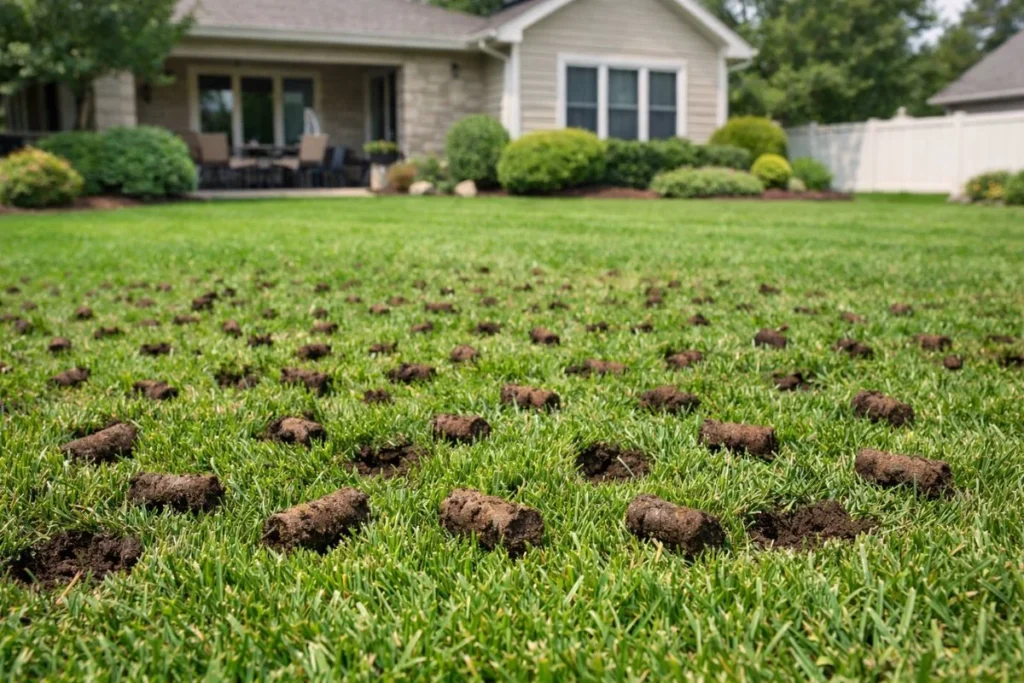
I have seen many lawns that looked healthy from a distance. The grass was green. The owners watered often and used fertilizer on time. But once I walked on the lawn, the soil felt hard. After rain, water stayed on the surface. Some areas stayed thin no matter what they tried. Homeowners were confused and frustrated because they were doing everything they thought was right.
In most of these cases, the problem was not the grass. It was the soil underneath. Compacted soil blocks air, water, and nutrients from reaching the roots. Lawn aeration fixes this hidden problem. It improves soil health first, and then the grass starts to improve. This guide explains the real benefits of aerating lawn and helps you decide if your lawn needs it.
- Lawn aeration fixes compacted soil below the surface.
- It helps air, water, and nutrients reach grass roots.
- Core aeration works best for most lawns.
- Timing depends on grass type and growing season.
- Aeration supports thicker and healthier grass.
- What Is Lawn Aeration
- Why Soil Compaction Hurts Your Lawn
- Signs Your Lawn Needs Aeration
- Benefits of Aerating Lawn
- Core vs Spike vs Liquid Aeration
- When to Aerate Your Lawn
- How Often Should You Aerate
- How Lawn Aeration Is Done
- Cost of Lawn Aeration in the USA
- Does Your Lawn Need Aeration? Quick Checklist
- Mistakes to Avoid When Aerating
- Frequently Asked Questions
- Final Thoughts
What Is Lawn Aeration
Lawn aeration is a process that loosens hard soil.
It improves the space where grass roots grow.
A tool or machine creates holes in the ground.
Some methods remove soil plugs.
Others only poke holes.
The goal is simple.
Help roots breathe and grow deeper.
If you want a complete guide on timing, methods, and aftercare, see our full article on aeration lawn.
Why Soil Compaction Hurts Your Lawn
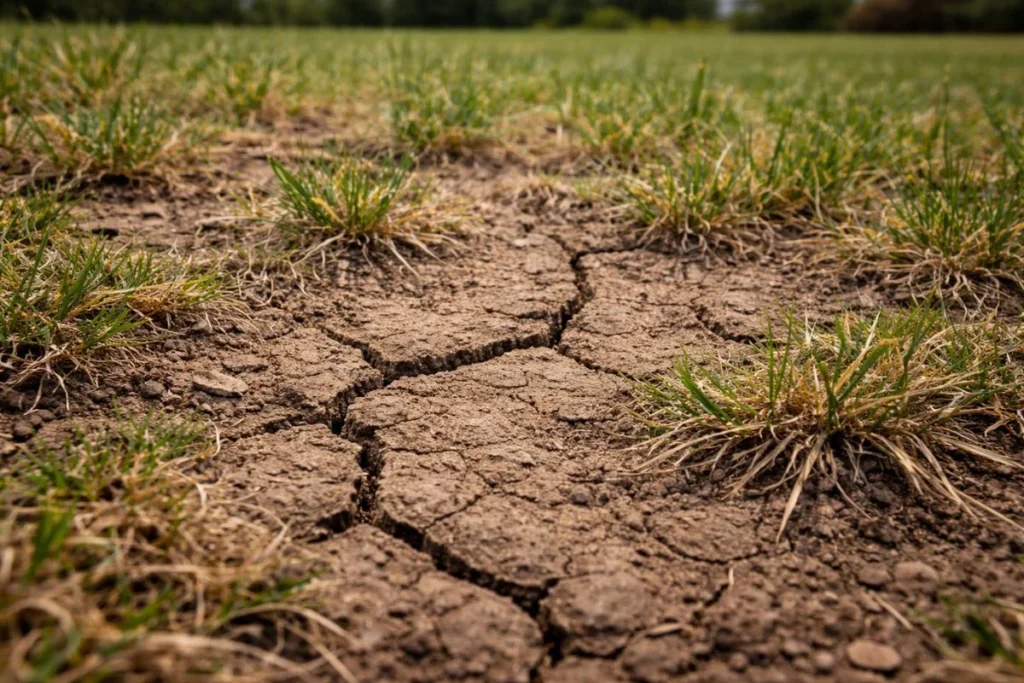
Soil compaction happens slowly.
Most homeowners do not notice it at first.
Common causes include:
- Walking on the lawn often
- Lawn mowers and heavy tools
- Clay soil
- Home construction
When soil becomes hard:
- Roots cannot grow deep
- Water stays on the surface
- Fertilizer cannot reach roots
This leads to weak grass and bare spots.
Signs Your Lawn Needs Aeration
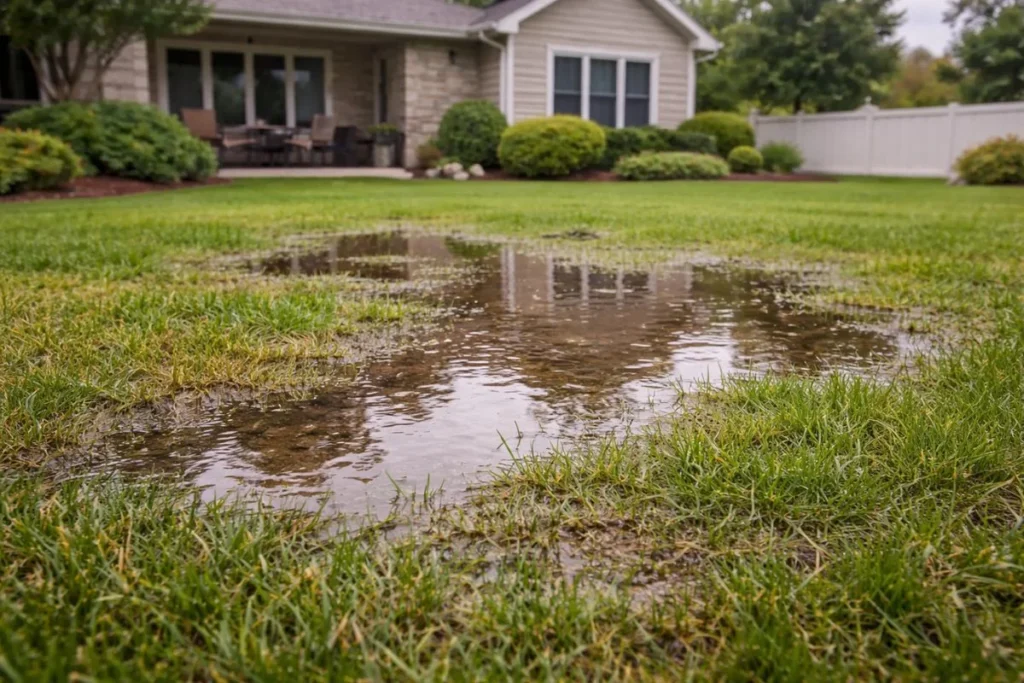
Many people wonder if aeration is really needed.
These signs can help you decide.
Look for:
- Water pooling after rain
- Soil that feels hard underfoot
- Thin or patchy grass
- Weeds spreading easily
- Fertilizer showing little effect
If you notice two or more signs, aeration can help.
If you notice two or more signs, aeration can Many homeowners notice these problems but are unsure how aeration actually helps. The benefits below explain what changes inside the soil after aeration and why lawns improve over time..
Benefits of Aerating Lawn
Relieves Soil Compaction
Aeration breaks up hard soil.
Roots get space to grow deeper.
Deep roots help grass survive heat and stress.
Improves Air Flow to Roots
Roots need oxygen to stay healthy.
Compacted soil blocks air.
Aeration opens the soil.
Roots get the oxygen they need.
Helps Water Reach the Root Zone
Without aeration, water runs off the lawn.
It does not soak into the soil.
After aeration:
- Water absorbs better
- Puddles reduce
- Dry spots improve
This also helps save water.
Improves Nutrient Absorption
Fertilizer works only when it reaches the roots.
Hard soil blocks nutrients.
Aeration allows nutrients to move into the soil.
Grass uses fertilizer more effectively.
Supports Thicker Grass Growth
Healthy roots create thicker grass.
Aeration helps roots spread and grow.
Over time:
- Bare spots fill in
- Grass becomes denser
- Lawn looks fuller
Helps Control Thatch Buildup
Thatch is a layer of dead grass.
Too much thatch blocks air and water.
Aeration helps break it down naturally.
Soil microbes work better after aeration.
Prepares the Lawn for Overseeding
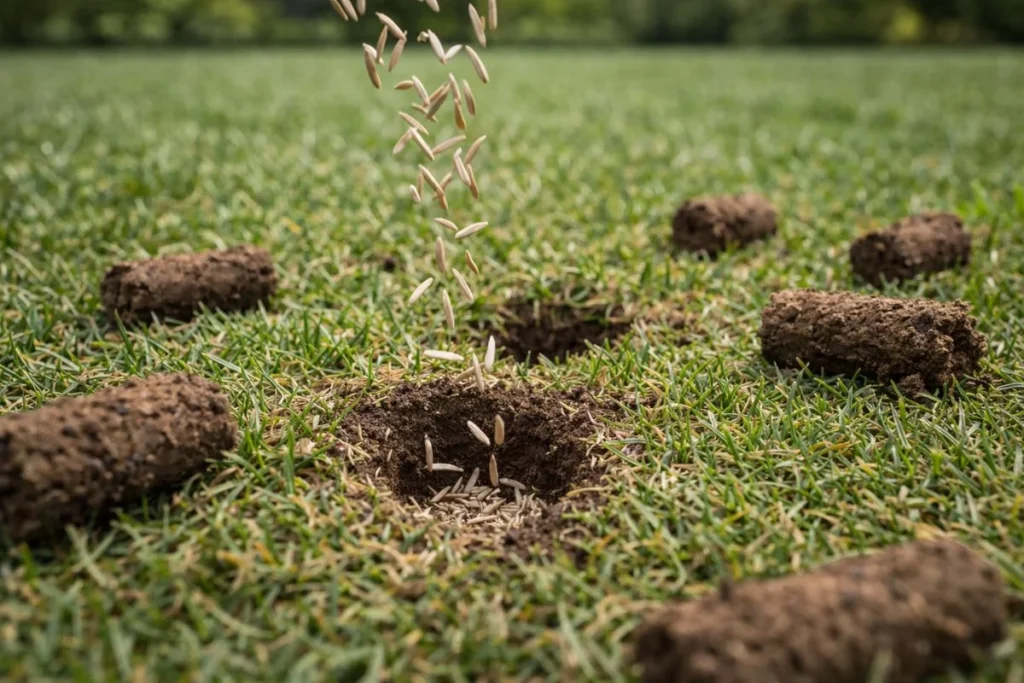
Aeration creates open soil contact.
Grass seeds fall into the holes.
This improves:
- Seed contact
- Moisture retention
- Germination rates
Overseeding works best right after aeration.
Core vs Spike vs Liquid Aeration
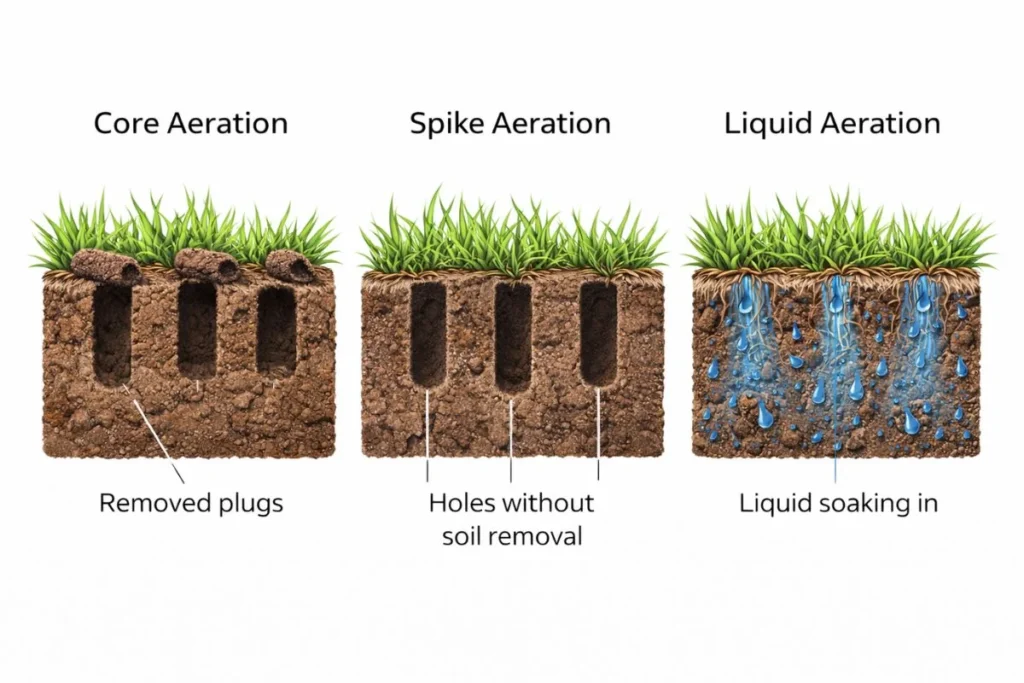
There are three main aeration methods.
Core Aeration
- Removes small soil plugs
- Best for compacted soil
- Improves air, water, and nutrients
- Most effective for most lawns
Spike Aeration
- Pushes holes into the soil
- Does not remove soil
- Can increase compaction in clay soil
- Best for light soil issues only
Liquid Aeration
- Uses liquid products to loosen soil
- No holes or plugs
- Results vary
- Works as support, not a replacement
For compacted lawns, core aeration gives the best For heavily compacted lawns, core aeration works best for most lawns, especially when compared with liquid alternatives..
| Aeration Method | How It Works | Best For | Main Downside |
|---|---|---|---|
| Core Aeration | Removes small soil plugs | Compacted soil | Requires equipment |
| Spike Aeration | Pushes holes into soil | Light soil issues | Can increase compaction |
| Liquid Aeration | Uses liquid to loosen soil | Minor support use | Results vary |
When to Aerate Your Lawn
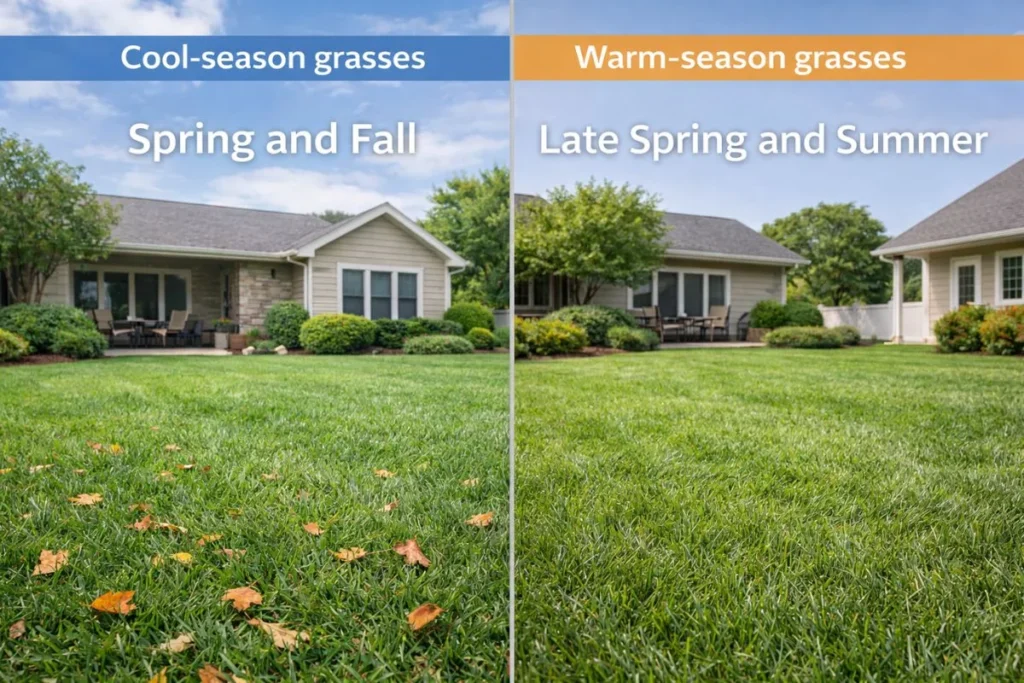
Timing matters.
Cool-season grasses grow best when aerated in:
- Early fall
- Early spring
Warm-season grasses respond best in:
- Late spring
- Early summer
Always aerate when grass is actively growing.
Avoid aeration during dormancy.
Choosing the correct timing matters. Follow this complete guide on when to aerate lawn to match aeration with your grass type and growing season.
| Grass Type | Best Season | Typical Months |
|---|---|---|
| Cool-season grasses | Early fall or spring | March–April, September–October |
| Warm-season grasses | Late spring to summer | May–July |
How Often Should You Aerate
Most lawns need aeration once a year, but In some cases, checking whether your lawn needs dethatching or aeration first helps avoid unnecessary work.
You may need it more often if:
- Soil is clay
- Lawn has heavy foot traffic
- Water does not soak in well
Low-traffic lawns may only need aeration every two years.
How Lawn Aeration Is Done
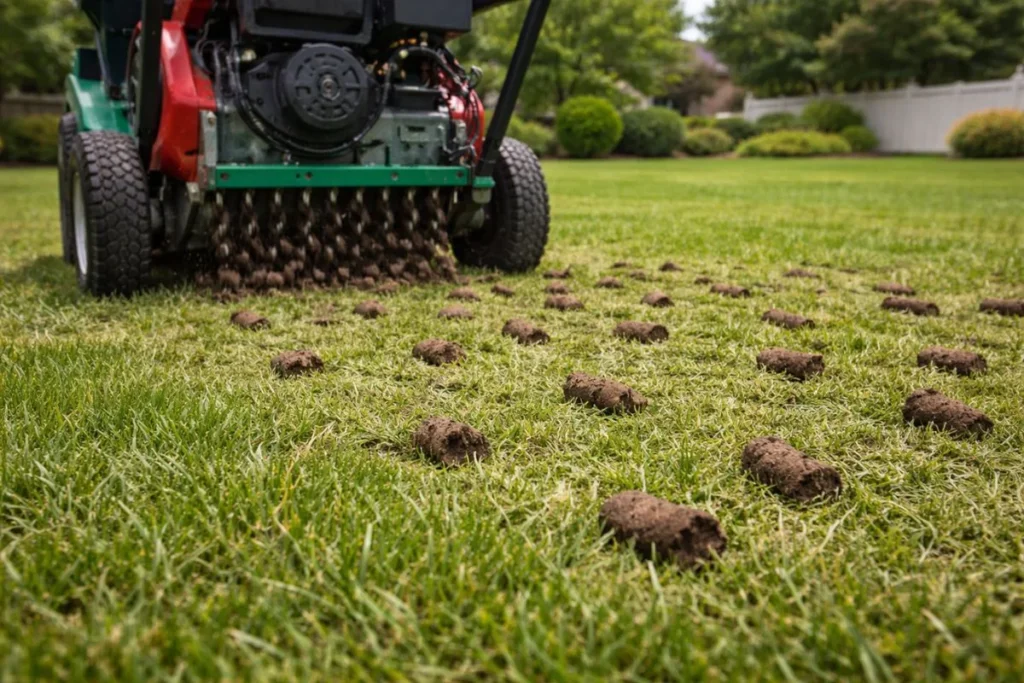
A simple aeration process includes:
- Water the lawn one day before
- Use a core aerator
- Make two passes for coverage
- Leave soil plugs on the lawn
- Fertilize or overseed after
Soil plugs break down naturally over time.
Cost of Lawn Aeration in the USA
Many homeowners want to know the cost first.
Average price ranges:
- DIY aerator rental: $40 to $90 per day
- Professional aeration: $75 to $250 per lawn
Costs depend on:
- Lawn size
- Soil condition
- Local service rates
DIY works for small lawns.
Large lawns often need professional service.
Does Your Lawn Need Aeration? Quick Checklist
Check the boxes below:
- Water pools after rain
- Soil feels hard when walking
- Grass looks weak or thin
- Weeds spread easily
- Fertilizer does not help
If two or more apply, aeration is worth doing.
Mistakes to Avoid When Aerating
Avoid these common issues:
- Aerating dry soil
- Aerating dormant grass
- Using spike aerators on clay soil
- Skipping watering before aeration
Correct timing and moisture are key.
Frequently Asked Questions
Does aeration damage grass?
No. Grass recovers quickly and grows stronger.
Can I aerate myself?
Yes. Core aerators can be rented.
Large lawns may need professional help.
Should I fertilize after aeration?
Yes. This is one of the best times to fertilize.
Can you aerate your lawn too often?
Yes. Aerating too often can disturb soil structure. Most lawns only need aeration once per year unless soil compaction is severe.
Should you water the lawn after aeration?
Yes. Light watering after aeration helps soil recovery and improves seed or fertilizer absorption.
Final Thoughts
From hands-on work and real results, one thing is clear. Lawns that are aerated at the right time stay healthier for longer. The grass grows thicker. Water absorbs better. Roots grow deeper instead of staying weak near the surface. Lawns that skip aeration often need more water, more fertilizer, and more repairs. Aeration is not a shortcut. It is a basic step that supports every other lawn care effort. If your lawn feels hard or never looks full, improving the soil through aeration can make a lasting difference.