 Skip to content
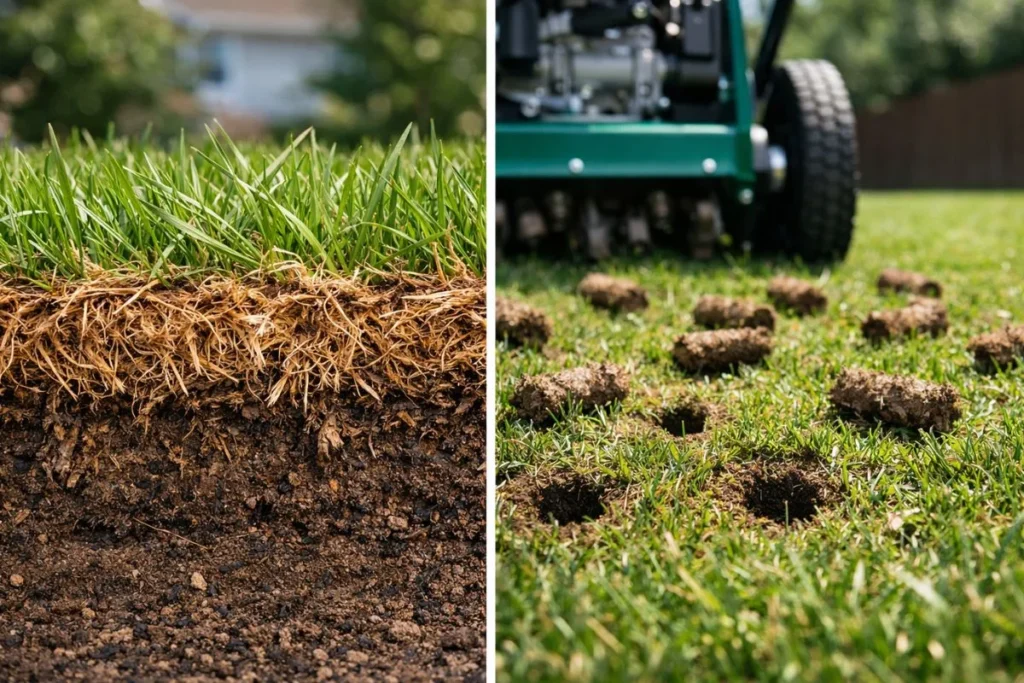
I have worked with many homeowners who felt stuck with their lawns. They watered more. They added fertilizer. Some even reseeded. But the grass stayed thin and weak. After rain, water pooled on the surface. In some spots, the lawn felt soft and spongy. In others, it felt hard like packed dirt. Most people thought the grass was the problem. In reality, the issue was happening below the surface.
That is why many homeowners search for dethatching vs aerating. They want to know which one will actually fix their lawn. Over the years, I have seen lawns improve quickly once the real issue was correctly identified. Thick thatch and compacted soil require different solutions. When you diagnose first and treat the right problem, results come faster and last longer.
- Why Homeowners Get Confused
- What Is Thatch?
- What Is Lawn Aeration?
- 30-Second Lawn Diagnosis Guide
- Dethatching vs Aerating: Quick Comparison
- Soil Type Matters More Than You Think
- Benefits of Aerating
- Benefits of Dethatching
- When to Aerate Your Lawn
- When to Dethatch Your Lawn
- How Often Should You Do It?
- Dethatching vs Aerating: Which Is Better?
- The Smart Strategy: Aeration + Overseeding
- Tools You Can Use
- Cost in the USA
- Recovery Timeline
- Common Mistakes to Avoid
- Final Thoughts
Quick Takeaway
- Thick brown layer above soil? → You likely need dethatching.
- Hard soil or water pooling? → Aeration is the better choice.
- Clay soil lawn? → Aerate once per year.
- Thin lawn in fall? → Aerate and overseed together.
Why Homeowners Get Confused
Both treatments improve grass growth. They are usually done in spring or fall. Most homeowners use machines to complete the job.
But they solve two very different issues:
- Thick thatch layer
- Compacted soil
If you treat the wrong one, you waste time and money.
What Is Thatch?
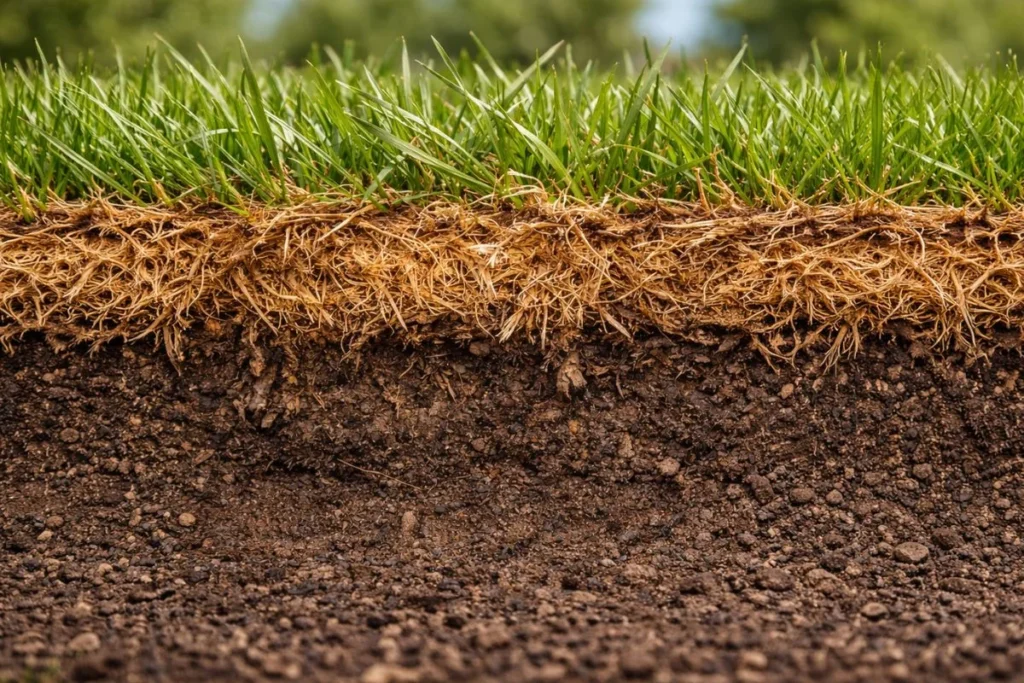
Thatch is a layer of dead grass stems and roots. It forms between green grass and the soil.
A thin layer is healthy. It protects roots.
But when thatch grows thicker than ½ inch, it blocks water and nutrients. Roots stay shallow. Grass becomes weak.
How to Check Thatch
- Cut a small slice of lawn with a shovel.
- Look at the brown layer between grass and soil.
- Measure it.
If it is over ½ inch thick, dethatching is likely needed.
If it is thinner, do not dethatch.
What Is Lawn Aeration?
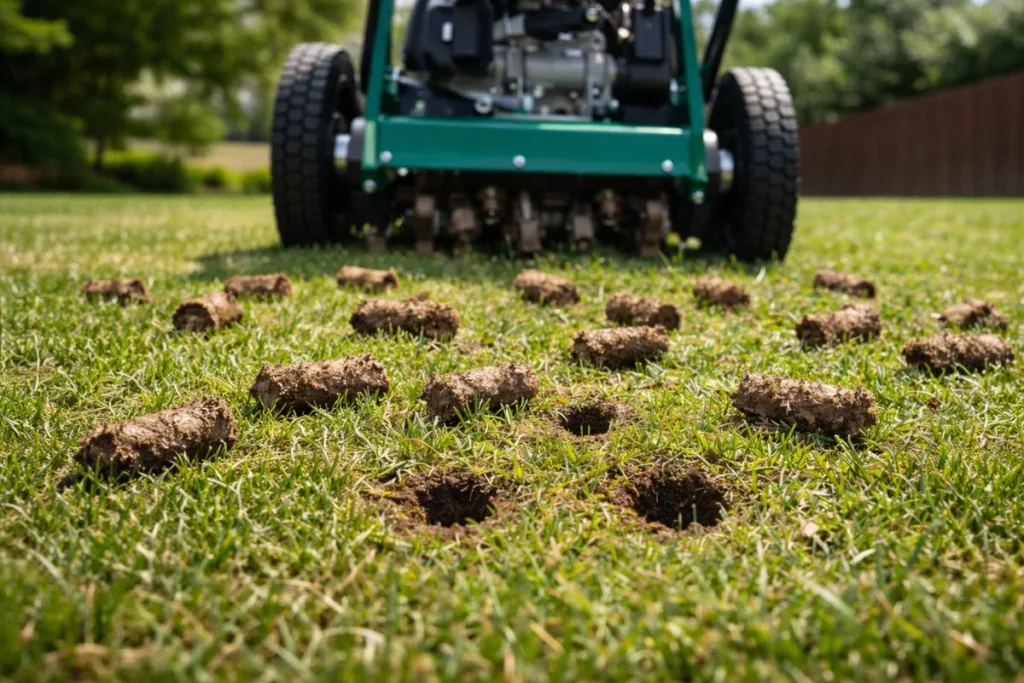
Lawn aeration means making small holes in the soil. These holes allow air, water, and nutrients to reach deeper roots.
The most effective method is core aeration. It removes small plugs of soil.
Aeration fixes soil compaction.
For a full step-by-step guide on timing, methods, and aftercare, read our complete article on aeration lawn.
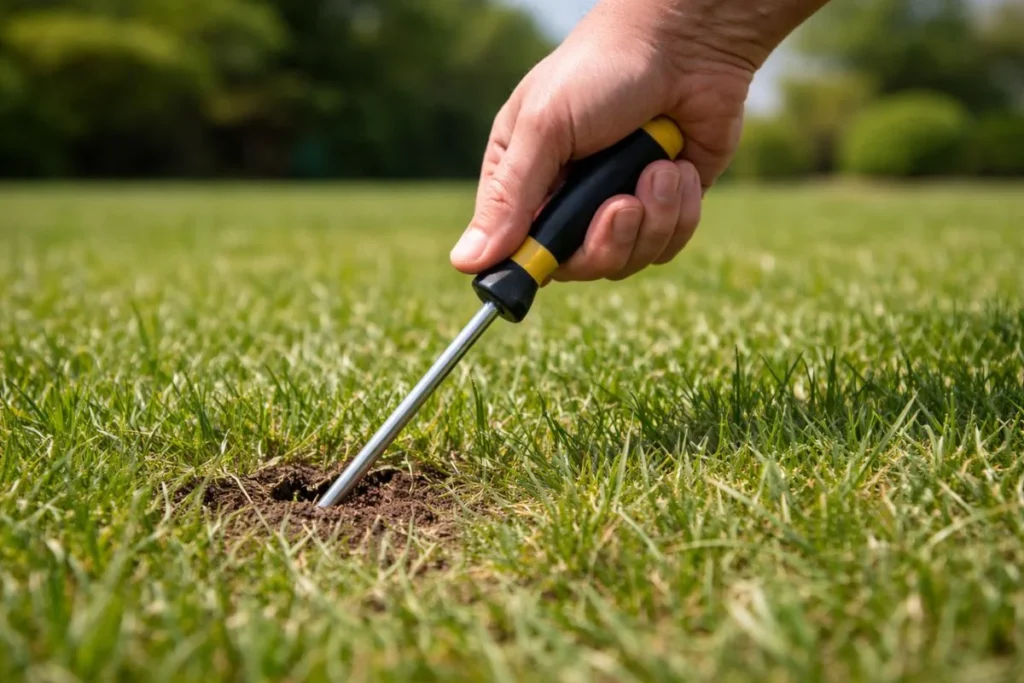
How to Check for Compacted Soil
Push a screwdriver into the ground.
- Easy to push in → Soil is fine
- Hard to push in → Soil is compacted
Compacted soil prevents deep root growth.
30-Second Lawn Diagnosis Guide
Use this before making a decision.
- Lawn feels soft and spongy → Thick thatch
- Water pools after rain → Compacted soil
- Roots are shallow → Compaction
- Thick brown layer above soil → Dethatching
- Hard soil surface → Aeration
Do not treat blindly. Diagnose first.
How to Decide in 3 Simple Steps
- Measure the thickness of your thatch layer.
- Test soil compaction using a screwdriver.
- Check your grass type and current season.
Once you complete these three steps, the correct choice becomes clear.
Dethatching vs Aerating: Quick Comparison
| Feature | Dethatching | Aerating |
|---|---|---|
| Fixes | Thick thatch layer | Compacted soil |
| Main Goal | Remove surface buildup | Loosen soil |
| Best Time (Cool-Season) | Early fall or spring | Fall (best) |
| Best Time (Warm-Season) | Late spring | Late spring to early summer |
| How Often | Only when thatch exceeds ½ inch | Once per year in clay soil |
| Best Combined With | Lawn cleanup | Overseeding |
| Tool Used | Thatch rake or power dethatcher | Core aerator |
In most residential lawns, soil compaction is more common than excessive thatch buildup, which is why aeration is usually needed more often than dethatching.
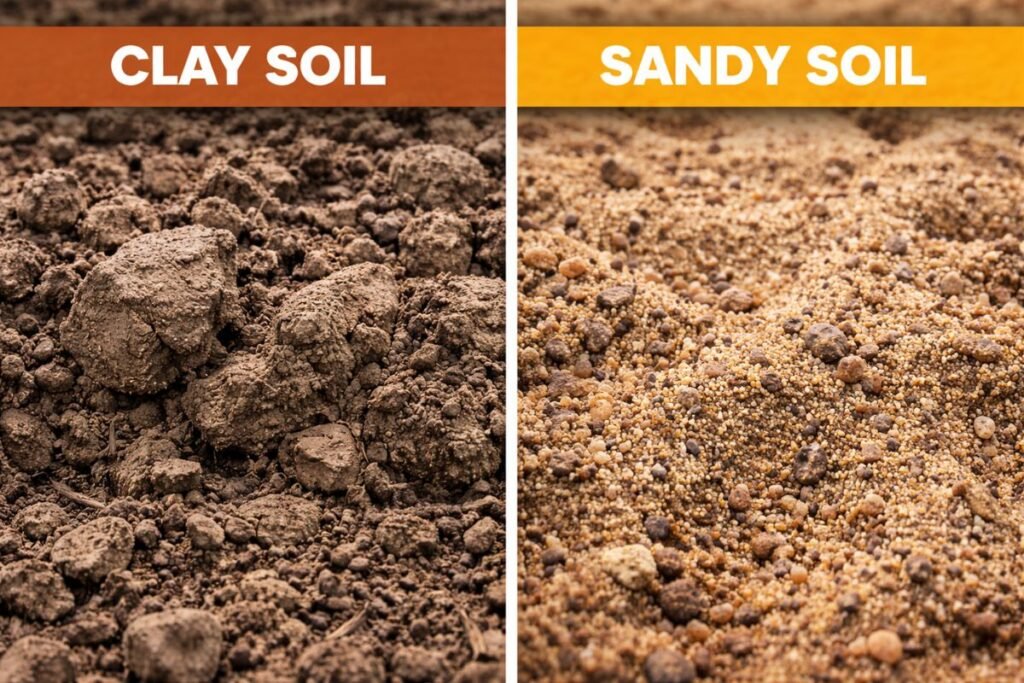
Soil Type Matters More Than You Think
Many homeowners ignore soil type. That is a mistake.
Clay Soil
Compacts easily.
Needs aeration once per year.
Common in Midwest and Southern states.
Sandy Soil
Drains well.
Rarely compacts.
Aerate every 2 to 3 years only if needed.
Loamy Soil
Balanced soil.
Aerate only when symptoms appear.
Dethatching depends on thatch buildup, not soil type.
Benefits of Aerating
- Improves root growth
- Reduces compaction
- Improves drainage
- Helps fertilizer work better
- Makes overseeding highly effective
- Helps slow future thatch buildup by improving soil activity
Aeration is especially helpful for lawns with heavy foot traffic or clay soil.
Benefits of Dethatching
- Removes thick buildup
- Improves air flow
- Reduces disease risk
- Helps water reach soil
Dethatching is helpful if your lawn feels matted and spongy.
When to Aerate Your Lawn
Timing depends on grass type.
Cool-Season Grass
Examples: Kentucky bluegrass, tall fescue
Best time: Fall
Spring is second best.
Fall works best because roots grow strongest then.
Warm-Season Grass
Examples: Bermuda, Zoysia
Best time: Late spring to early summer
Always aerate during active growth.
Seasonal Timing Guide
| Grass Type | Best Time to Aerate | Best Time to Dethatch |
|---|---|---|
| Cool-Season Grass | Fall (Best), Early Spring | Early Fall or Spring |
| Warm-Season Grass | Late Spring to Early Summer | Late Spring |
When to Dethatch Your Lawn
Dethatch during active growth.
- Cool-season grass: Early fall or spring
- Warm-season grass: Late spring
Avoid drought and extreme heat.
How Often Should You Do It?
Aeration:
- Clay soil → Once per year
- Sandy soil → Every 2 to 3 years
Dethatching:
Only when thatch exceeds ½ inch.
Most lawns do not need yearly dethatching.
Dethatching vs Aerating: Which Is Better?
Neither is better for every lawn.
Choose dethatching if thatch is thick.
Choose aerating if soil is hard.
Some lawns need both.
If doing both:
- Dethatch first
- Aerate second
This improves soil penetration.
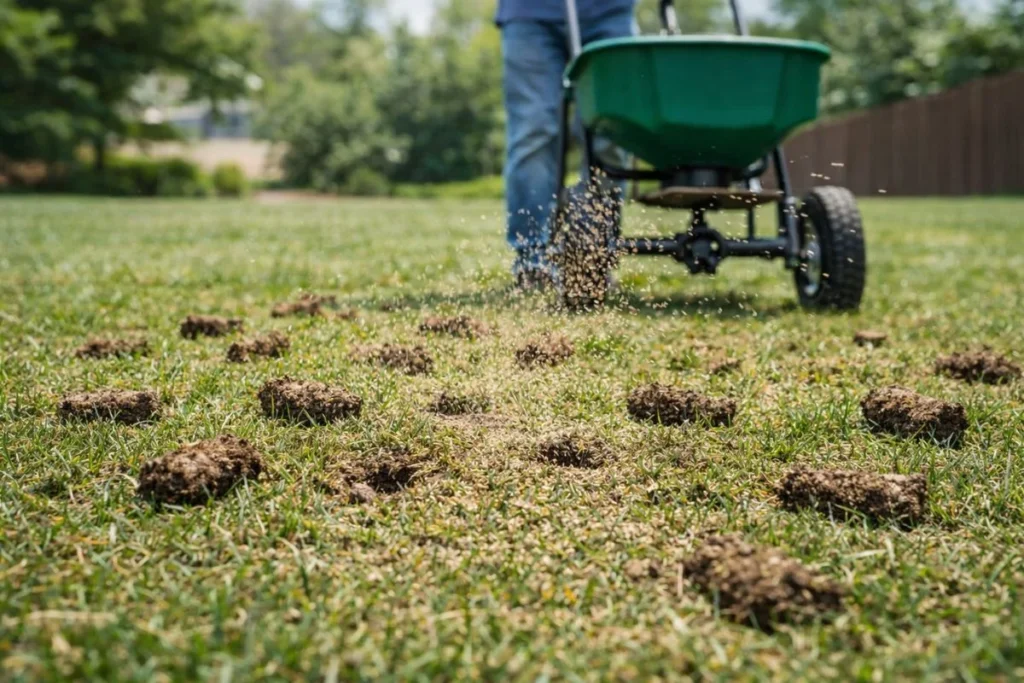
The Smart Strategy: Aeration + Overseeding
If your lawn is thin, aerate and overseed at the same time.
Aeration creates perfect seed-to-soil contact.
This is one of the best ways to thicken a weak lawn.
For cool-season lawns, fall aeration plus overseeding gives the strongest results.
Tools You Can Use
Aeration Tools
- Manual core aerator
- Machine aerator (rental)
Core aerators remove soil plugs.
Spike aerators push soil sideways and may worsen compaction in clay soil.
Dethatching Tools
- Thatch rake
- Power dethatcher
Large lawns are easier with rental machines.
Once you understand which treatment your lawn needs, the next question most homeowners ask is cost.
Cost in the USA
DIY Rental:
- Aerator: $70 to $120 per day
- Dethatcher: $60 to $100 per day
Professional Service:
- Aeration: $100 to $250
- Dethatching: $150 to $300
If your lawn only has one issue, do not pay for both services.
Diagnose first.
Recovery Timeline
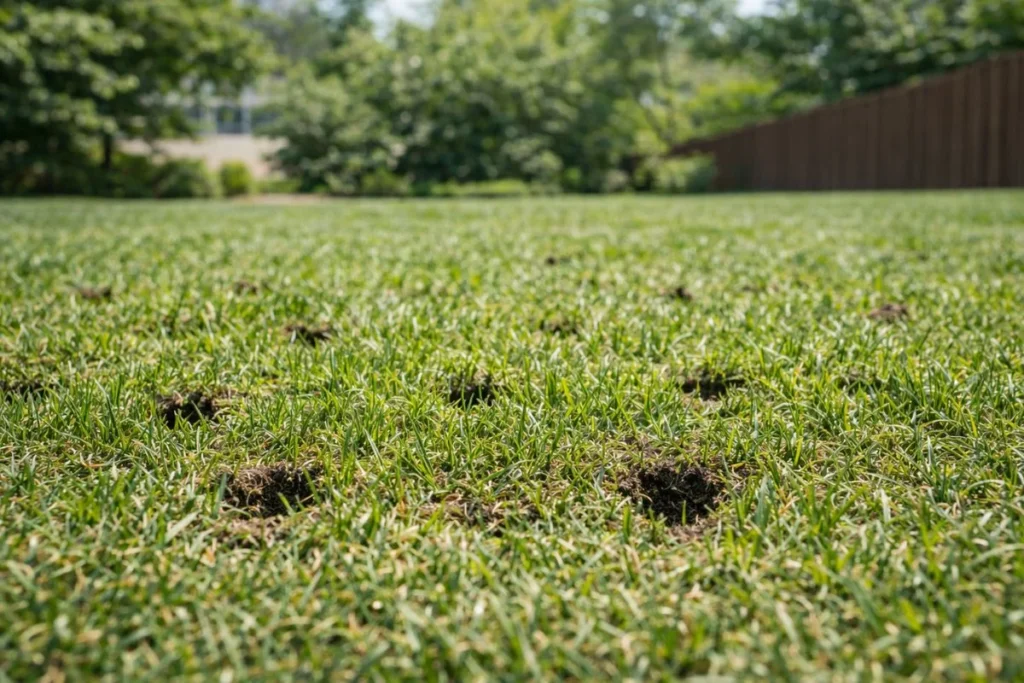
After Aeration:
- Holes close in 2 to 4 weeks
- Lawn may look rough at first
- Growth improves within weeks
After Dethatching:
- Lawn may look thin and messy
- Recovery takes 1 to 3 weeks during active growth
Water and fertilize to speed recovery.
Avoid heavy foot traffic for two weeks.
Common Mistakes to Avoid
- Aerating during drought
- Dethatching healthy lawns without thick thatch
- Using spike aerators on clay soil
- Dethatching during extreme heat
- Skipping watering after treatment
Grass must be actively growing for proper recovery.
When You Should NOT Dethatch or Aerate
- During drought conditions
- During extreme summer heat
- When grass is dormant
- If thatch is less than ½ inch thick
- Newly established lawns less than one to two years old
The Biggest Mistake Homeowners Make
Many homeowners dethatch when the real problem is compacted soil. This stresses the lawn and does not improve drainage. Always diagnose before choosing a treatment.
Final Thoughts
After helping many homeowners restore weak lawns, one thing is always clear: success starts with proper diagnosis. Adding more products rarely solves the issue if the soil cannot breathe or if thick thatch blocks nutrients. I have seen lawns bounce back strong after proper aeration and overseeding, and I have also seen damage when dethatching was done without real need. The difference comes down to checking your lawn carefully, choosing the correct treatment, and doing it at the right time. When you fix the root problem instead of guessing, your lawn responds with healthier growth and stronger roots. A properly diagnosed lawn problem is usually easier and less expensive to fix than most homeowners expect.