 Skip to content
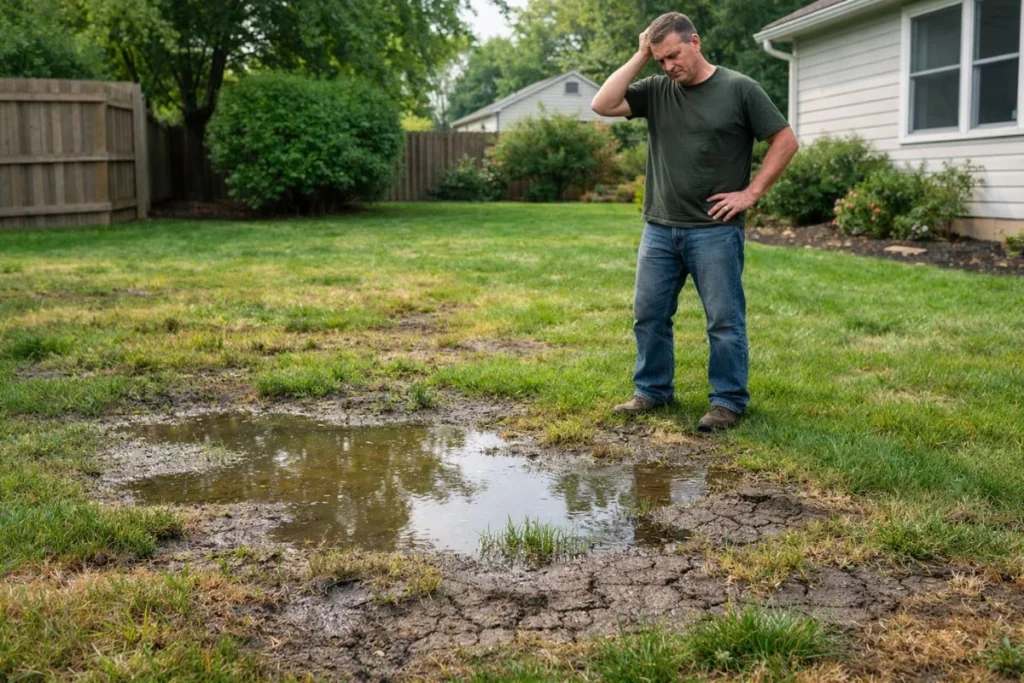
I have worked with many homeowners who felt confused and frustrated with their lawns. They watered more, applied fertilizer, and even reseeded, but the grass stayed thin and weak. After rain, water sat on the surface instead of soaking in. When they pushed a screwdriver into the soil, it barely went in. In almost every case, the problem was not the grass or the products being used. The real issue was hard, compacted soil that roots could not grow through.
This is usually when people start comparing liquid aeration and core aeration. Both sound helpful, and both are often promoted as simple fixes. From real lawn results and repeated patterns, I have seen how choosing the wrong method leads to wasted time and money. This guide explains the true difference between liquid aeration and core aeration, based on how lawns actually respond, not on sales claims.
- What Is Lawn Aeration
- How Soil Compaction Happens
- When Lawn Aeration Is Needed
- What Is Liquid Aeration
- What Is Core Aeration
- Liquid Aeration vs Core Aeration
- How Long Aeration Results Last
- Soil Type and Aeration Choice
- Best Time of Year for Aeration
- Repair vs Maintenance
- Can You Use Both Methods
- Aeration and Overseeding
- DIY vs Professional Service
- Common Mistakes to Avoid
- Quick Decision Guide
- FAQ
- Conclusion
What Is Lawn Aeration
Lawn aeration loosens compacted soil.
It creates space so air, water, and nutrients can reach grass roots.
Healthy roots need oxygen.
They also need room to grow.
If soil stays hard, grass cannot recover.
Aeration solves that problem.
For a full breakdown of aeration timing, methods, costs, and aftercare, read our complete guide on aeration lawn.
How Soil Compaction Happens
Soil slowly becomes compacted over time.
Common causes include:
- Foot traffic
- Pets
- Lawn equipment
- Clay-heavy soil
- Rain followed by drying
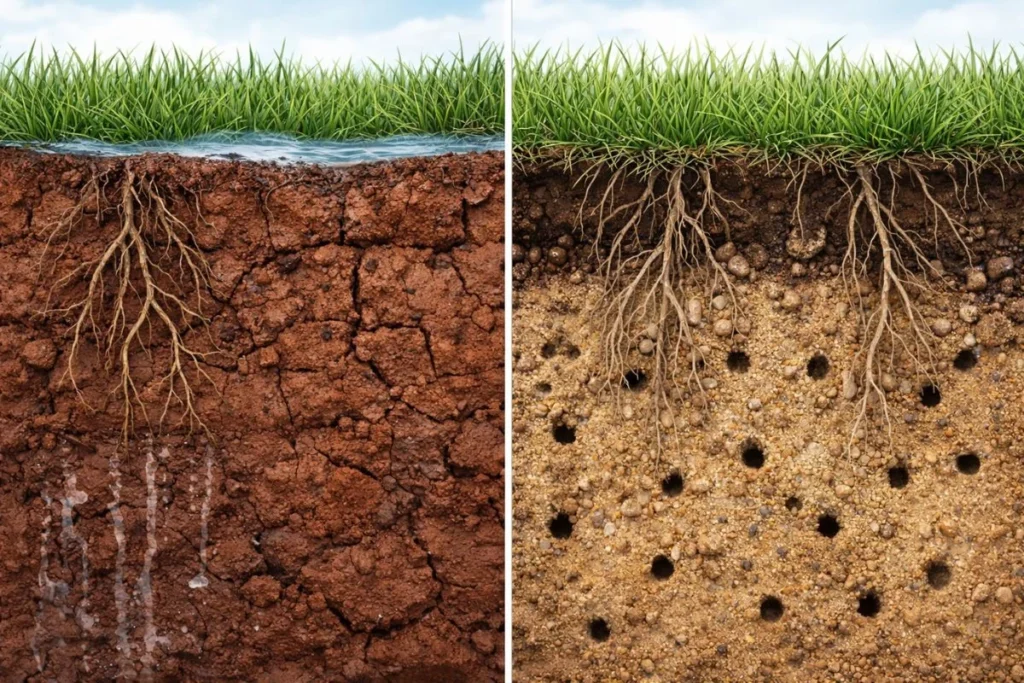
Compacted soil has very little air space.
Water cannot soak in.
Fertilizer cannot reach roots.
This is why lawns often look poor even with regular care.
When Lawn Aeration Is Needed
Your lawn likely needs aeration if you notice:
- Water pooling after rain
- Soil that feels hard when pushed
- Thin or patchy grass
- Heavy thatch buildup
- Weak response to fertilizer
These signs mean roots are struggling.
What Is Liquid Aeration
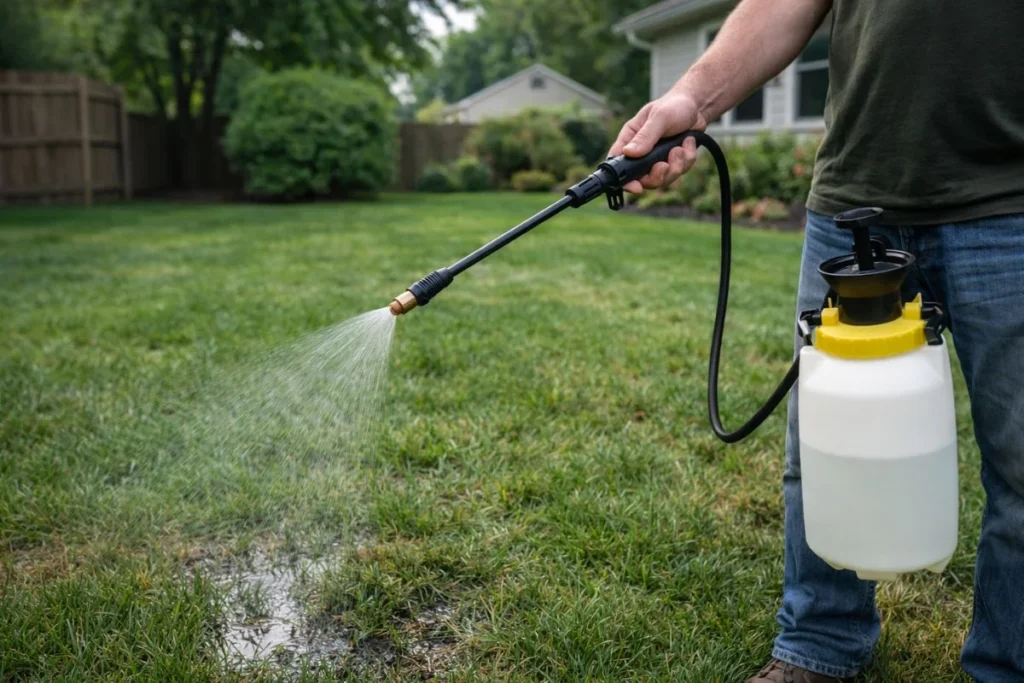
Liquid aeration uses a spray solution.
It contains surfactants and biological agents.
These help loosen soil particles near the surface.
The liquid moves through small soil gaps.
Over time, it improves water movement and surface structure.
Liquid aeration does not remove soil.
Benefits of Liquid Aeration
- Easy to apply
- No soil plugs on the lawn
- Can be used during more months
- Helps mild compaction
- Lower effort for homeowners
Liquid aeration works best as maintenance.
It does not fix hard or deeply compacted soil.
What Is Core Aeration
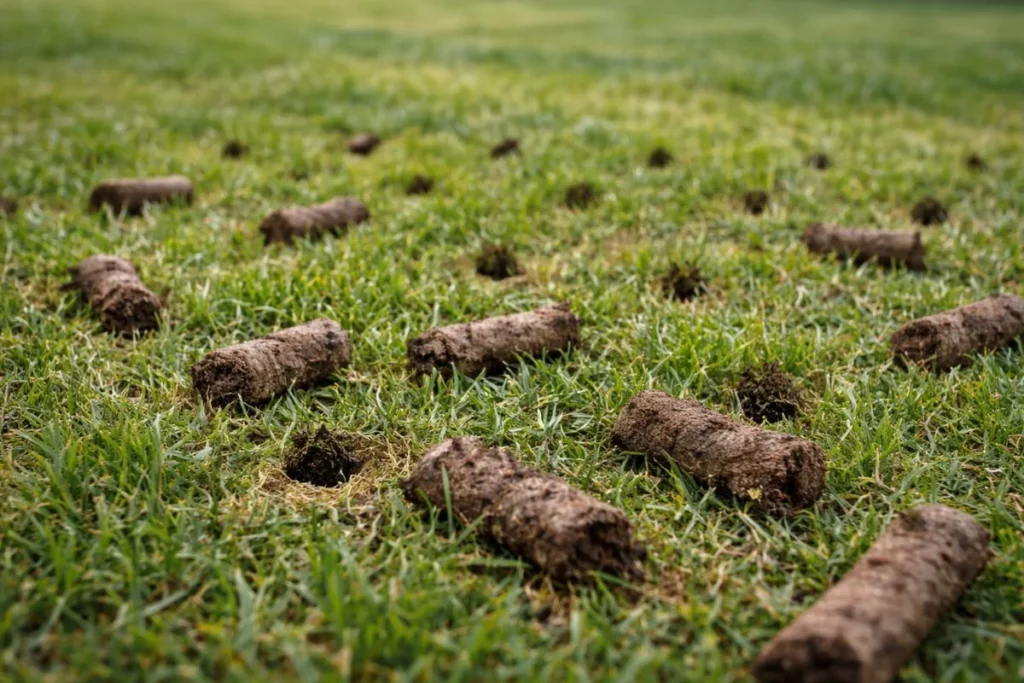
Core aeration uses a machine.
It removes small plugs of soil from the lawn.
These holes allow direct airflow and water movement.
Roots can grow deeper and stronger.
Most machines pull plugs 2 to 3 inches deep.
This reaches the main root zone.
Benefits of Core Aeration
- Breaks real soil compaction
- Improves deep root growth
- Reduces thatch
- Helps with overseeding
- Long-lasting results
Core aeration is the best choice for compacted lawns.
Liquid Aeration vs Core Aeration
Level of Soil Compaction
Liquid aeration helps light compaction.
Core aeration handles moderate to heavy compaction.
Depth of Impact
Liquid aeration works near the surface.
Core aeration reaches deep soil layers.
Speed of Results
Liquid aeration improves soil slowly.
Core aeration shows faster improvement.
| Feature | Liquid Aeration | Core Aeration |
|---|---|---|
| Removes soil plugs | No | Yes |
| Depth of impact | Surface level | 2–3 inches |
| Handles heavy compaction | No | Yes |
| Lawn appearance after | Clean | Visible soil plugs |
| Best for overseeding | No | Yes |
| Speed of results | Slow | Faster |
| DIY friendly | Yes | Moderate |
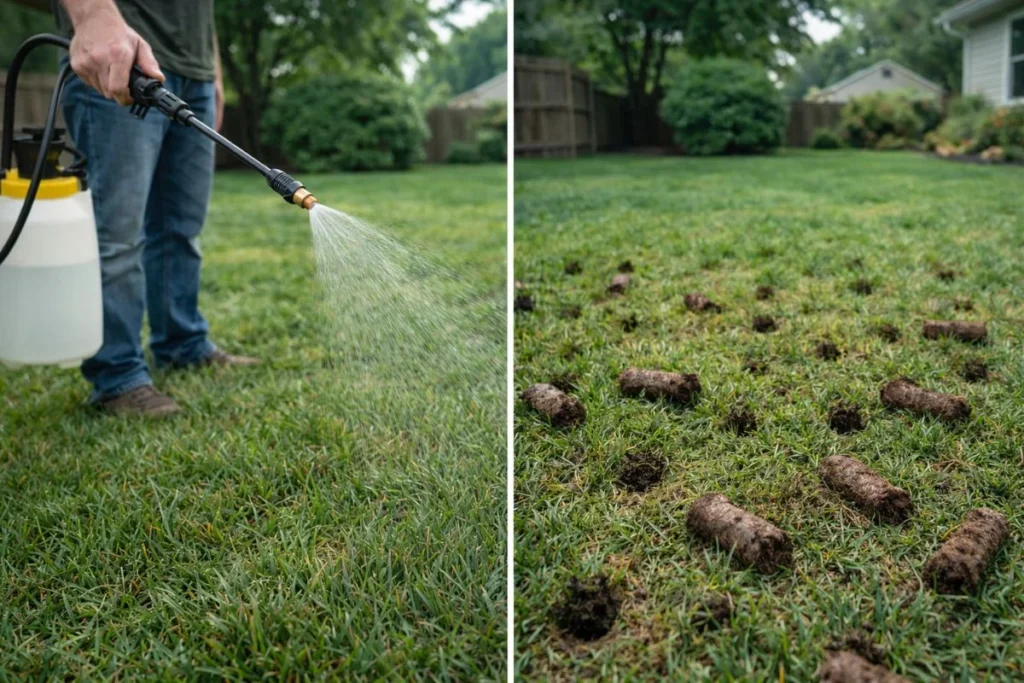
Lawn Appearance After Treatment
Liquid aeration leaves the lawn clean.
Core aeration leaves plugs for a short time.
Cost Risk
Liquid aeration costs less per visit but needs repeat use.
Core aeration costs more per visit but fixes the problem faster.
Best Use
Liquid aeration fits healthy lawns.
Core aeration fixes damaged lawns.
Key Takeaway
- Core aeration fixes compacted soil
- Liquid aeration helps maintain healthy soil
- Hard or clay soil responds better to core aeration
- Liquid aeration works best for light compaction
- Overseeding works better after core aeration
How Long Aeration Results Last
Core aeration usually improves soil structure for one year or longer, depending on soil type and lawn traffic. Liquid aeration often requires multiple applications during the growing season because it works gradually. Lawns with heavy foot traffic or clay soil typically benefit from yearly core aeration followed by maintenance treatments.
Soil Type and Aeration Choice
Clay Soil Lawns
Clay soil compacts easily.
Water drains slowly.
Core aeration works best for clay soil.
Liquid aeration alone is not enough.
Liquid aeration can help later as upkeep.
Sandy or Loamy Soil Lawns
These soils drain better.
They compact less.
Liquid aeration works well here.
Core aeration helps if foot traffic is heavy.
Best Time of Year for Aeration
Cool-Season Grasses
Examples include fescue and Kentucky bluegrass.
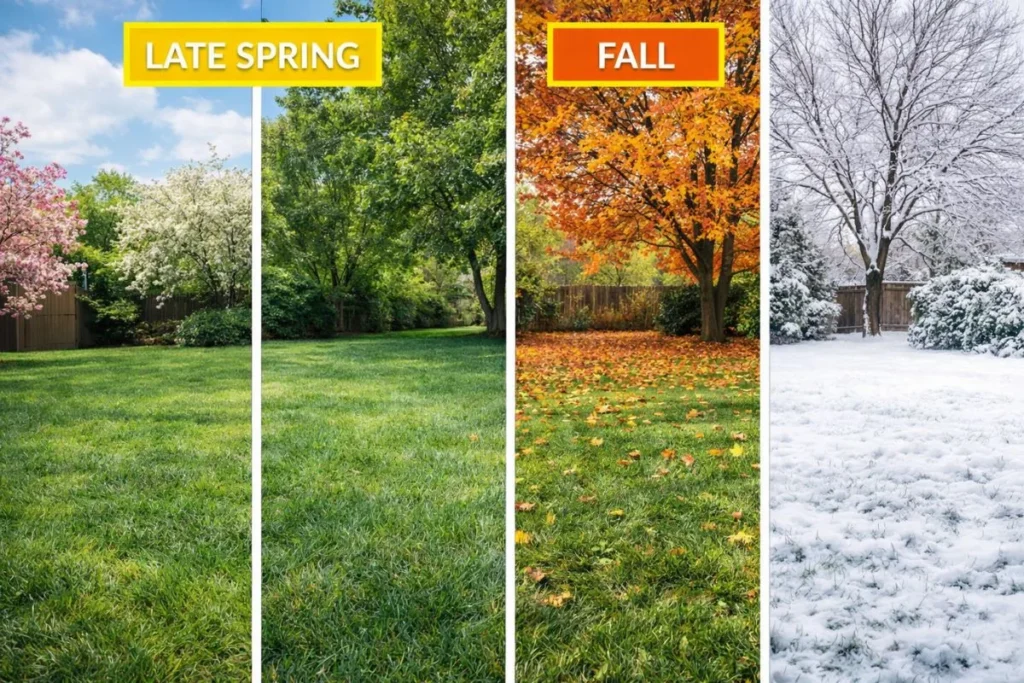
- Best time for core aeration: early fall
- Second option: spring
- Avoid hot summer months
Liquid aeration works during active growth.
Warm-Season Grasses
Examples include Bermuda and zoysia.
- Best time for core aeration: late spring to early summer
- Avoid dormant periods
Liquid aeration works best while grass is growing.
| Grass Type | Best Time for Core Aeration |
|---|---|
| Cool-season grasses | Early fall |
| Warm-season grasses | Late spring |
Repair vs Maintenance
This is where many homeowners get confused.
Core aeration repairs soil damage.
Liquid aeration helps keep soil loose after repair.
If your lawn struggles every year, start with core aeration.
If your lawn is mostly healthy, liquid aeration can help maintain it.
Can You Use Both Methods
Yes. Many lawns benefit from both.
A simple plan:
- Core aeration once per year
- Liquid aeration during the growing season
Core aeration opens the soil.
Liquid aeration helps prevent it from tightening again.
Aeration and Overseeding
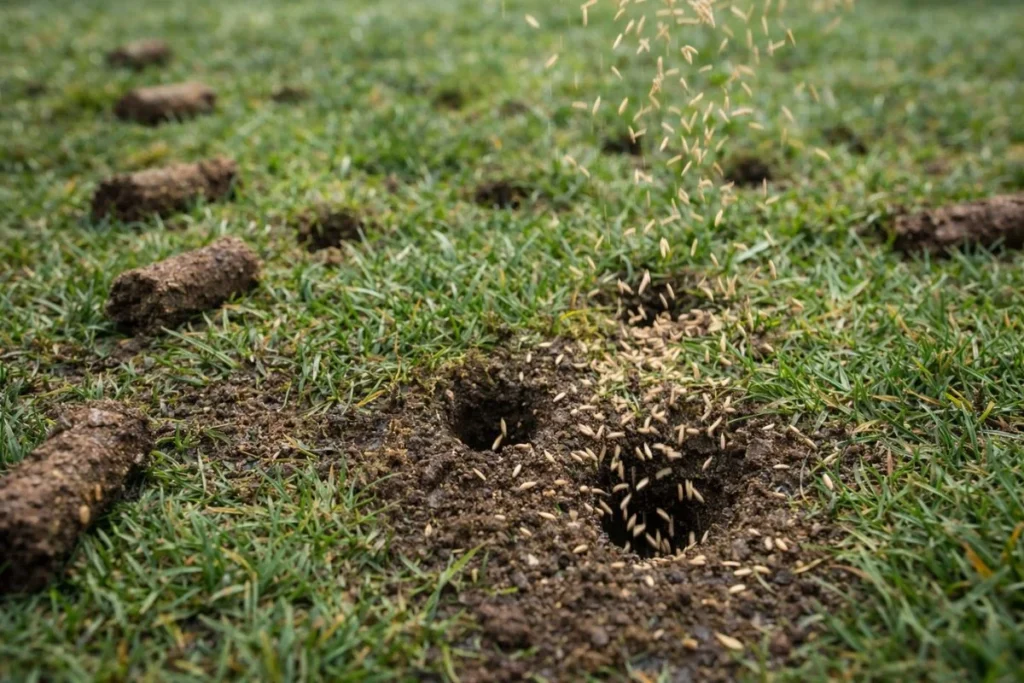
Core aeration works best before overseeding.
Seeds fall into the holes and stay protected.
Liquid aeration does not create seed pockets.
It should not be used alone before seeding.
If overseeding is planned, core aeration is the better option.
DIY vs Professional Service
DIY Core Aeration
- Requires equipment rental
- Machines are heavy
- More physical effort
- Lower cost for large lawns
Professional Core Aeration
- Correct depth and spacing
- Faster work
- Higher cost
- Less effort
Liquid aeration is easier for DIY use.
Core aeration often works better when done by professionals.
Common Mistakes to Avoid
- Aerating dry soil
- Aerating dormant grass
- Using liquid aeration for severe compaction
- Skipping watering after treatment
- Expecting instant results
Aeration works best when grass is growing.
Quick Decision Guide
- Hard soil and water pooling → core aeration
- Thin grass with traffic → core aeration
- Mild compaction → liquid aeration
- Overseeding planned → core aeration
- Routine lawn care → liquid aeration
If unsure, start with core aeration.
FAQ
Is liquid aeration a replacement for core aeration
No. It supports soil health but does not remove compacted soil.
How often should core aeration be done
Once per year for compacted lawns. Every two years for healthy lawns.
Can liquid aeration be done in summer
Yes, if grass is growing and soil is not dry.
How long do core aeration holes last
Two to four weeks, based on soil and moisture.
Can I mow after aeration
Yes. Wait one to two days.
Should I water after aeration
Yes. Water helps roots grow deeper.
Conclusion
After years of seeing how lawns respond to different treatments, one thing is clear. Liquid aeration and core aeration do not solve the same problem. Liquid aeration helps maintain soil that is already in decent condition, while core aeration fixes real compaction by opening space for air, water, and roots. Lawns with hard soil, poor drainage, or weak growth consistently improve after core aeration because it creates physical change below the surface. The best results come from choosing the method that matches the soil condition. When soil health improves, grass follows, and the lawn becomes easier to maintain over time. The condition of your soil matters more than the method itself.