 Skip to content
Have you ever walked across your lawn and felt it bounce under your feet? Maybe water sits on top instead of soaking in. Maybe your grass looks thin even though you water and fertilize it. Many homeowners think their lawn is dying when they see these signs. I have seen this problem many times, and in most cases, the real issue was lawn thatch.
Lawn thatch is a layer of dead and living grass material that builds up between the green grass and the soil. A small amount is normal and healthy. But when it becomes too thick, it blocks water, air, and nutrients from reaching the roots. The key is knowing how to measure it and when to take action. In this guide, I will explain exactly what lawn thatch is and how to tell if it is helping or hurting your lawn.
Key Takeaways
- A thin lawn thatch layer under ½ inch is healthy.
- More than ¾ inch usually requires action.
- Grass clippings do not cause thatch buildup.
- Always measure before dethatching.
- Healthy soil reduces thatch naturally.
What Does Lawn Thatch Look Like?
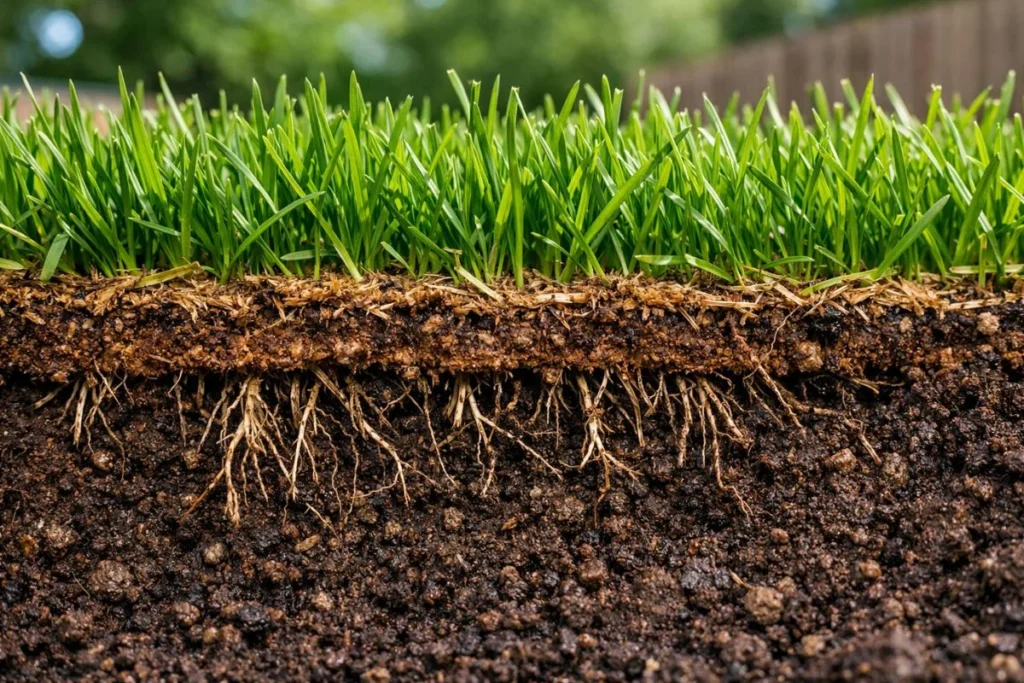
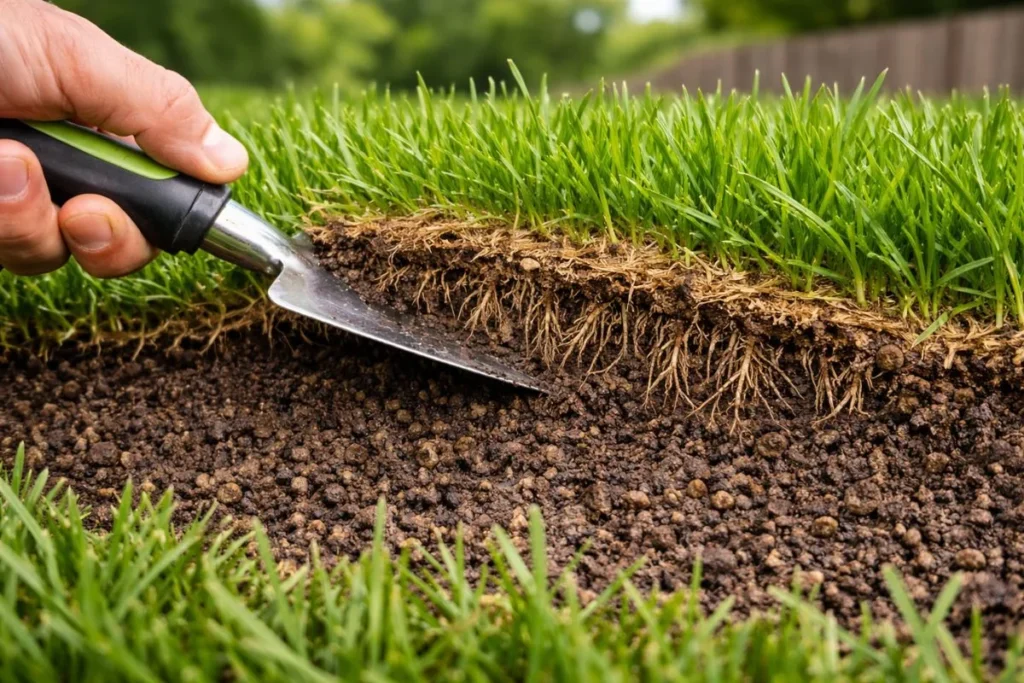
Lawn thatch looks like a dense, brown mat between the soil and the green grass blades.
It is not loose soil.
It is also different from moss.
Unlike mulch, it forms naturally from grass stems and roots.
It feels dry and fibrous. When it becomes thick, the lawn may feel soft and bouncy when you walk on it.
If your lawn feels spongy, that is often the first clue.
How Does Lawn Thatch Develop?
Grass grows constantly. As it grows, older roots and stems die. Soil microbes break down this material over time.
Lawn thatch forms when dead grass builds up faster than microbes can break it down.
This usually happens when:
- You apply too much nitrogen fertilizer
- You water too often
- The soil has poor airflow
- The lawn has compacted soil
- Microbial activity is weak
When decomposition slows down, organic material starts to collect.
Why Soil Conditions Affect Thatch Buildup
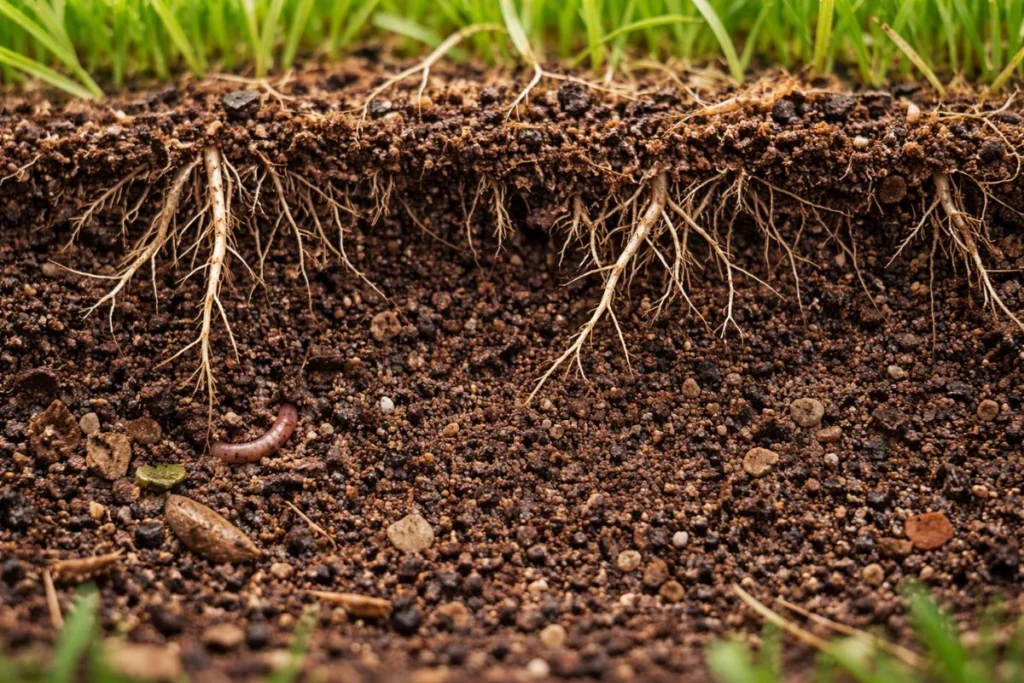
Healthy soil is full of bacteria, fungi, and other organisms. These organisms break down dead plant material.
When soil becomes compacted, oxygen levels drop. Microbes slow down. As a result, thatch builds faster.
Low soil pH can also reduce microbial activity. Heavy pesticide use may lower populations of beneficial organisms.
If soil health is poor, lawn thatch increases.
Improving soil biology often reduces thatch naturally.
How Much Lawn Thatch Is Normal?
Every lawn has some thatch.
A thin layer under ½ inch is healthy. It protects roots and helps retain moisture.
If the layer reaches ½ inch or more, you should monitor it closely.
How Thick Should Lawn Thatch Be?
Use this guide:
- Less than ½ inch → Healthy
- ½ to ¾ inch → Monitor
- More than ¾ inch → Likely causing stress
When thatch becomes thick, water may run off instead of soaking in. Fertilizer may not reach the roots properly.
The goal is balance, not complete removal.
Lawn Thatch Thickness Guide
| Thatch Thickness | Lawn Condition | Recommended Action |
|---|---|---|
| Less than ½ inch | Healthy | No action needed |
| ½ – ¾ inch | Monitor closely | Improve soil health |
| More than ¾ inch | Likely causing stress | Consider dethatching |
What Causes Thatch Buildup?
Common causes include:
- Overwatering
- Excess nitrogen fertilizer
- Compacted soil
- Poor drainage
- Spreading grass types
Fast-growing grasses produce more stems and roots. If soil breakdown is slow, lawn thatch increases.
Do Grass Clippings Cause Lawn Thatch?
No.
Grass clippings are mostly water. They decompose quickly and return nutrients to the soil.
Thatch forms from tougher plant parts like stems and crowns, not fresh clippings.
This is one of the biggest lawn myths.
Which Grasses Develop Thatch?
Some grass types are more likely to produce lawn thatch.
High-risk grasses include:
- Kentucky bluegrass
- Bermudagrass
- Zoysia grass
Tall fescue usually produces less thatch compared to spreading grasses.
If your grass spreads through runners, monitor thatch more often.
Grass Type and Thatch Risk
| Grass Type | Thatch Risk Level |
|---|---|
| Kentucky Bluegrass | High |
| Bermudagrass | High |
| Zoysia Grass | High |
| Tall Fescue | Moderate to Low |
Pros and Cons of Lawn Thatch
Pros
A thin layer:
- Protects roots from heat and cold
- Reduces moisture loss
- Cushions foot traffic
Cons
A thick layer:
- Blocks water
- Blocks nutrients
- Increases disease risk
- Makes the lawn feel soft
Too much thatch stresses grass over time.
Signs Your Lawn May Have a Thatch Problem
Many homeowners search this topic because they notice something feels wrong.
Look for these signs:
- Spongy feeling when walking
- Water pooling after irrigation
- Grass thinning despite fertilizing
- Brown mat visible under grass
If you see these signs, measure before taking action.
Do not dethatch without checking thickness first.
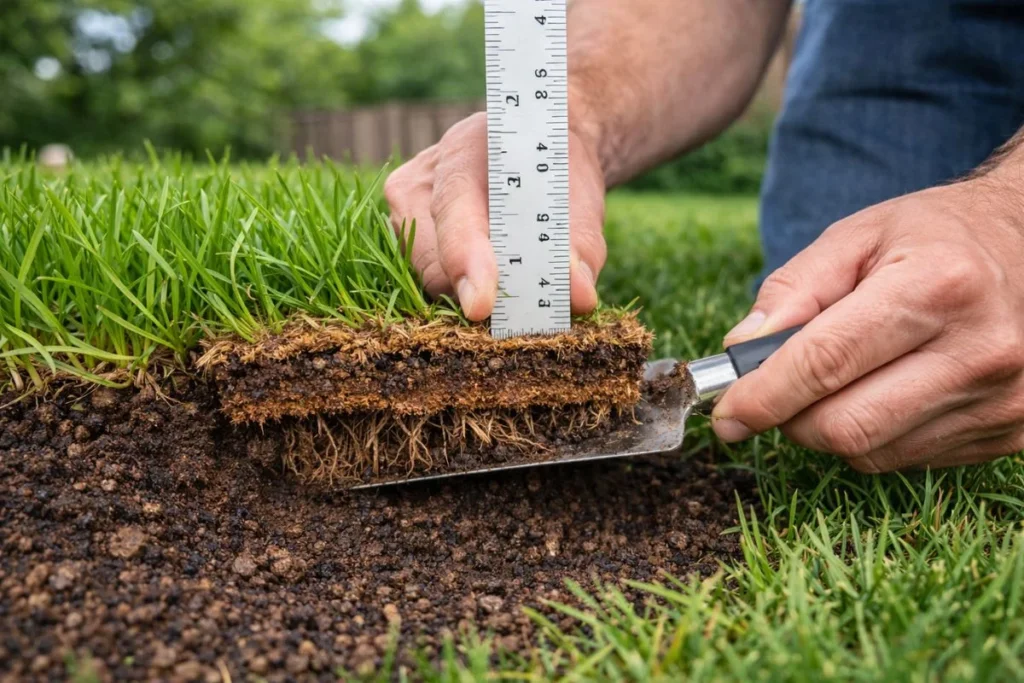
How to Measure Lawn Thatch
Follow these steps:
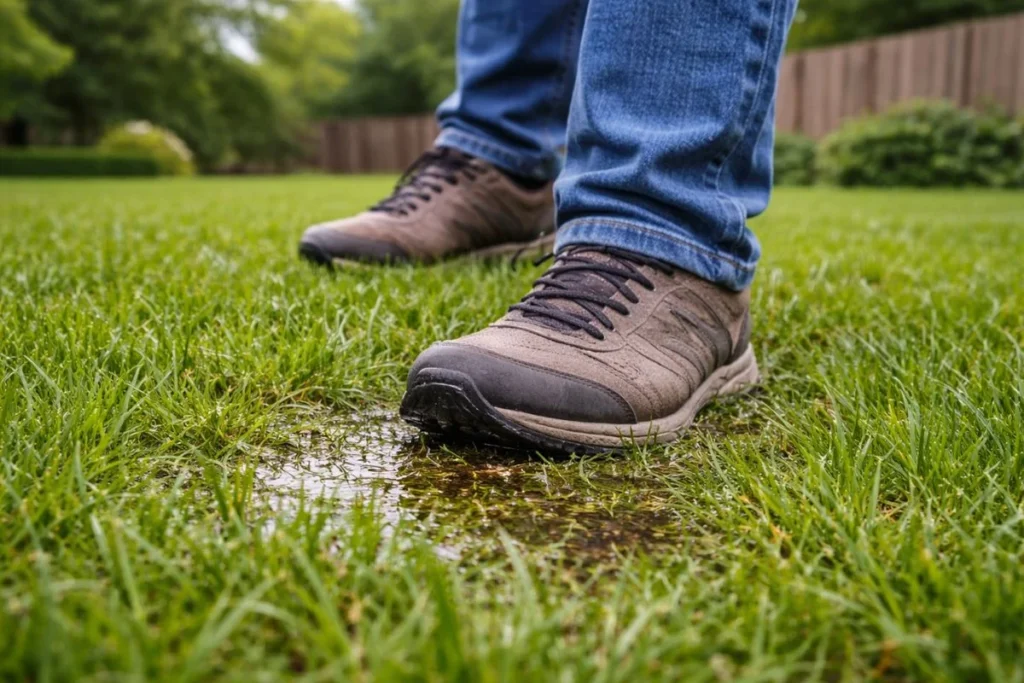
- Use a shovel or trowel.
- Cut a small wedge 2 to 3 inches deep.
- Identify the brown layer above the soil.
- Measure its thickness with a ruler.
Check several areas for accuracy.
Measuring prevents unnecessary dethatching.
What Your Measurement Means
- Under ½ inch → Lawn is healthy
- Around ½ inch → Monitor conditions
- Over ¾ inch → Action may be required
Always confirm lawn stress before choosing dethatching.
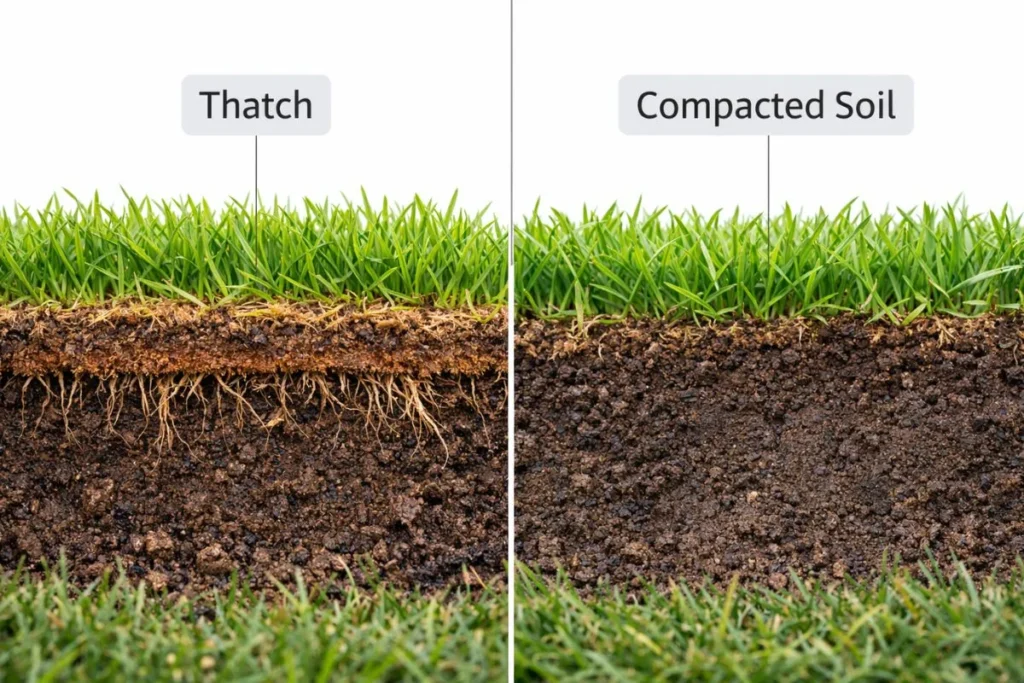
Thatch vs. Soil Compaction
Homeowners often confuse these problems.
Lawn thatch
- Above the soil
- Made of plant debris
- Feels spongy
Soil compaction
- Inside the soil
- Caused by traffic or clay
- Feels hard
You can test compaction by pushing a screwdriver into the soil. If it is hard to push in, compaction may be present.
Some lawns have both problems.
If soil compaction is part of the issue, read our complete guide on aeration lawn to learn when and how to fix it properly.
Benefits of Dethatching Your Lawn
If lawn thatch is too thick, removing it can:
- Improve water absorption
- Help fertilizer reach roots
- Increase root growth
- Improve grass density
Only dethatch if thickness exceeds recommended levels.
Do You Really Need to Dethatch?
- Measure the thatch thickness.
- Is it more than ½ inch?
- Is your lawn showing stress signs?
- If yes, plan dethatching during active growth.
- Many lawns improve without mechanical dethatching. If grass growth remains healthy and water slowly absorbs into the soil, improving aeration and watering habits may solve the problem naturally.
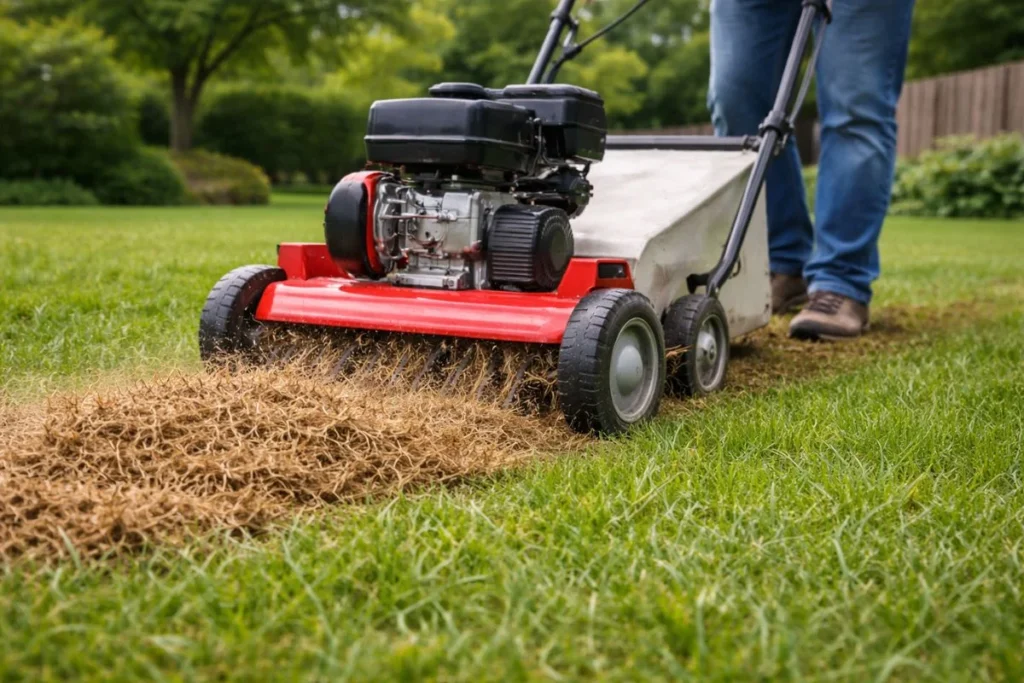
Step-by-Step: How to Dethatch Properly
- Mow slightly shorter than usual.
- Choose a dethatching rake or machine.
- Adjust settings to pull up the thatch layer.
- Make one pass across the lawn.
- Make a second pass in another direction if needed.
- Rake and remove debris completely.
Avoid removing all thatch in one session if the layer is very thick.
When to Dethatch Based on Your Region
Timing matters.
Northern US (cool-season grasses)
Early fall is best. Spring is possible but may encourage weeds.
Southern US (warm-season grasses)
Late spring or early summer during active growth.
Transition zone
Match timing to grass type.
Always dethatch during active growth so the lawn recovers faster.
Dethatching Tool and Cost Comparison
General cost overview in the United States:
- Manual rake → Low cost, high effort
- Power dethatcher rental → Moderate cost
- Professional service → Higher cost, low effort
Choose based on lawn size and physical ability.
What to Do After Dethatching
After dethatching:
- Remove loose debris
- Water lightly
- Overseed thin areas
- Apply balanced fertilizer after initial recovery
- Avoid heavy traffic for 2 to 4 weeks
Proper aftercare helps the lawn fill in faster.
Recovery Timeline After Dethatching
Week 1: Lawn looks thin
Week 2–3: New growth begins
Week 4+: Lawn starts filling in
Keep soil slightly moist during recovery.
How to Prevent Thatch Buildup
Prevention steps:
- Water deeply but not too often
- Use proper fertilizer rates
- Aerate compacted soil
- Mow at recommended height
- Support soil biology with organic matter
Healthy soil reduces lawn thatch naturally.
Can Severe Thatch Require Gradual Treatment?
If the layer is very thick, removing everything at once may shock the lawn.
In severe cases:
- Dethatch in stages
- Combine with core aeration
- Add compost topdressing
Gradual correction is safer.
Common Myths About Lawn Thatch
Myth 1: Every lawn needs yearly dethatching.
Most lawns need it only when thickness exceeds ½ inch.
Myth 2: Moss is thatch.
Moss is a plant. Thatch is plant debris.
Myth 3: More dethatching is always better.
Too much removal damages roots.
FAQ About Lawn Thatch
Is lawn thatch dangerous?
No. A thin layer is beneficial.
How often should I check my lawn?
Once per year is enough for most lawns.
Can overwatering increase lawn thatch?
Yes. Excess moisture slows oxygen flow in soil.
Final Thoughts
Over the years, I have worked with many lawns that struggled because of thick thatch, and I have also seen lawns damaged by removing too much of it. Lawn care is about balance. A thin layer of thatch protects roots and supports healthy growth, but a thick layer creates stress. The smartest approach is simple: measure first, improve soil health, and only dethatch when the layer is too thick. When you understand how lawn thatch works, you can make confident decisions and keep your lawn healthy year after year. In many lawns I have evaluated, improving soil health alone reduced thatch buildup without the need for aggressive dethatching.