
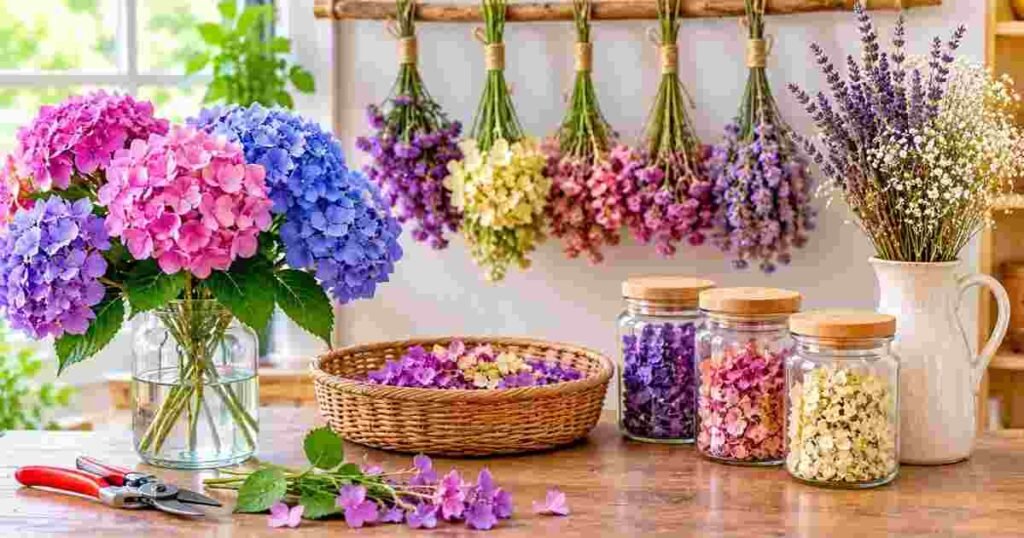
By late summer most gardens have more blooms than anyone can put in a vase. Instead of letting the last lavender, hydrangeas, and roses fade on the stem, you can dry them and keep a piece of the garden inside for the whole winter. Drying flowers is cheap, needs almost no equipment, and works with plants many of us already grow along the lawn edge or in a sunny border. Here is what to pick, when to cut it, and which drying method suits which flower.
Thank you for reading this post, don't forget to subscribe!Which garden flowers dry best?
Some flowers almost dry themselves; others turn brown and shapeless whatever you do. The reliable ones have papery petals, small flower heads, or a lot of structure:
– Lavender: keeps its color and its scent and is the classic first project.
– Strawflower (helichrysum) and statice: their petals are already dry to the touch, so they look the same after drying as before.
– Hydrangea: best left on the plant until the heads start to feel slightly papery in early autumn, then cut and finished indoors.
– Yarrow, globe amaranth, and celosia: hold their shape and color well, ideal for filling out a bouquet.
– Roses: dry well if picked as tight buds or just opening; fully open roses tend to drop their petals.
– Ornamental grasses and seed heads: add height and movement, and cost nothing if you already grow them.
Fleshy flowers with lots of water in the petals, such as lilies or tulips, are harder. They can work with silica gel, but they are not the place to start.
When and how to cut
Timing matters more than the method. Cut on a dry day, mid-morning, once the dew has gone but before the afternoon heat makes the stems droop. Wet flowers go moldy before they dry.
Choose blooms that are just short of their peak. A flower keeps opening a little while it dries, so a bloom cut at full size often looks overblown and loses petals a week later. Cut stems longer than you think you need, at least 20 to 30 cm, so you have room to tie and trim them, and strip off most of the leaves: they hold moisture and slow everything down.
Method 1: air drying (the easiest)
Air-drying suits lavender, statice, strawflower, yarrow, grasses, and small roses.
1. Make small bunches of five to ten stems. Large bunches trap moisture in the middle.
2. Tie them with a rubber band rather than string. Stems shrink as they dry and a rubber band keeps its grip.
3. Hang them upside down in a dark, dry room with some air movement: a spare room, a wardrobe or a dry attic. A damp shed or a steamy kitchen will not work.
4. Leave them for two to three weeks. They are ready when the stems snap cleanly instead of bending.
Hanging them head down keeps the stems straight and the flower heads upright once you turn them over. Darkness is what keeps the colour: the same bunch dried on a sunny windowsill comes out pale and beige.
Method 2: silica gel (for shape and color)
Silica gel is a drying sand sold in craft shops. It is the best option for roses, zinnias, dahlias, and other flowers whose shape you want to keep.
Pour a layer into an airtight box, set the flower heads on it face up, then gently spoon more gel between and over the petals until they are covered. Close the lid and wait two to seven days depending on the size of the bloom. The petals should feel dry and crisp. Brush off the gel with a soft paintbrush. The gel can be dried in a low oven and used again.
Method 3: pressing (for flat flowers and leaves)
Pansies, violas, cosmos, small ferns, and autumn leaves press beautifully. Place them between sheets of baking paper inside a heavy book, add more books on top, and leave them for two to four weeks without peeking too often. Pressed flowers are perfect for cards, frames, and bookmarks rather than vases.
Method 4: glycerin (for foliage)
Eucalyptus, beech, and other leafy branches can be preserved with glycerin so they stay soft and flexible instead of brittle. Mix one part vegetable glycerin with two parts hot water, crush the bottom few centimeters of the stems, and stand them in the mixture for two to three weeks until the leaves change color and feel supple. They will darken, but they will not crumble.
Common mistakes
– Cutting after rain or watering: the most common reason for mold.
– Drying in sunlight: colors fade fast.
– Bunches that are too big: the center stays damp and rots.
– Waiting until flowers are fully open: petals fall off later.
– Displaying them in a bathroom: humidity softens dried flowers and makes them droop.
Making them last indoors
Dried flowers can look good for a year or more if you treat them right. Keep them away from direct sun, radiators and damp rooms. Dust them every few weeks with a hairdryer on the cool setting held well back. A light mist of unscented hairspray helps fragile heads such as hydrangea hold together. When a bunch finally looks tired, put it on the compost and start again next summer.
If your garden does not give you enough for a full arrangement, or you want varieties you cannot grow in your climate, a specialist shop can fill the gaps. For example, the Croatian florist sells ready-made bouquets of dried and preserved flowers that mix well with homegrown stems. Combining a few bought pieces with your own lavender and grasses gives a fuller bouquet without losing the personal touch.
A final tip
Start small. One bunch of lavender hung in a dark wardrobe this weekend will teach you more than any guide. By the time the lawn needs its first spring mowing, you will know which of your flowers are worth drying next year, and you will have had something from the garden on the table all winter.