 Skip to content
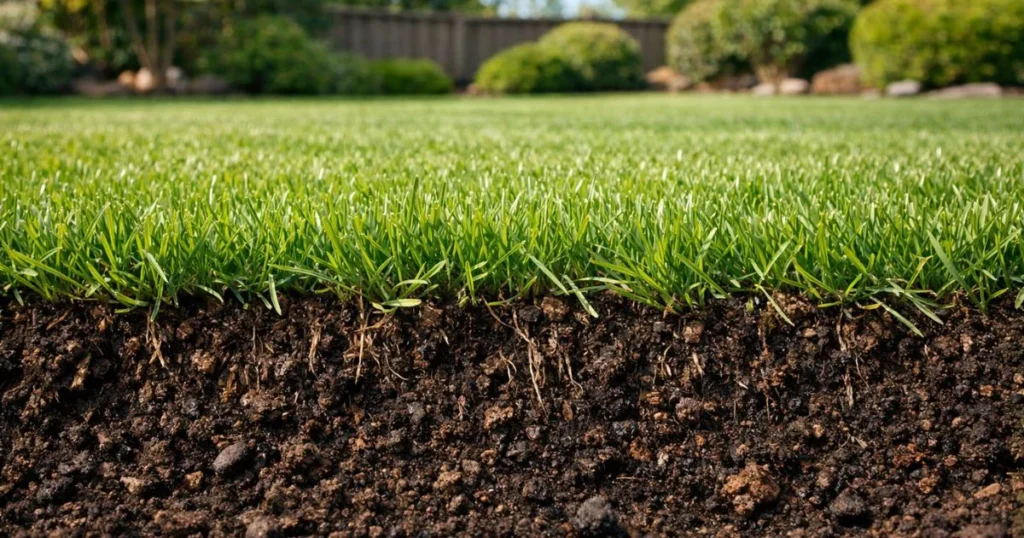
I have stood on lawns that looked fine from a distance but failed up close. Thin grass. Hard soil. Bare spots that kept coming back no matter what product was used. Like many homeowners, I started with regular fertilizer. The lawn turned green fast, then faded. Watering more did not help. Mowing better did not fix it either.
The real problem was under the grass. The soil was tired and compacted. That is where worm castings made a difference for me. They did not give fast color, but they fixed what fertilizer could not. Once the soil improved, the grass followed. This guide is written for people dealing with the same frustration and looking for a safer, long-term fix.
- What Are Worm Castings?
- Are Worm Castings Safe for Lawns, Pets, and Kids?
- How Worm Castings Benefit Your Lawn
- Worm Castings and Lawn Health
- How to Apply Worm Castings to Your Lawn
- How Much Worm Castings to Use on Larger Lawns
- Worm Castings and Grass Types
- When Will You See Results?
- Worm Casting Tea for Lawns
- How to Make Worm Casting Tea
- Do Worm Castings Replace Lawn Fertilizer?
- Worm Castings vs Lawn Fertilizer
- Dealing With Earthworm Castings in Your Lawn
- Troubleshooting Excess Surface Castings
- Common Questions About Worm Castings for Lawns
- How Worm Castings Fit Into Lawn Care
- Conclusion
Key Takeaways
- Worm castings improve lawn soil slowly and safely.
- They do not burn grass and are safe for pets and children.
- Most lawns show improvement within 2 to 4 weeks.
- Castings support soil health but do not replace fertilizer.
- One or two applications per year are usually enough.
What Are Worm Castings?
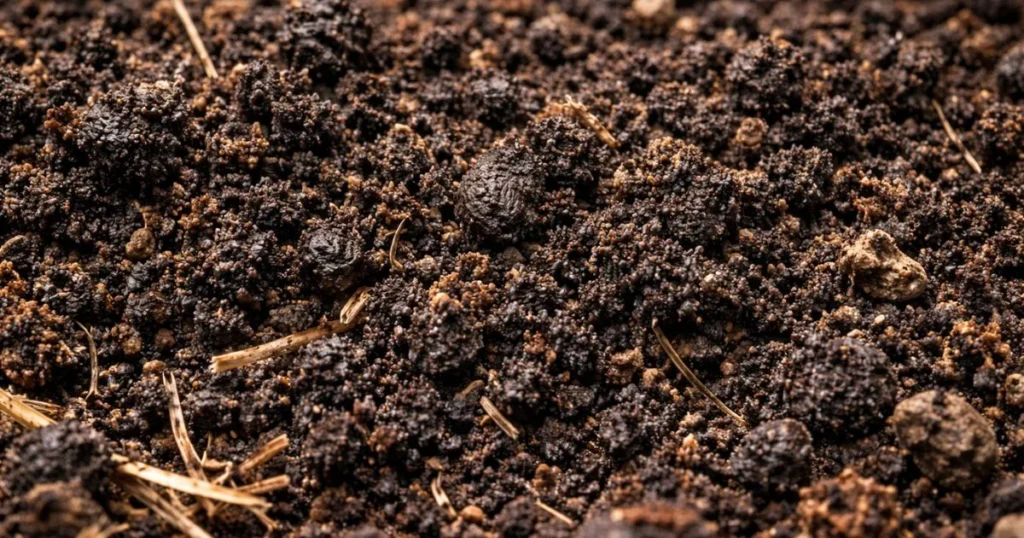
Worm castings are the waste left behind by earthworms.
They look like dark, fine soil.
They contain organic matter, nutrients, and helpful microbes.
These help grass grow in a steady and safe way.
Are Worm Castings Safe for Lawns, Pets, and Kids?
Yes. Worm castings are safe.
They do not burn grass.
Safe for pets and children.
They contain no harsh chemicals.
You can apply them without fear of damaging your lawn.
How Worm Castings Benefit Your Lawn
Improved Soil Structure
Worm castings loosen compacted soil.
This allows roots, water, and air to move freely.
Natural Fertilization
Nutrients release slowly over time.
Grass feeds at a steady pace.
Boosts Microbial Activity
Castings add helpful microbes to soil.
These microbes help grass absorb nutrients better.
Worm Castings and Lawn Health
Disease Resistance
Strong soil supports strong grass.
Healthy grass handles stress better.
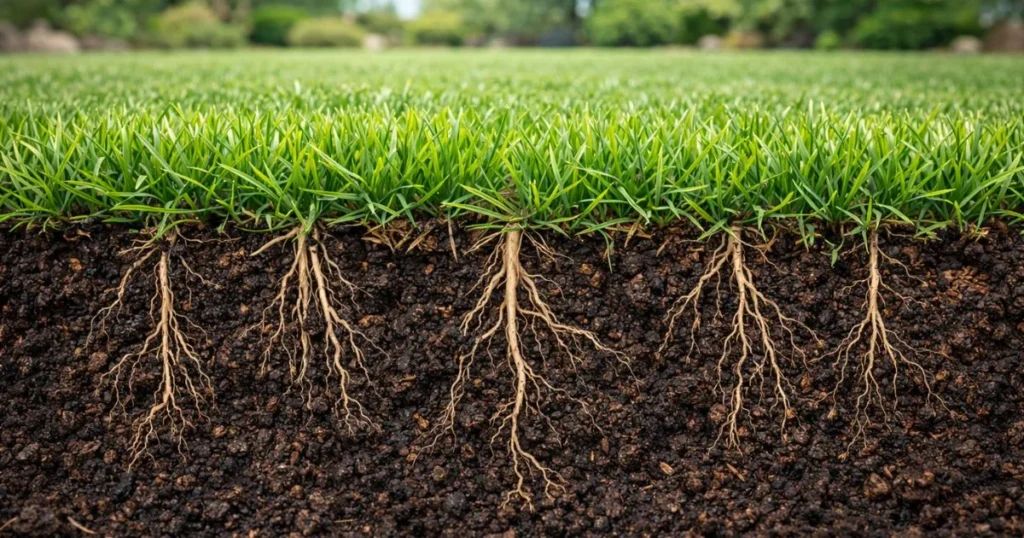
Enhanced Root Growth
Roots grow deeper and thicker.
This helps grass handle heat and dry weather.
Thatch Breakdown
Microbes help break down old plant matter.
This reduces thatch over time.
How to Apply Worm Castings to Your Lawn
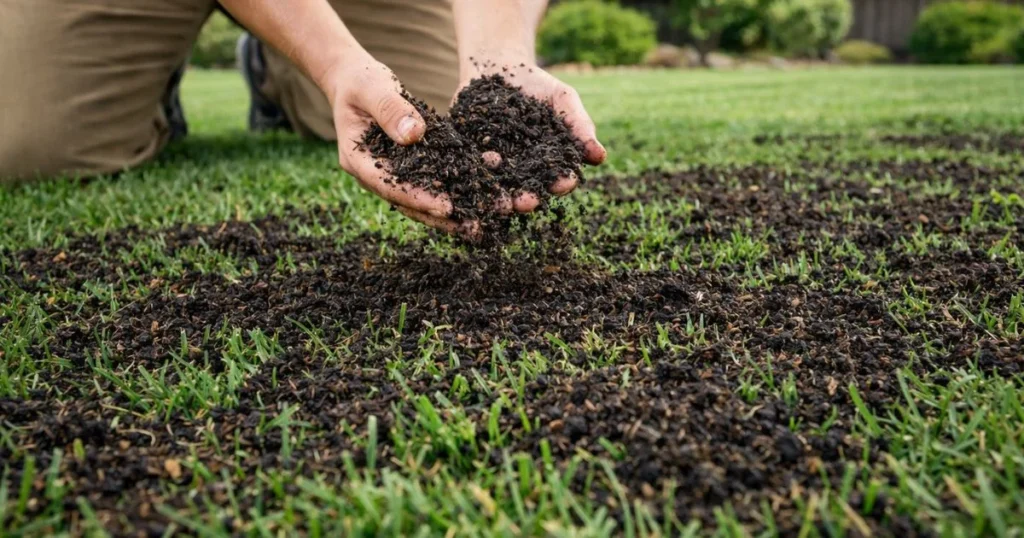
Top Dressing
Spread a thin layer across the lawn.
Use 5 pounds per 100 square feet.
Water lightly after spreading.
Mixing with Compost
Mix castings with compost before spreading.
This helps cover large areas more easily.
Application Timing
Apply in spring or fall.
These seasons support root growth and recovery.
How Much Worm Castings to Use on Larger Lawns
| Lawn Size | Worm Castings Amount | Application Frequency |
|---|---|---|
| 100 sq ft | 5 pounds | 1–2 times per year |
| 500 sq ft | 25 pounds | 1–2 times per year |
| 1,000 sq ft | 50 pounds | 1–2 times per year |
Common and safe amounts:
- 100 sq ft: 5 pounds
- 500 sq ft: 25 pounds
- 1,000 sq ft: 50 pounds
Always spread evenly.
Do not leave piles on the grass.
Worm Castings and Grass Types
Worm castings work on all lawn grasses.
- Cool-season grasses respond best in spring and fall
- Warm-season grasses respond best from late spring through summer
The soil benefits stay the same.
Only timing changes.
When Will You See Results?
Worm castings work slowly.
They focus on long-term soil health.
Most lawns show changes in 2 to 4 weeks.
Early signs include:
- Softer soil
- Better grass color
- Stronger growth after mowing
Full improvement builds across the season.
Worm Casting Tea for Lawns
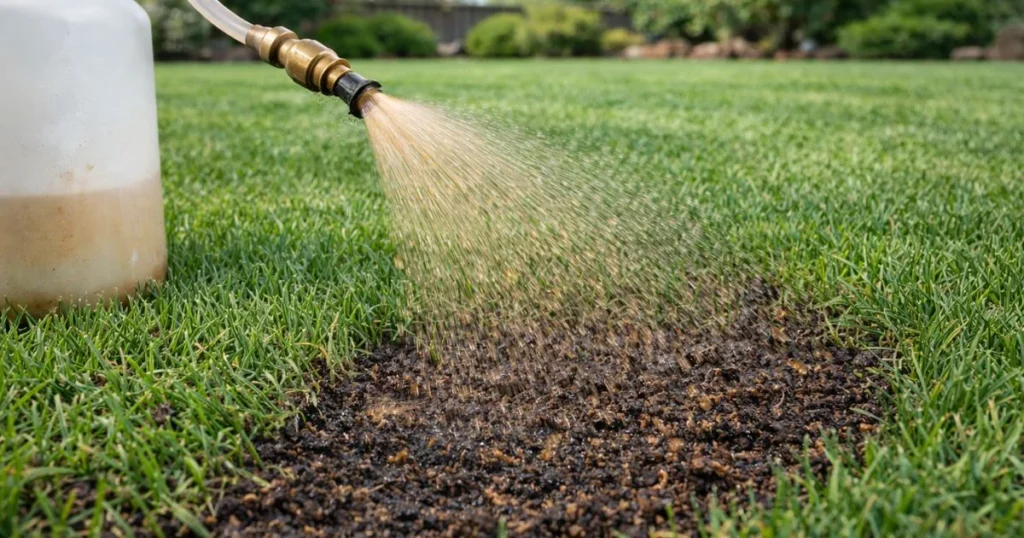
Worm casting tea is a liquid made from castings and water.
It delivers microbes and nutrients faster than dry castings.
Best times to use it
- During active growth
- On thin or stressed lawns
- When quick soil contact helps
Apply with a sprayer or watering can.
Spray evenly over grass and soil.
Tea supports lawn health but does not replace dry castings.
How to Make Worm Casting Tea
- Fill a 5-gallon bucket one-third full with worm castings.
- Add water to fill the bucket.
- Let it steep for 24 to 48 hours. Stir once or twice.
- Strain the liquid before use.
- Dilute one part tea with five parts water for lawn spraying.
Use the tea within 24 hours after brewing for best results.
Do Worm Castings Replace Lawn Fertilizer?
Worm castings improve soil quality.
They are low in nitrogen.
For best results:
- Use castings to build soil health
- Add fertilizer only if grass shows nutrient needs
This approach supports steady lawn improvement.
To understand how fertilizer nutrients and numbers work before adding them with worm castings, read our complete guide on lawn fertilizer numbers explained.
Common Mistakes to Avoid
- Using too much and leaving piles on the lawn.
- Expecting fast green-up like chemical fertilizer.
- Skipping watering after application.
- Applying on heavily compacted soil without aeration.
- Using worm castings as the only nutrient source.
If you have ever seen brown tips or patchy damage after feeding, review the warning signs in our guide on over fertilization lawn symptoms.
Worm Castings vs Lawn Fertilizer
| Feature | Worm Castings | Lawn Fertilizer |
|---|---|---|
| Speed of Results | Slow and steady | Fast green-up |
| Soil Improvement | High | Low |
| Risk of Burn | None | Possible |
| Pet and Kid Safety | Safe | Depends on product |
Dealing With Earthworm Castings in Your Lawn
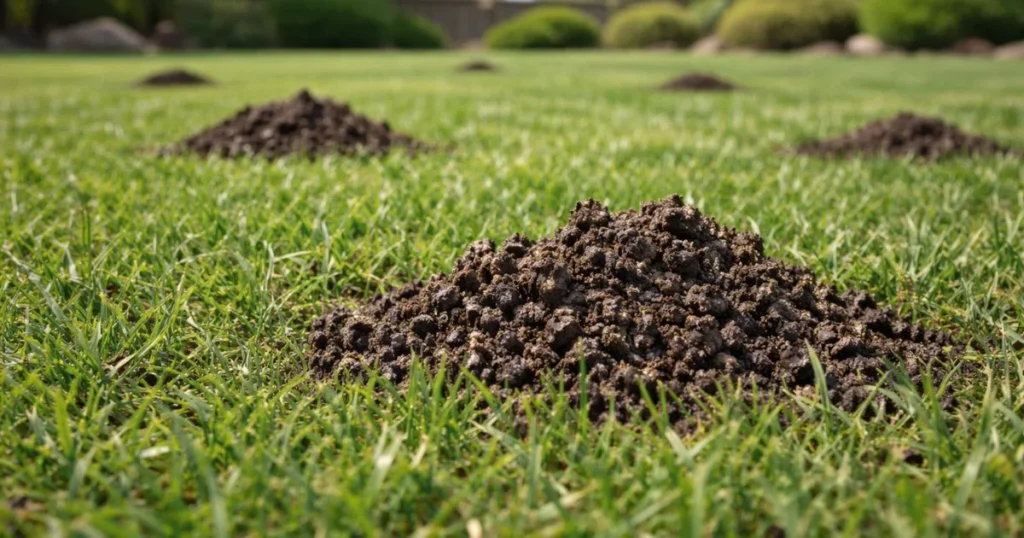
Small soil piles may appear on the surface.
This is normal and harmless.
If they become an issue:
- Let them dry and brush them away
- Raise mowing height slightly
- Avoid compacting the soil
Do not use chemicals to remove worms.
They help your lawn.
Troubleshooting Excess Surface Castings
If castings appear too often:
- Aerate compacted soil
- Reduce excess organic debris buildup
- Improve drainage if soil stays wet
- Brush casts away only when dry
These steps control the surface mess without harming soil health.
Common Questions About Worm Castings for Lawns
Can worm castings burn grass?
No. They are gentle and safe.
How often should I apply them?
Once or twice a year is enough.
Should I water after applying?
Yes. Light watering helps castings settle into soil.
Are worm castings worth it long term?
Yes. They improve soil over time and reduce lawn problems later.
| Feature | Worm Castings | Lawn Fertilizer |
|---|---|---|
| Speed of Results | Slow | Fast |
| Soil Improvement | High | Low |
| Risk of Lawn Burn | None | Possible |
| Pet and Kid Safety | Safe | Depends on product |
How Worm Castings Fit Into Lawn Care
Worm castings work best when combined with:
- Lawn aeration
- Overseeding
- Proper mowing height
- Basic soil care
They support the system under the grass.
Conclusion
After working with different lawns and soil conditions, one thing stays true. Grass health depends on soil health. Worm castings are not a quick fix, and they should not be treated like one. Used the right way, they improve soil structure, support roots, and help lawns handle stress better over time. I have seen steady improvement in lawns that struggled for years once castings became part of regular care. For homeowners who want fewer problems, safer inputs, and results that last, worm castings are a practical and reliable choice.