 Skip to content
- What Are Natural Weeds and Weed Killers?
- Identify Which Method Is Perfect to Kill Weeds on Your Lawn
- Natural vs Chemical Herbicides:
- Best DIY Natural Weed Killers That Won't Harm Lawn Grass and Plants
- How to Apply Weed Killers Effectively
- Seasonal and Regional Considerations
- Store-Bought Weed Killer Products Option in the USA
- Weed Prevention Methods
- Pros and Cons
- Frequently Asked Questions
What Are Natural Weeds and Weed Killers?
Thank you for reading this post, don't forget to subscribe!Weeds are plants growing on soil has no value. They take water, sunlight, and nutrients from your lawn with other beneficial plants and harm them, reducing your efforts. Example of some common lawn weeds are dandelions, clover, crabgrass, and chickweed.
A natural weed killer is a thing that can control these plants using non-chemical ingredients, such as vinegar, salt, soap, heat, or corn gluten meal. It works in two ways:
Contact killers If weeds persist after planting, remove them by handling or by using natural killer methods.
Pre-emergent killers Take action to prevent weed seeds and roots in deep of the soil before planting.
Identify Which Method Is Perfect to Kill Weeds on Your Lawn
This is a critical problem that identifies the right methods when treating. It is most effective to choose the right one to keep the same nature of your lawn. Some identified are:
- A lawn surrounded by grass: Use a selective manner only. Treat individual weeds, hand-pull them, or use a pre-emergent like corn gluten meal that targets germinating seeds without harming established turf.
- In a driveway, patio, gravel path, or between pavers: May use non-selective natural killers such as vinegar or boiling water since there don’t need grass protection.
- In a vegetable or flower garden: Use targeted hand application or a soap-based contact spray, applied carefully around desirable plants which you want to kill.
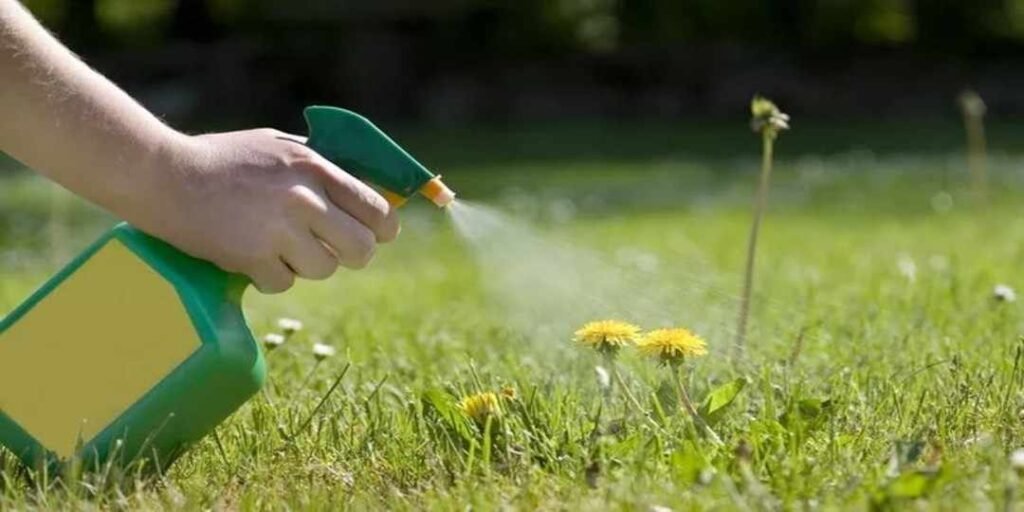
The golden rule: any vinegar-, salt-, or soap-based spray is non-selective and will damage or kill grass where it applies. So, there’s a need for a small spraying system or a single spraying machine applied on specific weeds/harmful leaves to kill the specific plants.
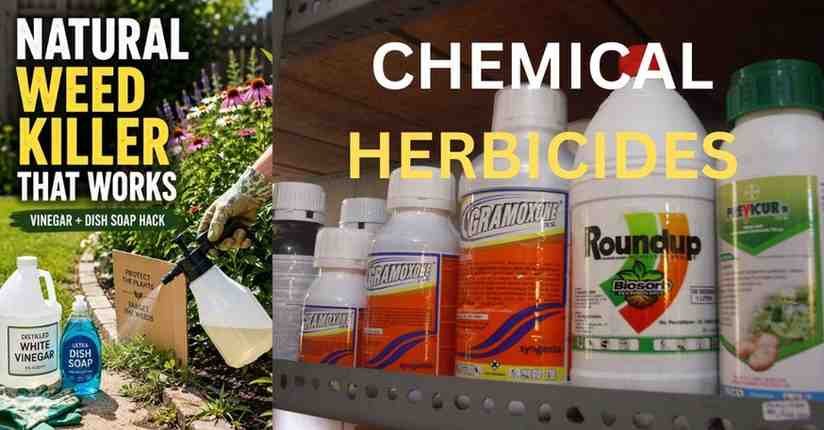
Natural vs Chemical Herbicides:
| Factor | Natural Weed Killers | Chemical Herbicides |
| Speed | Visible results in hours to a few days | It takes more time even 1-3 weeks |
| Selectivity | Mostly non-selective (kills any plant) | Many are selective for lawns |
| Soil impact | Breaks down quickly, minimal residue | Some leave residue for weeks |
| Safety | Generally safer for pets, kids, and pollinators when contracted | Requires action before and after application |
| Root kill | Often only kills top growth; regrowth may occur | Systemic types kill the root, with less chance to regain. |
| Coverage | Spot treatment, prevention, hard surfaces, safe for all | Large-scale lawn weed control |
In short, natural killers are safe, and chemicals are less safe to use.
Best DIY Natural Weed Killers That Won’t Harm Lawn Grass and Plants
1. Vinegar and Salt Weed Killer
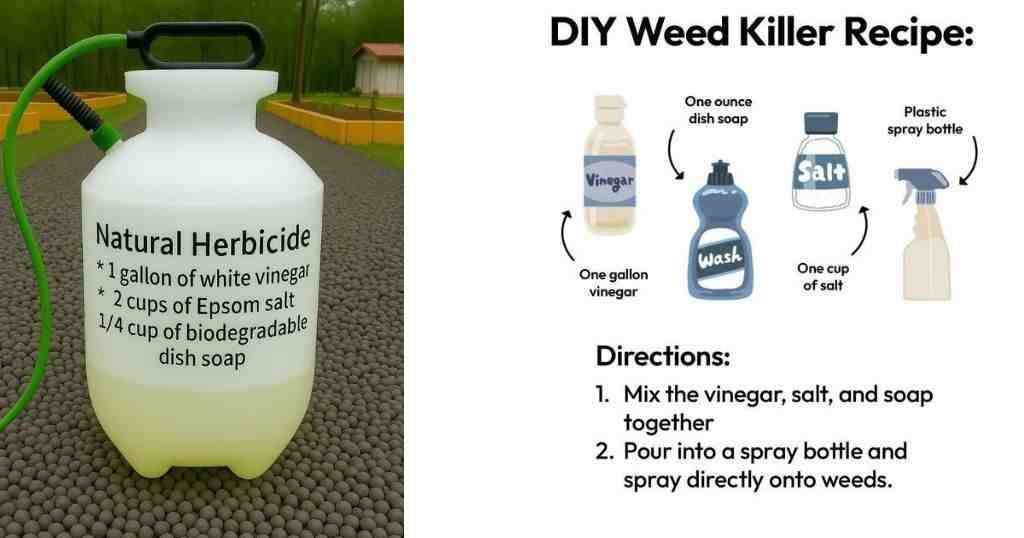
Vinegar/ acetic acid and salt both pull moisture out of plant leaves, drying them up fast. Mix 1 gallon of white vinegar + 1 cup of salt. Use only your specific area of selected weeds— never spray it across your lawn. For a weed inside your grass, us brush instead of whole spraying.
Normally, 5-10% vinegar is used for the preparation of light-weed killers, but a 10-20% vinegar solution and a 15-20% solution of salt.
2. Boiling Water Method
After boiling, just pour boiling water directly on a weed — it cooks the plant instantly. Cheap and chemical-free, but it scalds anything it touches, including grass. Best for cracks in pavement or isolated weeds, not lawn weeds.
3. Vinegar, Dish Soap, and Salt Spray
Adding 1 tablespoon of dish soap to the vinegar-salt mix makes it stick better to leaves, which makes it work faster — but also makes it more likely to damage nearby grass. Spray on hot, sunny days, and keep it off your lawn edges.
Vinegar + Salt + Soap Weed Killer Mix
- 1 liter white vinegar (5% acidity)
- ½–1 cup salt (100–200 g)
- 1 tablespoon liquid dish soap
This solution may damage your lawn grass, so try to use as requirements.
4. Baking Soda for Weeds
Sprinkle about 1 teaspoon directly on weed leaves and at the base. It raises salt and pH levels in the soil over than normal (6.0- 7.0), dehydrating the plant. So, for heavy use, it can effect the surroundings of the applied area of grasses. Best for sidewalks and perriferal area of lawn.
5. Cornmeal Gluten as a Pre-Emergent
This is the only option that’s actually marketed as lawn-safe — but it only stops weed seeds from rooting, it won’t kill weeds already growing. Apply in early spring and fall. Skip it if you’re about to overseed your lawn, since it’ll block new grass seed too. Research results on how well it actually works are mixed.
6. Rubbing Alcohol Spray
Mix 2 tablespoons rubbing alcohol with 1 quart water and spray directly on weed leaves. It strips their protective coating and causes quick wilting, often within hours. Like the others, it’s not selective, so target it carefully.
If a method requires spraying liquid over an open area, assume it is non-selective and keep it off your lawn.
How to Apply Weed Killers Effectively
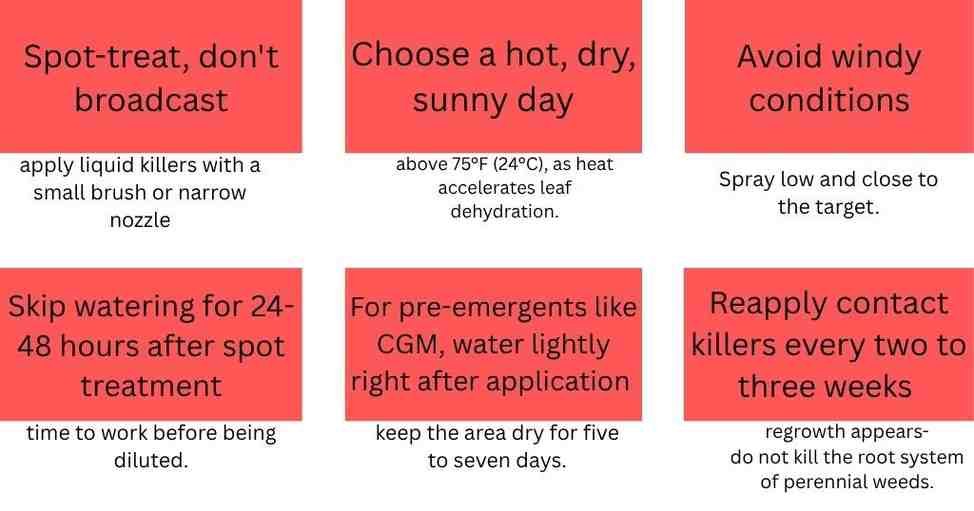
Application technique determines whether your grass survives:
Seasonal and Regional Considerations
Timing changes everything with natural weed control:
- Early spring: Apply corn gluten meal once soil temperature holds at 55°F (13°C) for five to ten consecutive days, typically when forsythia blooms. This is the most important window for stopping crabgrass and other annual weeds before they germinate.
- Late summer to early fall: A second CGM application helps prevent cool-season weeds like chickweed and henbit.
- Hot summer months: Contact killers such as vinegar and alcohol sprays perform best, since intense sunlight become leaf dehydration.
- Cool, wet, or shaded regions: Expect slower results from contact sprays. Rely more on pre-emergents, mulching, and hand-pulling, since dampness lets weeds recover.
- Always check your forecast. A 48-hour rain-free window is essential after applying any natural product, or it will wash away before it works perfectly.
Store-Bought Weed Killer Products Option in the USA
If DIY mixing is not for you, several OMRI-listed and pet-safe commercial products are available:
- Sea-salt-based sprays that kill common broadleaf weeds and crabgrass to the root, ideal for driveways and hardscapes.
- High-concentration acetic acid sprays (around 20%, far stronger than household vinegar) for fast contact kill on tough, established weeds.
- Essential-oil based formulas using clove and cinnamon oil, OMRI-certified for organic gardening and safe around vegetable beds.
- Herbicidal soap sprays that dehydrate weeds on contact without leaving harmful soil residue, suited for spot treatment in lawns and around trees.
- Granular corn gluten meal lawn products, sold as both a weed preventer and a slow-release organic fertilizer.
Always confirm a product is labeled “non-selective” or “selective” before buying.
Weed Prevention Methods
Killing existing weeds is only half the job. Prevention keeps them from coming back:
- Mow at the correct height for your grass type. Taller grass shades the soil, blocking the sunlight weed seeds need to germinate.
- Mulch garden beds and borders with 2-3 inches of organic material to smother weed seedlings.
- Apply corn gluten meal twice yearly as described in Section 6 to build a long-term pre-emergent barrier.
- Overseed thin patches with quality grass seed so turf, not weeds, fills bare ground.
- Water deeply but infrequently to encourage deep grass roots, which outcompete shallow-rooted weeds for moisture.
- Top-dress with compost periodically to improve soil health, since a thriving lawn naturally resists weed invasion.
A dense, healthy lawn is still the most effective natural weed killer of all.
Pros and Cons
Advantages:
- Safer for children, pets, and pollinators when used as directed
- Breaks down quickly without leaving long-term soil residue
- Inexpensive, especially for DIY recipes
- Reduces dependence on synthetic herbicides
Limitations:
- Most contact sprays are non-selective and will damage grass if misapplied
- Often kills only visible top growth, allowing perennial weeds to regrow from the root
- Requires more frequent reapplication than chemical herbicides
- Pre-emergents like corn gluten meal need precise timing and a dry window to work
- Not practical for large infestations without significant labor
Frequently Asked Questions
Will vinegar kill my grass along with the weeds?
Yes. Vinegar is non-selective and will damage or kill grass on contact. Use it only as a precision spot treatment, never as a broadcast spray over turf.
Is corn gluten meal safe for a lawn with established grass?
Yes. It is safe for mature turf and even feeds it nitrogen. It will not kill weeds that have already sprouted, and it should not be used on newly seeded lawns.
How long before I see results from a natural weed killer?
Contact sprays like vinegar or salt mixtures typically show wilting within hours to two days. Pre-emergents like corn gluten meal take several weeks to show their effect, since they prevent germination rather than killing existing plants.
Can natural methods fully replace chemical herbicides?
For light to moderate weed pressure, yes, especially when combined with strong lawn care practices. For severe infestations of perennial or rhizome-spreading weeds, natural methods may need to be paired with manual removal.
What is the single best natural method to protect my lawn while killing weeds?
Hand-pulling combined with seasonal corn gluten meal applications offers the most reliable protection for grass, since neither method risks damaging turf.