 Skip to content
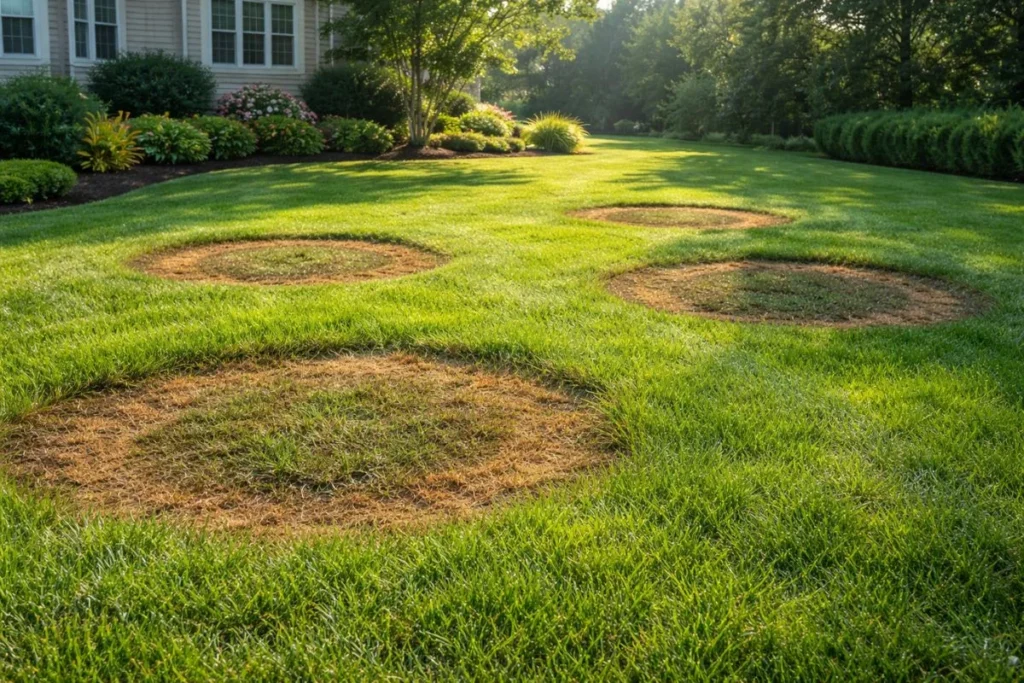
You step outside on a hot summer morning and notice brown circles spreading across your lawn. Just days ago it was green and healthy. You water more, thinking it is heat stress, but the patches keep growing. This is where many homeowners get frustrated. They spend money on fertilizer or extra watering, only to make the problem worse. Brown patch disease often looks like drought at first, which is why it spreads before people realize what is happening.
Brown patch is just one of several lawn diseases that create circular damage. If you are not fully sure what you are seeing, review our complete guide on lawn fungus identification before starting treatment. Over the years, I have seen this pattern repeat in many U.S. lawns, especially during humid summers when nights stay warm. Brown patch is not random. It follows clear weather triggers and lawn care habits. Once you understand how it starts and what feeds it, you can control it with simple, smart changes. In this guide, you will learn how to identify it early, treat it correctly, and prevent it from coming back.
Is It Brown Patch or Just Drought?
Before treating, confirm the problem.
Quick checklist:
- Are the brown areas circular?
- Do you see a dark ring around the edge?
- Does the lawn stay wet overnight?
- Are nights above 68°F?
If yes, it is likely brown patch disease.
If the browning looks even across the yard and improves after watering, it is more likely drought stress.
What Is Brown Patch Disease?
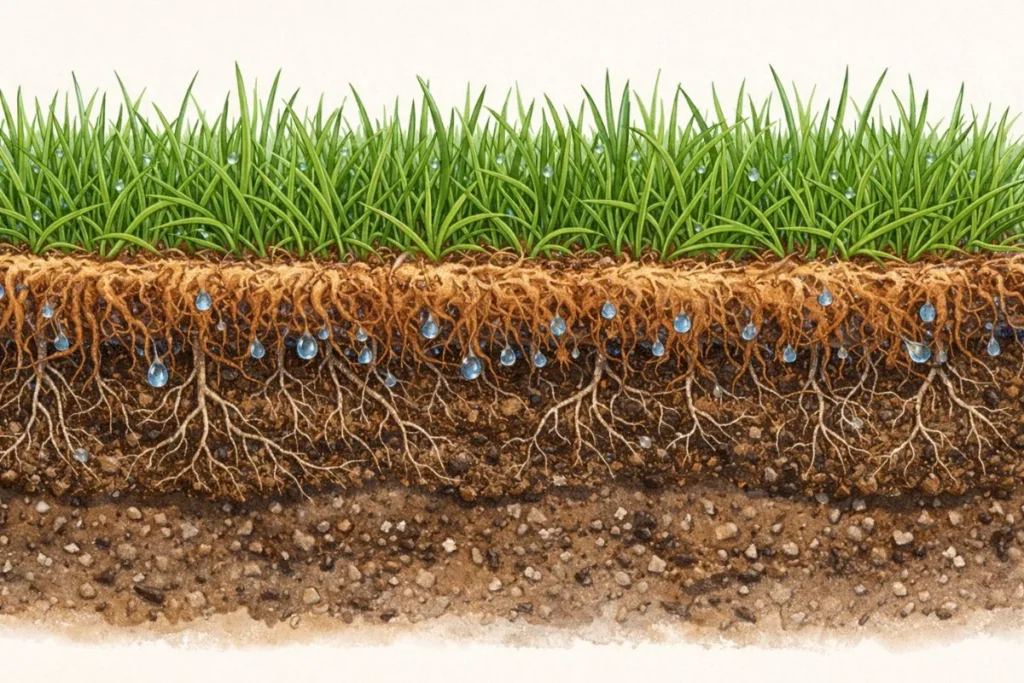
Brown patch disease is a fungal infection of grass blades. The fungus lives in soil and thatch year round. It becomes active during warm, humid weather.
High-risk conditions:
- Night temperatures above 68°F
- High humidity
- Leaf wetness lasting 8 to 12 hours
- Thick thatch
- Poor airflow
The fungus spreads quickly during hot summer nights.
How Brown Patch Develops Over Time
The fungus survives in old plant material in the soil. It waits for ideal weather.
When grass stays wet overnight, spores infect leaf tissue. Thick thatch traps moisture and heat. Compacted soil reduces drainage and increases humidity at the surface.
The disease first attacks leaf blades. Roots usually remain alive. That is why lawns often recover when temperatures cool.
What Does Brown Patch Look Like?
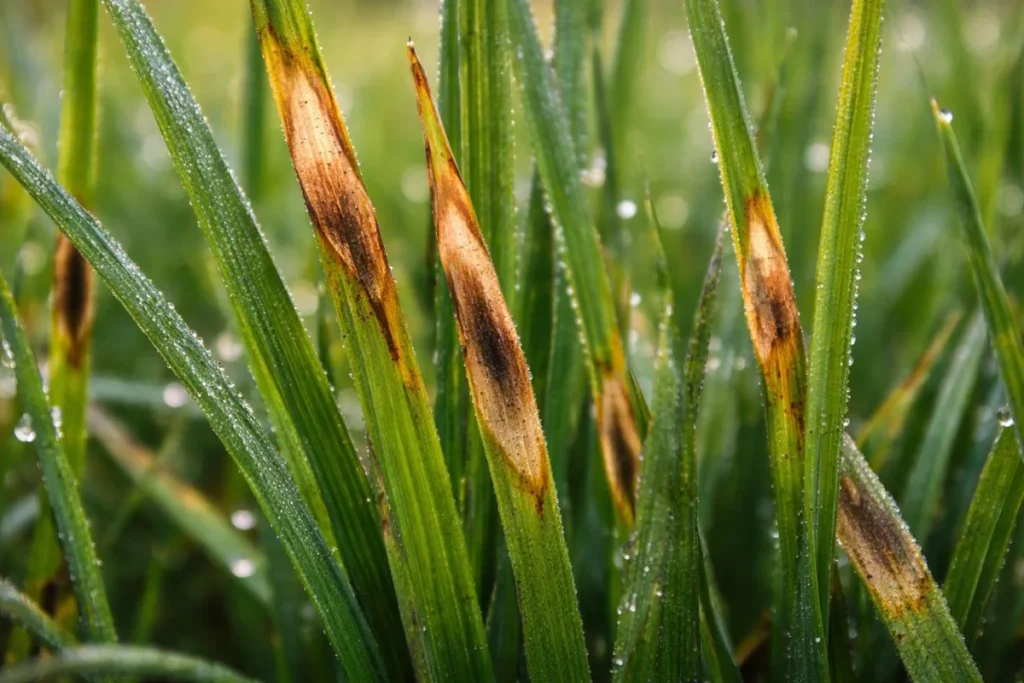
Common signs:
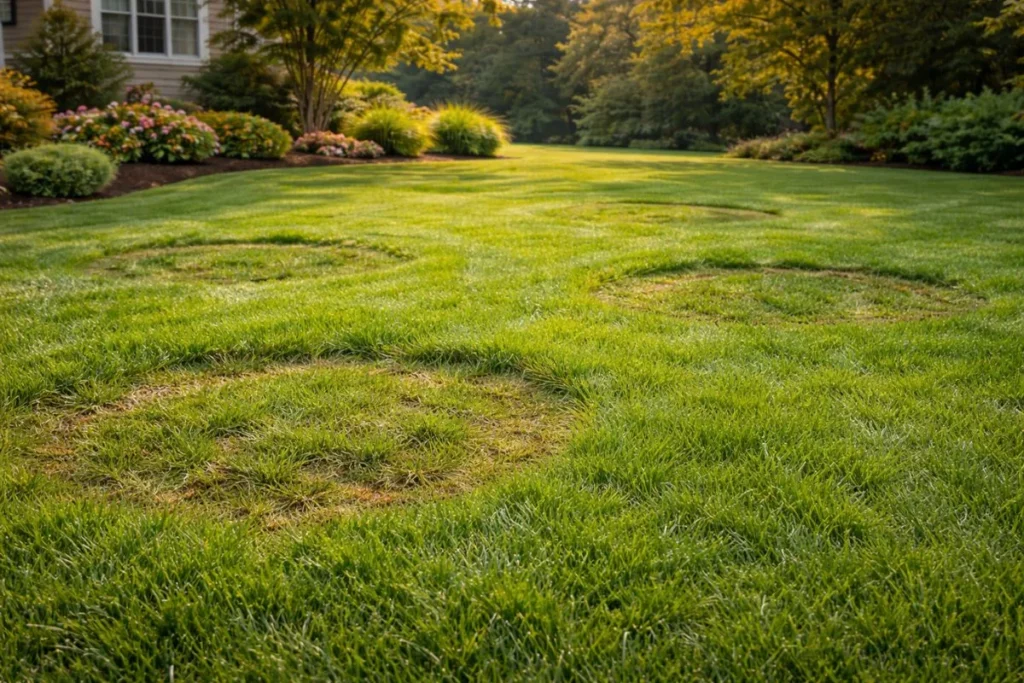
- Circular brown patches
- Patches from a few inches to several feet wide
- Dark smoke-like border
- Tan lesions on blades
- Thin white web in early morning
Grass Susceptibility Guide
High Risk:
- Tall fescue
- Perennial ryegrass
Moderate Risk:
- Kentucky bluegrass
Lower Risk:
- St. Augustine grass
- Zoysia grass
Rare:
- Bermudagrass
Cool-season lawns in the transition zone face the highest summer risk.
Brown Patch vs Other Lawn Problems
Brown Patch vs Drought
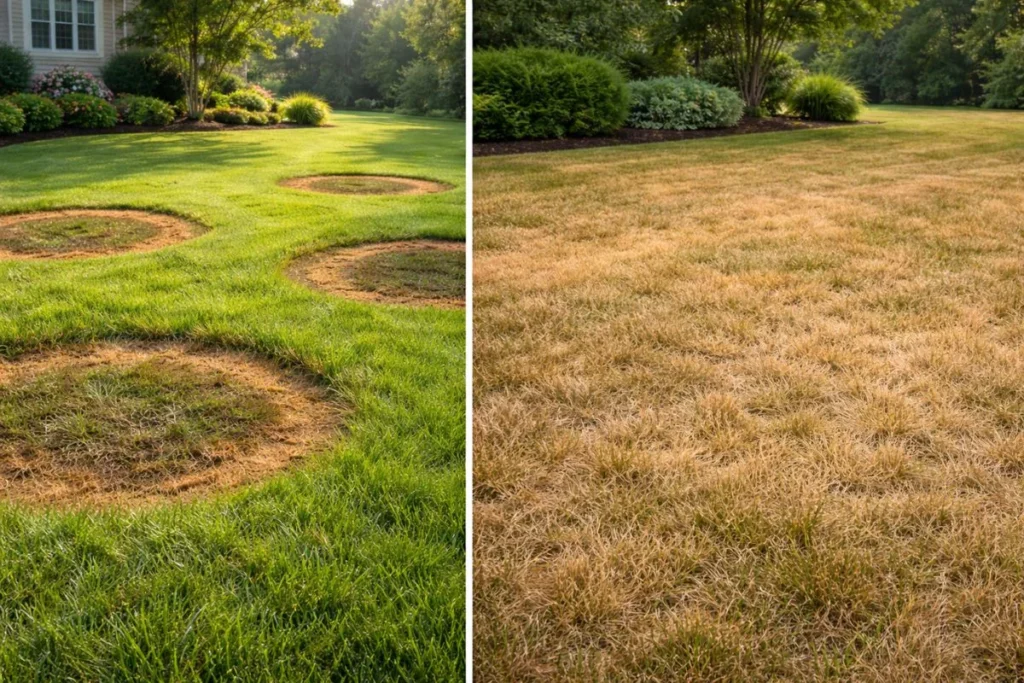
Drought is uniform. Brown patch forms circles.
Brown Patch vs Dollar Spot
Dollar spot makes small coin-sized spots. Brown patch forms larger patches.
Brown Patch vs Pythium
Pythium spreads in streaks and looks greasy. Brown patch spreads in circles.
Brown Patch vs Large Patch
Large patch affects warm-season grass in spring and fall. Brown patch mainly hits cool-season grass in summer.
Quick Lawn Problem Comparison
| Problem | Patch Shape | Main Trigger | Improves With Water? | Common Season |
|---|---|---|---|---|
| Brown Patch | Circular with dark border | Warm nights + humidity | No | Summer |
| Drought Stress | Uniform browning | Lack of water | Yes | Summer |
| Dollar Spot | Small coin-sized spots | Low nitrogen + moisture | No | Late spring / Summer |
| Pythium Blight | Greasy streaks | Heat + heavy rain | No | Summer |
How to Treat Brown Patch Disease Fast (7-Day Action Plan)
This is for homeowners who need a clear plan.
Day 1
Stop evening watering. Switch to early morning only.
Day 2
Mow at recommended height. Do not scalp.
Day 3
Bag heavy clippings if disease is active.
Day 4
Inspect drainage and reduce watering frequency.
Day 5–7
Apply fungicide if patches are spreading.
Most fungicides require reapplication every 14 to 21 days.
What Should You Do Based on Severity?
| Patch Condition | Recommended Action |
|---|---|
| Small patches, not spreading | Adjust watering schedule and monitor closely |
| Slowly expanding patches | Improve airflow, reduce nitrogen, monitor weekly |
| Fast spreading circles | Apply labeled fungicide immediately |
When to Use Fungicide
Use fungicide if:
- Lawn had brown patch last year
- Night temps stay above 68°F
- Humidity remains high
- Patches are expanding
Common active ingredients:
- Azoxystrobin
- Propiconazole
- Thiophanate-methyl
Rotate fungicide groups each season to prevent resistance.
Keep pets and children off treated areas until dry.
DIY vs Professional Treatment Cost
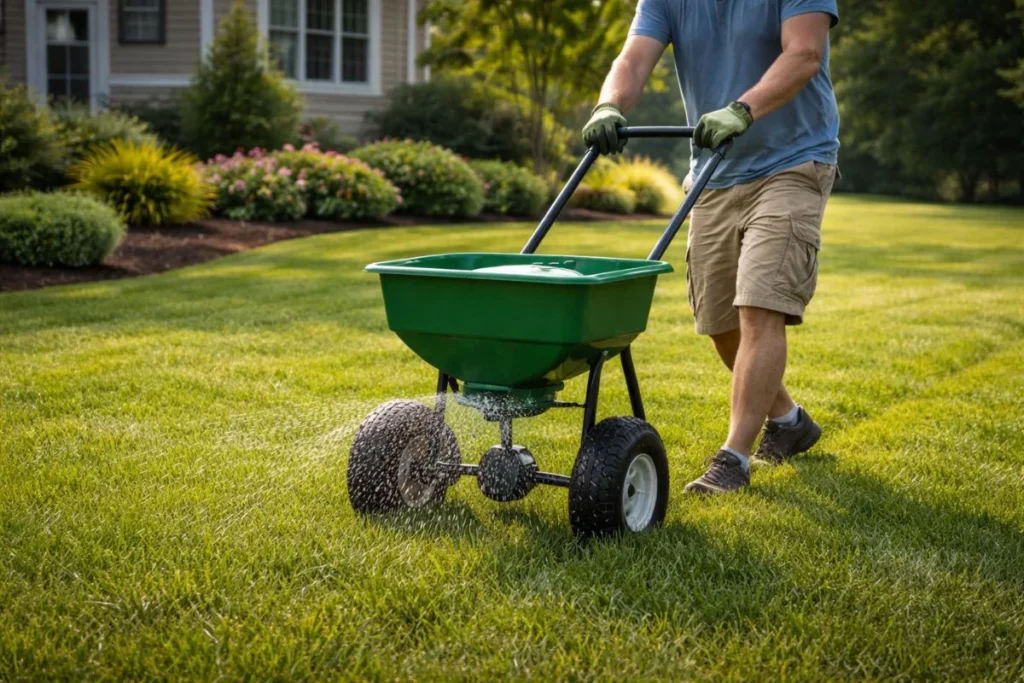
DIY fungicide treatment:
- Lower cost
- Requires correct timing
- Needs repeat applications
Professional lawn service:
- Higher cost
- Usually includes monitoring
- Often includes preventive program
Most homeowners can manage mild to moderate outbreaks themselves.
Brown Patch Treatment Cost Comparison
| Treatment Option | Estimated Cost | Best For |
|---|---|---|
| DIY Fungicide Application | $20 – $60 per treatment | Small to medium lawns |
| Preventive Seasonal Program | $150 – $400 per season | Lawns with repeat outbreaks |
| Professional Lawn Service | $300 – $800+ | Severe or large properties |
Cultural Control Strategy (Long-Term)
Good lawn habits reduce outbreaks.
- Mow at correct height
- Avoid heavy summer nitrogen
- Improve soil drainage
- Aerate compacted soil
- Reduce thatch
- Overseed with resistant varieties
Healthy turf resists infection better.
Risk Forecasting: When Should You Be Alert?
Watch your lawn closely when:
- Night temperatures stay above 68°F
- Humidity is high for several days
- Rainfall increases
- Grass remains wet in morning
These weather patterns increase outbreak risk.
Brown Patch Risk Level Guide
| Night Temperature | Leaf Wetness Duration | Risk Level |
|---|---|---|
| Below 60°F | Short (under 4 hours) | Low |
| 60°F – 68°F | Moderate (4–8 hours) | Medium |
| Above 68°F | Long (8+ hours) | High |
Seasonal Prevention Calendar (USA)
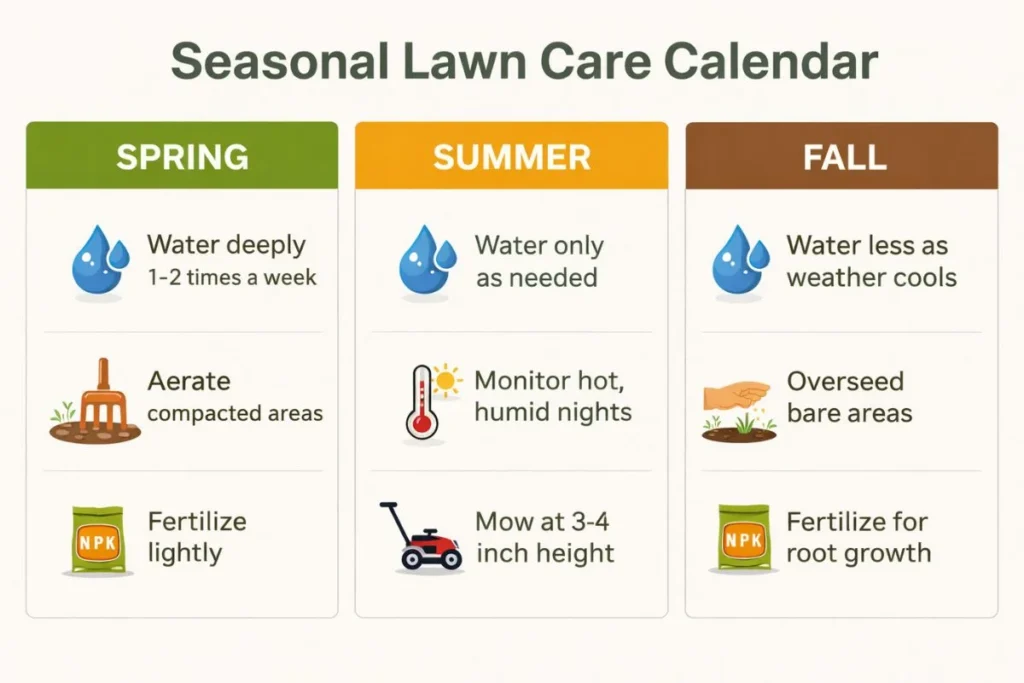
Early Spring
- Soil test
- Plan aeration
Late Spring
- Avoid heavy nitrogen
- Improve drainage
Early Summer
- Monitor temperatures
- Adjust watering schedule
Mid Summer
- Inspect weekly
- Apply preventive fungicide if history exists
Fall
- Aerate
- Overseed thin areas
Recovery Timeline
Mild cases:
- Grass often recovers in 2 to 3 weeks when weather cools.
Moderate cases:
- May need overseeding in early fall.
Severe cases:
- Dead patches may require reseeding.
If crowns remain alive, recovery is likely.
Is Brown Patch Dangerous?
Brown patch affects grass only. It does not infect pets or people.
However, thin turf allows weeds to move in.
Final Thoughts
Brown patch disease may look serious, but most lawns recover when handled correctly. In many real cases, the turning point came from adjusting watering time, reducing summer nitrogen, and improving airflow. The biggest mistake homeowners make is reacting with more water and more fertilizer, which fuels the fungus instead of the grass. Lawn health is about balance and timing. If you watch night temperatures, keep leaves from staying wet too long, and follow a seasonal prevention plan, brown patch becomes manageable. With steady care and early action, even a stressed lawn can return strong by fall.