 Skip to content
If you have ever stepped outside and noticed small brown circles spreading across your lawn, you know how frustrating it feels. One week the grass looks thick and green. A few days later, patches appear and slowly grow. Many homeowners assume it is drought and add more water. I have seen this mistake many times, and in many cases, the real cause turns out to be dollar spot fungus.
Dollar spot is one of several lawn diseases that create brown patches. If you are not fully sure what you are seeing, review our complete guide on lawn fungus identification before starting treatment. This lawn disease is very common across the United States, especially during warm days and cool nights with heavy dew. It spreads quietly and can make a healthy lawn look damaged fast. The good news is that dollar spot rarely destroys a lawn if you act early. With the right diagnosis and simple lawn care adjustments, you can stop the spread and help your grass recover.
- What Is Dollar Spot Fungus?
- Small Brown Circles in Lawn? How to Confirm Dollar Spot
- Dollar Spot Fungus Symptoms
- Life Cycle of Dollar Spot Fungus
- Disease Triangle: Why Dollar Spot Develops
- What Causes Dollar Spot Fungus?
- Grass Types Ranked by Susceptibility
- Nitrogen Strategy to Reduce Dollar Spot
- How Thatch Increases Risk
- Dollar Spot vs Brown Patch vs Red Thread
- Step-by-Step Dollar Spot Control Plan (Homeowner Focus)
- Cultural Control Methods
- Fungicide Treatment for Dollar Spot Fungus
- Fungicide Resistance and FRAC Rotation
- Seasonal Risk in the United States
- Does Dollar Spot Kill Roots?
- Dollar Spot Prevention Calendar
- Cost: Fertilizer vs Fungicide
- When to Call a Professional
- Final Thoughts on Dollar Spot Fungus
Quick Takeaways
- Dollar spot causes small 1–3 inch straw-colored patches.
- Low nitrogen is one of the biggest triggers.
- Long dew periods increase outbreaks.
- Most lawns recover with proper fertilization.
- Rotate fungicides to prevent resistance.
What Is Dollar Spot Fungus?
Dollar spot is a turfgrass disease caused by a fungus known as Clarireedia. In the past, it was called Sclerotinia homoeocarpa. Many older labels and guides still use the older name.
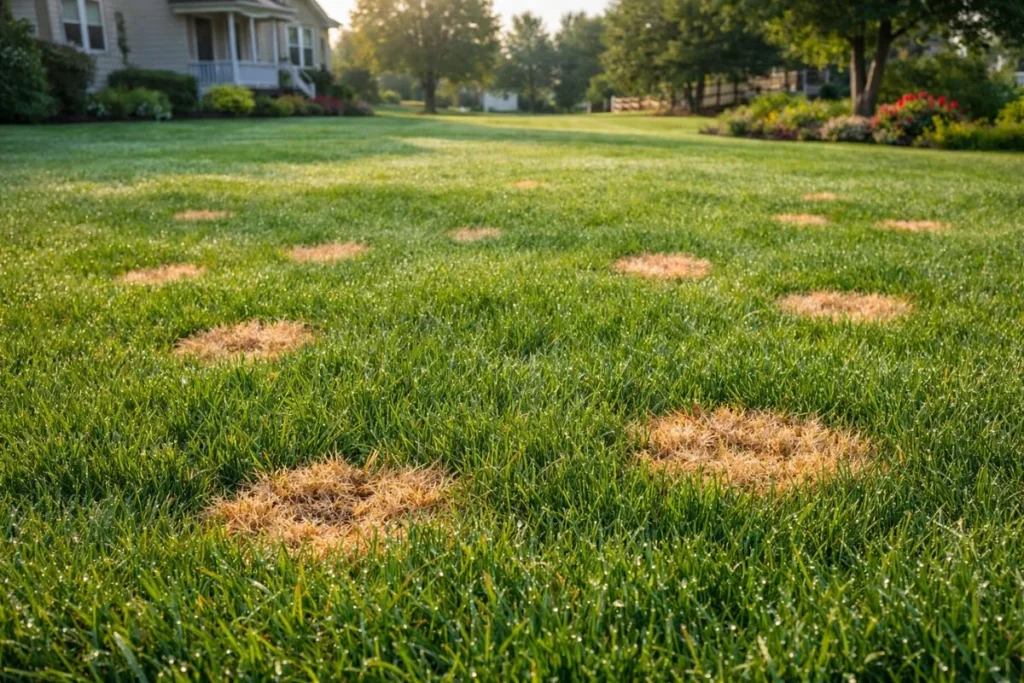
The disease attacks grass blades and creates small straw-colored spots. These spots are usually 1 to 3 inches wide.
Dollar spot lawn disease is most active in late spring, summer, and early fall. It spreads fast during warm days and cool nights with heavy dew.
Dollar spot fungus mainly affects:
- Kentucky bluegrass
- Perennial ryegrass
- Fine fescue
- Bentgrass
- Bermudagrass
Small Brown Circles in Lawn? How to Confirm Dollar Spot
Many homeowners first notice small brown circles and assume drought.
Here is how to confirm dollar spot fungus:
- Spots are small and round
- Patches are about coin size
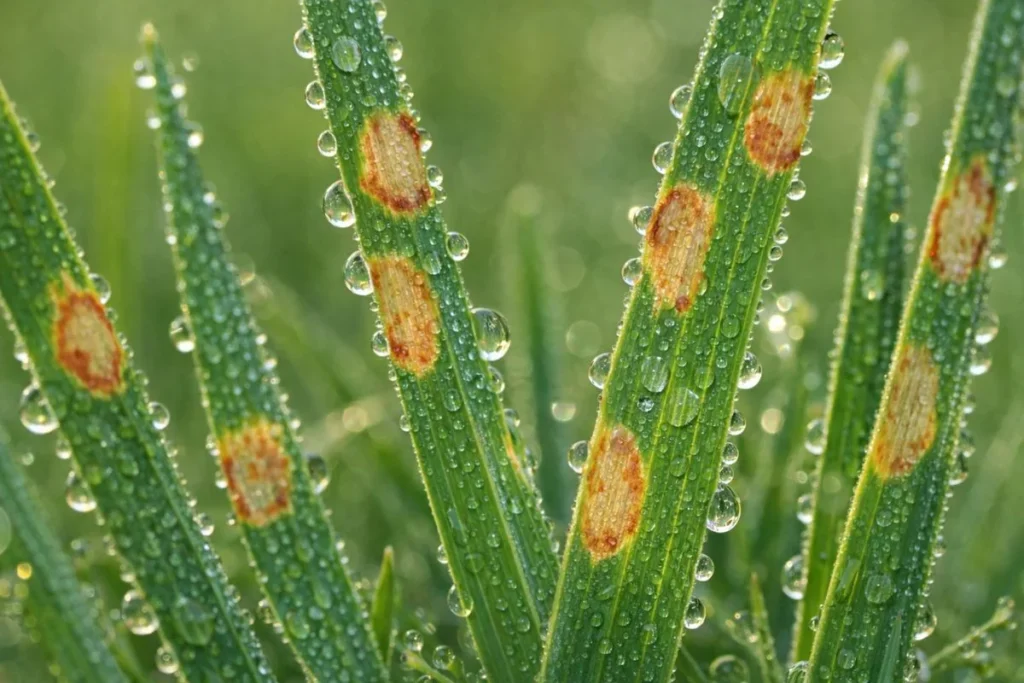
- Grass blades show tan lesions
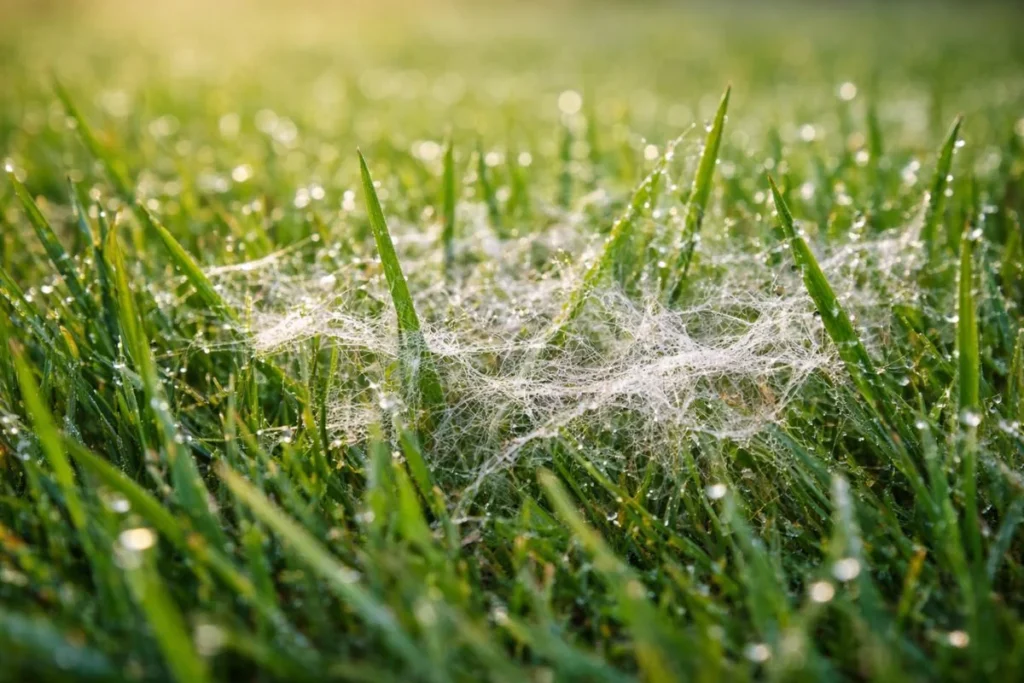
- White web-like growth appears early morning
If the grass turns green again after watering, it may be drought.
If spots remain and slowly expand, it is likely dollar spot lawn disease.
Dollar Spot Fungus Symptoms
Identifying dollar spot fungus early makes control easier.
Small Round Patches
The first sign is small, circular patches of dead grass.
Bleached Grass Blades
Individual blades develop small tan lesions with darker borders.
Web-Like Growth in Morning
White fungal growth may appear during heavy dew.
Spots Merge Over Time
Untreated patches can combine and form larger areas.
Life Cycle of Dollar Spot Fungus
Dollar spot fungus survives in infected debris and thatch.
It spreads through:
- Lawn mowers
- Foot traffic
- Rain splash
- Infected clippings
It becomes active when:
- Temperatures are 60°F to 85°F
- Nights are cool
- Leaf wetness lasts many hours
Disease Triangle: Why Dollar Spot Develops
Three factors must exist:
- Susceptible grass
- The fungus
- Moist environment
If one factor is reduced, disease pressure drops.
What Causes Dollar Spot Fungus?
Low Nitrogen Levels
Low nitrogen is a major trigger. Weak turf is more vulnerable.
High Humidity
Moisture helps infection start.
Poor Air Flow
Shade and tight spaces slow drying.
Compacted Soil and Thatch
These hold surface moisture.
Grass Types Ranked by Susceptibility
Highly susceptible:
- Creeping bentgrass
- Annual bluegrass
Moderately susceptible:
- Kentucky bluegrass
- Perennial ryegrass
- Fine fescue
More tolerant:
- Tall fescue
Nitrogen Strategy to Reduce Dollar Spot
For most lawns:
Apply 0.5 to 1 pound of nitrogen per 1,000 square feet during active growth.
Light, steady feeding works better than heavy doses.
Mild cases may improve within 7 to 14 days after nitrogen correction.
This approach is often enough for homeowners before using fungicide.
Should You Fertilize or Spray?
| Situation | Best First Action |
|---|---|
| Small scattered patches | Apply light nitrogen feeding |
| Lawn looks underfed | Correct fertility before spraying |
| Patches spreading quickly | Consider fungicide treatment |
| Repeated yearly outbreaks | Use a preventive program |
| Fungicide stopped working | Rotate FRAC groups |
How Thatch Increases Risk
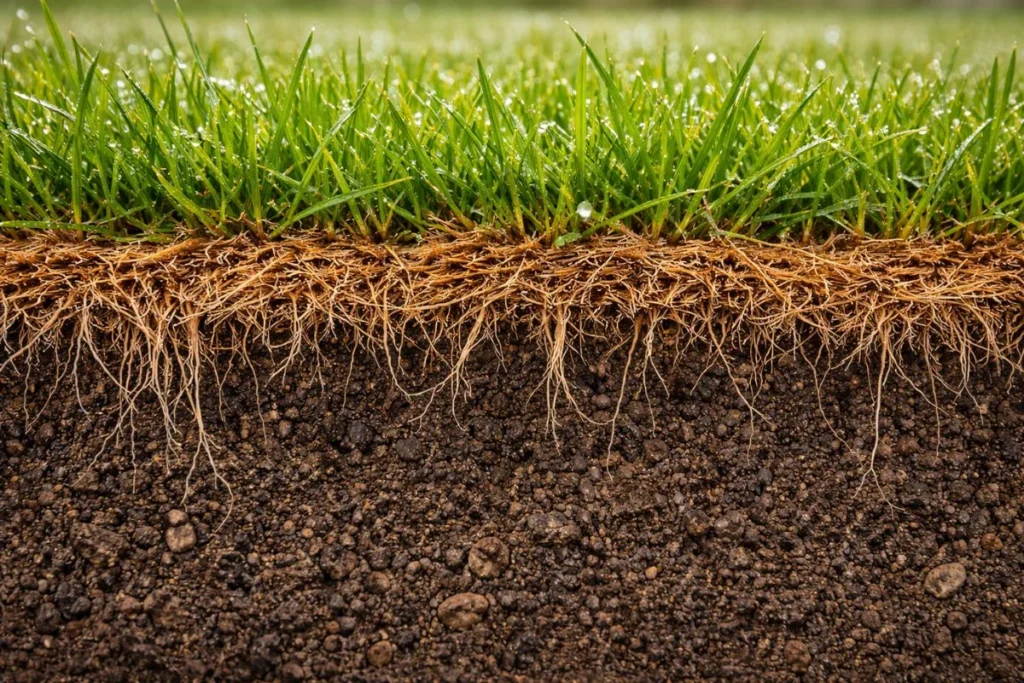
Thatch thicker than half an inch traps moisture.
Measure it by cutting a small wedge of turf and checking the brown layer.
Dethatching reduces humidity near grass blades.
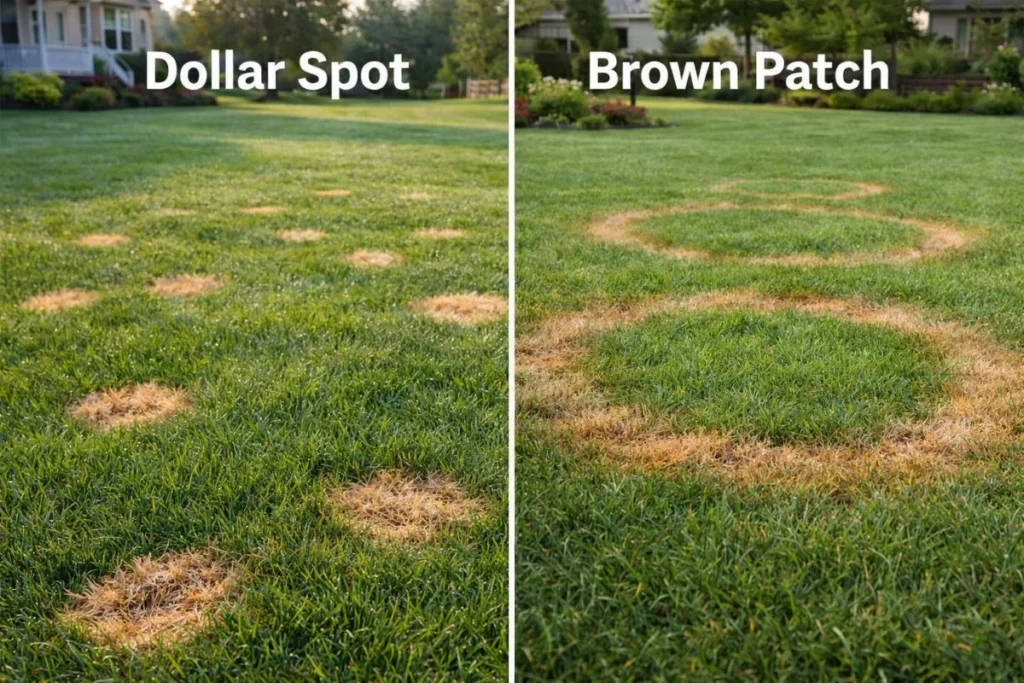
Dollar Spot vs Brown Patch vs Red Thread
| Disease | Patch Size | Key Sign |
|---|---|---|
| Dollar Spot | 1–3 inches | Small coin spots |
| Brown Patch | Large circles | Smoky ring border |
| Red Thread | Irregular | Pink/red threads |
Correct identification prevents wrong treatment.
Step-by-Step Dollar Spot Control Plan (Homeowner Focus)
- Confirm diagnosis
- Apply light nitrogen feeding
- Water early morning only
- Remove heavy dew
- Bag clippings temporarily
- Apply fungicide only if spreading continues
This plan reduces cost and unnecessary chemical use.
Cultural Control Methods
- Reduce leaf wetness
- Improve air circulation
- Raise mowing height slightly
- Aerate compacted soil
These steps support recovery.
Integrated Dollar Spot Control Plan
- Maintain steady nitrogen levels
- Reduce leaf wetness time
- Improve air circulation
- Monitor early symptoms
- Use fungicides only when necessary
Fungicide Treatment for Dollar Spot Fungus
Two types:
Contact Fungicides
Protect new growth.
Systemic Fungicides
Move inside plant tissue.
Rotate FRAC groups to avoid resistance.
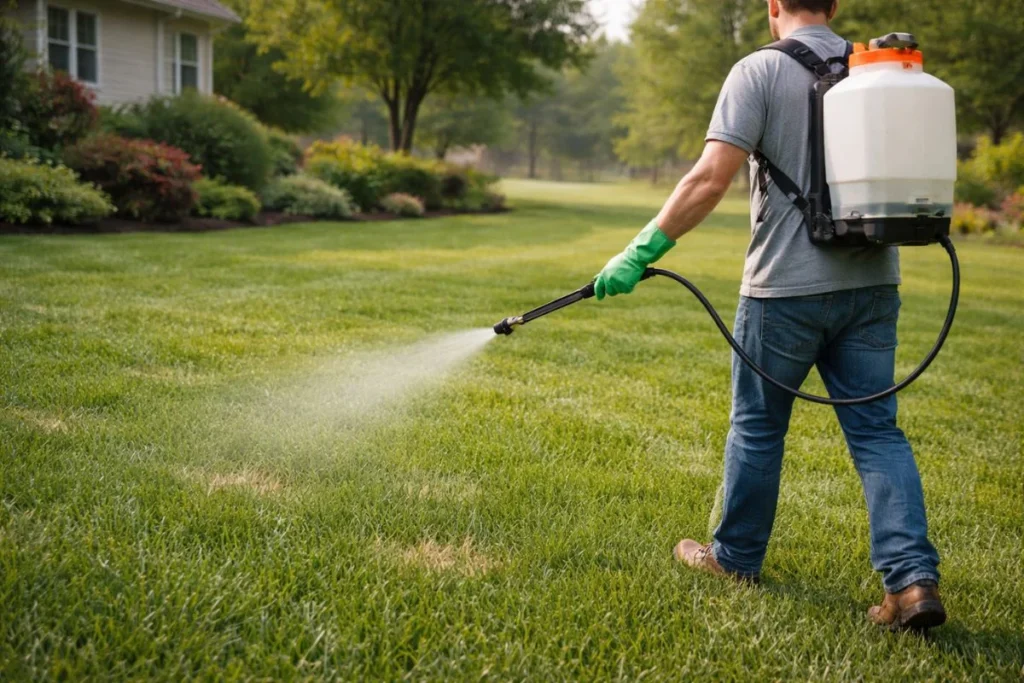
Fungicide Resistance and FRAC Rotation
Dollar spot fungus has developed resistance in many states.
To reduce resistance:
- Rotate chemical classes
- Avoid repeating same active ingredient
- Follow proper intervals
Failure to rotate may reduce effectiveness over time.
Seasonal Risk in the United States
Northern states: late spring to fall.
Southern states: cooler months.
Humid regions: higher risk.
Watch for warm days and cool, wet nights.
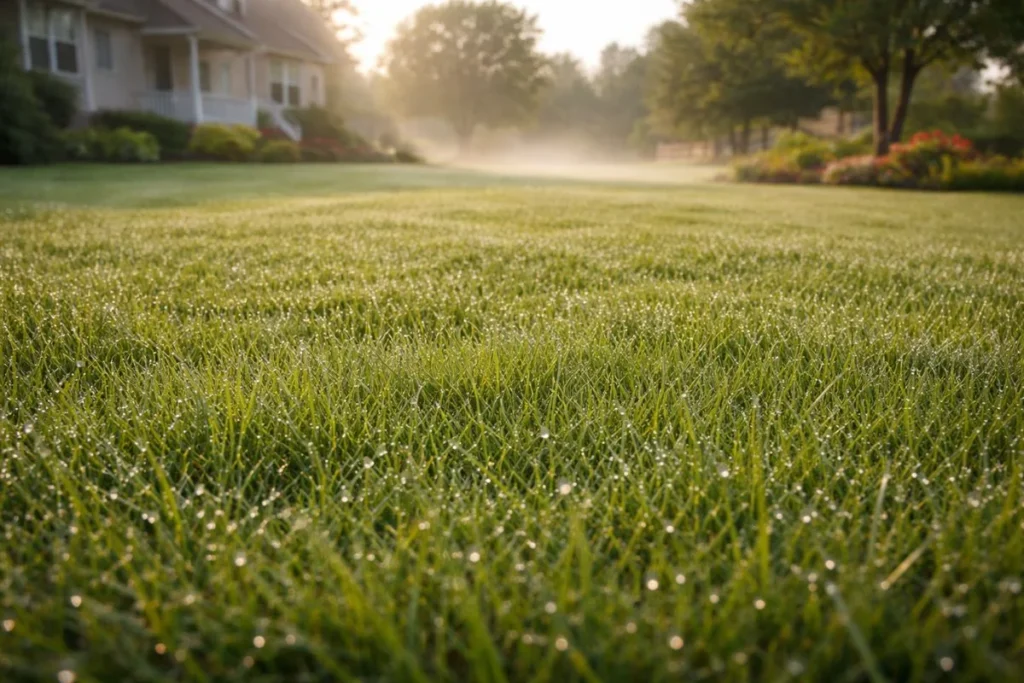
High-Risk Conditions for Dollar Spot
- Night temperatures between 60°F and 70°F
- Heavy morning dew
- High humidity levels
- Low nitrogen in soil
- Poor air circulation
Does Dollar Spot Kill Roots?
Dollar spot mainly damages leaves.
Roots and crowns usually survive.
This means lawns often recover with proper care.
Dollar Spot Prevention Calendar
Spring
- Apply balanced fertilizer
- Monitor dew
Summer
- Watch humidity
- Adjust mowing height
Fall
- Maintain nitrogen levels
- Reduce stress before winter
Preventive care reduces repeat outbreaks.
Cost: Fertilizer vs Fungicide
In many cases, nitrogen correction costs less than fungicide.
Fungicides are more expensive but may be needed for severe outbreaks.
Start with cultural and nutritional correction first.
When to Call a Professional
Call a lawn expert if:
- Disease spreads rapidly
- Fungicides fail
- Large areas decline
Professionals may use advanced rotation programs.
Final Thoughts on Dollar Spot Fungus
In my experience, dollar spot fungus is usually a sign that the lawn is under stress, not that it is beyond saving. Low nitrogen, long periods of moisture, and poor airflow create the perfect setup for infection. Once those issues are corrected, most lawns bounce back without long-term damage. Fungicides can help in severe cases, but strong nutrition and proper watering habits often make the biggest difference. When you understand what triggers dollar spot and respond early, you stay ahead of the problem and keep your lawn healthy throughout the season.