 Skip to content
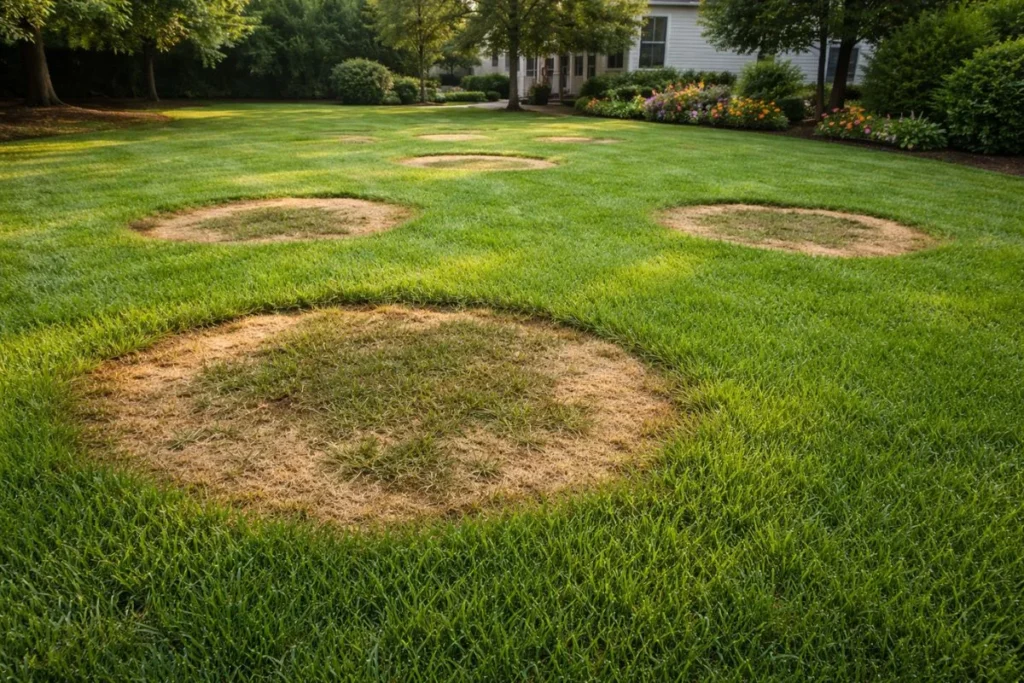
Last summer, I walked outside and saw brown circles spreading across a lawn I had worked hard to maintain. A week earlier it looked healthy. My first thought was drought, so I watered more. That made it worse. The real issue was lawn fungus. Many homeowners face this same moment. You mow correctly. You water regularly. Then strange patches, rings, or powder appear and you are left wondering what went wrong.
The truth is most lawn fungus problems can be identified quickly if you know what to look for. The mistake is guessing. In this guide, you will learn how to identify lawn fungus step by step using visible patterns, weather clues, and grass type differences. Once you confirm the real cause, you can act with confidence and avoid wasting money on the wrong treatment.
- What Is Lawn Fungus?
- Step-by-Step Lawn Fungus Identification
- How to Tell If It Is Really Fungus
- Types of Lawn Fungus and How to Identify Them
- Lawn Fungus Comparison Table
- Mild vs Severe Lawn Fungus
- What to Do After Lawn Fungus Identification
- When to Consider Professional Help
- Why Lawn Fungus Happens
- How to Prevent Lawn Fungus
- Seasonal Lawn Fungus Watch Guide
- Lawn Fungus Identification FAQ
- Conclusion
What Is Lawn Fungus?
Lawn fungus is caused by tiny organisms that live in soil. Most lawns already contain fungal spores. They stay inactive until the right conditions appear.
Fungus spreads through:
- Wind
- Water
- Lawn equipment
- Shoes and pets
- Grass clippings
It grows when grass stays wet too long, especially overnight.
Step-by-Step Lawn Fungus Identification
1. Look at the Pattern
- Small round spots?
- Large spreading patches?
- Perfect ring shape?
- Random thinning?
Shape gives the first clue.
2. Check the Grass Blades
Look closely.
- Tan spots with brown borders?
- White powder?
- Orange dust?
- Water-soaked blades?
Details matter.
3. Think About Recent Weather
- Hot and humid nights above 65–70°F?
- Cool and wet conditions?
- Long snow cover?
Weather strongly influences which fungus appears.
4. Know Your Grass Type
Cool-season grasses:
- Kentucky bluegrass
- Tall fescue
- Ryegrass
Warm-season grasses:
- Bermuda
- Zoysia
- St. Augustine
Certain diseases prefer certain grass types.
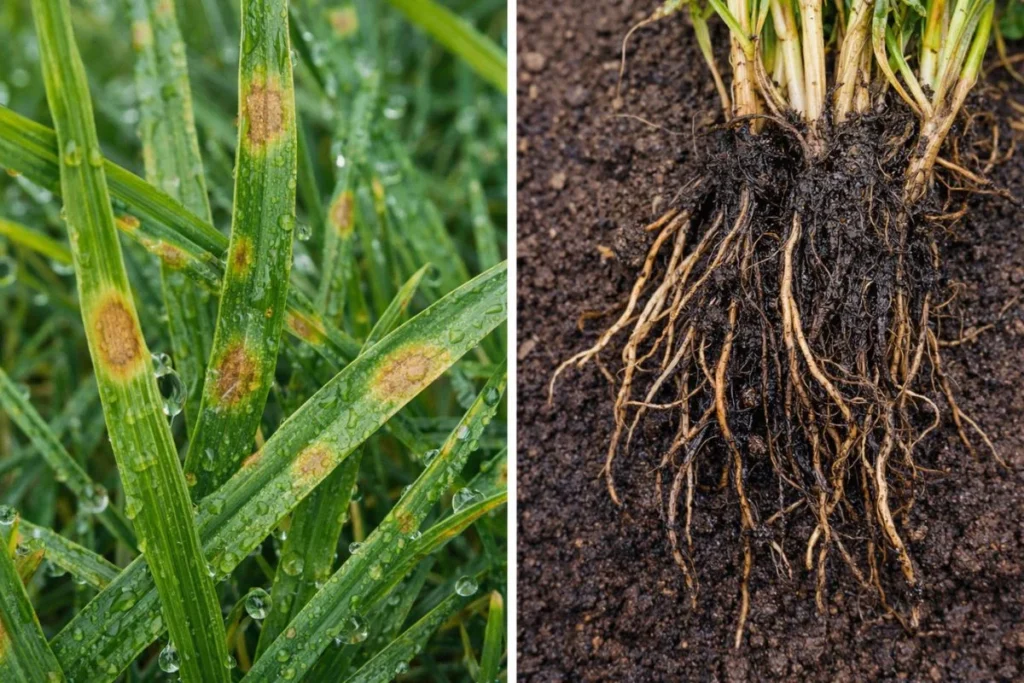
5. Check Roots vs Blades
- Damage only on blades → Leaf disease
- Roots dark or weak → Root disease
- Grass pulls up easily → Possible root infection
This helps avoid misdiagnosis.
Lawn Fungus Quick Decision Chart
Use this simple flow to narrow down the problem fast.
- Is the damage circular?
- Yes → Dark brown outer edge? → Brown Patch
- Yes → Mushrooms present? → Fairy Ring
- No → Continue below
- Are there small coin-sized tan spots?
- Yes → Dollar Spot
- No → Continue below
- Is there powder on the grass blades?
- White powder in shade → Powdery Mildew
- Orange dust on shoes → Rust
- Is grass greasy and spreading fast during hot weather?
- Yes → Pythium Blight
This quick check helps reduce confusion before applying treatment.
If you see thin pink or red strands on grass tips during cool, damp weather, the problem may be red thread fungus. Review our detailed treatment guide to correct low nitrogen and restore lawn strength quickly.
How to Tell If It Is Really Fungus
Not all brown patches are fungal disease.
Check for these look-alikes:
Drought Stress
- Even browning
- Improves after watering
Dog Urine
- Small round spots
- Dark green border
Grub Damage
- Grass lifts like carpet
- White grubs in soil
If you see powder, threads, rings, or blade spots, fungus is more likely.
Many homeowners also ask whether lawn fungus can disappear without treatment. If you are debating whether to wait or take action, read our guide on will lawn fungus go away on its own to understand when monitoring is safe and when treatment is necessary.
Types of Lawn Fungus and How to Identify Them
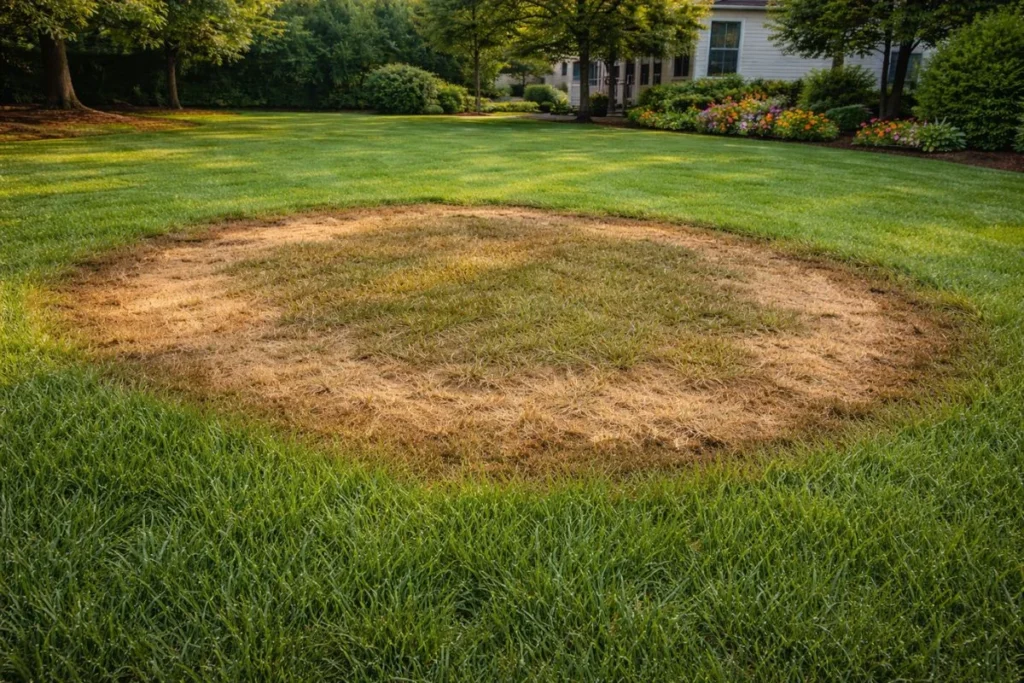
Brown Patch
- Large brown areas
- Dark outer ring
- Common in tall fescue
- Hot humid nights above 65°F
If your lawn shows these symptoms during summer, read our detailed guide on brown patch disease for step-by-step treatment and prevention.
Dollar Spot
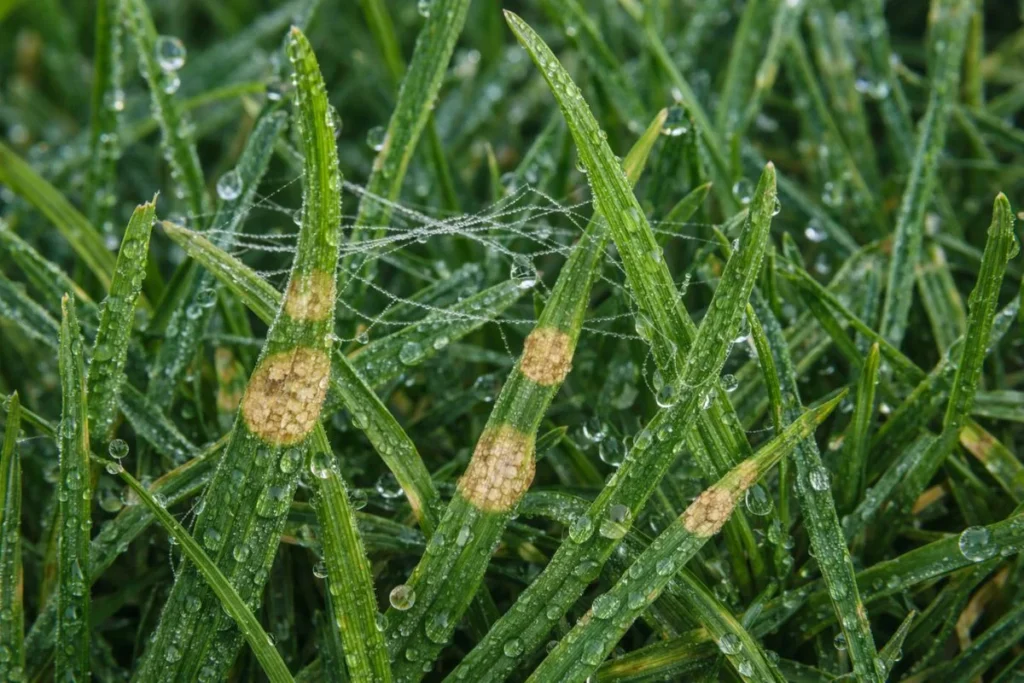
- Small silver-dollar sized spots
- Webbing in morning dew
If your lawn shows these small coin-sized patches during warm, humid weather, read our detailed guide on dollar spot fungus for step-by-step prevention and treatment options.
Red Thread
- Pink or red thread-like strands
- Cool moist weather
- Often linked to low nitrogen
Pythium Blight
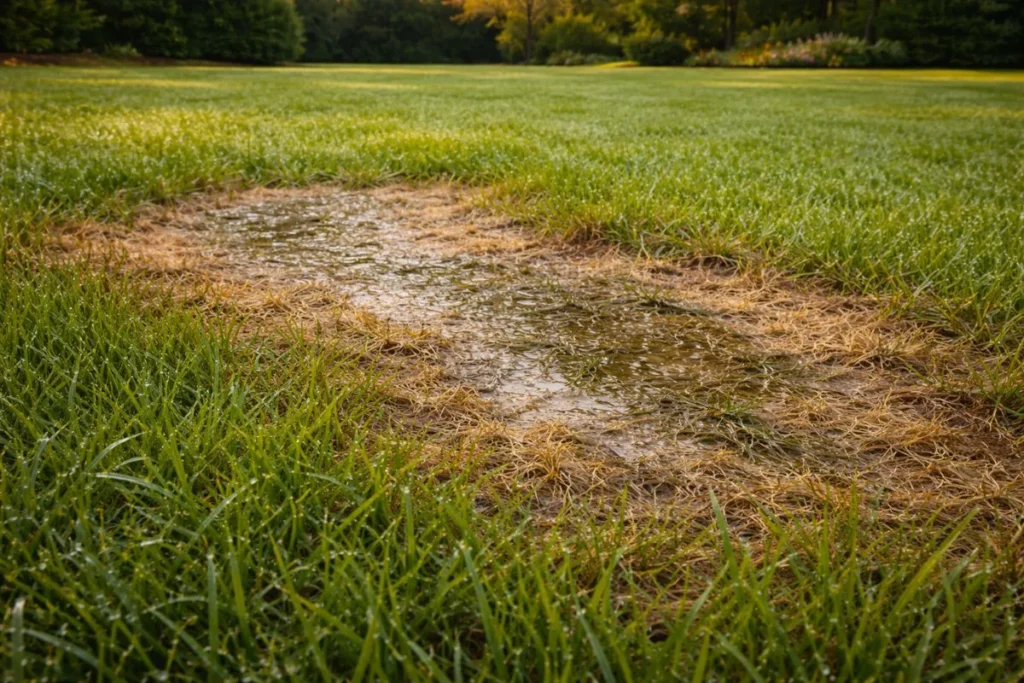
- Greasy, matted grass
- Spreads very fast
- Night temps above 70°F
- Cotton-like growth in morning
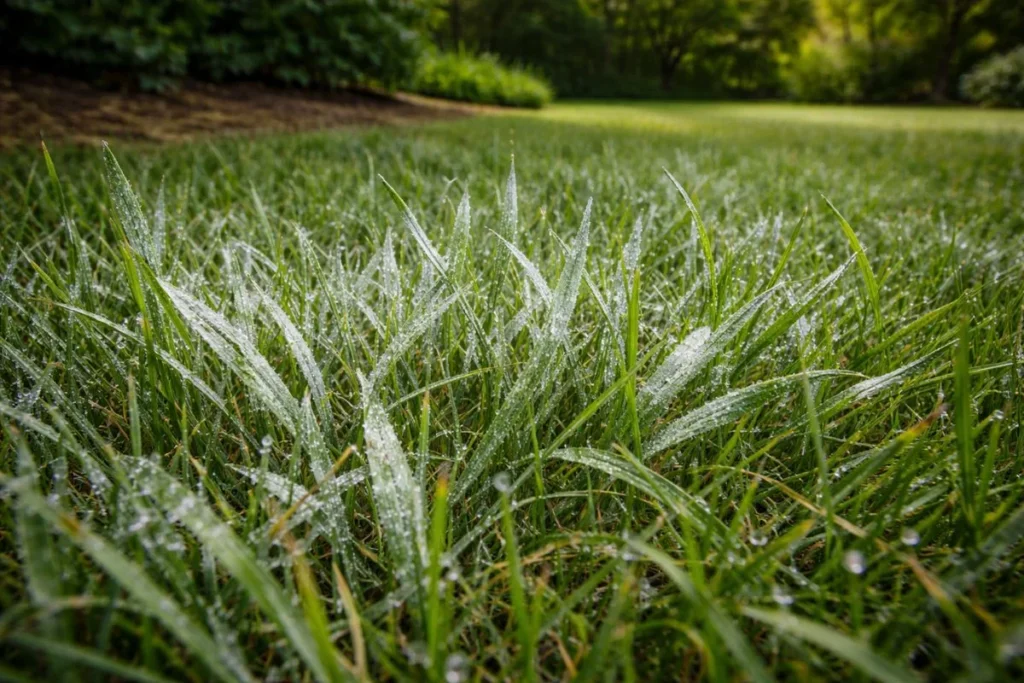
Powdery Mildew
- White powder
- Shade and poor airflow
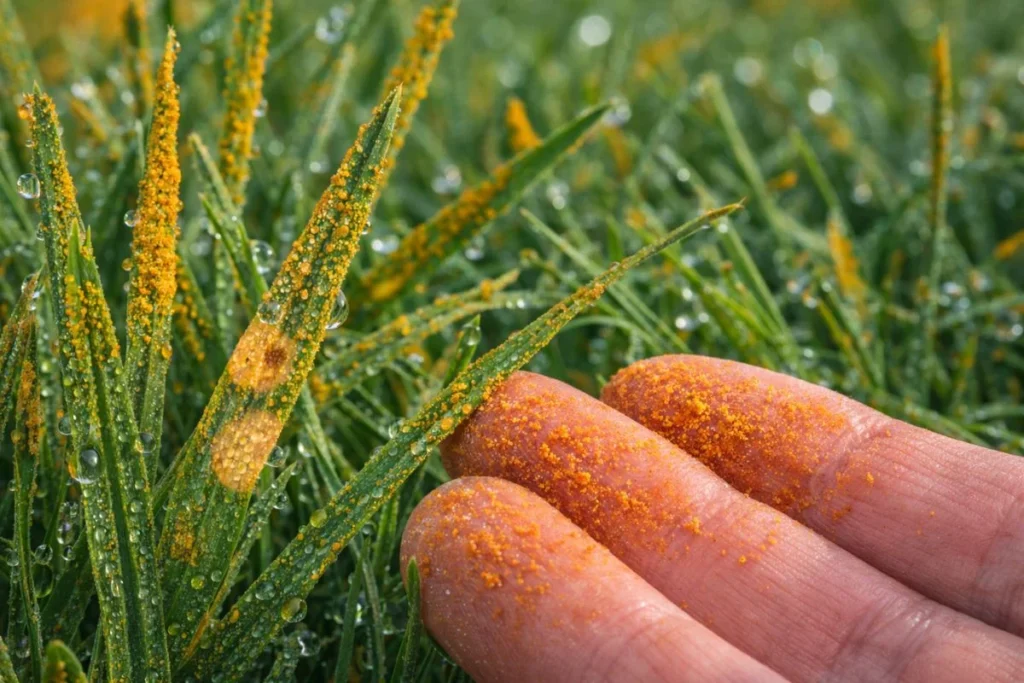
Rust
- Orange dust
- Rubs off on shoes
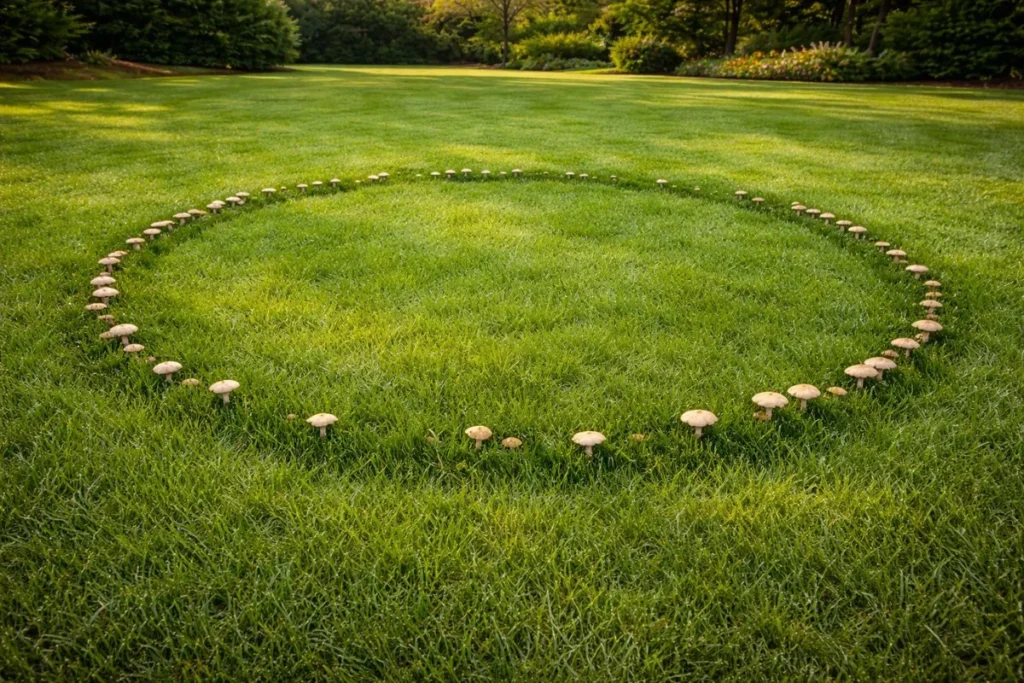
Fairy Ring
- Dark green ring
- Sometimes mushrooms
- Three types: mushrooms only, green ring, or dead ring
Gray Snow Mold
- Gray circular patches
- Appears after snow melt
- Rarely kills grass permanently
Pink Snow Mold
- Pink webbing
- Can damage crowns
Anthracnose
- Yellowing grass
- Dark lesions
- Linked to low nitrogen and low mowing height
Leaf Spot and Melting-Out
- Purple or brown blade spots
- Can move into roots
Summer Patch
- Circular patches
- Frog-eye pattern
- Common in Kentucky bluegrass
- Root-based disease
Lawn Fungus Comparison Table
| Symptom | Likely Disease | Key Clue |
|---|---|---|
| Small tan spots | Dollar Spot | Morning webbing |
| Large brown areas | Brown Patch | Dark border |
| Greasy wet patches | Pythium | Fast spread |
| White powder | Powdery Mildew | Shade |
| Orange dust | Rust | Rubs off |
| Ring shape | Fairy Ring | Mushrooms possible |
Mild vs Severe Lawn Fungus
Mild Cases
- Small patches
- Slow spread
- Grass still strong
Often improves by adjusting watering.
Severe Cases
- Fast spread
- Large connected patches
- Root damage
May require fungicide.
What to Do After Lawn Fungus Identification
- Water early morning only
- Improve airflow
- Reduce thatch
- Avoid mowing wet grass
- Apply fungicide only if spread continues
Correct lawn conditions first.
If You Just Found Lawn Fungus, Do This First
- Stop watering at night.
- Water only early in the morning.
- Mow only when grass is dry.
- Avoid heavy nitrogen fertilizer.
- Improve airflow in shaded areas.
Small adjustments often stop mild fungus before chemicals are needed.
When to Consider Professional Help
You may need help if:
- Fungus keeps returning
- Roots are damaged
- Large areas decline
- Soil drainage is poor
Professionals check compaction, irrigation, root depth, and grass type suitability.
Why Lawn Fungus Happens
Fungus needs:
- Moisture
- Stress
- Weak grass
Remove one of these and fungus slows down.
Common Lawn Fungus Mistakes
- Watering more when brown patches appear.
- Applying fungicide without confirming the disease.
- Mowing wet grass.
- Ignoring grass type differences.
- Overfertilizing stressed lawns.
Correct identification always comes before treatment.
How to Prevent Lawn Fungus
- Water early morning
- Aerate compacted soil
- Avoid overwatering
- Improve sunlight in shade
- Keep mower blades sharp
- Use balanced fertilizer
Healthy lawns resist disease better.
Seasonal Lawn Fungus Watch Guide
Spring
- Leaf Spot
- Red Thread
- Snow Mold
Snow mold appears after long periods of snow cover and often looks worse than it really is. If you are seeing white or pink patches right after winter, read our detailed guide on snow mold on grass to understand recovery and prevention steps.
Summer
- Brown Patch
- Pythium
- Fairy Ring
- Summer Patch
Late Summer
- Rust
- Anthracnose
Lawn Fungus Identification Checklist
- ✔ Check the shape of damage
- ✔ Inspect grass blades closely
- ✔ Review recent weather conditions
- ✔ Confirm your grass type
- ✔ Inspect roots for weakness
- ✔ Compare symptoms using the tables above
Follow this checklist before choosing any treatment product.
Lawn Fungus Identification FAQ
Can lawn fungus go away on its own?
Yes, mild cases often improve when weather changes.
Does mowing spread fungus?
Yes, especially if grass is wet.
Is fungus harmful to pets?
Most are not harmful, but avoid treated areas after fungicide use.
Can fungus kill my lawn?
Severe cases can cause heavy damage if untreated.
Conclusion
Over the years, I have seen many lawns treated for the wrong issue simply because the diagnosis was rushed. Brown patches create worry, but the real solution begins with careful observation. When you study the pattern, check the blades, think about weather, and consider grass type, lawn fungus identification becomes much clearer. Most problems can be managed early with small changes in watering and airflow. Severe cases require faster action, but every situation starts with accurate identification. A healthy lawn is not luck. It is informed care and timely decisions.