 Skip to content
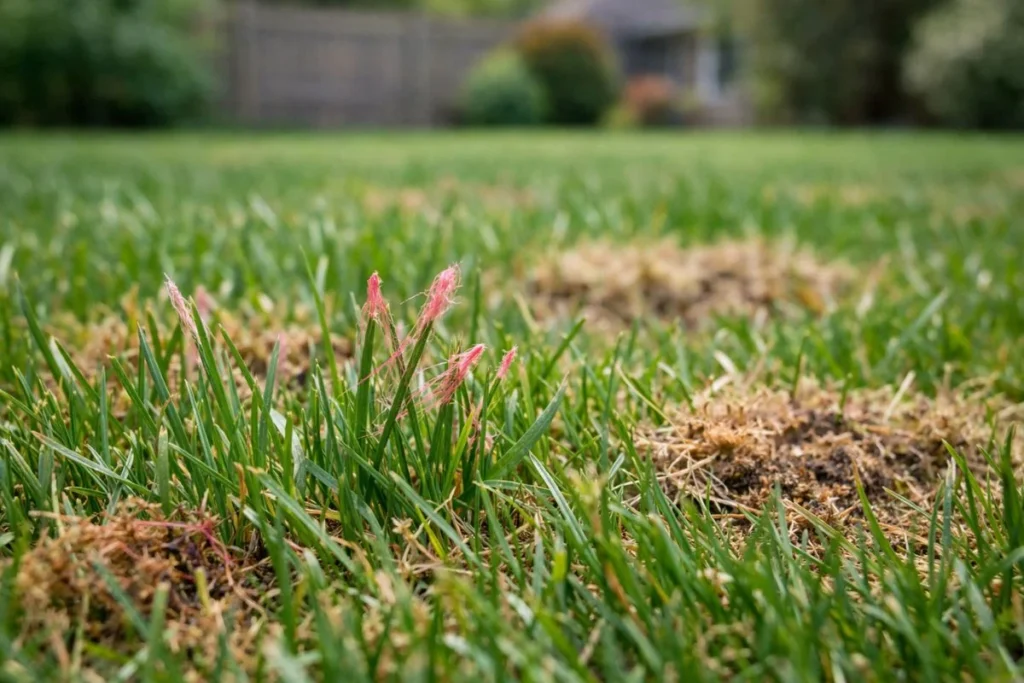
Last spring, I walked outside and noticed small pink patches spreading across a lawn that had looked healthy just a week earlier. The grass was thinning, and strange red strands were visible on the tips. My first reaction was to water more, thinking it was drought stress. That made it worse. If you are seeing pink or brown patches right now, you may feel confused or worried that your lawn is dying.
Red thread is one of several lawn diseases that create patchy discoloration. If you are not completely sure what you are seeing, review our full guide on lawn fungus identification before choosing a treatment. I have dealt with red thread fungus on many cool-season lawns over the years. In most cases, the issue was not serious damage but low nitrogen and cool, damp weather. Once we corrected those problems, the lawn recovered without drastic treatment. Red thread can look alarming, but it is usually a sign of stress, not destruction. In this guide, I will explain exactly what causes it and how to fix it with steady, practical steps.
- What Is Red Thread Fungus?
- Why Did My Lawn Get Red Thread?
- How the Red Thread Fungus Lifecycle Works
- What Does Red Thread Look Like?
- Red Thread vs Other Lawn Diseases
- Grass Types Most Affected in the US
- Early Detection Checklist
- How to Fix Red Thread Fast
- When Should You Use Fungicide?
- Seasonal Prevention Schedule (Cool-Season Lawns)
- Lawn Recovery Timeline
- Does Soil pH or Thatch Affect Red Thread?
- Is Red Thread Harmful?
- Will Red Thread Return?
- Final Thoughts
What Is Red Thread Fungus?
Red thread is caused by a fungus called Laetisaria fuciformis. It lives in soil and thatch.
The fungus becomes active in cool, moist weather. It attacks weak grass first. Lawns low in nitrogen are most at risk.
It is common in northern states and transition zones where cool-season grasses grow.
Why Did My Lawn Get Red Thread?
Most homeowners ask this first.
Red thread appears when:
- Temperatures stay between 60°F and 75°F
- Humidity is high
- Grass growth slows
- Nitrogen levels are low
- The lawn stays wet for long periods
Low nitrogen is the biggest trigger. When grass does not grow strongly, the fungus spreads faster than the plant can recover.
How the Red Thread Fungus Lifecycle Works
The fungus survives in thatch and soil year-round.
During dry or hot periods, it becomes inactive. When cool and wet weather returns, it becomes active again.
It infects grass blades and forms the red thread-like structures you see.
If you improve lawn nutrition and conditions, the fungus slows down. However, it can stay in the lawn and return next season if stress remains.
What Does Red Thread Look Like?
Look closely at your lawn.
Common signs include:
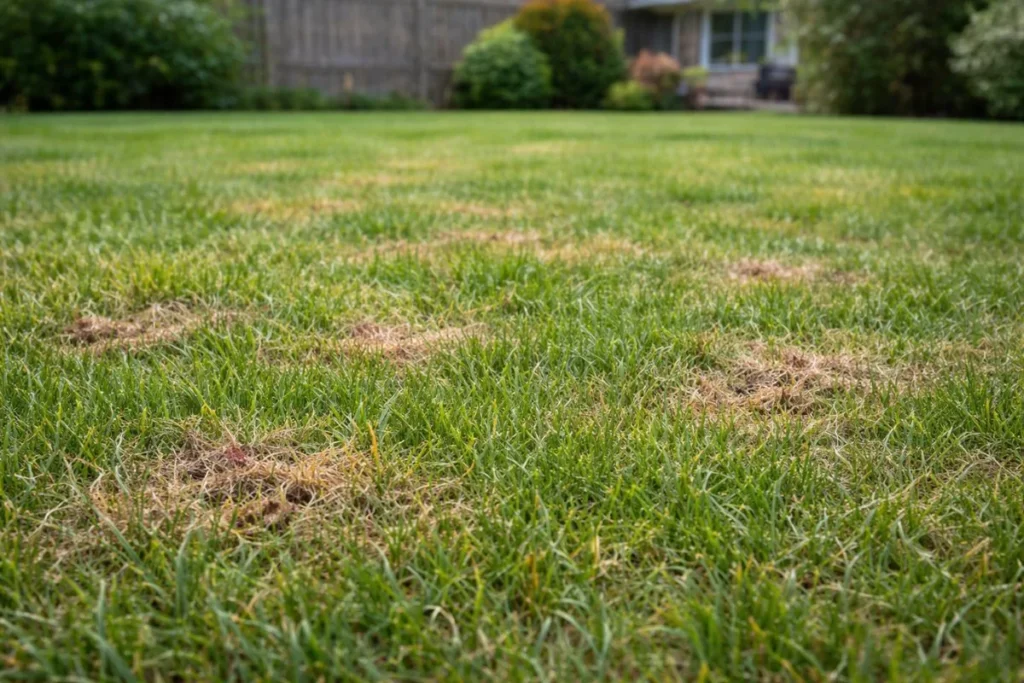
- Light brown or tan patches
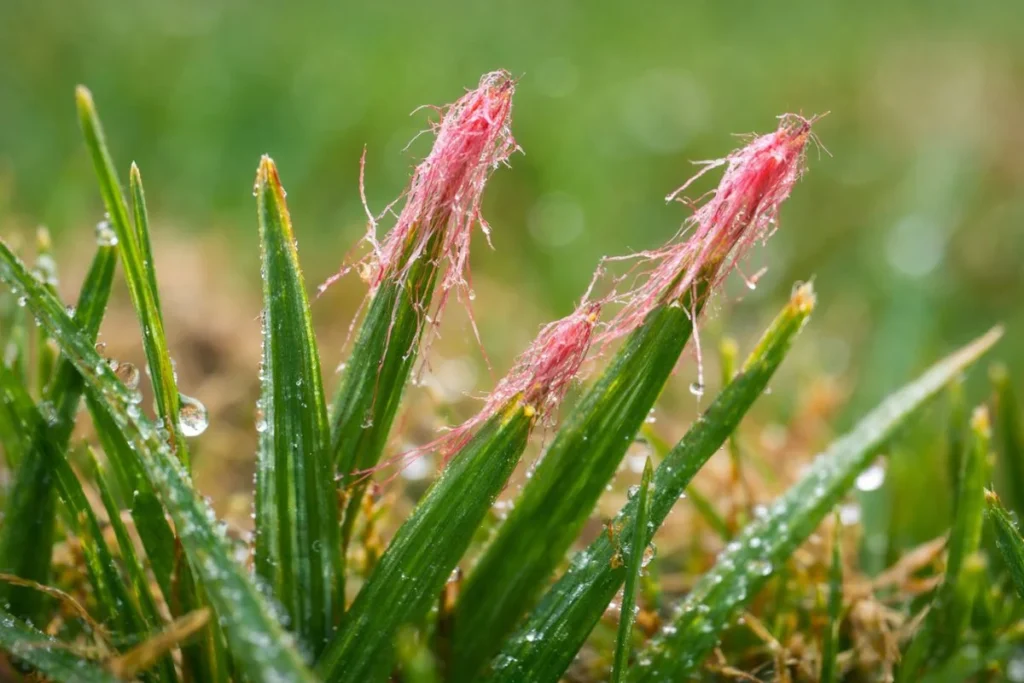
- Red or pink thread-like strands on grass tips
- Thin or slow-growing areas
- Symptoms worse in cool, damp weather
The red threads are the clearest sign. They stick out from the ends of grass blades.
Quick Action Plan: If You See Red Thread
- Apply a light nitrogen fertilizer
- Water only in the early morning
- Mow at the proper height
- Avoid watering at night
- Wait 2–3 weeks before considering fungicide
In most cases, proper feeding fixes the problem.
Red Thread vs Other Lawn Diseases
Many homeowners confuse red thread with other diseases.
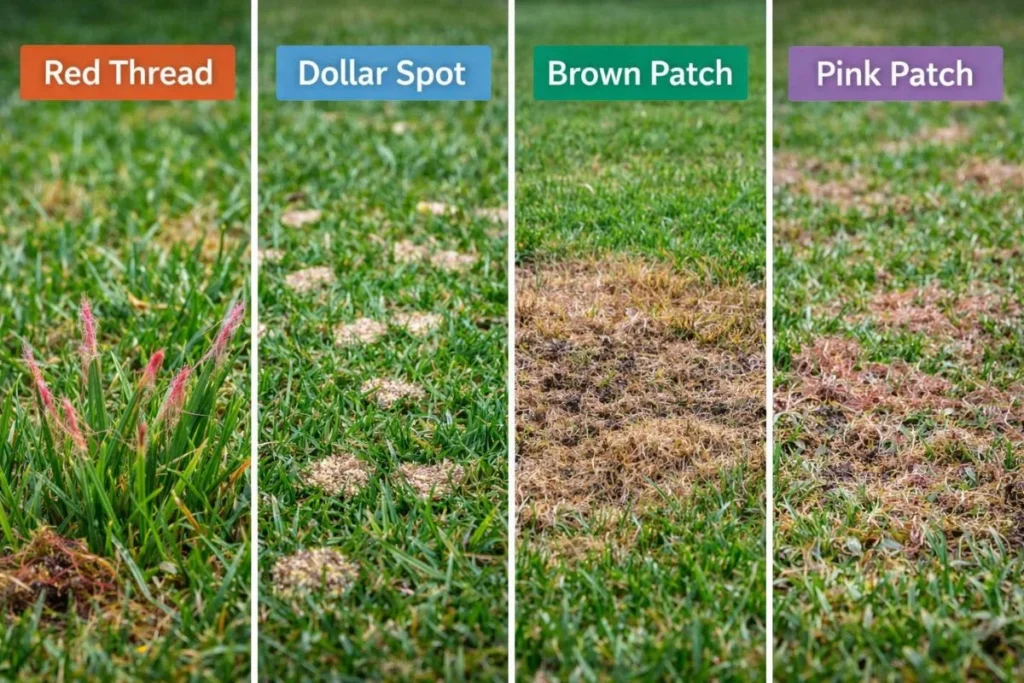
Use this table to diagnose correctly.
| Disease | Key Sign | Patch Size | Season | Main Trigger |
|---|---|---|---|---|
| Red Thread | Red or pink threads on grass tips | Small to medium patches | Spring & Fall | Low nitrogen + cool moisture |
| Dollar Spot | Small silver dollar spots | Small round spots | Late Spring & Summer | Low nitrogen + humidity |
| Brown Patch | Large brown circles | Large patches | Summer | Heat + humidity |
| Pink Patch | Pink edges but no thread strands | Irregular patches | Cool, wet weather | Excess moisture |
If you see red strands, it is very likely red thread.
Is It Red Thread? Quick Diagnosis Guide
- Do you see red or pink strands on grass tips? Yes → Likely red thread
- Are patches small to medium and appearing in cool, wet weather? Yes → Likely red thread
- Are patches large and happening during hot summer weather? No → Could be brown patch
- No red strands visible? Check for dollar spot instead
Grass Types Most Affected in the US
Red thread mainly attacks cool-season grasses:
- Perennial ryegrass
- Fine fescue
- Tall fescue
- Kentucky bluegrass
- Bentgrass
Warm-season grasses are less likely to develop this disease.
Red Thread Risk by Grass Type
| Grass Type | Risk Level | Notes |
|---|---|---|
| Perennial Ryegrass | High | Very sensitive to low nitrogen |
| Fine Fescue | High | Common in cool climates |
| Kentucky Bluegrass | Medium | Recovers well with feeding |
| Tall Fescue | Medium | More tolerant but still affected |
| Warm-Season Grasses | Low | Rarely affected |
Early Detection Checklist
Check your lawn weekly during spring and fall.
Look for:
- Small brown patches forming
- Pink or red strands on blades
- Slow grass growth
- Heavy morning dew that stays long
Early action makes recovery faster.
How to Fix Red Thread Fast
Most lawns recover without fungicide.
Step 1: Correct Nitrogen Levels
Apply a balanced fertilizer with nitrogen during active growth.
Healthy grass grows out of the infection.
Step 2: Adjust Watering
Water early in the morning.
Avoid watering at night.
Water deeply but not every day.
Step 3: Improve Mowing Habits
Do not cut more than one-third of the blade.
Keep mower blades sharp.
Clean mower deck after mowing infected areas.
Step 4: Improve Air Flow
Aerate compacted soil.
Reduce thick thatch.
Trim nearby plants if they block air movement.
When Should You Use Fungicide?
Fungicide is rarely needed for home lawns.
Consider it only if:
- Large areas are infected
- The lawn is high value (sports turf or display lawn)
- Cool, wet weather continues for weeks
- Fertilizer correction does not improve the lawn
Common fungicide groups effective against red thread include:
- Group 3 (DMI)
- Group 7 (SDHI)
- Group 11 (QoI)
Rotate fungicide groups to reduce resistance. Always follow label instructions.
When You Do NOT Need Fungicide
- Only small patches are visible
- The lawn is actively growing
- Warmer weather is coming soon
- You recently applied nitrogen fertilizer
Most home lawns recover without chemical treatment.
Seasonal Prevention Schedule (Cool-Season Lawns)
Early Spring
- Apply balanced fertilizer
- Begin mowing at proper height
Late Spring
- Monitor during cool wet weather
- Avoid overwatering
Summer
- Avoid heavy nitrogen during extreme heat
- Keep mower blades sharp
Fall
- Apply light fertilizer
- Overseed thin areas
Strong growth reduces disease risk.
Red Thread Prevention Checklist
- Fertilize in spring and fall
- Mow at the correct height
- Aerate compacted soil once per year
- Water early in the morning
- Avoid heavy nitrogen during extreme heat
Lawn Recovery Timeline
After correcting nitrogen levels:
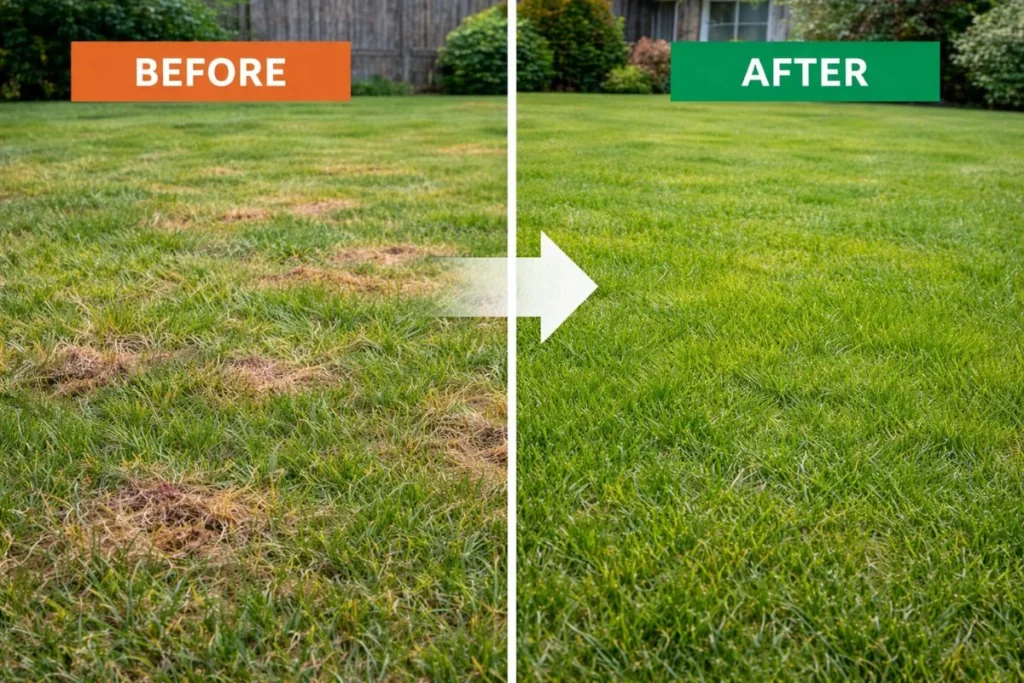
- 1–2 weeks: New green growth begins
- 2–4 weeks: Red strands fade
- 3–6 weeks: Lawn thickens
If thin spots remain after 4–6 weeks, overseed lightly and keep soil moist until new grass establishes.
Does Soil pH or Thatch Affect Red Thread?
Thick thatch can trap moisture and increase risk.
Core aeration once per year helps.
Grass grows best in soil pH between 6.0 and 7.0. Healthy soil supports stronger turf.
Is Red Thread Harmful?
Red thread is not harmful to people or pets.
It does not damage soil long term.
It mainly affects lawn appearance.
Will Red Thread Return?
Yes, it can return if:
- Nitrogen levels stay low
- Grass remains stressed
- Weather stays cool and wet
Healthy lawn care reduces repeat outbreaks.
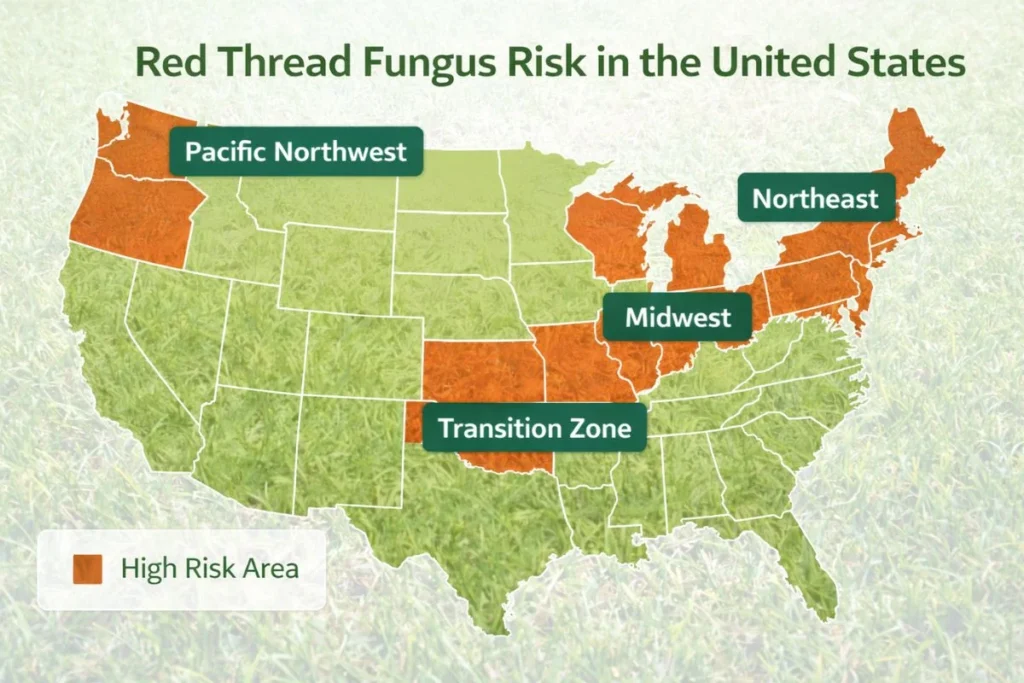
Where Red Thread Is Most Common in the United States
- Northeast states
- Midwest
- Pacific Northwest
- Transition zone regions
It is less common in deep southern states where warm-season grasses dominate.
Frequently Asked Questions About Red Thread Fungus
Does fertilizer cure red thread fungus?
In most home lawns, yes. Red thread is strongly linked to low nitrogen. Applying a balanced fertilizer often helps grass grow out of the infection within a few weeks.
How long does red thread last?
If weather remains cool and wet, it can last several weeks. Once nitrogen levels improve and temperatures rise, symptoms usually fade within 2–4 weeks.
Will red thread kill my lawn?
No. Red thread rarely kills grass roots. It weakens blades but most lawns recover fully with proper care.
Can mowing spread red thread?
Yes. Mowers can move fungal material across the lawn. Always mow when grass is dry and clean equipment after cutting infected areas.
Is red thread harmful to pets or children?
No. Red thread fungus affects grass only. It is not harmful to people or pets.
Does red thread return every year?
It can return if lawns remain low in nitrogen or stressed during cool, wet weather. Proper seasonal feeding reduces repeat outbreaks.
Final Thoughts
After working with red thread outbreaks in different lawns and conditions, I can say with confidence that this disease is manageable and rarely permanent. Most cases improve once nitrogen levels are corrected and mowing and watering habits are adjusted. I have seen lawns go from thin and pink to thick and green within weeks simply by restoring proper care. Red thread is a signal that your grass needs support, not panic. When you focus on healthy growth and consistent maintenance, your lawn can recover and stay strong season after season.