 Skip to content
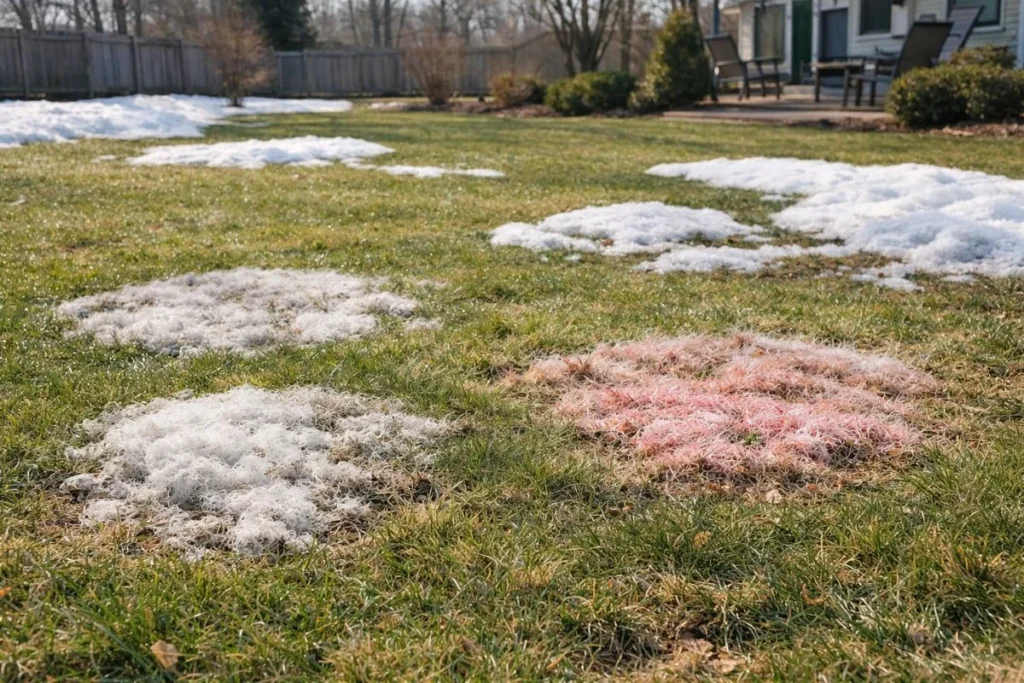
When the snow melts and you see white or pink patches across your lawn, it can feel like all your hard work is gone. The grass looks flat, pale, and damaged. Many homeowners think their lawn is dead or ruined. They start wondering if they need to reseed everything or spend money on treatments. That early spring shock is very common, especially in colder states where snow sits for weeks.
I’ve seen this situation many times with homeowners who felt the same panic. In most cases, the lawn was not destroyed. What they were dealing with was snow mold, a seasonal lawn disease that often looks worse than it really is. Snow mold is just one type of lawn disease that appears after specific weather conditions. If you want to understand how different lawn diseases form patterns and how to tell them apart early, read our complete guide on lawn fungus identification before choosing any treatment. With the right steps and a little patience, most lawns recover well. In this guide, I’ll explain exactly what snow mold is, why it happens, and what you should do next.
- What Is Snow Mold?
- Pink vs Gray Snow Mold: What’s the Difference?
- How to Identify Snow Mold
- Is Snow Mold Killing My Lawn?
- What Causes Snow Mold?
- Environmental Factors That Increase Snow Mold Risk
- Grass Types Commonly Affected
- How to Fix Snow Mold on Grass (Step-by-Step)
- How to Prevent Snow Mold Before Winter
- Organic and Natural Prevention Methods
- Fungicide Options and Timing
- Recommended Tools for Prevention and Repair
- Common Mistakes That Lead to Snow Mold
- Post-Winter Recovery Plan
- When Should You Call a Lawn Professional?
- Frequently Asked Questions
- Final Thoughts
What Is Snow Mold?
Snow mold is a fungal lawn disease.
It grows under snow during cold and wet weather.
It usually appears right after the snow melts in early spring.
Snow mold does not need deep snow. It can also grow under wet leaves or cold rain.
There are two main types:
- Gray snow mold
- Pink snow mold
Both create circular patches on grass.
Most cases are surface-level and temporary.
Pink vs Gray Snow Mold: What’s the Difference?
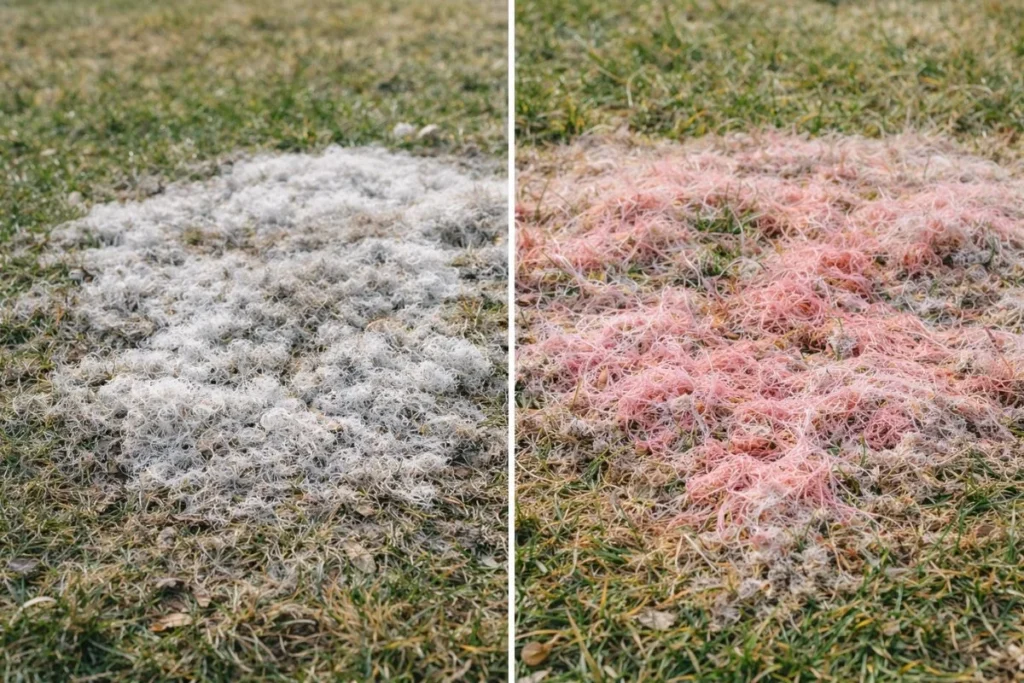
Quick Snow Mold Comparison
| Feature | Gray Snow Mold | Pink Snow Mold |
|---|---|---|
| Color | Gray or white patches | Pink or reddish web-like growth |
| Damage Level | Mostly affects grass blades | Can damage grass crown |
| Recovery Speed | Usually recovers naturally | May need overseeding |
| Fungicide Needed? | Rarely needed | Sometimes preventive treatment helps |
| Overall Risk | Mild | Moderate |
Understanding the difference helps you decide what to do next.
Gray Snow Mold
- Light gray or white patches
- Affects grass blades only
- Rarely kills the plant
- Lawn usually recovers on its own
Pink Snow Mold
- Pink or reddish web-like growth
- Can damage grass crowns
- May cause permanent thinning
- May require overseeding
Gray snow mold is mostly cosmetic.
Pink snow mold can be more serious.
How to Identify Snow Mold
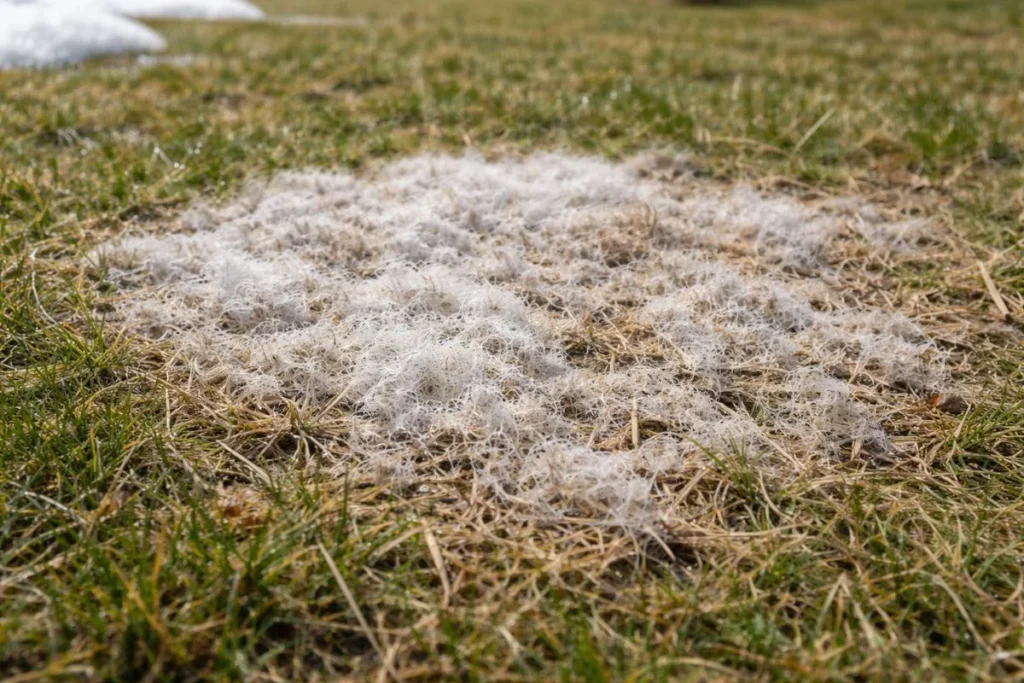
Look for these signs:
- Round patches on the lawn
- Matted or flattened grass
- White, gray, or pink web-like growth
- Straw-colored or tan grass
- Spots from a few inches to several feet wide
Quick Scratch Test
Use your fingernail to gently scratch the base of the grass plant.
- If it is green underneath, the grass is alive.
- If it is brown and soft, the plant may be dead.
This simple test helps you decide whether to wait or reseed.
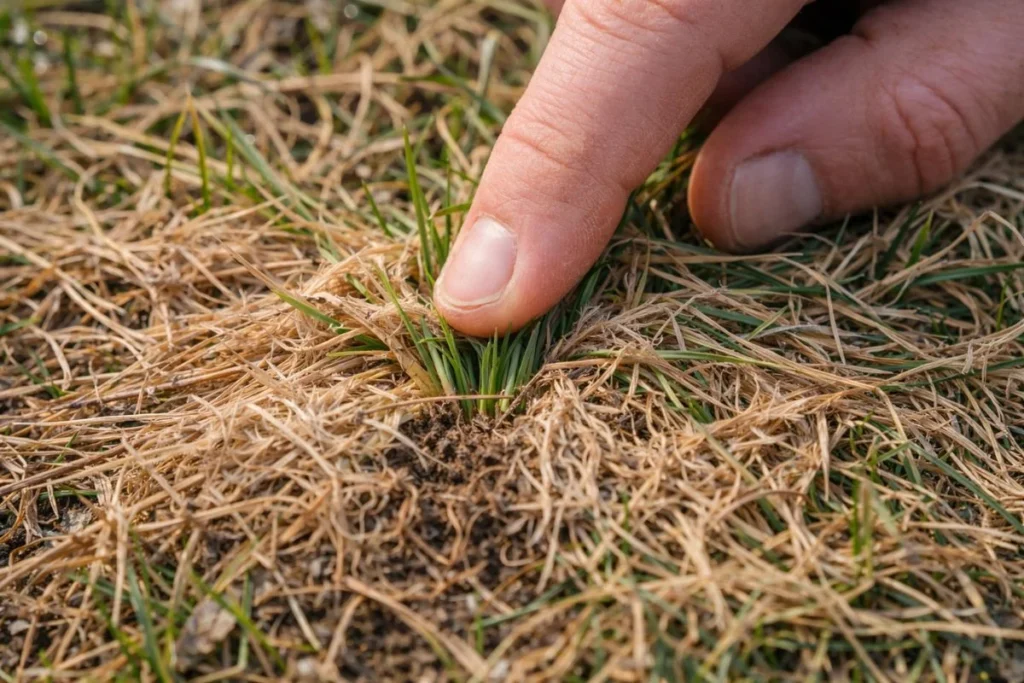
If the base of the plant is still firm and green, recovery is likely.
If the crown feels soft and brown, reseeding may be needed.
Is Snow Mold Killing My Lawn?
This is the most common concern.
In most cases, no.
Gray snow mold rarely kills healthy grass.
Pink snow mold can damage weak lawns, especially those with poor drainage or heavy thatch.
Healthy lawns usually bounce back within weeks of warmer weather.
Give it time before reseeding.
Do I Need to Worry?
You likely do NOT need major repair if:
- The grass crown is still firm
- Patches are small (under 12 inches)
- Your lawn was healthy before winter
- Weather is warming steadily
You may need repair if:
- Large areas remain dead after 4–6 weeks
- The grass crown is brown and soft
- Pink mold covered wide sections of lawn
What Causes Snow Mold?
Snow mold forms in cool, wet conditions.
Main causes include:
- Snow falls before the ground freezes
- Thick thatch layer
- Leaves left on the lawn
- Poor drainage
- High nitrogen fertilizer in late fall
- Long periods of snow cover
- Shaded areas that stay damp
The fungus grows under snow where moisture stays trapped.
Environmental Factors That Increase Snow Mold Risk
Some lawns are at higher risk.
Important factors include:
- Snow cover lasting more than 60 days
- Heavy snow piles from shoveling
- North-facing lawns
- Areas with low air movement
- Deep shade
- Lawns that stay wet after snow melts
Long snow cover combined with moisture creates ideal conditions.
Grass Types Commonly Affected
Cool-season grasses are most at risk:
- Kentucky bluegrass
- Perennial ryegrass
- Fine fescue
- Tall fescue
Warm-season grasses are less affected.
How to Fix Snow Mold on Grass (Step-by-Step)
If you see patches, follow these steps:
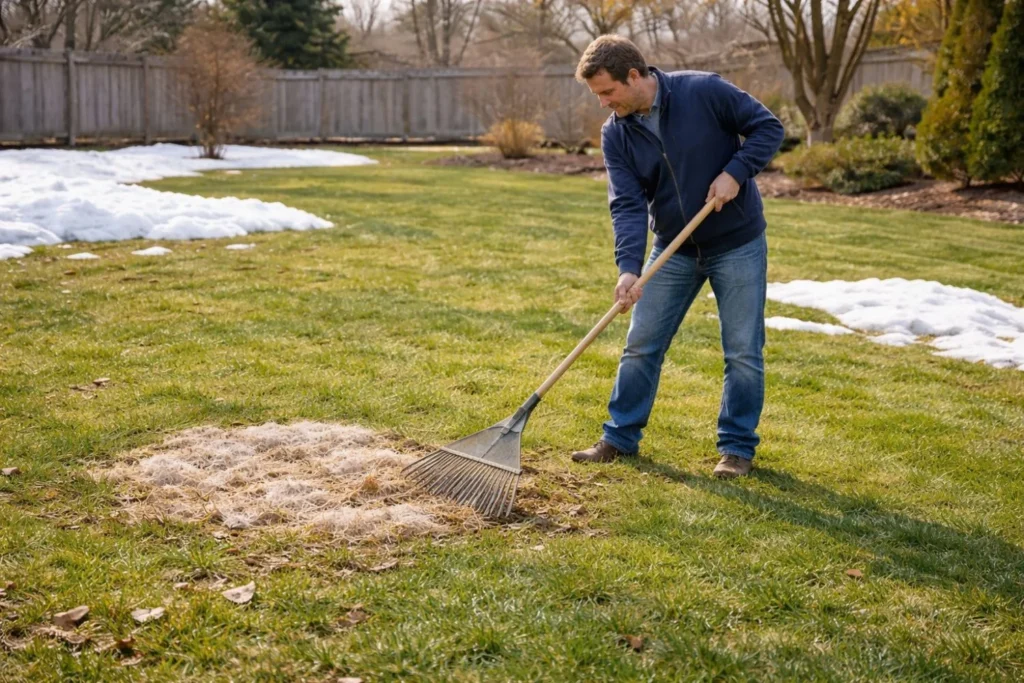
Step 1: Lightly Rake the Area
Break up matted grass. Improve air flow.
Step 2: Let It Dry
Avoid walking on wet patches.
Step 3: Wait Two to Three Weeks
Many areas recover naturally.
Step 4: Overseed Bare Spots
Reseed only if grass does not return.
Step 5: Apply Light Spring Fertilizer
Feed once active growth begins.
Do not rush into heavy treatment.
How to Prevent Snow Mold Before Winter
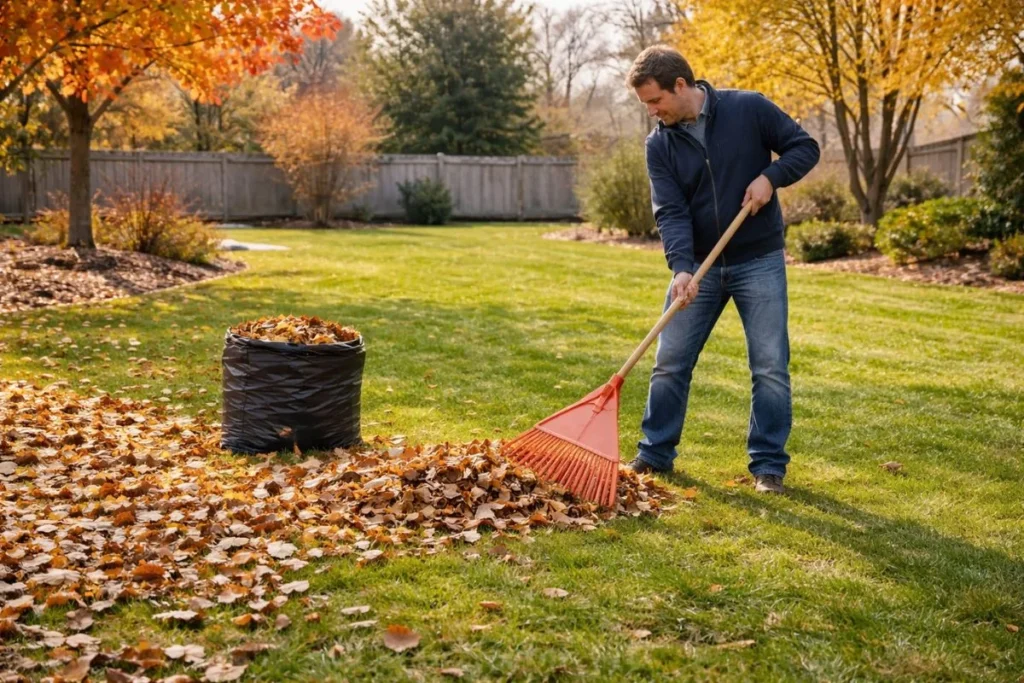
Prevention starts in fall.
1. Mow to a Moderate Height
Do not leave grass too tall.
2. Remove Leaves Often
Leaves trap moisture.
3. Dethatch or Aerate
Reduce thick thatch buildup.
4. Improve Drainage
Fix low, soggy areas.
5. Avoid Heavy Nitrogen Late in Fall
Late nitrogen encourages weak growth.
6. Spread Out Snow Piles
Avoid piling snow in one spot.
Strong fall care reduces spring damage.
Snow Mold Prevention & Recovery Timeline
Fall (Before Snow)
- Remove leaves and debris
- Dethatch or aerate if needed
- Avoid heavy nitrogen fertilizer late in fall
- Apply preventive fungicide if required
Winter
- Avoid piling snow in one spot
- Reduce foot traffic on frozen grass
Early Spring
- Lightly rake matted grass
- Allow lawn to dry naturally
- Monitor for natural recovery
Mid to Late Spring
- Overseed thin or bare spots
- Apply balanced spring fertilizer
Organic and Natural Prevention Methods
If you prefer non-chemical care:
- Apply compost topdressing
- Aerate compacted soil
- Use slow-release organic fertilizer early in fall
- Maintain proper mowing height
- Improve soil health over time
Healthy soil builds stronger grass.
Natural methods work best as prevention.
Fungicide Options and Timing
Fungicides work best before snow arrives.
Apply when air temperatures are between 40°F and 50°F.
Common active ingredients include:
- Propiconazole
- Azoxystrobin
- Chlorothalonil
Apply before permanent snow cover.
Fungicides prevent infection.
They do not cure visible spring patches.
Most home lawns improve with good cultural care alone.
Recommended Tools for Prevention and Repair
Basic tools include:
- Leaf rake
- Dethatching rake
- Lawn aerator
- Grass seed spreader
- Garden hose or sprinkler
Simple tools are enough for most homeowners.
Common Mistakes That Lead to Snow Mold
Avoid these:
- Heavy nitrogen fertilizer late in fall
- Leaving thick leaves
- Letting grass grow too tall
- Piling snow in one place
- Walking on frozen turf
- Ignoring drainage issues
Small mistakes increase spring damage.
Post-Winter Recovery Plan
After snow melts:
- Rake matted grass
- Allow drying time
- Aerate compacted soil
- Feed grass properly
- Monitor weak areas
Healthy turf recovers faster.
When Should You Call a Lawn Professional?
Consider professional help if:
- Large areas remain dead after 4–6 weeks
- Pink snow mold covers major sections
- The lawn has repeated yearly damage
- Drainage problems are severe
Most homeowners can manage mild snow mold on their own.
Frequently Asked Questions
How long does snow mold last?
Usually two to four weeks after snow melts.
Can I reseed after snow mold?
Yes, once soil warms and growth begins.
Is snow mold the same as winter kill?
No. Winter kill is caused by cold injury. Snow mold is fungal.
Final Thoughts
Snow mold can look serious, but in most cases it is temporary. Over the years, I’ve watched many lawns recover fully once the weather warmed and proper care was given. The biggest mistake homeowners make is overreacting too quickly. Light raking, good airflow, and proper spring care often solve the problem. The real key is fall preparation and building strong, healthy turf before winter arrives. If you stay calm, assess the damage correctly, and follow the right steps, your lawn has a strong chance of returning healthy and green again.