 Skip to content
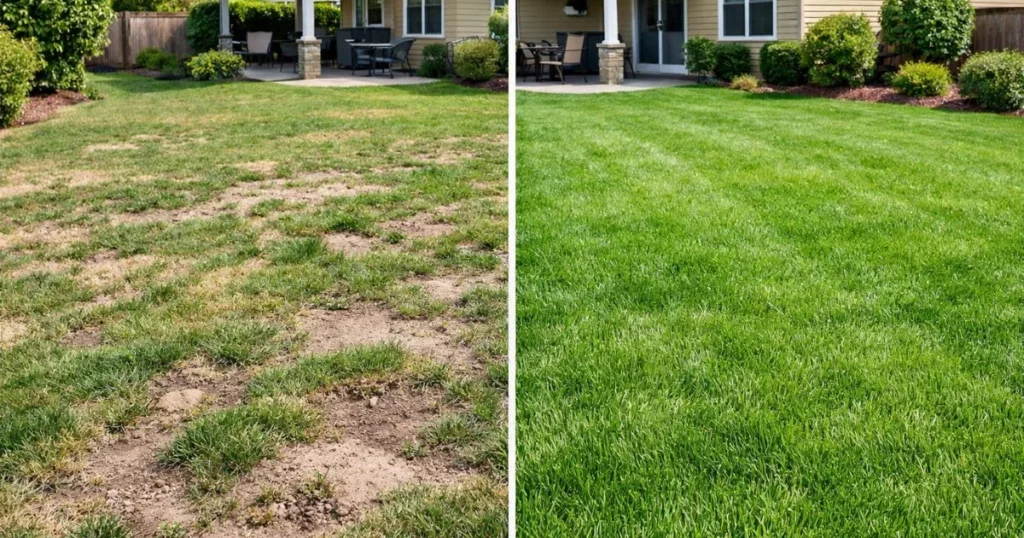
I have overseeded my own lawn more than once, and I learned the hard way. The first time, I bought too much seed. I thought more seed would fix thin grass faster. Instead, the grass came in weak and uneven. Some spots were crowded. Other areas still looked bare. I wasted money and time, and the lawn did not improve.
Later, I tried using less seed. That did not work either. What finally worked was learning how much grass seed to overseed based on lawn condition, grass type, and season. Most people searching this topic are in the same place. They are not guessing. They want a number they can trust before buying seed. This guide is written from real experience to answer that exact problem.
- Thin lawn = use the lower seed rate
- Patchy lawn = use a medium seed rate
- Very thin lawn = use the higher seed rate
- Overseeding uses less seed than a new lawn
- What Is Overseeding?
- Why Seed Amount Matters
- How Much Grass Seed to Overseed per 1,000 Sq Ft
- Adjust Seed Amount by Lawn Condition
- Overseeding vs Reseeding Seed Rates
- Fall vs Spring Overseeding Seed Amount
- Warm-Season Grass and Overseeding
- How to Measure Seed for Your Lawn
- Should You Follow the Seed Bag Rate?
- Best Way to Spread Grass Seed Evenly
- Common Mistakes with Overseeding Seed Amount
- Can You Overseed with Too Much Seed?
- Frequently Asked Questions About Overseeding
- Final Thoughts
What Is Overseeding?
Overseeding means spreading grass seed over an existing lawn.
The lawn still has grass, but it looks thin or patchy.
Overseeding is different from reseeding.
Reseeding is for bare soil.
Overseeding always uses less seed.
For a full explanation of overseeding, including timing, preparation, watering, and aftercare, see this overseeding lawn guide.
Why Seed Amount Matters
Grass seed needs space to grow.
Crowded seedlings fight for water and nutrients.
Too much seed leads to weak grass.
Too little seed leaves open soil where weeds grow.
Heavy overseeding often leads to shallow roots because seedlings compete too closely.
That is why seed rate matters more than people think.
How Much Grass Seed to Overseed per 1,000 Sq Ft
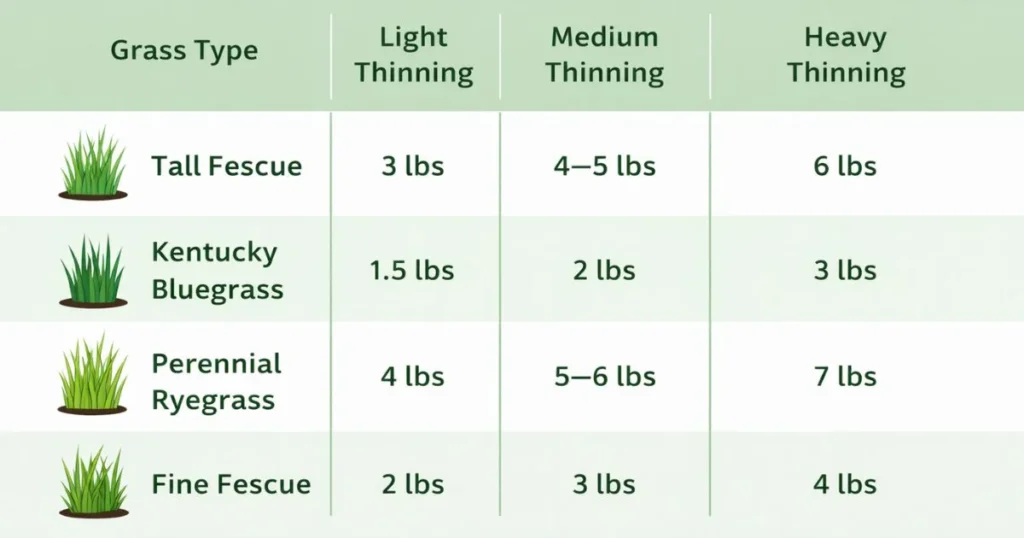
| Grass Type | Light Thinning | Medium Thinning | Heavy Thinning |
|---|---|---|---|
| Tall Fescue | 3 lbs | 4–5 lbs | 6 lbs |
| Kentucky Bluegrass | 1.5 lbs | 2 lbs | 3 lbs |
| Perennial Ryegrass | 4 lbs | 5–6 lbs | 7 lbs |
| Fine Fescue | 2 lbs | 3 lbs | 4 lbs |
These are safe overseeding rates for common cool-season grasses.
Tall Fescue
- Light thinning: 3 lbs
- Medium thinning: 4–5 lbs
- Heavy thinning: 6 lbs
Kentucky Bluegrass
- Light thinning: 1.5 lbs
- Medium thinning: 2 lbs
- Heavy thinning: 3 lbs
Perennial Ryegrass
- Light thinning: 4 lbs
- Medium thinning: 5–6 lbs
- Heavy thinning: 7 lbs
Fine Fescue
- Light thinning: 2 lbs
- Medium thinning: 3 lbs
- Heavy thinning: 4 lbs
These numbers are for overseeding only.
New lawns require higher rates.
Adjust Seed Amount by Lawn Condition
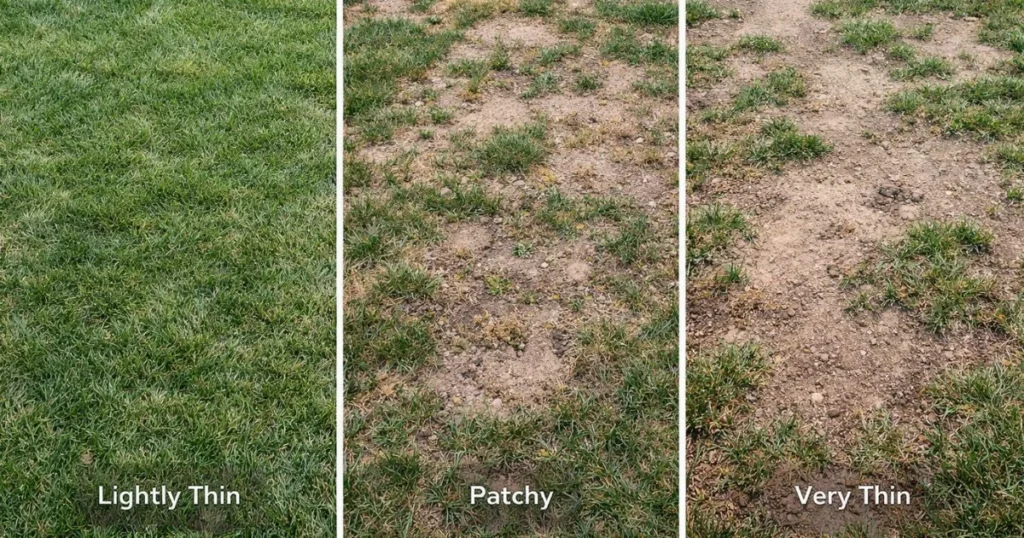
This step solves most confusion.
- Grass everywhere but thin
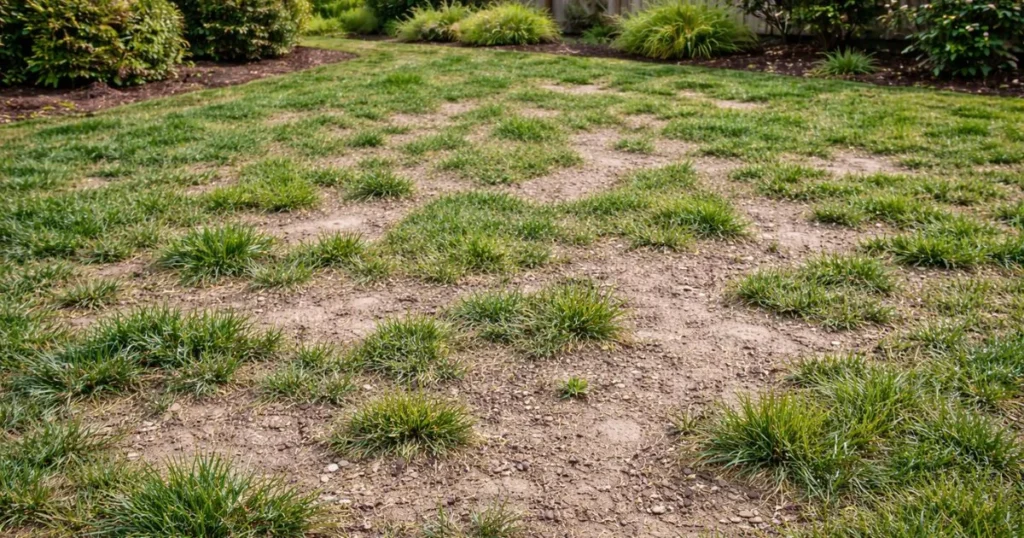
Use the low end of the range. - Patchy lawn with soil showing
Use the middle of the range. - Very thin lawn with bare spots
Use the high end of the range.
Do not use one number for every lawn.
Overseeding vs Reseeding Seed Rates
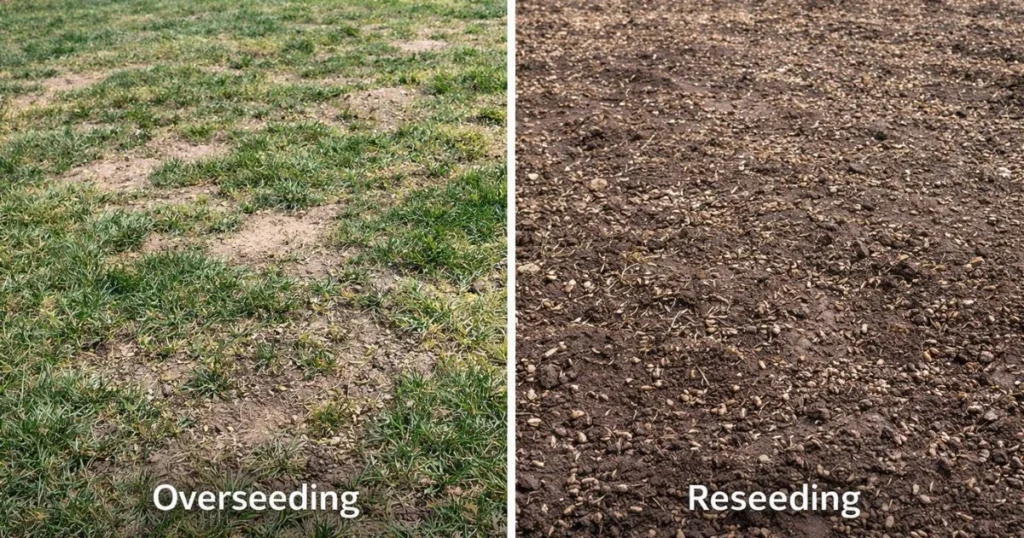
Many people fail because they mix these up.
- Overseeding uses about half the seed of a new lawn.
- Reseeding uses full rates because soil is bare.
| Overseeding | Reseeding |
|---|---|
| Used on thin lawns | Used on bare soil |
| Grass already exists | No grass present |
| Lower seed amount | Higher seed amount |
| About half the seed rate | Full seed rate needed |
If a seed bag shows 6 lbs per 1,000 sq ft for a new lawn,
use around 3 lbs for overseeding.
Fall vs Spring Overseeding Seed Amount
Season affects how much seed survives.
Fall Overseeding
- Cooler soil
- Better germination
- Less seed loss
- Normal overseeding rates work well
Spring Overseeding
- More stress on seedlings
- Some seed may fail
- Slightly higher rates may help
Summer overseeding usually fails due to heat.
Warm-Season Grass and Overseeding
Warm-season grasses grow during warmer months.
They are not overseeded the same way as cool-season lawns.
Many warm-season lawns are overseeded with ryegrass for winter color.
Seed amounts depend on the grass used for overseeding.
Always confirm the grass type before buying seed.
How to Measure Seed for Your Lawn
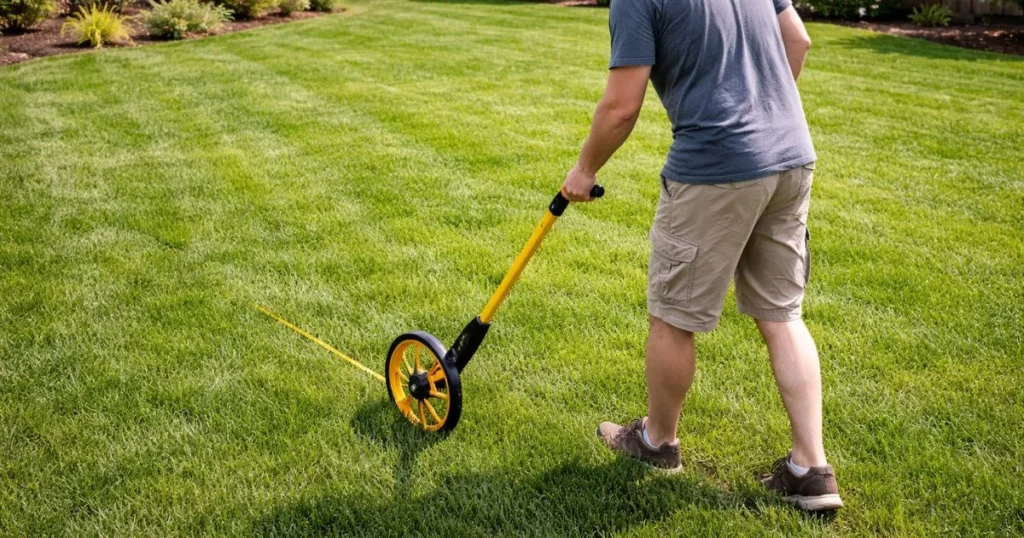
Measuring prevents overbuying.
Example:
- Lawn size: 5,000 sq ft
- Grass type: Tall fescue
- Lawn condition: Medium thinning
- Rate: 5 lbs per 1,000 sq ft
Lawn size: 5,000 sq ft
Seed rate: 5 lbs per 1,000 sq ft
5 × 5 = 25 lbs of grass seed
Calculation:
5 × 5 = 25 lbs of seed
Do not guess lawn size.
If you are unsure how to measure lawn square footage, see our guide on measuring lawn size correctly.
Should You Follow the Seed Bag Rate?
Seed bags often list rates for new lawns.
Those numbers are higher.
For overseeding, you usually need less seed.
In many cases, it is about half the bag rate.
Read the label.
Then adjust based on your lawn type and condition.
Some seed bags also list Pure Live Seed (PLS) percentage. Lower PLS means fewer viable seeds, which may affect how much product you need to buy.
Best Way to Spread Grass Seed Evenly
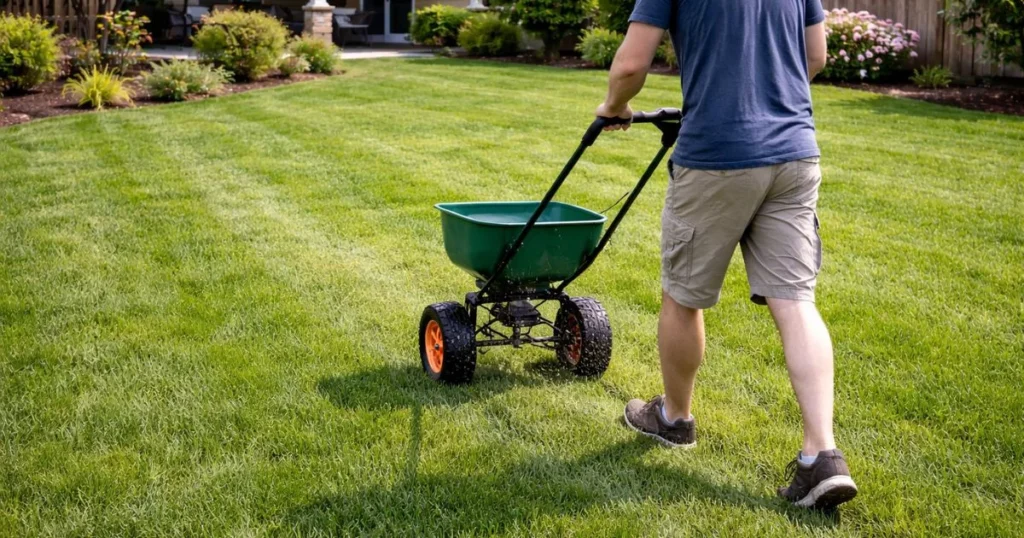
Even spreading improves results.
Spread half the seed in one direction.
Then spread the rest in a crossing direction.
This reduces missed spots and heavy piles.
Common Mistakes with Overseeding Seed Amount
- Using new-lawn seed rates
- Guessing lawn size
- Ignoring lawn condition
- Spreading seed unevenly
- Trusting spreader settings without testing
These mistakes cause most failures:
- Using new-lawn seed rates
- Guessing lawn size
- Ignoring lawn condition
- Uneven spreading
- Trusting spreader settings without testing
Avoid these and results improve fast.
Can You Overseed with Too Much Seed?
Yes.
Too much seed causes:
- Thin blades
- Weak roots
- Poor growth
- Higher disease risk
More seed does not mean thicker grass.
Frequently Asked Questions About Overseeding
Can I overseed without aerating?
Yes, if soil is not compacted.
Seed must touch soil to grow.
Should I water before or after overseeding?
Water after spreading seed.
Keep soil moist, not soaked.
How long does overseeded grass take to grow?
Most grass sprouts in 7 to 21 days.
Weather and grass type affect timing.
Can I walk on the lawn after overseeding?
Limit foot traffic.
Young grass is easy to damage.
Final Thoughts
After overseeding many lawns, one thing is clear. The seed amount makes or breaks the result. I have seen lawns fail from using too much seed, and I have seen thin lawns stay thin because too little seed was used. The best results always come from measuring the lawn, knowing the grass type, and matching the seed rate to how thin the lawn really is. When those steps are followed, overseeding works. Grass fills in evenly, bare spots improve, and the lawn looks healthy again.