 Skip to content

I have seen this happen every year. In early spring, lawns look healthy. Grass is green. Growth feels strong. Then summer arrives and stays longer than expected. Heat builds up. Rain becomes uneven. Foot traffic increases. By late summer, many fescue lawns look tired. Grass thins out. Bare spots show up. Weeds move in fast. Homeowners water more, but the lawn does not recover. That is when frustration starts.
This is the exact situation where fall overseeding with fescue works best. I have helped homeowners deal with lawns damaged by summer stress many times. When overseeding is done at the right time and in the right way, fall repairs what summer breaks. New grass fills gaps. Roots grow deeper. The lawn enters winter stronger instead of weaker. That is why overseeding fescue in fall is such an important step.
- Fall is the best time to overseed fescue.
- Soil temperature matters more than calendar dates.
- Proper watering is the biggest success factor.
- Seeding too late increases the risk of failure.
- Why Overseed Fescue in Fall
- What Overseeding Is
- Best Fall Timing for Overseeding Fescue
- Fall Overseeding Timing by Region
- Seed Selection for Overseeding
- Make a Plan Before You Overseed
- Prep the Lawn Before Seeding
- Temperature Check Before Seeding
- Seeding Rate for Overseeding Fescue
- How to Apply the Seed
- Starter Fertilizer After Overseeding Fescue
- Water Management After Overseeding
- Care for Young Fescue Grass
- Mowing After Overseeding
- What Happens If You Overseed Too Late in Fall
- Common Problems and Fixes
- FAQs About Overseeding Fescue in Fall
- conclusion
Why Overseed Fescue in Fall
Summer stress weakens fescue lawns.
Heat dries soil.
Foot traffic causes damage.
Fall overseeding helps fix these problems.
Fall also brings:
- Fewer weeds
- Less heat stress
- Better growing conditions
Spring has more weed pressure.
Fall gives grass space to grow without competition.

What Overseeding Is
Overseeding means spreading new grass seed over an existing lawn.
You do not remove the old grass.
You improve it.
This helps:
- Thin lawns
- Patchy areas
- Older fescue grass
Overseeding keeps your lawn thick and healthy.
For a complete explanation of overseeding, including timing, tools, and aftercare for all grass types, this overseeding lawn guide covers the full process.
Best Fall Timing for Overseeding Fescue
Timing is the most common reason overseeding fails.
Fescue seed grows best when:
- Soil temperature is 50°F to 65°F
- Daytime air temperature is 60°F to 75°F
These conditions usually happen in early to mid-fall.
Seed about 3 to 4 weeks before the first hard frost.
This gives roots time to form.
Seeding too early risks heat stress.
Seeding too late risks weak growth.

Fall Overseeding Timing by Region
| Region | Best Fall Overseeding Window | Main Risk If Delayed |
|---|---|---|
| Northern Areas | Late August to Early September | Early frost |
| Transition Zone | Early to Mid-September | Cold soil slows germination |
| Southern Cool-Season Lawns | Mid-September to October | Weak root growth |
Timing changes based on location.
Northern areas usually need overseeding earlier in fall because soil cools faster.
- Soil cools sooner
- Overseed earlier in fall
In the transition zone:
- Early to mid-fall works best
In southern areas with cool-season lawns:
- Mid to late fall is common
Soil temperature is more reliable than calendar dates.
Seed Selection for Overseeding
Most lawns use tall fescue.
Choose seed that:
- Matches your lawn
- Has a high germination rate
- Has low weed seed content
Avoid low-cost blends with filler seed.
Quality seed gives better results.
Fescue grows best in soil with a pH between 6.0 and 7.0. If soil is too acidic or too alkaline, germination and root growth can slow down.
Make a Plan Before You Overseed
A simple plan prevents mistakes.
Before you start:
- Measure your lawn
- Buy the correct seed amount
- Check the weather forecast
- Prepare watering access
Fall timing is short.
Planning saves time.
Prep the Lawn Before Seeding
Seed must touch soil to grow.
Before overseeding:
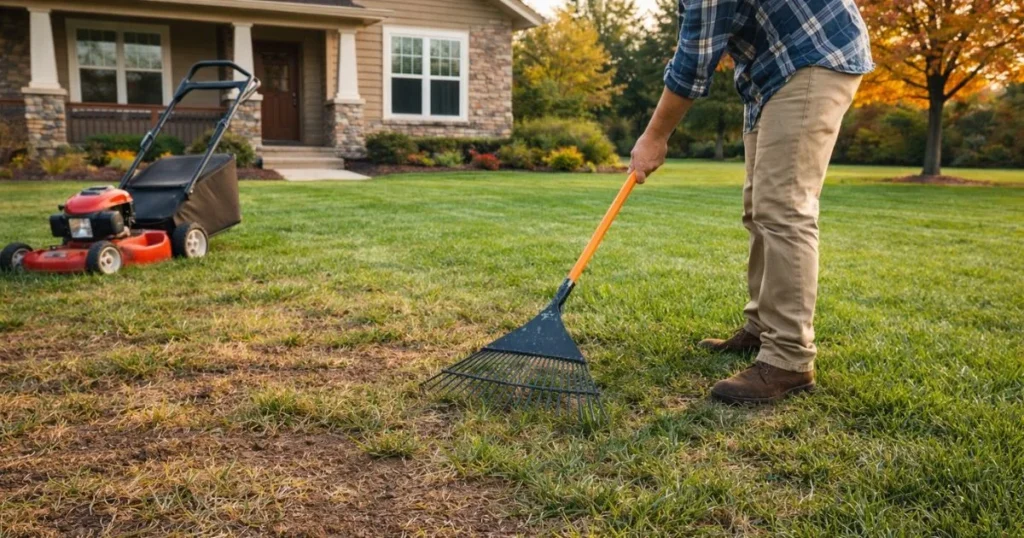
- Mow the lawn short
- Bag clippings
- Rake lightly
- Remove dead grass
If soil feels hard, aeration helps.
Aeration creates space for roots.
Aeration improves results but is not required.
Temperature Check Before Seeding
Do not guess.
Use a soil thermometer.
Check soil 2 to 3 inches deep.
Hot soil dries seed.
Cold soil slows germination.
Seeding Rate for Overseeding Fescue
Do not use new lawn rates.
For overseeding:
- Apply 3 to 5 pounds of seed per 1,000 square feet
Too much seed causes weak grass.
Too little seed leaves gaps.
Tall fescue usually begins to sprout within 7 to 14 days when soil temperature and moisture levels are correct. If nothing appears after two weeks, check soil moisture and temperature.
Spread seed evenly.
How to Apply the Seed
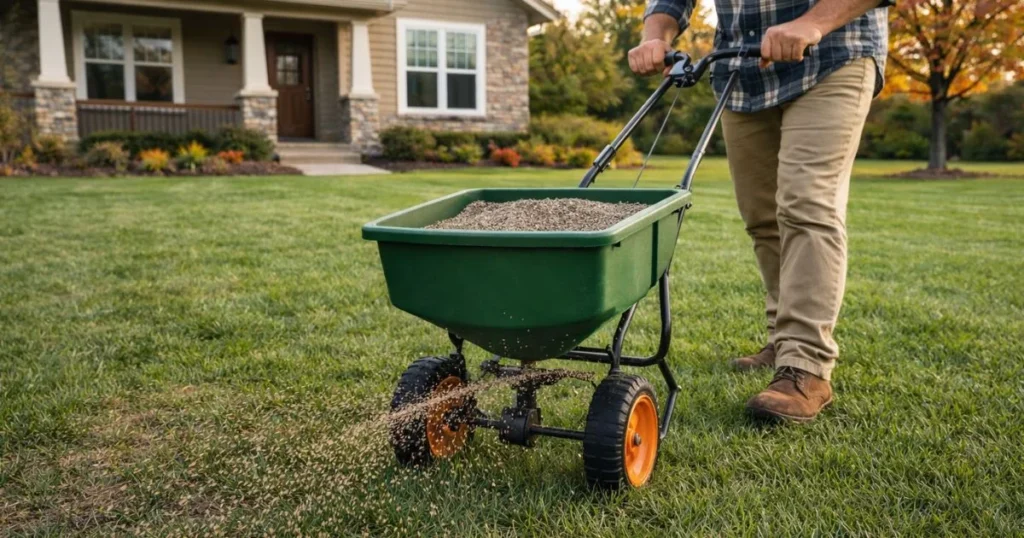
Use a broadcast spreader.
Apply:
- Half the seed in one direction
- The rest at a right angle
Lightly rake after spreading.
Do not bury the seed.
Fescue seed should remain close to the surface and be lightly covered, no deeper than about 1/4 inch. Planting too deep can prevent proper germination.
Starter Fertilizer After Overseeding Fescue
Starter fertilizer supports root growth.
Apply starter fertilizer:
- At seeding
- Or within a few days after
Choose a fertilizer higher in phosphorus.
Avoid heavy fertilizer use.
Too much fertilizer harms young grass.
If overseeding late in fall, use light feeding only.
Water Management After Overseeding
| Time Period | Watering Frequency | Goal |
|---|---|---|
| Days 1–7 | 2–3 times per day (light) | Keep soil moist |
| Days 8–21 | Once per day | Support new growth |
| After 3 Weeks | 2–3 times per week (deep) | Build strong roots |
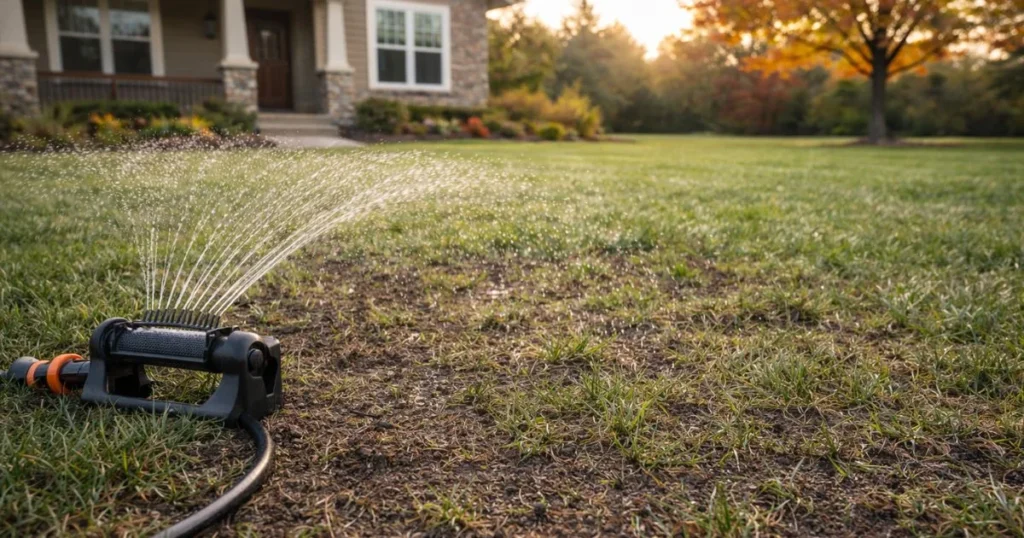
Watering decides success or failure.
Right after seeding:
- Keep soil damp
- Do not flood
First 7 days:
- Water 2 to 3 times daily
- Short watering each time
After sprouts appear:
- Water once daily
After 3 weeks:
- Water deeper
- Fewer times per week
Overwatering causes rot.
Underwatering dries seed.
Care for Young Fescue Grass
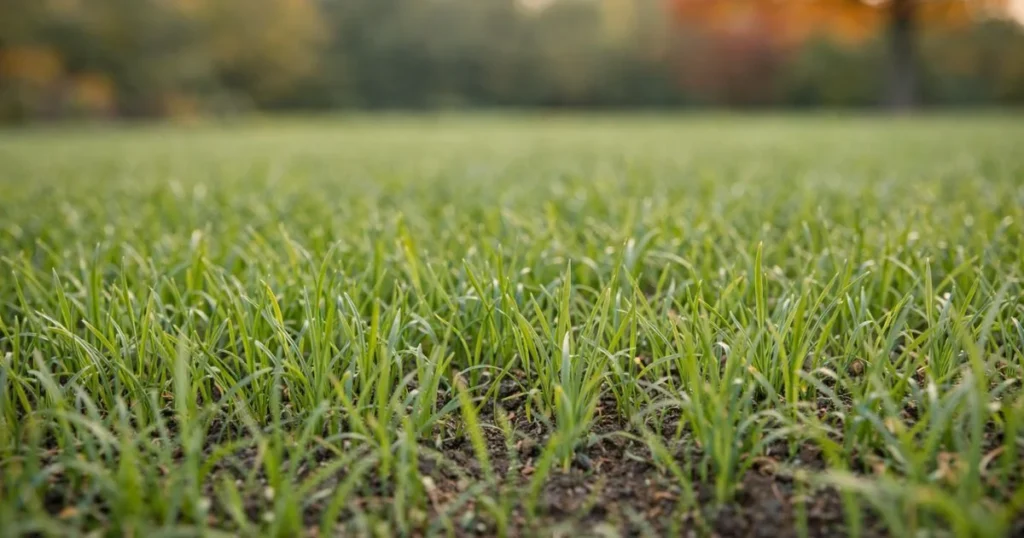
New grass is fragile.
Avoid foot traffic.
Do not mow too early.
Wait until grass reaches 3 inches.
Use a sharp mower blade.
Cut only the top third.
Mowing After Overseeding
Mowing helps grass thicken.
Keep fescue height:
- Between 3 and 4 inches
Do not scalp the lawn.
Taller grass shades soil and protects roots.
What Happens If You Overseed Too Late in Fall
Late fall overseeding is risky.
Cold soil slows growth.
Seed may not sprout before frost.
If grass does grow:
- Roots stay weak
- Winter damage is more likely
If you miss the fall window:
- Wait for next fall
- Or plan carefully for spring
Correct timing gives better results than rushing.
Common Problems and Fixes
Seed did not grow
- Soil dried out
- Poor soil contact
Patchy growth
- Uneven seed spread
- Inconsistent watering
Weeds appear
- Lawn was thin before seeding
These problems are common and fixable.
- Seeding too late in fall
- Using too much seed
- Letting soil dry out
- Mowing too early
- Poor seed-to-soil contact
FAQs About Overseeding Fescue in Fall
Can you overseed fescue without aerating?
Yes. Aeration helps but is not required.
Can you just spread seed without raking?
No. Seed must touch soil to grow.
How often should you overseed fescue?
Most lawns need overseeding every 1 to 2 years.
Is fall better than spring for overseeding fescue?
Yes. Fall gives stronger roots and fewer weeds.
conclusion
Overseeding fescue in fall is one of the most reliable ways to restore a thin lawn. I have seen lawns fail when seed was rushed or timing was guessed. I have also seen strong results when homeowners followed soil temperature, watering, and basic prep steps. Fall overseeding is not about quick fixes. It is about giving fescue the right conditions to recover and grow stronger before winter. When done correctly, thin areas fill in, weeds lose space, and the lawn looks healthier going into the next season. From experience, using the fall window wisely saves time, money, and frustration later.
- Soil temperature checked
- Correct seed amount measured
- Watering plan ready
- Weather forecast checked