 Skip to content
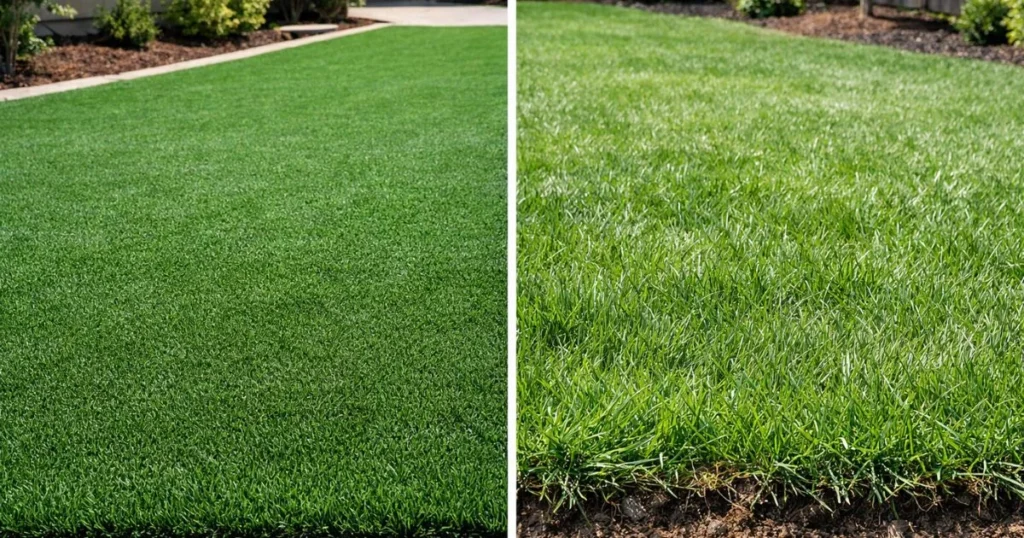
Many people search turf vs sod after something has already gone wrong. I have seen homeowners spend money on a lawn and regret it within weeks. Some expected soft grass but got a hard surface that felt hot. Others chose sod and were shocked by how much care it needed right away. Most of the time, the mistake comes from one thing. They were never clearly told the difference before choosing.
From real lawn projects and homeowner feedback, one pattern shows up again and again. People hear the words turf and sod used in the same way. Sellers focus on looks. Friends give mixed advice. Online answers are unclear. That confusion leads to stress, wasted money, and lawns that do not fit daily life. This guide breaks down turf vs sod in plain language so you can choose based on real use, not guesswork.
- What Is Turf?
- What Is Sod?
- Why People Confuse Turf and Sod
- Turf vs Sod: Side-by-Side Comparison
- Average Cost of Turf vs Sod in the USA
- 5-Year Cost Comparison Example
- Installation Time and Effort
- Sod Rooting and Establishment Time
- Maintenance Differences
- Best Season to Install Turf or Sod
- Climate and Weather Factors
- When Turf May Not Be the Best Choice
- When Sod May Not Be the Best Choice
- Water Use Comparison
- Soil and Drainage Differences
- Environmental Impact
- Pets and Kids Safety
- How Long Turf and Sod Last
- Region-Based Recommendation Guide
- Where Each Option Works Best
- Common Mistakes People Make
- Frequently Asked Questions About Turf vs Sod
- Turf vs Sod: Which One Should You Choose?
- Final Thoughts on Turf vs Sod
Key Takeaways
- Turf is artificial grass with very low maintenance
- Sod is real grass that needs regular care
- Turf costs more upfront but less over time
- Sod costs less upfront but needs ongoing work
- Climate, use, and time decide the best option
What Is Turf?
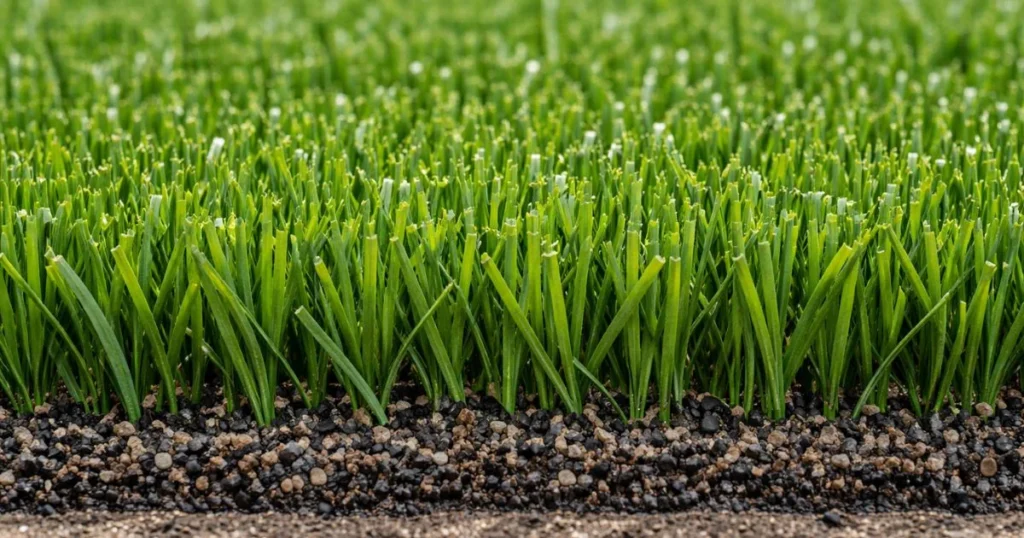
In most cases, turf means artificial grass.
Artificial turf is made from plastic fibers. It looks like grass but does not grow. It stays green all year and does not need mowing or watering.
Some people also use the word turf to mean grass in general. This causes confusion, especially for first-time homeowners.
In this article, turf means artificial turf.
What Is Sod?
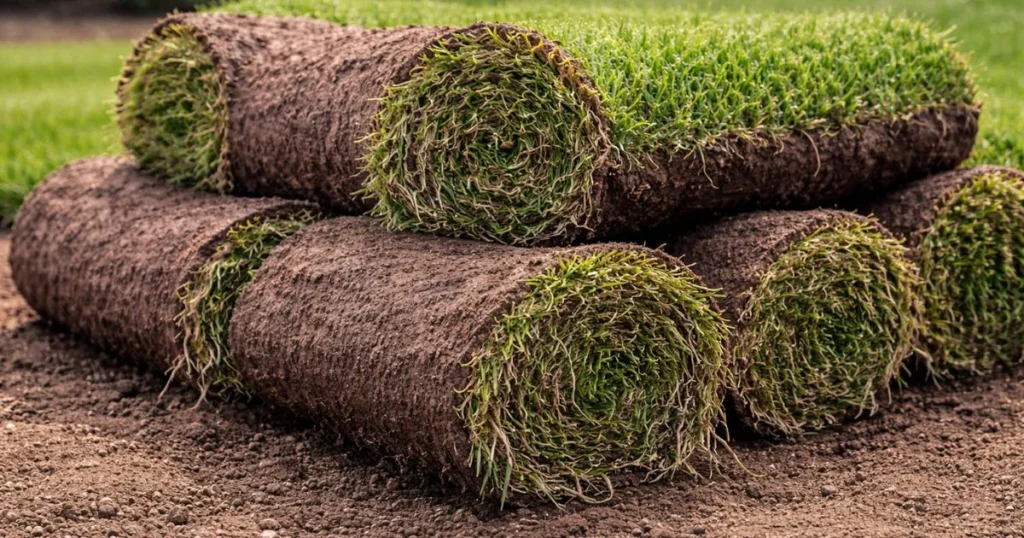
Sod is real grass.
It is grown on farms with roots and soil. It is cut into rolls or squares and placed on prepared soil.
Sod creates an instant lawn. Over time, the roots grow into the ground below. Sod needs water, sunlight, and regular care.
Why People Confuse Turf and Sod
The confusion comes from everyday use.
Landscapers, sports fields, and ads often use the word turf for lawns. Homeowners then assume turf and sod are the same.
They are not.
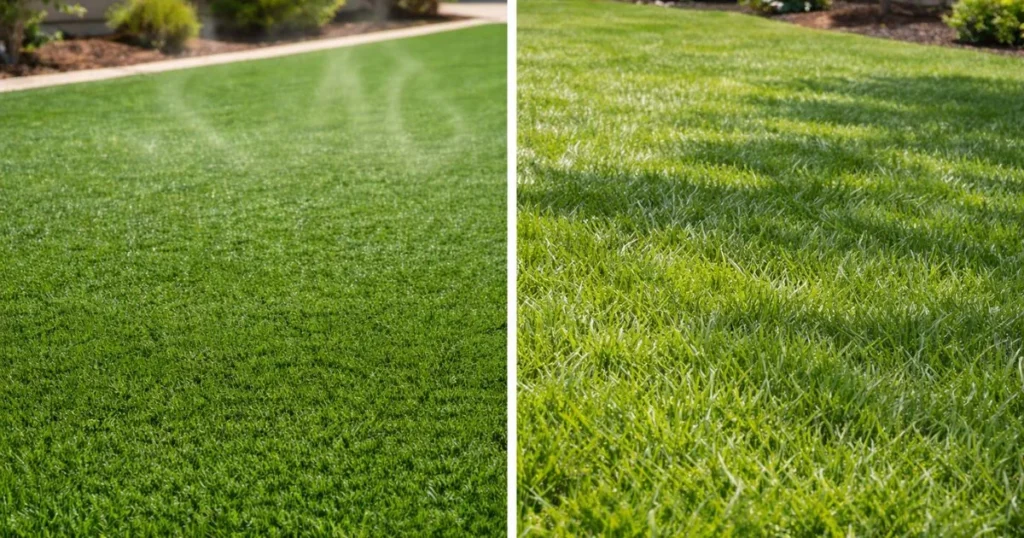
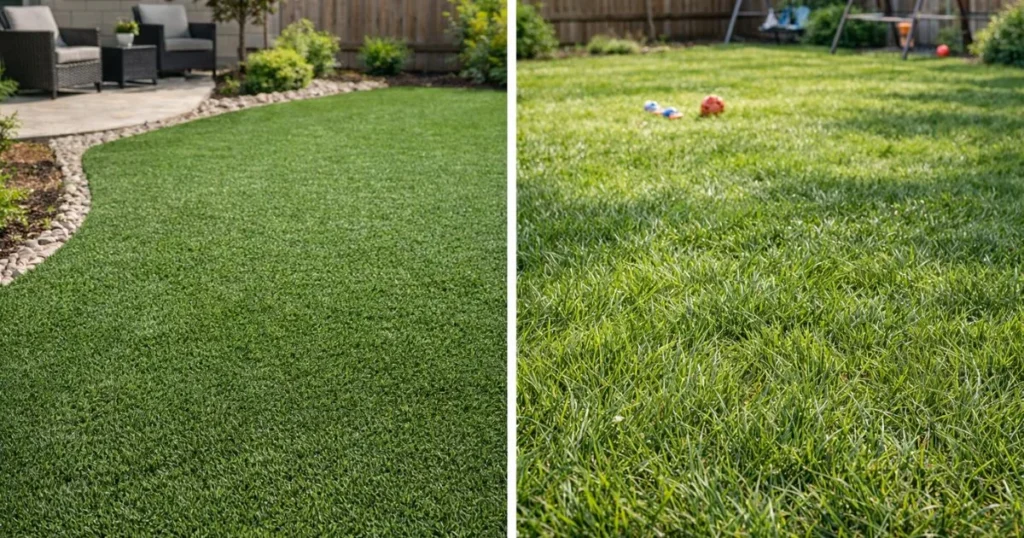
- Turf is artificial
- Sod is natural
Knowing this avoids costly mistakes.
Turf vs Sod: Side-by-Side Comparison
Nature
- Turf: Artificial surface
- Sod: Living grass
Look
- Turf: Green all year
- Sod: Changes with seasons
Feel
- Turf: Firm
- Sod: Soft
Growth
- Turf: No growth
- Sod: Roots grow into soil
| Feature | Turf | Sod |
|---|---|---|
| Type | Artificial grass | Natural grass |
| Upfront Cost | Higher | Lower |
| Long-Term Cost | Lower | Higher |
| Maintenance | Very low | Regular |
| Water Use | Very low | High |
| Heat in Sun | Can get hot | Stays cooler |
| Feel | Firm surface | Soft surface |
| Best For | Low upkeep yards | Natural lawns |
Average Cost of Turf vs Sod in the USA
Cost is a major concern for homeowners and rental owners.
- Turf: $8–$15 per square foot installed
- Sod: $1–$3 per square foot plus upkeep
Artificial Turf Cost
- Installed cost: $8 to $15 per square foot
- Most cost is paid upfront
- Very low ongoing expenses
Sod Cost
- Sod price: $1 to $3 per square foot
- Installation adds cost
- Ongoing costs include water, mowing, and care
Sod costs less at first.
Turf often costs less over many years.
This matters for rental homes and long-term planning.
5-Year Cost Comparison Example
To make the difference clearer, here is a simple example based on a 1,000 sq ft yard.
| Option | Estimated Install Cost | 5-Year Maintenance Cost | Estimated Total 5-Year Cost |
|---|---|---|---|
| Turf | $8,000 – $15,000 | Very low | $8,500 – $16,000 |
| Sod | $1,000 – $3,000 | Ongoing care and water | $4,000 – $8,000 |
This example shows:
- Turf costs more at the beginning
- Sod may cost more over time depending on care
- The better choice depends on budget and long-term plans
Installation Time and Effort
Turf Installation
- Old grass is removed
- A base is built
- Turf is laid and secured
Once installed, turf is ready for use.
Sod Installation
- Soil is prepared
- Sod is rolled out
- Watering starts right away
Its looks finished fast but needs time to settle.
Sod Rooting and Establishment Time
This section matters for families and active yards.
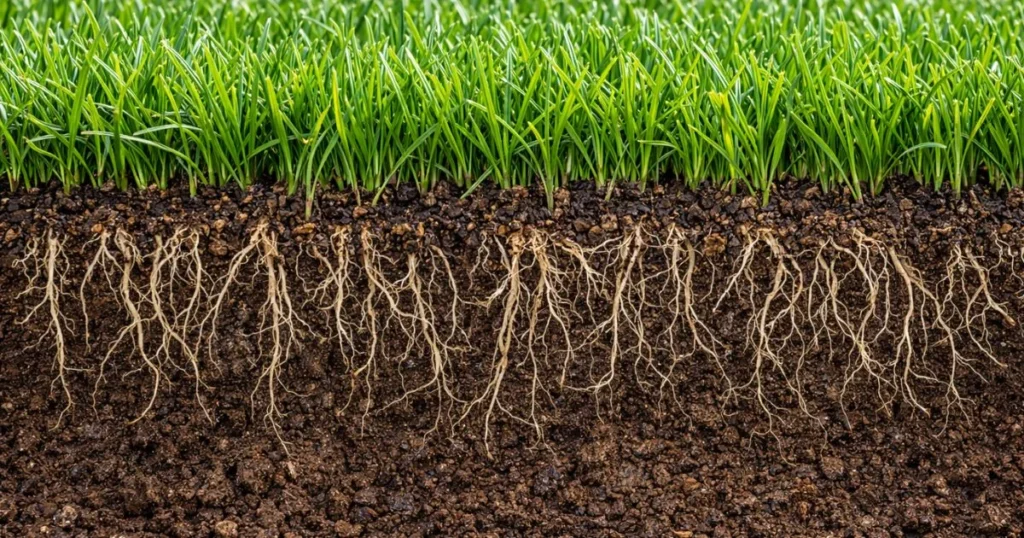
- Roots begin forming in 10 to 14 days
- Full rooting takes 3 to 6 weeks
- Heavy use should be avoided early
Walking or playing too soon can damage sod.
Mowing should wait until the grass feels firm.
If your existing lawn is thin but still alive, replacing it may not be needed. This overseeding lawn guide explains how to thicken natural grass without installing new sod.
Maintenance Differences
Turf Maintenance
- No mowing
- No fertilizing
- Light cleaning only
This suits busy homeowners and rental properties.
Sod Maintenance
- Regular watering
- Mowing
- Weed control
Sod needs time and effort but offers a natural lawn.
Best Season to Install Turf or Sod
Timing affects success.
Best Time for Sod
- Spring and early fall work best
- Summer heat slows rooting
- Cold winters can cause failure
Best Time for Turf
- Can be installed most of the year
- Frozen ground may delay work
This helps homeowners avoid lawn failure.
Climate and Weather Factors
Climate matters for turf vs sod decisions.
Turf in Hot Areas
Artificial turf can get hot in direct sun. This is a concern in warm states and for kids and pets.
Sod in Different Regions
Sod works best when grass type matches climate.
- Cool regions use cool-season grass
- Warm regions use warm-season grass
When Turf May Not Be the Best Choice
Turf is not perfect for every yard.
- Very hot climates may make it uncomfortable
- Poor drainage can cause odor
- Heavy direct sunlight can increase surface heat
It works best when installed correctly and used in the right setting.
When Sod May Not Be the Best Choice
Sod also has limits.
- Drought can damage grass
- Poor soil reduces success
- Low maintenance can lead to weeds and thinning
Sod needs regular care to stay healthy.
Water Use Comparison
Water use is a key concern in dry states.
- Turf uses very little water
- Sod needs regular watering
In dry climates, turf can lower water bills.
In wetter regions, sod performs well.
Soil and Drainage Differences
Soil health affects long-term results.
Sod and Soil
- Sod connects with soil
- Healthy soil supports strong roots
- Poor soil causes weak lawns
Turf and Drainage
- Turf does not improve soil
- Proper drainage is required
- Poor drainage can cause odor issues
Good preparation prevents problems later.
Environmental Impact
Each option affects the yard differently.
Turf Impact
- Saves water
- Made from plastic
- No soil or insect support
Sod Impact
- Uses water
- Supports soil life
- Helps cool the ground
Choose based on priorities.
Pets and Kids Safety
This matters for families.
Turf
- No mud
- Firm surface
- Can feel hot in sun
Sod
- Cooler surface
- Soft for play
- May attract insects
Daily use should guide the choice.
How Long Turf and Sod Last
Artificial Turf
- Lasts 10 to 20 years
- Depends on quality and traffic
Sod
- Can last many years with care
- Poor maintenance shortens life
This is important for long-term cost planning.
Region-Based Recommendation Guide
Different regions may favor different choices.
- Southwest: Turf often preferred due to water limits
- Southeast: Warm-season sod performs well
- Midwest: Cool-season sod works best
- Pacific Northwest: Sod performs well due to rainfall
- Mountain regions: Choice depends on sun exposure and soil
Climate should guide the decision.
Where Each Option Works Best
Turf Works Best For
- Low-maintenance yards
- Rental properties
- Decorative spaces
- Dry climates
Sod Works Best For
- Natural lawns
- Play areas
- Family homes
- Soil-focused yards
Common Mistakes People Make
- Choosing turf without considering heat
- Installing sod in peak summer
- Ignoring soil prep
- Choosing looks over use
Avoiding these saves money.
Frequently Asked Questions About Turf vs Sod
Is turf the same as sod?
No. Turf is artificial. Sod is real grass.
Can sod fail after installation?
Yes. Heat, poor soil, or bad watering can cause failure.
Does turf smell with pets?
It can if drainage is poor. Cleaning helps.
Which option adds more home value?
Sod often adds more value due to natural appeal.
Quick Decision Guide
Choose Turf If:
- You want low maintenance
- You live in a dry area
- You want year-round green
- The yard has low foot traffic
Choose Sod If:
- You want real grass
- Kids or pets use the yard daily
- You want a cooler surface
- You enjoy lawn care
Turf vs Sod: Which One Should You Choose?
Choose turf if:
- You want low upkeep
- You want year-round green
- You want lower long-term effort
Choose sod if:
- You want real grass
- You want cooler ground
- You enjoy lawn care
Final Thoughts on Turf vs Sod
After seeing how different lawns perform over time, one thing is clear. The best turf vs sod choice depends on how the yard is used, not how it looks on day one. Turf works well for low-maintenance spaces and rentals. Sod works better for family yards and people who want a natural feel. Most problems happen when expectations are wrong, not because the product is bad. When you think about time, climate, and daily use, the right choice becomes clear and the lawn lasts longer.