 Skip to content
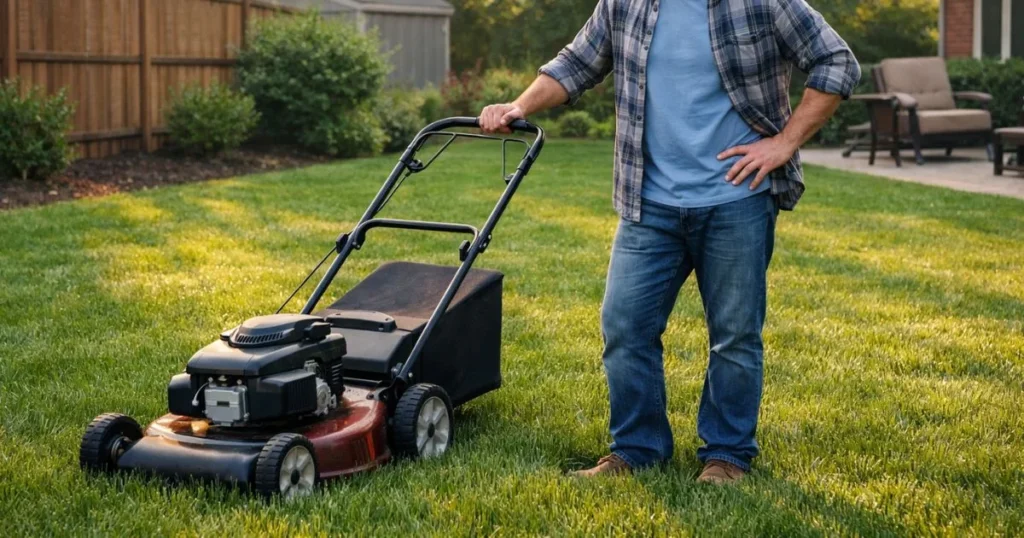
The first time I installed new sod, I thought mowing early would help it grow. The grass looked tall, uneven, and ready. I grabbed the mower and went ahead. That single mistake pulled pieces of sod loose, left brown lines, and slowed the whole lawn down. I learned fast that new sod does not fail because of bad grass. It fails because of bad timing.
If you are reading this, you are likely in the same spot. Standing in your yard. Looking at fresh sod. Wondering if mowing will fix it or destroy it. That worry is normal. Mowing new sod first time feels risky because it is. This guide comes from real mistakes, real fixes, and hands-on lawn care experience, so you do not have to learn the hard way.
- Quick Direct Answers for Snippet Clarity
- Why the First Mow Matters
- When to Mow New Sod for the First Time
- Wait Before Mowing a New Lawn
- Grass Type Matters for the First Mow
- Specific Grass Examples for Better Clarity
- Set Mower Height High for the First Cut
- Prepare Your Mower Before the First Mow
- Avoid Riding Mowers on New Sod
- Best Time of Day to Mow New Sod
- Do Not Mow Wet New Sod
- How to Mow New Sod the Right Way
- What If Sod Lifts While Mowing?
- Mowing New Sod in Hot Weather
- Visual Height Check Before the First Mow
- What to Do After the First Mow
- Common Mistakes to Avoid
- Frequently Asked Questions
- Related Care After Installing Sod
- Final Thoughts on Mowing New Sod First Time
Quick Direct Answers for Snippet Clarity
When can you mow new sod for the first time?
You can mow new sod once the roots hold firm in the soil, which usually takes about 10 to 14 days.
How high should you cut new sod the first time?
Set your mower to the highest setting and remove no more than one-third of the blade height.
- Wait 10–14 days before the first mow
- Check root grip, not just days
- Mow high on the first cut
- Never mow wet sod
- Use a push mower if possible
Why the First Mow Matters
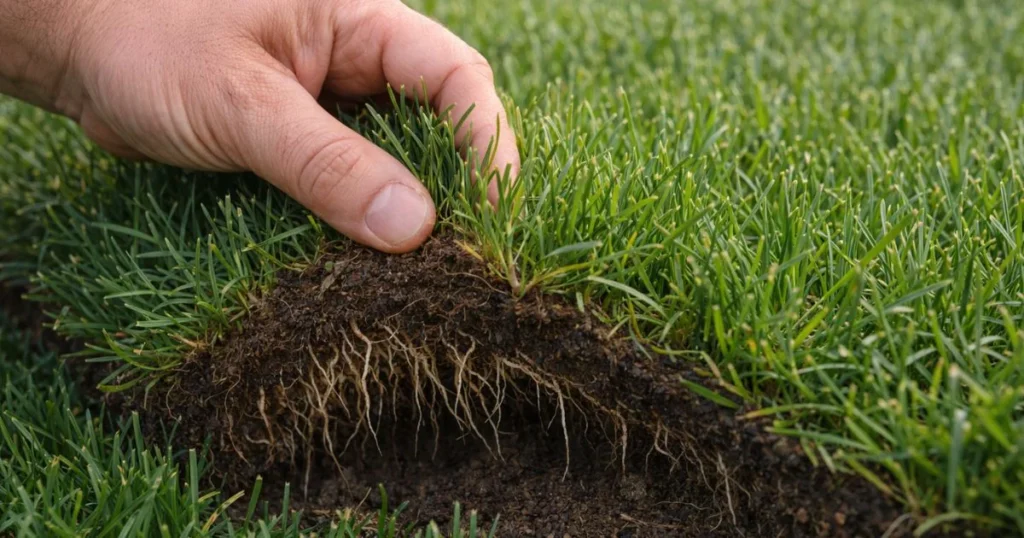
New sod has shallow roots.
Those roots are still grabbing the soil.
Mowing too early can:
- Pull sod loose
- Tear roots
- Create brown edges
- Slow lawn growth
A careful first mow helps sod settle and grow even.
When to Mow New Sod for the First Time
Most sod is ready in 10 to 14 days.
But days alone are not enough.
Use these checks:
- Grass height is about 3 to 4 inches
- Sod stays in place when pulled gently
- Soil feels firm, not soft
If sod lifts easily, wait longer.
This removes guesswork.
Wait Before Mowing a New Lawn
Waiting protects your investment.
Cutting too early can cause:
- Shifted sod seams
- Thin growth
- Longer rooting time
If unsure, waiting two more days is safer than mowing early.
Grass Type Matters for the First Mow
Different sod types grow at different speeds.
Cool-season sod like fescue or bluegrass:
- Roots slower
- Often needs closer to 14 days
Warm-season sod like Bermuda or Zoysia:
- Grows faster in heat
- May be ready earlier
- Roots must still hold firm
Always rely on root grip, not growth speed.
| Grass Type | Typical Wait Time | First Mow Height |
|---|---|---|
| Cool-season sod | 12–14 days | Highest mower setting |
| Warm-season sod | 10–14 days | Highest mower setting |
Specific Grass Examples for Better Clarity
| Grass Type | Typical Wait Time | First Mow Height |
|---|---|---|
| Kentucky bluegrass | 12–14 days | 3 to 3.5 inches |
| Tall fescue | 12–14 days | 3 to 4 inches |
| Perennial ryegrass | 10–14 days | 3 inches |
| Bermuda grass | 10–14 days | 1.5 to 2 inches |
| Zoysia grass | 10–14 days | 2 to 2.5 inches |
Set Mower Height High for the First Cut
First cut must be gentle.
Follow these rules:
- Set mower to highest setting
- Cut no more than one-third of blade height
- Never scalp new sod
Tall blades protect roots and soil moisture.
Prepare Your Mower Before the First Mow
Mower setup matters more than people think.
Before mowing:
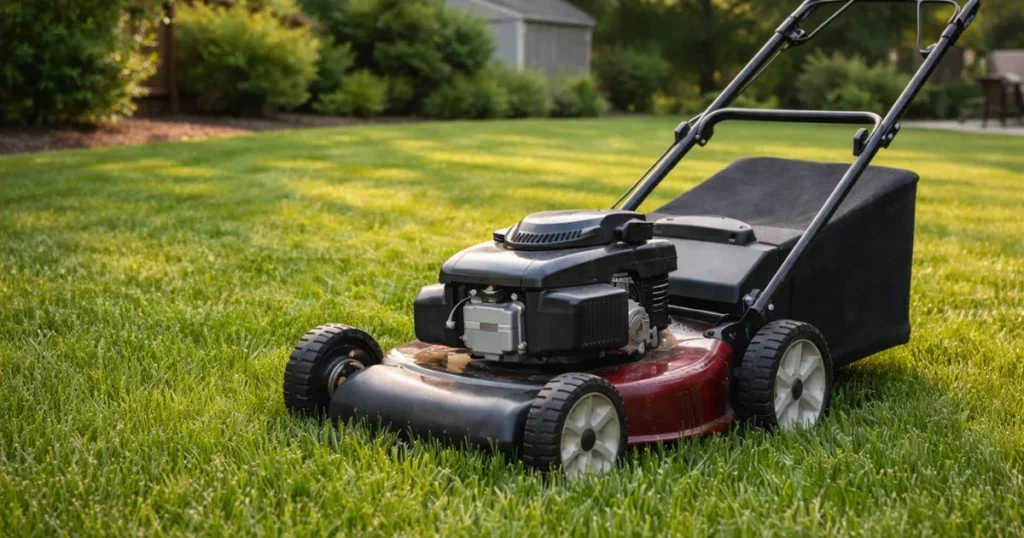
- Sharpen the blade
- Clean the deck
- Check that height is even
A dull blade rips grass and stresses sod.
Avoid Riding Mowers on New Sod
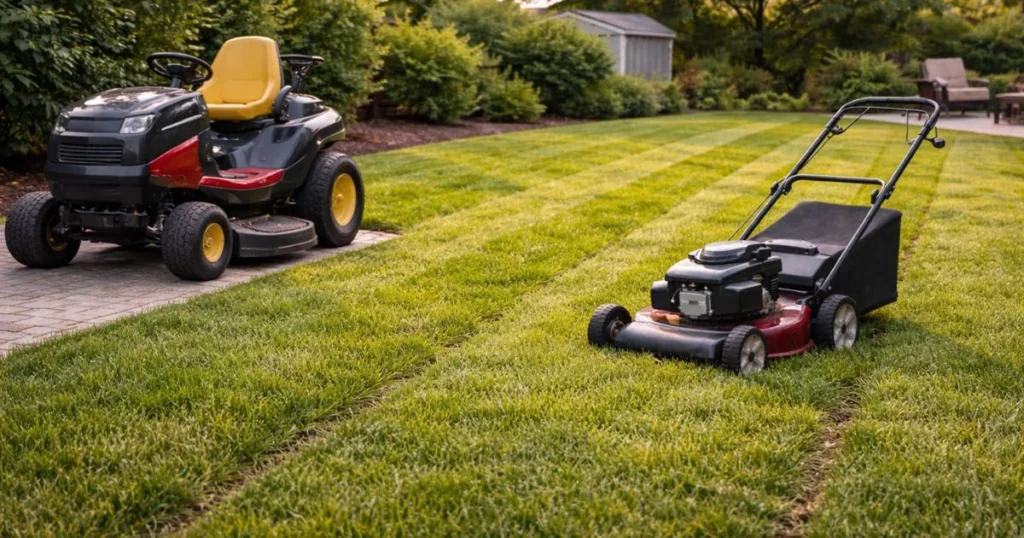
Riding mowers are heavy.
New sod cannot handle that weight.
For the first mow:
- Use a push mower
- Avoid sharp turns
- Stay off edges
Wait until sod is fully rooted before riding mowers.
Best Time of Day to Mow New Sod
Timing affects stress and recovery.
Best times:
- Late morning
- Early evening
Avoid:
- Early morning dew
- Midday heat
- Late evening moisture
Dry grass cuts clean and heals faster.
Do Not Mow Wet New Sod
Wet sod shifts easily.
Before mowing:
- Skip watering the day before
- Let grass dry fully
- Avoid rainy days
Dry soil gives cleaner cuts and better footing.
- Sod does not lift when pulled gently
- Grass height is about 3–4 inches
- Soil feels firm, not soft
- Mower blade is sharp
- Grass is fully dry
How to Mow New Sod the Right Way
Follow a calm approach:
- Walk slowly
- Mow straight lines
- Turn gently
- Avoid sudden stops
Slow mowing prevents sod movement.
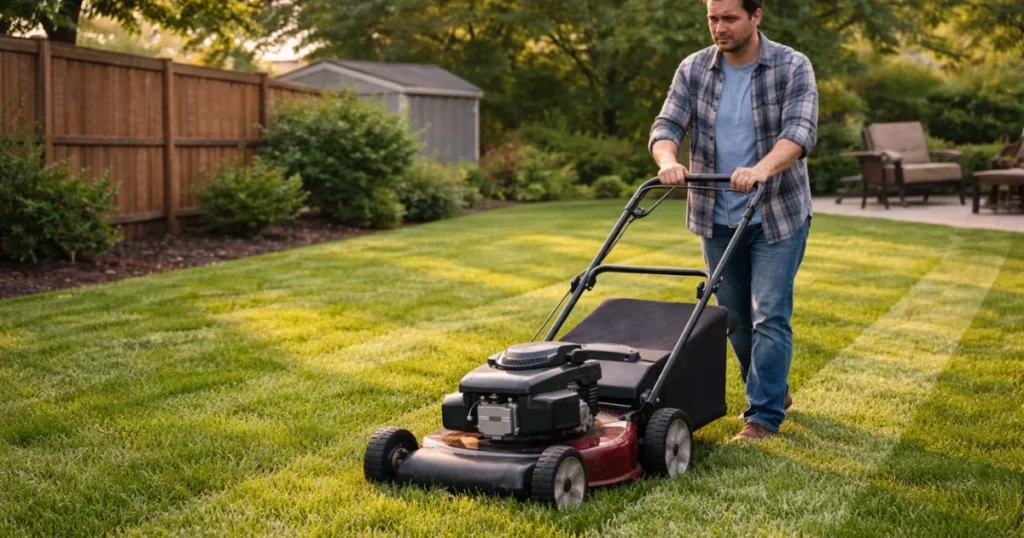
What If Sod Lifts While Mowing?
If you notice sod shifting or lifting during mowing, stop immediately. Raise the mower height and wait a few more days before trying again. Cutting too soon can undo early root growth.
Slow and careful mowing of new sod for the first time
Mowing New Sod in Hot Weather
Heat speeds blade growth.
Roots still need time.
During hot weather:
- Grass may look ready early
- Roots may still be weak
- Mowing too soon adds stress
If unsure, wait and cut high.
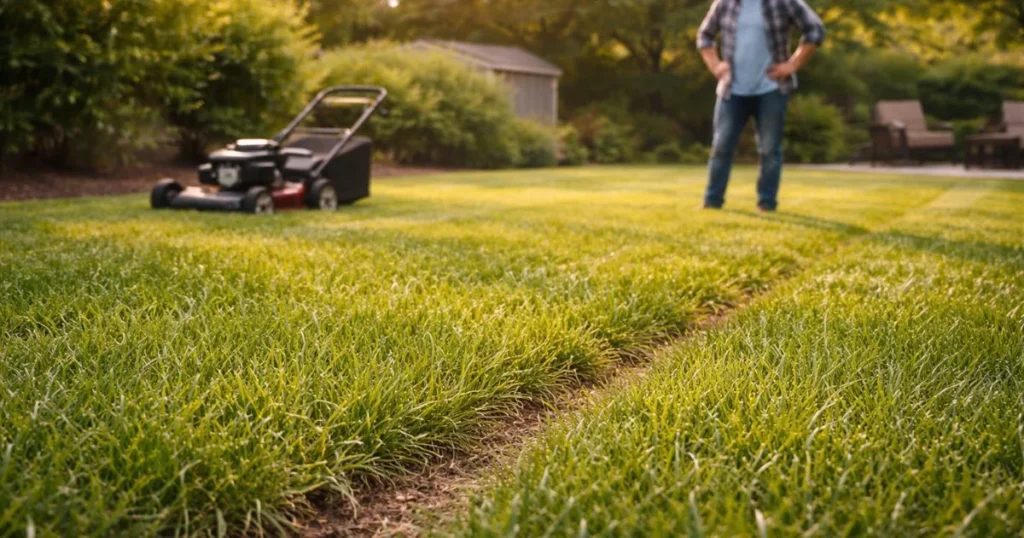
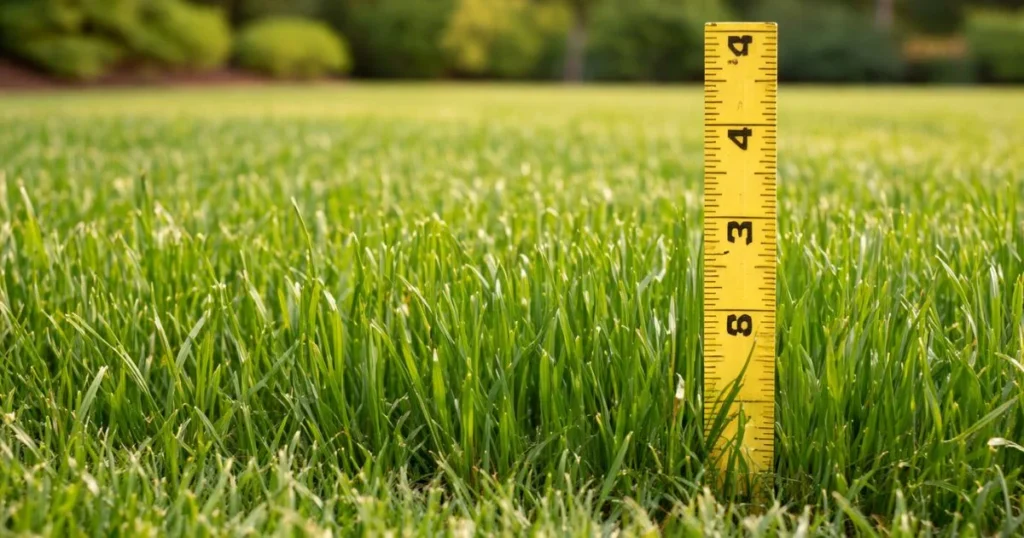
Visual Height Check Before the First Mow
Do not rely on days alone.
Sod is ready when:
- Grass stands upright
- Height reaches 3 to 4 inches
- Sod edges stay flat
If grass lays flat or feels loose, wait.
What to Do After the First Mow
After mowing:
- Water lightly if soil is dry
- Keep traffic low for two days
- Avoid fertilizer for now
Let sod recover before normal care.
Common Mistakes to Avoid
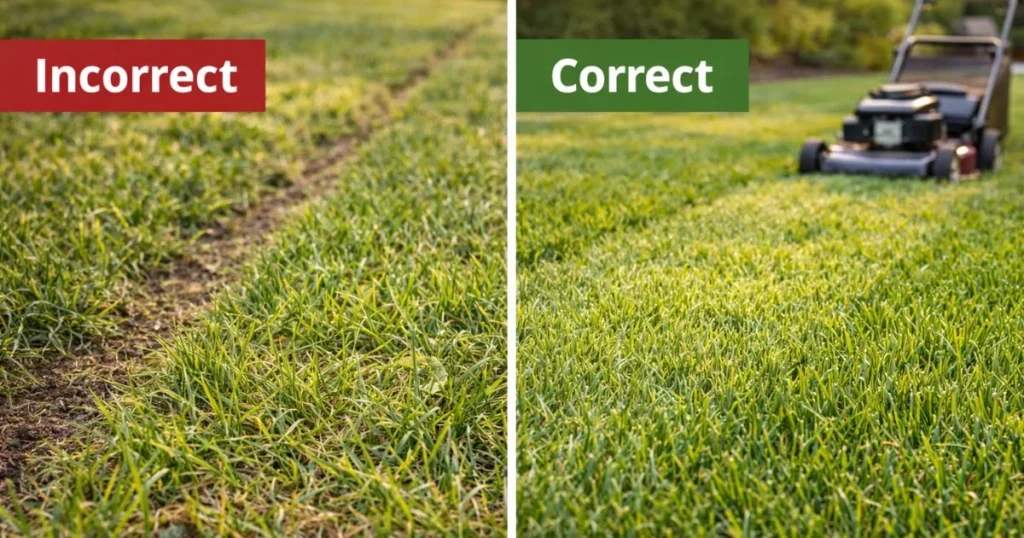
Many sod failures come from these errors:
- Mowing too early
- Cutting too short
- Using dull blades
- Mowing wet grass
- Riding mower too soon
Avoiding these protects roots.
| Mistake | Why It Hurts Sod | What to Do Instead |
|---|---|---|
| Mowing too early | Pulls sod loose | Wait for root grip |
| Cutting too short | Stresses roots | Mow high |
| Mowing wet sod | Shifts sod | Wait until dry |
Frequently Asked Questions
What if sod grows too tall before two weeks?
Mow only if sod holds firm.
Set mower high and cut lightly.
Can I bag clippings on the first mow?
Yes. Mulching is also fine if grass is dry.
When can I mow normally again?
After two to three gentle mows at high height.
Related Care After Installing Sod
Mowing is one step.
New sod also needs:
- Proper watering
- Limited foot traffic
- Delayed fertilizing
These steps help roots lock in.
If your sod later becomes thin or uneven instead of being replaced again, this overseeding lawn guide explains how to thicken it and restore density.
Final Thoughts on Mowing New Sod First Time
After years of working with new lawns and fixing sod damaged by early mowing, one thing is always true. Strong roots matter more than tall grass. When you wait until sod holds firm, cut high, and mow slowly, the lawn settles fast and stays even. Rushing the first mow causes problems that take weeks to fix. I have made that mistake so you do not have to. Follow the steps in this guide, and your first mow will help your sod grow stronger, not weaker.
Expert tip: If sod holds firm, you can mow. If it moves, you wait.