 Skip to content
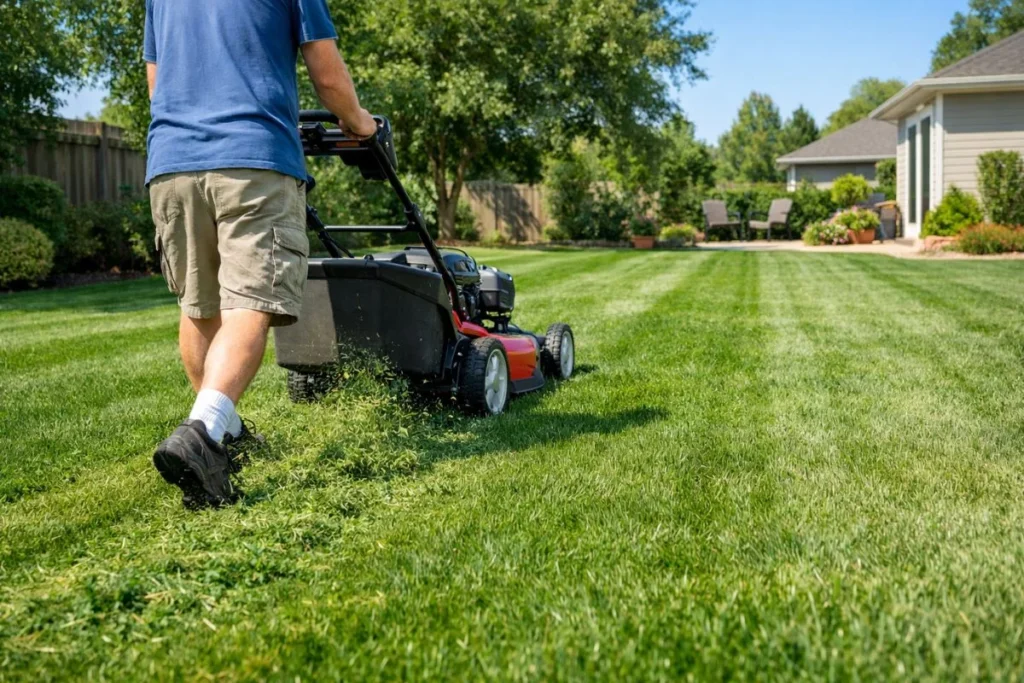
Many homeowners finish mowing and then stop for a moment while looking at grass clippings spread across the lawn. The yard may look uneven, clippings stick to shoes, and sometimes thick piles sit on top of the grass. This creates real confusion. Some people worry they are harming their lawn by leaving clippings behind, while others feel bagging every time takes too much effort. The problem usually starts when homeowners receive mixed advice and are unsure what actually works.
From years of observing regular lawn mowing routines and common homeowner mistakes, this question comes up more than almost any other lawn care decision. Some lawns turn patchy because clippings were left when grass was too wet, while others lose nutrients because everything was bagged unnecessarily. The truth is simple. There is no single rule that works every time. The right choice depends on lawn condition, mowing frequency, and seasonal growth. This guide explains how to decide correctly each time you mow so your lawn stays healthy and clean.
- What Is the Difference Between Mulching and Bagging?
- Quick Comparison: Mulching vs Bagging Grass Clippings
- Advantages of Mulching Grass Clippings
- Disadvantages of Mulching Grass Clippings
- Advantages of Bagging Grass Clippings
- Disadvantages of Bagging Grass Clippings
- When to Choose Mulching vs Bagging
- How Mowing Frequency Changes Your Choice
- Lawn Care Goals
- When Lawn Appearance Matters More Than Lawn Feeding
- Grass Species and Clipping Choice
- Best Times to Mulch Grass Clippings
- Mulching vs Bagging vs Side Discharge
- What to Do With Lawn Clippings
- Environmental Benefits of Leaving Clippings
- Common Mistakes Homeowners Make
- Do Grass Clippings Cause Thatch?
- Practical Lawn Care Experience
- Fertilizer Clarification
- FAQ
- Final Verdict: Bag or Mulch Grass Clippings?
What Is the Difference Between Mulching and Bagging?
Mulching means leaving grass clippings on the lawn after mowing. The mower cuts clippings into small pieces that settle between grass blades and break down naturally.
Bagging means collecting clippings in a mower bag and removing them from the lawn surface.
Both methods work well when used in the right situation.
Quick Comparison: Mulching vs Bagging Grass Clippings
| Feature | Mulching | Bagging |
|---|---|---|
| Lawn nutrients | Returns nutrients | Removes nutrients |
| Lawn appearance | Natural look | Cleaner look |
| Time required | Faster mowing | Takes more time |
| Fertilizer need | Lower | Higher |
| Disease control | Not ideal | Better option |
| Heavy growth | Can clump | Cleaner result |
This quick comparison helps homeowners decide immediately after mowing.
Advantages of Mulching Grass Clippings
Mulching supports lawn health during normal mowing routines.
- returns nutrients to soil
- reduces fertilizer needs
- saves cleanup time
- helps soil keep moisture
- improves soil activity
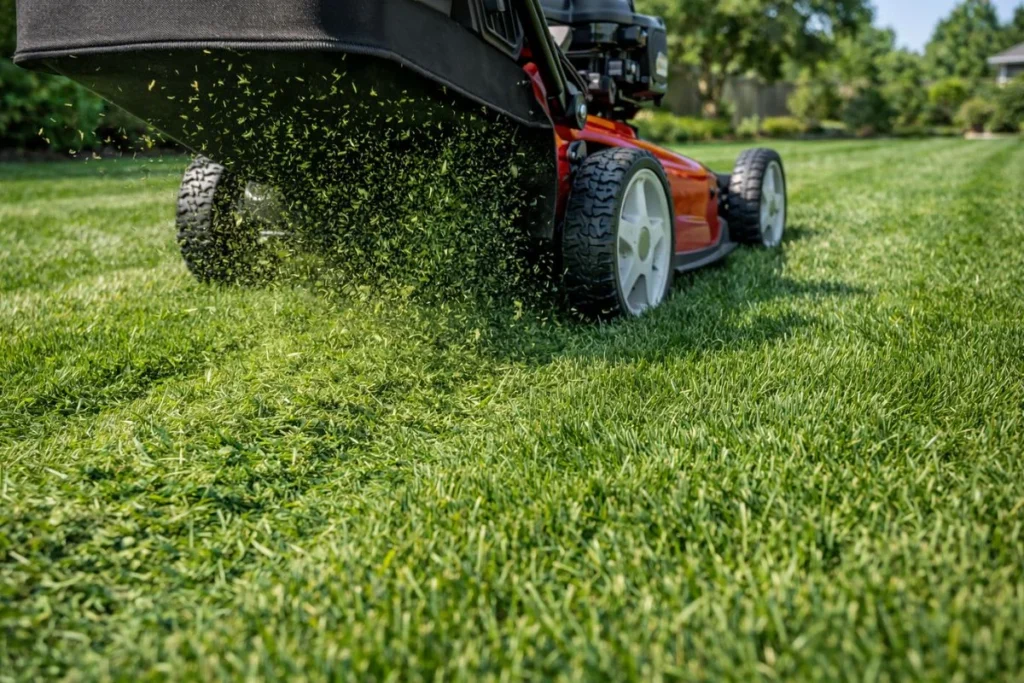
Grass clippings contain a high amount of water and decompose quickly. When mowing happens regularly, clippings almost disappear within days.
For homeowners who mow weekly, mulching usually keeps lawns healthy with less effort.
Disadvantages of Mulching Grass Clippings
Mulching may cause problems under certain conditions.
Issues appear when:
- grass is wet
- lawn becomes too tall
- mower blades are dull
- too much grass is removed at once
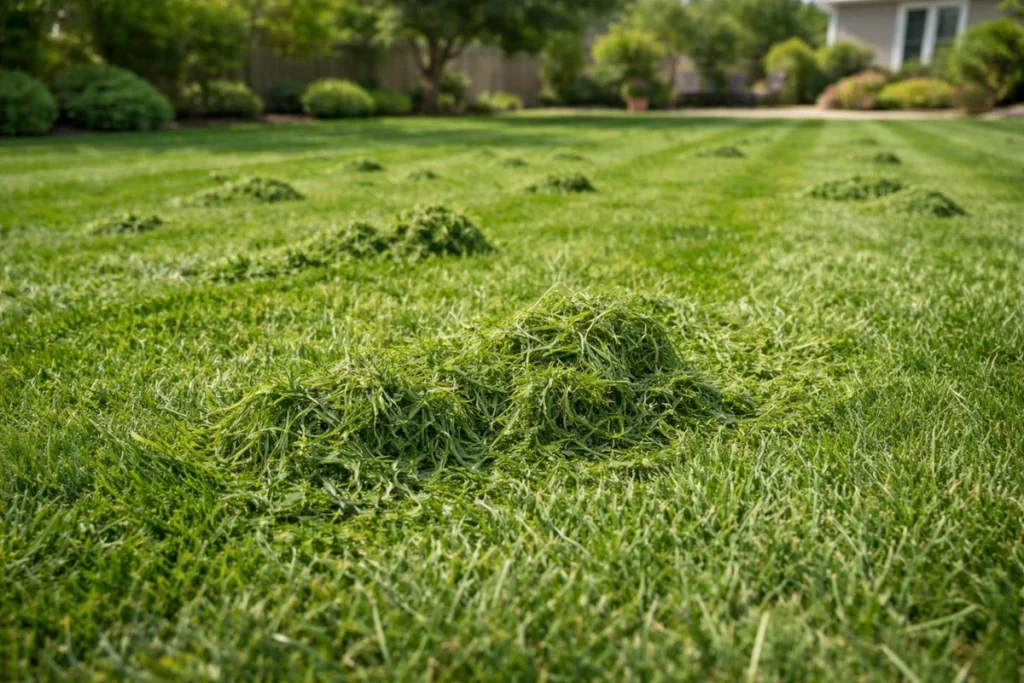
Thick clumps may block sunlight and slow growth. This often happens when mowing is delayed.
Advantages of Bagging Grass Clippings
Bagging becomes helpful when lawn conditions change.
- creates a clean appearance
- removes diseased grass
- controls weed seed spread
- prevents heavy clumping
- useful during fall cleanup
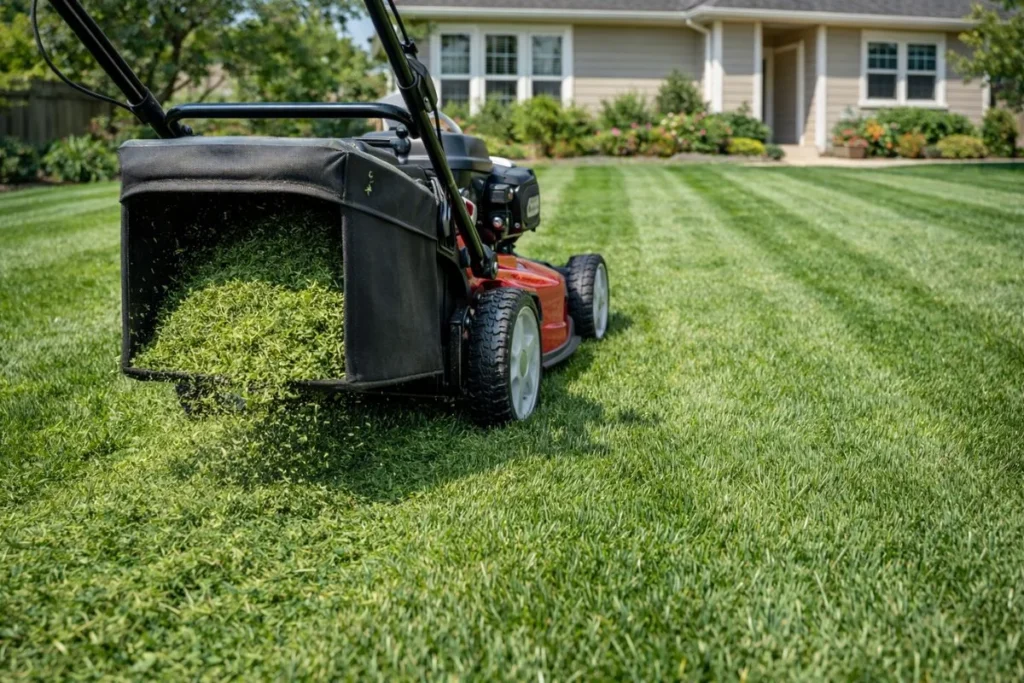
Homeowners focused on curb appeal often prefer bagging for front lawns or visible areas.
Disadvantages of Bagging Grass Clippings
Bagging requires more effort.
- increases mowing time
- removes natural nutrients
- raises fertilizer needs
- requires disposal work
Regular bagging removes nutrients your lawn could reuse naturally.
When to Choose Mulching vs Bagging
Your choice should match lawn conditions at the time of mowing.
Choose Mulching When:
- lawn is healthy
- mowing happens weekly
- grass is dry
- growth is normal
- summer heat stresses grass
Choose Bagging When:
- grass becomes overgrown
- lawn disease appears
- mowing happens after rain
- weeds produce seeds
- fall debris mixes with grass
Most experienced lawn owners switch methods during the season instead of using only one approach.
How to Decide After Every Mow
- Is the grass dry?
Yes → Continue
No → Bag clippings - Did you remove more than one-third of grass height?
Yes → Bag
No → Mulch - Does the lawn look clumpy after mowing?
Yes → Bag next mow
No → Mulch safely - Is appearance your main goal today?
Yes → Bag
No → Mulch
How Mowing Frequency Changes Your Choice
Mowing frequency strongly affects clipping management.
Weekly mowing produces small clippings that break down quickly. If you are beginning seasonal mowing for the first time this year, review our guide on mowing season start to make sure your lawn is ready before managing grass clippings. Mulching works best in this situation and saves time.
If mowing is delayed, grass becomes longer and heavier. Bagging helps prevent thick layers from covering healthy turf.
During spring growth, many homeowners alternate between mulching and bagging depending on how fast grass grows.
Lawn Care Goals
Different homeowners want different results.
Some want the greenest lawn possible. Others want the cleanest appearance.
Mulching supports soil health over time. Bagging improves visual neatness immediately.
Many homeowners mulch backyard areas while bagging front lawns where appearance matters more.
When Lawn Appearance Matters More Than Lawn Feeding
Neighborhood standards, HOA rules, or preparing a home for sale often require a tidy lawn.
Visible clippings may make freshly cut grass appear uneven even when lawn health is good. Bagging provides a uniform finish in these situations.
Mulching can still be used in less visible parts of the yard.
Grass Species and Clipping Choice
Grass type also influences your decision.
| Grass Type | Best Method |
|---|---|
| Kentucky Bluegrass | Mulch regularly |
| Bermuda Grass | Mulch often |
| Tall Fescue | Use both methods |
| Zoysia Grass | Mulch with frequent mowing |
| St. Augustine | Bag during heavy growth |
Fast-growing grasses sometimes require occasional bagging.
Best Times to Mulch Grass Clippings
Mulching performs best when:
- grass is dry
- mowing follows the one-third rule
- lawn growth stays consistent
- mowing happens regularly
Frequent mowing produces fine clippings that settle easily into the lawn.
Mulching vs Bagging vs Side Discharge
Most lawn mowers include three clipping options.
Mulching recycles nutrients back into the lawn.
Bagging removes clippings completely.
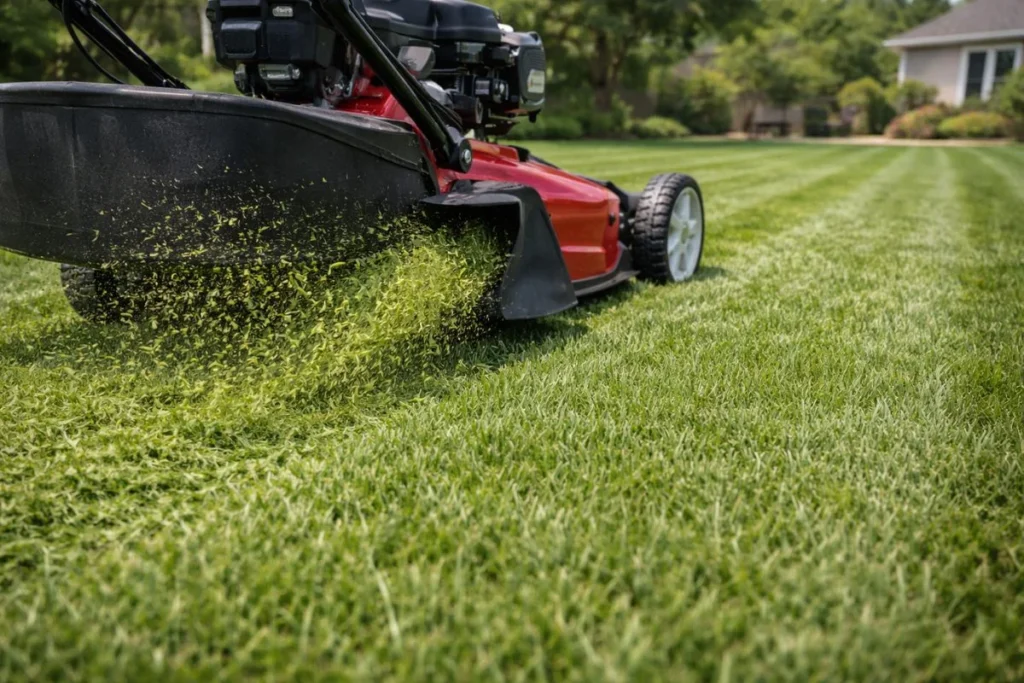
Side discharge spreads clippings across the lawn surface. This option works well when grass becomes tall or mowing was delayed. However, clippings remain visible and nutrients are reused less efficiently than mulching.
Side discharge can prevent mower clogging during heavy growth.
What to Do With Lawn Clippings
Bagged clippings can still be useful.
You can:
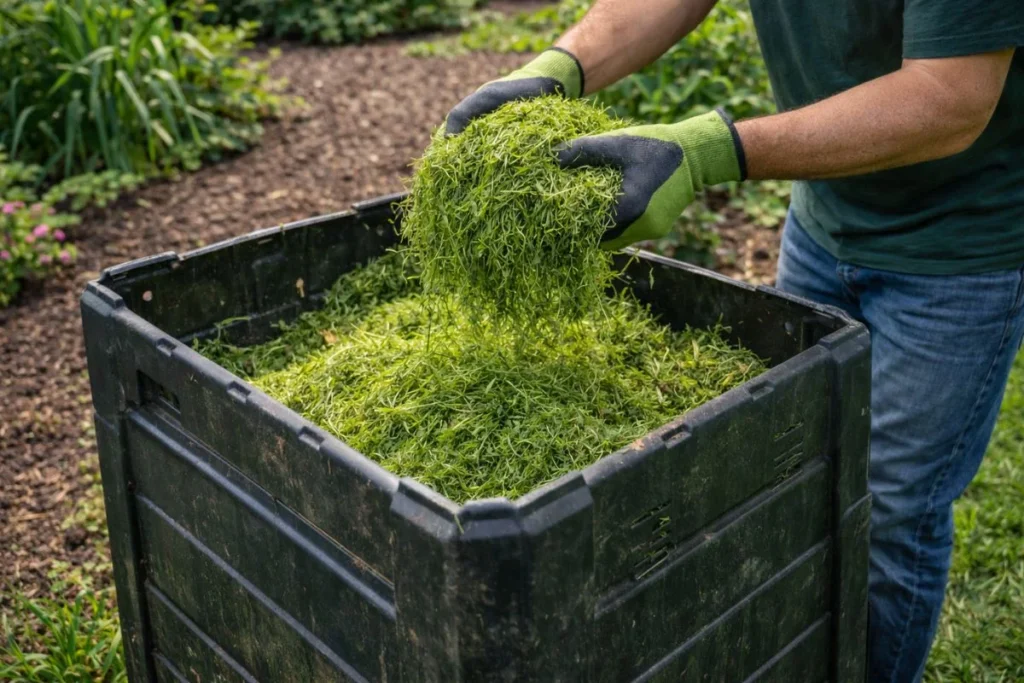
- add them to compost piles
- use them as garden mulch
- place them in yard waste collection
- spread thin layers in planting beds
Reusing clippings improves soil quality instead of creating waste.
Environmental Benefits of Leaving Clippings
Leaving clippings on the lawn reduces yard waste sent to landfills.
Mulching also lowers fertilizer demand and supports healthier soil life over time.
Common Mistakes Homeowners Make
Many lawn issues come from simple mowing habits.
- mowing wet grass
- cutting too much height at once
- using dull mower blades
- mulching overgrown lawns
- bagging every time without reason
Correct mowing timing prevents most clipping problems.
Lawn Care Pro Tips for Managing Grass Clippings
| Situation | Expert Tip |
|---|---|
| Wet lawn | Wait until grass dries before mowing |
| Thick clumps | Make a second mowing pass |
| Fast growth season | Increase mowing frequency |
| Uneven clipping spread | Slow mowing speed |
| Frequent bagging | Adjust fertilization slightly |
Do Grass Clippings Cause Thatch?
No.
Grass clippings do not create thatch. Thatch develops from roots and stems, not leaf blades. Since clippings decompose quickly, they rarely cause buildup when mowing is done properly.
Practical Lawn Care Experience
In weekly mowing routines, mulching keeps most lawns healthy while reducing cleanup work. Bagging becomes necessary mainly during rapid growth, wet conditions, or seasonal cleanup periods.
Fertilizer Clarification
Mulched grass clippings return nitrogen to the soil and help support lawn growth. However, lawns may still need balanced fertilization because nutrients such as phosphorus and potassium depend on soil condition.
FAQ
Should I bag grass clippings every time I mow?
No. Mulching works well for routine mowing. Bag only when conditions require it.
Is mulching better than bagging?
Mulching benefits lawn health in most situations, while bagging helps during heavy growth or disease.
Can grass clippings kill grass?
Only when thick clumps block sunlight.
Do mulched clippings replace fertilizer?
They supplement nutrients but usually do not replace fertilizer completely.
Should I bag grass clippings after rain?
Yes. Wet clippings clump easily and should usually be bagged.
Is mulching better during summer?
Yes. Mulching helps soil retain moisture during heat.
Quick Takeaway: Bag or Mulch Grass Clippings
| Situation | Best Choice |
|---|---|
| Healthy lawn and weekly mowing | Mulch |
| Grass is wet | Bag |
| Lawn disease present | Bag |
| Fast spring growth | Use both methods |
| Summer heat | Mulch |
| Overgrown grass | Bag |
| Fall cleanup | Bag |
| Routine maintenance | Mulch |
Final Verdict: Bag or Mulch Grass Clippings?
In practical lawn care experience, the healthiest lawns come from homeowners who adjust their mowing habits instead of following one fixed method. Mulching works best during normal weekly mowing because it feeds the soil and reduces extra cleanup, while bagging becomes useful during heavy growth, wet conditions, or when a clean appearance is needed. Over time, observing how grass reacts after mowing makes this decision easier. Most experienced lawn owners mulch during routine maintenance and bag only when conditions require it. Using both methods at the right time helps maintain strong grass growth while keeping the lawn looking its best throughout the season.