 Skip to content
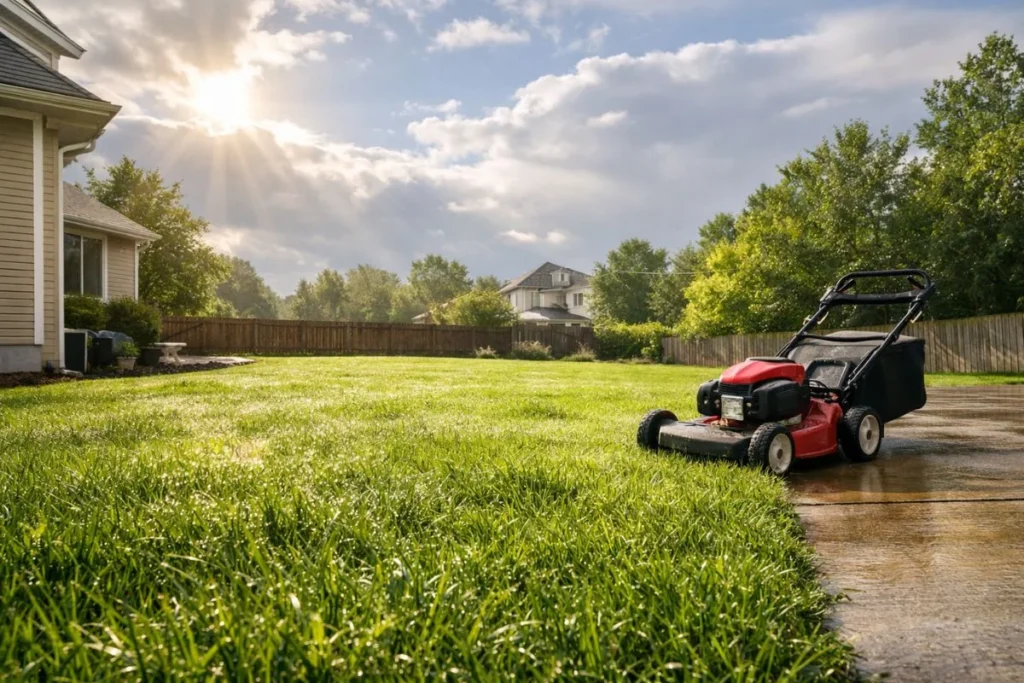
Many homeowners face the same problem after rain. The lawn suddenly looks overgrown, and mowing day cannot wait any longer. You step outside and wonder if cutting the grass now will help or harm the lawn. From experience, this is where most lawn mistakes happen. Grass may look dry on top, but the soil underneath is often still soft, and mowing too soon can leave tire marks, uneven cuts, or brown patches a few days later.
I have seen many lawns lose their clean look simply because mowing was done at the wrong time after rainfall. Wet grass behaves very differently from dry grass, and small timing mistakes can stress both the lawn and the mower. The goal is not just cutting grass but protecting long-term lawn health. Knowing when to wait and when it is safe to mow makes a noticeable difference in how your lawn looks throughout the season.
- Should You Mow After Rain? Quick Answer
- How Soon Can You Cut Grass After It Rains?
- Is Morning Dew the Same as Rain?
- Why You Shouldn’t Mow Wet Grass
- Is It Bad to Mow Wet Grass?
- When Is It Okay to Mow Wet Grass?
- Why Landscapers Sometimes Mow Grass in the Rain
- What Happens When Wet Grass Clumps Together?
- How Long Should You Wait to Mow the Grass After Rain?
- Quick Checklist Before Mowing After Rain
- When Is the Best Time to Mow the Grass After Rain?
- What If It Keeps Raining All Week?
- Tips for Mowing Wet Grass
- How to Adjust the Lawnmower?
- Check Your Lawn Before the First Mow After Heavy Rain
- What Can Be an Alternative to Mowing Wet Grass?
- Create a Regular Mowing Plan
- Final Thoughts
Key Takeaways: Mowing After Rain
- Avoid mowing immediately after rainfall.
- Wait until grass blades and soil feel dry.
- Wet mowing can cause lawn damage and soil compaction.
- Late morning or early afternoon is usually safest.
- If grass becomes too tall, mow lightly during the driest period.
Should You Mow After Rain? Quick Answer
Most homeowners search this question while standing in their yard.
Use this simple rule.
If grass feels dry and soil is firm, you can mow.
If the lawn feels soft, muddy, or slippery, wait longer.
Checking lawn condition matters more than waiting a fixed number of hours.
How Soon Can You Cut Grass After It Rains?
There is no fixed waiting time. Drying depends on sunlight, airflow, and soil condition.
Use this general guide:
| Rain Condition | Recommended Waiting Time |
|---|---|
| Light shower | 2 to 6 hours |
| Overnight rain | 12 to 24 hours |
| Heavy rain | 24 to 48 hours |
| Waterlogged lawn | 2 to 3 days |
Can I Mow After Rain Today?
| Lawn Condition | Safe to Mow? |
|---|---|
| Grass dry and upright | ✅ Yes |
| Soil firm underfoot | ✅ Yes |
| Shoes stay clean | ✅ Yes |
| Grass wet but soil firm | ⚠ Proceed carefully |
| Footprints remain | ❌ Wait |
| Soil muddy or soft | ❌ Do not mow |
Drying time changes based on weather, shade, and drainage.
Grass should stand upright before mowing.
Is Morning Dew the Same as Rain?
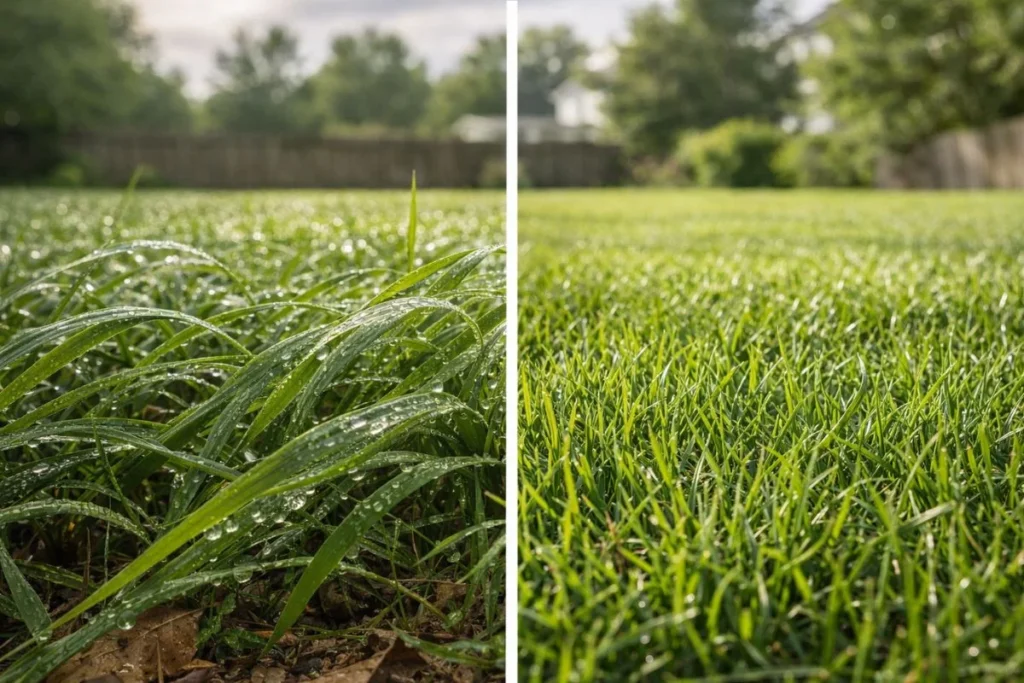
Morning dew and rainfall affect grass differently.
Dew sits only on grass blades.
Rainwater soaks deep into soil and softens the ground.
You can often mow after dew once blades dry slightly.
Rain increases soil moisture, which raises damage risk.
If your shoes collect mud, wait before mowing.
Why You Shouldn’t Mow Wet Grass
Wet mowing causes several lawn problems.
Uneven Cuts Damage Your Lawn
Wet grass bends under mower blades.
Blades tear grass instead of cutting cleanly.
Torn tips turn brown and weaken lawn appearance.
Increases Risk of Lawn Disease
Wet conditions help fungus spread.
Torn grass creates openings where disease can enter.
Wet clippings may carry fungal spores across the lawn.
Common issues include:
- brown patches
- leaf spots
- thinning grass
Damages Your Lawn Mower
Wet clippings stick inside the mower deck.
This may:
- clog airflow
- slow blade movement
- reduce cutting quality
Moisture buildup can also cause rust.
Presents Safety Hazards
Wet grass becomes slippery.
You may lose balance while mowing slopes.
Electric mowers also become riskier around moisture.
Soil Compaction and Lawn Ruts
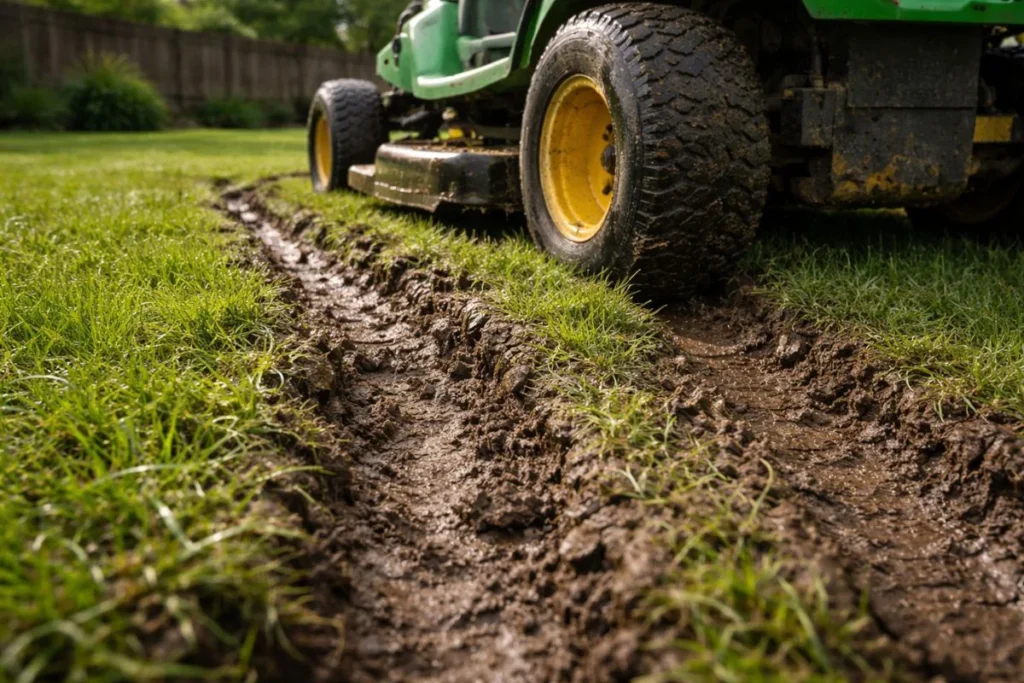
After rain, soil becomes soft.
Heavy mower wheels press soil tightly together.
Roots receive less oxygen and water movement slows.
Compacted soil often causes thin grass later.
Is It Bad to Mow Wet Grass?
In most cases, yes.
Wet mowing stresses grass and equipment.
Waiting allows blades to recover and stand upright again.
When Is It Okay to Mow Wet Grass?
Sometimes rain continues for several days.
You may mow slightly damp grass only if:
- grass blades are mostly dry
- soil feels firm
- mower wheels do not sink
- clippings do not stick heavily
Otherwise, delay mowing.
Why Landscapers Sometimes Mow Grass in the Rain
Professional landscapers may mow during light rain because work schedules must continue.
Frequent mowing prevents grass from growing too tall, which can also damage lawns.
Professionals reduce risk by:
- mowing slowly
- raising cutting height
- using sharp blades
- avoiding saturated areas
Home lawns usually benefit from waiting longer.
What Happens When Wet Grass Clumps Together?
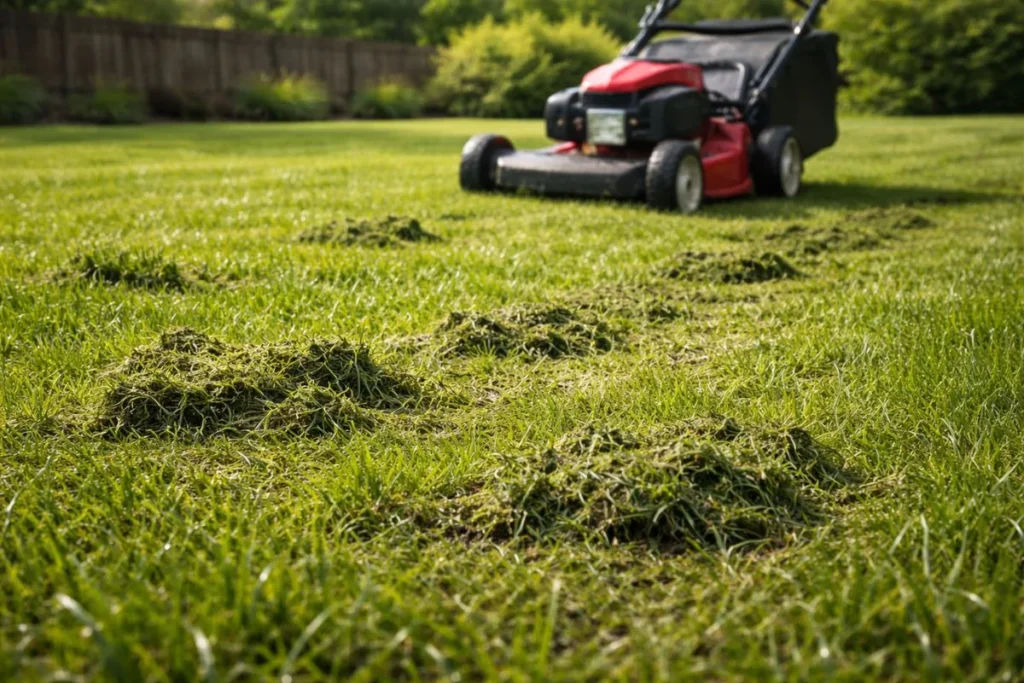
Wet grass clippings stick and form heavy clumps.
These clumps can:
- block sunlight
- trap moisture
- create yellow or dead patches
Remove large clumps after mowing.
How Long Should You Wait to Mow the Grass After Rain?
Instead of guessing, check lawn conditions.
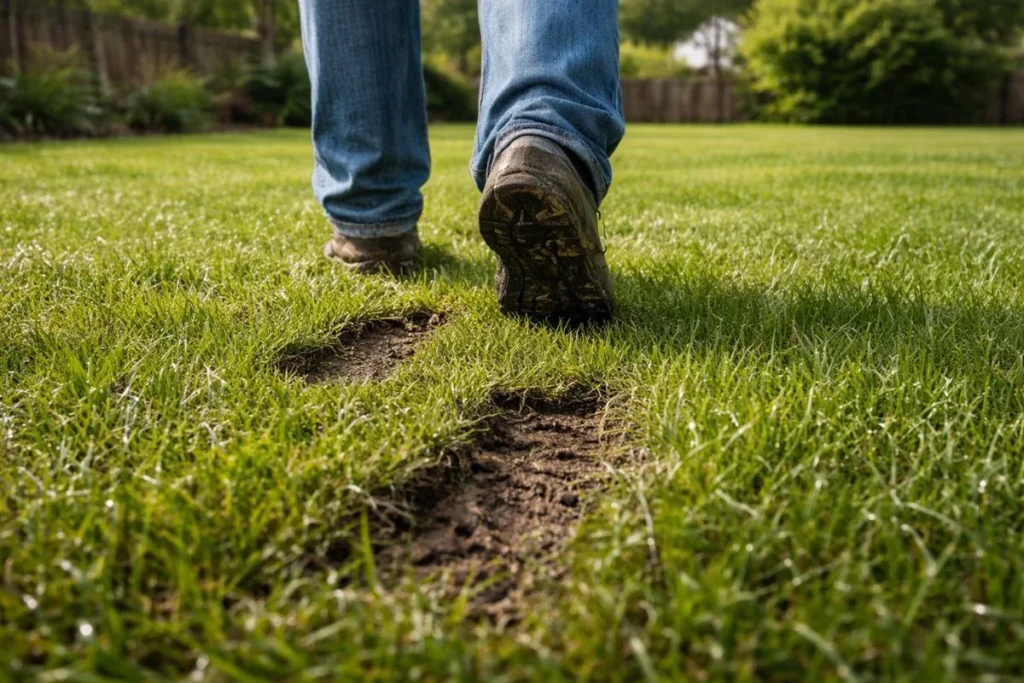
Footprint Test
Walk across grass.
If footprints stay visible, soil is still wet.
Grass Blade Test
Touch the grass.
If water transfers easily, wait longer.
Simple Lawn Dryness Tests Before Mowing
| Test | What to Check | Safe Result |
|---|---|---|
| Footprint Test | Walk on lawn | Marks disappear quickly |
| Touch Test | Feel grass blades | No water transfer |
| Soil Test | Push screwdriver | Slight resistance |
| Wheel Test | Roll mower slightly | No sinking |
Soil Check
Push a screwdriver into soil.
If it slides in easily, ground remains saturated.
Quick Checklist Before Mowing After Rain
Many homeowners want a fast decision.
Use this checklist before starting your mower.
✅ Grass stands upright
✅ Footprints disappear quickly
✅ Soil feels firm
✅ Wheels do not sink
✅ Clippings do not stick
If most answers are yes, mowing is generally safe.
When Is the Best Time to Mow the Grass After Rain?
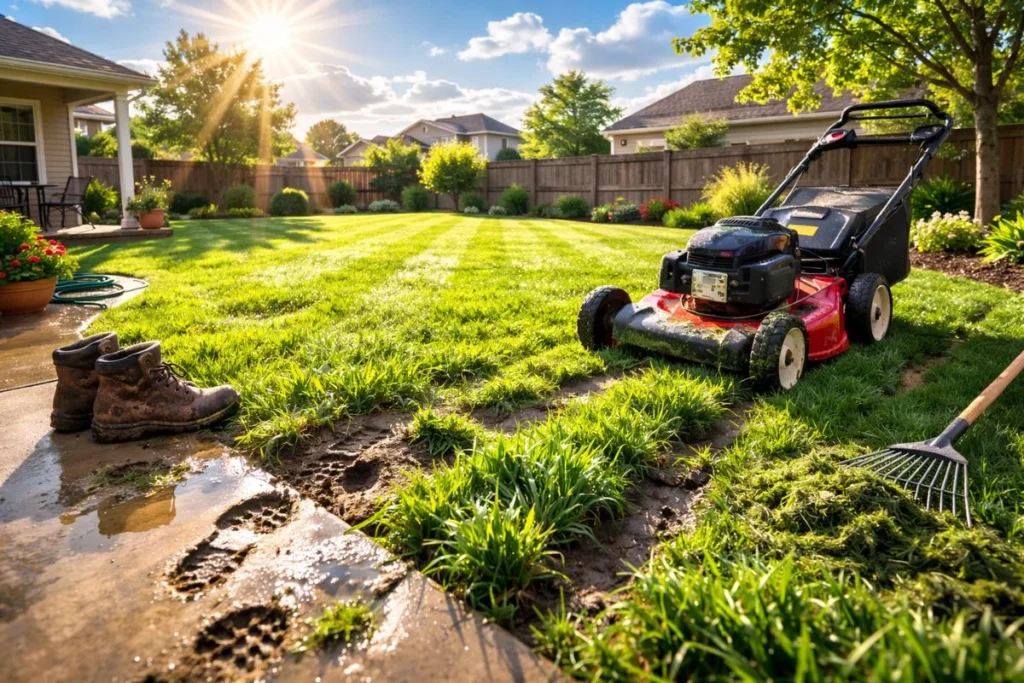
Late morning or early afternoon works best.
By this time:
- dew has dried
- sunlight removes moisture
- grass stands upright
Avoid evening mowing because moisture returns quickly.
What If It Keeps Raining All Week?
This situation happens often during rainy seasons.
If grass becomes too tall:
- mow during the driest part of the day
- raise mowing height
- remove only the top portion
- mow again after lawn fully dries
This prevents breaking the one-third rule.
Tips for Mowing Wet Grass
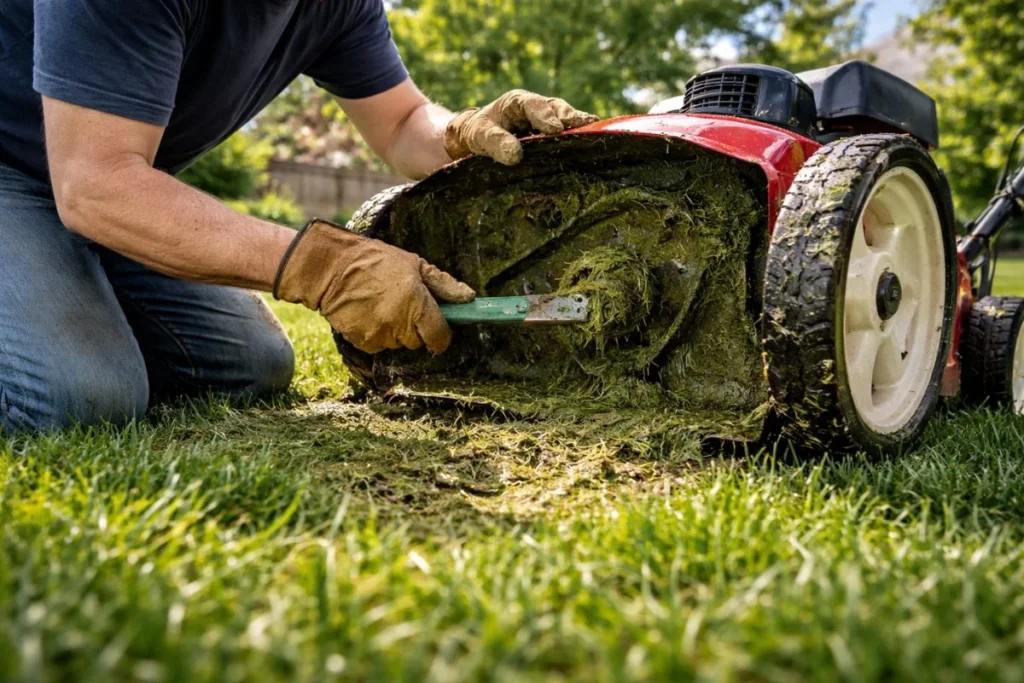
If mowing cannot be delayed:
- raise mowing height
- mow slowly
- use sharp blades
- discharge clippings
- clean mower deck often
Stop mowing if heavy clumps form.
Common Mistakes Homeowners Make After Rain
- Mowing because the surface looks dry.
- Using dull mower blades on damp grass.
- Cutting too much grass height at once.
- Mowing during evening moisture.
- Ignoring soft or muddy soil conditions.
How to Adjust the Lawnmower?
Small adjustments reduce damage.
- increase cutting height
- reduce mowing speed
- empty grass bag often
- check blade sharpness
Sharp blades reduce tearing.
Check Your Lawn Before the First Mow After Heavy Rain
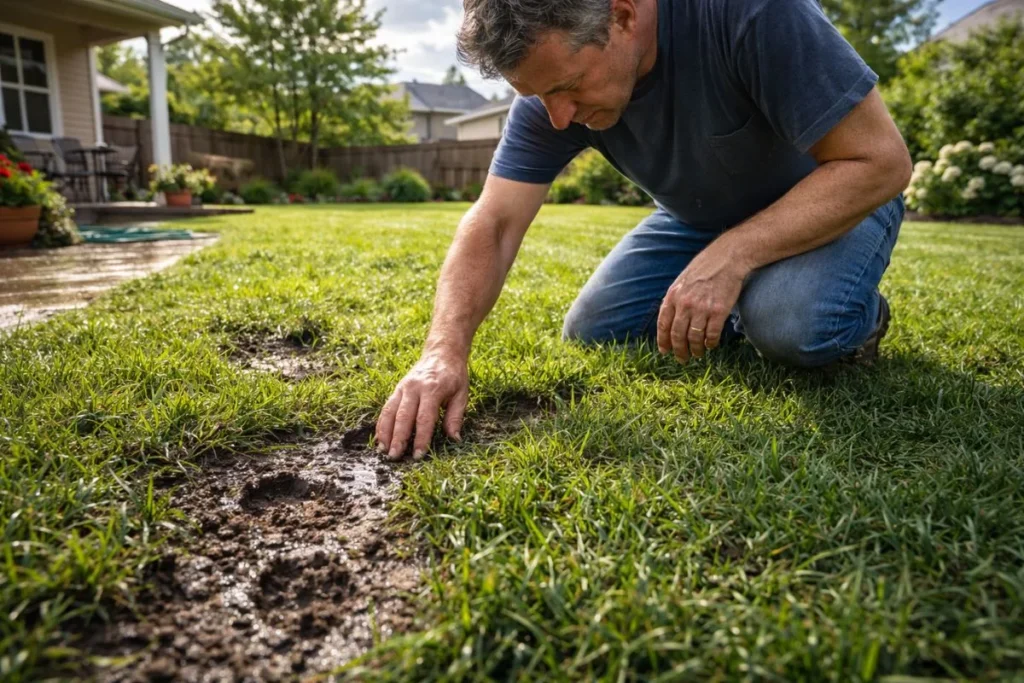
Heavy rain may leave hidden lawn problems.
Before mowing, check for:
- fallen branches
- standing water
- soft soil areas
- wheel ruts
Allow soil to firm before mowing.
If this is your first cut of the year, review our complete guide on mowing season start to confirm your lawn is ready for safe seasonal mowing.
What Can Be an Alternative to Mowing Wet Grass?
Sometimes waiting protects lawn health.
You can:
- delay mowing one day
- remove debris
- trim small areas later
- plan the next mowing schedule
Create a Regular Mowing Plan
Regular mowing prevents emergency cutting.
Follow the one-third rule.
Never remove more than one-third of grass height at once.
A steady schedule keeps lawns healthier during wet weather.
Related Lawn Care Guides
Final Thoughts
From practical lawn care experience, the biggest improvement most homeowners can make is learning to wait until conditions are right after rain. A lawn that dries properly cuts cleaner, stays healthier, and recovers faster after mowing. Checking soil firmness, grass position, and moisture levels before mowing helps prevent common problems like compaction, disease spread, and uneven growth. Good lawn care is often about simple decisions made at the right moment, and allowing the grass enough drying time after rain is one of the easiest ways to maintain a strong and healthy lawn.