 Skip to content
Many homeowners unknowingly damage their lawn during mowing. The grass may look healthy at first, but after cutting, it turns yellow, thin, or uneven. Some areas look scalped while others stop growing properly. I have seen this happen often, especially when people try to cut tall grass shorter in one mowing session to save time. Most believe watering or fertilizer caused the issue, but the real problem usually starts with removing too much grass at once.
From practical lawn care experience, one pattern appears again and again. Lawns that follow a simple mowing limit stay greener, thicker, and recover faster after stress. Homeowners who learn this early avoid many common lawn problems throughout the season. This simple method is called the 1/3 rule, and once understood, it makes mowing decisions easier and helps maintain steady lawn health.
- Understanding the One-Third Rule
- Why the One-Third Rule Matters
- How to Apply the One-Third Rule
- Grass Cutting Height Calculator
- Relationship Between Mowing Frequency and Growth
- Gradual Height Reduction Recommendation
- Recommended Mowing Heights by Grass Type
- Signs You Broke the 1/3 Rule
- Applying the 1/3 Rule During the First Mow of the Season
- How Weather Affects the One-Third Rule
- Origin of the One-Third Rule in Turfgrass Management
- Common Beginner Mistakes When Following the 1/3 Rule
- Real Lawn Situations Homeowners Face
- FAQ About the One-Third Rule
- Conclusion
Key Takeaways: The 1/3 Rule
- Never remove more than one-third of grass height in one mowing.
- Taller grass develops stronger and deeper roots.
- Frequent mowing is safer than cutting grass too short.
- Reduce height gradually if the lawn becomes overgrown.
- Proper mowing prevents lawn stress and yellow patches.
Understanding the One-Third Rule
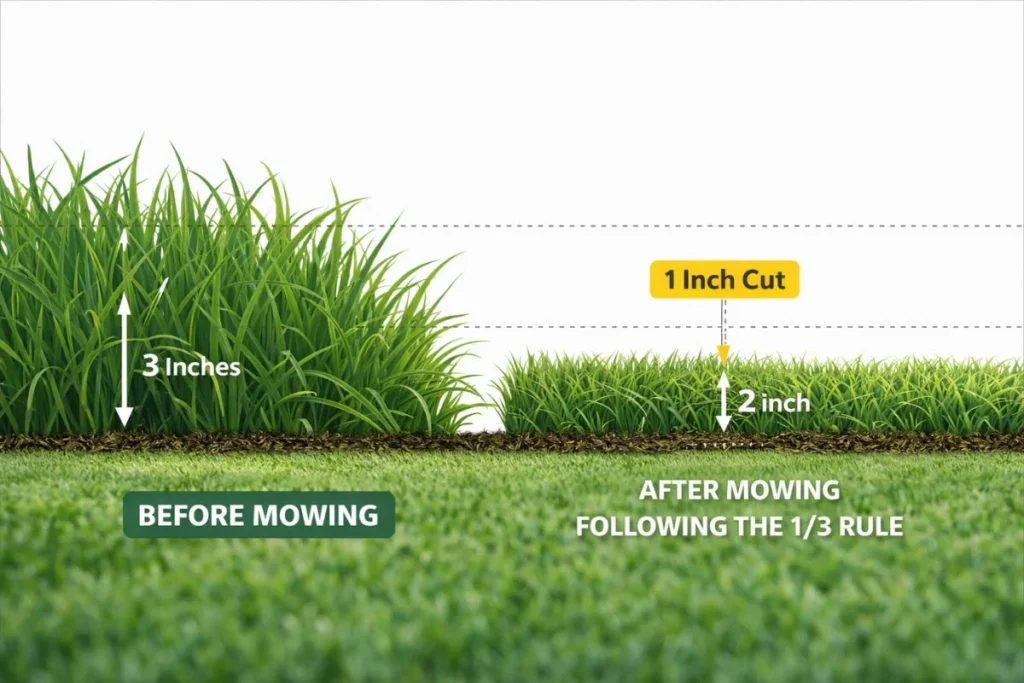
The 1/3 rule means you should never remove more than one-third of the grass blade during a single mowing session.
Example:
If grass grows to 3 inches, remove only 1 inch.
After mowing, about 2 inches of grass should remain.
This rule protects the plant and allows steady regrowth.
Many beginners damage lawns because they try to cut tall grass back to normal height in one mow. The 1/3 rule prevents that mistake.
Why the One-Third Rule Matters
Grass produces energy through sunlight. The leaf blade acts as the plant’s food source. Removing too much leaf area reduces energy production.
Healthy mowing keeps the lawn dense and green.
Fosters Photosynthesis
Leaves collect sunlight needed for growth. Removing excessive leaf tissue limits energy production.
Aids Mineral Absorption
Healthy leaves support active roots. Strong roots absorb nutrients and water efficiently.
Creates Natural Mulch
Small grass clippings return nutrients to the soil as they break down.
Increasing Immunity
Grass under less stress handles weeds, heat, and disease more effectively.
Effects on Root Growth
Removing large portions of grass slows root development because energy shifts toward blade recovery.
Effects on Photosynthesis
Short grass struggles to rebuild food reserves due to reduced leaf surface.
Lawn Recovery and Stress Response
Lawns cut correctly recover faster and maintain even color after mowing.
How to Apply the One-Third Rule
Applying the rule becomes simple once you check grass height before mowing.
Measure Grass Height
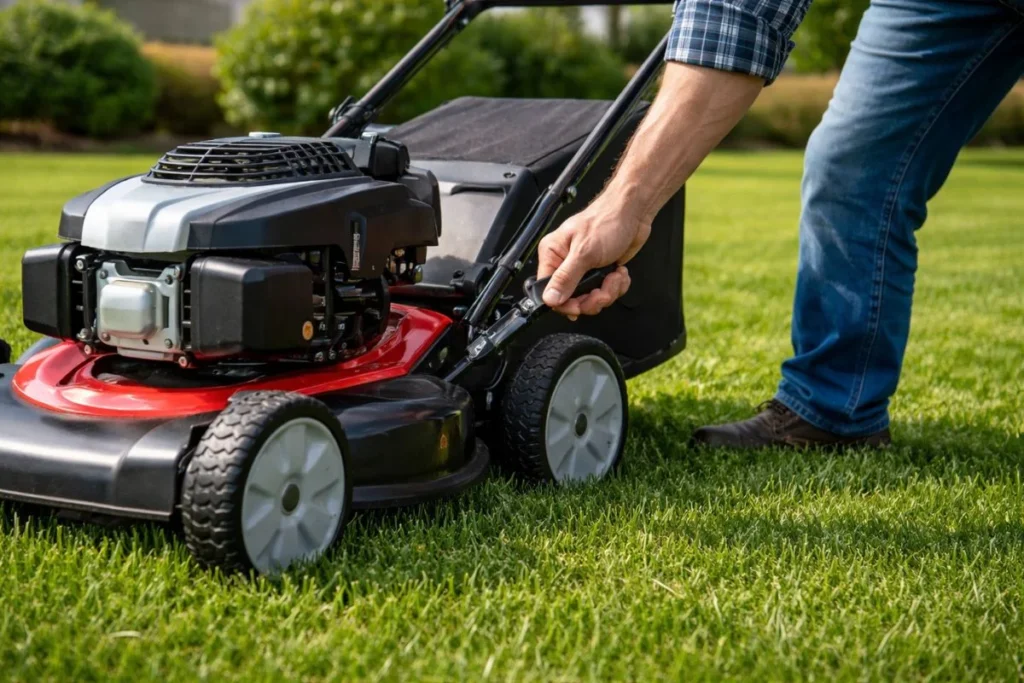
Check grass height using a ruler or compare it with mower settings.
If grass looks taller than usual, avoid cutting everything at once.
What Length Should I Mow My Grass?
Most residential lawns perform best between 2.5 and 4 inches depending on grass type.
| Current Height | Amount to Cut | Height After Mowing |
|---|---|---|
| 3 inches | 1 inch | 2 inches |
| 4.5 inches | 1.5 inches | 3 inches |
| 6 inches | 2 inches | 4 inches |
This simple check helps homeowners decide whether to mow today or wait a few more days.
Should You Mow Today?
| Lawn Condition | Recommended Action |
|---|---|
| Grass increased by one-third height | Safe to mow |
| Grass doubled in height | Reduce height gradually |
| Lawn looks dry or stressed | Wait before mowing |
| Fast growth after rain | Increase mowing frequency |
| Recently fertilized lawn | Expect faster growth |
Grass Cutting Height Calculator
The Simple 1/3 Rule Formula
Current Grass Height ÷ 3 = Maximum Amount You Can Cut
Example: If grass is 6 inches tall, cut only 2 inches.
Use this quick method:
- Measure grass height
- Divide by three
- Remove only that amount
If grass measures 5 inches:
5 ÷ 3 = about 1.6 inches maximum removal.
This approach prevents accidental lawn scalping.
Relationship Between Mowing Frequency and Growth
Grass growth changes throughout the season.
Fast spring growth may require mowing every 5–7 days. Growth slows during summer heat.
Weather conditions strongly influence mowing needs:
- rainfall increases growth
- warm temperatures speed development
- fertilizer boosts growth rate
- drought slows growth
Regular mowing keeps grass within the one-third limit.
Gradual Height Reduction Recommendation
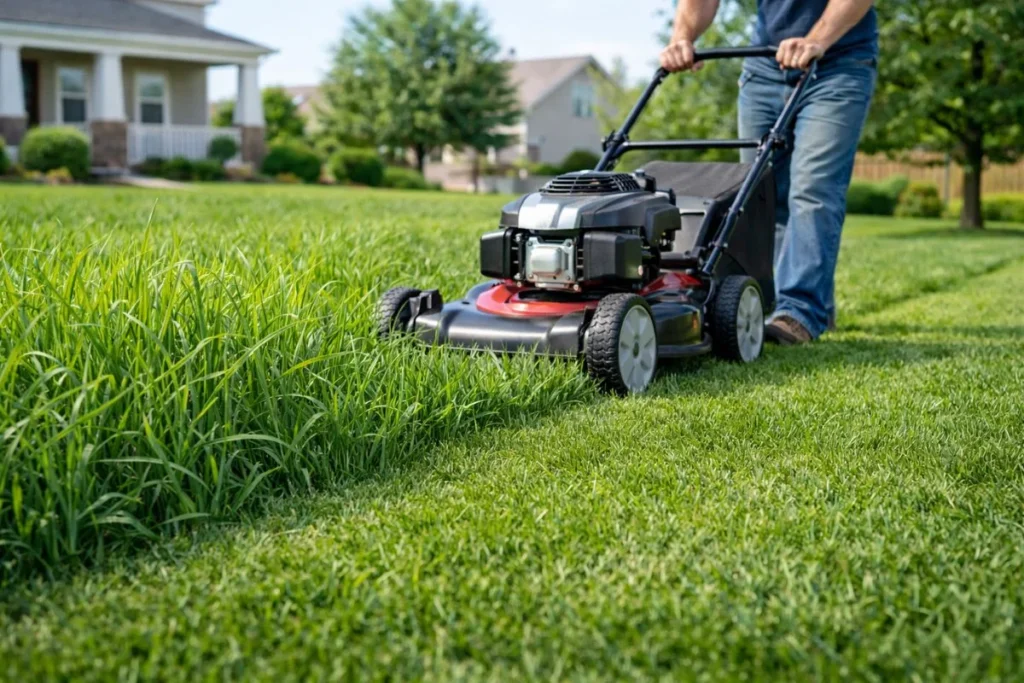
Grass often becomes too tall after rain or missed mowing.
Avoid cutting it down in one session.
Instead:
- mow at a higher setting
- wait several days
- reduce height slowly
This method protects roots and prevents stress.
Recommended Mowing Heights by Grass Type
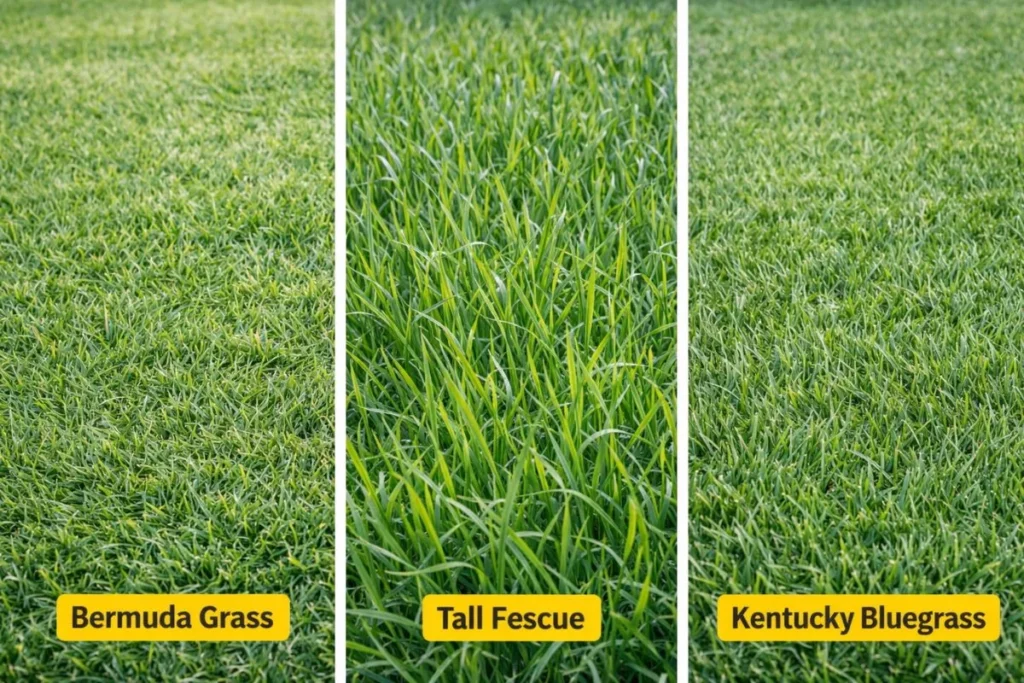
Different grass species grow best at specific heights.
| Grass Type | Ideal Height | Mow Before It Reaches |
|---|---|---|
| Kentucky Bluegrass | 2.5–3.5 inches | 3.75–5 inches |
| Tall Fescue | 3–4 inches | 4.5–6 inches |
| Perennial Ryegrass | 2–3 inches | 3–4.5 inches |
| Bermuda Grass | 1–2 inches | 1.5–3 inches |
| Zoysia Grass | 1–2.5 inches | 1.5–3.75 inches |
Knowing grass type helps homeowners maintain consistent mowing results.
Signs You Broke the 1/3 Rule
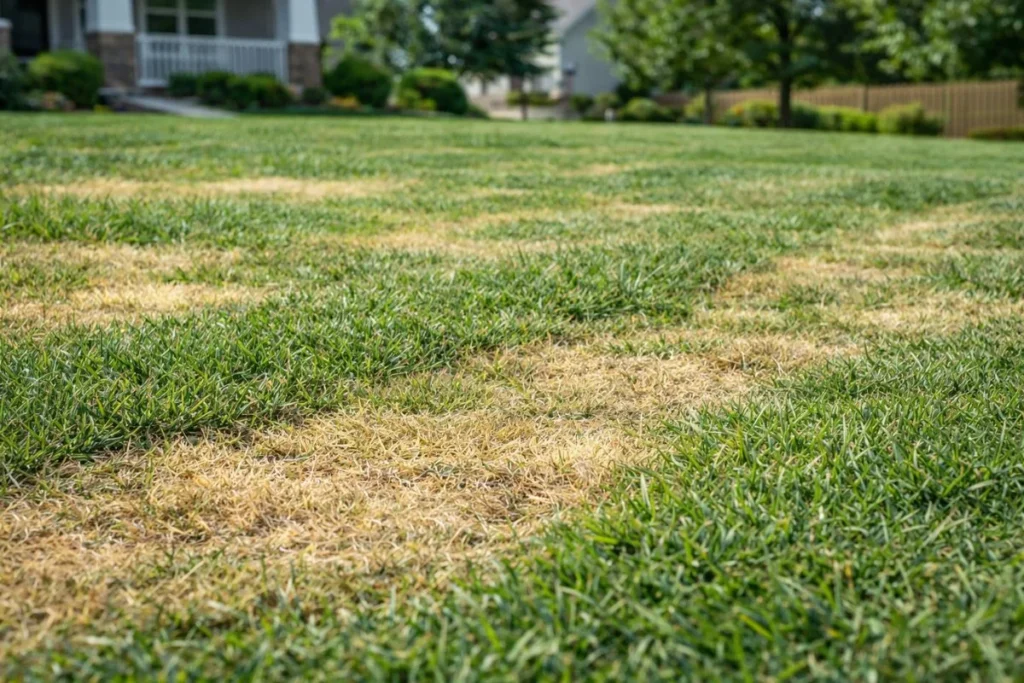
Lawns often show warning signs after excessive mowing.
Common indicators include:
- yellow or pale grass after mowing
- exposed stems instead of green blades
- uneven or scalped patches
- heavy grass clumps
- slow recovery or thinning areas
If these appear, allow recovery time before mowing again.
Common Lawn Mowing Mistakes and Results
| Mistake | What Happens |
|---|---|
| Cutting grass too short | Yellow or brown lawn |
| Skipping mowing for weeks | Stress during next cut |
| Using dull mower blades | Torn grass tips |
| Mowing wet grass | Clumping and disease risk |
| Lowering mower height suddenly | Root stress |
Applying the 1/3 Rule During the First Mow of the Season
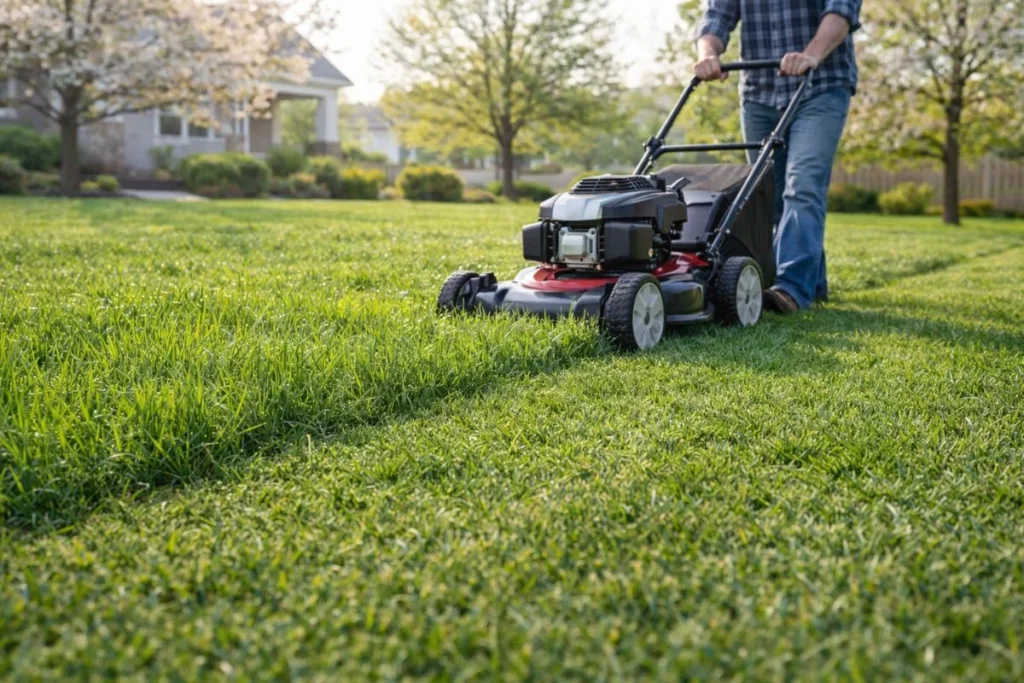
Grass usually grows tall after winter dormancy.
Avoid cutting back to normal height immediately.
Instead:
- mow using a higher setting
- wait several days
- gradually lower mowing height
This supports strong spring growth and prevents early stress.
Before applying your first seasonal cut, review our guide on mowing season start to make sure grass growth and soil conditions are ready for mowing.
How Weather Affects the One-Third Rule
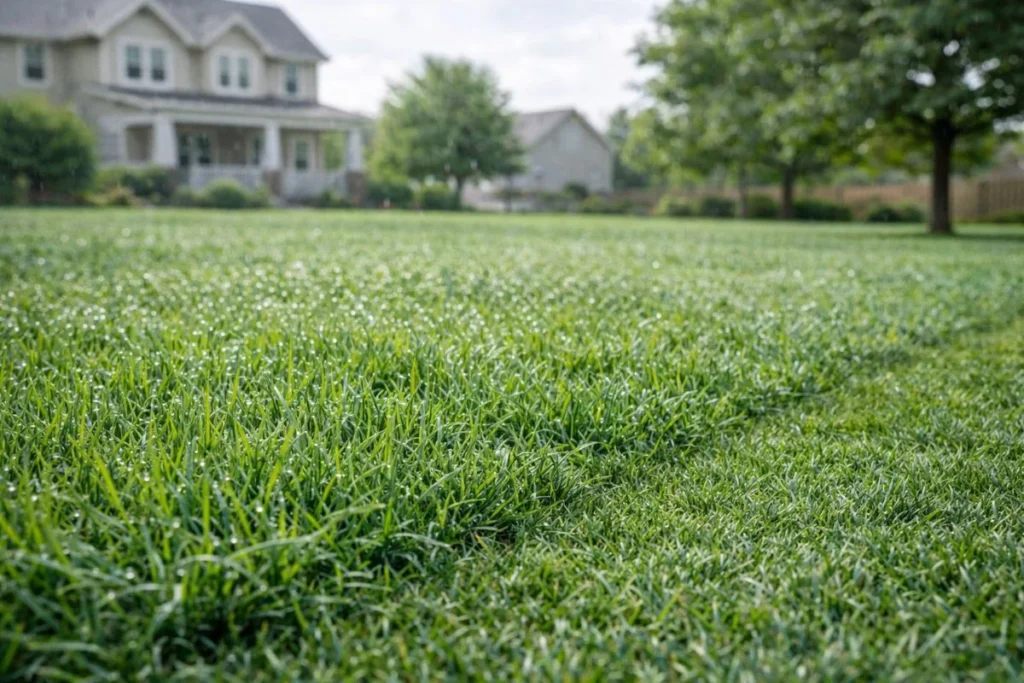
Growth speed changes with weather conditions.
Warm and wet periods increase mowing frequency. Dry or hot conditions slow growth.
Adjust mowing timing so grass never exceeds the one-third removal limit.
Seasonal Use of the 1/3 Rule
| Season | Recommended Approach |
|---|---|
| Spring | Mow frequently due to fast growth |
| Summer | Raise mowing height |
| Fall | Gradually reduce mowing height |
| Drought | Reduce mowing frequency |
Origin of the One-Third Rule in Turfgrass Management
The rule comes from turfgrass research used on sports fields and golf courses. Researchers observed that removing excessive leaf tissue slowed recovery and reduced root activity.
Professional turf managers adopted this practice to maintain dense turf. The same principle works for home lawns.
Common Beginner Mistakes When Following the 1/3 Rule
Many homeowners understand the rule but apply it incorrectly.
Common mistakes include:
- mowing only when grass looks too tall
- lowering mower height suddenly
- mowing dull or wet grass
- skipping weekly mowing during spring growth
Avoiding these mistakes improves lawn appearance quickly.
Real Lawn Situations Homeowners Face
Missed Mowing for Two Weeks
Reduce height gradually over multiple sessions.
Lawn Grew Fast After Rain
Mow more frequently instead of cutting shorter.
Lawn Looks Thin After Mowing
Allow recovery time and maintain correct height.
These situations are common and usually recover with proper mowing habits.
FAQ About the One-Third Rule
Can Grass Recover if Cut Too Short?
Yes, though temporary stress may appear.
How Does the Rule Apply to Overgrown Grass?
Reduce height gradually across several mowing sessions.
How Often Can I Mow My Lawn?
Mowing frequency depends on growth rate.
Is There Ever a Time You Wouldn’t Apply the Rule?
During dormancy or very slow growth, mowing may not be needed.
Expert Tip
Professional turf managers avoid cutting grass too short to save time. Maintaining proper mowing height improves moisture retention, strengthens roots, and reduces long-term lawn maintenance problems.
Conclusion
Over time, working with residential lawns shows that many turf problems begin with incorrect mowing habits rather than serious lawn diseases or soil issues. Homeowners often cut grass shorter hoping to reduce mowing frequency, but this usually weakens the lawn and slows recovery. Lawns maintained using the 1/3 rule develop stronger roots, better color, and improved resistance against heat and weeds. This rule has long been used in professional turf management because it protects grass from unnecessary stress. Following it consistently turns mowing from guesswork into a reliable routine, helping homeowners maintain a healthy lawn through simple and repeatable habits.