 Skip to content
Have you ever skipped a week of mowing and then felt stressed when your lawn suddenly looked messy and uneven? Or maybe you mow every weekend, but you still see thin grass, weeds, or brown tips. Many homeowners feel confused about weekly mowing. They wonder if they are cutting too often or not enough. The truth is, mowing mistakes are one of the most common reasons lawns struggle.
Over the years, I have worked with cool-season and warm-season grasses across different climates. I have seen lawns improve just by correcting mowing habits. I have also seen healthy lawns decline because they were cut too short or too late. Weekly mowing can build a thick and strong lawn, but only if it matches grass growth, proper height, and seasonal conditions. Once you understand how mowing affects your grass, the confusion becomes much easier to solve.

- How Often Should You Mow Your Lawn?
- What Is Weekly Mowing?
- Is Weekly Mowing Really Necessary?
- Weekly Mowing vs. Bi-Weekly Mowing
- Weekly vs. Bi-Weekly Mowing Comparison
- The 1/3 Rule: Key to Lawn Health
- Why Frequent Light Cutting Improves Root Growth
- Recommended Mowing Heights by Grass Type
- Weekly Mowing by Region in the United States
- Seasonal Weekly Mowing Schedule
- Step-by-Step Weekly Lawn Routine
- Lawn Mower Maintenance for Weekly Mowing
- Does Weekly Mowing Reduce Weeds?
- Is Weekly Mowing Worth the Cost?
- How Weekly Mowing Fits Into a Complete Lawn Care Plan
- Frequently Asked Questions
- Final Thoughts
Quick Weekly Mowing Takeaway
- Mow once per week during peak growing season
- Always follow the 1/3 rule
- Adjust mowing frequency based on grass growth
- Raise mowing height during summer heat
- Use sharp mower blades for clean cuts
How Often Should You Mow Your Lawn?
Most U.S. lawns need mowing once per week during active growing seasons.
However, mowing frequency depends on:
- Grass type
- Rainfall
- Temperature
- Season
Always follow the 1/3 rule and mow based on growth, not the calendar.
What Is Weekly Mowing?
Weekly mowing means cutting your lawn every seven days during peak growth.
It usually includes:
- Cutting grass evenly
- Edging sidewalks and driveways
- Trimming around trees and fences
- Cleaning up clippings
It is common in spring and early summer when grass grows fast.
Is Weekly Mowing Really Necessary?
This depends on growth rate.
Weekly mowing is usually needed when:
- Grass grows more than 1 inch per week
- Rainfall is consistent
- Temperatures are moderate
- Lawn is fertilized
Weekly mowing may NOT be needed when:
- Growth slows in drought
- Extreme heat reduces growth
- Winter dormancy begins
The key rule is simple:
If mowing weekly helps you follow the 1/3 rule, it is appropriate.
Mowing Frequency Decision Guide
| Situation | Recommended Frequency |
|---|---|
| Fast spring growth | Weekly |
| Moderate growth | Every 7–10 days |
| Drought conditions | Every 10–14 days |
| Winter dormancy (Northern states) | Not needed |
| Active warm-season summer growth | Weekly |
Weekly Mowing vs. Bi-Weekly Mowing
Many homeowners compare these two options.
- Weekly mowing keeps growth controlled.
- Bi-weekly mowing allows taller growth between cuts.
When grass grows too tall, you may remove more than one-third at once. This stresses the plant.
Weekly vs. Bi-Weekly Mowing Comparison
| Feature | Weekly Mowing | Bi-Weekly Mowing |
|---|---|---|
| Grass Health | Stronger roots | Higher stress |
| Lawn Appearance | Even and neat | Can look uneven |
| Weed Control | Better seed control | Weeds spread easier |
| Clumping | Rare | More common |
| 1/3 Rule | Easy to follow | Harder to follow |
| Long-Term Results | Dense turf | Possible thinning |
If your goal is strong turf and fewer weeds, weekly mowing usually performs better during peak growth.
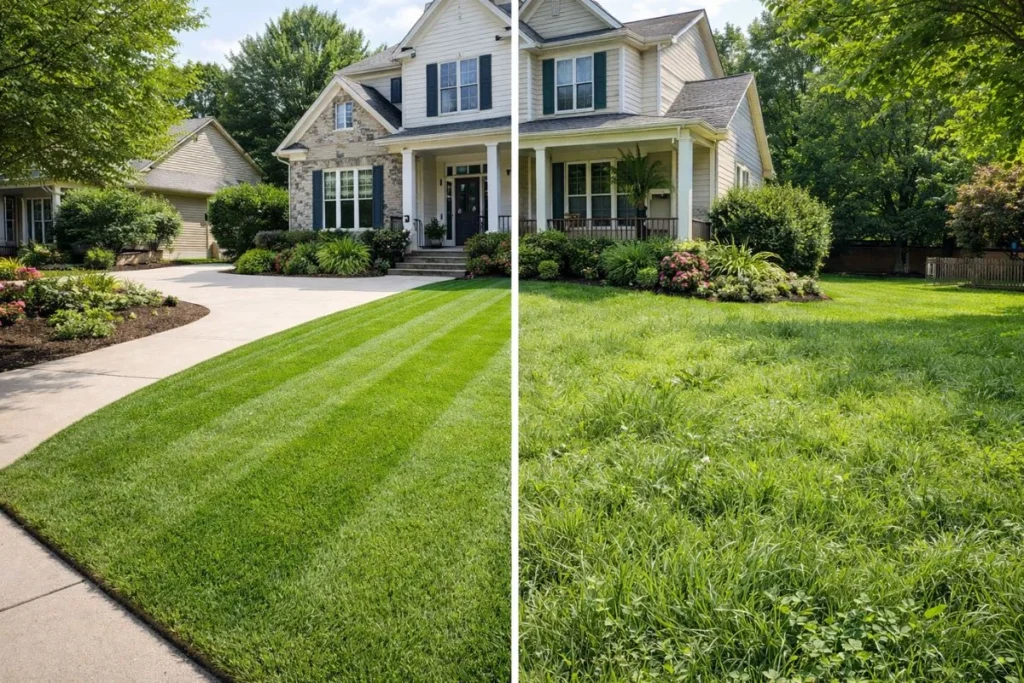
Signs Your Lawn Needs Weekly Mowing
- Grass grows more than 1 inch per week
- Lawn looks uneven after 5–7 days
- You struggle to follow the 1/3 rule
- Clippings become heavy or clump
- Weeds begin flowering or spreading
The 1/3 Rule: Key to Lawn Health
Never remove more than one-third of the grass blade in a single cut.
Example:
If grass is 3 inches tall, do not cut below 2 inches.
Cutting too much at once:
- Reduces root depth
- Weakens grass
- Slows recovery
- Increases stress
Weekly mowing helps you stay within safe limits.
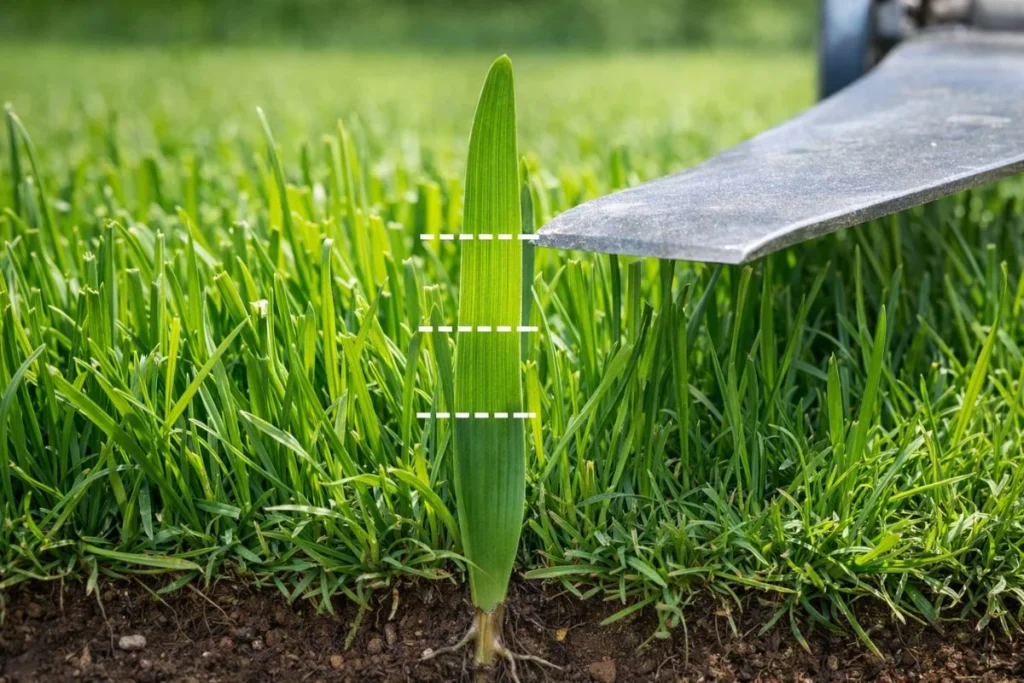
Avoid This Common Mistake
Cutting your grass very short to avoid mowing next week may seem smart, but it weakens roots and increases stress. Always follow the 1/3 rule to protect long-term lawn health.
Why Frequent Light Cutting Improves Root Growth
Grass stores energy in its roots.
When you remove too much blade at once, the plant focuses on leaf repair. Root growth slows.
Frequent light cutting reduces stress. This supports deeper roots and thicker turf.
Deeper roots improve drought tolerance and lawn strength.
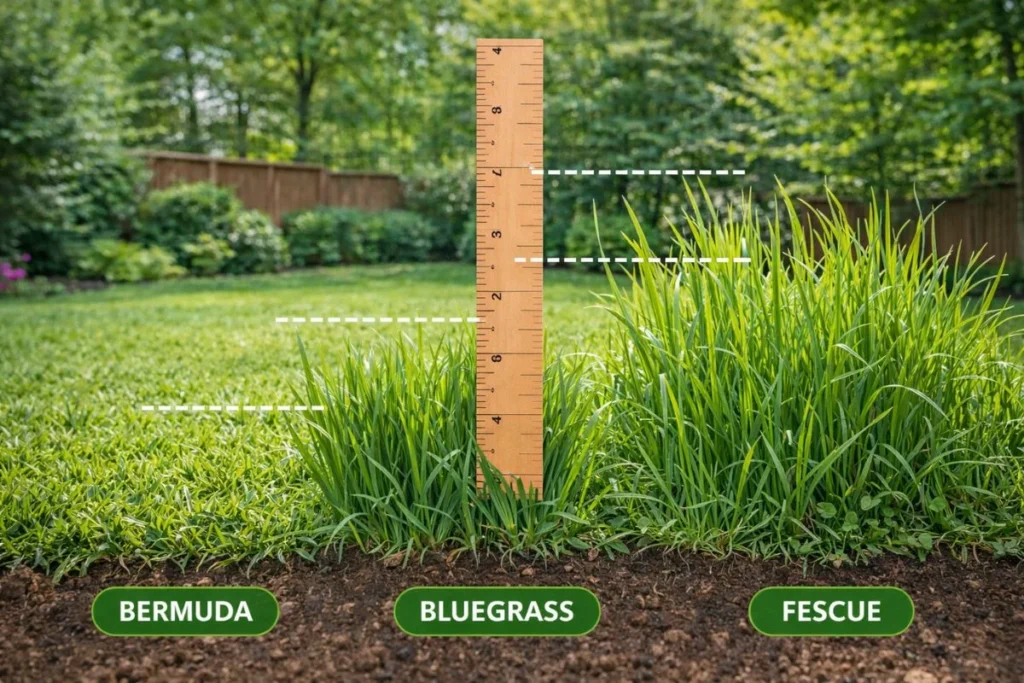
Recommended Mowing Heights by Grass Type
Correct cutting height is critical.
Warm-Season Grasses
- Bermuda: 1–2 inches
- Zoysia: 1–2.5 inches
- St. Augustine: 2.5–4 inches
Cool-Season Grasses
- Tall Fescue: 3–4 inches
- Kentucky Bluegrass: 2.5–3.5 inches
- Perennial Ryegrass: 2.5–3 inches
Cutting too low weakens turf and increases weed pressure.
Weekly Mowing by Region in the United States
Mowing needs change by climate.
Northern States
Cool-season grasses dominate. Weekly mowing is common in spring and fall.
Southern States
Warm-season grasses grow aggressively in summer. Weekly mowing may continue from late spring to early fall. Some areas mow almost year-round.
Transition Zone States
States like Missouri, Oklahoma, and Kansas grow both grass types. Frequency changes depending on the dominant turf.
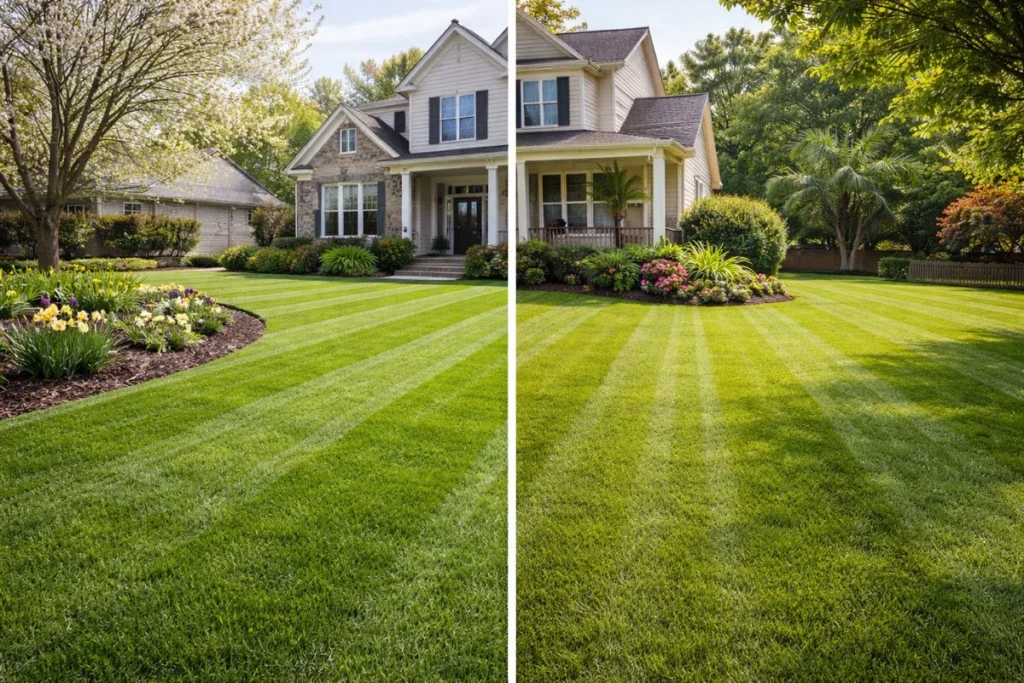
Seasonal Weekly Mowing Schedule
Spring
Growth is fast.
Weekly mowing is common.
Summer
Raise mower height slightly.
Avoid cutting too short.
Fall
Growth slows.
Continue weekly mowing if growth remains active.
Winter
Most northern lawns stop growing.
Some southern lawns may need light mowing.
Step-by-Step Weekly Lawn Routine
- Check grass height.
- Adjust mower deck.
- Inspect blade sharpness.
- Mow when grass is dry.
- Change mowing direction weekly.
- Edge and trim.
- Remove heavy clippings.
- Inspect lawn health.
Consistency keeps turf even and healthy.
Lawn Mower Maintenance for Weekly Mowing
Proper equipment improves results.
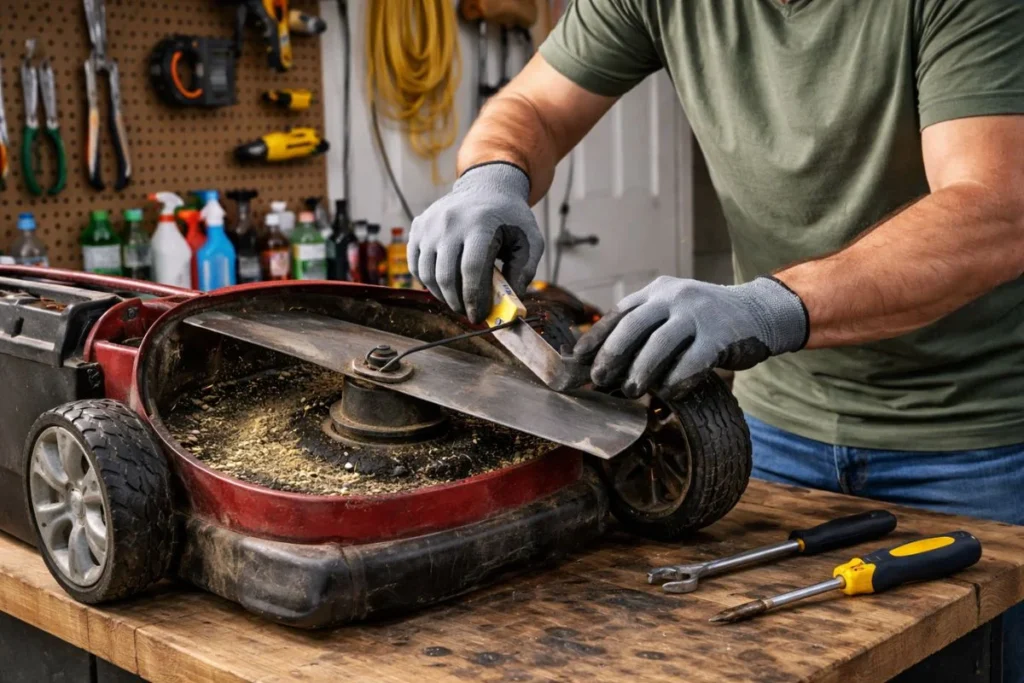
- Sharpen blades every 20–25 mowing hours
- Clean mower deck regularly
- Check oil levels
- Inspect air filter
Sharp blades make clean cuts. Dull blades tear grass and cause brown tips.
Does Weekly Mowing Reduce Weeds?
Weekly mowing helps prevent weeds from spreading seeds.
It also thickens turf, which blocks sunlight from reaching new weed seedlings.
However, mowing does not remove established weeds. Additional weed control may still be needed.
Is Weekly Mowing Worth the Cost?
Professional weekly mowing costs vary by lawn size and region.
Typical U.S. price ranges:
- Small yard: $30–$50 per visit
- Medium yard: $40–$70 per visit
- Large yard: $60–$100+ per visit
Bi-weekly service may cost slightly less per visit.
However, overgrown lawns may:
- Take longer to cut
- Increase stress on grass
- Require extra cleanup
For many homeowners, weekly mowing protects long-term lawn health and reduces repair costs.
DIY mowing includes fuel, maintenance, equipment wear, and your time.
How Weekly Mowing Fits Into a Complete Lawn Care Plan
Weekly mowing works best when combined with:
- Proper watering
- Seasonal fertilization
- Weed management
- Weekly mowing works best when it begins at the correct mowing season start, based on soil temperature and steady grass growth.
Mowing alone does not fix every problem. It supports overall lawn care.
Frequently Asked Questions
Can I mow every 10 days instead of weekly?
Yes, if growth is slow and you still follow the 1/3 rule.
Does weekly mowing make grass thicker?
Yes. Regular cutting encourages lateral growth.
Should I mulch clippings?
Mulching often returns nutrients to the soil.
Is weekly mowing required year-round?
No. It depends on climate and grass type.
Final Thoughts
From experience, consistent mowing habits make a bigger difference than most homeowners realize. I have seen lawns recover simply by adjusting mowing height and frequency, and I have seen damage caused by ignoring the 1/3 rule. Weekly mowing works well during active growth because it protects roots, improves density, and supports long-term lawn health. But it must be adjusted based on grass type, region, and season. The best approach is simple: watch your grass, not just the calendar. When you mow based on growth and follow proper technique, your lawn becomes healthier and easier to manage year after year.