Skip to content

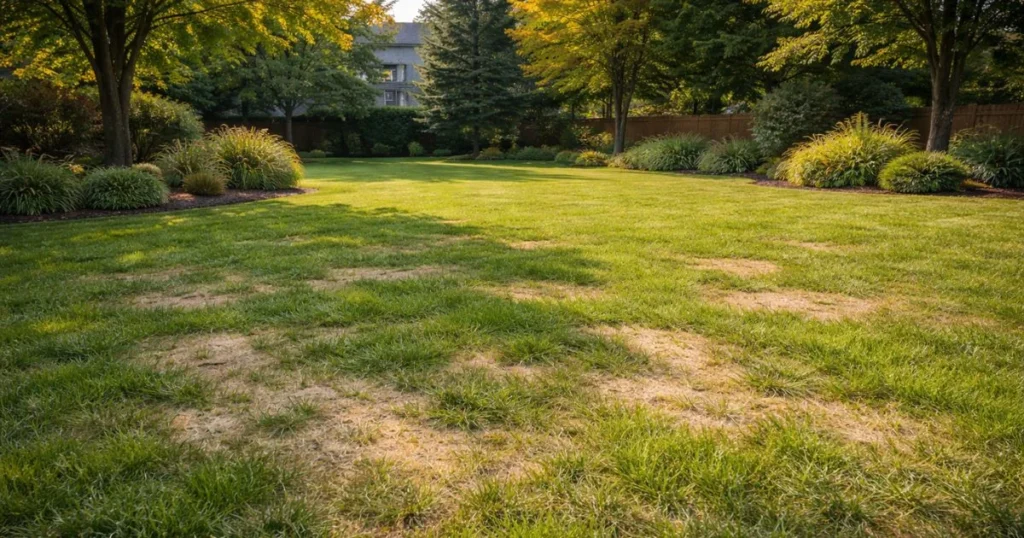
Many homeowners spread grass seed and wait for results that never come. I have seen this happen again and again. The seed was good. The watering was fine. The lawn still stayed thin. In most cases, the problem was not the seed or the effort. It was the timing. Cool season grass is very sensitive to heat and cold, and missing the right window can cause total failure.
I have watched lawns seeded too early dry out in late summer heat. I have also seen lawns seeded too late get hit by frost before roots formed. Most cool season lawns look fine in spring, then struggle after summer stress. By fall, people rush to fix the damage and guess the timing. This guide explains when to overseed cool season grass using proven timing, soil clues, and real lawn results so your work does not go to waste.
- Best time to overseed cool season grass is late summer to early fall
- Soil temperature should stay between 55°F and 65°F
- Overseed 6–8 weeks before the first frost
- Fall overseeding works better than spring in most areas
- What Overseeding Means
- Why Timing Decides Success
- Best Time to Overseed Cool Season Grass
- The 45-Day Frost Rule
- Soil Temperature Is More Important Than Air
- Overseeding Timing by Region
- How to Find Your First Frost Date
- Fall vs Spring Overseeding
- Common Cool Season Grass Types
- How to Prepare Before Overseeding
- How Much Seed to Use
- Recommended Overseeding Rates
- Fertilizer Timing After Overseeding
- What to Do After Overseeding
- Common Mistakes to Avoid
- Frequently Asked Questions
- conclusion
What Overseeding Means
Overseeding is spreading new grass seed over an existing lawn.
You do not remove old grass.
New seed grows between it.
This helps lawns that look weak after summer heat.
If your lawn turns thin each year, overseeding helps fix that.
If you want a complete guide that covers when to overseed, how much seed to use, and step-by-step lawn care, this overseeding lawn article explains the full process.
Why Timing Decides Success
Cool season grass grows best in mild weather.
Heat dries out young seedlings.
Cold stops growth.
Good timing gives seed:
- warm soil to sprout
- cool air to grow
- enough time before winter
Bad timing wastes seed and effort.
Best Time to Overseed Cool Season Grass
The best time to overseed cool season grass is late summer to early fall.
For most of the USA, that means:
- Late August
- September
- Early October
Soil stays warm.
Air becomes cooler.
Rain is more common.
This gives the highest success rate.
The 45-Day Frost Rule
Overseed at least 45 days before your area’s average first frost.
This gives seedlings enough time to build roots before winter.
If frost arrives too soon, young grass may not survive.
Soil Temperature Is More Important Than Air
Air temperature can change fast.
Soil changes slower.
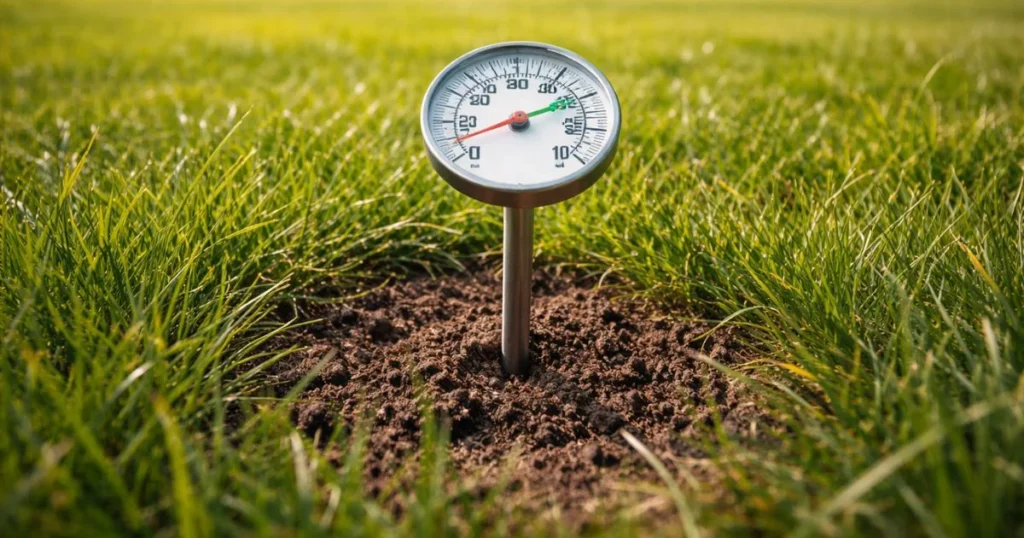
Cool season grass seed grows best when soil stays between 55°F and 65°F.
You can check this with a soil thermometer.
Push it a few inches into the ground.
Check in the morning.
If soil stays warm, overseeding can begin.
Overseeding Timing by Region
| Region | Best Overseeding Time |
|---|---|
| Northern States | Late August – Mid September |
| Transition Zone | Early September – Early October |
| Cooler Coastal Areas | September – Mid October |
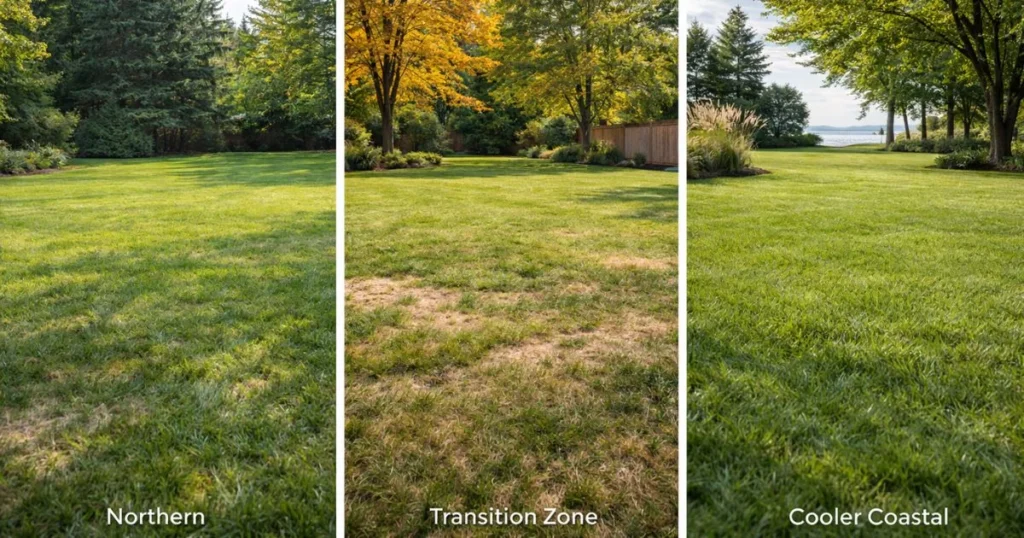
Timing depends on where you live.
Northern States
Late August to mid-September works best.
Transition Zone
Early September to early October is safer.
Cooler Coastal Areas
You may overseed later if frost arrives late.
Always overseed 6 to 8 weeks before the first frost.
How to Find Your First Frost Date
You can check your average first frost date using NOAA or your local extension website.
This helps you plan the 45-day window correctly.
Fall vs Spring Overseeding
| Factor | Fall Overseeding | Spring Overseeding |
|---|---|---|
| Weed pressure | Low | High |
| Root growth | Strong | Limited |
| Success rate | High | Medium |
| Risk level | Low | Higher |
Fall is the best option.
Spring is a backup option.
Fall Overseeding
- Less weed pressure
- Strong root growth
- Better results
Spring Overseeding
- Works in early spring
- Faces weeds
- Faces summer heat sooner
Spring overseeding usually happens in March or early April.
Common Cool Season Grass Types
Most cool season lawns include:
- Kentucky bluegrass
- Tall fescue
- Fine fescue
- Perennial ryegrass
These grasses grow best in cooler weather.
They respond well to fall overseeding.
If your lawn grows fast in spring and slows in summer, it is likely cool season.
How to Prepare Before Overseeding
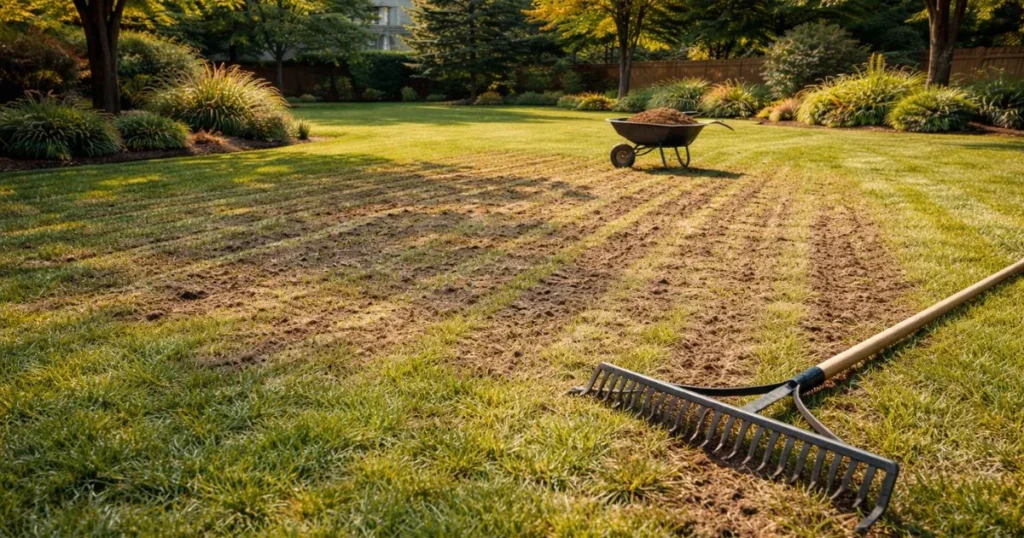
Good prep helps seed touch soil.
Before overseeding:
- Mow grass short
- Rake away dead grass
- Loosen compacted soil
- Fix bare spots
If soil feels hard, aeration helps.
How Much Seed to Use
Always follow the seed bag rate.
Too much seed causes crowding.
Crowded seedlings grow weak roots.
Weak roots lead to thin grass later.
Overseeding uses less seed than starting a new lawn.
Recommended Overseeding Rates
| Grass Type | Overseeding Rate (per 1,000 sq ft) |
|---|---|
| Tall Fescue | 3–5 lbs |
| Kentucky Bluegrass | 1–3 lbs |
| Perennial Ryegrass | 3–5 lbs |
Using the correct rate improves root strength and lawn density.
Fertilizer Timing After Overseeding
New seed needs nutrients early.
A starter fertilizer works best.
Apply it at seeding time or within one week.
Avoid heavy fertilizer late in fall.
Slow, steady growth is better.
What to Do After Overseeding
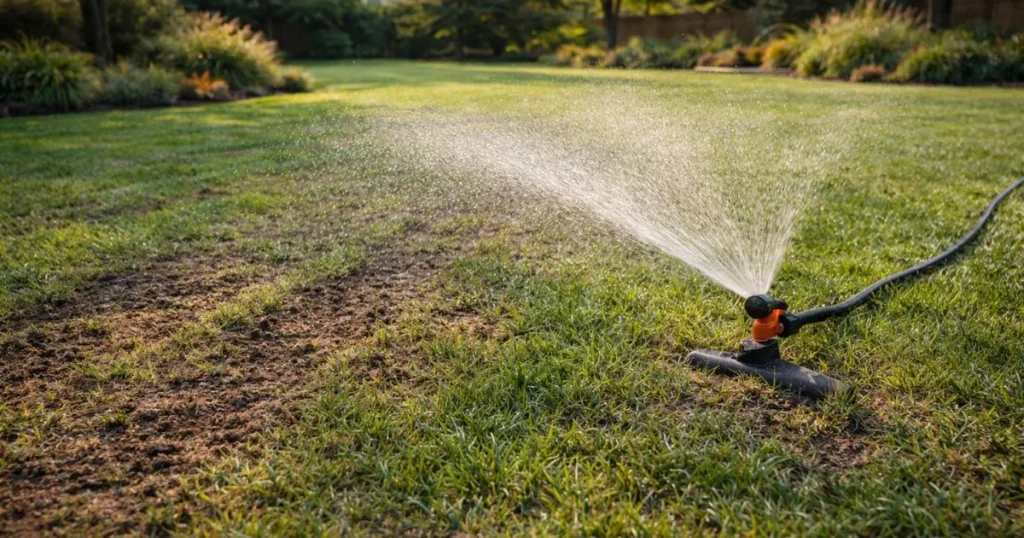
New seed needs care.
Follow these steps:
- Water lightly once or twice daily for 7–14 days
- Keep soil moist, not soaked
- Do not mow until grass reaches 3 inches
- Avoid weed control until grass is strong
Once grass establishes, reduce watering.
- Day 1–7: Water lightly once or twice daily
- Day 8–14: Reduce watering, keep soil moist
- After 3 weeks: First mow if grass reaches 3 inches
Common Mistakes to Avoid
Many overseeding failures come from timing errors.
Avoid these mistakes:
- Overseeding during summer heat
- Waiting too close to frost
- Skipping soil prep
- Using too much seed
- Letting soil dry out
Small mistakes can ruin results.
Frequently Asked Questions
Can I overseed without aerating?
Yes. Aeration helps, but it is not required for every lawn.
How long does cool season grass take to grow?
Most seed sprouts in 7 to 21 days, depending on moisture and temperature.
Can I overseed before aeration?
Aerating first works better because seed reaches the soil.
conclusion
Overseeding works when it is done at the right time. From experience, I have seen thin lawns fill in fast just by waiting for proper soil conditions and cooler air. Fall gives cool season grass the best chance to grow strong roots before winter. Spring can work, but it brings more risk from weeds and heat. The biggest mistake is waiting too long and missing the window. When you plan ahead, check soil temperature, and seed on time, overseeding becomes simple and reliable.
Takeaway: The right timing matters more than seed quality.