 Skip to content
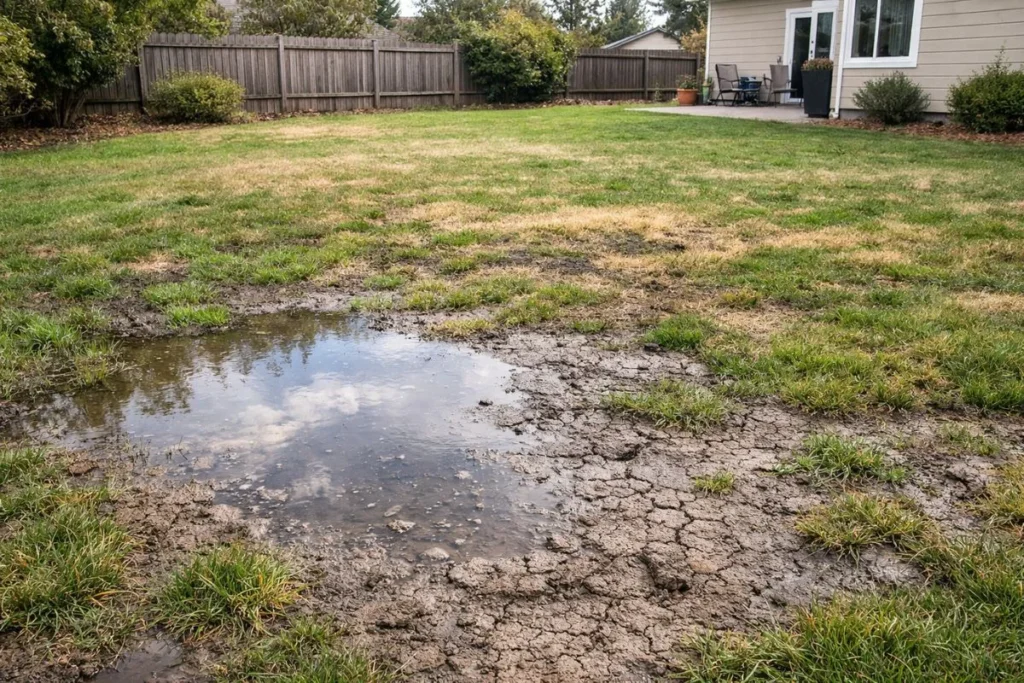
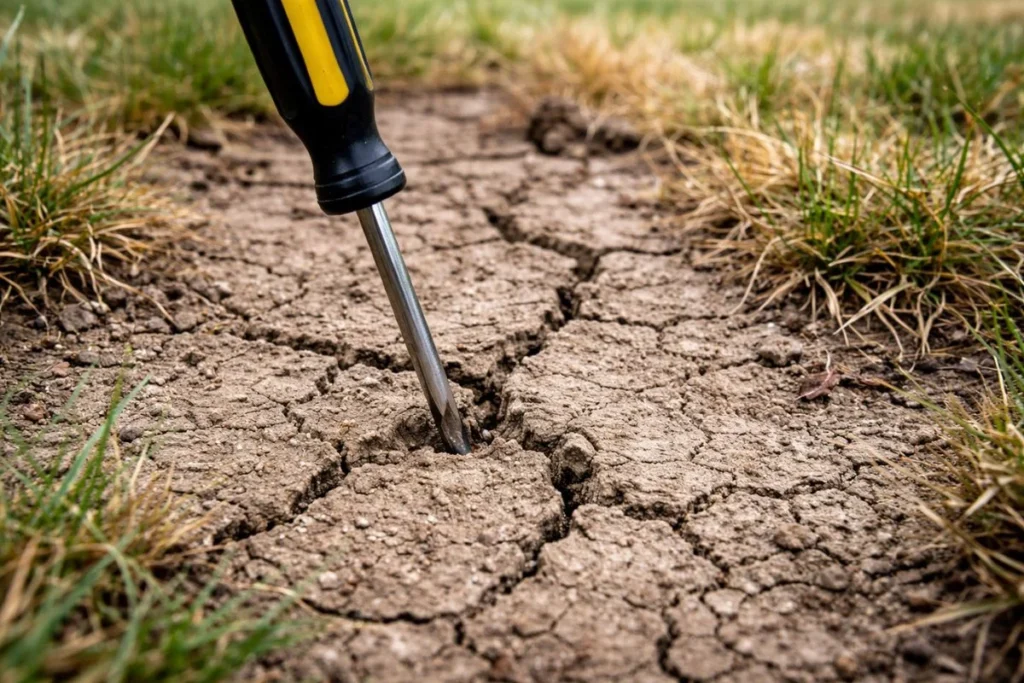
Most people search for gypsum for lawn after hitting a wall. The lawn gets water. Fertilizer goes down. Still, the soil stays hard. After rain, water sits on the surface. When it dries, the ground feels like concrete. You try pushing a screwdriver into the soil and it barely moves. That frustration is real. I have seen it many times, and I have dealt with it in my own yard.
Years ago, I used gypsum on a clay-heavy lawn expecting fast improvement. I followed the instructions and watered it in. Weeks passed and nothing changed. That failure pushed me to learn what gypsum actually does, not what people claim it does. Since then, I have worked with different soil conditions and seen where gypsum helps and where it fails. This article shares those lessons so you can make a smart choice before spending time or money.
- What Is Gypsum?
- Why People Use Gypsum for Lawn
- What Gypsum Is Used for in Lawns
- Are Gypsum and Lime the Same?
- Does Gypsum Reduce Soil pH?
- How to Tell If Your Lawn Needs Gypsum
- Soil Testing Comes First
- How Much Gypsum to Apply
- DIY 100-Square-Foot Gypsum Trial
- How Long Does Gypsum Take to Work?
- When You Should NOT Use Gypsum
- Gypsum vs Other Lawn Fixes
- Gypsum vs Aeration vs Compost
- Common Myths About Gypsum for Lawn
- Frequently Asked Questions
- Final Thoughts
Quick Takeaway
- Gypsum helps only some lawns
- It works best in clay soil with high sodium
- It does not fix soil compaction
- Soil testing matters before applying any amendment. Use a reliable soil test kit to confirm sodium levels, calcium balance, and soil texture before spreading gypsum.
- Aeration and compost often help more
What Is Gypsum?
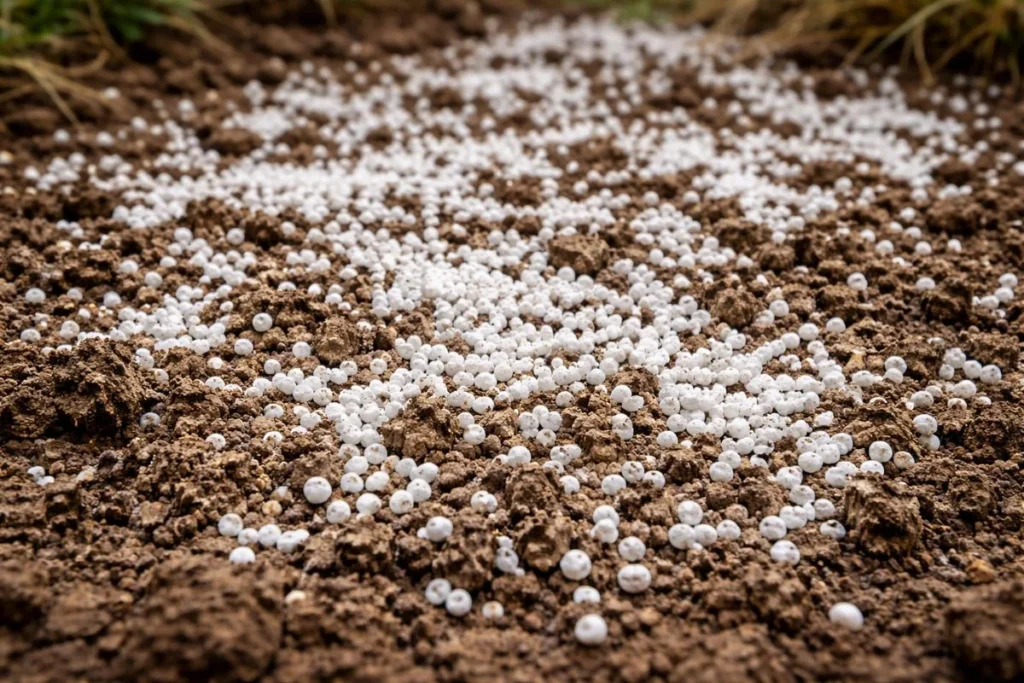
Gypsum is a natural mineral made of calcium and sulfur. It is not lime. It does not raise soil pH. Gypsum affects soil structure, not soil acidity.
For lawn use, gypsum comes as powder or granules. Both forms work the same. Granules are easier to spread evenly.
Why People Use Gypsum for Lawn
Most people search for gypsum for lawn because their soil feels hard. Common signs include:
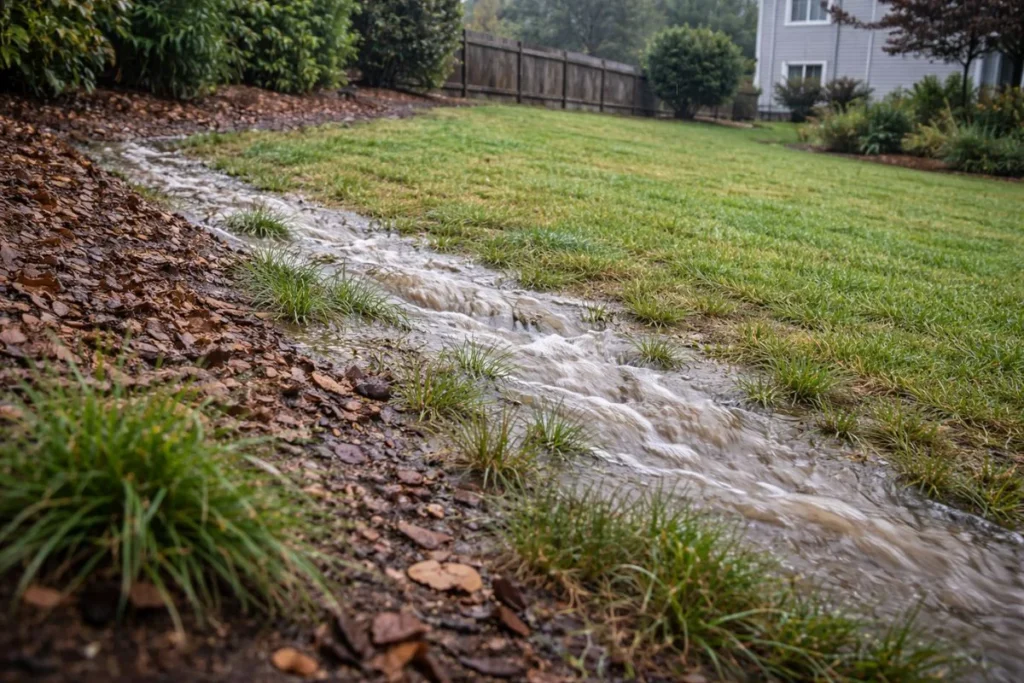
- Water pooling after rain
- Clay soil that cracks when dry
- Poor drainage
- Grass roots staying shallow
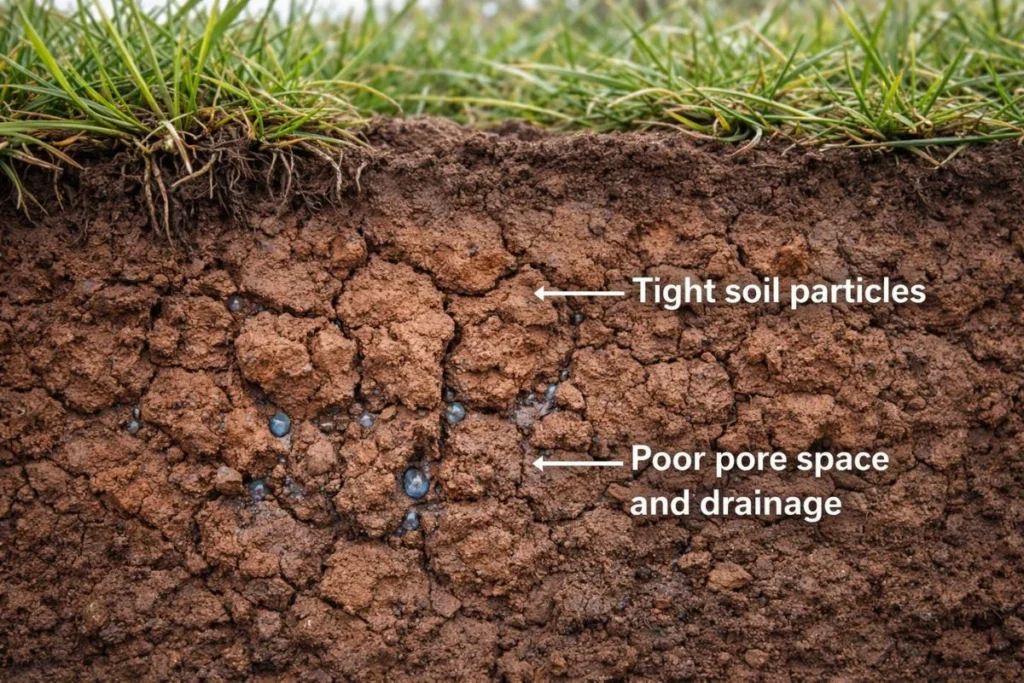
Gypsum adds calcium to the soil. Calcium helps clay particles group together. This creates small gaps in the soil. Water and air can move through these gaps more easily.
What Gypsum Is Used for in Lawns
Gypsum for lawn care is mainly used on sodic or heavy clay soils. These soils often contain excess sodium. Sodium causes soil particles to repel each other. This leads to tight, sealed soil that drains poorly.
Gypsum works by replacing sodium with calcium. Once sodium is released, water can carry it deeper into the soil.
This process may improve:
- Drainage
- Root growth
- Water movement
- Surface crusting
Are Gypsum and Lime the Same?
No. Gypsum and lime solve different problems.
Lime raises soil pH.
Gypsum does not change soil pH.
If your soil is acidic, lime may help. If your soil pH is fine but drainage is poor due to clay or sodium, gypsum may help.
Does Gypsum Reduce Soil pH?
No. Gypsum does not lower or raise soil pH. This is a common misunderstanding. If pH is the issue, gypsum will not fix it.
This is why soil testing matters.
How to Tell If Your Lawn Needs Gypsum
Should I Use Gypsum on My Lawn?
| Lawn Condition | Does Gypsum Help? |
|---|---|
| Heavy clay soil with poor drainage | Yes |
| High sodium or salt buildup | Yes |
| Sandy soil | No |
| Soil compacted by foot traffic | No |
| Low soil pH | No |
| Water pooling after rain (clay + sodium) | Yes |
Gypsum for lawn use works only in specific cases.
Signs gypsum may help:
- Clay soil that drains slowly
- Sticky soil when wet
- White salt crust on soil
- Runoff after rain
- Shallow root systems
Signs gypsum will not help:
- Sandy soil
- Normal sodium levels
- Soil packed down by foot traffic
- Thin grass caused by shade or poor mowing
Quick Decision Table — Should You Use Gypsum?
| Lawn Condition | Does Gypsum Help? |
|---|---|
| Heavy clay soil with poor drainage | Yes |
| High sodium or salt buildup | Yes |
| Sandy soil | No |
| Soil compacted by foot traffic | No |
| Low soil pH | No |
| Water pooling after rain (clay + sodium) | Yes |
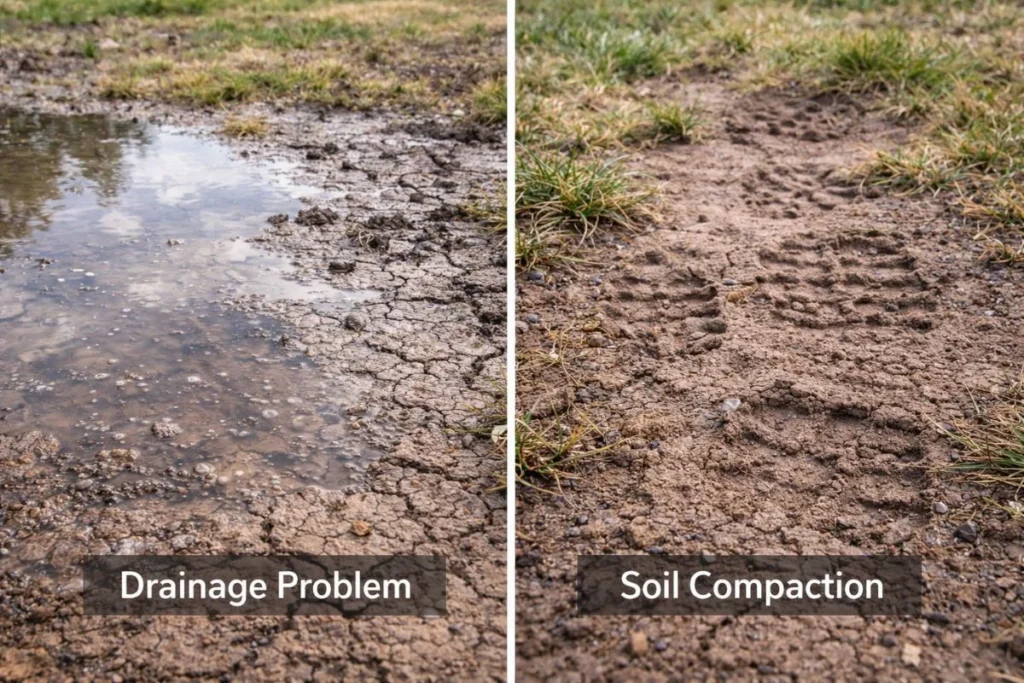
Drainage Problems vs Soil Compaction
| Problem | Main Cause | Best Fix |
|---|---|---|
| Poor drainage | Clay soil and sodium | Gypsum over time |
| Soil compaction | Foot traffic or pressure | Core aeration |
| Hard surface crust | Clay sealing | Gypsum (only if sodium exists) |
Drainage problems and compaction are often Drainage problems and compaction are often confused. If water sits on the lawn after rain, review practical lawn drainage solutions before assuming gypsum is the answer..
Clay soil drains poorly because particles stick together. Gypsum can help if sodium is present.
Compaction happens when soil is pressed down by walking or vehicles. Gypsum does not loosen compacted soil. Core aeration works better for this problem.
Knowing the difference prevents wasted treatments.
Many homeowners confuse drainage issues with compacted soil caused by pressure. To understand how physical soil compaction forms and why aeration is often the real fix, see our guide on what is compact soil.
Soil Testing Comes First
Before using gypsum for lawn care, a soil test is important.
A soil test shows:
- Soil pH
- Sodium levels
- Calcium levels
- Soil texture
If sodium levels are low, gypsum will have little effect. Many lawn failures happen because gypsum is used without testing.
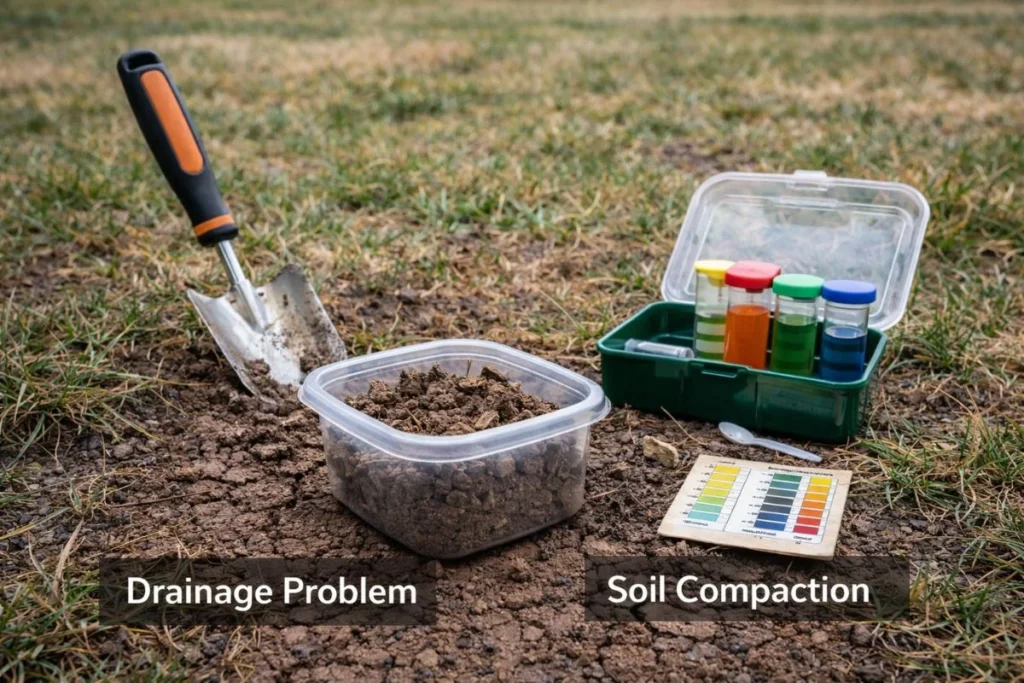
How to Test Your Lawn for Gypsum Needs
- Collect soil samples from 4–6 spots in your yard.
- Take samples 4–6 inches deep.
- Mix them together in a clean container.
- Send the sample to a local soil testing lab.
- Request sodium level, calcium level, and soil texture results.
If sodium levels are high and clay content is heavy, gypsum may help.
Lawn Type and Grass Growth Considerations
Gypsum does not depend on grass type. Cool-season and warm-season grasses respond the same way to soil conditions. Soil structure matters more than the grass itself.
Lawns with shallow roots may still struggle if mowing height, watering, or traffic stress is not corrected.
Before You Apply Gypsum
- I tested my soil
- I confirmed clay or sodium issues
- I ruled out soil compaction
- I checked drainage after rain
- I planned follow-up lawn care
How Much Gypsum to Apply
The amount of gypsum for lawn use depends on soil condition.
General guidance:
- Light clay soil: 20–30 lbs per 1,000 sq ft
- Heavy clay or sodic soil: up to 40 lbs per 1,000 sq ft
Spread evenly. Water deeply after application.
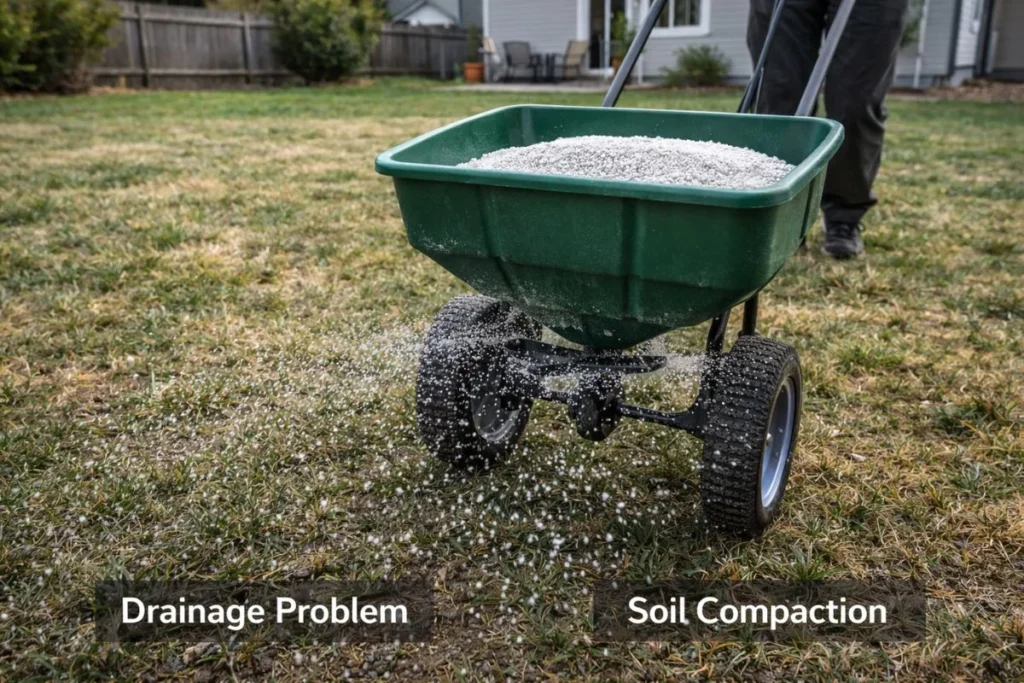
Application Rates Depend on Soil Test Results
These rates are estimates. The correct amount depends on soil test results, especially sodium levels. Using more gypsum than needed does not speed up results and may increase runoff risk.
Gypsum Application Rate Reference
| Soil Type | Typical Rate |
|---|---|
| Light clay soil | 20–30 lbs per 1,000 sq ft |
| Heavy clay or sodic soil | Up to 40 lbs per 1,000 sq ft |
| Sandy soil | Not recommended |
These rates are general estimates. Soil test results should guide final application amounts.
DIY 100-Square-Foot Gypsum Trial
DIY 100-Square-Foot Gypsum Trial
How Long Does Gypsum Take to Work?
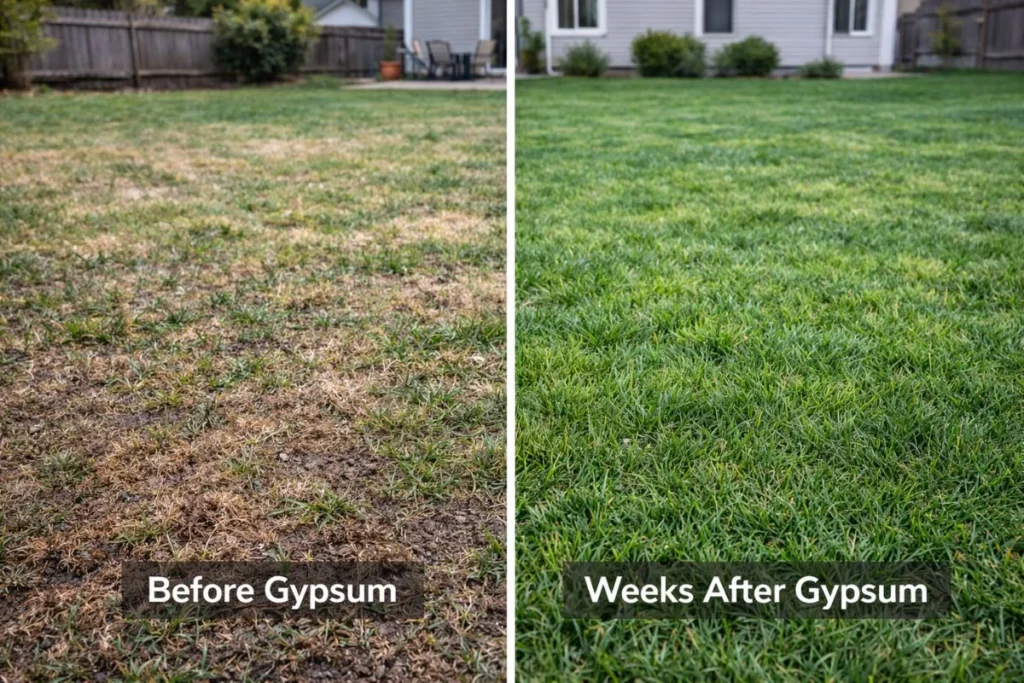
Gypsum works slowly. Changes often take weeks or months. In some lawns, improvement takes an entire season.
If results appear right away, the issue was likely surface moisture or watering habits, not soil structure.
Comparing Gypsum Results With Other Lawn Fixes
Gypsum improves soil structure slowly. Aeration often shows faster results for compaction. Compost improves soil over time and benefits more soil types. Gypsum works best as part of a larger plan, not as a stand-alone fix.
When You Should NOT Use Gypsum
Do not use gypsum for lawn care if:
- Soil is sandy
- Soil tests show low sodium
- Problems come from shade
- Soil is compacted by traffic
- Watering or mowing practices are poor
In these cases, gypsum adds cost without benefit.
Why Gypsum Often Fails in Home Lawns
Many lawns are hard because of pressure, not chemistry. Foot traffic, mowing, and play compress soil layers. Gypsum cannot undo physical pressure. If sodium is not the cause, gypsum will not change soil structure.
This is why many homeowners see no improvement.
Gypsum vs Other Lawn Fixes
Gypsum works best when combined with good lawn care. If soil pH is low, proper lime treatment for lawn may be needed instead of gypsum.
Other helpful practices include:
- Core aeration
- Adding compost
- Proper watering
- Correct mowing height
Gypsum alone rarely solves lawn problems.
Gypsum vs Aeration vs Compost
| Method | Best For | Speed of Results |
|---|---|---|
| Gypsum | Clay soil with sodium | Slow |
| Core Aeration | Soil compaction | Fast |
| Compost | General soil improvement | Medium |
Choose the method based on the real problem, not guesswork.
Common Myths About Gypsum for Lawn
- Gypsum softens all hard soil
- Gypsum fixes compaction
- Gypsum replaces aeration
- Gypsum improves every lawn
These claims are false. Gypsum helps only in specific soil conditions.
Safety and Environmental Notes
Gypsum is safe when used correctly. Overuse can cause calcium and sodium to wash deeper into the soil. On slopes or near drains, heavy watering may increase runoff. Apply only what the soil needs and avoid spreading before heavy rain.
Frequently Asked Questions
No. Gypsum does not loosen soil compacted by foot traffic. Core aeration works better.
Results usually take weeks or months. Some lawns take an entire season.
Gypsum is safe when used correctly. Overuse can increase runoff without added benefit.
Frequently Asked Questions
Does gypsum fix compacted soil?
No. Compacted soil needs aeration, not gypsum.
Will gypsum change soil pH?
No. Gypsum does not affect pH levels.
How long does gypsum take to work?
Most lawns need weeks or months to show improvement.
Final Thoughts
From real lawns and real soil problems, one truth stands out. Gypsum is useful only in the right situation. I have seen it improve drainage where sodium was the issue and calcium was missing. I have also seen it do nothing where compaction, traffic, or poor lawn care caused the problem. Gypsum is not a fix for every hard lawn. Soil testing, proper diagnosis, and basic lawn practices matter more than any single product. When gypsum matches the soil condition, it can help over time. When it does not, skipping it is the smarter move.