 Skip to content
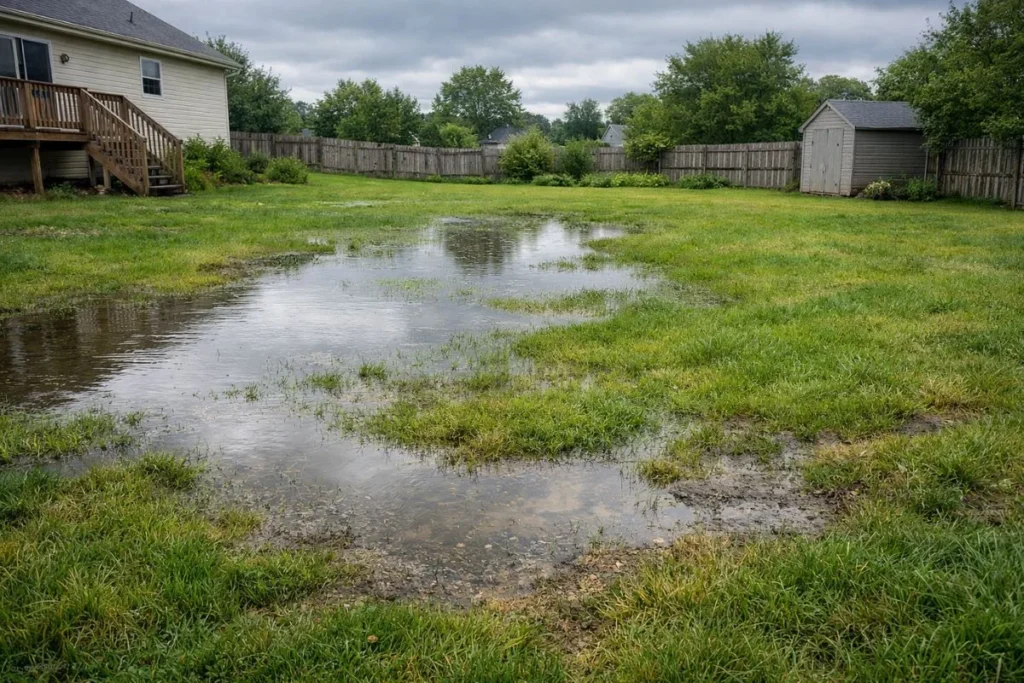
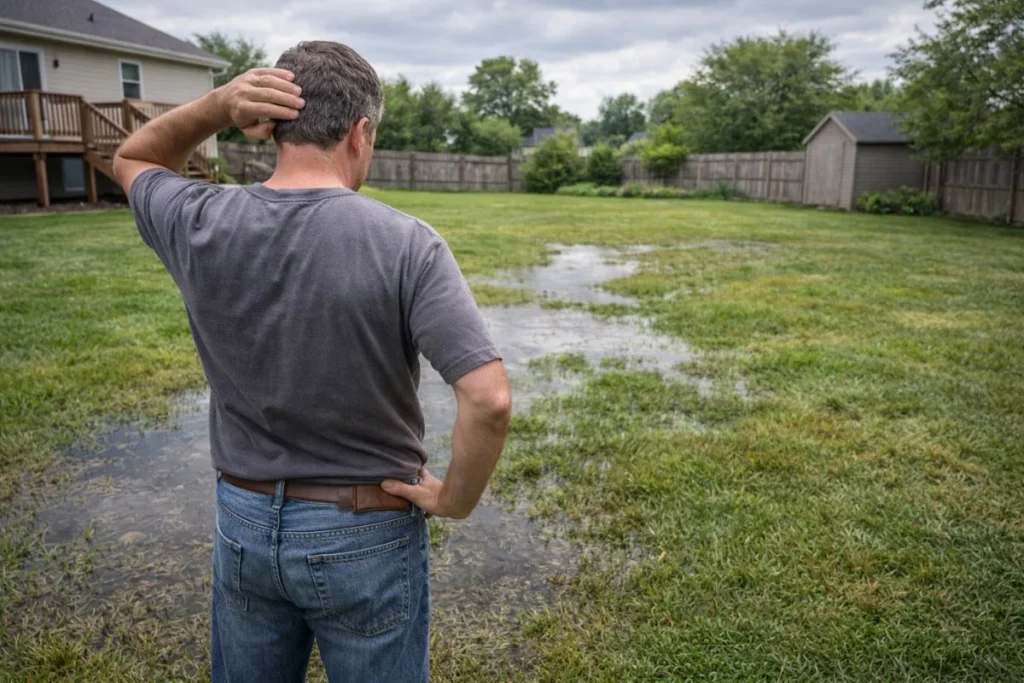
After a heavy rain, many homeowners step into their yard and feel the ground sink under their feet. Water sits on the grass. Shoes get muddy. A few days later, the lawn still feels wet. I have seen this happen again and again, both in my own yard and in yards where homeowners asked for help. At first, it feels like a small issue, but over time the grass turns weak, bare spots appear, and the yard never fully dries.
Most people think the problem is watering too much or using the wrong grass. From experience, the real cause is often poor drainage. I have worked with lawns where one low area caused most of the damage, and others where roof runoff slowly ruined healthy turf. Once the cause is clear, the fix becomes much easier. This guide on lawn drainage solutions is based on real lawn problems and real fixes that homeowners can trust.
- Why Lawn Drainage Matters More Than You Think
- Signs of Poor Lawn Drainage
- Why Is Yard Drainage Important?
- How to Identify the Source of the Water
- Start With a Soil Test
- Aerate the Lawn
- Top Dress With Compost or Sand
- Build Up Low Spots
- Install a French Drain
- When a French Drain Might Not Be the Best Option
- When a French Drain Might Not Work
- Build a Dry Creek Bed
- Improve Downspout Drainage
- Create a Rain Garden
- Install a Catch Basin or Yard Drain
- Water Less Frequently
- Surface Drainage vs Subsurface Drainage
- How Yard Slope and Grading Affect Drainage
- Why Proper Grading Is the Foundation of Lawn Drainage
- DIY vs Professional Drainage Fixes
- Cost Ranges for Lawn Drainage Solutions
- When Is the Best Time to Fix Drainage?
- Do You Need to Fix Lawn Drainage Problems?
- When to Call a Pro
- Recommended Order of Fixing Lawn Drainage Problems
- Drainage Solution Comparison Table
- Typical Cost Range for Lawn Drainage Solutions
- Maintenance After Installing Lawn Drainage Solutions
- FAQs About Lawn Drainage Solutions
- Common Lawn Drainage Mistakes to Avoid
- Conclusion
Why Lawn Drainage Matters More Than You Think
Poor drainage harms your lawn.
Roots lose access to air.
Grass becomes weak.
Fungus and weeds grow faster.
Water can also move toward your house.
This can damage the foundation and walkways.
Good drainage protects your lawn and your home.
Signs of Poor Lawn Drainage
You may have a drainage problem if you see:
- Water standing hours after rain
- Muddy or soggy patches
- Thin or dying grass
- Moss or algae growth
- Soil that smells sour
If one area stays wet longer than others, drainage is uneven.
Why Is Yard Drainage Important?
Water must move away at a steady pace.
Too much water pushes air out of soil.
Roots cannot breathe.
Proper drainage:
- Keeps grass healthy
- Improves fertilizer results
- Prevents erosion
- Protects structures
How to Identify the Source of the Water
Before choosing a solution, identify where the water is coming from.
Check these common sources:
- Roof runoff from clogged or short downspouts
- Compacted soil that prevents absorption
- Low spots in the yard
- Poor grading toward the house
- Heavy clay soil that drains slowly
Knowing the source prevents installing the wrong solution.
Start With a Soil Test
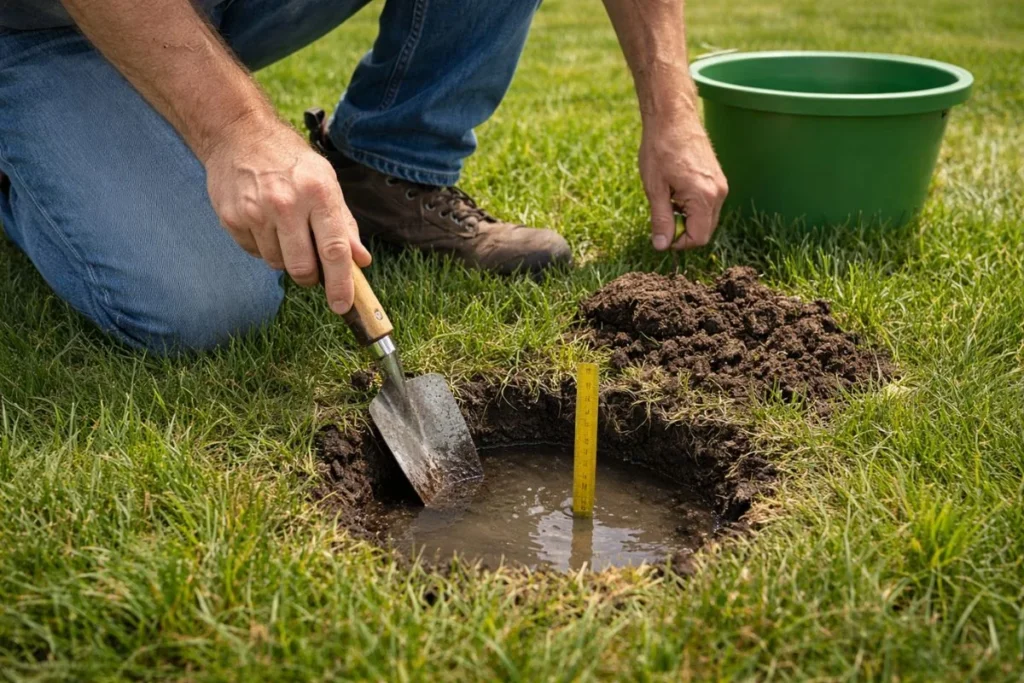
Always test before fixing drainage.
Dig a hole one foot deep.
Fill it with water.
Let it drain.
Fill it again and time it.
- Under 1 hour = fast drainage
- 1–4 hours = normal
- Over 4 hours = poor drainage
Clay soil drains slow.
Sandy soil drains fast but dries quickly.
Cold soil drains slower than warm soil.
Aerate the Lawn
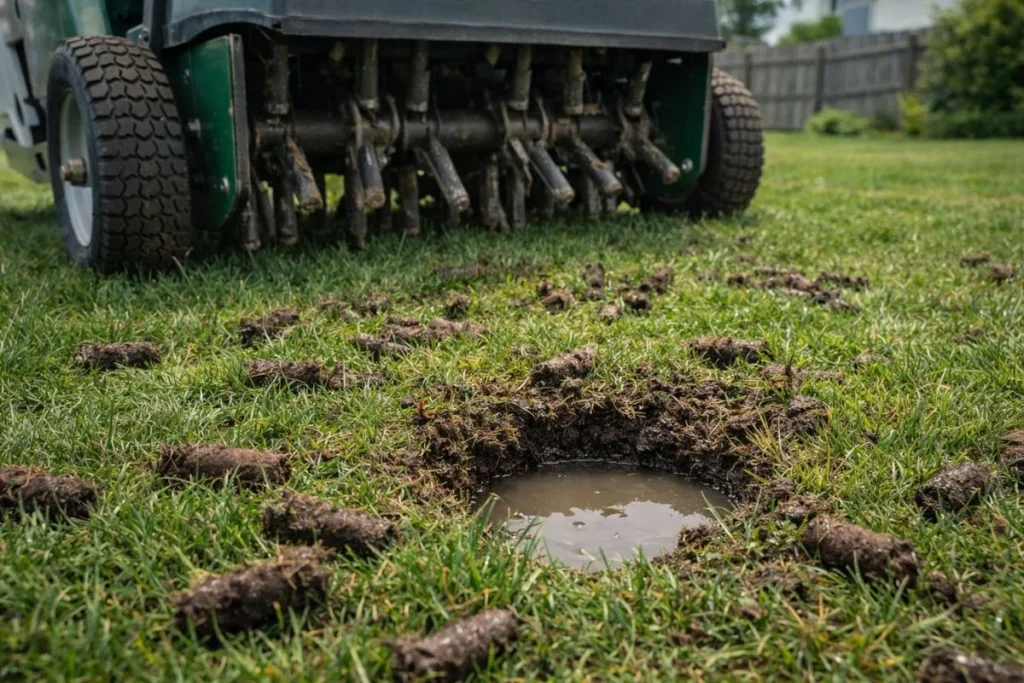
Aeration removes soil plugs.
This allows air and water to move deeper.
Benefits:
- Reduces compaction
- Helps roots grow
- Improves drainage
Core aeration works better than spike aeration.
Best times are spring and fall.
Top Dress With Compost or Sand
Top dressing improves soil structure.
- Compost improves heavy soil
- Sand helps water pass through clay
Apply a thin layer after aeration.
Do not bury the grass.
Best for mild drainage problems.
Build Up Low Spots
Low areas trap water.
Fill slowly with soil and compost mix.
Add layers over time.
Allow grass to grow through.
This is a low cost fix.
Install a French Drain
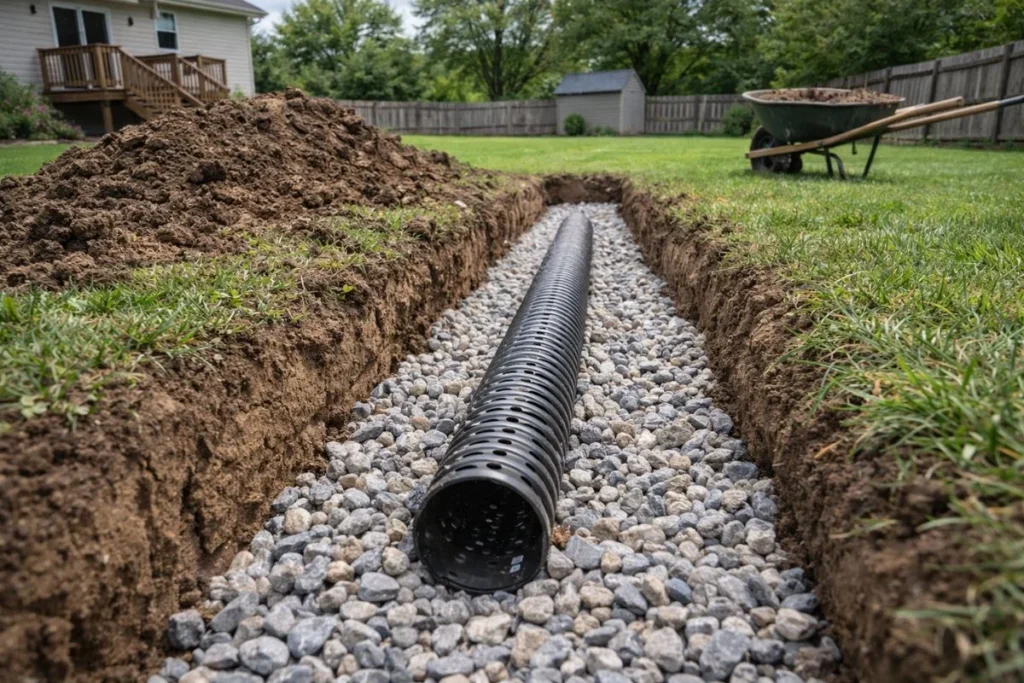
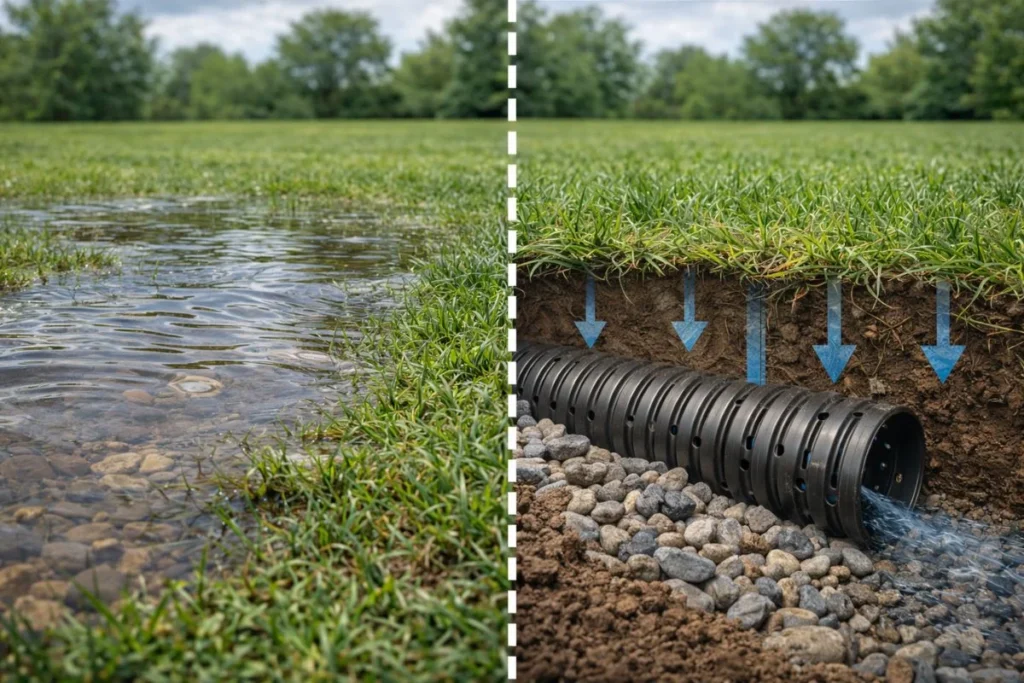
A French drain moves water below ground.
It uses gravel and a perforated pipe.
Water enters the pipe and flows away.
Best used when:
- Soil drains very slowly
- Water pools in one area
- A long term fix is needed
This usually requires digging.
Many homeowners hire a professional.
When a French Drain Might Not Be the Best Option
A French drain works well for slow soil drainage. But it is not always the right choice.
It may not work if:
- Your yard is completely flat with no discharge point.
- Water pools from surface runoff instead of underground seepage.
- The drain has nowhere safe to redirect water.
- The pipe is installed without proper slope.
In some cases, fixing grading or redirecting roof runoff is more effective.
Choose the solution based on the water source, not just popularity.
When a French Drain Might Not Work
A French drain is not always the best choice.
It may fail if:
- The yard is completely flat
- There is no discharge point
- Water issue is only surface runoff
- The pipe lacks proper slope
Sometimes correcting grading works better.
Build a Dry Creek Bed
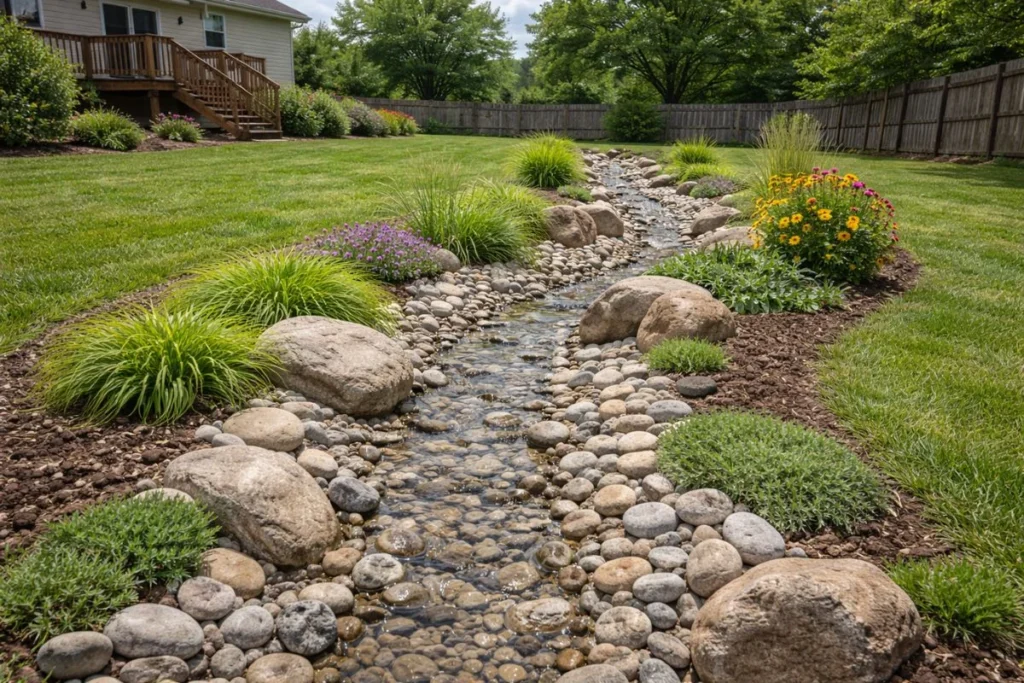
A dry creek bed controls surface runoff.
It uses rocks and gravel to guide water.
It also reduces erosion.
Works well when:
- Water flows across the lawn
- You want a natural look
- The yard has mild slope
Improve Downspout Drainage
Roof runoff often causes wet lawns.
Downspouts should send water far from the house.
Extensions are easy to install.
This is one of the cheapest drainage solutions.
It also protects foundations.
Create a Rain Garden
Rain gardens collect and absorb runoff.
They use deep rooted plants.
Water soaks in slowly.
Best when:
- Water flows from slopes
- Soil drains moderately
- You want a plant based solution
Install a Catch Basin or Yard Drain
Catch basins collect surface water.
They sit at low points.
Water enters and flows into pipes.
Useful for:
- Flat yards
- Heavy rain areas
- Patios and walkways
Regular cleaning is required.
Water Less Frequently
Too much watering makes drainage worse.
Water deeply but less often.
This helps roots grow deeper.
Morning watering works best.
Surface Drainage vs Subsurface Drainage
| Problem Type | Best Solution | Cost Level | DIY Friendly |
|---|---|---|---|
| Standing water on surface | Dry creek bed | Medium | Yes |
| Soggy soil below grass | French drain | High | No |
| Water near house | Downspout extension | Low | Yes |
| Flat yard pooling | Catch basin | High | No |
| Mild drainage issues | Aeration | Low | Yes |
Drainage problems fall into two types.
Surface drainage involves visible water.
It flows over the lawn.
Surface solutions:
- Dry creek beds
- Rain gardens
- Grading
- Swales
Subsurface drainage involves trapped water below soil.
Subsurface solutions:
- French drains
- Catch basins
- Yard drains
Choosing the right type prevents wasted effort.
In many yards, poor subsurface drainage is caused by soil being pressed too tightly over time. To understand how this physical problem forms and how it affects water movement, see our guide on what is compact soil.
Which Drainage Solution Should You Start With?
- If water is visible after rain, start with surface drainage solutions.
- If soil stays soft under the grass, check subsurface drainage options.
- If water gathers near the house, fix roof runoff first.
- If unsure, test your soil before digging or installing drains.
How Yard Slope and Grading Affect Drainage
Slope controls water flow.
Water should move away from the house.
Flat yards drain slowly.
Small dips trap water.
Fixes include:
- Filling low spots
- Gentle reshaping
- Directing water toward exits
Good grading supports long term drainage.
Why Proper Grading Is the Foundation of Lawn Drainage
Many homeowners install drains without fixing slope first. That leads to wasted time and money.
Water always follows gravity. If your yard does not slope away from your home, no drainage system will fully solve the issue.
Before installing a French drain, channel drain, or dry creek bed, check:
- Does the soil slope away from the house?
- Are there low spots where water collects?
- Is runoff flowing toward your foundation?
Even a small grading correction can improve drainage more than adding pipes.
If grading is wrong, fix that first. Then add other drainage solutions if needed.
DIY vs Professional Drainage Fixes
Some drainage solutions are DIY friendly.
DIY options:
- Aeration
- Downspout extensions
- Top dressing
- Filling low spots
Professional help is better when:
- Deep trenches are needed
- Water flows toward the house
- Pipes or utilities are present
Choosing correctly saves time and money.
Cost Ranges for Lawn Drainage Solutions
Costs vary by method.
Low cost:
- Downspout extensions
- Aeration
Medium cost:
- Dry creek beds
- Rain gardens
Higher cost:
- French drains
- Catch basins
Ignoring drainage often costs more later.
When Is the Best Time to Fix Drainage?
Spring and fall work best.
Soil is workable.
Grass recovers faster.
Avoid frozen or soaked soil.
Do You Need to Fix Lawn Drainage Problems?
Water stays on the lawn after rain
Grass keeps dying in the same area
The soil has a bad or sour smell
Small problems grow over time.
When to Call a Pro
Call a professional if:
- Water moves toward your home
- Digging is deep
- Drain lines are complex
A proper system prevents damage.
Recommended Order of Fixing Lawn Drainage Problems
Recommended Order of Fixing Lawn Follow this order for best results:
- Test soil drainage
- Fix grading and slope
- Redirect roof runoff
- Improve soil with aeration or compost
- Install drainage systems if needed
This prevents unnecessary digging.Problems
Drainage Solution Comparison Table
Use this table to choose the right method for your situation:
| Problem | Best Solution | Cost Level | Difficulty |
|---|---|---|---|
| Standing water after rain | French drain | Medium | Moderate |
| Compacted soil | Core aeration | Low | Easy |
| Water near foundation | Downspout extension | Low | Easy |
| Heavy runoff | Swale or channel drain | Medium | Moderate |
| Decorative drainage | Dry creek bed | Medium | Moderate |
This prevents choosing the wrong solution.
Typical Cost Range for Lawn Drainage Solutions
Estimated costs:
- Core aeration: $50–$200 DIY / $150–$400 professional
- Downspout extension: $10–$50 each
- French drain: $10–$25 per linear foot
- Yard regrading: $1,000+ depending on size
- Dry creek bed: $500–$2,500
Prices vary by area and yard size.
Maintenance After Installing Lawn Drainage Solutions
Drainage needs upkeep.
- Check French drain outlets
- Clean catch basin grates
- Remove debris from dry creek beds
Check once or twice a year.
FAQs About Lawn Drainage Solutions
How long should water stay on my lawn?
One to two hours is normal.
Can plants fix drainage problems?
They help mild issues only.
Is aeration enough for clay soil?
Sometimes. Often it needs more.
What is the cheapest fix?
Downspout extensions and aeration.
Can permeable paving help with lawn drainage?
Yes. Permeable pavers allow water to pass through instead of pooling on the surface.
Is grading necessary before installing drains?
Yes. Proper slope ensures water flows away from the house. Without grading, drains may fail.
Why do French drains fail?
They fail if installed without slope, without discharge point, or if clogged over time.
Common Lawn Drainage Mistakes to Avoid
Avoid these common mistakes:
- Installing drains without fixing grading
- Ignoring roof runoff
- Skipping filter fabric in French drains
- Blocking natural water paths
- Not checking soil condition first
These mistakes cause drainage systems to fail early.
Conclusion
From years of working with drainage issues, one thing is clear: most lawn problems do not need extreme fixes right away. In my own yard, small steps like redirecting downspouts and improving soil made a big difference within one season. In tougher cases, I have seen French drains solve problems that aeration alone could not. The key is watching how water moves, testing the soil, and choosing the right solution for that specific yard. When drainage is fixed the right way, grass grows stronger, soil stays healthy, and costly damage is avoided. Fixing drainage is not just lawn care, it is long term yard protection.
Key Takeaways
- Standing water after rain points to a drainage problem, not a grass issue.
- Soil type and yard slope decide which drainage solution works best.
- Start with low-cost fixes before moving to major drainage systems.
- Poor drainage affects lawn health and can damage your home over time.