 Skip to content
Seeing arborvitae turning brown can worry many homeowners. These trees are often planted to create a green privacy hedge or improve the look of a yard. When brown patches appear on the branches, it can feel alarming. Many people start to think the tree is dying or that something went wrong with planting or watering. This problem happens often, especially after harsh weather or during dry periods.
In most cases, arborvitae turn brown because of stress such as drought, winter wind, pests, or natural needle shedding. Over time, landscape experts have noticed that the pattern of browning often reveals the real cause. For example, inner needles turning brown in fall can be normal, while brown tips in summer may point to dry soil. Learning how to read these signs makes it easier to understand what the tree needs and how to help it recover.
- Quick Answer: Why Is My Arborvitae Turning Brown?
- Is Arborvitae Turning Brown Always a Serious Problem?
- How to Diagnose Arborvitae Browning
- Pests That Can Cause Arborvitae Turning Brown
- Diseases That May Cause Arborvitae Browning
- Arborvitae Turning Brown by Season
- Can Arborvitae Recover From Browning
- Common Arborvitae Varieties
- FAQ
- Conclusion
Key Takeaways
- Arborvitae turning brown can happen due to drought, winter burn, pests, or natural needle drop.
- Inner foliage turning brown is often normal, especially in fall.
- Brown tips or outer foliage usually indicate stress such as dry soil or wind damage.
- Checking the browning pattern helps identify the real cause.
- Proper watering, pruning, and winter protection can help arborvitae recover.
Quick Answer: Why Is My Arborvitae Turning Brown?
If your arborvitae is turning brown, the most common reasons include:
- drought stress
- winter burn
- pests such as spider mites or bagworms
- poor drainage
- natural inner needle drop
In many cases the tree can recover once the cause is fixed.
Why Arborvitae Foliage Turns Brown
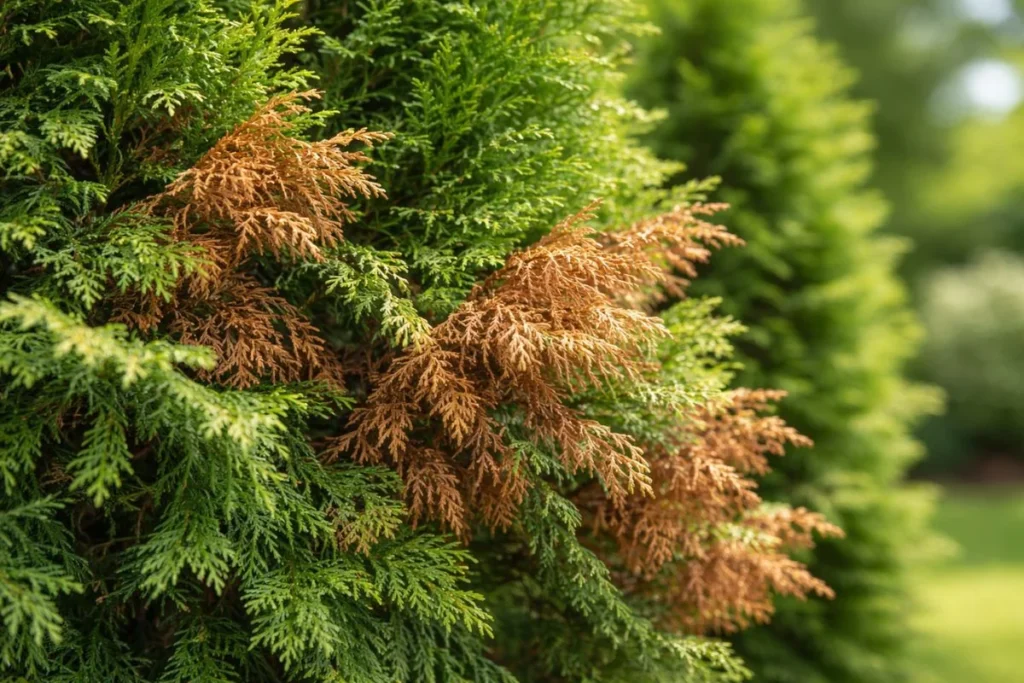
Arborvitae foliage can turn brown for several reasons. Some are natural, while others show stress or damage.
Here are the most common causes.
Not Enough Water
Arborvitae need steady moisture in the soil. When the soil becomes too dry, the tree cannot move enough water to its foliage.
Signs of drought stress include:
- brown branch tips
- dry soil around the roots
- slow growth
Newly planted trees are more sensitive to dry conditions.
Fix
Water deeply so moisture reaches the roots. During dry weather, watering once or twice a week can help young trees stay healthy.
Insufficient Sunlight
Arborvitae grow best in full sun or partial shade. If the plant grows in heavy shade, inner foliage may start turning brown.
Dense growth can also block sunlight from reaching the inside of the tree.
Fix
Trim nearby plants if they block light. Good spacing and airflow also help keep arborvitae healthy.
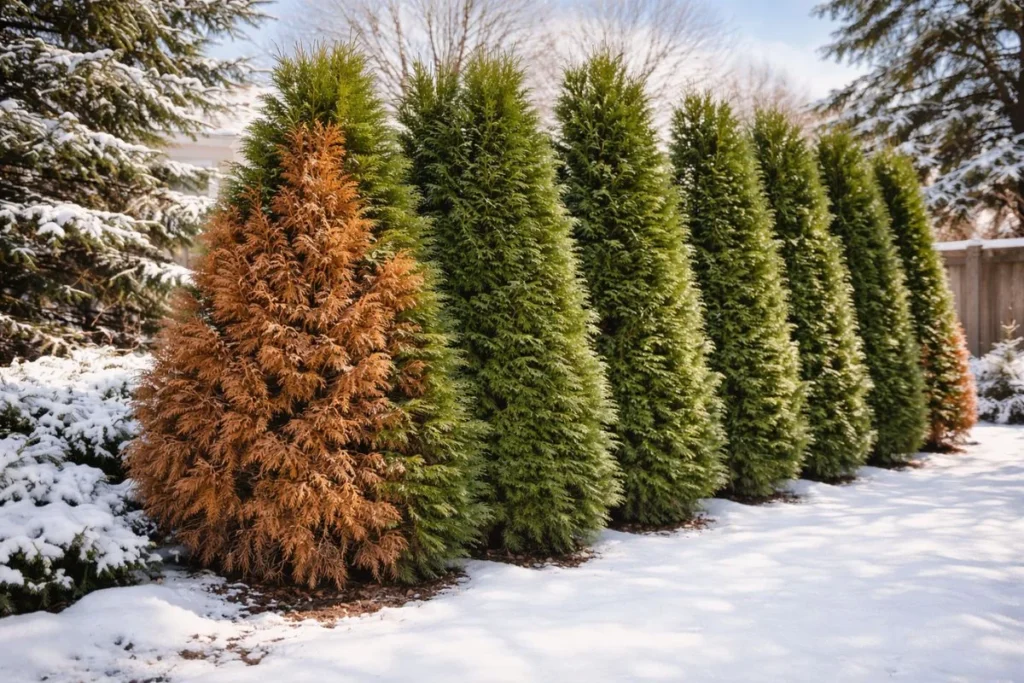
Winter Burn
Winter burn is a very common reason for arborvitae turning brown.
Cold winds pull moisture from the foliage while frozen soil prevents the roots from replacing that moisture.
This often causes:
- brown foliage on the wind-exposed side
- browning at branch tips
- damage appearing in late winter or early spring
Fix
Water trees well before the ground freezes. Young trees can also be protected with burlap screens during winter.
Is Arborvitae Turning Brown Always a Serious Problem?
Many homeowners worry that their arborvitae is dying when it turns brown.
In many cases, the tree is still healthy.
For example:
- inner needles turning brown in fall is normal
- mild winter burn may recover in spring
- small drought damage can improve after watering
The key is to look at the pattern of browning on the plant.
How to Fix an Arborvitae Turning Brown
Once you identify the cause, you can begin helping the tree recover.
Protect Against Winter Burn
In areas with strong winter winds, wrapping arborvitae with burlap can reduce damage.
Burlap acts as a barrier against drying winds.
Supplemental Watering
Water stress is one of the main causes of arborvitae browning.
Deep watering helps moisture reach the root system. Shallow watering often does not reach the deeper roots.
Young trees usually need more frequent watering than mature trees.
Prune Brown Patches
Dead branches will not turn green again.
Use clean pruning tools to remove brown branches. This improves the appearance of the tree and allows new growth to develop.
Avoid removing too much foliage at once.
How to Prevent Arborvitaes From Turning Brown
Arborvitae Care Checklist
- Water deeply during dry weather.
- Add mulch around the root zone to keep soil moisture stable.
- Inspect branches for pests during summer months.
- Protect young trees from strong winter wind.
- Prune dead or damaged branches in spring.
Healthy care practices help keep arborvitae green year round.
Homeowners with larger landscapes often manage evergreen health through a structured tree and shrub care program that includes seasonal inspections, fertilization, and pest monitoring.
Plant in a Sheltered Location
Choose planting spots that protect the tree from strong winds. Wind protection helps prevent winter burn.
Plant in Spring
Spring planting gives arborvitae time to build strong roots before winter arrives.
Trees planted late in the season may struggle during their first winter.
Mulch the Root Zone
Mulch helps keep soil moisture stable.
Benefits include:
- keeping roots cool in summer
- holding moisture in the soil
- protecting roots in winter
Keep mulch a few inches away from the trunk.
Wrap Trees in Burlap
Young arborvitae may benefit from burlap protection in winter.
This helps reduce wind exposure and moisture loss.
Why Inner Arborvitae Growth Turns Brown
Sometimes only the inner foliage turns brown while the outer parts remain green.
This is often normal.
Evergreen trees shed older needles each year. The plant drops older inner foliage so new growth can develop.
If the outer foliage remains healthy and green, this browning usually is not a problem.
How to Diagnose Arborvitae Browning
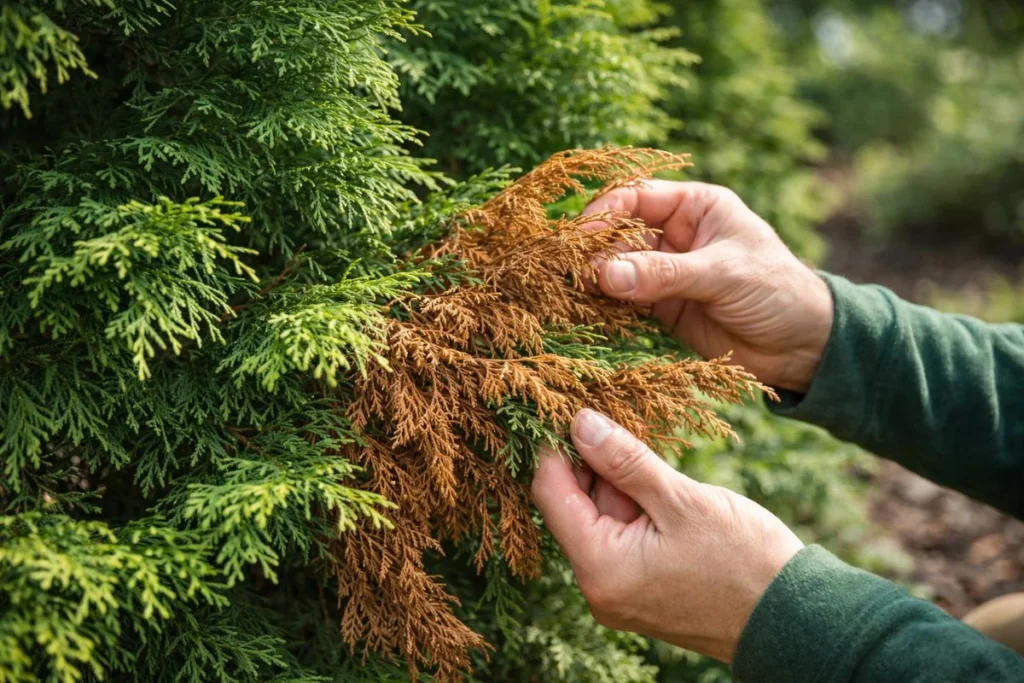
Arborvitae Browning Quick Diagnosis
| Symptom | Most Likely Cause | What to Do |
|---|---|---|
| Inner foliage brown | Natural needle drop | Usually no action needed |
| Brown branch tips | Drought stress | Deep watering |
| One side of tree brown | Winter burn | Protect from strong wind |
| Random brown patches | Pest damage | Inspect branches for insects |
| Whole plant browning | Root or soil issue | Check drainage |
Before trying to fix the problem, it helps to identify the exact reason your arborvitae is turning brown.
| Browning Pattern | Possible Cause | What to Check |
|---|---|---|
| Inner foliage turning brown | Natural needle drop | Outer foliage still green |
| Branch tips brown | Drought or winter burn | Soil moisture |
| One side brown | Wind damage | Direction of wind |
| Random patches | Pest damage | Look for insects |
| Whole branch dying | Disease or root problem | Soil drainage |
Looking at these patterns can help identify the problem faster.
Pests That Can Cause Arborvitae Turning Brown
Some insects feed on arborvitae foliage and cause browning.
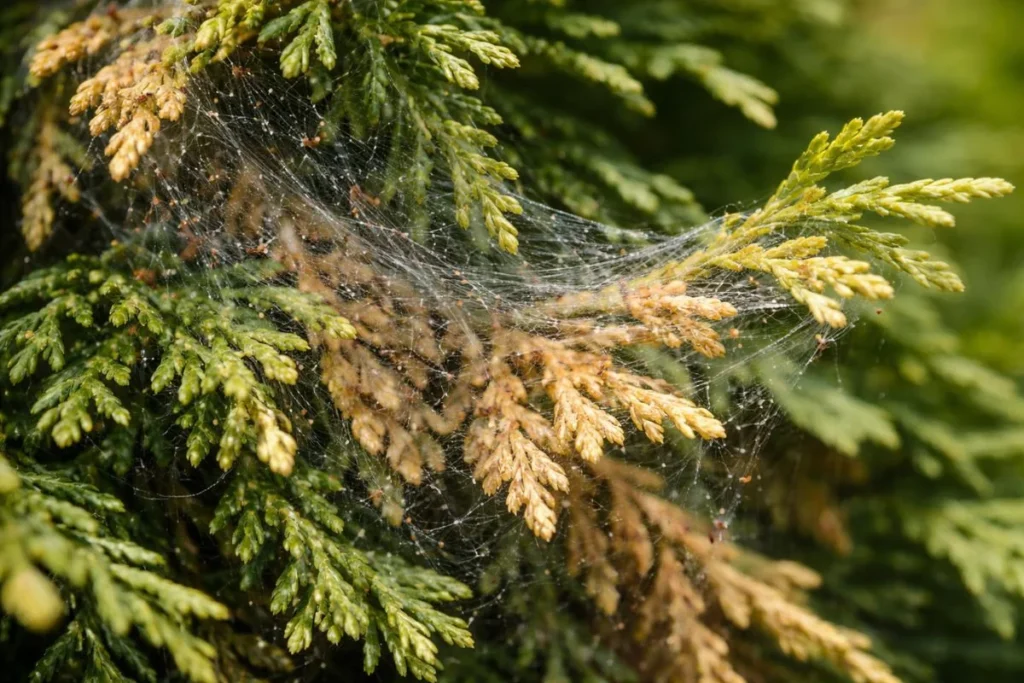
Spider Mites
Spider mites are tiny pests that feed on plant juices.
Signs include:
- yellow or brown foliage
- small webbing on branches
- speckled needles
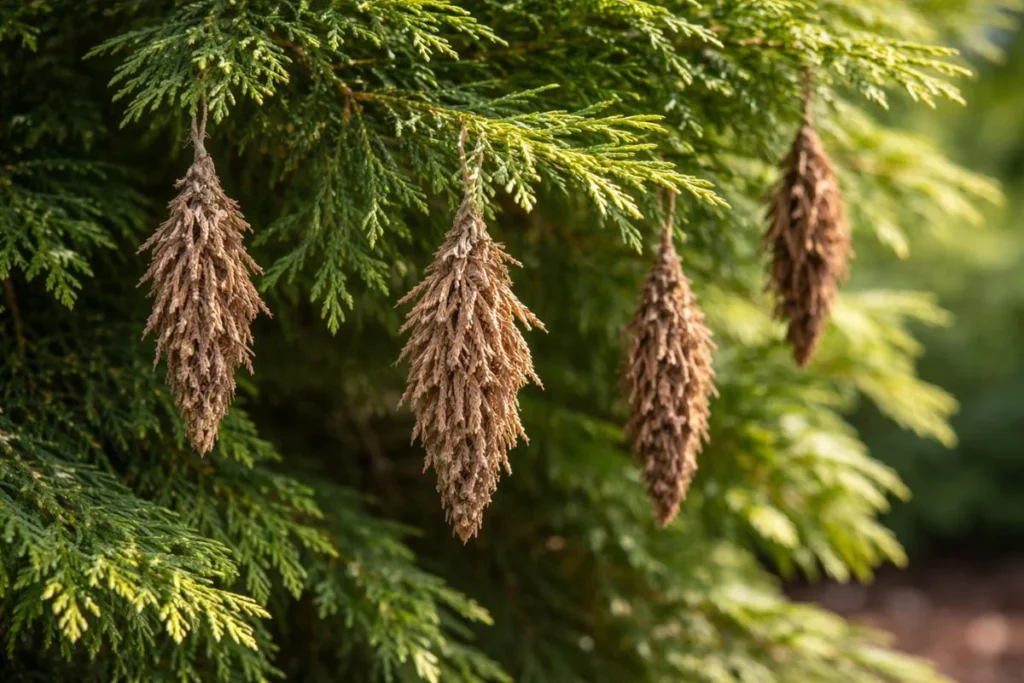
Bagworms
Bagworms create small hanging bags on branches.
Signs include:
- cone shaped bags
- thinning foliage
- brown patches on branches
Arborvitae Leafminers
Leafminers feed inside the foliage.
Damage may appear as:
- brown needle tips
- hollow leaves
Diseases That May Cause Arborvitae Browning
Although less common, diseases can also cause arborvitae turning brown.
Root Rot
Root rot develops when soil stays too wet.
Signs include:
- weak growth
- overall browning
- soggy soil
Tip Blight
Tip blight affects small branches and tips.
Signs include:
- browning at branch ends
- dead patches of foliage
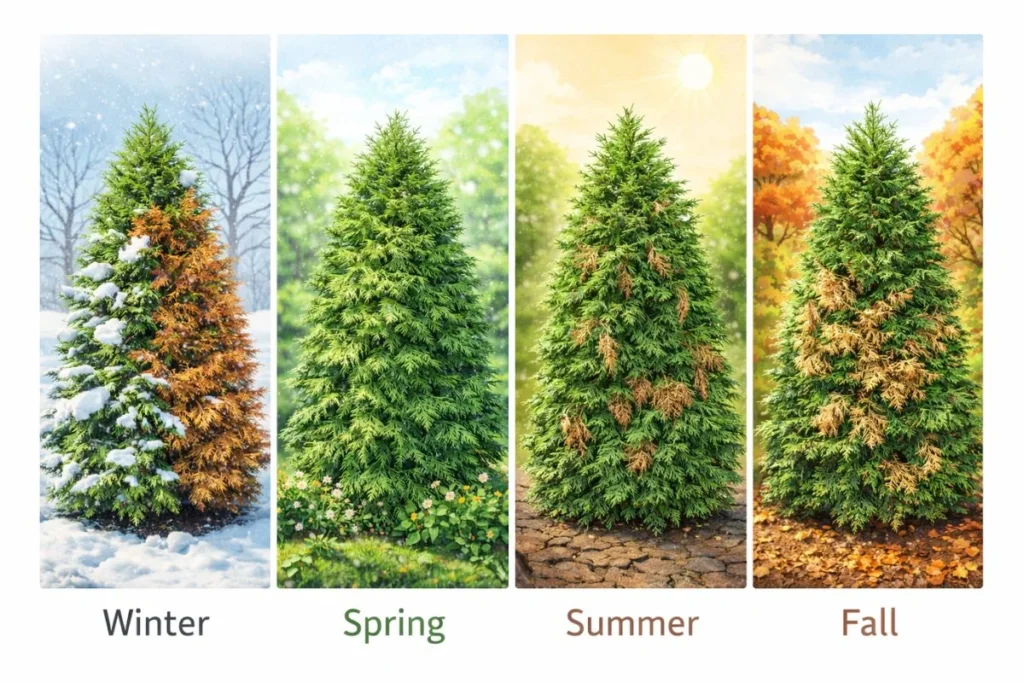
Arborvitae Turning Brown by Season
The time of year often helps identify the cause.
Winter
Winter burn and drying winds often damage arborvitae.
Spring
Transplant stress may appear if trees were recently planted.
Summer
Hot weather and drought stress are common causes.
Spider mites also become active.
Fall
Inner needles may drop as part of the natural growth cycle.
Can Arborvitae Recover From Browning
Recovery depends on how much damage occurred.
If only inner needles are brown, the tree is usually healthy.
If branch tips are brown, the tree may recover with proper care.
If large sections are brown or dead, recovery becomes less likely.
Pruning damaged branches can improve the plant’s appearance.
Can Arborvitae Recover?
| Damage Level | Recovery Chance |
|---|---|
| Inner needles only | Very High |
| Brown tips | High |
| Several branches brown | Moderate |
| Half the tree brown | Low |
| Entire tree brown | Very Unlikely |
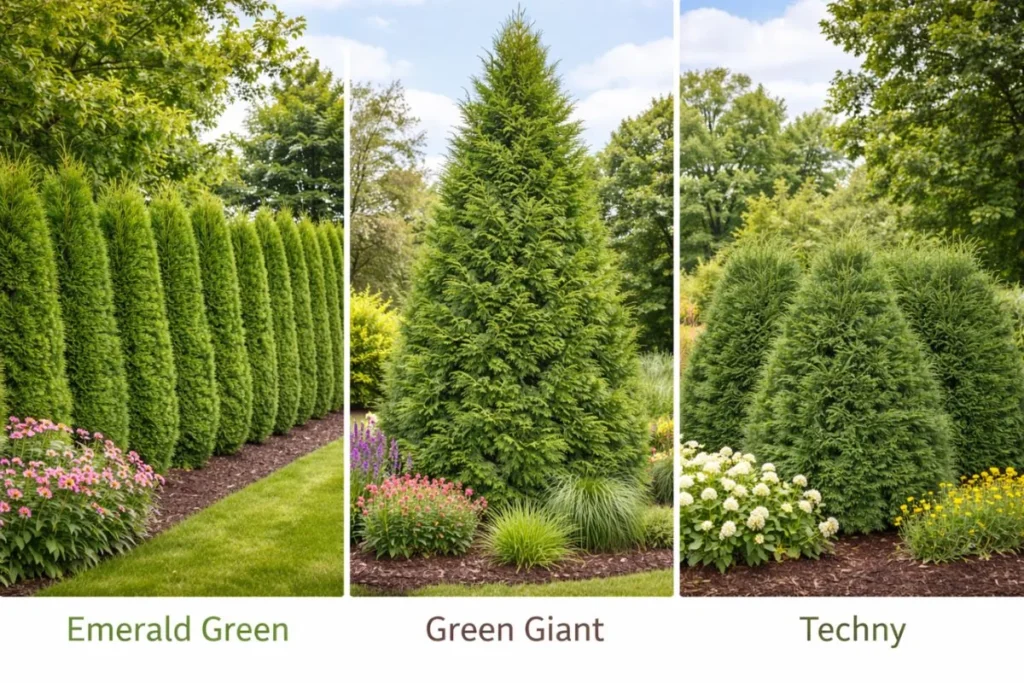
Common Arborvitae Varieties
Different arborvitae types grow in landscapes.
Emerald Green Arborvitae
A narrow growing variety often used for privacy hedges.
Green Giant Arborvitae
A fast growing tree used for large screens.
Techny Arborvitae
A hardy variety that handles cold climates well.
FAQ
Can brown arborvitae turn green again?
Dead foliage will not turn green again. New green growth may appear if the tree is healthy.
Should I cut off brown arborvitae branches?
Yes. Removing dead branches improves the appearance of the tree.
How often should arborvitae be watered?
Young trees may need watering once or twice per week during dry weather.
Is browning always caused by disease?
No. Many cases are caused by drought stress or winter damage.
Conclusion
Arborvitae turning brown may look serious, but many cases come from temporary stress rather than permanent damage. Careful observation usually provides the answer. The location of the browning, the season when it appears, and the condition of the soil often reveal the cause. In many landscapes, arborvitae recover once watering improves, pests are controlled, or winter protection is added. With regular inspection and simple care, these trees can stay healthy and continue providing privacy and greenery for many years.