 Skip to content
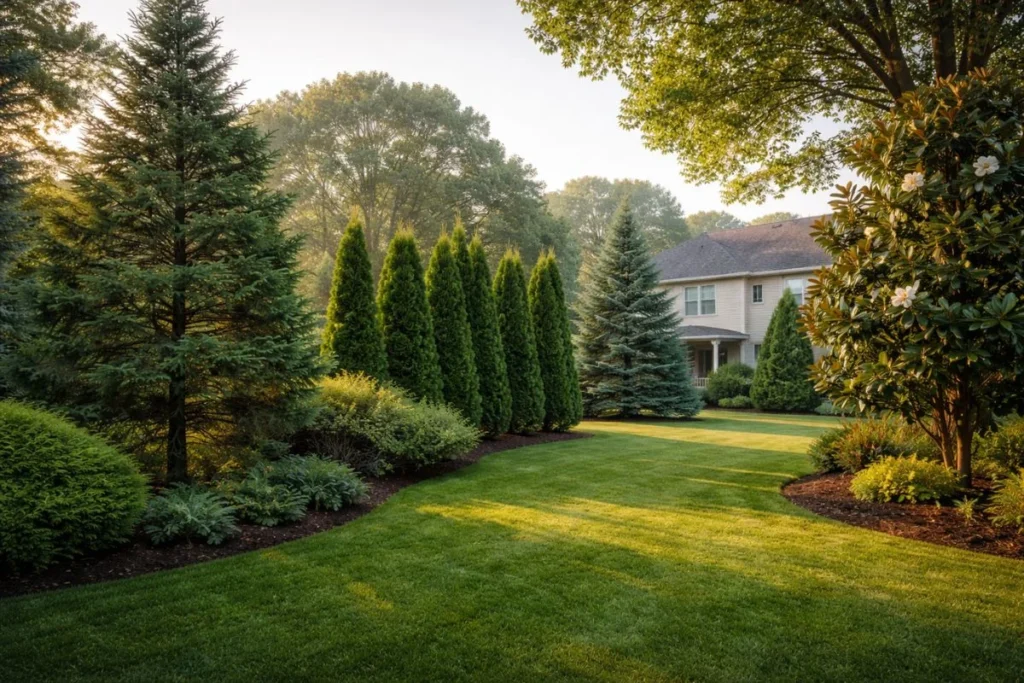
Many homeowners in Virginia want a yard that stays green through the whole year. But choosing the right evergreen trees in Virginia can be confusing. Some people plant a tree that looks great at the nursery, yet after a few years it struggles with the local soil or winter weather. Others plant trees too close together and later deal with crowded branches or poor growth. A common issue many homeowners face is privacy. As neighborhoods grow and new houses appear nearby, backyards can start to feel exposed. This is why many people search for evergreen trees that grow tall and dense enough to create a natural screen.
Another challenge is knowing which trees truly grow well in Virginia. The state has several climate zones, and trees that do well in coastal areas may not survive colder mountain regions. Over time, gardeners and landscape professionals in Virginia have noticed that certain evergreen trees perform much better than others. Trees like Eastern red cedar, American holly, and Southern magnolia have proven reliable for many landscapes. Understanding these options can help homeowners choose trees that stay healthy, provide privacy, and keep the yard green through every season.
- Evergreen, Semi-evergreen
- Evergreens? Ever Useful!
- First, Why Are Evergreen Trees and Plants So Great?
- Magnolia Grandiflora
- Japanese Cedar
- Boxwood
- Camellia
- Mahonia
- Sedum ‘Angelina’
- American Holly
- Osmanthus
- Eastern Red Cedar
- Best Evergreen Trees in Virginia Landscapes
- Evergreen Trees for Landscaping in Virginia
- Virginia Growing Zones for Evergreen Trees
- Maintenance Needs for Evergreen Plants in Virginia
- Evergreen Trees for Privacy in Virginia
- Native Evergreen Trees in Virginia
- How to Plant Evergreen Trees in Virginia
- Evergreen Trees That Support Wildlife
- Common Problems With Evergreen Trees in Virginia
- Essential Spring Tree Care Tips for Evergreens in Northern VA
- Frequently Asked Questions About Evergreen Trees in Virginia
- Conclusion
Key Takeaways
- Evergreen trees in Virginia stay green throughout the year and add color to landscapes even in winter.
- Popular evergreen trees include Eastern red cedar, American holly, and Southern magnolia.
- Fast growing evergreen trees like arborvitae and Leyland cypress are often used for privacy screens.
- Native evergreen trees usually adapt better to Virginia soil and climate conditions.
- Fall and early spring are the best seasons to plant evergreen trees in Virginia.
Evergreen, Semi-evergreen
Plants fall into different groups based on how long their leaves stay on the plant.
Evergreen
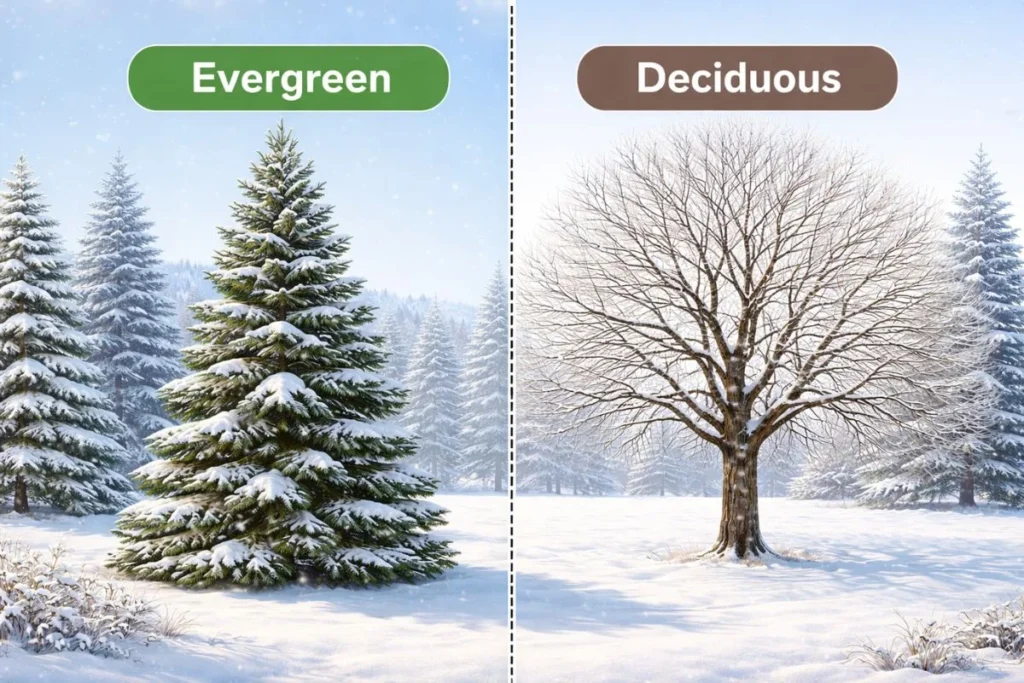
Evergreen plants keep their leaves all year. The leaves may slowly drop and grow again, but the plant never looks bare.
Common evergreen trees include:
- pine
- spruce
- cedar
- holly
- magnolia
These plants stay green even during winter.
Semi-evergreen
Semi-evergreen plants keep leaves in mild winters but may drop them in colder weather. In warm areas they stay green longer.
Many shrubs and small trees fall into this group.
Evergreens? Ever Useful!
Evergreen trees have many uses in landscapes.
They provide benefits through the whole year.
Winter protection
Evergreens block cold winds. Their thick branches help protect homes and other plants.
Privacy
Dense foliage makes evergreen trees great for natural screens.
Wildlife habitat
Birds and small animals use evergreen branches for shelter. Many birds also nest in these trees.
Year round color
Evergreens keep landscapes green even during winter months.
Because of these benefits, evergreen trees are common in Virginia yards and parks.
First, Why Are Evergreen Trees and Plants So Great?
Evergreen trees work well in Virginia landscapes for several reasons.
Year round greenery
Unlike deciduous trees, evergreen species keep their leaves during winter.
Low maintenance
Many evergreen trees need little pruning once they are established.
Strong wind protection
Rows of evergreen trees can act as windbreaks.
Property value
Healthy evergreen trees can make a property look more attractive.
Magnolia Grandiflora
Magnolia grandiflora is also called Southern magnolia. It is one of the most popular evergreen trees in warm parts of Virginia.
Key features
- large glossy leaves
- big white flowers
- strong fragrance
Growth
- height: 60 to 80 feet
- spread: 30 to 50 feet
This tree works well as a shade tree in large yards.
Japanese Cedar
Japanese cedar (Cryptomeria japonica) is a tall evergreen conifer. It grows well in many Mid Atlantic landscapes.
Features
- soft needle like foliage
- pyramid shape
- good winter color
Growth
- height: 50 to 70 feet
It is often used in large landscapes or parks.
Boxwood
Boxwood is a small evergreen shrub that is very common in Virginia gardens.
Features
- dense green leaves
- easy to shape
- works well for hedges
Boxwood plants are often used near walkways, gardens, and building entrances.
Camellia
Camellia is a flowering evergreen shrub.
It is popular for its bright winter and spring blooms.
Features
- glossy leaves
- pink, red, or white flowers
- shade tolerant
Camellia plants grow best in protected areas with well drained soil.
Mahonia
Mahonia is an evergreen shrub with unique foliage.
Features
- spiky leaves
- yellow flowers in winter
- blue berries
Birds often eat the berries.
Sedum ‘Angelina’
Sedum ‘Angelina’ is a small evergreen groundcover plant.
It is often used in landscape beds.
Features
- bright yellow foliage
- drought tolerant
- low growing
This plant spreads across the soil and adds color to garden borders.
American Holly
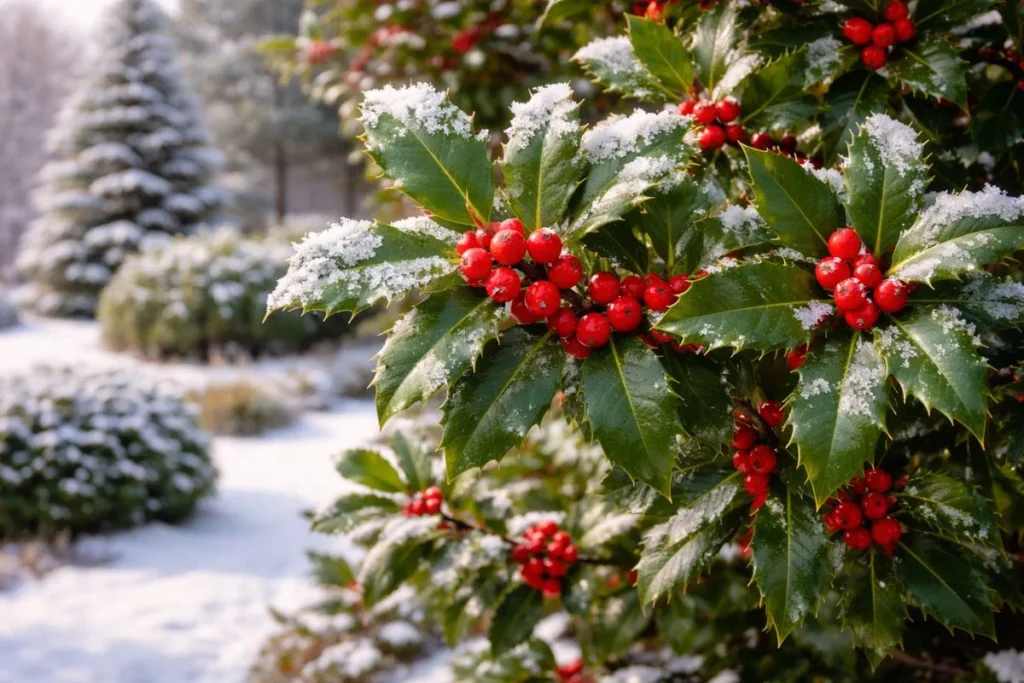
American holly is a native evergreen tree in Virginia.
It is well known for its red berries and glossy leaves.
Features
- shiny dark green foliage
- bright red berries
- strong winter color
Growth
- height: 30 to 50 feet
Birds often eat the berries during winter.
Osmanthus
Osmanthus is an evergreen shrub or small tree.
It is also called tea olive.
Features
- small white flowers
- strong sweet fragrance
- dense foliage
It works well near patios or walkways because of its scent.
Eastern Red Cedar
Eastern red cedar is a native evergreen tree found across Virginia.
It grows in forests, fields, and landscapes.
Features
- blue green foliage
- small blue berries
- drought tolerance
Growth
- height: 30 to 40 feet
Many birds and animals use this tree for shelter.
Best Evergreen Trees in Virginia Landscapes
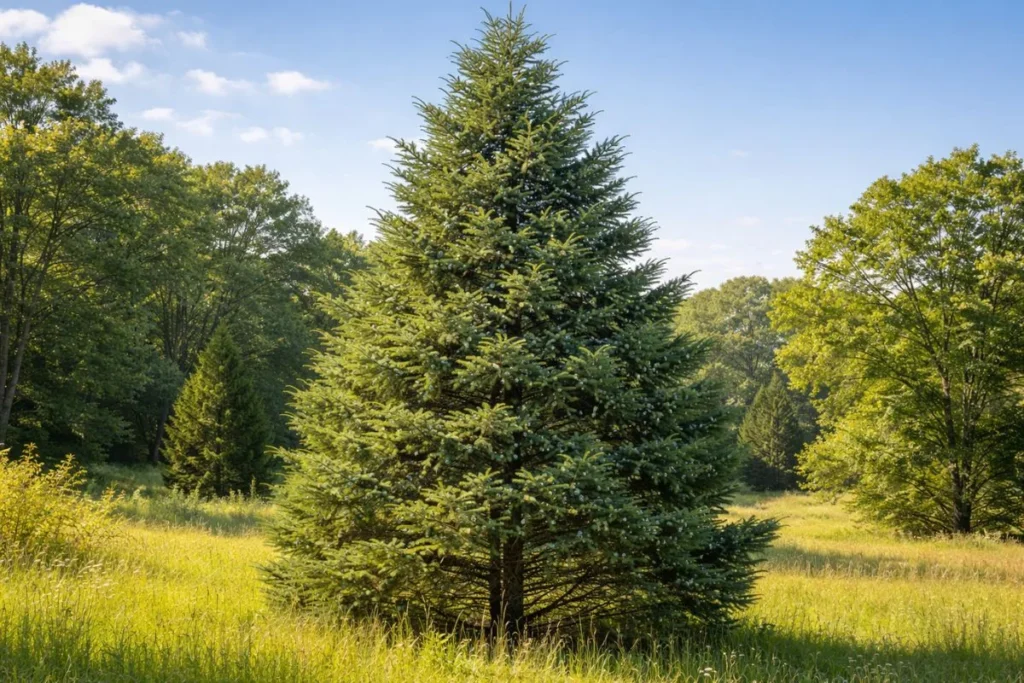
Many evergreen trees grow well in Virginia landscapes. These trees provide shade, privacy, and year round greenery.
Some popular choices include:
- Eastern red cedar
- American holly
- Southern magnolia
- arborvitae
- Norway spruce
Homeowners often choose these evergreen trees because they adapt well to Virginia climate and soil.
Evergreen Tree Comparison Guide
| Tree | Mature Height | Growth Speed | Best Use |
|---|---|---|---|
| Eastern Red Cedar | 30–40 ft | Medium | Wildlife habitat, windbreak |
| American Holly | 30–50 ft | Slow to medium | Ornamental landscape tree |
| Southern Magnolia | 60–80 ft | Medium | Shade tree |
| Green Giant Arborvitae | 40–60 ft | Fast | Privacy screen |
| Leyland Cypress | 50–70 ft | Fast | Privacy hedge |
Evergreen Trees for Landscaping in Virginia
Evergreen trees play an important role in landscape design.
Landscape planners often use evergreen trees for:
- foundation planting
- garden borders
- background trees
- shade trees
Small evergreen trees work well in front yards and near patios.
Larger evergreen trees are often used as shade trees or windbreaks.
Combining evergreen trees with flowering plants can create a balanced landscape.
Virginia Growing Zones for Evergreen Trees
Virginia has several climate zones. These zones affect which evergreen trees grow best.
Most of the state falls between USDA zones 6a and 8a.
| Region | Zone |
|---|---|
| Appalachian mountains | 6a–6b |
| Northern Virginia | 7a |
| Central Virginia | 7a–7b |
| Coastal Virginia | 8a |
Evergreen trees should match the climate zone.
Maintenance Needs for Evergreen Plants in Virginia
Evergreen trees in Virginia need basic care to stay healthy.
Homeowners who manage larger landscapes often rely on a structured tree and shrub care program that includes seasonal inspections, fertilization, and pest monitoring.
Soil
Most evergreen trees prefer well drained soil.
Water
Young evergreen trees need regular watering during the first year.
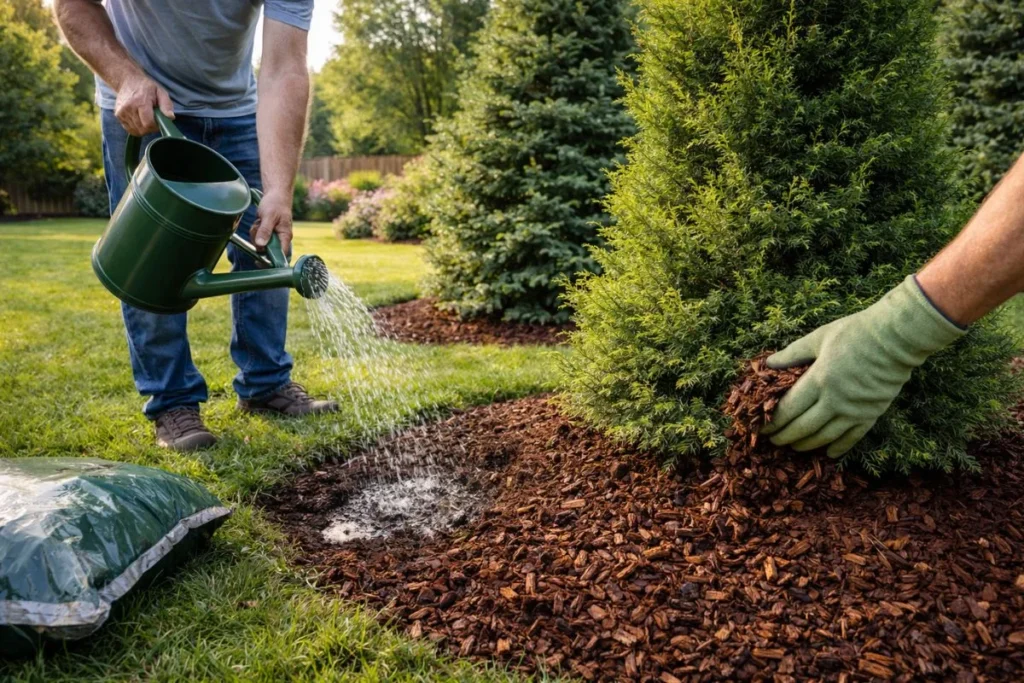
Mulch
Mulch helps hold soil moisture.
Pruning
Remove dead or damaged branches.
Evergreen Tree Care Calendar
Spring
- Inspect trees for winter damage
- Add mulch around the base
- Check for pests or disease
Summer
- Water deeply during dry periods
- Watch for drought stress
Fall
- Best season for planting evergreen trees
- Apply mulch before winter
Winter
- Protect young trees from strong wind
- Remove heavy snow from branches
Evergreen Trees for Privacy in Virginia
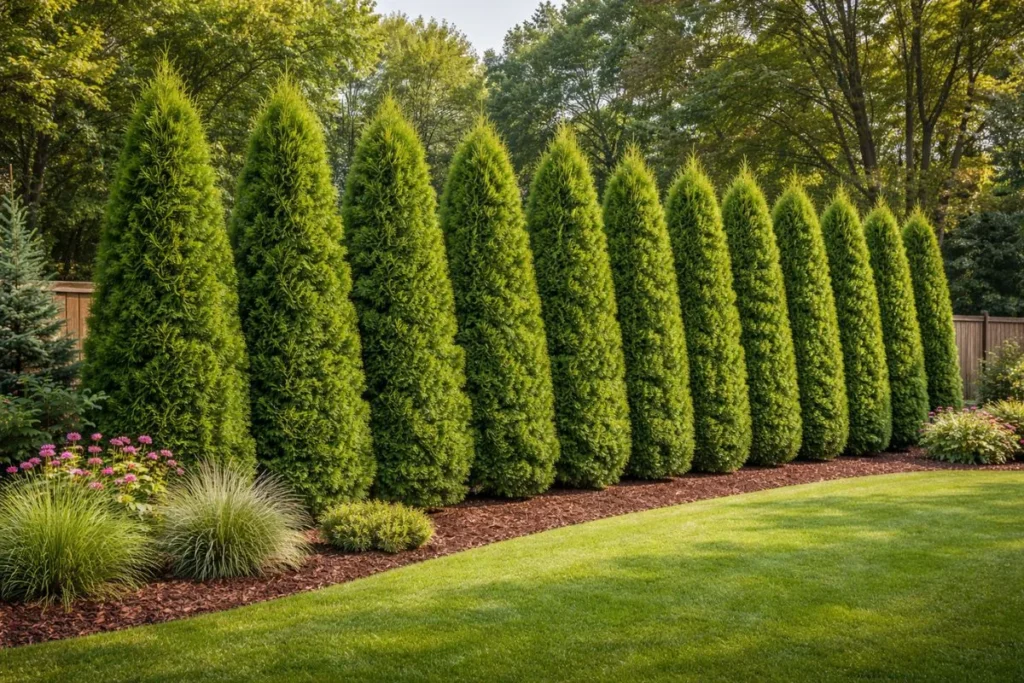
Many homeowners plant evergreen trees to create natural privacy screens.
Popular choices include:
- Green Giant Arborvitae
- Leyland Cypress
- Eastern Red Cedar
- Norway Spruce
These trees grow tall and form thick green walls.
Evergreen Tree Growth Rate Guide
| Growth Speed | Examples of Trees |
|---|---|
| Fast | Green Giant Arborvitae, Leyland Cypress |
| Medium | Eastern Red Cedar, Southern Magnolia |
| Slow | American Holly |
Native Evergreen Trees in Virginia
Native evergreen trees grow naturally in Virginia forests.
Examples include
- Eastern Red Cedar
- American Holly
- Virginia Pine
- Atlantic White Cedar
Native trees support birds and wildlife.
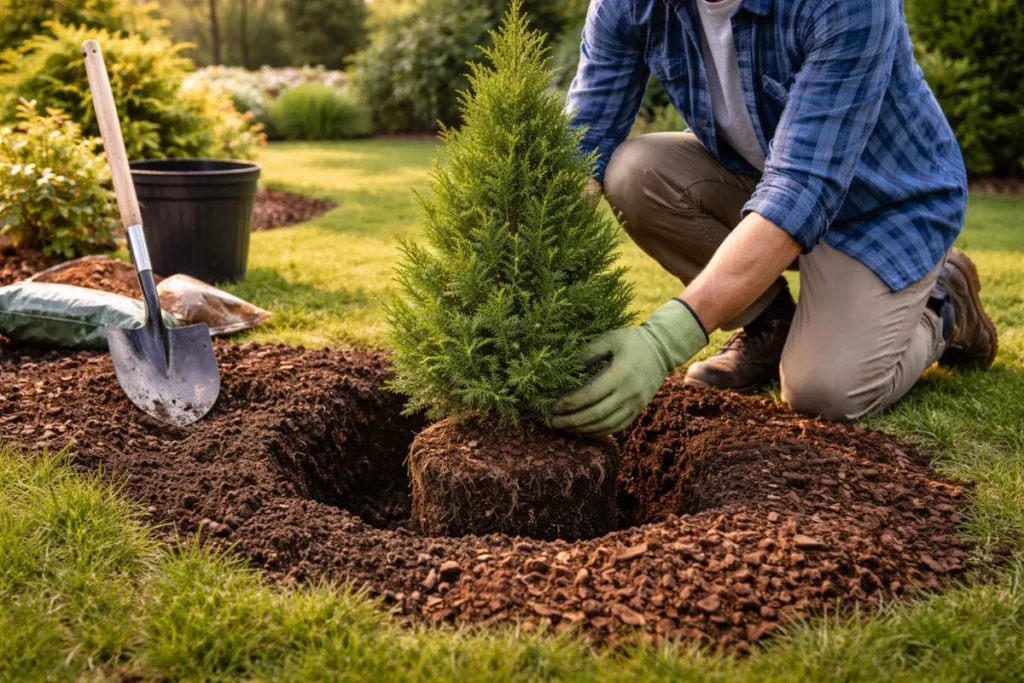
How to Plant Evergreen Trees in Virginia
Choose the right location
Prepare the soil
Place the tree
Water deeply
Add mulch
Plant evergreen trees with enough spacing so air can move between branches. Crowded trees often develop disease problems and poor growth over time.
Evergreen Trees That Support Wildlife
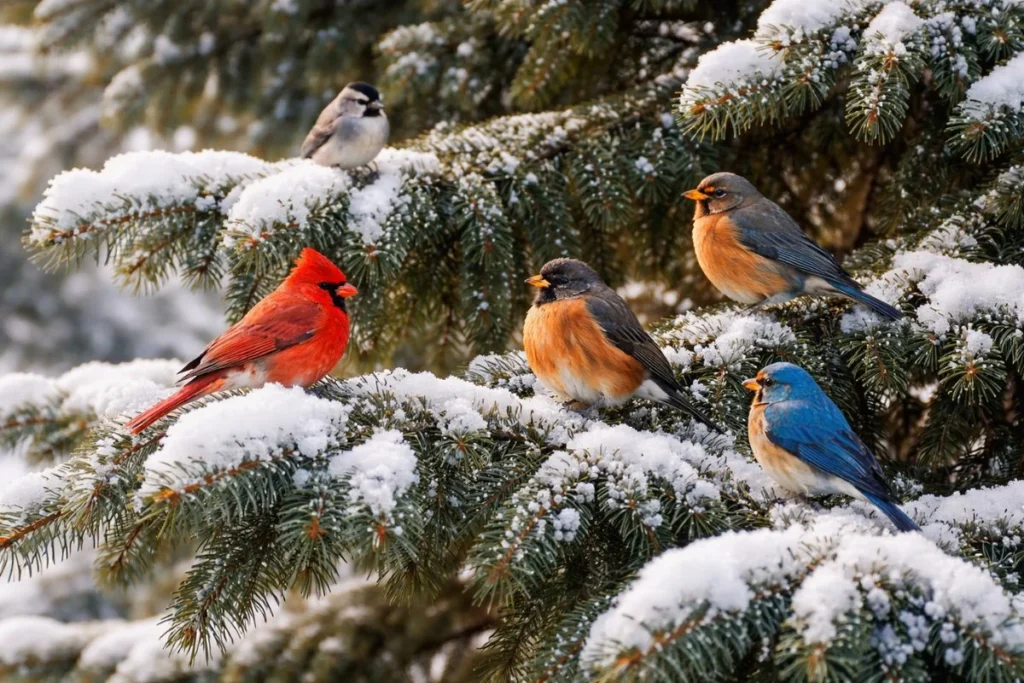
Many evergreen trees help birds and wildlife survive winter.
Dense branches provide shelter from wind and predators.
Some evergreen trees also produce berries or seeds that birds eat.
Examples include:
- American holly
- Eastern red cedar
- Virginia pine
Planting these trees can help create a wildlife friendly garden.
Common Problems With Evergreen Trees in Virginia
Winter burn
Root rot
Drought stress
Deer damage
Essential Spring Tree Care Tips for Evergreens in Northern VA
Spring is an important season for evergreen tree care in Virginia.
Key Spring Evergreen Care Tips
Check for winter damage
Remove broken or dead branches.
Apply mulch
Fresh mulch helps soil keep moisture.
Inspect for pests
Look for insects or disease early in the season.
The Importance of Spring Tree Care for Evergreen Trees & Shrubs
Spring care helps evergreen plants grow strong through the year.
Healthy trees resist pests, drought, and disease better.
Frequently Asked Questions About Evergreen Trees in Virginia
What evergreen trees grow best in Virginia?
Eastern red cedar, American holly, arborvitae, and Southern magnolia grow well.
What is the fastest growing evergreen tree in Virginia?
Green Giant arborvitae and Leyland cypress.
Are evergreen trees good for privacy?
Yes. Dense foliage blocks views and creates natural screens.
When should evergreen trees be planted in Virginia?
Fall and early spring are the best planting seasons because cooler weather helps roots establish.
Conclusion
Evergreen trees can completely change the look and feel of a Virginia landscape. Many homeowners begin planting them to solve simple problems like lack of privacy or a yard that looks empty in winter. Over time, the right evergreen trees become long-term features that provide shade, block wind, and create natural screens between properties. Landscape professionals across Virginia often recommend species like Eastern red cedar, American holly, and arborvitae because they adapt well to the local climate and soil conditions. When trees are planted with the right spacing and given proper care during the first year, they usually grow strong and healthy for decades. With careful planning and the right tree choices, evergreen trees can help create a yard that stays green, peaceful, and attractive throughout the entire year.