 Skip to content
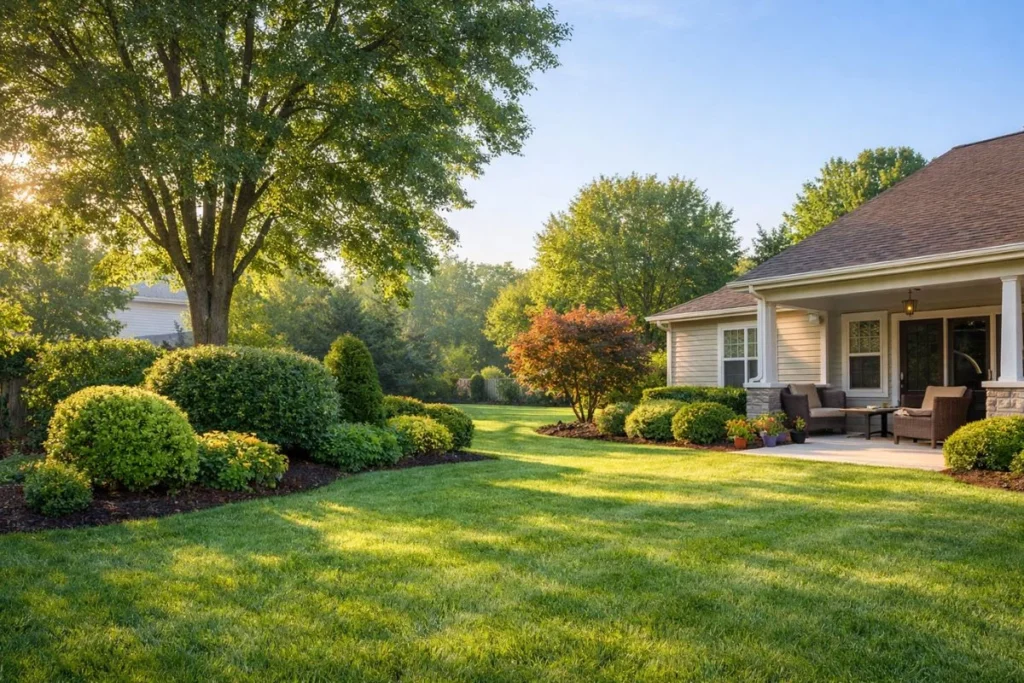
Many homeowners start worrying about their trees and shrubs after noticing small changes. Leaves lose color, growth slows down, or certain branches begin to thin out. Even after regular watering or fertilizer use, plants may continue to look weak. I have seen homeowners believe weather or plant age caused the problem, but in many cases the real issue starts below the soil where roots struggle with poor nutrients, compacted ground, or hidden insect activity.
In several residential landscapes, I noticed people replacing shrubs again and again without fixing the underlying cause. Mature trees and shrubs take years to grow, yet stress can damage them within a short time if proper care is missing. A tree and shrub care program helps prevent these problems by supporting plant health throughout the year instead of reacting after visible damage appears. This guide explains how these programs work and how homeowners can protect their landscape before decline becomes costly.
- Quick Answer: What Is a Tree & Shrub Care Program?
- What Is a Tree & Shrub Care Program?
- Why Trees and Shrubs Need Year-Round Care
- Benefits of a Tree & Shrub Care Program
- Tree and Shrub Care Services Included in Most Programs
- Tree & Shrub Care Process Throughout the Year
- Integrated Pest Management in Tree and Shrub Care Programs
- How Soil Compaction Affects Tree and Shrub Health
- Tree Care and Shrub Care Differences
- Common Insects and Diseases Affecting Landscape Plants
- Signs Your Trees or Shrubs Need a Care Program
- Program Care vs One-Time Treatment
- Tree and Shrub Care Programs Across Different Climate Zones
- DIY Tree Care vs Professional Care Programs
- What Is a Plant Health Care Program?
- Average Tree & Shrub Care Program Cost in the USA
- How to Choose the Right Tree & Shrub Care Program
- Frequently Asked Questions
- Final Thoughts
Key Takeaways: Tree & Shrub Care Program
- Trees and shrubs often decline before visible damage appears.
- Year-round care helps prevent insects, disease, and nutrient stress.
- Deep root fertilization supports stronger root development.
- Monitoring treatments work better than one-time applications.
- Preventive care protects long-term landscape investment.
Quick Answer: What Is a Tree & Shrub Care Program?
A tree and shrub care program is a scheduled yearly plan that includes fertilization, pest monitoring, soil improvement, and preventive treatments that help landscape plants stay healthy and resist environmental stress throughout the growing season.
What Is a Tree & Shrub Care Program?
A tree and shrub care program is an annual maintenance plan designed for homeowners who want long-term plant health instead of short-term fixes.
Instead of reacting to disease or insect damage, the program focuses on prevention and monitoring.
Most programs include:
- seasonal inspections
- deep root fertilization
- insect control
- disease prevention
- soil improvement
- plant health monitoring
This type of program supports mature landscapes where trees and shrubs represent years of growth and investment.
Why Trees and Shrubs Need Year-Round Care
Landscape plants grow in challenging residential conditions. Urban soil often lacks nutrients and proper structure.
Common problems include:
- compacted soil
- nutrient deficiency
- limited root space
- summer heat stress
- insect pressure
Many homeowners notice plant decline after extreme weather or seasonal change. Regular care supports stronger roots and stable canopy growth throughout the year.
Healthy plants recover faster and maintain consistent appearance.
Benefits of a Tree & Shrub Care Program
A structured program provides both visual and long-term property benefits.
Stronger Root Growth
Deep root feeding delivers nutrients directly to active root zones.
Better Resistance to Pests
Healthy plants naturally tolerate insect pressure better.
Improved Landscape Appearance
Full foliage improves curb appeal and overall yard appearance.
Protection of Landscape Investment
Replacing mature trees or shrubs can be costly. Preventive care reduces plant loss.
Expert Tip
Healthy trees often show stress in their roots long before leaves change color. Regular inspections and preventive treatments help identify problems early and improve long-term plant survival in residential landscapes.
Tree and Shrub Care Services Included in Most Programs
Professional programs follow a step-based approach.
Landscape Inspection
Plants are evaluated for stress, pest activity, and soil condition.
Protective Treatments
Preventive treatments help reduce disease and insect risks before damage spreads.
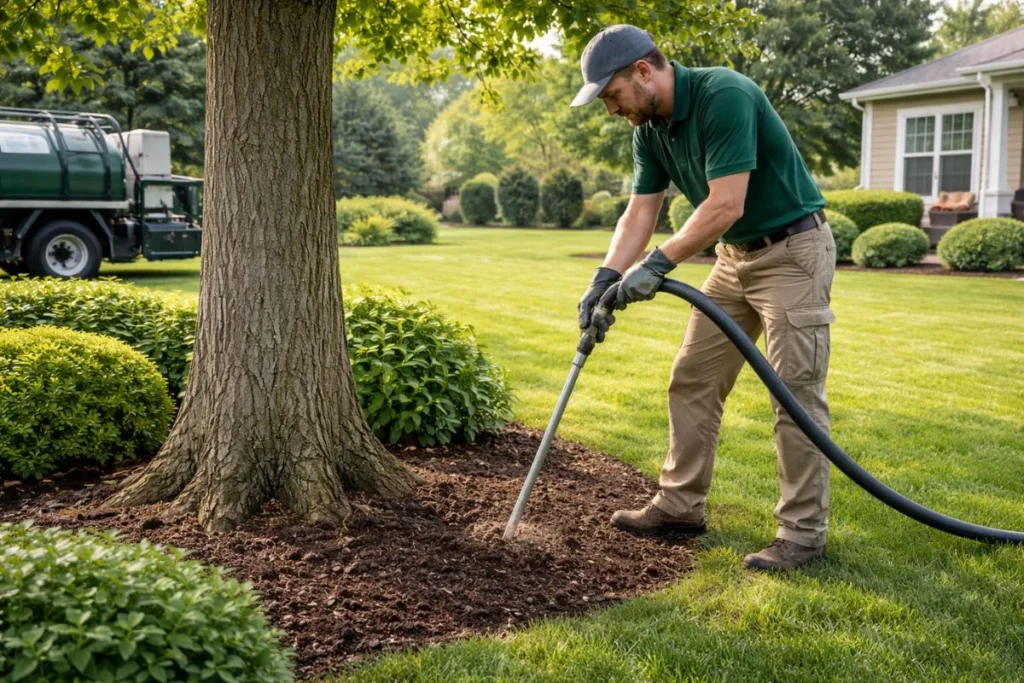
Root Zone Fertilization
Nutrients are injected below the soil surface for better absorption.
Follow-Up Visits
Seasonal monitoring ensures treatments match plant needs.
Tree & Shrub Care Process Throughout the Year
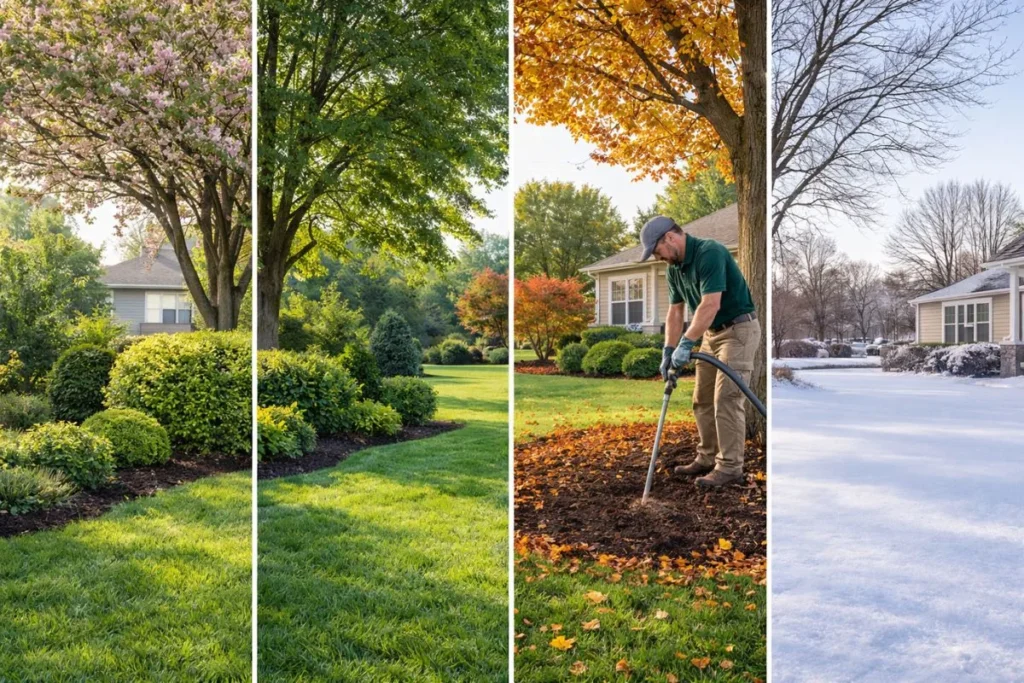
Care programs align with plant growth cycles.
Early Spring
- inspection after winter
- dormant oil application before bud break
- early nutrient support
Late Spring
- pest monitoring
- preventive treatments
Summer
- stress protection
- disease observation
- watering adjustments
Fall
- deep root fertilization
- recovery support
Winter Preparation
- plant health evaluation
- planning for next season
Treatment timing may vary depending on local climate conditions across the United States.
Typical Annual Tree & Shrub Care Schedule
| Season | Primary Focus | Purpose |
|---|---|---|
| Early Spring | Inspection & Dormant Oil | Prevent overwintering pests |
| Late Spring | Pest Monitoring | Protect new growth |
| Summer | Stress Management | Reduce heat and disease damage |
| Fall | Deep Root Fertilization | Strengthen roots before winter |
| Winter | Evaluation | Plan next season care |
Integrated Pest Management in Tree and Shrub Care Programs
Many programs follow Integrated Pest Management, often called IPM.
This method focuses on monitoring plants before applying treatments.
IPM includes:
- regular inspections
- pest identification
- targeted treatment when needed
- reduced unnecessary chemical use
This approach protects beneficial insects while maintaining plant health.
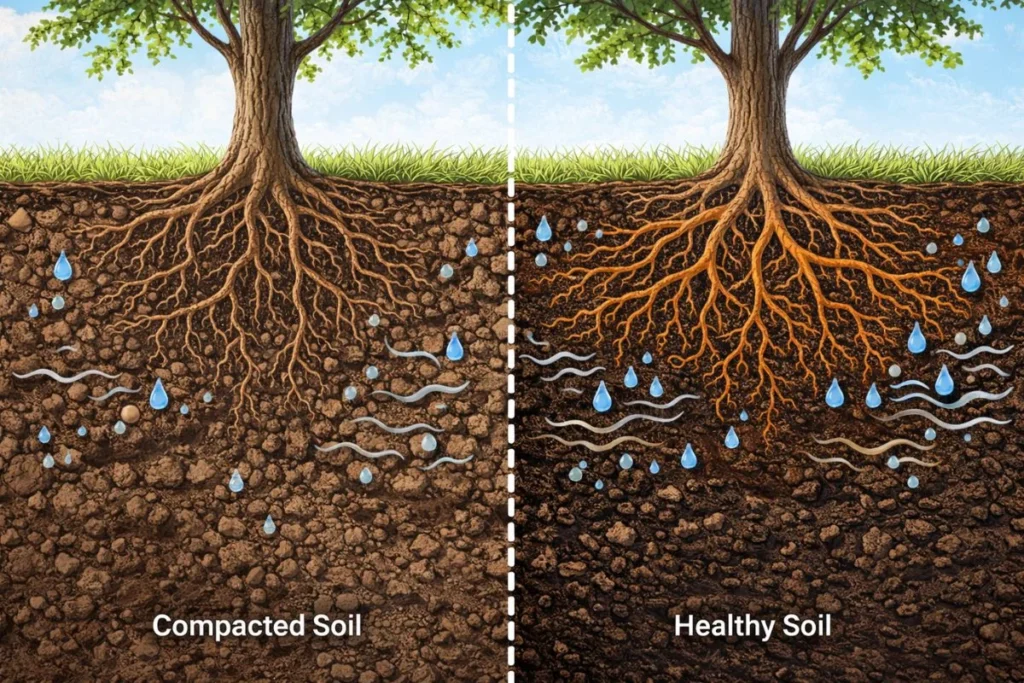
How Soil Compaction Affects Tree and Shrub Health
Healthy roots require oxygen, water, and space. Residential soil often becomes compacted due to traffic or construction.
Compacted soil causes:
- reduced oxygen availability
- poor water movement
- limited nutrient flow
- weak root development
When roots struggle underground, plants show stress above ground. Care programs help improve root zone soil conditions over time.
Tree Care and Shrub Care Differences
Trees and shrubs require different maintenance strategies.
Trees
- deeper root systems
- slower nutrient response
- structural stability needs
Shrubs
- shallow roots
- faster growth cycles
- appearance maintenance
Understanding these differences improves treatment results.
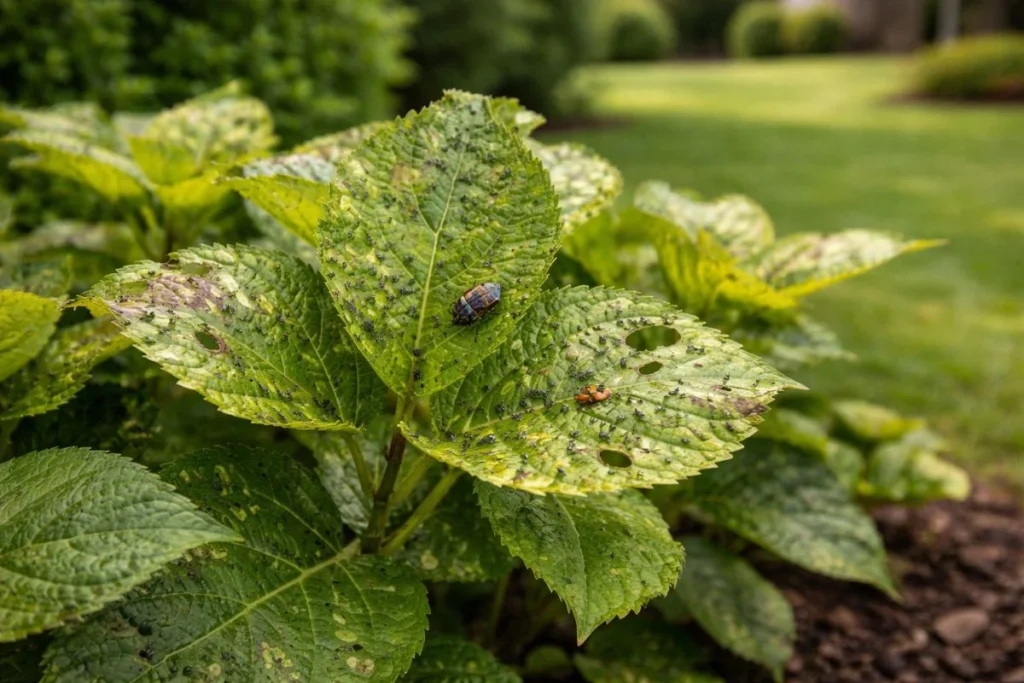
Common Insects and Diseases Affecting Landscape Plants
Many issues begin before homeowners notice visible damage.
Common pests include:
- aphids
- spider mites
- scale insects
- Japanese beetles
- bagworms
- borers
Disease symptoms may include:
- leaf spotting
- thinning canopy
- branch dieback
- early leaf drop
Routine monitoring prevents widespread damage.
Signs Your Trees or Shrubs Need a Care Program
Homeowners often search for help after noticing warning signs such as:
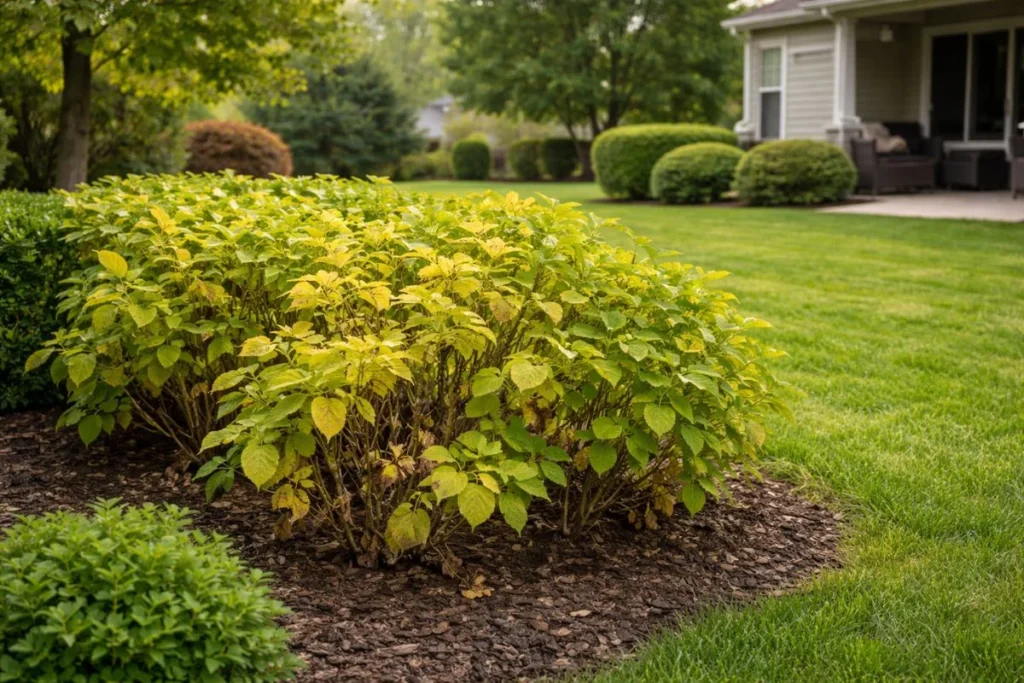
- yellow or pale leaves
- slow spring growth
- uneven plant development
- thinning foliage
- branches dying back
- plants struggling after summer heat
Early care prevents long-term decline.
One common example is arborvitae turning brown, which may signal drought stress, pests, or winter burn affecting evergreen shrubs.
Program Care vs One-Time Treatment
Many homeowners attempt single treatments after problems appear.
However, pests and diseases follow seasonal life cycles. One treatment rarely solves recurring issues.
A yearly program focuses on prevention, monitoring, and steady plant support. This approach reduces repeated damage and maintenance stress.
Tree and Shrub Care Programs Across Different Climate Zones
Growing seasons differ across the United States.
For example, homeowners in the Mid-Atlantic often plant species suited to local conditions. See our guide on evergreen trees in Virginia to learn which trees grow best in that region.
Southern regions experience earlier growth, while northern areas have shorter active seasons.
Programs adjust by changing:
- fertilization timing
- inspection schedules
- pest monitoring periods
Local climate awareness improves treatment success.
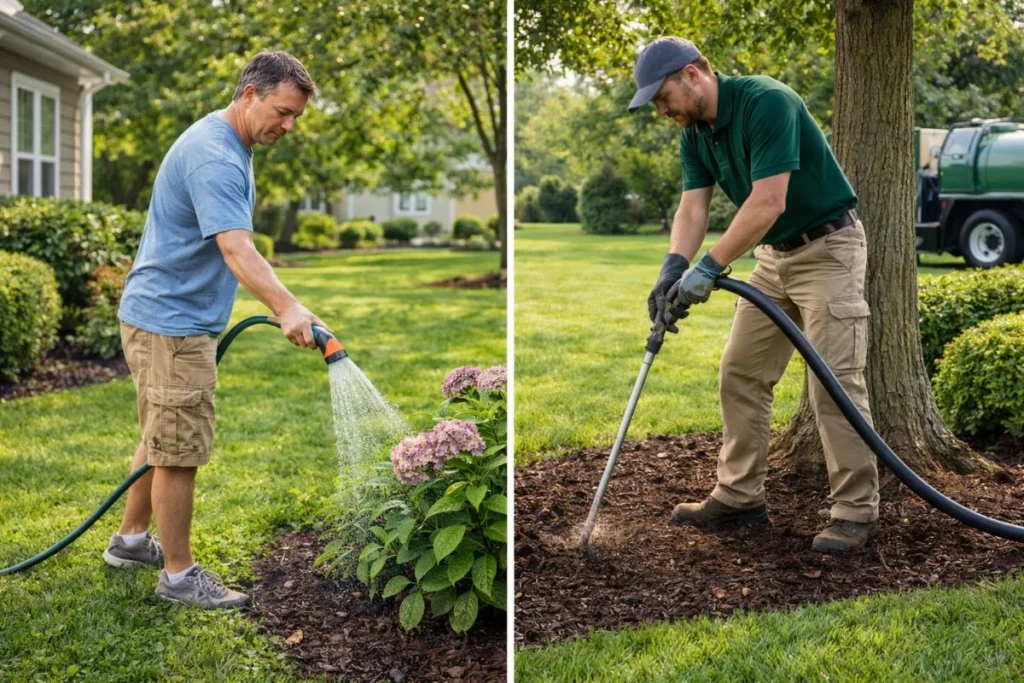
DIY Tree Care vs Professional Care Programs
Some homeowners prefer managing plant care themselves.
Basic tasks homeowners can handle include:
- watering management
- mulch maintenance
- visual inspections
Professional programs help with:
- deep root fertilization
- disease diagnosis
- pest lifecycle control
- long-term monitoring
Many homeowners begin with DIY care and later choose professional programs for consistent results.
DIY Care vs Professional Tree & Shrub Program
| Task | Homeowner DIY | Professional Program |
|---|---|---|
| Watering | ✔ | ✔ |
| Mulching | ✔ | ✔ |
| Pest Identification | Limited | Advanced Monitoring |
| Disease Treatment | Difficult | Targeted Treatment |
| Deep Root Fertilization | Rare | Standard Service |
| Long-Term Monitoring | Inconsistent | Scheduled Visits |
What Is a Plant Health Care Program?
A plant health care program is a preventive system used to maintain trees and shrubs over time.
It focuses on:
- monitoring plant condition
- correcting nutrient deficiencies
- protecting canopy health
- improving root zone soil quality
Tree and shrub care programs often form part of a larger landscape health strategy.
Average Tree & Shrub Care Program Cost in the USA
Costs vary based on plant size, property layout, and regional labor rates.
Typical yearly ranges:
- Small landscape: $150–$300
- Medium property: $300–$600
- Large landscape: $600 or more
Program pricing may increase with mature trees or higher treatment frequency.
How to Choose the Right Tree & Shrub Care Program
Homeowners evaluating programs should look for:
- seasonal inspections
- preventive treatments
- root fertilization
- pest monitoring
- clear annual scheduling
Programs based on plant growth cycles provide more stable long-term results.
Quick Landscape Health Checklist
Check your trees and shrubs if you notice:
- Leaves changing color early
- Reduced seasonal growth
- Thinning canopy
- Pest activity on leaves
- Plants struggling after summer heat
If several signs appear together, plants may benefit from a structured care program.
Frequently Asked Questions
How often should trees be fertilized?
Fertilization needs vary depending on soil condition and plant health.
When should shrubs receive insect treatment?
Late spring and early summer are common treatment periods due to increased insect activity.
Is deep root fertilization necessary?
Deep feeding improves nutrient access for active roots.
Can homeowners maintain trees without a program?
Basic care helps, but professional monitoring often identifies hidden problems earlier.
Final Thoughts
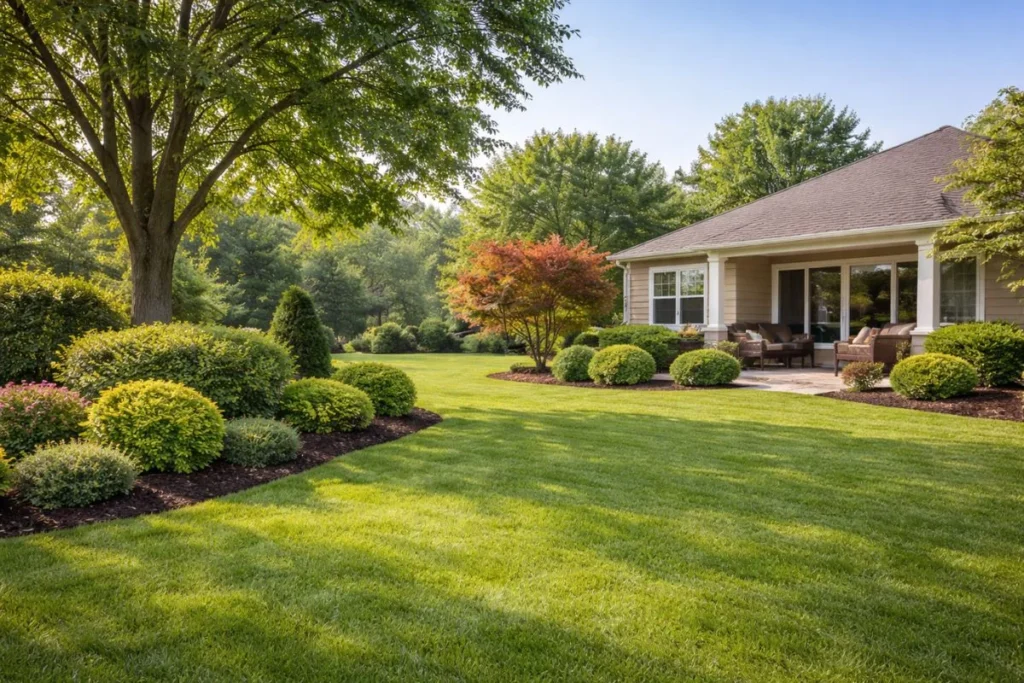
From experience working around residential landscapes, healthy trees and shrubs usually come from consistent care rather than occasional treatments. Homeowners who follow structured care programs often deal with fewer pest problems, stronger seasonal growth, and less plant loss over time. Trees and shrubs are long-term investments that may take many years to mature, so protecting root health and monitoring seasonal stress makes a clear difference. A well-managed tree and shrub care program helps maintain plant strength, improves landscape appearance, and reduces future maintenance issues, allowing homeowners to enjoy stable and healthy outdoor spaces year after year.