 Skip to content
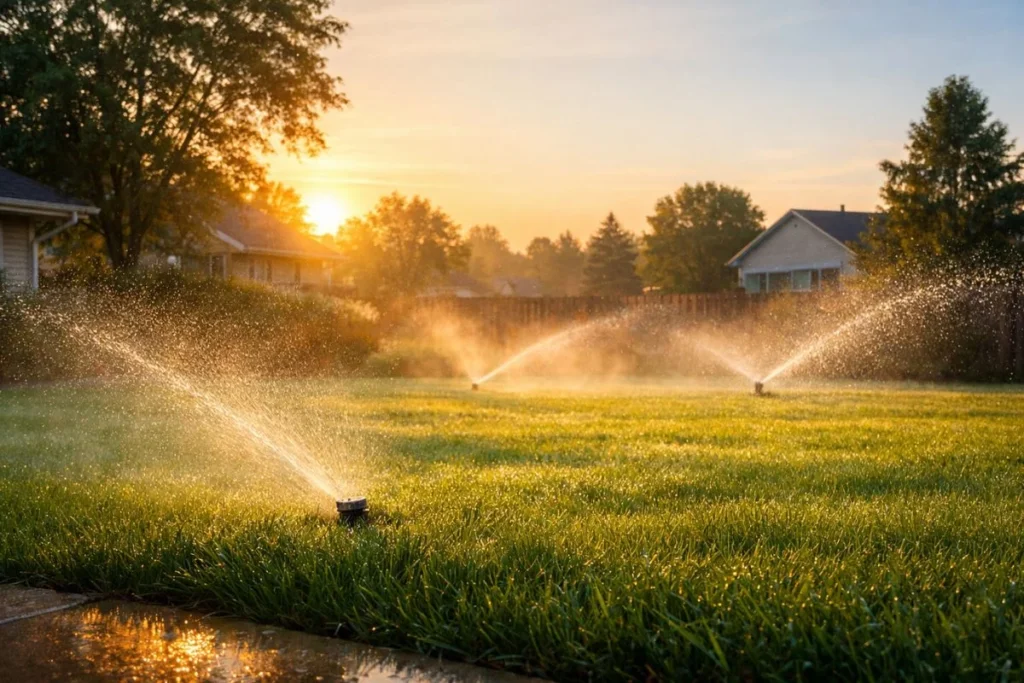
Last summer, I walked outside and saw brown patches spreading across my lawn. I was watering regularly, yet the grass looked stressed. Some areas felt soggy, while others were dry and thin. My water bill was higher than usual, and I still was not getting results. If this sounds familiar, you are not alone. Many homeowners water their lawn the wrong way, thinking more water will fix the problem.
The truth is, timing matters more than most people realize. Over the years, I have tested different watering schedules in both hot and humid conditions, and I have seen how simple timing changes can improve lawn health. The biggest mistake people make is watering at the wrong time of day. Once you understand the best time to water lawn, you can protect your grass, reduce disease risk, and avoid wasting water.
- Simple Lawn Watering Schedule (For Busy Homeowners)
- Why Early Morning Is the Best Time to Water Lawn
- Why Watering at Night Can Harm Your Lawn
- Why Midday Watering Is a Bad Idea
- How to Water Lawn Without Increasing Your Water Bill
- Best Time to Water Lawn by Grass Type
- Best Time to Water Lawn by Climate
- Deep Watering vs Light Watering
- How Long Should You Water Lawn?
- How Often Should You Water Lawn?
- Soil Type and Lawn Watering
- Cycle-and-Soak Method (For Better Absorption)
- Adjusting Watering After Rain
- How Wind and Humidity Affect Watering
- Best Time to Water New Grass Seed
- Water Restrictions and Drought Rules
- Signs You Are Watering Too Much
- Signs You Are Not Watering Enough
- Common Lawn Watering Mistakes
- Final Thoughts
Quick Answer: Best Time to Water Lawn
- Best Time: 5:00 am – 9:00 am
- In Extreme Heat: Start closer to 4:30 am
- Frequency (Summer): 2–3 times per week
- Water Amount: 1–1.5 inches per week (including rain)
- Method: Deep watering, not daily light watering
If you also want to understand how much water your lawn needs each week and how long to run sprinklers, read our complete guide on watering lawn for a step-by-step breakdown.
Simple Lawn Watering Schedule (For Busy Homeowners)
If you want a simple plan, follow this:
- Water 2 to 3 times per week in summer
- Water between 5 am and 9 am
- Aim for 1 to 1.5 inches of water per week (including rain)
This schedule works for most lawns in the USA.
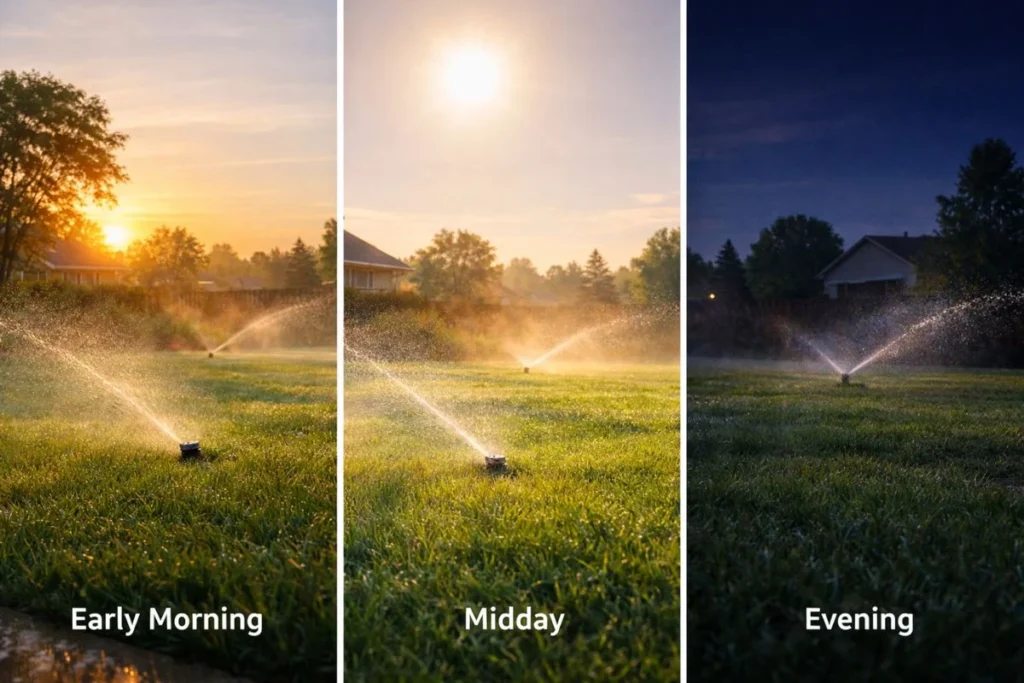
Why Early Morning Is the Best Time to Water Lawn
Morning watering works because:
- Less water evaporates
- Wind is calm
- Grass dries quickly
Night watering keeps grass wet too long.
Midday watering wastes water.
Morning gives the best balance.
Why Watering at Night Can Harm Your Lawn
Watering at night increases disease risk.
Grass stays wet for many hours.
Fungal diseases grow in damp conditions.
If evening watering is your only option, finish before sunset and avoid heavy soaking.
Morning is always safer.
Why Midday Watering Is a Bad Idea
Heat and wind increase evaporation.
Water can disappear before reaching roots.
This increases your water bill.
Midday watering also stresses grass.
| Time of Day | Good or Bad | Why |
|---|---|---|
| Early Morning (5–9 am) | Best | Low evaporation, low wind, grass dries after sunrise |
| Midday (10 am–4 pm) | Poor | High evaporation and water waste |
| Evening (After 6 pm) | Risky | Grass stays wet overnight, fungus risk increases |
How to Water Lawn Without Increasing Your Water Bill
Many homeowners worry about cost.
Here’s how to reduce waste:
- Do not water every day
- Skip watering after rainfall
- Fix broken sprinkler heads
- Adjust spray so water hits grass only
- Water deeply instead of lightly
Overwatering is the biggest cause of high bills.
Best Time to Water Lawn by Grass Type
Different grass types respond differently to heat.
Cool-Season Grass
Kentucky bluegrass, tall fescue, ryegrass
- Needs more water in summer
- Sensitive to heat stress
- Morning watering is critical
Warm-Season Grass
Bermuda, Zoysia, St. Augustine
- Handles heat better
- May need slightly less frequent watering
- Still water early morning
Best Time to Water Lawn by Climate
Your location changes watering needs.
Hot and Dry Regions
Arizona, Nevada, Texas
- Start closer to 5 am
- Check soil often
- Evaporation is higher
Humid Regions
Florida, Georgia
- Water early morning only
- Watch for fungus
Northern States
Michigan, Ohio, New York
- Water 1 to 2 times per week
- Reduce watering in spring and fall
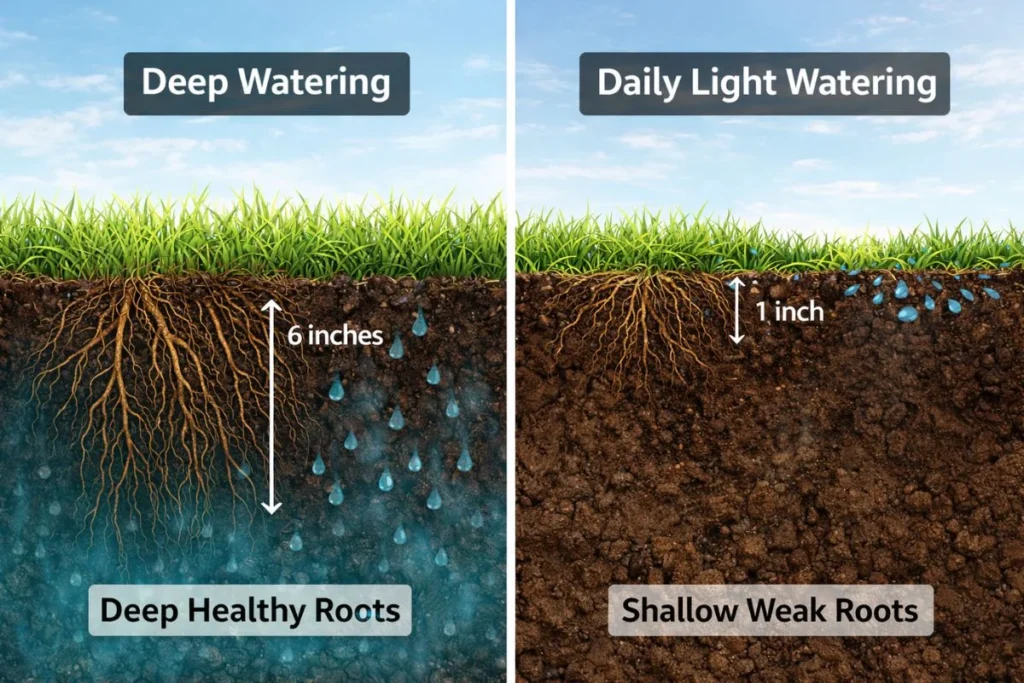
Deep Watering vs Light Watering
Deep watering soaks soil about 6 inches deep.
Benefits:
- Stronger root system
- Better drought resistance
- Healthier lawn during heat
Light daily watering:
- Creates shallow roots
- Increases disease risk
- Dries out faster
Deep watering is better.
How Long Should You Water Lawn?
Most lawns need 1 to 1.5 inches per week, including rain.
To measure sprinkler output:
- Place tuna cans on lawn.
- Run sprinklers.
- Measure collected water.
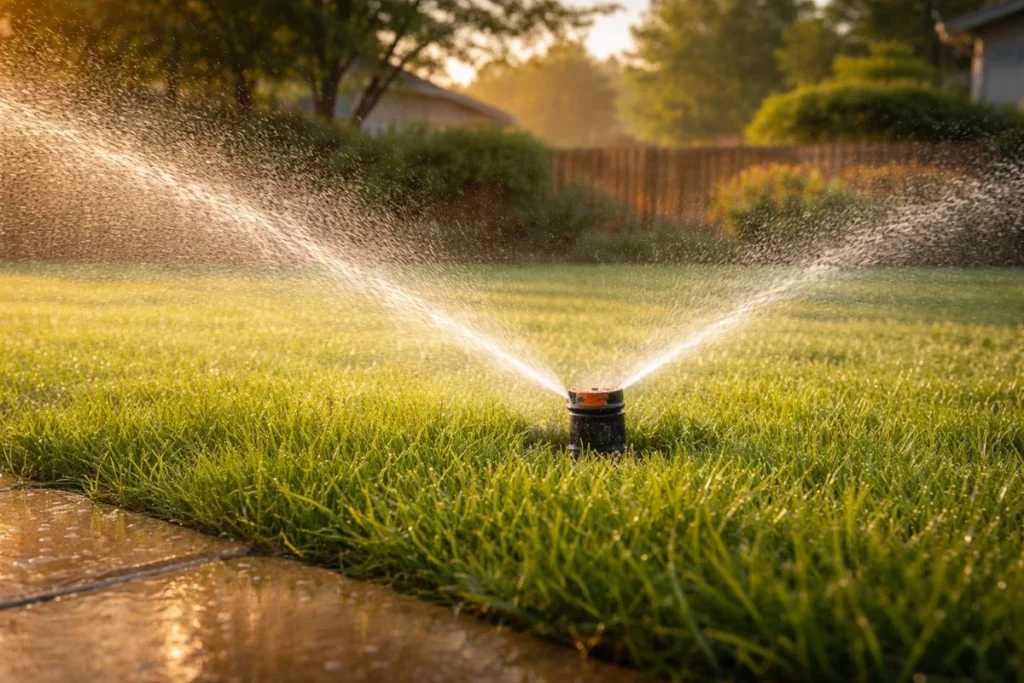
Typical run times:
- Spray heads: 10–20 minutes
- Rotor heads: 25–40 minutes
Adjust based on your system.
How Often Should You Water Lawn?
In summer:
- 2 to 3 times per week
- Deep watering each session
In cooler seasons:
- 1 to 2 times per week
- Adjust based on rainfall
Do not water daily unless growing new grass.
| Season | Watering Frequency | Notes |
|---|---|---|
| Spring | 1–2 times per week | Adjust based on rainfall |
| Summer | 2–3 times per week | Water early morning only |
| Fall | 1–2 times per week | Reduce as temperatures drop |
| Winter | Rare (if not dormant) | Water only if soil becomes very dry |
Soil Type and Lawn Watering
Soil affects watering frequency.
Clay Soil
- Absorbs slowly
- Holds moisture longer
- Use cycle-and-soak method
Sandy Soil
- Drains fast
- May need shorter but slightly more frequent watering
Loam Soil
- Balanced drainage
- Standard deep watering works well
Cycle-and-Soak Method (For Better Absorption)
If water runs off:
- Run sprinklers 10 minutes
- Wait 30 minutes
- Run again
This prevents runoff and improves soil absorption.
Adjusting Watering After Rain
Rain counts toward your weekly total.
If heavy rain occurs:
- Skip next watering
- Check soil before watering again
Push a screwdriver into soil.
If it enters 6 inches easily, soil is still moist.
How Wind and Humidity Affect Watering
Wind reduces sprinkler accuracy.
Dry air increases evaporation.
Start watering earlier on windy days.
Check coverage after storms.
Humidity slows evaporation but increases fungus risk.
Morning watering balances both.
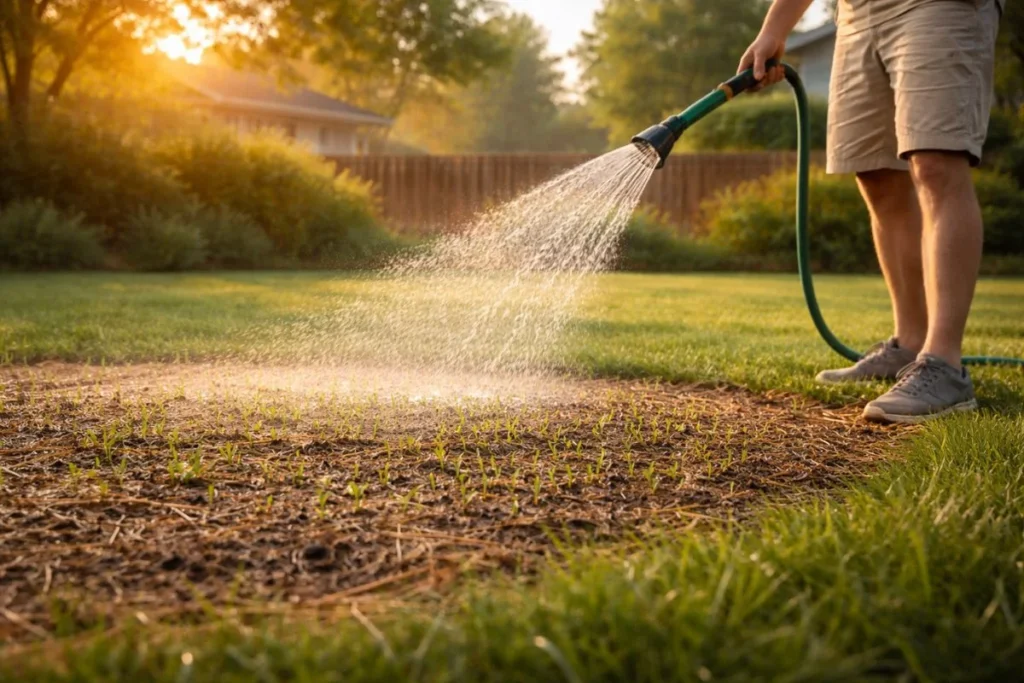
Best Time to Water New Grass Seed
New lawns need different care.
Newly Seeded Lawn
- Light watering 2 to 3 times daily
- Keep top soil moist
- Switch to deep watering after roots establish
New Sod
- Water early morning
- Keep soil moist first two weeks
- Reduce frequency once roots grow
Water Restrictions and Drought Rules
Some areas limit watering days.
If restrictions apply:
- Water deeply during allowed hours
- Focus on root survival
- Allow slight dormancy during drought
Grass can recover when roots remain healthy.
Signs You Are Watering Too Much
- Yellowing grass
- Mushy soil
- Fungus patches
- Persistent damp smell
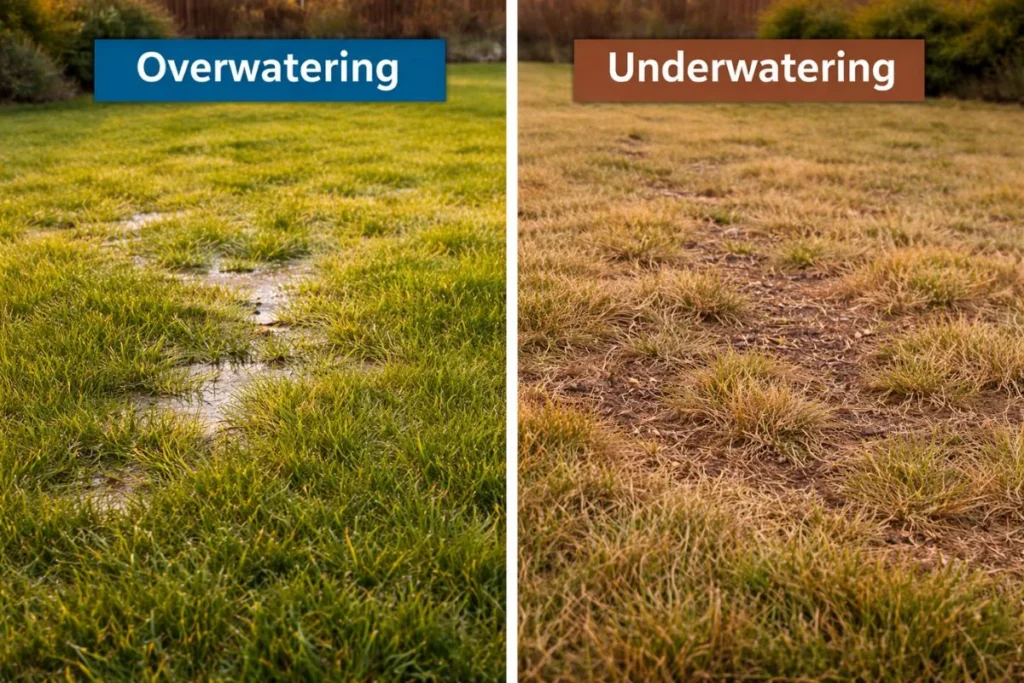
Signs You Are Not Watering Enough
- Blue-gray color
- Footprints remain visible
- Hard soil
Adjust slowly, not drastically.
Common Lawn Watering Mistakes
- Watering at night
- Watering every day
- Ignoring rainfall
- Watering during strong wind
- Short shallow watering sessions
Avoid these to keep lawn strong.
Expert Tip
If you are unsure whether to water, check soil moisture first. Grass recovers better from slight dryness than from overwatering. Always check the soil before adjusting your schedule.
Frequently Asked Questions
Is 7 am a good time to water lawn?
Yes. 7 am is an excellent time to water lawn. It falls within the ideal early morning window of 5 am to 9 am when evaporation is low and grass can dry after sunrise.
Can I water lawn in the evening?
Evening watering increases the risk of fungus because grass stays wet overnight. Early morning watering is safer and healthier for most lawns.
How often should I water lawn in summer?
Most lawns need watering 2 to 3 times per week in summer. The goal is to provide 1 to 1.5 inches of water per week, including rainfall.
Does watering at night cause lawn disease?
Watering at night can increase lawn disease risk because moisture stays on grass blades for many hours. Fungal diseases grow faster in damp conditions.
Should I water lawn every day in hot weather?
No. Daily light watering creates shallow roots. Deep watering 2 to 3 times per week is better for root growth and drought resistance.
Final Thoughts
After working with different grass types and seeing lawns struggle through heat waves, I have learned that watering is not about doing more. It is about doing it at the right time. When homeowners switch to early morning watering and focus on deep, consistent sessions, they often see stronger roots, fewer brown patches, and lower water bills. Healthy lawns come from smart habits, not extra effort. Water early, adjust for weather, and let the roots grow deep. Small changes in timing can make a big difference in how your lawn looks and survives summer stress.