 Skip to content
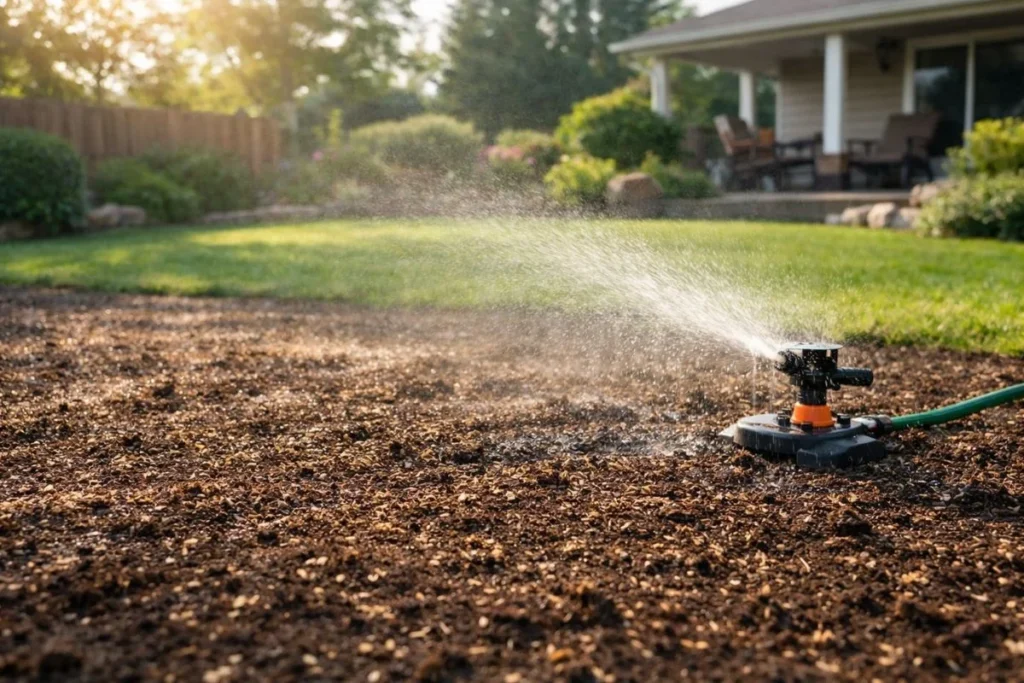
You planted grass seed, and now you’re checking the soil every few hours. Is it too dry? Did you water too much? Why are some spots not growing? Many homeowners lose good seed because they guess the watering schedule. The first two weeks are critical. If the soil dries even once, seeds can fail. If you soak the area, seed can rot or wash away. That is where most new lawns go wrong.
I have helped fix patchy lawns that failed for one reason only — improper watering. In almost every case, the seed was fine. The problem was timing and frequency. Watering grass seed is different from watering mature grass. It needs light, frequent moisture at first, then deeper watering later. In this guide, I will show you exactly how often to water grass seed so you do not waste time, money, or effort.
- How Often to Water Grass Seed (Quick Answer)
- Week-by-Week Watering Plan
- Simple Watering Schedule Table
- Why Getting Watering Wrong Ruins Grass Seed
- How to Know If You Are Watering the Right Amount
- How to Test Sprinkler Coverage
- Best Time of Day to Water Grass Seed
- Watering Grass Seed by Grass Type
- Soil Temperature Matters
- How Weather Changes Your Watering Schedule
- What If You Miss a Day of Watering?
- What If You Overwatered Grass Seed?
- How to Protect Your Investment
- Using a Hose Timer for Busy Homeowners
- Drought Tip for New Grass Seed
- Overseeding vs New Lawn
- Watering After the First Mow
- How Long Does Grass Seed Take to Grow?
- Final Advice for New Homeowners
Quick Takeaways
- Water grass seed 3–4 times daily for the first 7–10 days
- Keep the top 1 inch of soil moist at all times
- Reduce to once daily after sprouting
- Switch to 2–3 deep waterings per week by week 5
- Adjust for heat, wind, and rainfall
How Often to Water Grass Seed (Quick Answer)
Water grass seed 3 to 4 times per day for the first 7 to 10 days. Keep the top 1 inch of soil moist at all times.
After sprouting, reduce watering to once per day.
By weeks 5 to 8, switch to 2 to 3 deep waterings per week, applying about ½ inch total water per week.
Now let’s break it down in simple steps.
Week-by-Week Watering Plan
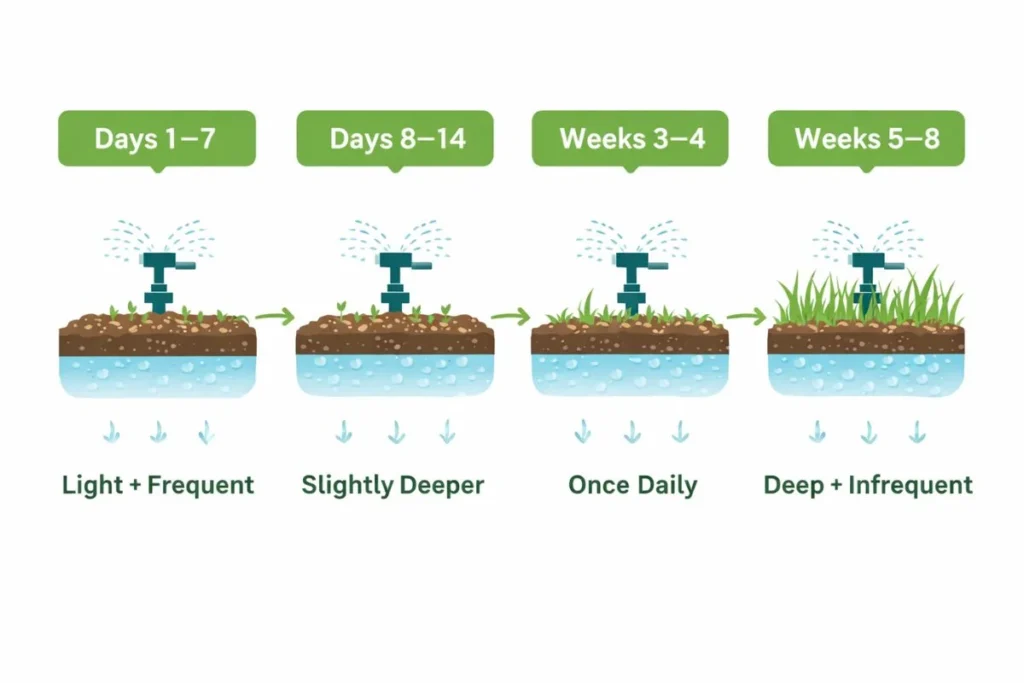
Days 1–7 After Seeding
Water 3 to 4 times daily.
Each session should be short. The soil surface must stay moist.
If the soil dries out even once, seeds can die.
Hot or windy weather may require one extra light watering.
Days 8–14 (Germination Stage)
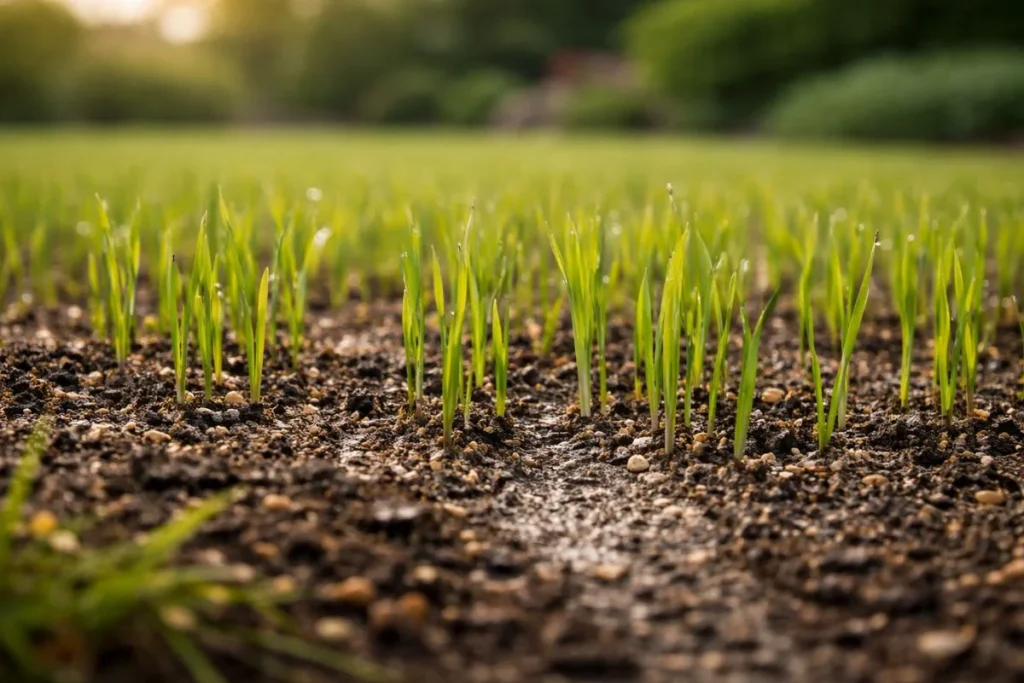
Small sprouts begin to appear.
Water 2 to 3 times daily.
Roots are shallow. Do not let the top inch dry.
Weeks 3–4 (Root Development Stage)
Grass is visible across most of the area.
Water once per day.
Water slightly deeper so roots grow down instead of staying near the surface.
Weeks 5–8 (Establishing Stage)
Water 2 to 3 times per week.
Apply about ½ inch total water per week, split into those sessions.
Deep watering builds stronger roots.
Once your new grass reaches this stage, transition to a regular watering lawn schedule so roots continue growing deeper and stronger.
Daily Grass Seed Check (First 14 Days)
- Touch the soil. Is the top inch moist?
- Look for puddles or runoff.
- Check corners and edges for dry spots.
- Adjust sprinkler if needed.
Simple Watering Schedule Table
| Stage | Frequency | Water Depth | Goal |
|---|---|---|---|
| Days 1–7 | 3–4 times daily | Light mist | Keep surface moist |
| Days 8–14 | 2–3 times daily | Slightly deeper | Support sprouting |
| Weeks 3–4 | Once daily | Moderate soak | Encourage roots |
| Weeks 5–8 | 2–3 times per week | Deep soak | Strengthen lawn |
Why Getting Watering Wrong Ruins Grass Seed
Many new homeowners make one of two mistakes:
- Water once heavily per day
- Let soil dry between waterings
Heavy watering can wash seed away.
Dry soil stops germination.
Grass seed needs steady moisture, not puddles.
How to Know If You Are Watering the Right Amount
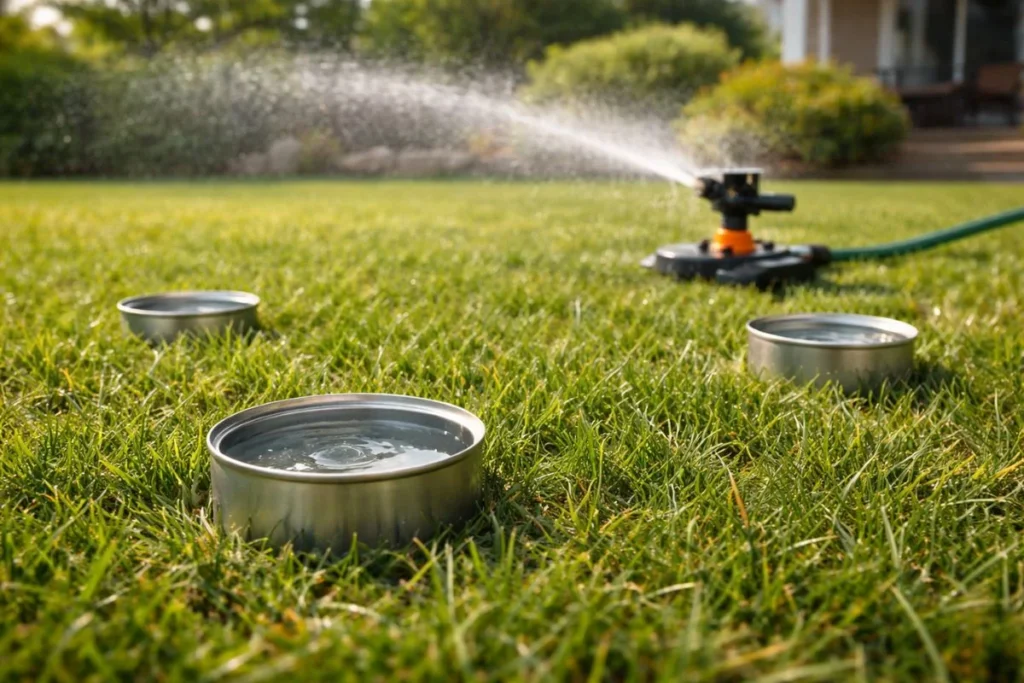
Place empty tuna cans around the yard.
Run your sprinkler for 10–15 minutes.
If cans collect about ⅛ inch during early stages, that is enough.
Also check soil with your finger.
If the top 1 inch feels moist, you are doing it right.
How to Test Sprinkler Coverage
Uneven watering causes patchy lawns.
- Place several cans around the seeded area.
- Run the sprinkler.
- Compare water levels.
If some areas receive less water, adjust sprinkler position.
Best Time of Day to Water Grass Seed
Water early morning between 6 am and 10 am.
Morning watering:
- Reduces evaporation
- Lowers disease risk
- Helps soil absorb moisture evenly
Avoid watering late at night.
Watering Grass Seed by Grass Type
Different grass types germinate at different speeds.
Cool-Season Grass
- Kentucky bluegrass: 14–21 days
- Tall fescue: 7–12 days
- Ryegrass: 5–10 days
These need steady moisture longer.
Warm-Season Grass
- Bermuda: 10–21 days
- Zoysia: 14–21 days
Hot climates may require more frequent checks.
Soil Temperature Matters
Cool-season grass grows best at 50–65°F soil temperature.
Warm-season grass grows best at 65–75°F soil temperature.
Cold soil slows sprouting.
Hot soil dries the surface faster.
How Weather Changes Your Watering Schedule
Hot Weather
Soil dries faster.
You may need shorter but more frequent watering.
Windy Conditions
Wind dries the top layer faster than sun alone.
Rain
About ½ inch of rain equals one watering session.
Always check soil moisture before adding more water.
What If You Miss a Day of Watering?
During the first two weeks, missing a day can dry out seeds.
If soil feels dry:
- Resume frequent light watering
- Check daily for the next few days
If sprouts appear uneven, you may need light reseeding.
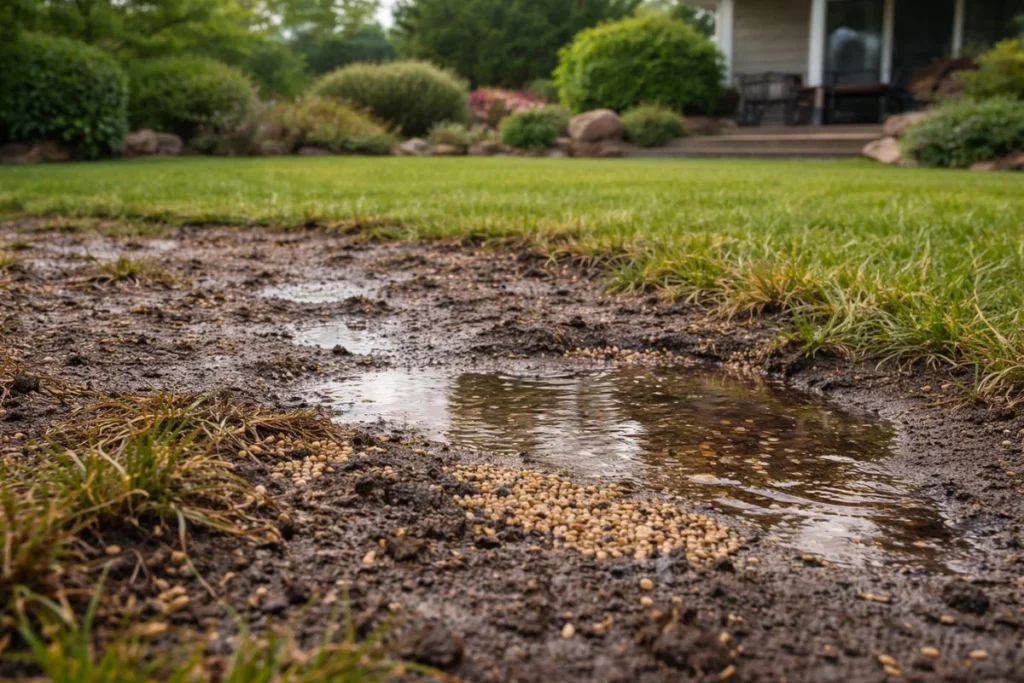
What If You Overwatered Grass Seed?
Signs of overwatering:
- Puddles
- Mold growth
- Seed moving into low areas
If this happens:
- Stop watering until soil drains
- Rake lightly if seed shifted
- Reapply seed to thin spots
Then return to light, short watering sessions.
Grass Seed Watering Problems and Fixes
| Problem | What It Means | What To Do |
|---|---|---|
| Soil dry on surface | Underwatering | Add short watering session |
| Puddles forming | Overwatering | Reduce watering time |
| Seed moved into piles | Water pressure too strong | Water gently and re-rake thin spots |
| Thin uneven growth | Uneven sprinkler coverage | Test sprinkler output with cans |
How to Protect Your Investment
Grass seed costs money. Water also costs money.
To avoid wasting both:
- Use a hose timer for short cycles
- Check soil daily
- Adjust based on weather
- Avoid heavy single watering sessions
Small adjustments prevent starting over.
Using a Hose Timer for Busy Homeowners
Short watering cycles are hard to manage by hand.
A hose timer can:
- Run 3–4 short cycles per day
- Prevent missed watering
- Keep soil evenly moist
This helps if you work during the day.
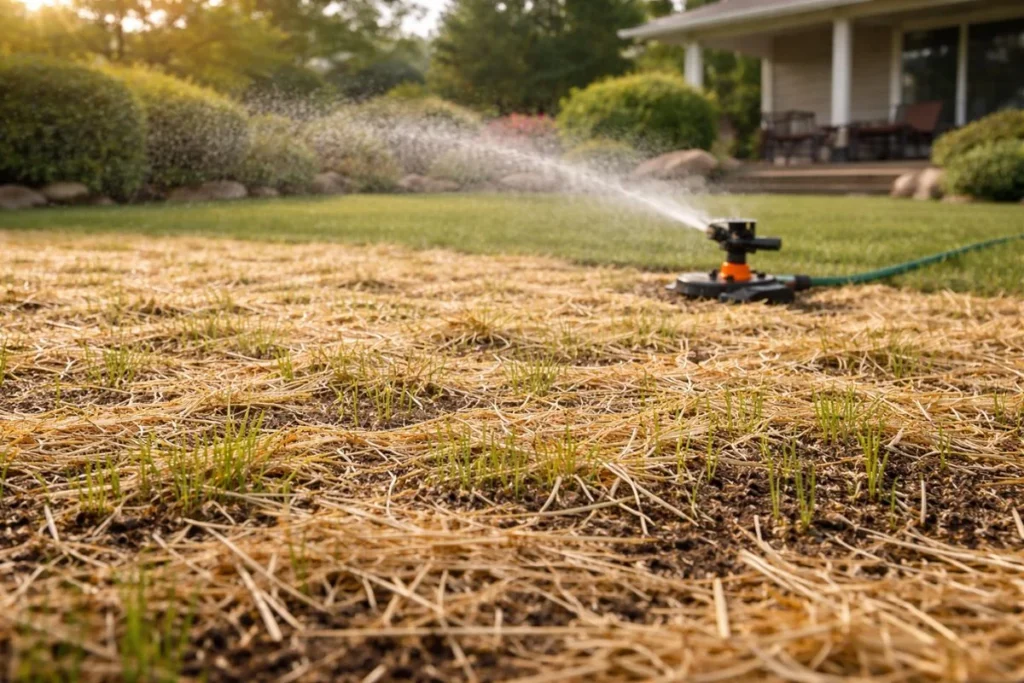
Drought Tip for New Grass Seed
In hot, dry conditions, add a thin layer of clean straw.
This helps:
- Reduce moisture loss
- Protect seed from heat
- Prevent soil crusting
Remove excess straw after grass grows in.
Overseeding vs New Lawn
If overseeding, water lightly but ensure seed touches soil.
For bare patches, focus on those areas.
For a full new lawn, water evenly across the entire yard.
Watering After the First Mow
After your first mow:
Water about 1 inch per week total, split into 1 or 2 sessions.
Shift to deeper watering to build strong roots.
How Long Does Grass Seed Take to Grow?
Most grass seed sprouts in 5 to 21 days.
Full establishment takes 6 to 8 weeks.
Patience and consistent watering make the difference.
Final Advice for New Homeowners
Over the years, I have seen new lawns succeed and fail, and watering is usually the deciding factor. When you keep the soil consistently moist during germination and then shift to deeper watering as roots grow, the lawn fills in thicker and stronger. Most people overwater early or stop watering too soon. If you follow the stage-by-stage schedule in this guide and adjust for weather, your grass seed has the best chance to grow evenly. Stay patient for the first six to eight weeks, and your lawn will reward you with long-term health and fewer problems later.