 Skip to content
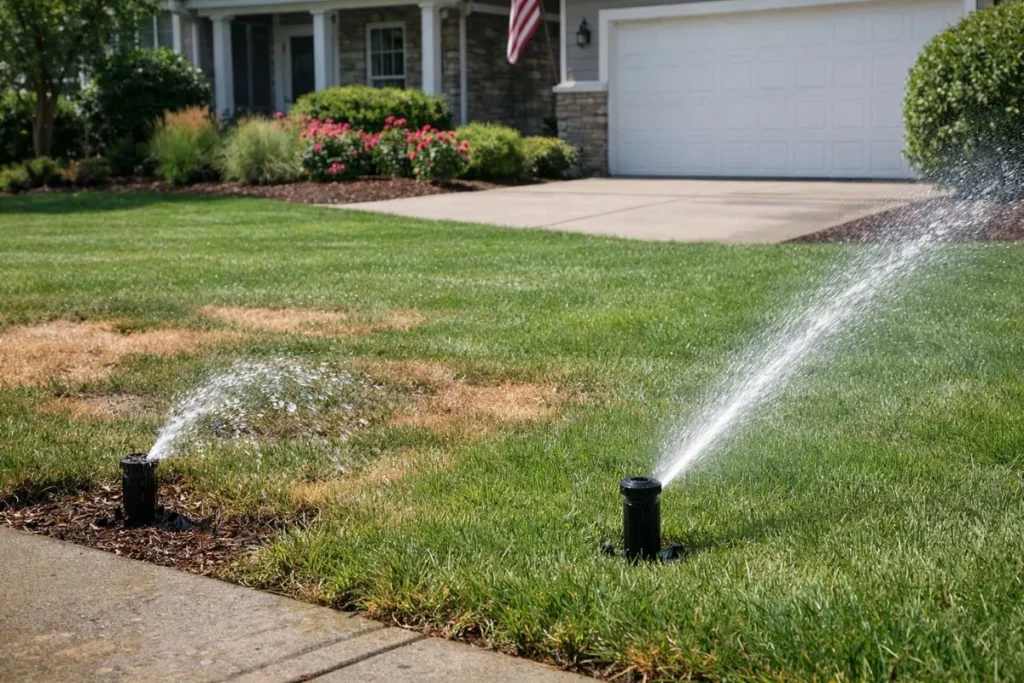
If your sprinkler system is not working, your lawn shows it quickly. Brown spots start spreading. One zone will not turn on. Water sprays like fog instead of strong streams. Sometimes the water bill goes up, but the grass still looks dry. This is frustrating, especially when you are not sure what is wrong or where to start.
I have worked with residential sprinkler systems and helped troubleshoot many common lawn problems. In most cases, the issue is smaller than homeowners think. A clogged head, pressure imbalance, or simple controller mistake can cause big lawn damage if ignored. The key is checking the system in the right order. When you follow a clear step-by-step process, sprinkler troubleshooting becomes simple and manageable
Before You Begin Sprinkler Troubleshooting
Before starting, take a few safety steps.
- Turn off the main water supply if digging.
- Shut off electrical power before touching wiring.
- Keep hands dry when checking wires.
- Wear gloves when digging around pipes.
These simple steps prevent injury and system damage.
Tools You May Need for Sprinkler Troubleshooting
If you have these tools, you can fix most basic sprinkler problems.
- Flathead screwdriver
- Shovel
- Adjustable wrench
- Multimeter
- Pressure gauge (PSI meter)
- Teflon tape
- Replacement sprinkler heads
- Waterproof wire connectors
You may not need all of them. But these tools cover most common repairs.
How a Sprinkler System Works
Understanding the system makes troubleshooting easier.
- Controller tells the system when to run
- Valves control water to each zone
- Pipes carry water underground
- Sprinkler heads spray water
- Pump (if installed) moves water
If one part fails, the whole zone may stop working.
Step-by-Step Sprinkler Troubleshooting Checklist
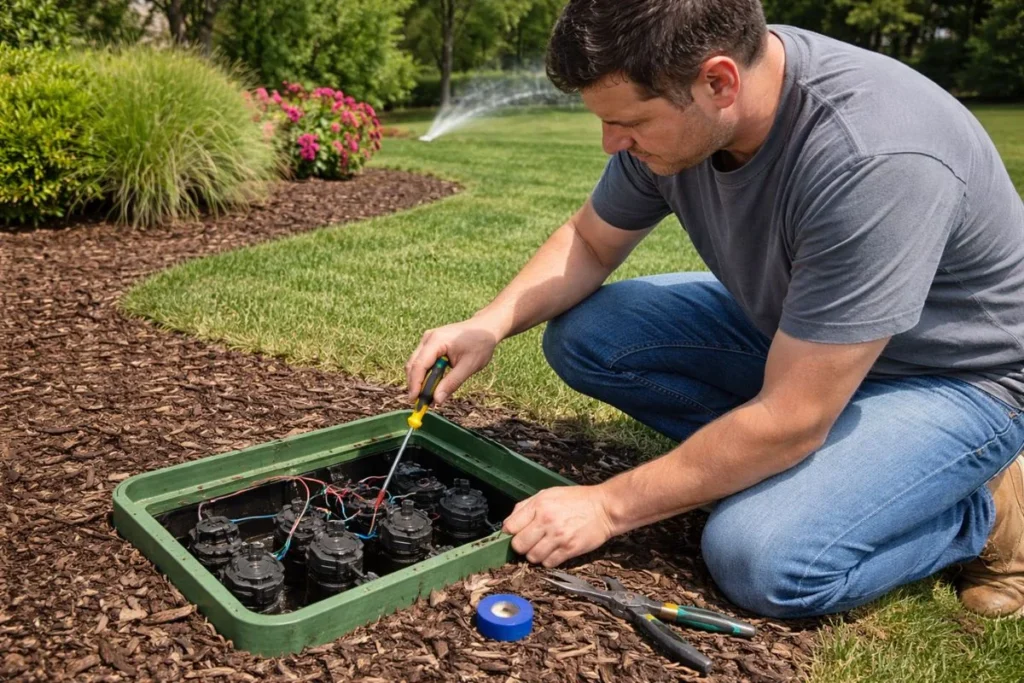
Do not guess. Follow this order.
- Check the main water supply
- Check the controller settings
- Run one zone at a time
- Inspect sprinkler heads
- Check pressure
- Inspect valves and wiring
- Look for leaks
Start simple. Many problems are small and easy to fix.
Quick Sprinkler Troubleshooting Guide
| Symptom | Most Likely Cause | First Thing to Check |
|---|---|---|
| Heads not popping up | Low pressure or clogged head | Clean nozzle and check PSI |
| One zone not turning on | Bad solenoid or wiring | Listen for click and inspect wires |
| Weak spray at last head | Leak or pressure drop | Inspect pipe near last head |
| Misting or foggy spray | High pressure | Test PSI and check regulator |
| Brown spots on lawn | Poor coverage or tilted head | Run system during daylight |
Match the Symptom to the Cause
Use this quick guide:
- Heads not popping up → Check pressure or clogged heads
- One zone not turning on → Check solenoid or wiring
- Weak spray at last head → Check pipe or pressure
- Misting or foggy spray → Pressure too high
- Brown spots → Poor coverage or tilted heads
This helps you diagnose faster.
Broken or Clogged Sprinkler Heads
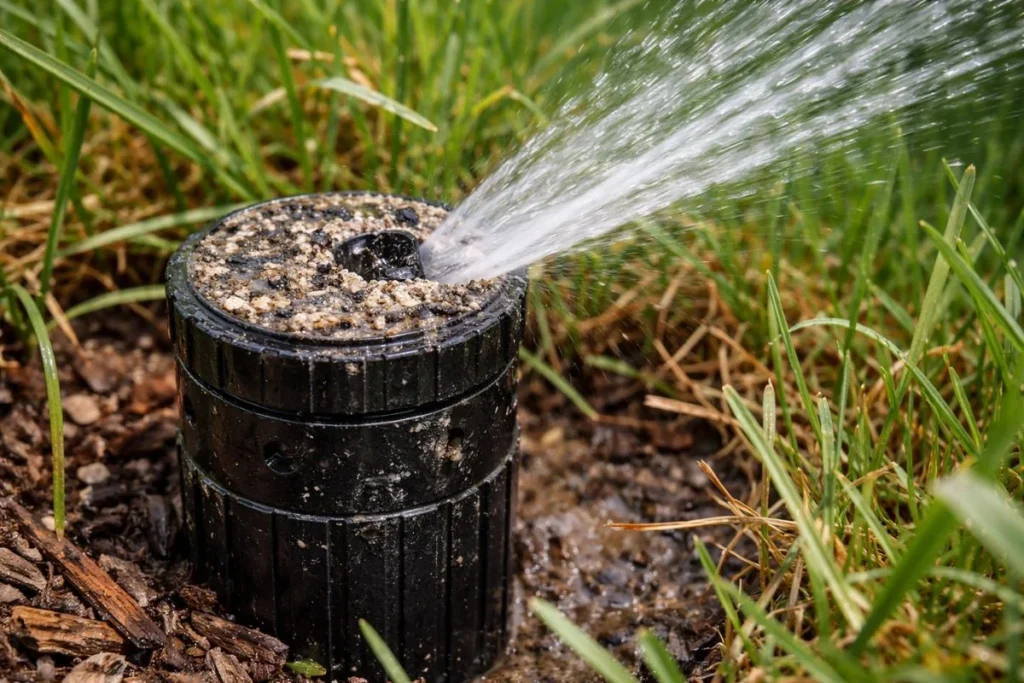
This is one of the most common sprinkler troubleshooting issues.
Signs:
- Water sprays in wrong direction
- Weak spray
- No water coming out
- Head does not pop up
Fix:
- Turn off system
- Remove head
- Clean dirt from nozzle
- Replace cracked heads
This repair usually takes less than 10 minutes.
Sunken or Low Sprinkler Heads
Low heads block water flow.
Signs:
- Grass blocks spray
- Mud splashes
- Uneven watering
Fix:
- Dig around the head
- Raise it to ground level
- Pack soil firmly
The top of the head should sit even with the soil.
Low Water Pressure
Low pressure causes dry areas.
Signs:
- Weak spray
- Heads do not rise fully
- Uneven watering
Causes:
- Clogged nozzles
- Leaks
- Too many heads on one zone
If too many heads are connected, pressure drops. A professional may need to adjust the layout.
Understanding Normal Water Pressure Levels
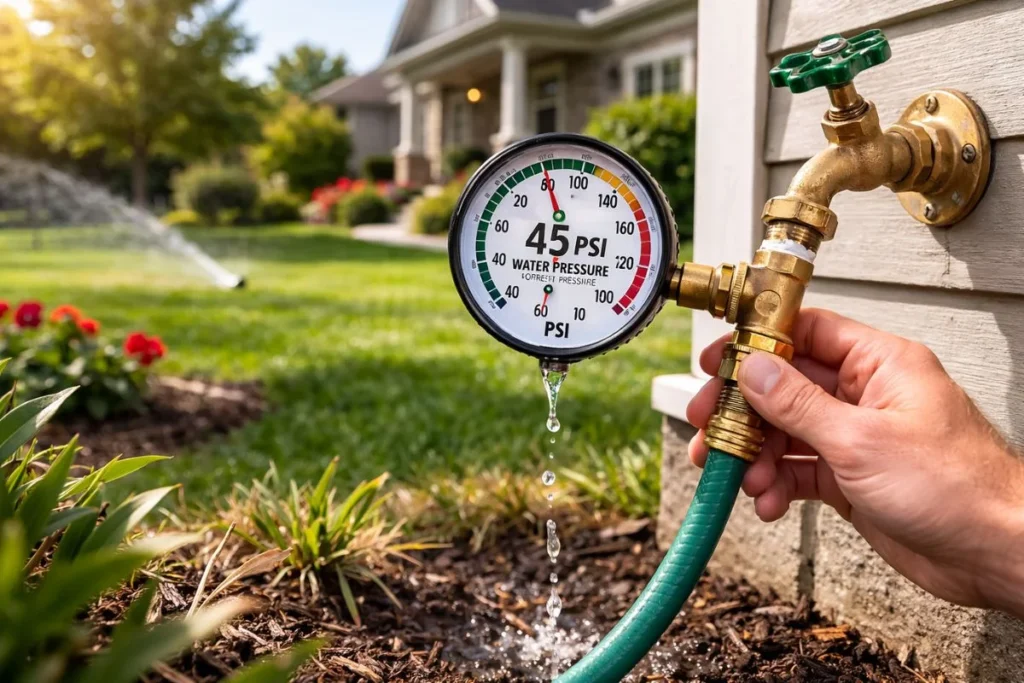
Normal residential ranges:
- Spray heads: 30–50 PSI
- Rotor heads: 40–65 PSI
Low pressure causes weak spray.
High pressure causes misting and water waste.
Use a pressure gauge on an outdoor faucet to check PSI.
Ideal Water Pressure for Sprinkler Systems
| Sprinkler Type | Ideal PSI Range |
|---|---|
| Spray Heads | 30–50 PSI |
| Rotor Heads | 40–65 PSI |
Low pressure causes weak spray. High pressure causes misting and water waste.
Misting or Foggy Spray
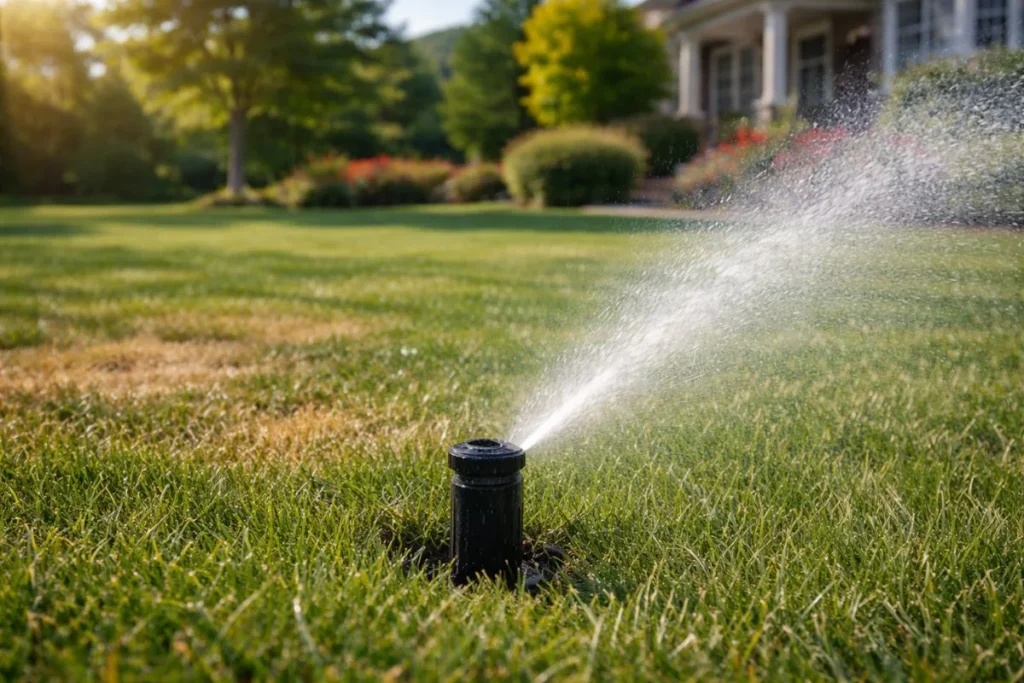
Misting wastes water and raises your water bill.
Signs:
- Water looks like fog
- Wind blows water away
- Lawn stays dry
Cause:
Pressure too high.
Fix:
- Install pressure regulator
- Check nozzle type
- Adjust pressure
Water should come out in clean streams, not mist.
Brown Spots on Lawn
Brown patches mean poor coverage.
Causes:
- Tilted heads
- Blocked spray
- Zone not running
- Pressure issues
Fix:
- Straighten heads
- Adjust spray pattern
- Run system during daylight to check coverage
After fixing sprinkler issues, make sure you are following a proper watering lawn schedule so your system delivers the correct amount at the right time.
Sprinkler Zone Not Turning On
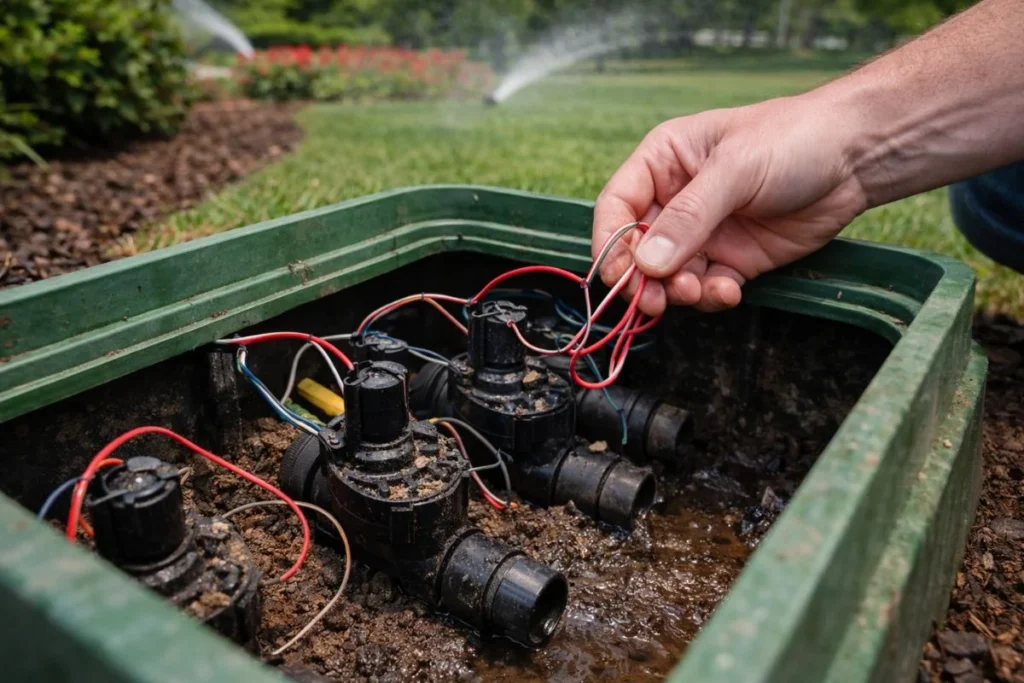
If one zone fails, check electrical parts.
Check:
- Controller program
- Start times
- Watering days
- Rain delay setting
- Zone wiring
- Valve solenoid
If you hear a click but no water flows, the solenoid may be bad.
Loose wires often cause this issue.
Controller Programming Mistakes
Sometimes nothing is broken.
Common mistakes:
- Wrong start time
- Watering days disabled
- Seasonal adjustment set too low
- Rain delay turned on
Reset the controller if needed.
Always double-check settings before digging.
Multiple Zones Running at the Same Time
This usually means a valve issue.
Causes:
- Stuck valve
- Damaged diaphragm
- Wiring short
Clean or replace faulty parts.
Indexing Valve Skipping Zones
Older systems may use indexing valves.
Signs:
- One zone never runs
- Zones run in wrong order
Clean or reset the valve.
If skipping continues, replace it.
Leaks Around Valves or Pipes
Leaks waste water and reduce pressure.
Signs:
- Soggy soil
- Pooling water
- Higher water bill
Fix:
- Dig carefully
- Tighten fittings
- Replace cracked pipe
Check before the problem spreads.
Leak at the Sprinkler Head Farthest From the Valve
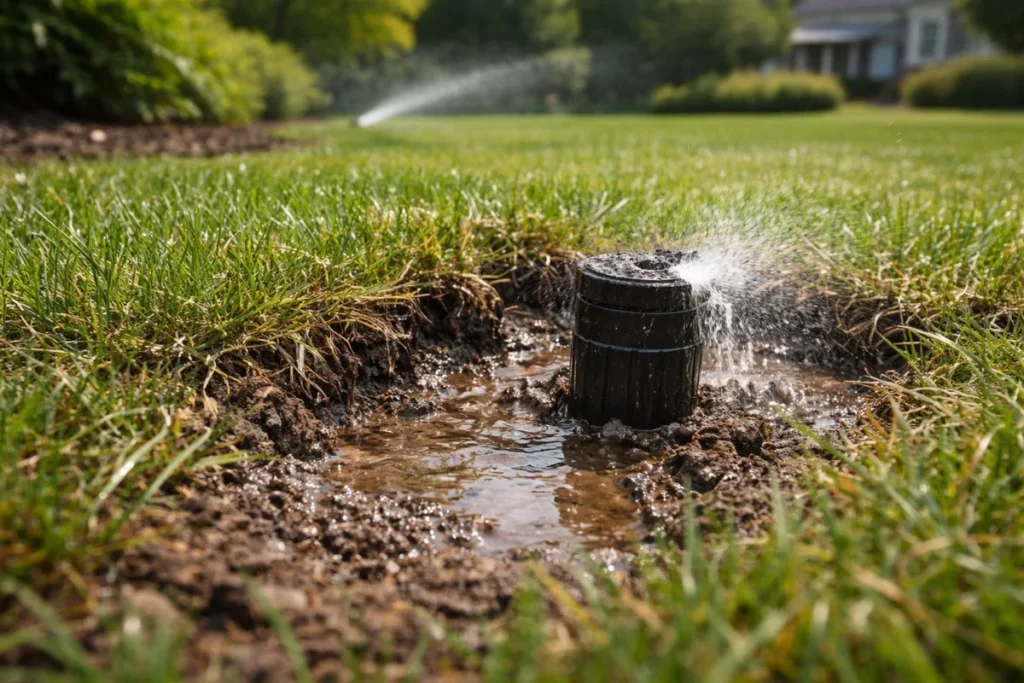
If the last head leaks or sprays weakly, pipe damage may exist.
Dig around the area and inspect fittings.
If no visible damage appears, professional help may be needed.
Pump Making Noise
A buzzing or chattering pump is a warning sign.
Causes:
- Air in line
- Low water supply
- Blocked intake
- Worn parts
Turn off system and inspect water supply.
If noise continues, have it checked.
Common Mistakes That Make Sprinkler Problems Worse
- Digging without shutting off water
- Adjusting pressure without testing PSI
- Ignoring small leaks
- Replacing heads with wrong type
Small mistakes can cause bigger repairs.
| Mistake | Why It Causes Bigger Problems |
|---|---|
| Digging without turning off water | Can flood yard and damage pipes |
| Ignoring small leaks | Leads to pressure loss and higher bills |
| Installing wrong sprinkler head type | Causes uneven watering |
Seasonal Sprinkler Protection
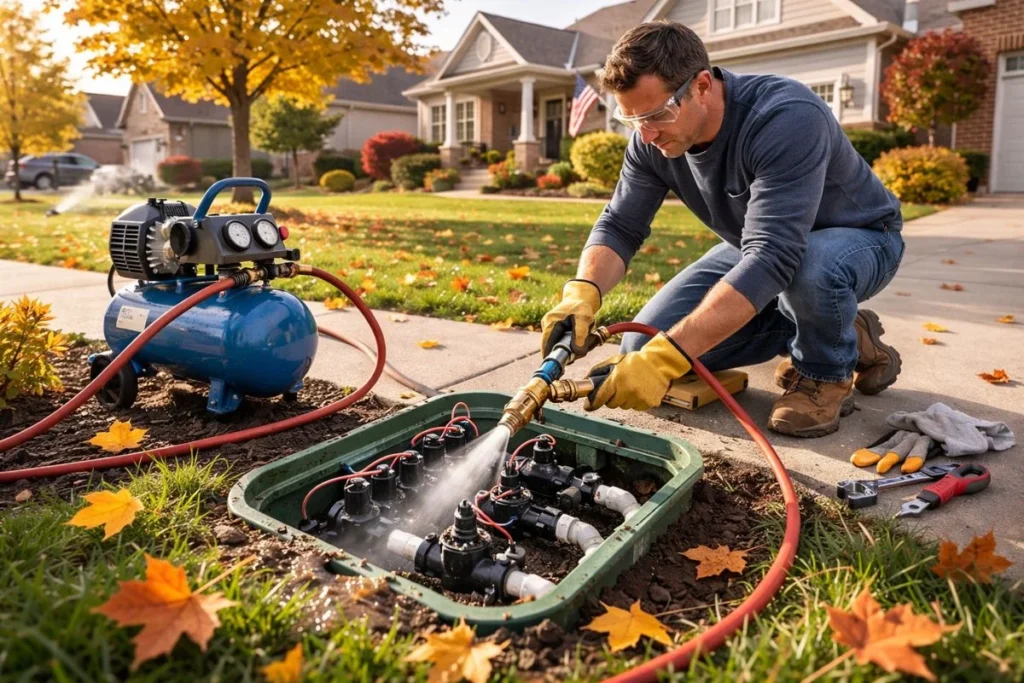
Prevent problems before they start.
- Inspect heads each month
- Test zones in spring
- Clean nozzles in summer
- Blow out system before winter in cold states
Seasonal checks reduce repair costs.
When to Call a Professional
Call a professional if:
- Multiple zones fail
- Electrical testing is required
- Major underground pipe breaks exist
- Pump damage continues
Fix simple problems yourself. Call for advanced repairs.
Typical Sprinkler Repair Costs in the USA
- Service visit: $100–$150
- Valve replacement: $150–$300
- Pipe repair: $200–$500
- Sprinkler head replacement (DIY): $10–$25 per head
Many common sprinkler problems can be fixed for under $50 if handled early.
Key Takeaways
- Start with simple checks before digging
- Most problems are pressure or sprinkler head related
- Test one zone at a time
- Check controller settings before replacing parts
- Fix small leaks early to prevent major damage
Final Thoughts on Sprinkler Troubleshooting
From my experience, most sprinkler problems are not major system failures. They are usually small issues that grow worse because they are not checked early. When you understand how the controller, valves, pressure, and heads work together, diagnosing problems becomes easier and less stressful. I have seen lawns recover quickly after fixing minor pressure or coverage issues. Regular inspection, careful testing, and simple maintenance can prevent costly repairs. Start with the basics, follow the checklist, and fix what you can safely handle. With the right approach, sprinkler troubleshooting becomes practical, affordable, and much less overwhelming.