 Skip to content

Watering lawn sounds simple, but many homeowners find themselves confused and frustrated. You water regularly, yet brown patches appear. The grass looks thin. The water bill goes up. You stand in your yard wondering what you are doing wrong. In most cases, the issue is not effort. It is the watering method. Too much water, too little water, or watering at the wrong time can all weaken your lawn.
Over the years, I have worked with lawns in extreme summer heat, heavy clay soil, sandy soil, and new sod installations. I have seen the same pattern again and again. Homeowners water every day thinking more water means greener grass. Instead, roots stay shallow and the lawn struggles. Healthy grass does not need daily surface watering. It needs deep moisture, correct timing, and consistency. In this guide, I will show you exactly how to water lawn the right way with clear numbers and simple steps.
- When to Water Lawn
- How Much Water Does a Lawn Need?
- How Long Should You Run Sprinklers?
- How to Lower Your Water Bill While Watering Lawn
- Why Your Lawn Is Brown Even After Watering
- Deep Watering vs Shallow Watering
- How to Tell If Your Lawn Needs Water
- Watering Lawn by Grass Type
- Letting Grass Go Dormant
- Watering Lawn by Soil Type
- Soak and Cycle Watering Method
- Watering Sloped Lawns
- Watering New Lawn vs Established Lawn
- Seasonal Watering Lawn Guide
- Adjust Watering After Rainfall
- Smart Irrigation Tools
- Lawn Watering Mistakes to Avoid
- Frequently Asked Questions About Watering Lawn
- Conclusion
Quick Watering Lawn Summary
- Best time to water: 5 a.m. to 9 a.m.
- Weekly amount: 1 to 1.5 inches (including rainfall)
- Frequency: 1 to 2 times per week
- Goal: Moisture 6 to 8 inches deep
- Avoid: Daily light watering
When to Water Lawn
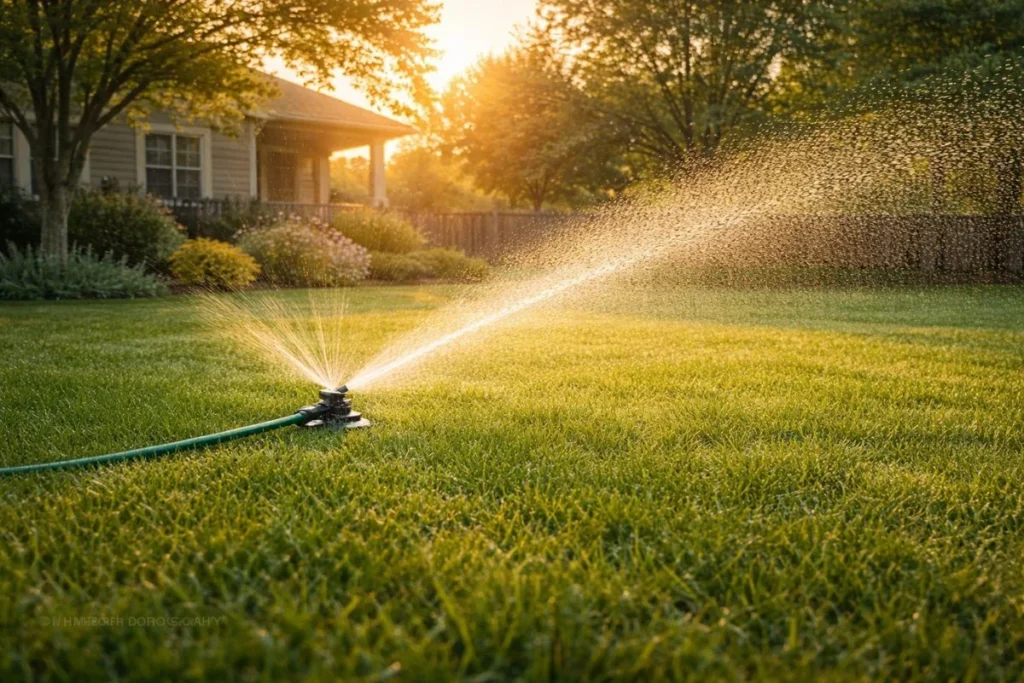
The best time to water lawn is early morning, between 5 a.m. and 9 a.m.
Why early morning?
- Less water is lost to heat.
- Wind is lower.
- Grass dries during the day, which reduces disease.
Avoid watering at midday. A large amount of water evaporates.
Avoid watering late at night. Wet grass overnight can cause fungus problems.
If you use an automatic system, set it for early morning.
If you use an automatic system, set it for early For a detailed breakdown of early morning timing, seasonal adjustments, and climate-based schedules, see our guide on the best time to water lawn for healthy grass growth..
How Much Water Does a Lawn Need?
Most lawns need 1 to 1.5 inches of water per week.
This includes rainfall.
Water deeply once or twice per week.
Do not water daily.
Daily watering creates shallow roots. Shallow roots make grass weak during heat.
Deep watering helps roots grow 6 to 8 inches deep.
Deeper roots mean stronger, greener grass.
How Long Should You Run Sprinklers?
Many homeowners ask this first.
Most sprinkler zones need:
- 30 to 40 minutes
- 1 to 2 times per week
But every system is different.
To know your exact time:
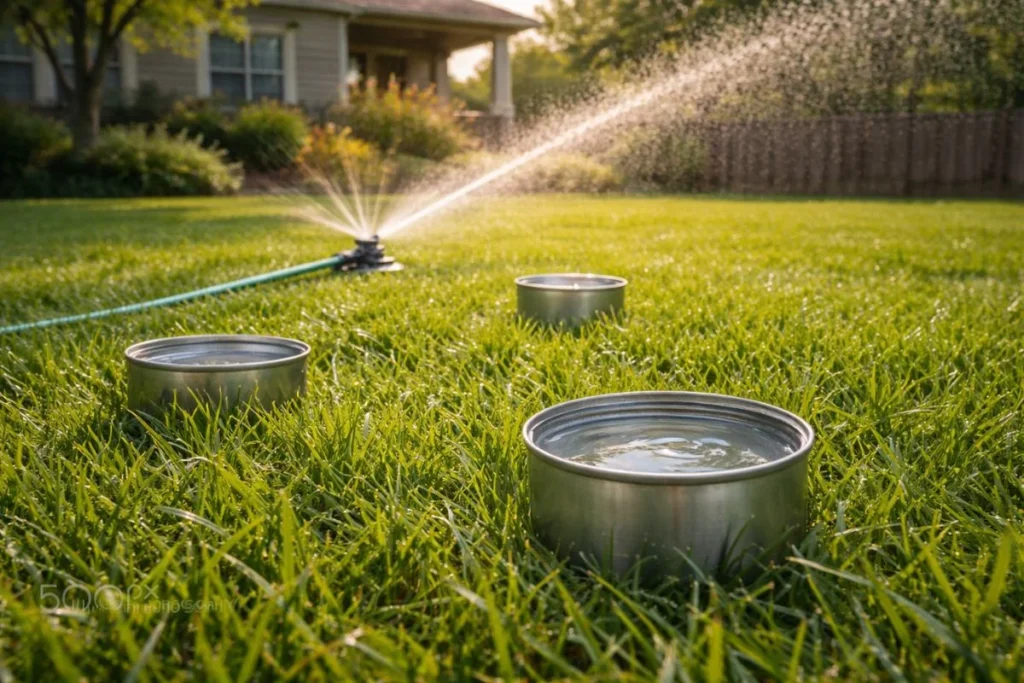
- Place empty tuna cans around the lawn.
- Run the sprinkler.
- Measure how long it takes to collect 1 inch.
Never guess.
How to Lower Your Water Bill While Watering Lawn
Watering lawn does not have to raise your water bill.
Follow these steps:
- Water deeply but less often.
- Subtract rainfall from your weekly total.
- Fix leaking sprinkler heads.
- Adjust spray so sidewalks are not watered.
- Use rain or soil moisture sensors if possible.
Small changes can reduce water waste and save money each month.
Why Your Lawn Is Brown Even After Watering
This is a common problem.
Possible reasons:
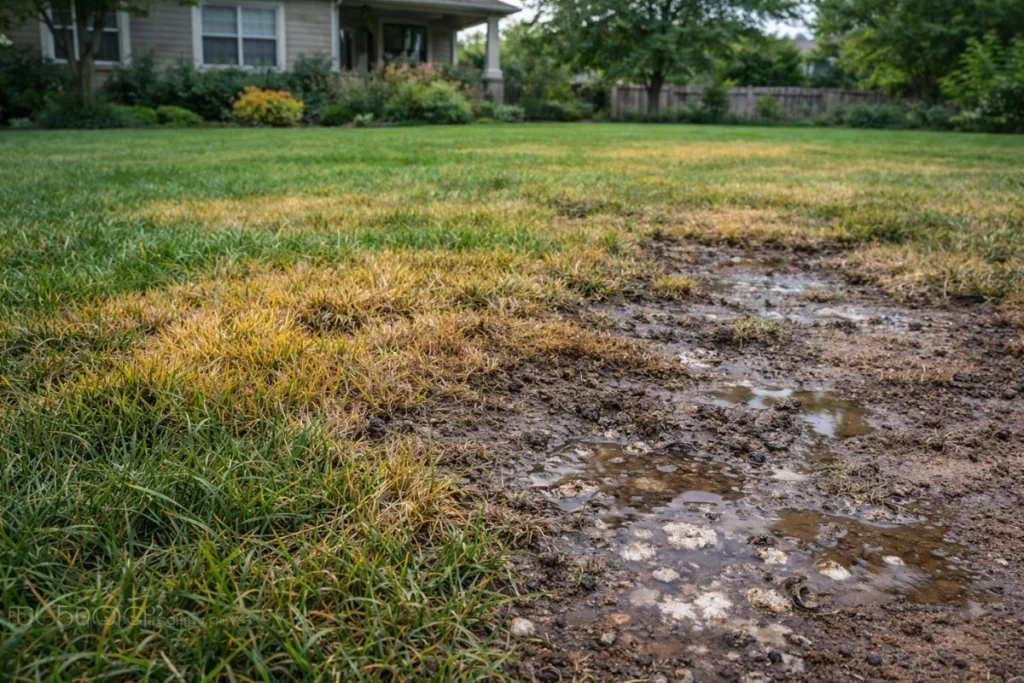
- Water is not reaching deep enough.
- You are watering too lightly every day.
- Soil is compacted.
- Grass is dormant due to heat.
- Sprinkler coverage is uneven.
Check soil moisture 3 to 4 inches below the surface.
If the top is wet but deeper soil is dry, you need longer watering sessions.
If the top is wet but deeper soil is dry, you need longer watering If you suspect uneven spray, pressure problems, or a zone not working properly, follow this step-by-step sprinkler troubleshooting guide before adjusting your watering schedule..
Deep Watering vs Shallow Watering
Shallow watering wets only the top inch of soil.
This leads to weak roots.
Deep watering reaches 6 to 8 inches down.
Strong roots help grass survive summer heat and dry periods.
Water fewer times per week.
But water long enough to soak deeply.

How to Tell If Your Lawn Needs Water
Watch for these signs:
- Bluish-gray grass color
- Footprints that stay visible
- Grass blades folding
- Dry soil several inches below surface
Push a screwdriver into the soil.
If it slides in easily, soil has enough moisture.
If not, it is time to water.
Lawn Watering Problem Guide
| Symptom | Likely Cause | Fix |
|---|---|---|
| Brown patches | Shallow watering | Increase watering depth |
| Mushy soil | Overwatering | Reduce frequency |
| Footprints stay visible | Underwatering | Water deeply |
| Water pooling | Clay soil or slope issue | Use soak and cycle method |
Watering Lawn by Grass Type
Different grass types need different care.
Cool-Season Grasses
Examples:
- Kentucky bluegrass
- Tall fescue
- Perennial ryegrass
These grow best in spring and fall.
They may need closer to 1.5 inches of water during hot summer.
They may also turn brown and go dormant in extreme heat.
Warm-Season Grasses
Examples:
- Bermuda grass
- Zoysia grass
- St. Augustine grass
These grow best in summer.
They tolerate heat better and often require slightly less water than cool-season grass.
Always adjust watering lawn schedule based on grass type.
Weekly Watering Guide by Grass Type
| Grass Type | Main Growing Season | Weekly Water Need | Notes |
|---|---|---|---|
| Kentucky Bluegrass | Spring / Fall | Up to 1.5 inches in summer | May go dormant in extreme heat |
| Tall Fescue | Spring / Fall | 1 to 1.5 inches | Deep roots help drought tolerance |
| Bermuda Grass | Summer | About 1 inch | Handles heat well |
| Zoysia Grass | Summer | About 1 inch | Slow growth but drought tolerant |
| St. Augustine | Summer | 1 to 1.25 inches | Needs steady moisture |
Letting Grass Go Dormant
In extreme heat, cool-season grass may turn brown.
This does not always mean it is dead.
It may be dormant to survive stress.
If this happens:
- Water lightly every 2 to 3 weeks.
- Do not overwater trying to force green growth.
Grass usually recovers when temperatures cool.

Watering Lawn by Soil Type
Soil changes watering strategy.
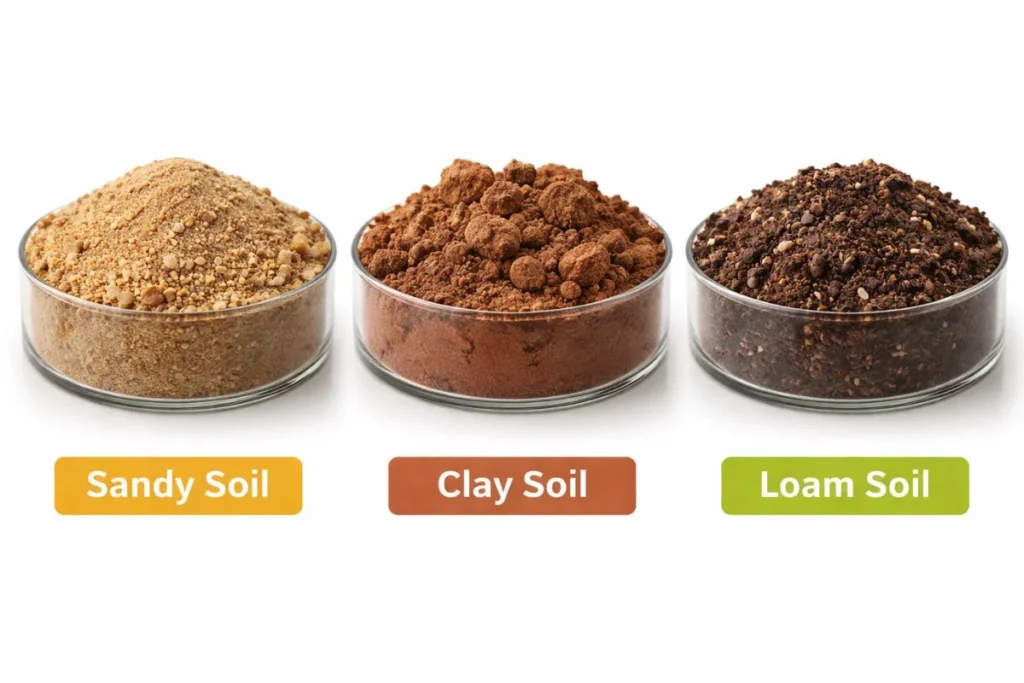
Sandy Soil
- Drains quickly
- Needs slightly more frequent watering
Clay Soil
- Holds water longer
- Water slowly
- Use split sessions
Loam Soil
- Balanced drainage
- Ideal for deep watering
If water pools, stop and let it soak before continuing.
Watering Strategy by Soil Type
| Soil Type | Watering Style | Main Risk | Best Method |
|---|---|---|---|
| Sandy | Shorter, slightly more frequent | Dries out fast | Monitor moisture closely |
| Clay | Slow, split sessions | Runoff and pooling | Use soak and cycle method |
| Loam | Deep, less frequent | Low | Standard deep watering |
Soak and Cycle Watering Method
For clay soil or slopes:
- Water 10 to 15 minutes.
- Stop for 30 minutes.
- Water again 10 to 15 minutes.
This prevents runoff and improves deep absorption.

Watering Sloped Lawns
Slopes lose water quickly.
To improve watering lawn results:
- Use shorter watering cycles
- Watch for runoff
- Adjust sprinkler angles
Water that runs downhill does not benefit roots.
Watering New Lawn vs Established Lawn
New Seed
- Water lightly 1 to 2 times daily
- Keep top soil moist
New Sod
- Water daily first 1 to 2 weeks
- Keep soil under sod moist
Established Lawn
- Water deeply once or twice weekly
- Allow slight drying between sessions
If you recently planted seed and need a clear daily plan, follow our complete guide on how often to water grass seed with a simple week-by-week schedule.
Seasonal Watering Lawn Guide
Spring
Rain often provides enough moisture.
Summer
Grass needs more water.
Cool-season lawns may struggle in heat.
Fall
Reduce frequency but maintain soil moisture.
Winter
In cold regions, watering may stop.
In warm climates, water only during dry periods.
Climate matters.
Lawns in Texas need more summer attention than lawns in cooler northern states.
Adjust Watering After Rainfall
Subtract rainfall from your weekly target.
If you get 0.5 inches of rain,
you only need 0.5 to 1 inch more that week.
Use a rain gauge to track this.
Smart Irrigation Tools
Tools that improve watering lawn efficiency:
Rain Sensors
Stop watering after rainfall.
Soil Moisture Sensors
Prevent unnecessary watering.
Smart Irrigation Controllers
Adjust watering based on weather.
These tools save water and reduce stress on grass.

Lawn Watering Mistakes to Avoid
Avoid these common mistakes:
- Watering every day
- Watering at midday
- Watering too lightly
- Ignoring rainfall
- Letting sprinklers spray sidewalks
Fixing these mistakes can improve lawn health quickly.
Simple Weekly Lawn Watering Plan
- Monday: Check soil moisture
- Tuesday: No watering
- Wednesday: Water deeply (30–40 minutes)
- Thursday: No watering
- Friday: Monitor stress signs
- Saturday: Water if needed
- Sunday: Check rainfall and adjust
Adjust based on weather and grass type.
Frequently Asked Questions About Watering Lawn
How often should I water lawn in summer?
Most lawns need water once or twice per week. Apply 1 to 1.5 inches total, including rainfall.
Is it bad to water lawn every day?
Yes. Daily watering leads to shallow roots and weaker grass. Deep watering is better.
Can overwatering kill grass?
Yes. Too much water can cause root rot, fungus problems, and weak root systems.
Should I water lawn after it rains?
No. Always subtract rainfall from your weekly total before watering again.
Conclusion
I have seen lawns improve in just a few weeks after simple watering changes. When homeowners switch from daily light watering to deep, scheduled watering, roots grow stronger and brown patches slowly recover. Watering lawn is not about giving more water. It is about giving the right amount at the right time based on soil, grass type, and season. When you water early in the morning, apply 1 to 1.5 inches per week, and avoid common mistakes, your lawn becomes stronger and more drought resistant. Healthy grass is not luck. It is the result of correct method and steady practice.