 Skip to content
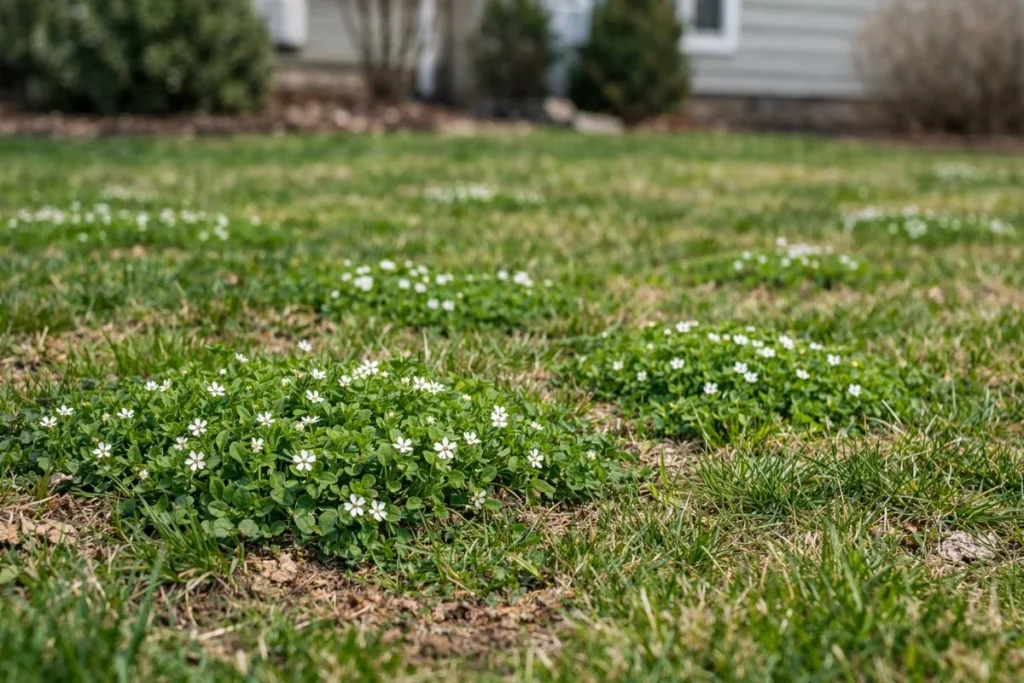
If you have ever stepped outside in late winter and noticed small white flowers spreading across your lawn, you know how frustrating chickweed can be. It forms thick green mats, makes your grass look weak, and keeps coming back even after mowing. Many homeowners treat it in spring, only to see it return the next season. I made that same mistake years ago. I sprayed too late, and while it looked better for a short time, the weed had already dropped seeds.
Chickweed is a winter annual broadleaf weed, which means it grows differently than grassy weeds and requires a specific control strategy. If you are unsure what defines a broadleaf weed, read our complete guide on what is a broadleaf weed to understand how proper identification improves control. After working with winter annual weeds and managing my own lawn through several seasons, I learned that chickweed control depends on timing and lawn strength. This weed begins growing months before most people notice it. When you understand its life cycle and treat it early, results improve fast. In this guide, I will walk you through the exact steps that work, how to avoid common mistakes, and how to build a lawn that keeps chickweed from taking over again.
- What Is Chickweed?
- How to Identify Chickweed
- Common Chickweed vs Mouse-Ear Chickweed
- Why Chickweed Is Growing in Your Lawn
- Chickweed Life Cycle and Best Time for Control
- Best Herbicides for Chickweed Control
- Organic Chickweed Control
- Step-by-Step Chickweed Control Plan
- Mistakes to Avoid in Chickweed Control
- How to Prevent Chickweed from Coming Back
- Frequently Asked Questions About Chickweed Control
- Final Thoughts on Chickweed Control
What Is Chickweed?
Chickweed is a winter annual broadleaf weed.
The most common type found in lawns is Stellaria media.
Another type is Cerastium fontanum.
Both grow low and spread across the soil surface.
Chickweed usually:
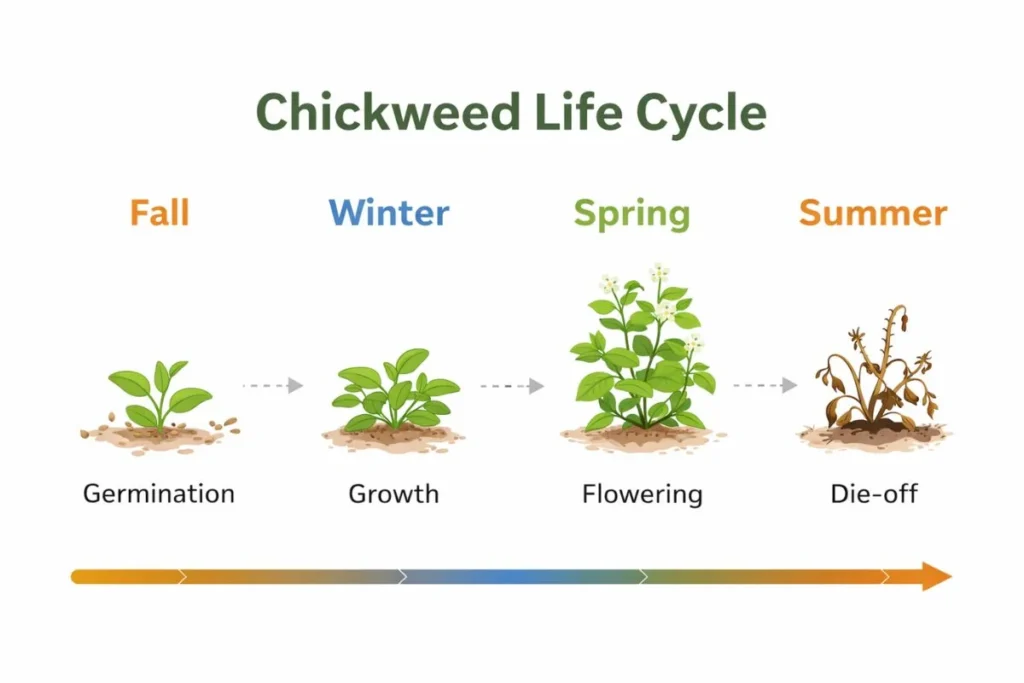
- Germinates in fall
- Grows through winter
- Flowers in early spring
- Dies in summer heat
This is why many homeowners are surprised. The weed actually starts months before you see flowers.
Understanding this cycle makes chickweed control much easier.
How to Identify Chickweed
Look for these signs:
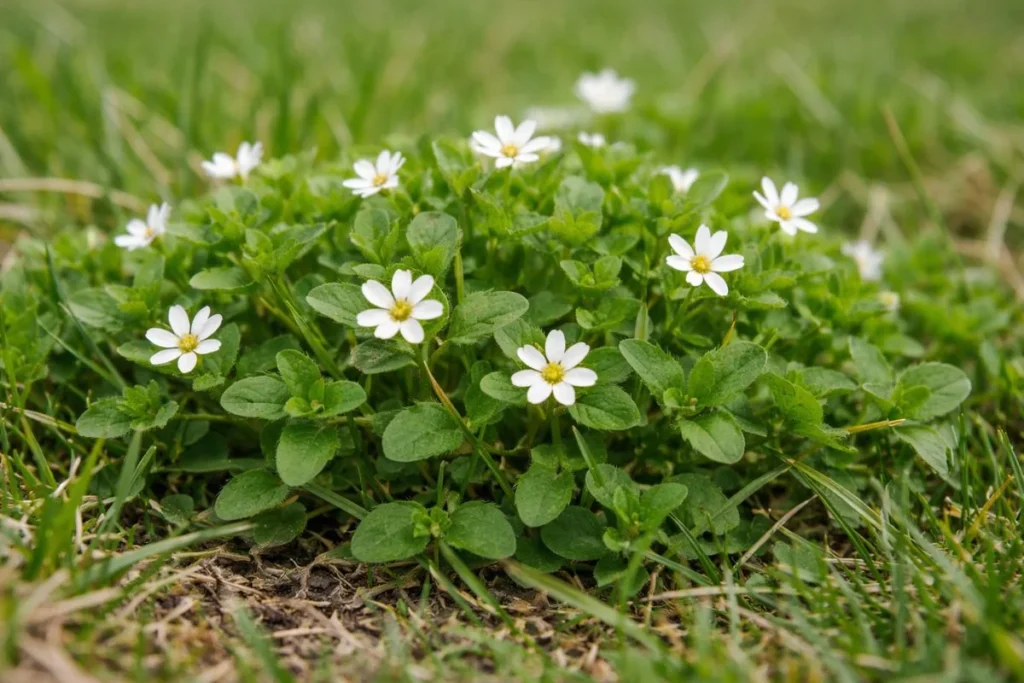
- Small white star-shaped flowers
- Light green oval leaves
- Low, spreading growth
- Thin stems that root at nodes
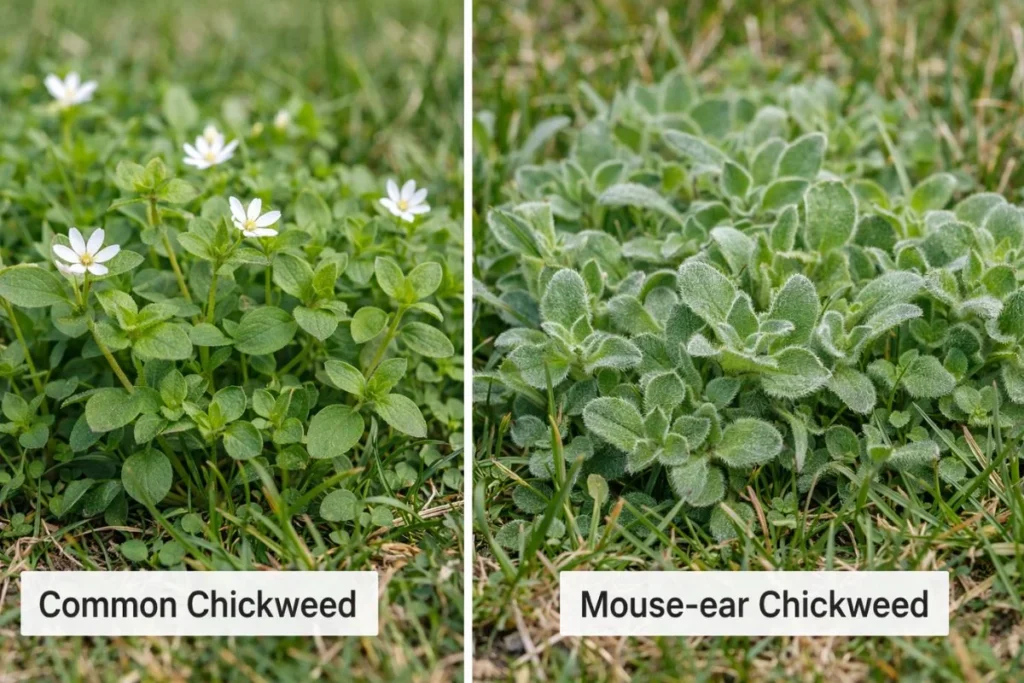
Common chickweed has smooth stems with one thin line of hairs.
Mouse-ear chickweed has fuzzy leaves and thicker growth.
Correct identification is the first step in chickweed control. Treating the wrong weed wastes time and money.
Common Chickweed vs Mouse-Ear Chickweed
| Feature | Common Chickweed | Mouse-ear Chickweed |
|---|---|---|
| Scientific Name | Stellaria media | Cerastium fontanum |
| Leaves | Smooth and light green | Hairy and gray-green |
| Stem | Thin with one line of hairs | Thick and fuzzy |
| Growth | Soft, low mat | Denser, fuzzy mat |
| Root Depth | Shallow | Slightly deeper |
Common chickweed spreads mostly by seed.
Mouse-ear chickweed may act like a short-lived perennial in some climates.
Correct identification improves chickweed control results.
Why Chickweed Is Growing in Your Lawn
Chickweed grows where turf is weak.
Common causes include:
- Thin grass
- Shade
- Wet soil
- Compacted soil
- Low nitrogen
- Poor fall fertilization
Chickweed grows well in shaded areas where grass struggles.
If your lawn is thick and healthy, chickweed has little room to spread.
Fixing lawn health is just as important as spraying.
Chickweed Life Cycle and Best Time for Control
Chickweed control depends on timing.
Late Summer / Early Fall
Seeds begin to germinate when soil cools.
Fall
Small plants establish in thin turf.
Winter
Plants stay green and grow slowly.
Early Spring
Rapid growth and flowering. Seeds develop.
Summer
Plants die from heat.
Soil Temperature and Germination
Chickweed seeds begin to sprout when soil temperatures drop below 70°F (21°C).
Pre-emergent herbicide must be applied before this temperature drop.
Regional Timing Examples (USA)
- Northern states: Early to mid-September
- Southern states: Late August to early September
Fall treatment gives the strongest chickweed control.
Chickweed Control Calendar (USA)
This simple calendar shows what chickweed is doing each season and what action you should take.
| Season | What Chickweed Is Doing | What You Should Do |
|---|---|---|
| Late Summer | Seeds begin to germinate | Apply pre-emergent before soil drops below 70°F |
| Fall | Young plants establish in thin turf | Spot treat early growth and strengthen grass |
| Winter | Slow growth continues | Avoid overwatering and monitor patches |
| Early Spring | Rapid growth and flowering | Apply post-emergent if needed before seed forms |
| Summer | Plants die from heat | Improve turf density for next season |
Best Herbicides for Chickweed Control
Selective broadleaf herbicides work best.
Look for products that contain:
- 2,4-D
- MCPP
- Dicamba
- Fluroxypyr
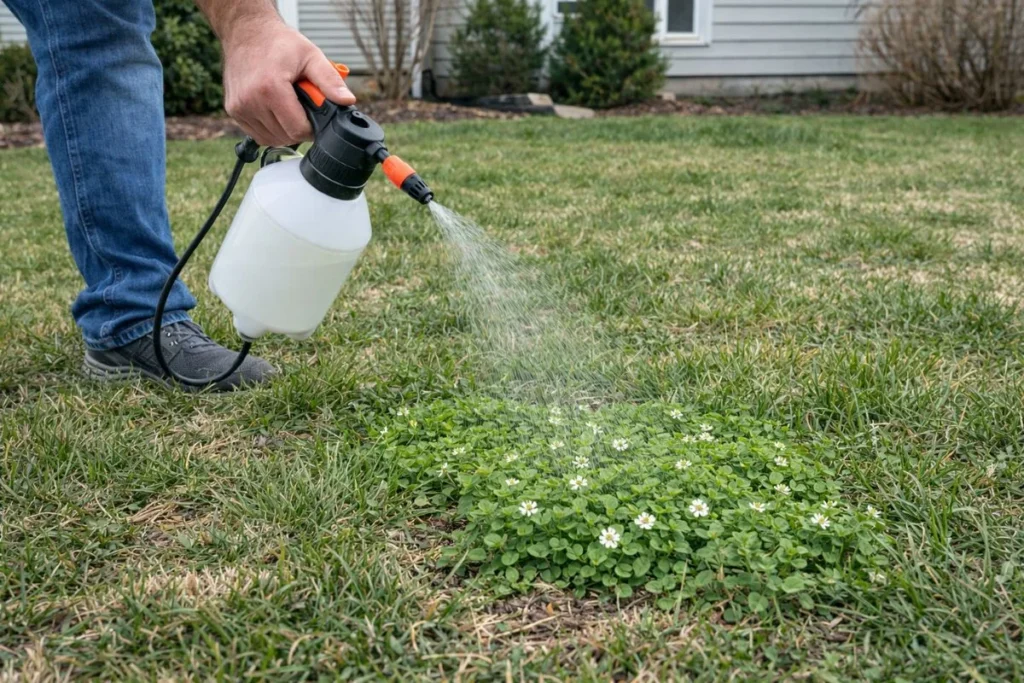
Common Herbicide Ingredients for Chickweed Control
This table helps you compare common active ingredients used in selective broadleaf herbicides.
| Active Ingredient | Type | Best Application Time | Safe for Most Lawns? |
|---|---|---|---|
| 2,4-D | Post-emergent | Fall / Early Spring | Yes (cool-season lawns) |
| MCPP (Mecoprop) | Post-emergent | Fall | Yes |
| Dicamba | Post-emergent | Fall | Use carefully during heat |
| Fluroxypyr | Post-emergent | Fall | Yes |
For Cool-Season Lawns
Apply in fall for best results.
Early spring works while plants are still young.
For Warm-Season Lawns
Treat while grass is actively growing but before extreme summer heat.
Always read and follow the product label.
Some herbicides can damage certain grass types during drought or high temperatures.
If you are unsure, spot test first.
Organic Chickweed Control
Some homeowners prefer non-chemical options.
Hand Pulling
Best for small patches. Remove roots fully.
Mulching in Garden Beds
Apply 2–3 inches of mulch to block light and prevent sprouting.
Improve Lawn Density
Overseed thin areas in fall.
Adjust Watering
Avoid shallow daily watering.
Vinegar may burn leaves but often does not kill roots. It can also harm nearby grass.
Organic control works best when infestations are small.
Step-by-Step Chickweed Control Plan
Step 1: Confirm identification
Make sure it is chickweed.
Step 2: Decide your method
Small area = hand pull.
Large area = selective herbicide.
Step 3: Treat in fall when possible
Young plants are easier to kill.
Step 4: Strengthen turf after treatment
Fertilize in fall.
Overseed thin areas.
Improve drainage.
This simple system makes chickweed control much more effective.
Mistakes to Avoid in Chickweed Control
Many homeowners struggle because of these mistakes:
- Spraying too late in spring
- Skipping fall pre-emergent
- Overwatering lawn
- Ignoring thin turf
- Using non-selective herbicide on grass
Avoiding these mistakes saves time and prevents repeat problems.
How to Prevent Chickweed from Coming Back
Prevention is long-term chickweed control.
- Apply pre-emergent in early fall
- Mow at proper height
- Aerate compacted soil
- Fertilize in fall
- Improve drainage
Healthy turf crowds out weeds.
Frequently Asked Questions About Chickweed Control
Does chickweed die in summer?
Yes. Most common chickweed dies in heat. Seeds remain in soil.
Is chickweed a perennial?
Common chickweed is a winter annual.
Mouse-ear chickweed may act like a short-lived perennial.
Will mowing kill chickweed?
No. It grows low to the ground.
What kills chickweed fast?
Selective broadleaf herbicides applied during active growth.
Can chickweed grow in shade?
Yes. Shade encourages growth.
Does chickweed spread only by seed?
Mostly by seed. Stems can root at nodes.
Can I use vinegar to kill chickweed?
It may burn leaves but often does not kill roots.
Quick Takeaway for Chickweed Control
If you remember only three things:
- Treat in early fall, not late spring.
- Apply pre-emergent before soil drops below 70°F.
- Keep turf thick with fall fertilization and overseeding.
Final Thoughts on Chickweed Control
Chickweed control becomes much easier once you understand how and when it grows. From my experience, the biggest improvement came when I shifted my focus to fall treatment and strengthening turf instead of reacting in spring. Healthy, thick grass reduces the space where chickweed can grow, and early action prevents seed spread before it starts. If you treat at the right time and support your lawn with proper fertilizing, mowing, and overseeding, you will see fewer weeds each season. Stick to that system, stay consistent every fall, and chickweed will stop being a yearly problem in your lawn.