 Skip to content
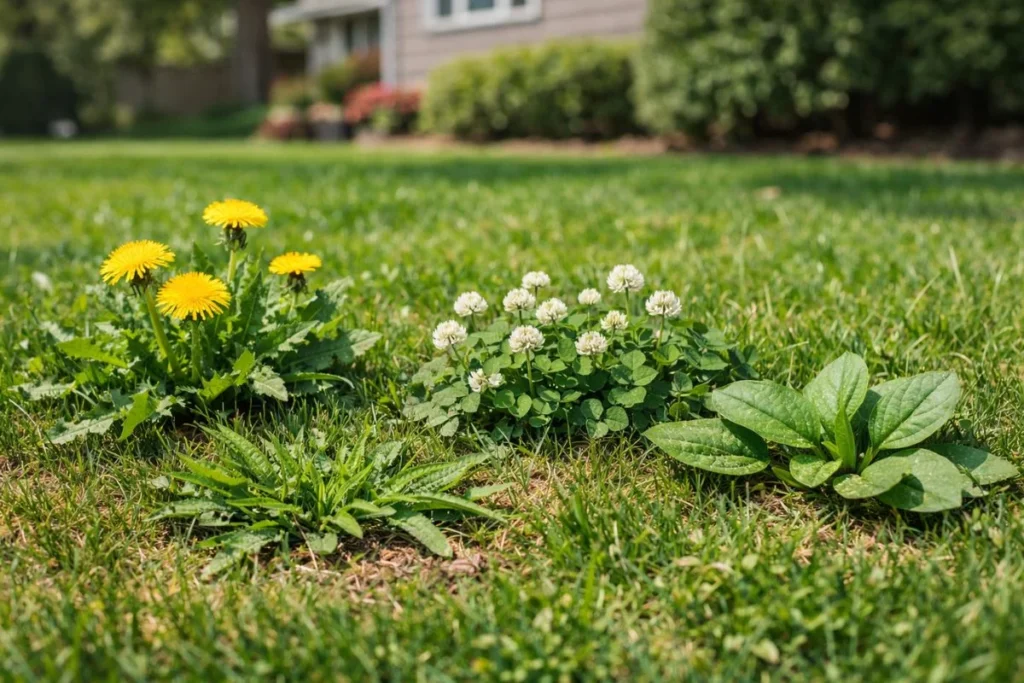
If you have ever looked at your lawn and wondered why strange plants keep appearing, you are not alone. One week your grass looks healthy. The next week, yellow flowers, light green clumps, or flat leafy plants start spreading. You mow them down, but they come back. You pull them out, and new ones grow again. That cycle can feel frustrating and confusing.
After working with residential lawns and studying turf problems for years, I have learned something important. Common lawn weeds do not grow by accident. They appear when grass is weak, soil is compacted, nutrients are low, or moisture is uneven. When you understand what type of weed you are seeing and why it showed up, control becomes much easier and more predictable. If you are unsure what type of plant you are dealing with, start by learning exactly what is a broadleaf weed and how it differs from grassy weeds before choosing a control method.
- What Are Lawn Weeds?
- Types of Common Lawn Weeds
- Quick Comparison: Broadleaf vs Grassy vs Sedge Weeds
- 15 Most Common Lawn Weeds in the United States
- Why Do Common Lawn Weeds Grow?
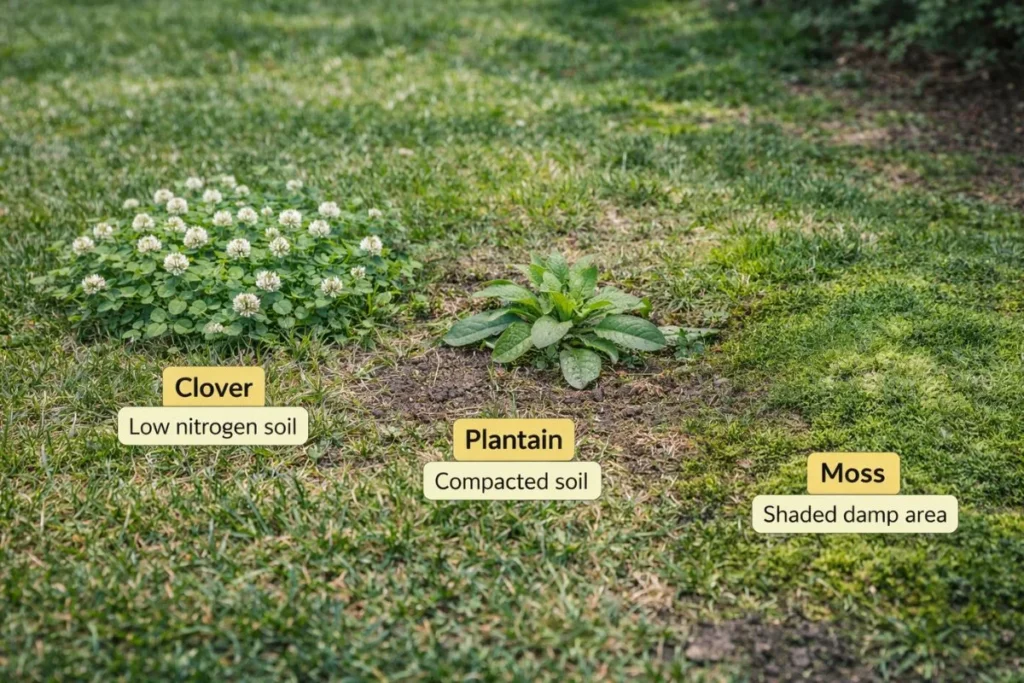
- What Your Weeds Say About Your Soil
- Weed Life Cycles: Why Timing Matters
- The Weed Seed Bank Problem
- Common Lawn Weeds by Region
- How to Control Common Lawn Weeds
- Organic Weed Control and Its Limits
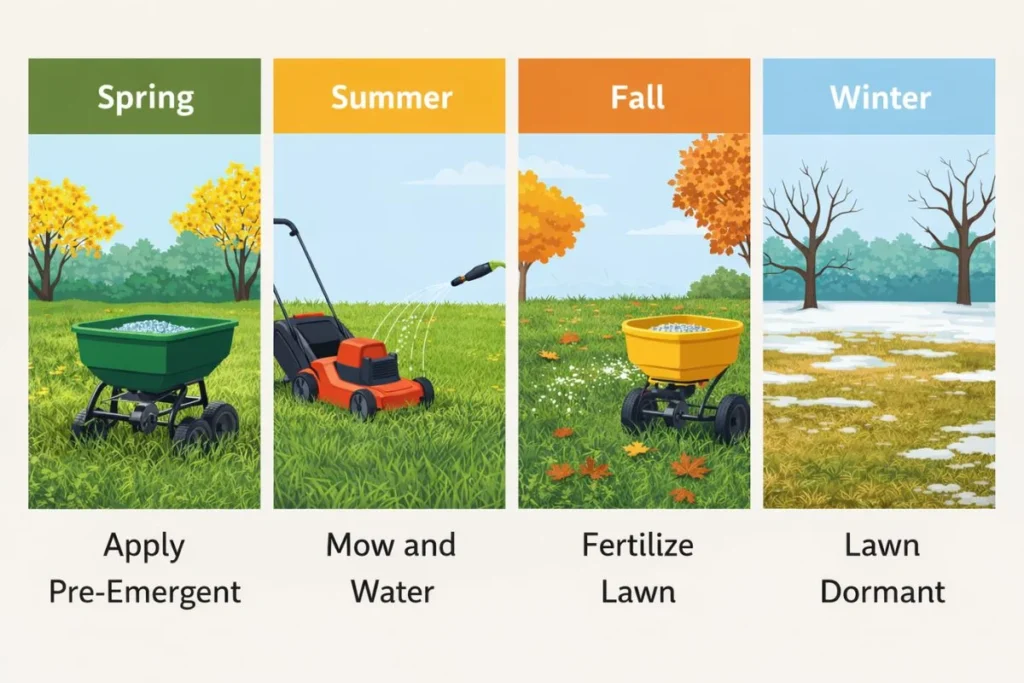
- Seasonal Weed Control Plan
- Best Mowing Height to Reduce Weeds
- How to Prevent Weeds Long Term
- Final Thoughts
What Are Lawn Weeds?
Lawn weeds are plants growing where grass should grow.
They compete with turfgrass for:
- Water
- Sunlight
- Nutrients
- Space
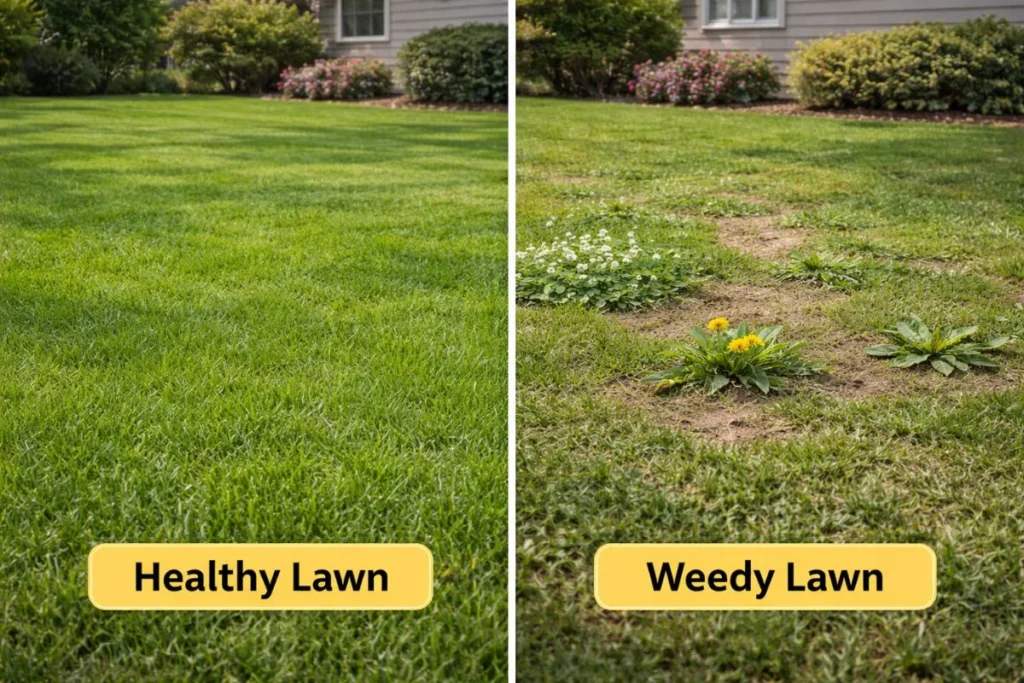
Weeds usually appear when grass is thin, stressed, or poorly maintained.
Healthy lawns crowd out weeds.
Types of Common Lawn Weeds
Most common lawn weeds fall into three main categories.
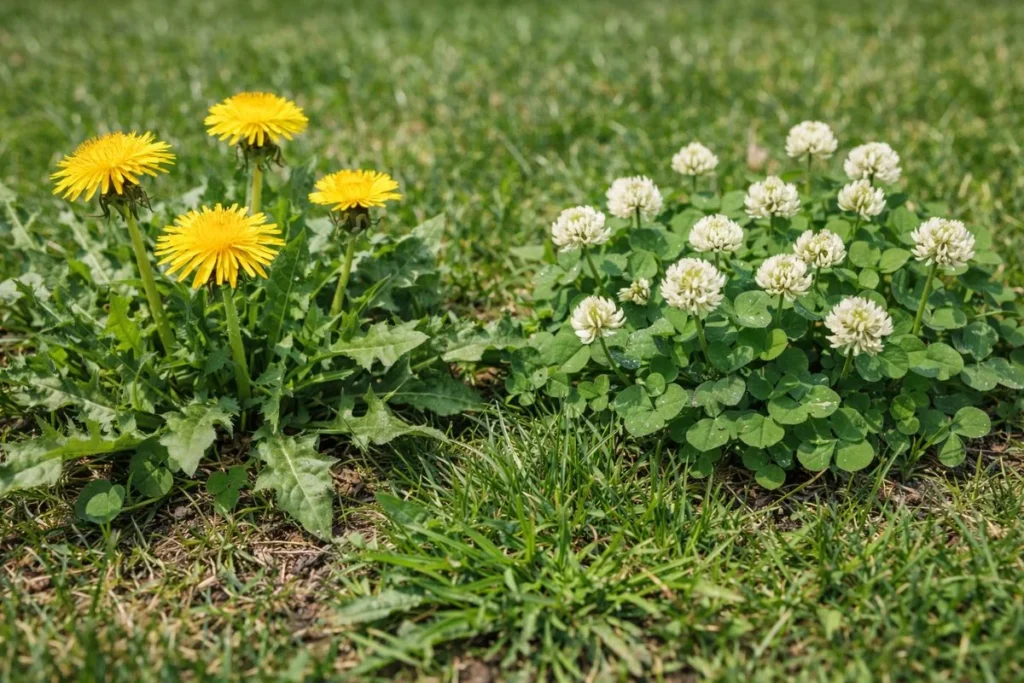
Broadleaf Weeds
These have wide leaves and often produce flowers.
Examples:
- Dandelion
- White clover
- Oxalis
- Plantain
- Chickweed
They are easy to spot because they do not look like grass.
Grassy Weeds
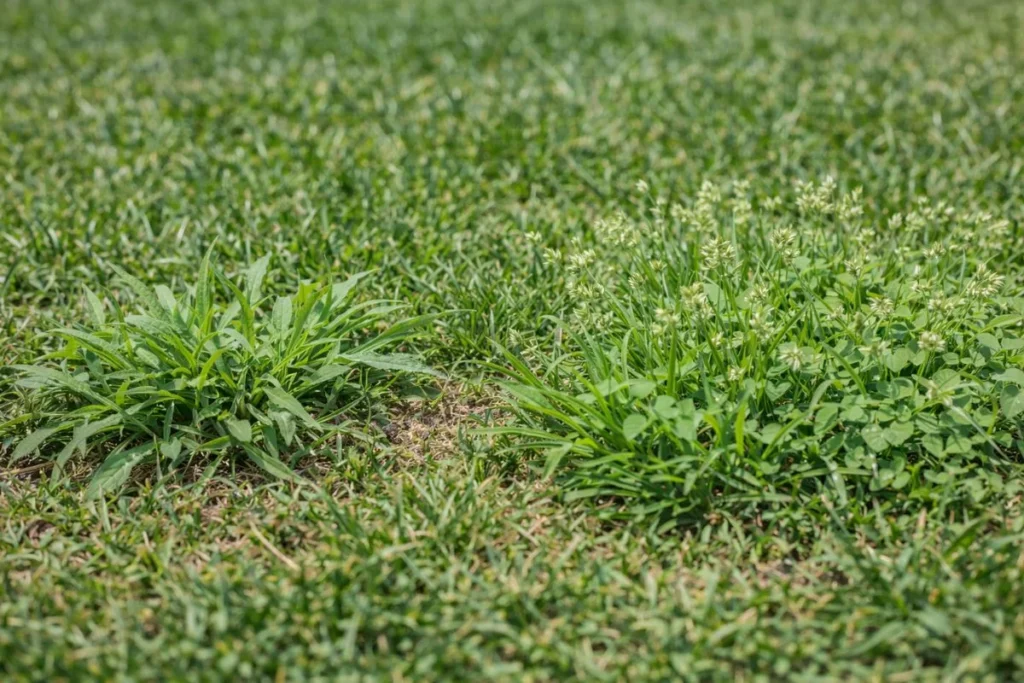
These look similar to turfgrass.
Examples:
- Crabgrass
- Annual bluegrass (Poa annua)
- Goosegrass
They often grow faster and lighter in color than lawn grass.
Sedges
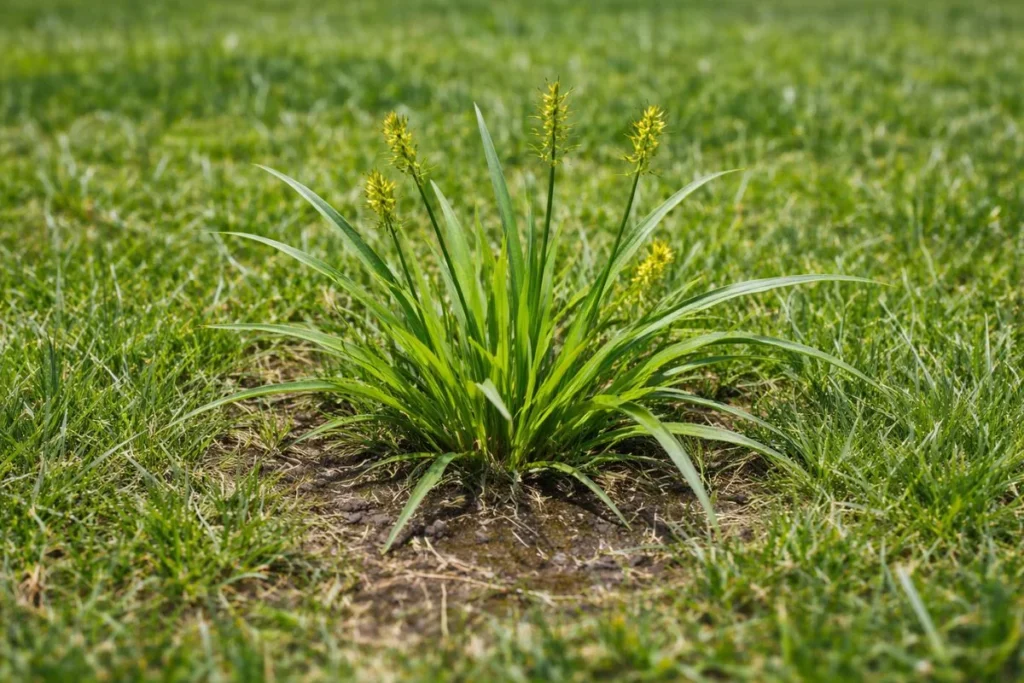
Sedges are not true grasses.
Example:
- Yellow nutsedge
They have triangular stems and prefer wet soil.
Lawn Weed Quick Identification Cheat Sheet
If you are standing in your yard and unsure what you are seeing, use this simple guide:
| If You See This | It Is Likely | What It Means |
|---|---|---|
| Yellow flowers with deep root | Dandelion | Perennial broadleaf weed |
| Light green clumps in spring | Poa annua | Cool-season annual |
| Low spreading grass in summer | Crabgrass | Bare or thin lawn |
| Bright green upright blades | Nutsedge | Excess moisture |
| Three round leaflets | Clover | Low nitrogen soil |
Quick Comparison: Broadleaf vs Grassy vs Sedge Weeds
| Weed Type | Leaf Shape | Root Type | Example | Best Time to Control |
|---|---|---|---|---|
| Broadleaf | Wide leaves | Taproot or fibrous | Dandelion | Fall |
| Grassy | Narrow blades | Fibrous | Crabgrass | Early spring |
| Sedge | Thick upright | Underground tubers | Nutsedge | Late spring |
This table helps beginners quickly narrow down what they are seeing.
15 Most Common Lawn Weeds in the United States
Below are the weeds most homeowners encounter.
1. Dandelion
- Yellow flower
- Deep taproot
- Perennial
Best controlled in fall when roots absorb nutrients.
2. Crabgrass
- Low spreading
- Summer annual
- Grows in bare spots
Prevent before germination in early spring.
3. White Clover
- Three leaflets
- White flowers
- Spreads across lawn
Often linked to low nitrogen soil.
4. Oxalis
- Heart-shaped leaves
- Yellow flowers
- Fast spreading
5. Creeping Charlie
- Round leaves
- Purple flowers
- Spreads in shade
6. Annual Bluegrass (Poa annua)
- Light green
- Early seed heads
- Cool-season annual
7. Plantain
- Flat leaves
- Thick roots
- Grows in compacted soil
8. Chickweed
- Small white flowers
- Cool-season growth
9. Yellow Nutsedge
- Bright green
- Upright growth
- Spreads through underground nutlets
Pulling often makes it worse if tubers remain.
10. Black Medic
- Yellow flowers
- Found in dry soil
11. Goosegrass
- Grows in compacted areas
- Summer annual
12. Spotted Spurge
- Reddish stems
- Milky sap
13. Knotweed
- Tough stems
- Grows in hard soil
14. Canada Thistle
- Spiny leaves
- Deep spreading roots
15. Ragweed
- Feathery leaves
- Produces pollen
Why Do Common Lawn Weeds Grow?
Weeds grow where grass struggles.
Common causes include:
- Thin turf
- Soil compaction
- Low nitrogen
- Excess moisture
- Poor mowing habits
- Wrong soil pH
Weeds take advantage of weakness.
What Your Weeds Say About Your Soil
Weeds can act like warning signs.
- Clover may mean low nitrogen
- Plantain suggests compacted soil
- Nutsedge points to poor drainage
- Crabgrass grows in bare areas
- Moss indicates shade and moisture problems
Fixing soil issues reduces weed pressure over time.
Weed Life Cycles: Why Timing Matters
Annual Weeds
- Live one season
- Spread by seed
- Example: crabgrass
Control before they seed.
Perennial Weeds
- Live multiple years
- Regrow from roots
- Example: dandelion
Treat roots for full control.
The Weed Seed Bank Problem
Weed seeds stay in soil for many years.
When soil is disturbed by:
- Aeration
- Digging
- Bare patches
Seeds move to the surface and grow.
That is why weeds return even after treatment.
Common Lawn Weeds by Region
Different regions face different problems.
Northern States
- Dandelion
- Chickweed
- Poa annua
Southern States
- Crabgrass
- Goosegrass
- Nutsedge
- Spurge
Transition Zone
- Clover
- Ground ivy
- Knotweed
Knowing your region improves treatment timing.
How to Control Common Lawn Weeds
Step 1: Improve Lawn Health
- Mow at correct height
- Water deeply
- Fertilize correctly
- Overseed thin areas
Thick grass blocks weed growth.
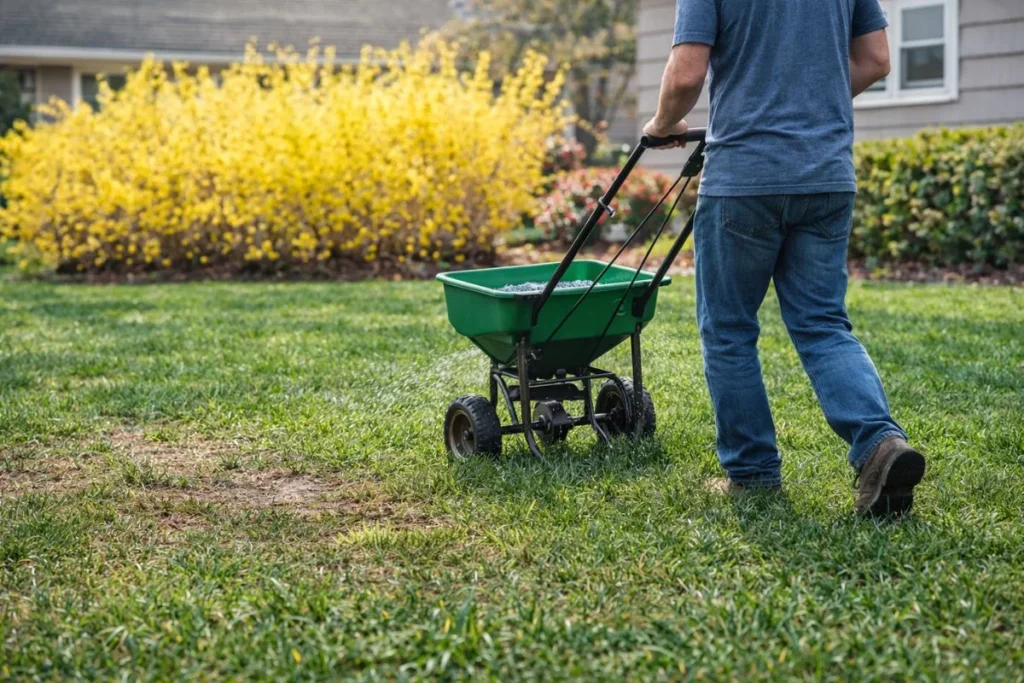
Step 2: Use Pre-Emergent at the Right Time
Apply when soil temperature reaches about 55°F for several days.
In many regions, this happens when forsythia blooms.
Timing is critical.
Step 3: Spot Treat Early
Use selective herbicides for:
- Broadleaf weeds
- Grassy weeds
- Sedges
Treat weeds when small for best results.
Weed Control Decision Guide
Not sure what to do next? Use this simple action guide:
| Situation | Best Action |
|---|---|
| Few weeds in small area | Hand pull when soil is moist |
| Crabgrass every summer | Apply pre-emergent in early spring |
| Clover spreading | Improve nitrogen + spot treat |
| Weeds in compacted soil | Aerate lawn |
| Nutsedge in wet area | Improve drainage + use sedge herbicide |
Organic Weed Control and Its Limits
Some homeowners prefer natural methods.
Options include:
- Hand pulling
- Vinegar spot treatment
- Corn gluten meal
However:
- Vinegar burns leaves but may not kill deep roots
- Corn gluten works only before seeds sprout and results vary
- Large infestations may require selective herbicides
Seasonal Weed Control Plan
Early Spring
- Apply pre-emergent
- Fertilize cool-season lawns
Late Spring
- Spot treat broadleaf weeds
Summer
- Mow higher
- Water properly
Fall
- Fertilize
- Overseed
- Treat perennial weeds
Fall is often the best time to control deep-rooted weeds.
Best Mowing Height to Reduce Weeds
Higher mowing shades the soil.
- Cool-season grass: 3 to 4 inches
- Warm-season grass: 2 to 3 inches
Short mowing encourages weeds.
How to Prevent Weeds Long Term
- Maintain dense turf
- Aerate compacted soil
- Test soil every few years
- Avoid overwatering
Healthy grass wins over time.
Common Lawn Weed Control Mistakes
- Mowing grass too short
- Applying pre-emergent too late
- Pulling nutsedge repeatedly
- Ignoring soil compaction
- Overwatering the lawn
- Skipping fall fertilization
Avoiding these mistakes improves long-term weed control.
When to Consider Professional Help
If weeds cover large areas, return every season despite treatment, or spread aggressively, professional lawn evaluation may help identify deeper soil or drainage problems.
Final Thoughts
In my experience, long-term weed control has less to do with spraying products and more to do with improving lawn health. When mowing height is correct, soil is not compacted, and fertilization is balanced, weeds slowly lose their advantage. I have seen lawns with heavy weed problems improve within one or two seasons once the root cause was fixed. Common lawn weeds are signals, not random problems. If you respond to those signals with consistent care and proper timing, your lawn becomes stronger each year and weeds become easier to manage.