 Skip to content
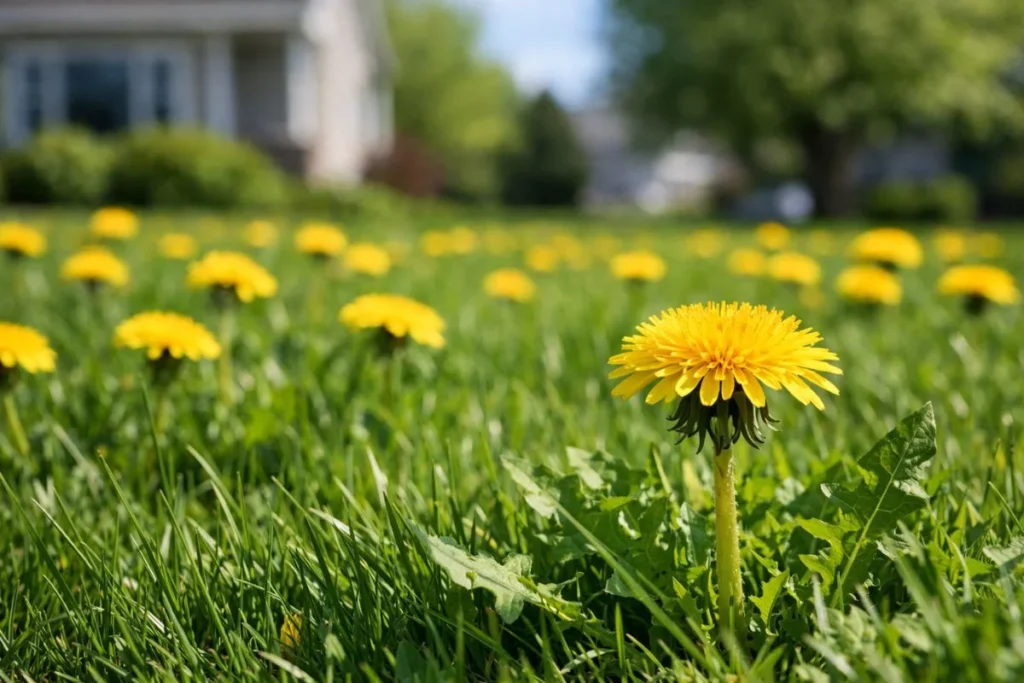
If you have ever walked out in spring and seen bright yellow flowers scattered across your lawn, you know the frustration. One week your yard looks clean. The next week, dandelions are popping up everywhere. You pull them out, but they grow back. You mow them down, but they return. Many homeowners feel stuck in this cycle and wonder why nothing seems to work.
I have worked with many lawns where a few small weeds turned into a full yard problem in one season. The truth is simple. Dandelions are tough because of their deep taproots and strong seed spread. Dandelions are a classic example of a perennial broadleaf weed, and understanding how broadleaf weeds grow and survive makes control much easier. Quick fixes rarely solve the issue. Real dandelion control takes proper timing, full root removal, and strong lawn care habits. Once you understand how the plant behaves, you can control it with confidence.
- What Is a Dandelion?
- Why Dandelions Keep Coming Back
- Dandelion Control Strategy: Choose Your Approach
- Best Time for Dandelion Control
- Seasonal Dandelion Control Calendar (USA)
- Hand Pulling Dandelions
- Using Herbicides for Dandelion Control
- Spray Conditions That Improve Results
- Natural and Low-Chemical Options
- Ideal Mowing Height for Weed Prevention
- Watering and Soil Health
- Signs Your Lawn Is at Risk for Dandelions
- Dandelion Control in Garden Beds
- When to Tolerate Dandelions
- How Long Does Dandelion Control Take?
- Common Mistakes to Avoid
- Quick Dandelion Control Checklist
- Frequently Asked Questions
- Conclusion
What Is a Dandelion?
A dandelion is a broadleaf perennial weed. It has bright yellow flowers and long jagged leaves.
Leaves grow in a circle close to the ground. This shape is called a rosette.
After flowering, the plant forms a white seed head. Wind spreads seeds across lawns and nearby yards.
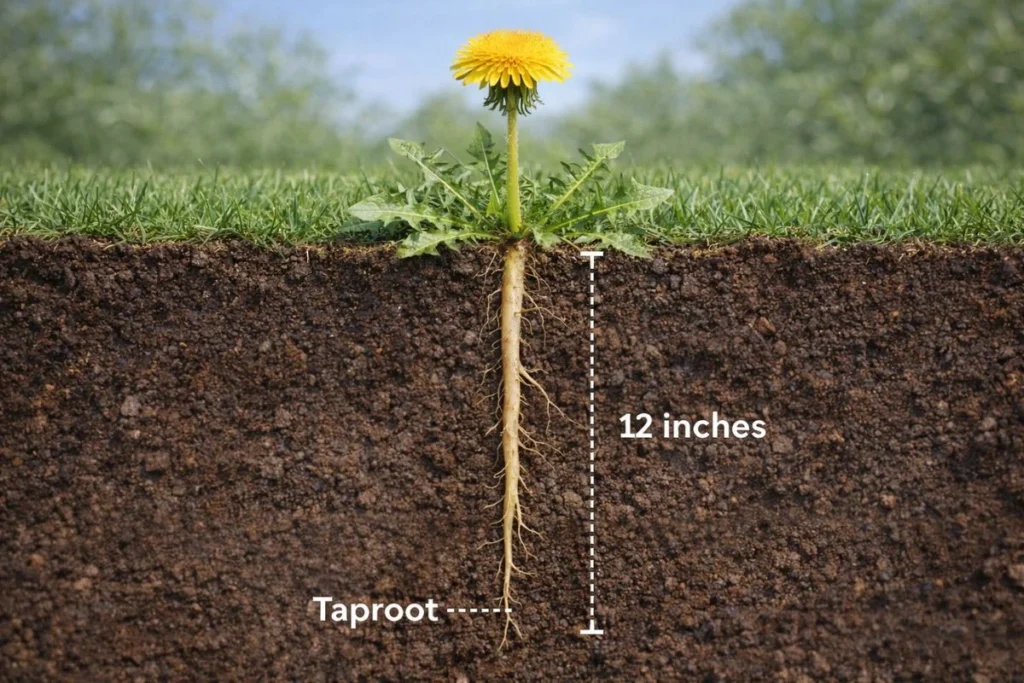
The plant also has a thick taproot. This root grows deep into the soil. That is why dandelion control requires root removal, not just leaf cutting.

Why Dandelions Keep Coming Back
Dandelions return for three main reasons:
- The taproot survives
- New seeds land in thin grass
- Lawn conditions favor weeds
In fall, dandelions move energy from leaves into the root. This makes the root strong. If you remove only the top, the plant can grow again.
A thin lawn makes the problem worse. Bare soil allows seeds to sprout easily.
Dandelion Control Strategy: Choose Your Approach
Your plan depends on your goal.
- Want fast cleanup? Focus on spot treatment.
- Want a perfect lawn? Combine herbicide with lawn thickening.
- Want safer methods? Use hand pulling and prevention first.
Dandelion control works best when removal and prevention are combined.
Best Time for Dandelion Control
Timing improves results.
Fall Is Best
Fall is the strongest season for dandelion control. The plant sends sugars into the root. Herbicide applied at this time travels deep into the taproot.
This increases root kill success.
Spring Works for Young Weeds
Spring control reduces flowers and seed production. It works best on small plants.
Spring may weaken weeds. Fall often finishes them.
Avoid Extreme Weather
Do not spray in strong wind.
Avoid very hot days.
Do not treat before heavy rain.
Seasonal Dandelion Control Calendar (USA)
Early Spring
- Hand pull small weeds
- Spot spray young plants
- Overseed thin areas
Late Spring
- Prevent seed heads
- Maintain mowing height
Quick Seasonal Action Chart
| Month | Recommended Action |
|---|---|
| March–April | Pull young weeds and spot treat early growth |
| May–June | Maintain mowing height and prevent seed spread |
| July–August | Avoid heavy spraying in extreme heat |
| September–October | Apply selective herbicide and fertilize lawn |
Summer
- Avoid spraying during extreme heat
- Water deeply but not daily
- Monitor lawn condition
Fall (Most Effective Season)
- Apply selective herbicide
- Fertilize lawn
- Overseed weak areas
This system supports long-term dandelion control.
Dandelion Control Methods Compared
| Method | Best For | Speed | Root Kill Success | Safety Level |
|---|---|---|---|---|
| Hand Pulling | Small infestations | Immediate | Medium–High (if full root removed) | Very Safe |
| Selective Herbicide | Moderate to heavy weeds | 1–3 Weeks | High (Best in Fall) | Safe when dry |
| Vinegar | Young weeds | Fast leaf burn | Low | Safer but limited |
| Corn Gluten Meal | Prevention | Slow | Does not kill existing weeds | Safe |
Which Dandelion Control Method Should You Use?
- If you see fewer than 10 weeds → Pull by hand.
- If you see 10–50 weeds → Spot spray selective herbicide.
- If weeds cover large areas → Plan fall treatment + overseed.
- If you have pets or kids → Pull weeds and focus on lawn thickening first.
Hand Pulling Dandelions
Best for small lawns or light infestations.
Pull after rain when soil is soft.
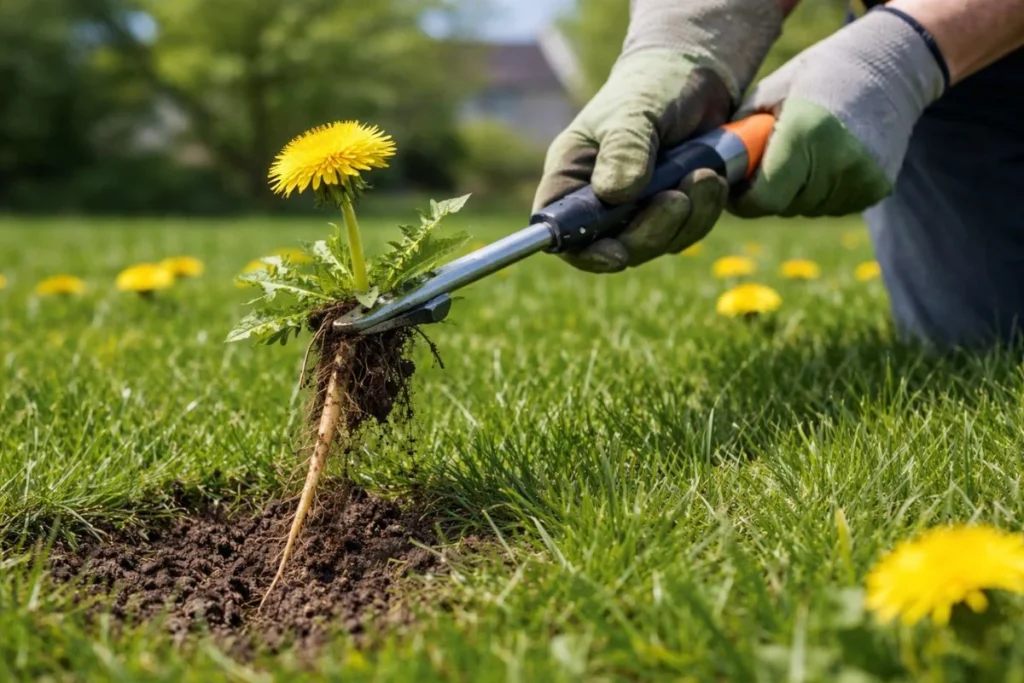
Insert tool deep beside root. Loosen soil. Remove entire taproot.
If root breaks, the weed may return.
This method is safe for children and pets.
Using Herbicides for Dandelion Control
Selective broadleaf herbicides kill dandelions without harming turf when used correctly.
Common active ingredients:
- 2,4-D
- MCPP
- Dicamba
For Homeowners Wanting Fast Results
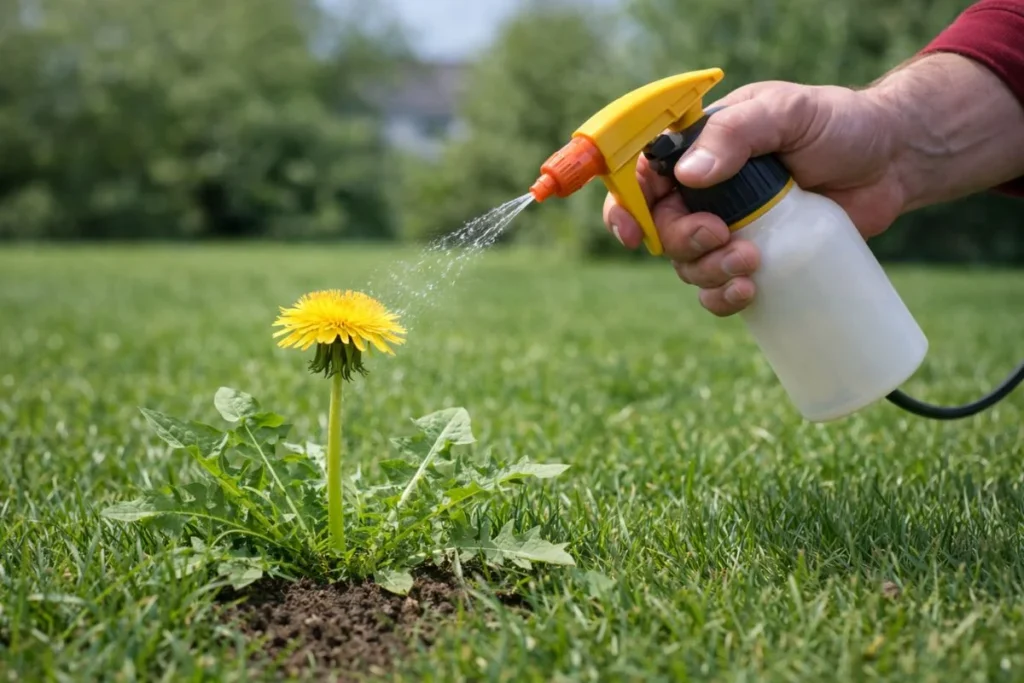
Spot spray visible weeds.
Results may appear in 7–21 days.
For Lawn Enthusiasts
Apply when weeds are actively growing.
Do not mow 2–3 days before or after treatment.
Fall applications improve root absorption.
Safety-Focused Guidance
- Keep pets and children off lawn until dry
- Follow label directions exactly
- Use spot spraying to limit exposure
Spray Conditions That Improve Results
- Temperature between 60°F and 80°F
- Calm air
- No heavy rain expected
- Grass is dry
Correct timing improves dandelion control success.
Natural and Low-Chemical Options
Some homeowners prefer fewer chemicals.
Vinegar
Burns leaves. Often does not kill deep roots. Regrowth is common.
Boiling Water
Works in cracks or hard surfaces. May damage nearby grass.
Corn Gluten Meal
Prevents seed sprouting. Does not kill established weeds.
Natural methods work best for small problems.
Ideal Mowing Height for Weed Prevention
Grass cut too short becomes weak.
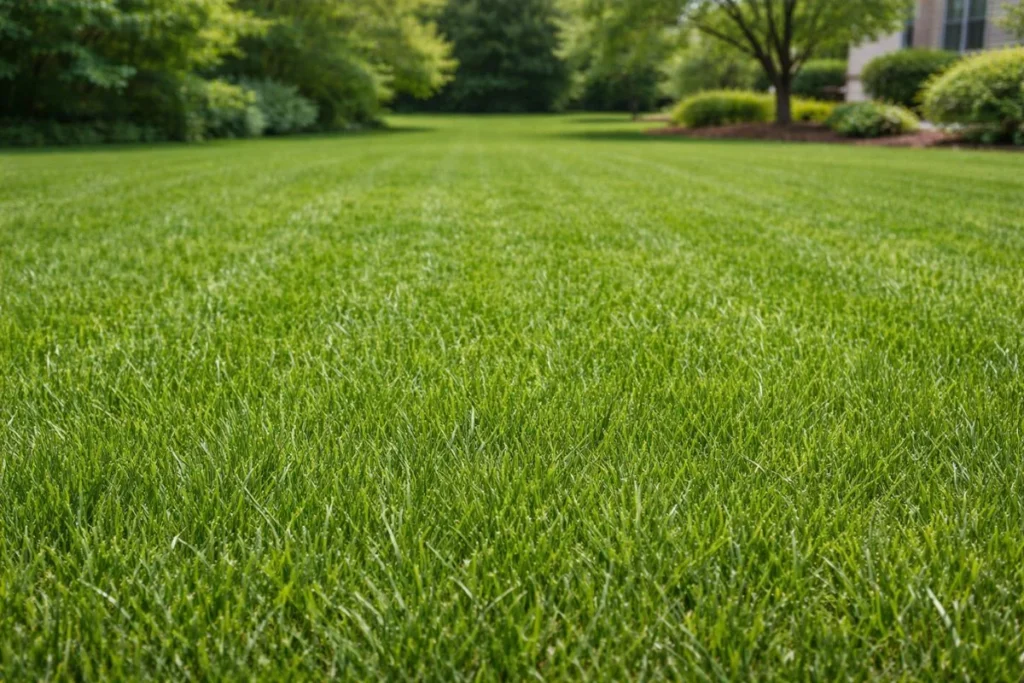
Most cool-season lawns perform best between 2.5 and 4 inches.
Taller grass shades soil. Shaded soil reduces weed seed growth.
Watering and Soil Health
Deep watering builds strong roots.
Shallow daily watering weakens grass.
Healthy soil helps grass compete with weeds.
Soil testing may help if lawn stays thin.
Signs Your Lawn Is at Risk for Dandelions
- Thin or patchy turf
- Compacted soil
- Frequent short mowing
- Bare soil areas
- Poor fertilization schedule
Improving these conditions reduces weed pressure.
Dandelion Control in Garden Beds
Hand pulling works best.
Remove full taproot.
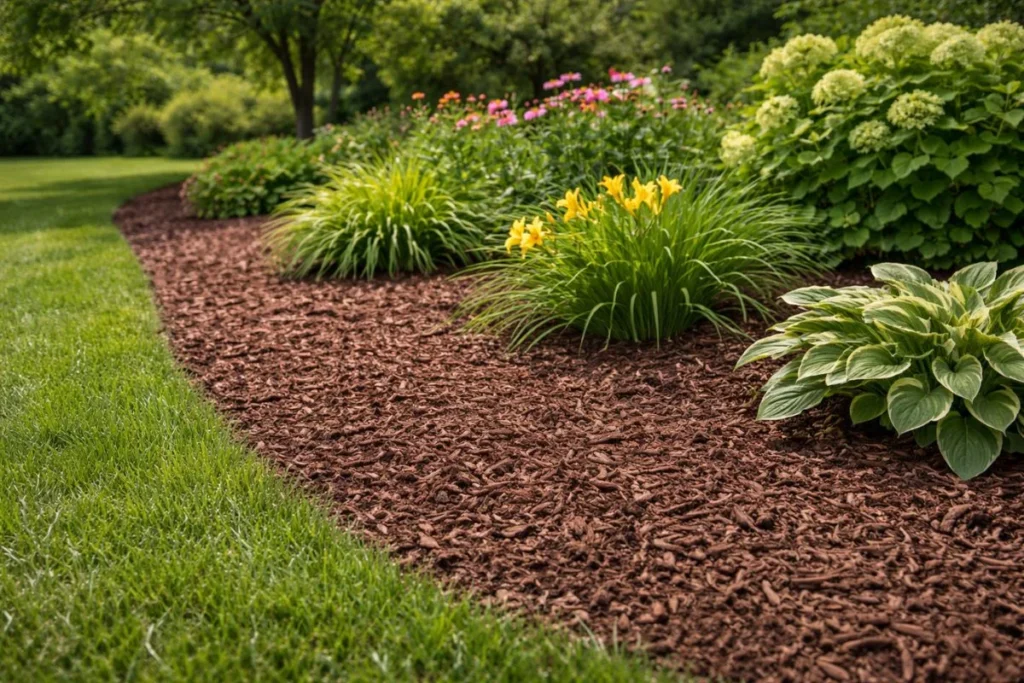
Add 2–3 inches of mulch to block light and reduce new seedlings.
Use herbicide carefully near vegetables or flowers.
When to Tolerate Dandelions
Some homeowners accept a few plants.
Dandelions provide early spring nectar for pollinators.
Dandelion control depends on your lawn standards and goals.
How Long Does Dandelion Control Take?
Hand pulling shows fast visible improvement.
Herbicides may require 1–3 weeks.
Lawn thickening may take one growing season.
Consistent effort improves results.
Common Mistakes to Avoid
- Pulling dry soil
- Mowing too short
- Spraying in wind
- Expecting one treatment to fix everything
- Ignoring lawn health
Dandelion control is a process, not a one-time fix.
Quick Dandelion Control Checklist
✔ Inspect lawn weekly
✔ Pull weeds after rain
✔ Spot spray in fall
✔ Keep grass thick
✔ Overseed bare spots
✔ Maintain proper mowing height
Frequently Asked Questions
Will mowing kill dandelions?
No. The root survives.
Can dandelions return after spraying?
Yes. New seeds may land. Some roots may survive.
How deep is a dandelion root?
Taproots can grow deep into soil.
Are lawn herbicides safe for pets?
Many are safe after drying. Always follow label directions.
Conclusion
From years of observing lawn care results, one thing is clear: dandelion control works best when removal and prevention go together. Killing visible weeds is only half the job. Strong, thick grass is what keeps them from coming back. I have seen lawns improve greatly when homeowners focused on fall treatment timing, proper mowing height, and overseeding thin areas. When you stay consistent and follow a seasonal plan, dandelions become easier to manage each year. With the right approach and steady care, you can build a lawn where weeds struggle to survive.