 Skip to content
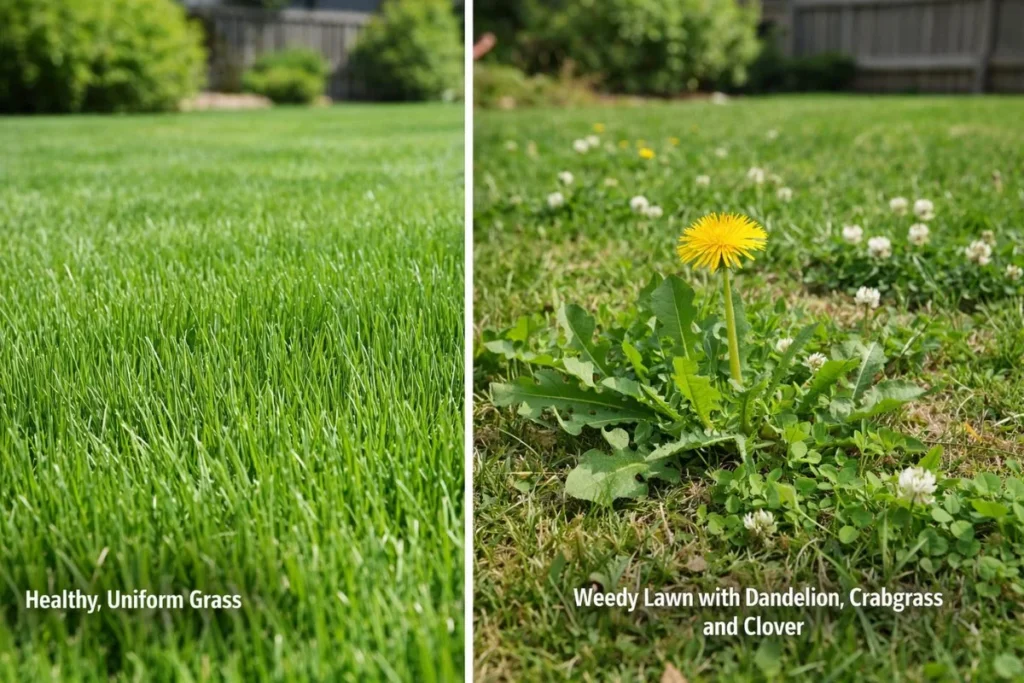
If you have ever looked at your lawn and noticed a strange plant growing in the middle of your grass, you probably felt unsure. Is it just grass growing differently, or is it a weed spreading? Many homeowners face this moment. Some pull the plant out right away. Others spray a product without being certain. In many cases, the wrong decision causes more damage than the plant itself.
After years of studying lawn care patterns and seeing common mistakes, one thing becomes clear. Most lawn problems start with misidentification. The difference between weeds and grass may look small at first glance, but it makes a big impact on how you treat your lawn. Once you understand that difference, lawn care becomes less stressful and much more manageable.
Quick Takeaway: Difference Between Weeds and Grass
- Grass is planted on purpose to create even turf.
- A weed is any plant growing where it is not wanted.
- Broadleaf weeds have wide leaves and branching veins.
- Grassy weeds look like grass but grow in clumps or patches.
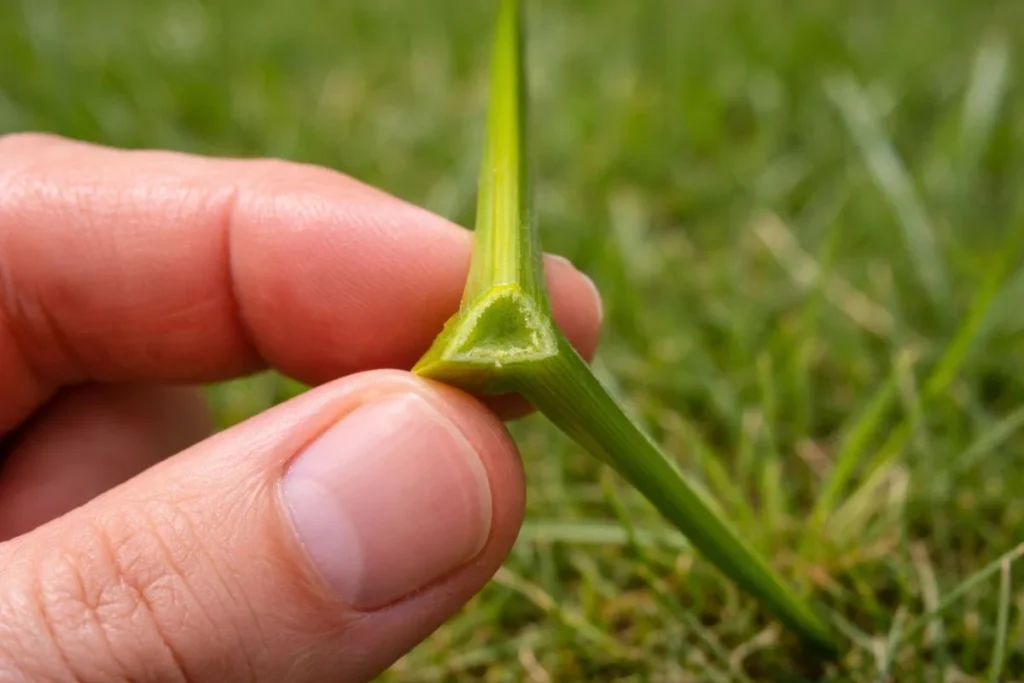
- Sedges often have triangular stems.
What Is Grass?
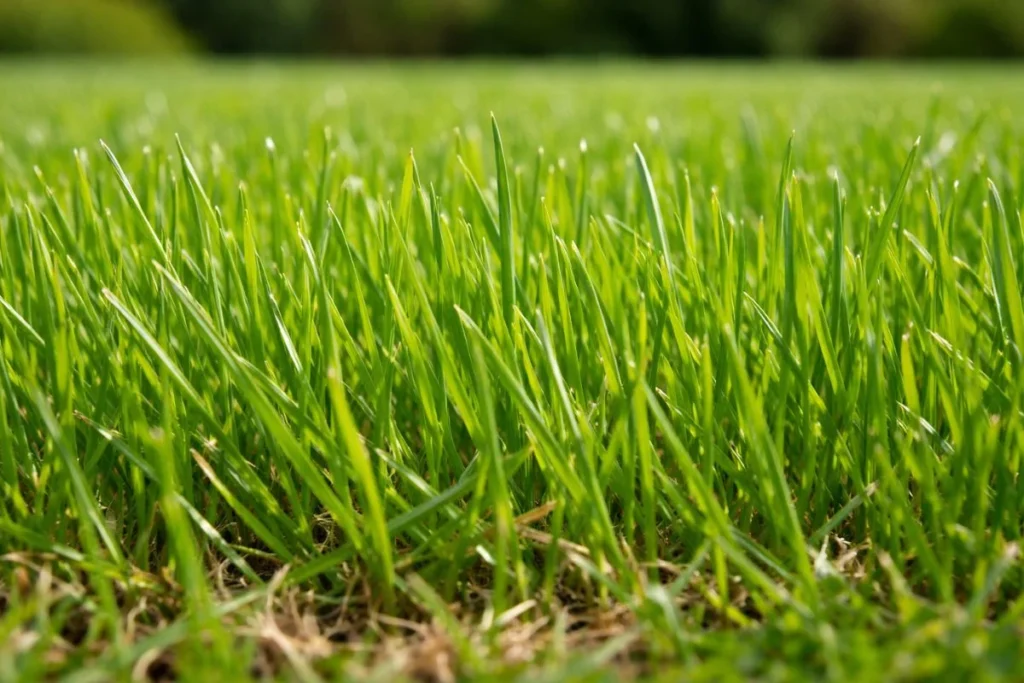
Grass is a plant from the Poaceae family. Lawn grass is planted on purpose to create even, green turf.
Common lawn grasses in the United States include:
- Kentucky bluegrass
- Tall fescue
- Bermuda grass
- Zoysia grass
Lawn grass usually has:
- Narrow blades
- Parallel veins
- Fibrous roots
- Even, spreading growth
Grass is grown for coverage, appearance, and soil protection.
What Is a Weed?
A weed is simply a plant growing where it is not wanted.
That means the same plant can be useful in one place and unwanted in another.
Common lawn weeds in the United States include:
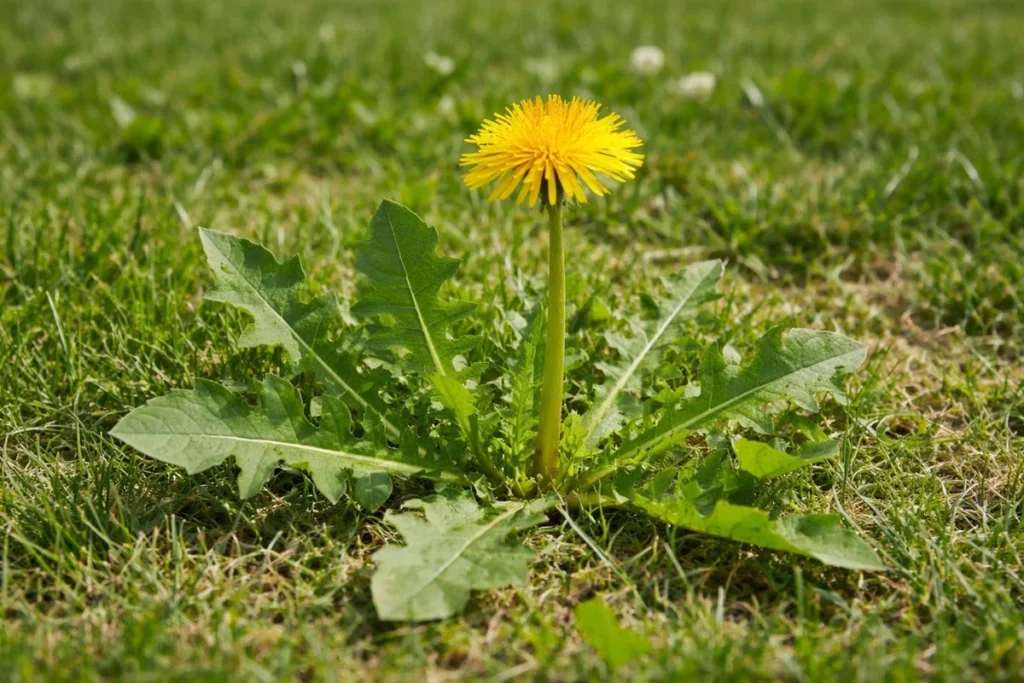
- Dandelion
- Crabgrass
- White clover
- Yellow nutsedge
Weeds compete with grass for sunlight, water, and nutrients.
If your lawn is thin or stressed, weeds often move in fast.
Can Grass Be a Weed?
Yes.
This surprises many homeowners.
For example:
- Bermuda grass grows well in southern lawns.
- But if it spreads into a cool-season lawn, it may be treated as a weed.
The plant did not change. The location changed.
This is one of the most important ideas when learning the difference between weeds and grass.
Monocot vs Dicot: The Basic Plant Science Difference
If you want deeper identification skills, here is one simple science fact.
Most lawn grasses are monocots. Most broadleaf weeds are dicots.
Monocots usually have:
- One seed leaf
- Narrow blades
- Parallel veins
- Fibrous roots
Dicots usually have:
- Two seed leaves
- Wider leaves
- Branching veins
- Often a taproot
This small plant difference explains why grass and broadleaf weeds look different.
You do not need to memorize plant science. Just remember: narrow parallel leaves usually mean grass.
Key Differences Between Weeds and Grass
Here is a simple comparison you can use in your yard.
| Feature | Lawn Grass | Broadleaf Weed | Grassy Weed | Sedge |
|---|---|---|---|---|
| Leaf shape | Narrow | Wide | Narrow | Narrow |
| Leaf veins | Parallel | Net-like | Parallel | Parallel |
| Stem | Round | Varies | Round | Triangular |
| Roots | Fibrous | Often taproot | Fibrous | Fibrous |
| Growth pattern | Even turf | Random spots | Clumps | Upright clusters |
Use this table as a quick lawn check guide.
Types of Weeds Found in Lawns
Understanding weed types builds confidence.
Broadleaf Weeds
These have wide leaves and branching veins.
Examples:
- Dandelion
- White clover
They are easier to spot because they do not look like turf.
If you want a deeper explanation of identification, life cycle stages, and control timing, read our complete guide on what is a broadleaf weed.
Grassy Weeds
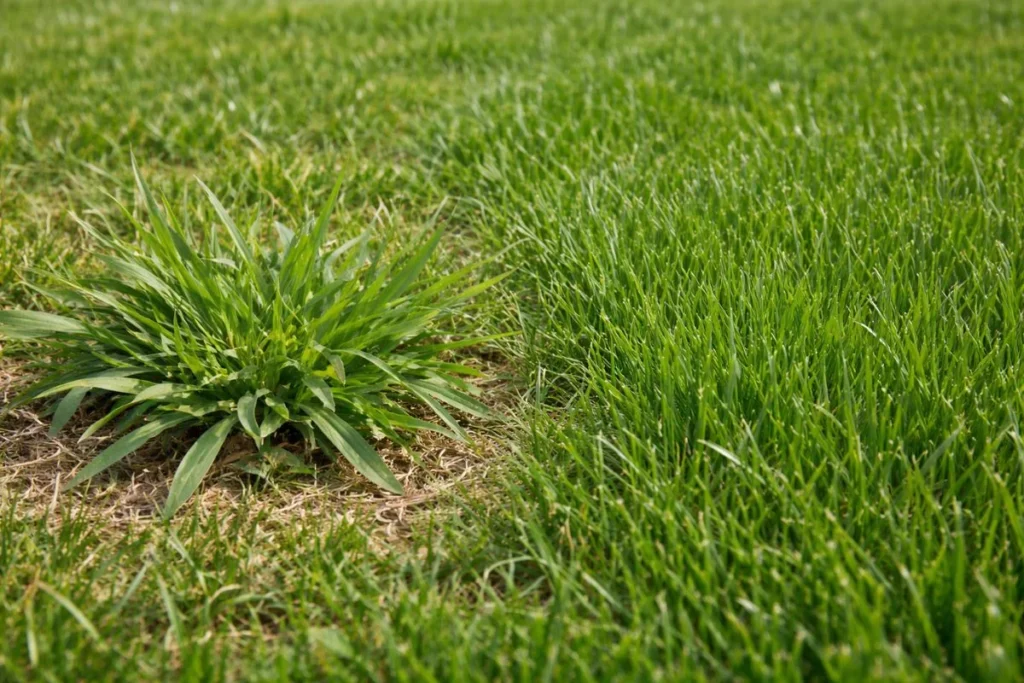
These look very similar to lawn grass.
Examples:
- Crabgrass
- Annual bluegrass
Many grassy weeds grow faster than turfgrass and may appear lighter in color.
These are the ones that confuse most homeowners.
Sedges
Sedges are often mistaken for grass.
Example:
- Yellow nutsedge
Sedges usually have triangular stems. Roll the stem between your fingers. If it feels like it has edges, it may be a sedge.
Flower and Seed Head Differences
Flowers and seed heads give strong clues.
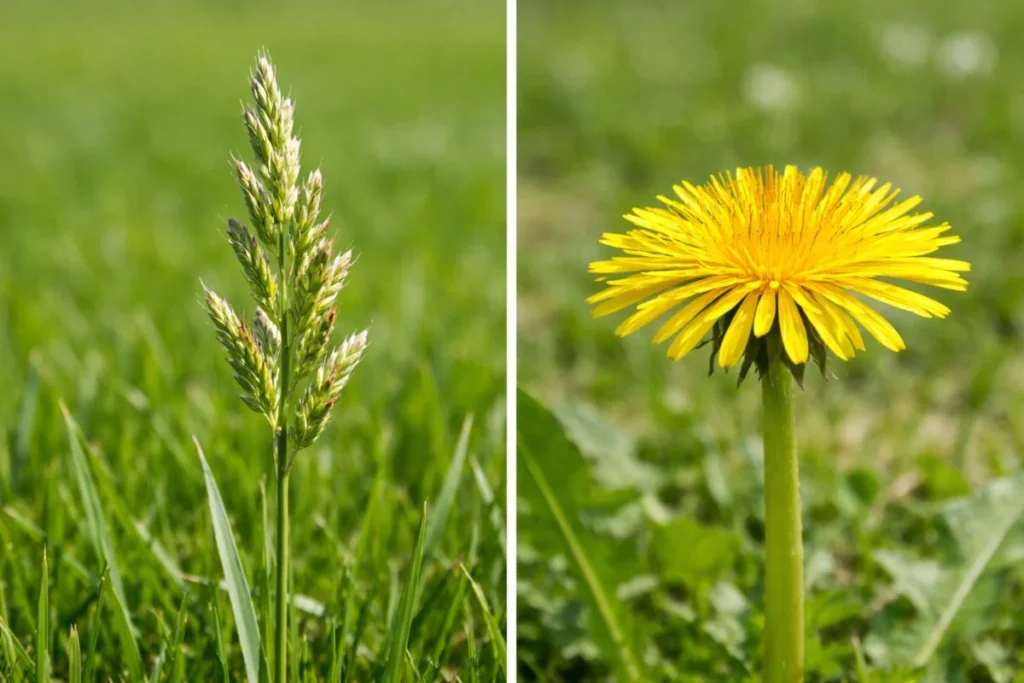
Lawn grass produces seed heads that look like small spikes or clusters. These are often cut off by mowing.
Broadleaf weeds usually produce noticeable flowers.
For example:
- Dandelions produce bright yellow flowers.
- Clover produces small white or pink flowers.
If you see flowers above your lawn, that plant is likely a weed.
Seasonal Growth Differences Between Weeds and Grass
Season matters.
Cool-season grass grows best in spring and fall.
When summer heat slows turf growth, weeds often take advantage.
For example:
- Crabgrass appears in late spring and grows through summer.
- Some broadleaf weeds grow quickly during cool, wet periods.
If a plant appears suddenly when your lawn looks weak, it may be a weed.
Watching timing helps prevent mistakes.
Seasonal Growth Guide for U.S. Lawns
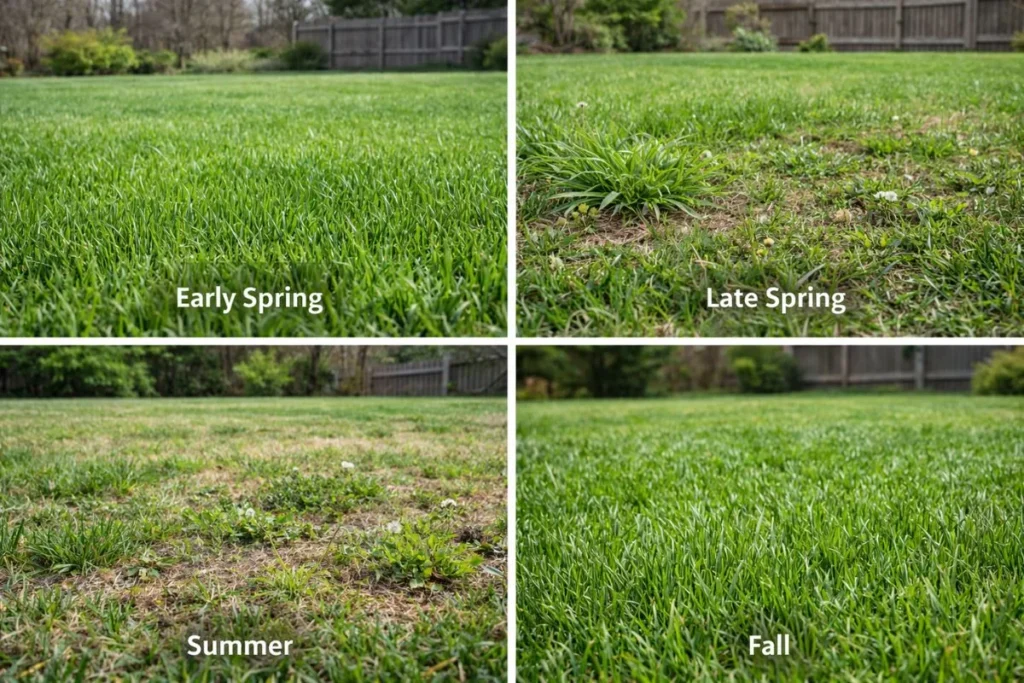
| Season | What Grass Does | What Weeds Often Do |
|---|---|---|
| Early Spring | Begins active growth | Broadleaf weeds appear |
| Late Spring | Thickens and spreads | Crabgrass begins germinating |
| Summer | May slow during heat stress | Grassy weeds spread aggressively |
| Fall | Recovers and thickens | Cool-season weeds return |
Why Weeds Often Grow Faster Than Grass
Many weeds are built for survival.
Weeds are built for survival.
They grow quickly and produce large numbers of seeds.
Disturbed or bare soil allows them to spread even faster.
Grass is grown for uniform coverage. It is not built to spread aggressively in all conditions.
This is why thin lawns invite weeds.
Keeping grass thick is one of the best prevention steps.
How to Tell if It Is Grass or a Weed
If you are unsure, use this simple checklist:
- Does it grow in clumps?
- Is the leaf wider than your turf?
- Is it lighter or darker in color?
- Does it grow faster between mowings?
- Is the stem triangular?
Watch the plant for two mowing cycles before spraying anything.
Correct identification saves money and protects your lawn.
5-Step Lawn Identification Checklist
- Compare the leaf width to the surrounding turf.
- Check the leaf veins: parallel or branching?
- Observe the growth pattern: even coverage or clumps?
- Look for flowers or unusual seed heads.
- Watch the growth speed over two mowing cycles.
Why the Difference Between Weeds and Grass Matters
Using the wrong product can harm your lawn.
Broadleaf weeds require different control methods than grassy weeds.
Grassy weeds are often harder to remove without damaging turf.
Sedges need specific treatment.
Identification always comes first.
When Grass Turns Into a Problem
Sometimes lawn grass spreads where it is not wanted.
For example:
- Tall fescue may invade warm-season lawns.
- Bermuda grass can spread aggressively in cool-season turf.
In these situations, grass behaves like a weed.
When to Ask for Professional Identification
If you still feel unsure, contact your local county extension office.
Many extension services offer free plant identification help.
Getting the correct answer before treatment prevents damage.
Common Beginner Mistakes
- Spraying before correctly identifying the plant.
- Treating sedges like broadleaf weeds.
- Ignoring thin or bare lawn areas.
- Pulling plants without checking root type.
Final Thoughts
From experience, proper plant identification is the foundation of healthy lawn care. Many homeowners struggle because they react before they fully understand what is growing in their yard. When you learn to tell the difference between weeds and grass by checking leaf shape, growth pattern, season, and stem type, you stop guessing and start making confident decisions. A strong, thick lawn naturally resists many weeds, but knowledge is what protects it long term. When you understand what you are looking at, you protect your lawn, your time, and your investment.