 Skip to content
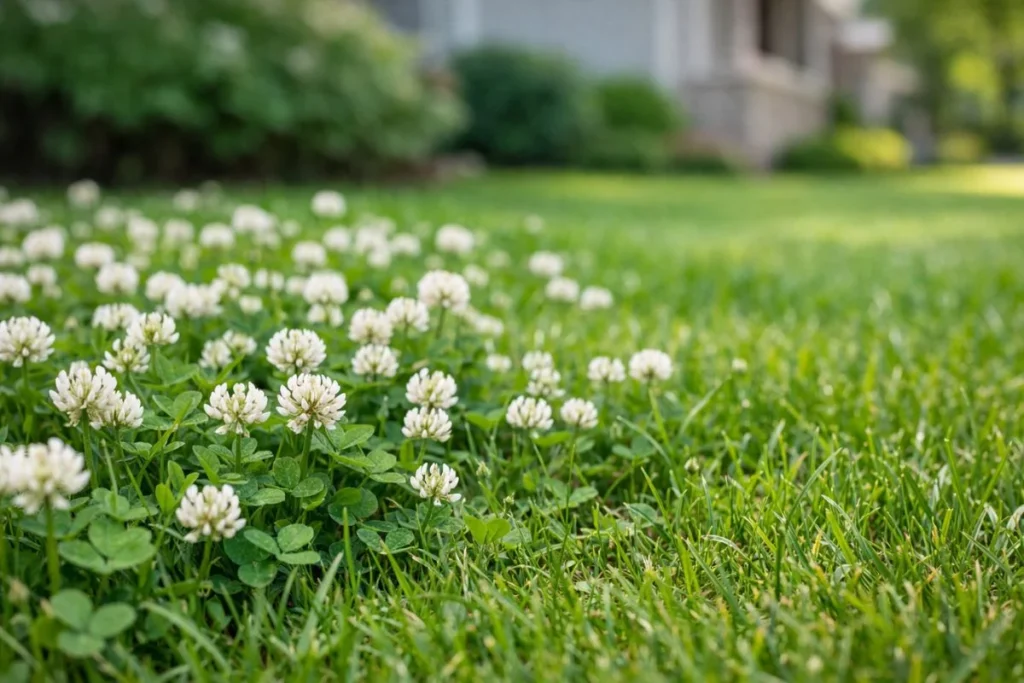
If you have stepped outside and noticed white flowers spreading across your lawn, you know how frustrating it feels. One week your grass looks fine. The next week, clover is creeping into every thin spot. You mow it down, but it keeps coming back. You may have tried fertilizer or sprayed once, yet nothing fully solves the problem. Many homeowners focus on removing the plant without understanding why it appeared in the first place.
Clover is classified as a broadleaf weed, which means it behaves differently than grassy weeds and needs a different control strategy. If you are unsure what defines a broadleaf weed, read our complete guide on what is a broadleaf weed to understand proper identification first. In most lawns, clover shows up when grass is weak, soil lacks nitrogen, or mowing habits are too aggressive. The real solution is not just killing clover, but correcting the conditions that allowed it to spread.
- What Is Clover?
- Why Clover Grows in Lawns
- How to Identify Clover
- How to Get Rid of Clover Naturally
- Remove Clover Flowers Before Treatment
- How to Kill Clover With Herbicide
- Safe Clover Control for Families and Pets
- What to Do If Clover Covers Half Your Lawn
- How to Repair Bare Spots After Removing Clover
- Step-by-Step Seasonal Clover Control Plan
- How to Prevent Clover From Coming Back
- Why Clover May Return After Treatment
- Is Clover Always a Problem?
- How to Tell Clover From Similar Weeds
- Clover Control Methods Comparison
- Frequently Asked Questions
- Final Thoughts
Quick Clover Removal Plan
- Small patch: Pull by hand and reseed the area.
- Medium patch: Spot spray with selective herbicide and fertilize.
- Heavy infestation: Two herbicide treatments spaced 2–3 weeks apart, then overseed.
- Long-term prevention: Improve soil health and mow at proper height.
What Is Clover?
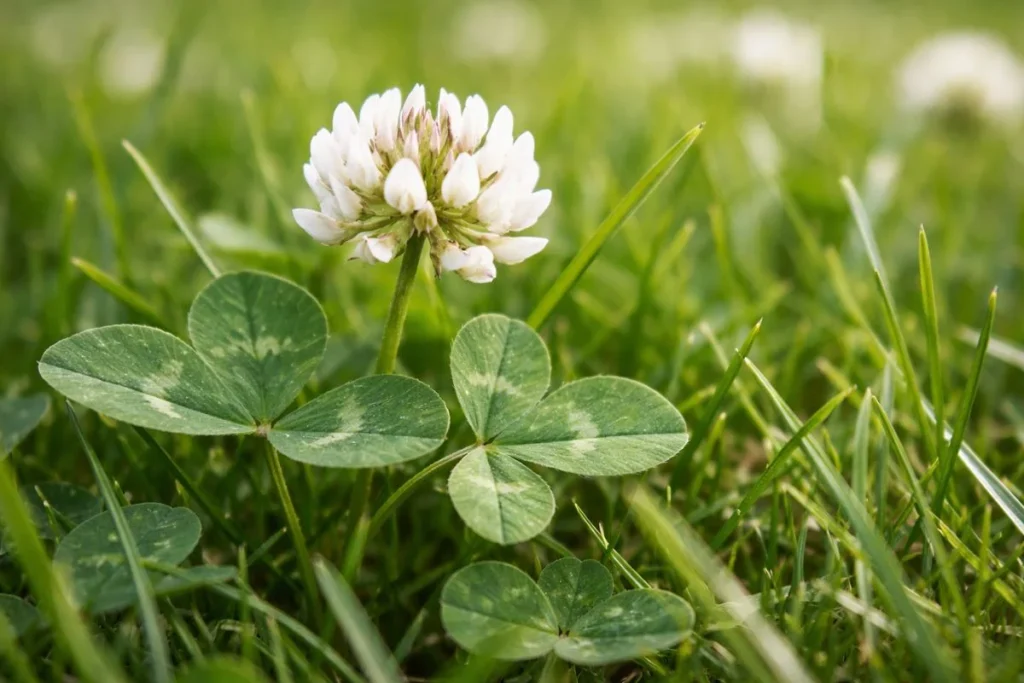
Clover is a broadleaf weed. It has three rounded leaflets. The most common lawn type is white clover.
It spreads through creeping stems and seeds. It grows low to the ground and blends into turf.
Clover makes its own nitrogen through bacteria in its roots. Grass cannot do this. That is why clover survives in poor soil.
Why Clover Grows in Lawns
Clover appears when grass is weak.
Common causes include:
- Low nitrogen in soil
- Thin or bare areas
- Soil compaction
- Cutting grass too short
- Poor watering habits
When grass lacks nutrients, clover fills the gap.
Fixing the lawn often reduces clover naturally.
How to Identify Clover
Before treatment, confirm it is clover.
White clover has:
- Three round leaves
- A pale crescent mark
- White or light pink round flowers
- Low spreading growth
Correct identification improves treatment results.
How to Get Rid of Clover Naturally
These methods work best for small patches or eco-friendly lawns.
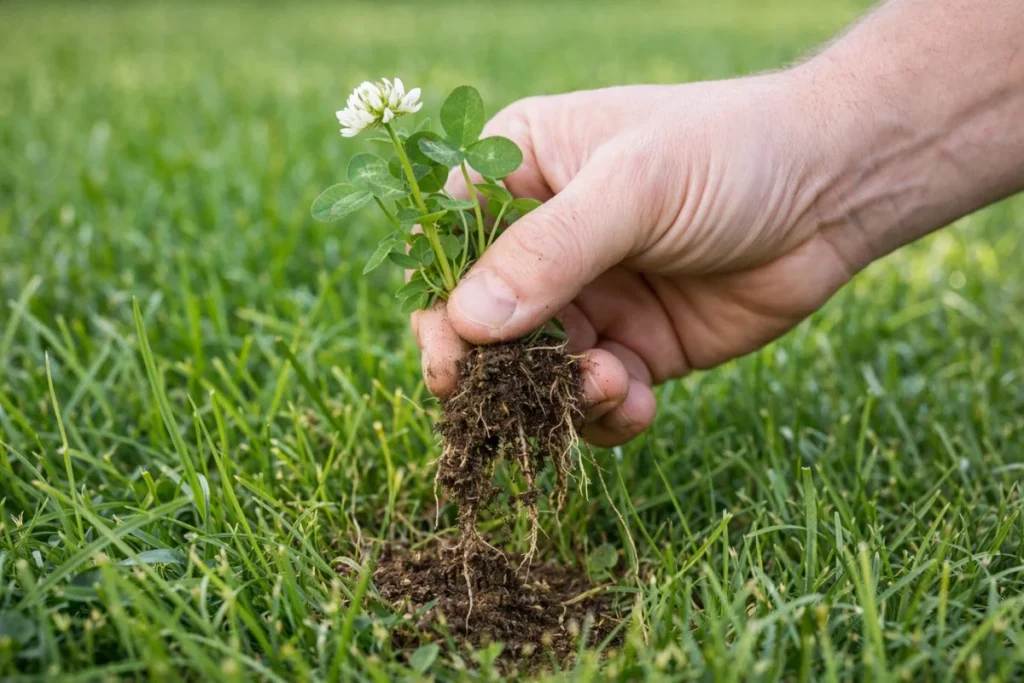
1. Pull It Out by Hand
Best for light growth.
- Water soil first
- Pull slowly to remove roots
- Fill the area with grass seed
Pulling works well after rain when soil is soft.
2. Adjust Your Mowing Height
Keep grass taller.
- Cool-season lawns: 3 to 4 inches
- Taller grass blocks sunlight
- Dense turf crowds out weeds
Short mowing weakens grass and helps clover spread.
3. Apply Corn Gluten Meal
Corn gluten acts as a pre-emergent.
- Apply in early spring
- Water lightly
It helps prevent seed germination. It does not kill mature plants. Results vary and work best as prevention.
4. Use a Vinegar Spot Spray
Vinegar burns leaf tissue.
- Mix white vinegar with a few drops of dish soap
- Spray directly on clover
- Avoid contact with grass
Vinegar usually kills top growth only. Roots may survive. Repeat treatment may be needed.
5. Improve Soil Health Naturally
Healthy soil supports strong grass.
- Apply compost
- Feed with organic fertilizer
- Aerate compacted soil
Improved soil reduces clover over time.
Remove Clover Flowers Before Treatment
Before using herbicide, remove flowers.
- Mow to cut off blooms
- Trim flower heads in small areas
- Wait 24 hours before spraying
This reduces reseeding and protects pollinators.
How to Kill Clover With Herbicide
For large infestations, selective herbicides are effective.
Look for products containing:
- 2,4-D
- Dicamba
- MCPP
- Fluroxypyr
Many lawn products combine two or three ingredients for better control.
Always match the product to your grass type.
Best Time to Apply Herbicide
Early fall gives the strongest results.
In fall:
- Clover moves nutrients into roots
- Herbicide reaches deeper into the plant
- Cooler weather reduces stress on grass
Late spring works on young plants. Avoid spraying during high heat.
Heavy infestations may require two applications spaced two to three weeks apart.
Safe Clover Control for Families and Pets
Safety matters.
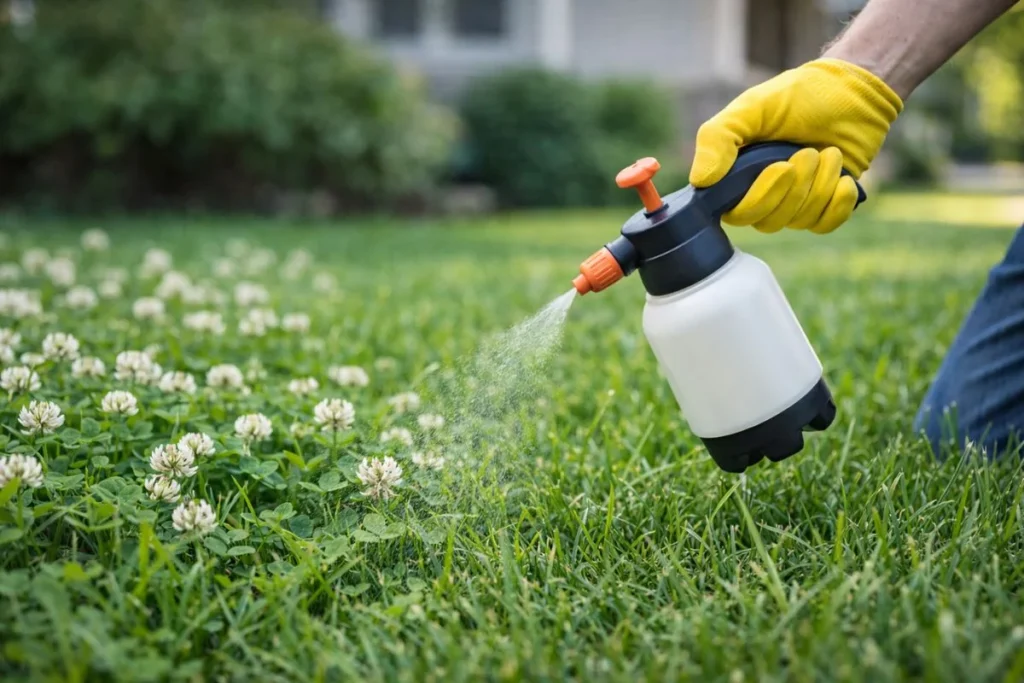
- Remove flowers before spraying
- Spray in calm weather
- Avoid windy days
- Keep pets and children off treated grass until fully dry
- Always follow label instructions
Most lawn herbicides are safe once dry, but read the label carefully.
What to Do If Clover Covers Half Your Lawn
If clover dominates your yard, use a recovery plan.
- Mow high and remove flowers.
- Apply selective herbicide.
- Wait two to three weeks.
- Apply second treatment if needed.
- Rake out dead material.
- Overseed bare areas.
- Fertilize to support new grass growth.
Large infestations need patience and follow-up care.
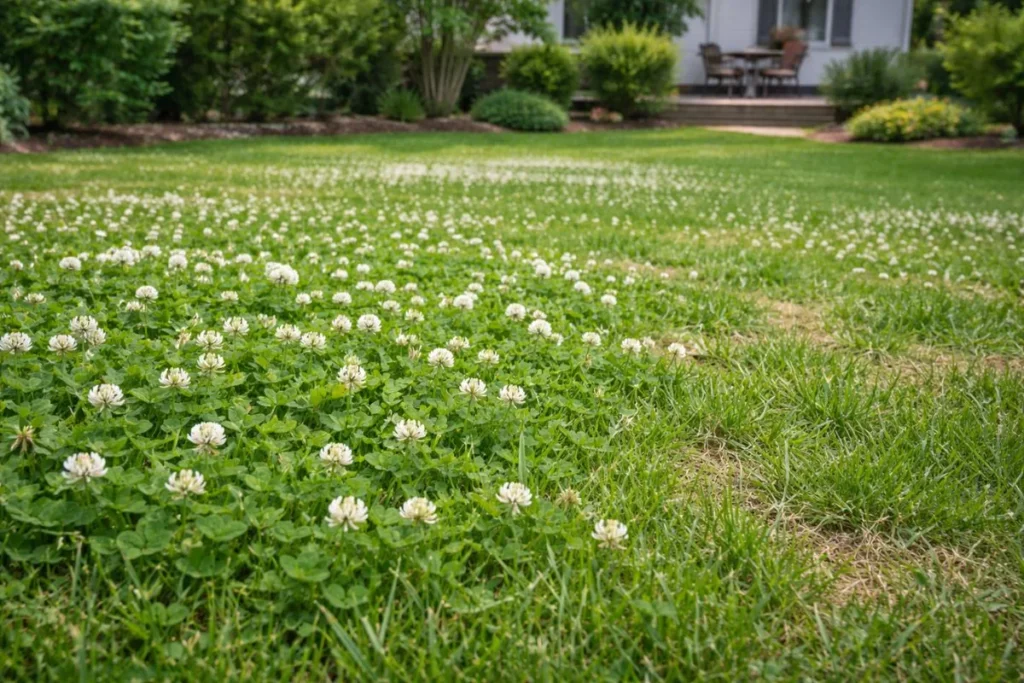
How to Repair Bare Spots After Removing Clover
Bare soil invites new weeds.
After removal:
- Loosen soil with a rake.
- Add fresh topsoil if needed.
- Spread grass seed evenly.
- Press seed into soil.
- Water lightly each day.
Keep soil moist for two to three weeks until seedlings grow.
Thick grass prevents clover from returning.
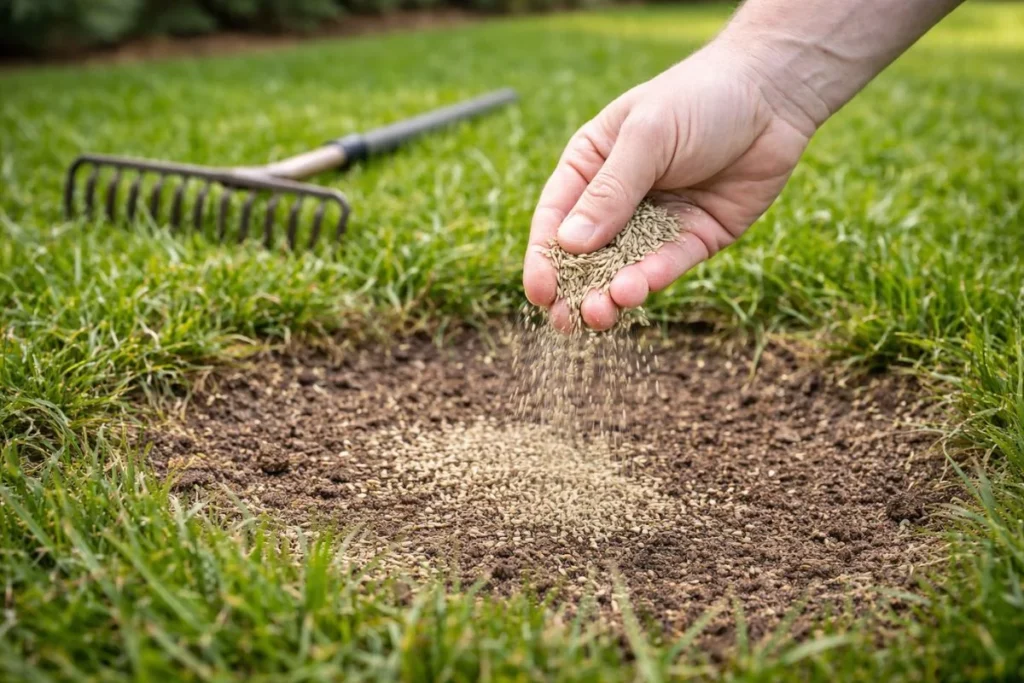
Step-by-Step Seasonal Clover Control Plan
Early Spring
- Test soil if possible
- Apply fertilizer if nitrogen is low
- Spot treat young plants
Late Spring
- Pull small patches
- Overseed thin areas
- Maintain proper mowing height
Summer
- Water deeply but less often
- Avoid cutting grass too short
Fall
- Apply herbicide for deep control
- Overseed damaged spots
- Fertilize to strengthen turf
This yearly plan builds long-term lawn health.
| Season | What To Do | Goal |
|---|---|---|
| Early Spring | Fertilize and spot treat young plants | Stop early growth |
| Late Spring | Pull small patches and mow high | Strengthen turf |
| Summer | Deep watering and avoid stress | Maintain lawn health |
| Fall | Apply herbicide and overseed | Deep root control |
How to Prevent Clover From Coming Back
Prevention focuses on grass strength.
- Fertilize based on soil needs
- Aerate compacted soil
- Overseed thin areas
- Mow at correct height
- Water deeply, not daily
Healthy lawns leave little room for weeds.
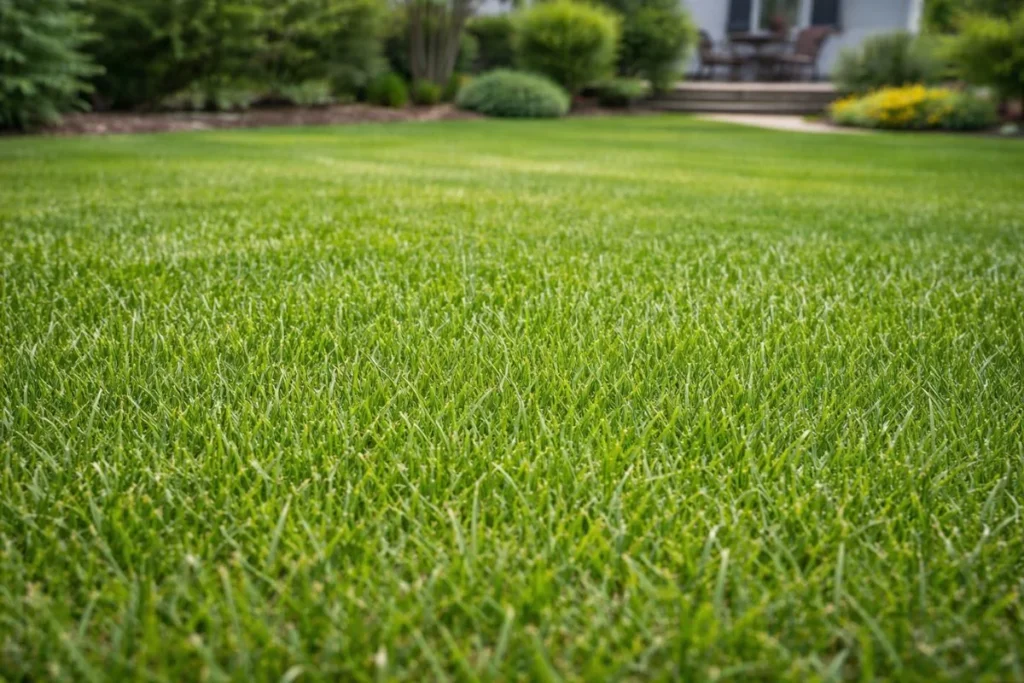
Why Clover May Return After Treatment
Clover may regrow if:
- Roots survive treatment
- Soil remains low in nitrogen
- Bare spots are not reseeded
- Lawn is cut too short
Correcting these issues stops repeat problems.
Common Clover Control Mistakes
- Spraying during extreme summer heat
- Cutting grass too short
- Not reseeding bare spots after removal
- Only killing top growth without repeat treatment
- Skipping fertilizer after weed control
Is Clover Always a Problem?
Clover is not always harmful.
Benefits include:
- Stays green during dry periods
- Supports pollinators
- Adds nitrogen naturally
Some homeowners prefer mixed lawns. Others prefer pure grass. Your lawn goals determine whether clover must be removed.
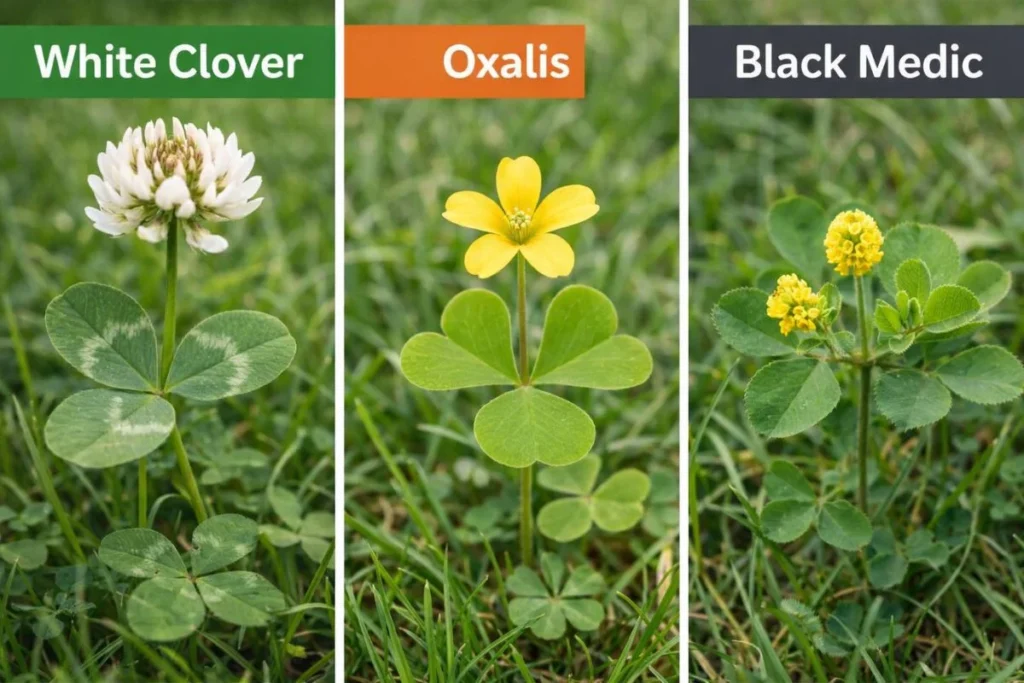
How to Tell Clover From Similar Weeds
White clover:
- Round leaves
- White or pink flowers
Oxalis:
- Heart-shaped leaves
- Yellow flowers
Black medic:
- Smaller leaves
- Small yellow blooms
Correct identification improves results.
| Weed | Leaf Shape | Flower Color | Growth Habit |
|---|---|---|---|
| White Clover | Rounded leaflets | White or pink | Low spreading |
| Oxalis | Heart-shaped | Yellow | Low spreading |
| Black Medic | Small oval | Yellow | Compact growth |
Clover Control Methods Comparison
| Method | Cost | Speed | Best For |
|---|---|---|---|
| Hand pulling | Low | Slow | Small patches |
| Vinegar spray | Low | Moderate | Spot treatment |
| Corn gluten | Medium | Preventive | Early season |
| Herbicide | Medium | Fast | Large infestations |
| Lawn fertilization | Low | Gradual | Long-term prevention |
Choose based on infestation size and comfort level.
Frequently Asked Questions
Does fertilizing alone remove clover?
Sometimes. If low nitrogen caused the problem, proper feeding may reduce clover gradually.
Will clover grow back after spraying?
Yes, if roots survive or lawn conditions stay weak.
Can you mix clover with grass on purpose?
Yes. Mixed lawns reduce fertilizer needs but change appearance.
When to Call a Lawn Care Professional
- Clover covers most of the yard
- Soil test shows severe imbalance
- Multiple weed types are spreading
- Repeated treatments fail
If basic lawn improvements and proper treatment do not work, professional help may save time and prevent further damage.
Final Thoughts
After years of observing lawn problems, one thing is clear: clover is a signal, not just a weed. When homeowners focus only on spraying, it often returns. When they improve soil health, mow at the right height, and repair thin areas, clover slowly loses ground. Whether you choose natural methods or selective herbicide, success depends on consistency and timing. Fix the root cause, strengthen your turf, and your lawn will begin to control the problem on its own.