 Skip to content
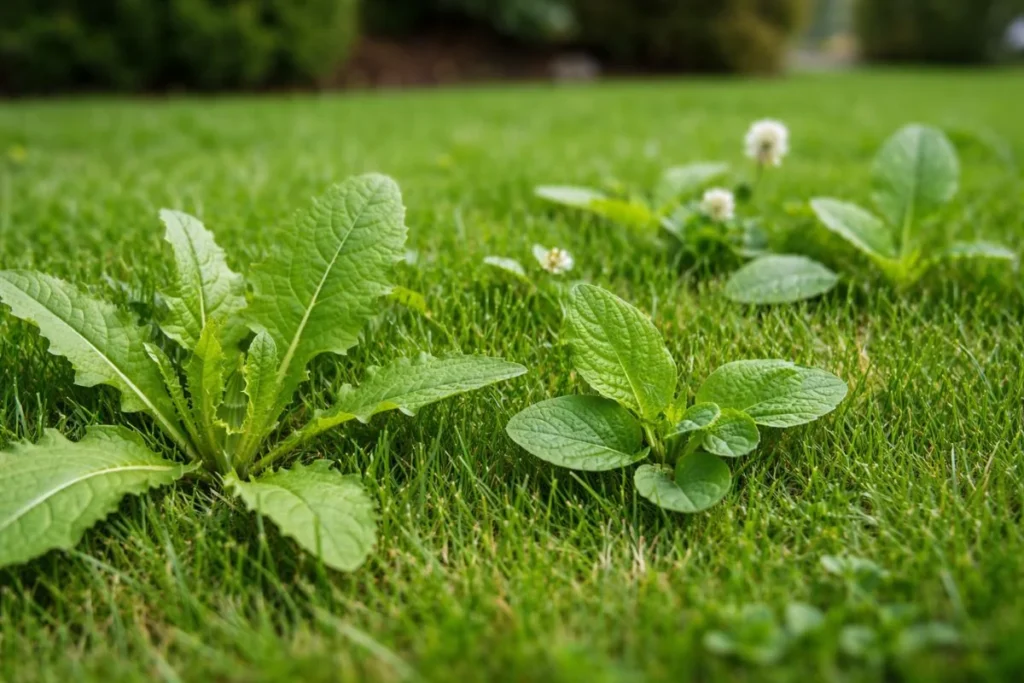
If you have ever walked across your lawn and noticed wide-leaf plants growing in your grass, you probably felt unsure about what they were. Many homeowners see these plants and wonder if they are harmful, if they will spread, or if they should remove them right away. Some try pulling them. Others spray random products. In many cases, the problem gets worse because the plant was not properly identified first.
After working with different lawns and studying common weed problems, I have seen that most mistakes happen at the beginning. People treat weeds without knowing what type they are dealing with. A broadleaf weed is a non-grass plant with wide leaves and net-like veins that grows in unwanted areas. Once you understand what is a broadleaf weed and how it behaves, controlling it becomes much easier and more effective.
- How to Tell If You Have a Broadleaf Weed
- Broadleaf Weed vs Grassy Weed
- Life Cycle of a Broadleaf Weed
- Why Broadleaf Weeds Grow in Lawns
- Where Do Broadleaf Weeds Grow?
- Common Broadleaf Weeds in US Lawns
- Why Root Type Matters
- How to Get Rid of Broadleaf Weeds
- Best Time to Control Broadleaf Weeds in the USA
- Natural vs Chemical Control
- Toxic Broadleaf Weeds to Watch For
- FAQ About Broadleaf Weeds
- conclusion
Quick Takeaway
- A broadleaf weed has wide leaves and net-like veins.
- It is different from grass and needs a different control method.
- Some broadleaf weeds live one year. Others return every season.
- Fall is often the best time to treat perennial weeds.
- Thick, healthy grass prevents most weed problems.
How to Tell If You Have a Broadleaf Weed
If you are unsure what plant is growing in your yard, use this quick checklist.
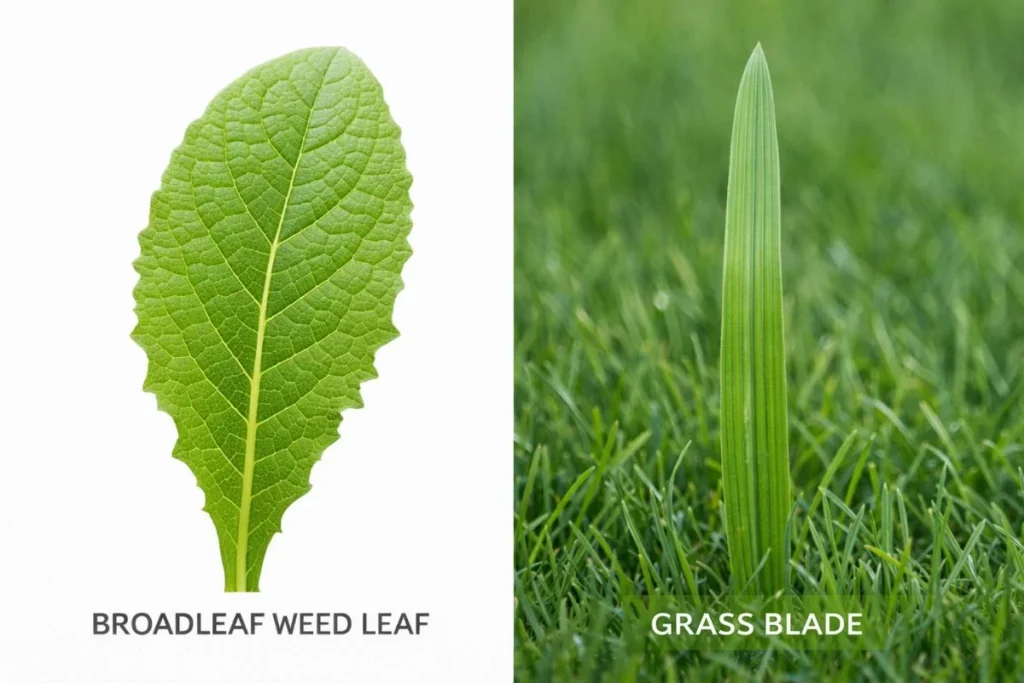
Step 1: Look at the leaf shape.
Broadleaf weeds have wide, flat leaves.
Step 2: Check the veins.
The veins form a net pattern. Grass has parallel veins.
Step 3: Look at the stem.
Many broadleaf weeds branch outward instead of growing upright like grass.
Step 4: Check for flowers.
Many produce visible flowers, unlike turfgrass.
Step 5: Examine the root.
Some grow from deep taproots.
Correct identification helps you choose the right control method.
Quick Identification Guide
| Feature | Broadleaf Weed |
|---|---|
| Leaf Shape | Wide and flat |
| Vein Pattern | Net-like veins |
| Flowers | Often visible |
| Root Type | Often deep taproot |
Grassy weeds may look similar to turf at first glance but behave very differently from broadleaf weeds. If you are unsure whether you are dealing with crabgrass or quackgrass, see our detailed guide on quackgrass vs crabgrass before choosing a control method.
Broadleaf Weed vs Grassy Weed
Many homeowners confuse these two types.
| Feature | Broadleaf Weed | Grassy Weed |
|---|---|---|
| Leaf shape | Wide and flat | Thin and blade-like |
| Leaf veins | Net pattern | Parallel lines |
| Growth habit | Often branching | Upright blades |
| Roots | Often taproot | Fibrous roots |
This difference matters because lawn herbicides are often made to kill broadleaf weeds without harming grass.
If you are unsure whether the plant in your lawn is grass or a weed, see our detailed guide on the difference between weeds and grass for a step-by-step identification checklist.
Life Cycle of a Broadleaf Weed
Understanding the life cycle helps you control broadleaf weeds properly.
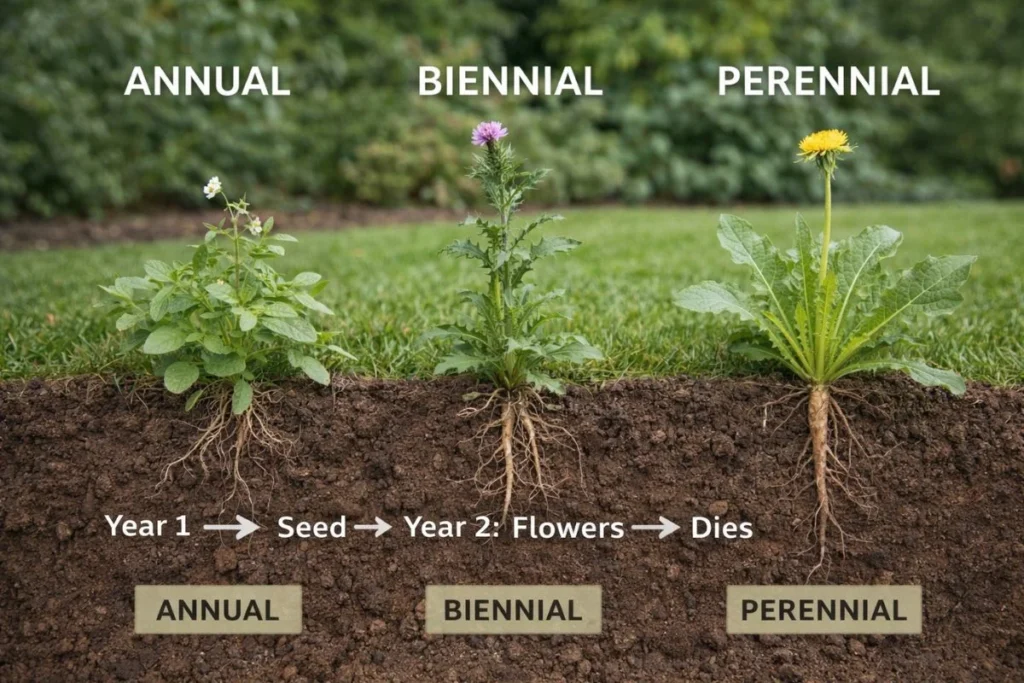
Annual Broadleaf Weeds
These live for one year. They grow from seed, produce flowers, and die.
Examples:
- Common chickweed
- Spotted spurge
They spread quickly because they produce many seeds.
Biennial Broadleaf Weeds
These live for two years.
- Year one: Leaves grow close to the ground.
- Year two: Flowers and seeds form.
Example:
- Bull thistle
Perennial Broadleaf Weeds
These live for many years. They regrow from strong root systems.
Examples:
- Dandelion
- White clover
- Ground ivy
Perennial broadleaf weeds are harder to remove because of Dandelions are one of the most common perennial broadleaf weeds in lawns. If they are spreading in your yard, see our full guide on dandelion control for step-by-step removal and prevention.taproots.
Why Broadleaf Weeds Grow in Lawns
Broadleaf weeds usually grow when grass is weak.
Common causes:
- Thin or patchy turf
- Mowing too short
- Compacted soil
- Poor drainage
- Improper watering
- Low soil fertility
Weeds take advantage of open space and sunlight. Thick turf blocks weed growth.
Chickweed is a common example of a broadleaf weed that thrives in thin, shaded turf during cool months. If you see it spreading in late winter or early spring, read our full guide on chickweed control for seasonal prevention and treatment timing.
Where Do Broadleaf Weeds Grow?
Broadleaf weeds grow in many areas:
- Lawns
- Garden beds
- Driveway cracks
- Sidewalk edges
- Disturbed soil
They grow fast in exposed soil.
Common Broadleaf Weeds in US Lawns
Common examples include:
- Dandelion – Yellow flowers, deep taproot
- White clover – White flowers, spreads low
- Ground ivy – Creeping stems, purple flowers
- Broadleaf plantain – Oval leaves, thick root
These are common in both northern and southern US lawns.
If you want a broader breakdown of the most common lawn weeds including grassy weeds and sedges, see our complete guide on common lawn weeds and how to control them.
Why Root Type Matters
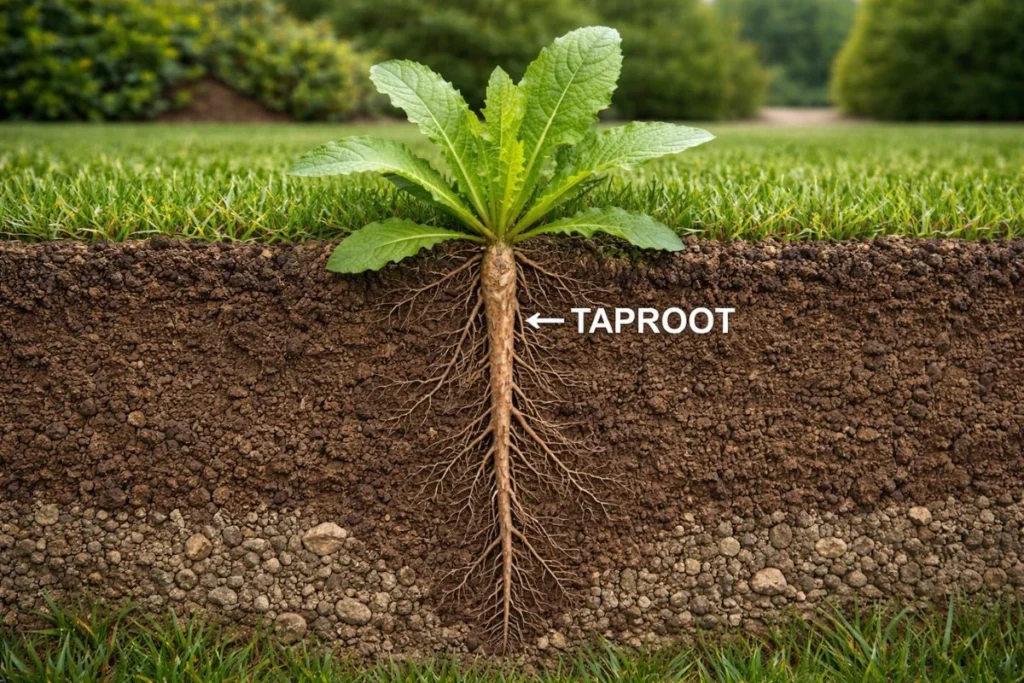
Many perennial broadleaf weeds grow from deep taproots.
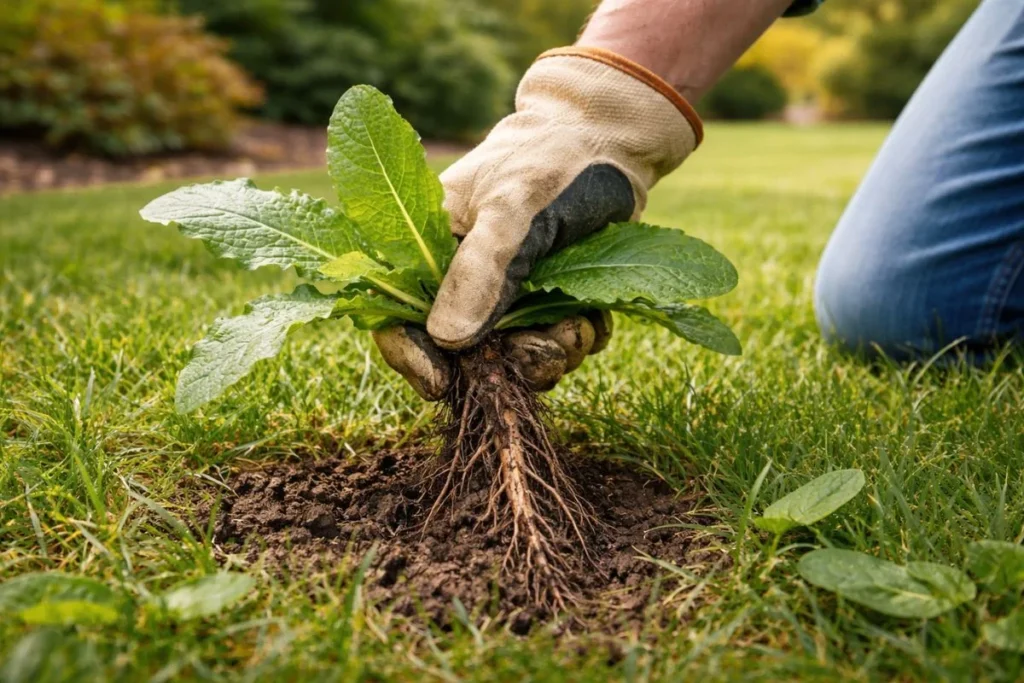
A taproot grows straight down into the soil. If part of it remains, the weed can regrow.
Cutting the top does not solve the problem. Full removal or correct herbicide timing is needed.
How to Get Rid of Broadleaf Weeds
There are three main approaches.
1. Hand Pulling
Best for small areas. Pull when soil is moist. Remove the entire root.
2. Pre-Emergent vs Post-Emergent Herbicides
There are two main herbicide types.
Pre-emergent
- Stops seeds before they sprout
- Applied early in the season
- Prevents new weeds
Post-emergent
- Kills weeds that are already growing
- Applied directly to leaves
- Best during active growth
Fall is often the most effective time to treat perennial broadleaf weeds because plants move nutrients into roots. Herbicide travels into the root system during this time.
3. Lawn Care Prevention
Prevention is the best long-term solution.
- Mow at proper height
- Water deeply but not daily
- Fertilize correctly
- Aerate compacted soil
- Overseed thin areas
Healthy turf crowds out broadleaf weeds.
White clover is one of the most common broadleaf weeds found in lawns, especially in low-nitrogen soil. If clover is spreading in your yard, read our detailed guide on how to get rid of clover for step-by-step control and prevention tips.
Broadleaf Weed Control Decision Guide
| If You See… | Weed Type Likely | Best Action |
|---|---|---|
| Small new weeds in spring | Annual | Pull early or spot treat |
| Deep-rooted weed returning yearly | Perennial | Apply fall post-emergent herbicide |
| Thin lawn with scattered weeds | Mixed types | Improve turf density first |
| Weeds in cracks or garden beds | Various | Hand pull or use boiling water |
Some homeowners confuse broadleaf weeds with grassy weeds like crabgrass, especially when planning seasonal treatments. If you are unsure how crabgrass behaves after frost, read our guide on does crabgrass die in winter before choosing a prevention strategy.
Best Time to Control Broadleaf Weeds in the USA
Timing depends on region and weed type.
Northern States
- Fall is best for perennial weeds
- Spring works for young annual weeds
Southern States
- Treat during active growth
- Avoid extreme heat
Correct timing improves results.
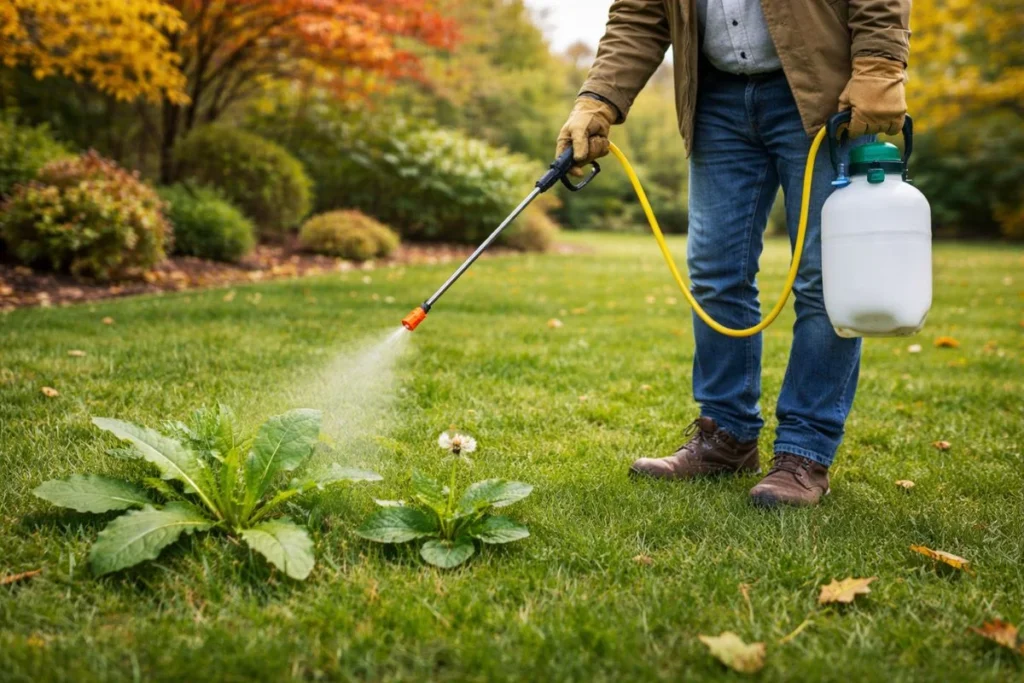
Best Time to Treat Broadleaf Weeds
| Season | Best For | Why It Works |
|---|---|---|
| Early Spring | Preventing seeds | Pre-emergent stops germination |
| Late Spring | Young annual weeds | Early growth is easier to control |
| Fall | Perennial weeds | Herbicide moves into roots |
| Mid-Summer | Spot treatment only | Avoid heat stress on lawn |
Natural vs Chemical Control
Some homeowners prefer natural methods.
Natural methods include:
- Hand pulling
- Mulching garden beds
- Boiling water for cracks
- Improving soil health
Household vinegar can burn leaves but may not kill deep roots, especially in perennial weeds.
Chemical methods are stronger and often needed for large infestations.
Choose the method based on lawn size and weed severity.
Toxic Broadleaf Weeds to Watch For
Some broadleaf weeds can harm people or pets.
Examples include:
- Poison ivy
- Poison hemlock
- Spurge
Wear gloves when handling unknown plants.
Common Broadleaf Weed Mistakes
- Spraying during extreme heat
- Cutting weeds instead of removing roots
- Using pre-emergent on visible weeds
- Treating at the wrong season
- Ignoring soil health and lawn density
FAQ About Broadleaf Weeds
What is a broadleaf weed in simple terms?
A broadleaf weed is a non-grass plant with wide leaves that grows where you do not want it.
Why do broadleaf weeds keep coming back?
Perennial weeds regrow from roots. Thin turf allows new seeds to grow.
Does mowing kill broadleaf weeds?
No. Many grow low to the ground.
Are all broadleaf plants weeds?
No. A plant becomes a weed only when it grows in unwanted areas.
conclusion
In my experience, lawns do not become overrun with broadleaf weeds overnight. It usually starts with a few small plants that get ignored or treated the wrong way. When homeowners learn to identify broadleaf weeds correctly, understand their life cycle, and improve lawn health, the results change quickly. Healthy grass competes better, weed control becomes more effective, and problems do not return as often. Knowing what is a broadleaf weed gives you control over your lawn instead of reacting to it. Strong lawn care habits and proper timing always make the biggest difference.