Skip to content
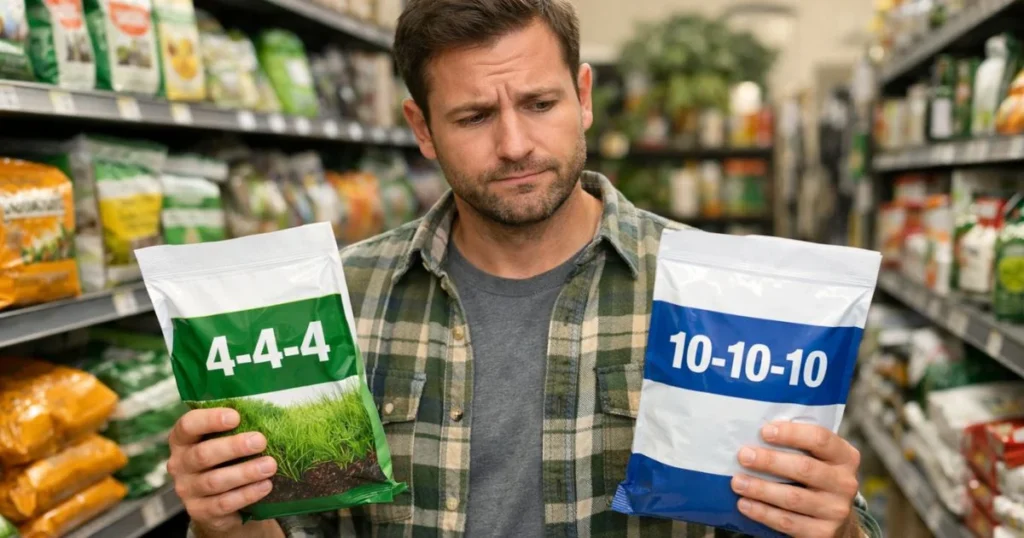
I still remember standing in a garden store, staring at two fertilizer bags and feeling stuck. One said 4-4-4. The other said 10-10-10. Both looked similar. Both claimed to be balanced. I had already put time and money into my lawn, and the last thing I wanted was to damage it by picking the wrong one. That moment of doubt is common. I have seen many homeowners pause right there, worried about burning grass or wasting fertilizer.
Over time, I learned that most lawn and garden problems do not come from lack of effort. They come from confusion. Fertilizer labels are short, but the meaning behind the numbers is not always clear. Many people guess, apply, and hope for the best. If you are asking whether 4-4-4 is the same as 10-10-10, you are doing something smart. You are checking before applying, and that simple step can save your lawn from long-term problems.
- What the Numbers Mean on Fertilizer
- Are 4-4-4 and 10-10-10 Interchangeable?
- Simple Comparison With Real Numbers
- How to Convert 4-4-4 to 10-10-10 (Easy Rule)
- Per 1000 Square Feet Lawn Example
- Which One Is Safer to Use?
- When 10-10-10 Makes Sense
- When 4-4-4 Is a Better Fit
- Does This Apply to Lawns and Gardens?
- Why Soil Testing Is a Smart Step
- When Balanced Fertilizer Is Not Ideal
- Why Too Much Phosphorus Can Cause Trouble
- Common Mistakes to Avoid
- Is Balanced Fertilizer Always the Best Choice?
- Conclusion
What the Numbers Mean on Fertilizer
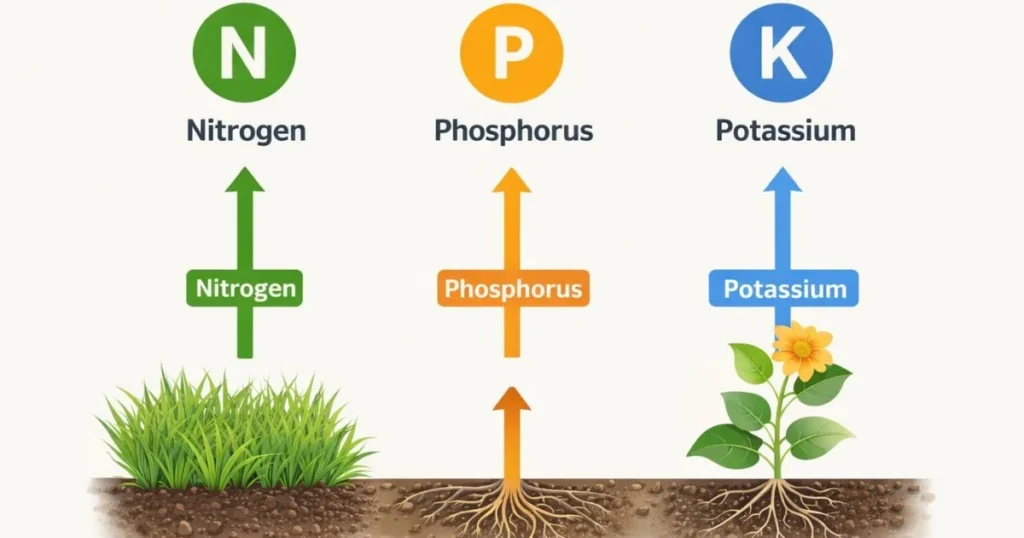
Every fertilizer label shows three numbers.
They always mean:
- Nitrogen helps leaf growth
- Phosphorus helps roots and flowers
- Potassium supports overall plant health
So:
- 4-4-4 = 4% nitrogen, 4% phosphorus, 4% potassium
- 10-10-10 = 10% nitrogen, 10% phosphorus, 10% potassium
The balance is the same.
The concentration is different.
For a full explanation of how fertilizer numbers work and how to read them correctly, see our complete guide on lawn fertilizer numbers explained.
Are 4-4-4 and 10-10-10 Interchangeable?
| Feature | 4-4-4 Fertilizer | 10-10-10 Fertilizer |
|---|---|---|
| Nutrient ratio | Balanced (equal nutrients) | Balanced (equal nutrients) |
| Strength per pound | Lower concentration | Higher concentration |
| Amount needed | More product required | Less product required |
| Burn risk | Lower risk for beginners | Higher risk if overapplied |
| Best use case | Large areas, steady feeding | Small areas, quick feeding |
They can be swapped, but only if you adjust the amount.
- 10-10-10 is stronger
- 4-4-4 is lighter
If you use the same weight of both, plants will not get the same nutrients.
This is where many people make mistakes.
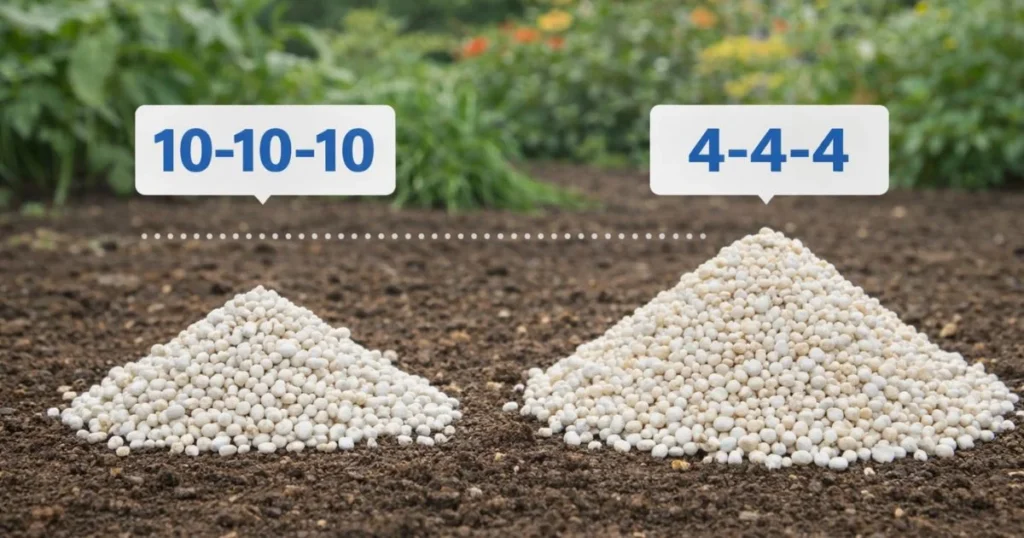
They have the same nutrient ratio, but 10-10-10 is about 2.5 times more concentrated than 4-4-4.
Simple Comparison With Real Numbers
This example keeps it simple.
- 10 pounds of 10-10-10 provides
- 1 pound nitrogen
- 1 pound phosphorus
- 1 pound potassium
- To get the same nutrients from 4-4-4
- You need about 25 pounds
Same nutrients.
More product.
How to Convert 4-4-4 to 10-10-10 (Easy Rule)
Here is the rule that helps most beginners.
If you switch from 10-10-10 to 4-4-4, apply about 2.5 times more fertilizer by weight.
Example:
- 10 pounds of 10-10-10
- About 25 pounds of 4-4-4
This keeps feeding levels equal and avoids underfeeding.
Per 1000 Square Feet Lawn Example
Example for lawns:
If a label recommends 10 pounds of 10-10-10 per 1,000 square feet, you would need about 25 pounds of 4-4-4 to supply the same nutrients.
Which One Is Safer to Use?
Safety matters for lawns and gardens.
- 10-10-10 works fast but mistakes matter more
- 4-4-4 feeds slower and spreads easier
Many beginners feel more comfortable with 4-4-4 because small errors are less risky.
When 10-10-10 Makes Sense
10-10-10 can be a good choice when:
- You treat small areas
- You want fewer bags to store
- You need faster results
Measure carefully. Strong fertilizer leaves less room for error.
When 4-4-4 Is a Better Fit
4-4-4 often works better when:
- You fertilize large lawns
- You want steady feeding
- You prefer organic products
- You want lower burn risk
It is easier to spread evenly across wide areas.
Does This Apply to Lawns and Gardens?
Yes. The same rule applies everywhere.
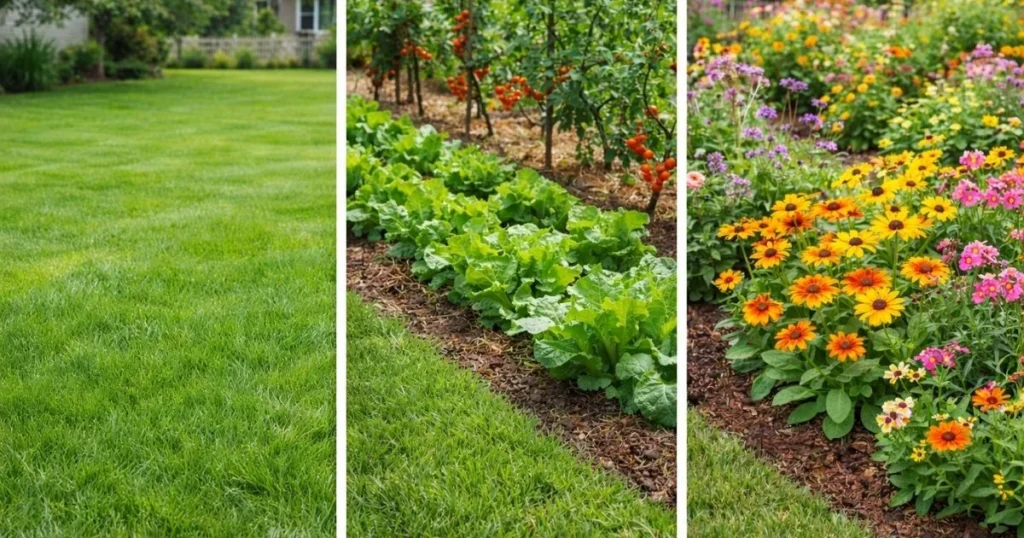
- Lawns
- Vegetable gardens
- Flower beds
Only the amount you apply changes.
The nutrient balance stays the same.
Always follow label directions.
Why Soil Testing Is a Smart Step
Balanced fertilizer is not always needed.
Many soils already contain enough phosphorus or potassium. Adding more does not help plants grow better.
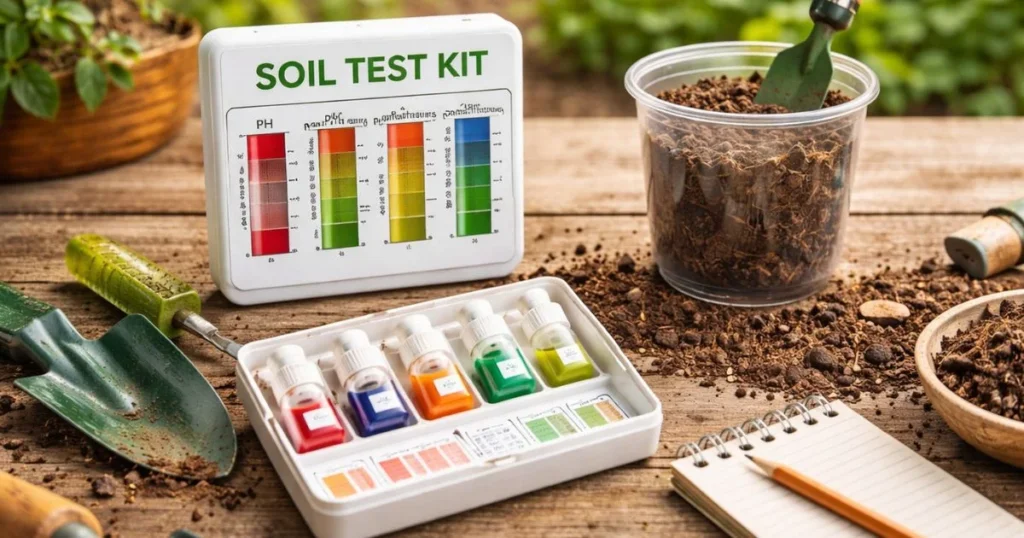
A soil test tells you:
- What nutrients are already in the soil
- What plants really need, especially when it comes to phosphorus levels in the soil, is explained clearly in our guide on phosphorus for lawn.
- How much fertilizer to use
This saves money and avoids problems.
When Balanced Fertilizer Is Not Ideal
Many lawns mainly need nitrogen. In that case, a fertilizer like 20-0-0 may be more suitable than a balanced product. A soil test helps confirm this before you apply anything.
Why Too Much Phosphorus Can Cause Trouble
Extra phosphorus does not disappear.
- Plants cannot use the excess
- Rain can wash it into water systems
- This can harm lakes and streams
Using fertilizer only when needed helps protect the environment.
Common Mistakes to Avoid
These mistakes happen often.
- Using the same weight for 4-4-4 and 10-10-10
- Thinking equal numbers mean equal strength
- Fertilizing every season without testing soil
- Applying more fertilizer than the label says
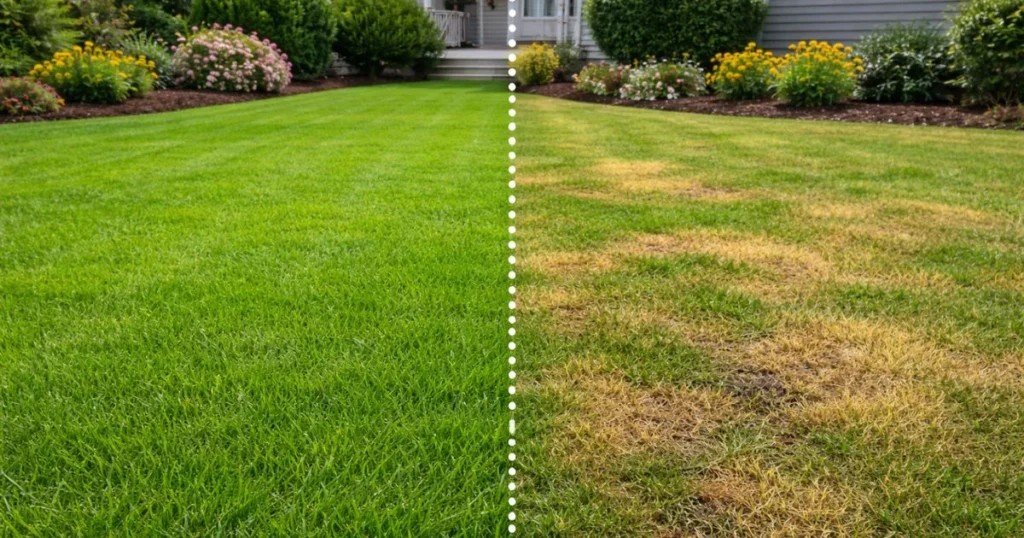
Overapplication can lead to serious lawn damage. Learn how to recognize the warning signs in our guide on over fertilization lawn symptoms.
Avoiding these errors keeps plants healthy.
Quick Reminder: Always measure fertilizer by its strength, not by habit.
Is Balanced Fertilizer Always the Best Choice?
No.
Many lawns and gardens mainly need nitrogen. Using a balanced product when it is not needed can waste nutrients.
Soil testing helps you choose better.
4-4-4 and 10-10-10 provide the same nutrient balance, but they do not deliver the same strength. If you switch between them, always adjust how much you apply. Using the correct amount matters more than the fertilizer name on the bag.
Conclusion
After working with lawns and garden soil for years, one pattern shows up again and again. Fertilizer issues usually happen because the strength of the product was misunderstood. I have seen lawns stressed from too much strong fertilizer and gardens struggle because weaker fertilizer was not adjusted properly. Once you understand that 4-4-4 and 10-10-10 share the same balance but differ in strength, the confusion fades. Applying the correct amount, paying attention to soil needs, and not guessing leads to healthier plants and better results season after season.