
Many homeowners face the same lawn problem. The grass looks weak. Growth feels slow. Bare spots do not fill in, even with watering and fertilizer. I have seen this issue again and again while helping people care for their lawns. Most homeowners think the answer is more fertilizer, so they add it without checking what the soil already has.
Thank you for reading this post, don't forget to subscribe!Over the years, I have seen lawns suffer because phosphorus was added when it was not needed. I have also seen lawns improve once the right steps were taken. Phosphorus for lawn care is useful in some cases, but harmful in others. Knowing the difference matters. This guide explains phosphorus in a clear and honest way, based on real lawn care experience and proven practices. Most lawns get worse because phosphorus is added when it is not needed.
- Quick Answer:
- What Is Phosphorus?
- Phosphorus’ Role in Lawn Health
- Phosphorus Benefits Your Lawn By
- Does My Lawn Need Phosphorus?
- 2-Second Decision:
- Soil Test Interpretation Guide
- How to Tell If a Lawn Has a Phosphorus Deficiency
- Soil Testing Is Key Before Applying Phosphorus
- Why Phosphorus Often Stays in the Soil
- Best Times to Apply Phosphorus
- Understanding the Middle Number on Fertilizer Bags
- Why More Phosphorus Is Not Better
- Phosphorus and Different Grass Types
- Phosphorus and Environmental Safety
- Example of State Phosphorus Rules
- Phosphorus Compared to Other Lawn Nutrients
- Common Mistakes to Avoid
- Final Thoughts
Quick Answer:
Most lawns do NOT need phosphorus. It is only useful when starting a new lawn, fixing damaged areas, or when a soil test shows a deficiency. Adding phosphorus without testing often does not improve growth and can cause problems.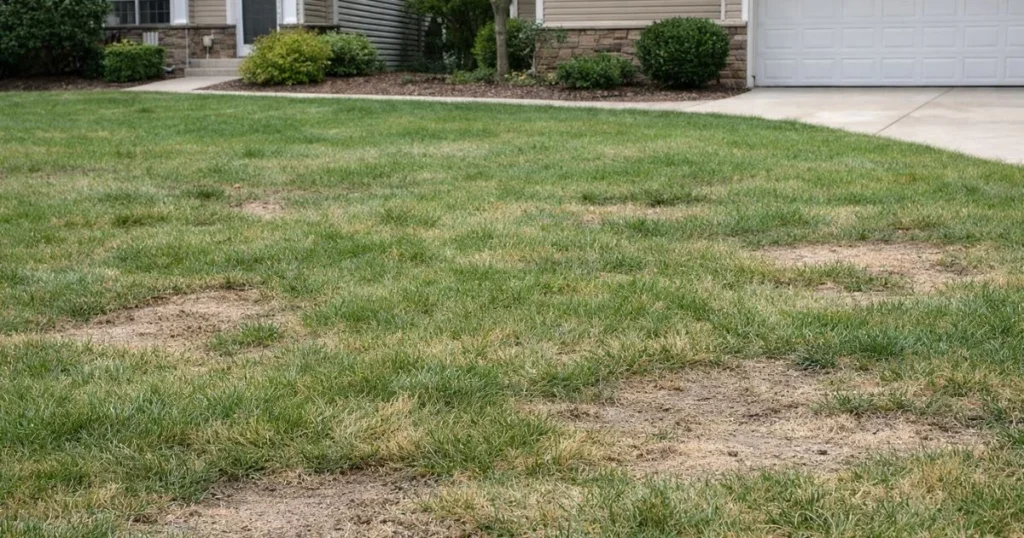
What Is Phosphorus?
Phosphorus is one of the three main nutrients in lawn fertilizer. It appears as the middle number in the N-P-K ratio. For example, a 10-20-10 fertilizer contains a high amount of phosphorus.
Phosphorus helps plants move energy. It supports early growth and root development. Grass uses it most during early growth stages.
Phosphorus’ Role in Lawn Health
Phosphorus for lawn health works mainly below the soil surface. It helps roots grow strong and deep. Strong roots help grass survive heat, drought, and foot traffic.
This nutrient is most useful when grass is young or repairing damage.
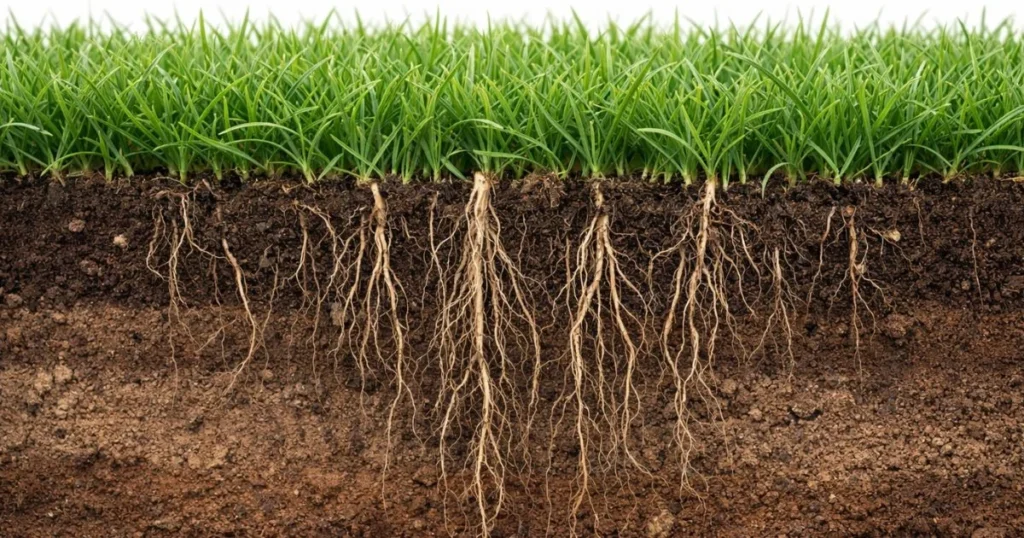
Phosphorus Benefits Your Lawn By
- Supporting root development
- Helping new grass establish faster
- Improving early growth
- Supporting recovery after lawn repair
These benefits apply mostly to new or stressed lawns.
Does My Lawn Need Phosphorus?
Most established lawns in the USA do not need extra phosphorus. Many soils already contain enough.
Phosphorus for lawn use is helpful in these situations:
- Seeding a new lawn
- Installing sod
- Overseeding thin or bare areas
- Soil tests showing low phosphorus
If your lawn is mature and healthy, phosphorus may not help at all.
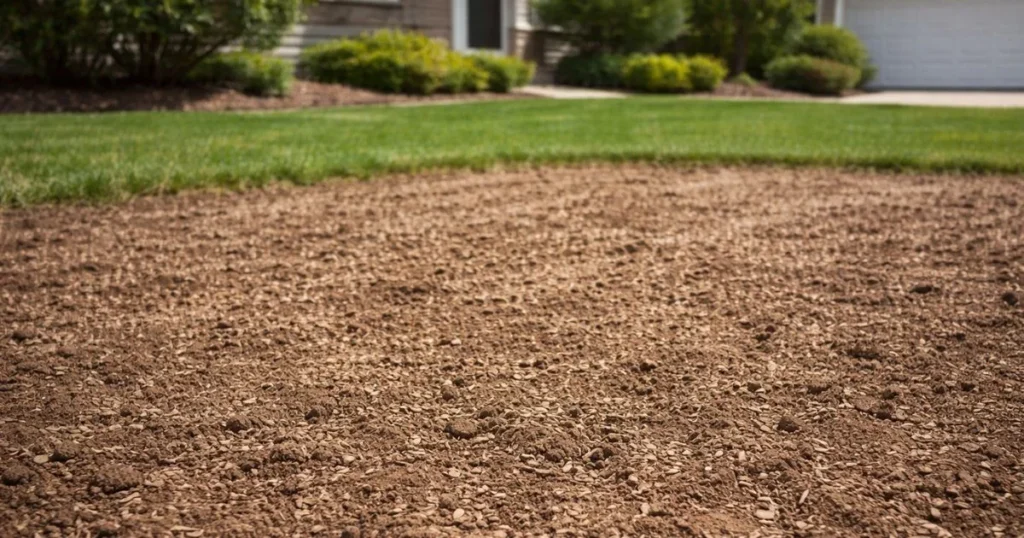
- Most established lawns do not need phosphorus
- Phosphorus helps mainly during seeding and sod installation
- A soil test should come before applying phosphorus
- Overuse can harm soil and nearby water
| Lawn Situation | Is Phosphorus Needed? |
|---|---|
| New lawn from seed | Yes |
| Sod installation | Yes |
| Overseeding bare spots | Sometimes |
| Established healthy lawn | No |
| Soil test shows high phosphorus | No |
2-Second Decision:
✔ New lawn or seeding → YES
✔ Bare patches or repair → MAYBE
✔ Healthy established lawn → NO
Always confirm with a soil test before applying phosphorus.
Soil Test Interpretation Guide
Before applying phosphorus, it helps to understand what soil test results mean. Most lab reports will show phosphorus levels as low, adequate, or high.
| Soil Phosphorus Level | What It Means | Recommended Action |
|---|---|---|
| Low | Lawn may benefit from phosphorus | Apply starter fertilizer |
| Adequate | Soil already has enough | Do not apply phosphorus |
| High | Excess phosphorus present | Avoid adding more |
Always follow the guidance provided by your local soil testing lab, since test methods can vary by state.
How to Tell If a Lawn Has a Phosphorus Deficiency
True phosphorus deficiency is uncommon in home lawns.
Possible signs include:
- Slow or weak growth
- Poor root development
- Thin grass even with watering
- Poor seed sprouting
These signs often look like nitrogen problems. A soil test is the only reliable way to confirm a phosphorus issue.
Soil Testing Is Key Before Applying Phosphorus
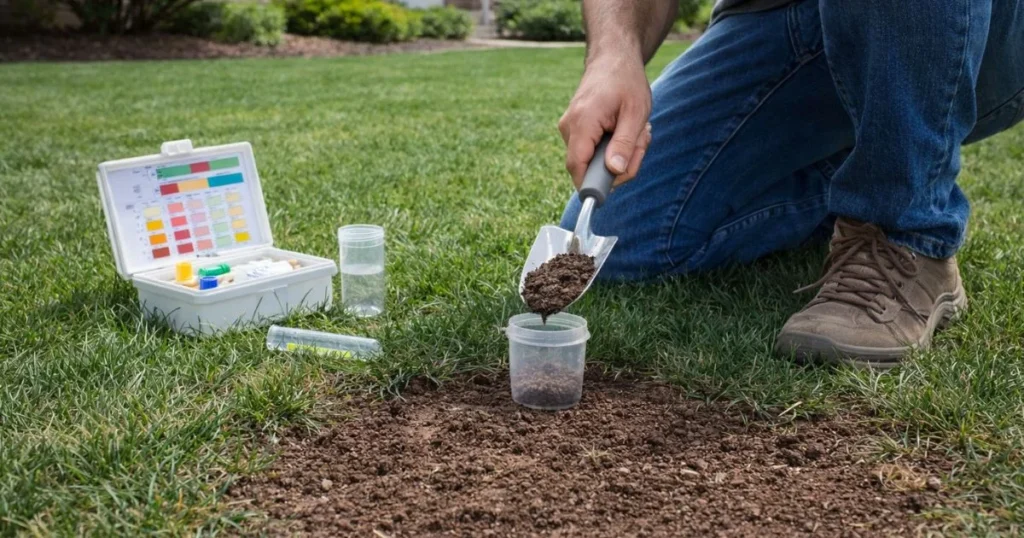
Before using phosphorus for lawn care, test your soil.
A soil test shows:
- If phosphorus is low, normal, or high
- Whether fertilizer is needed
- How to avoid overuse
Many states require a soil test before phosphorus can be applied. This rule protects water sources from pollution.
Why Phosphorus Often Stays in the Soil
Unlike nitrogen, phosphorus does not move easily through soil. It binds tightly to soil particles. This means grass cannot always absorb extra phosphorus, even when more is applied.
When soil already contains enough phosphorus, adding more usually does not improve growth. Instead, excess phosphorus can remain in the soil or move away with runoff during heavy rain.
This is one reason soil testing matters so much before application.
Best Times to Apply Phosphorus
Phosphorus works best when grass is starting or repairing.
Use phosphorus for lawn care:
- During seeding
- During sod installation
- During major lawn renovation
Do not apply phosphorus for routine feeding of established lawns.
Avoid applying before heavy rain. Runoff risk increases.
Understanding the Middle Number on Fertilizer Bags
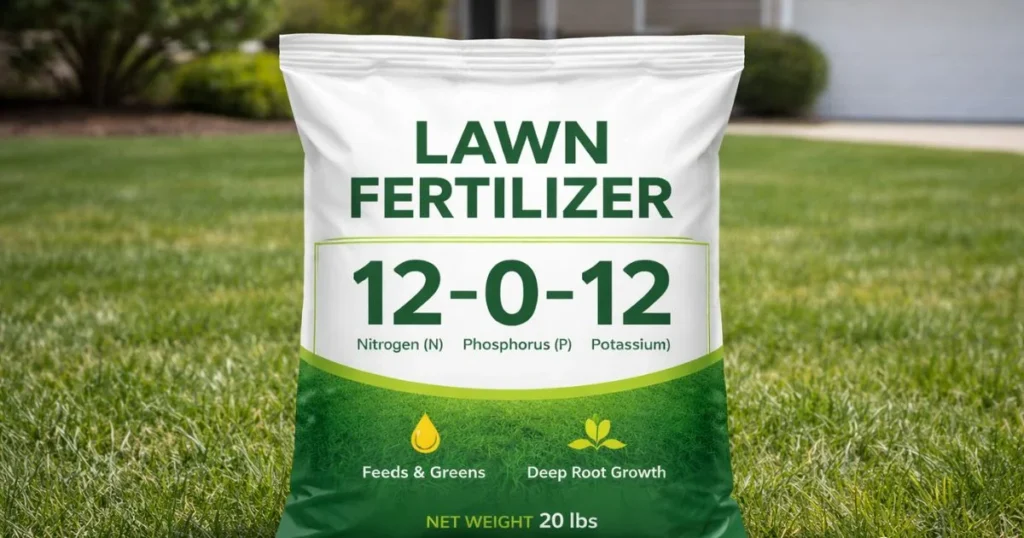
Fertilizer labels show three numbers, such as 12-0-12. These stand for nitrogen, phosphorus, and potassium.
The middle number is phosphorus.
Many lawn fertilizers show 0 in the middle. This means they contain no phosphorus. That is because most lawns already have enough in the soil.
High middle numbers are mainly used for starter fertilizers.
If fertilizer numbers still feel confusing, read our complete guide on lawn fertilizer numbers explained to understand how each number affects your lawn.
Why More Phosphorus Is Not Better
Extra phosphorus does not make grass greener.
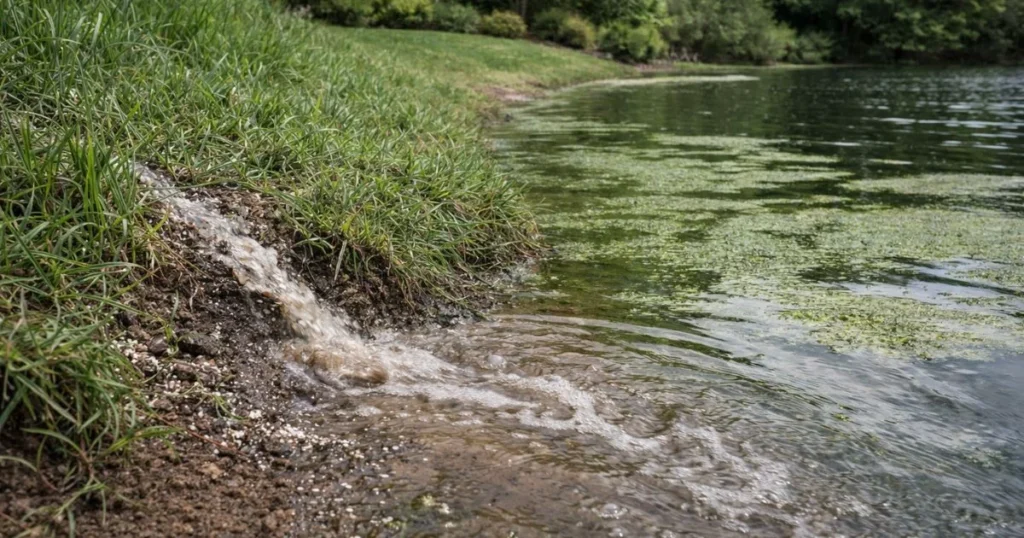
If soil already has enough, the grass cannot use more. The excess can wash away with water and enter lakes and rivers.
Using phosphorus for lawn care without testing can cause harm instead of improvement.
Phosphorus and Different Grass Types
Cool-season and warm-season grasses use phosphorus in the same basic way.
They need it most during early growth, seeding, or sod installation.
Once grass is established, phosphorus needs drop for all grass types.
Phosphorus and Environmental Safety
Too much phosphorus can enter nearby water through runoff. This feeds algae growth. Algae reduce oxygen in water and harm fish.
Because of this, many US states limit phosphorus fertilizer use. Some allow it only for new lawns or when soil tests show a need.
Using only what your lawn needs protects local water.
Example of State Phosphorus Rules
Some states restrict phosphorus use on established lawns unless a soil test shows deficiency. For example, certain states allow phosphorus only for new lawn establishment or documented low soil levels.
Rules can also include buffer zones near lakes and streams.
Always check your local state agriculture or extension website before applying phosphorus fertilizer.
Phosphorus Compared to Other Lawn Nutrients
Nitrogen supports green color and leaf growth. Potassium helps grass handle stress.
Phosphorus for lawn care mainly supports roots. It does not improve color or fast growth.
That is why many maintenance fertilizers contain little or no phosphorus.
| Nutrient | Main Role in Lawn Health |
|---|---|
| Nitrogen | Green color and leaf growth |
| Phosphorus | Root growth and early development |
| Potassium | Stress tolerance and overall strength |
To fully understand how phosphorus compares, it helps to see how nitrogen affects grass growth in real lawn conditions.
Common Mistakes to Avoid
- Applying phosphorus without a soil test
- Using starter fertilizer on mature lawns
- Fertilizing before rain
- Applying more than needed
More fertilizer does not mean better results.
- ☐ Applying phosphorus without a soil test
- ☐ Using starter fertilizer on an established lawn
- ☐ Fertilizing before heavy rain
- ☐ Applying more fertilizer than needed
Final Thoughts
From hands-on work with many home lawns, one pattern is clear. Phosphorus for lawn health helps during seeding, sod installation, and major repair. Outside of those cases, most lawns do not benefit from it. I have seen strong lawns decline from unnecessary phosphorus and weak lawns recover once soil testing guided the plan. The best results come from simple steps. Test the soil. Apply only what is needed. Follow local rules. Careful use of phosphorus leads to healthier grass and fewer long-term problems.
Phosphorus helps lawns only when there is a real need. Soil testing first prevents waste, protects water, and leads to better long-term lawn health.