 Skip to content
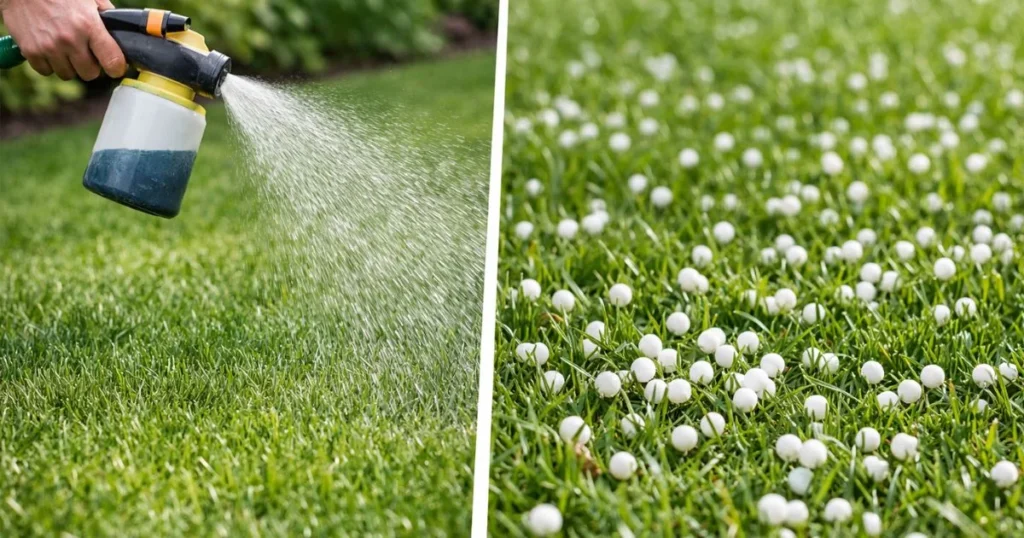
The first time I used fertilizer, I thought I did everything right. I followed the label and applied it evenly. Still, parts of my lawn turned yellow, while other areas grew too fast. I had to mow more, not less. Some plants looked stressed, and a few never recovered. That was when I realized fertilizer choice matters more than I thought.
Like many homeowners and gardeners, I was stuck between liquid fertilizer and granular fertilizer. Each one promised good results, but none explained which one fit my situation. The fear of burning plants, wasting money, or ruining healthy grass is real. This guide exists to clear that confusion and help you choose the right option with confidence.
- Fertilizer Basics
- Key Differences Between Liquid and Granular Fertilizers
- How Fertilizer Works in Soil
- What Is Liquid Fertilizer?
- What Is Granular Fertilizer?
- Controlled-Release vs Quick-Release Fertilizer
- Benefits and Drawbacks of Liquid Fertilizer
- Benefits and Drawbacks of Granular Fertilizer
- Liquid Fertilizer Advantages in Specific Situations
- Foliar Application of Fertilizers
- How to Apply Liquid Fertilizer
- How to Apply Granular Fertilizer
- Do Liquid and Granular Fertilizers Have the Same Nutrients?
- How Soil Type Affects Liquid and Granular Fertilizer
- Cost Comparison: Liquid vs Granular Fertilizer
- Best Choice for Lawns
- Best Choice for Gardens and Containers
- When Not to Use Each Type
- Common Fertilizer Mistakes to Avoid
- Frequently Asked Questions
- Conclusion
Fertilizer Basics
Fertilizer provides nutrients that plants need to grow. The main nutrients are nitrogen, phosphorus, and potassium.
These nutrients support leaf growth, root strength, and plant health.
Fertilizers come in liquid and granular forms. The form affects how fast nutrients reach plants and how long they stay in the soil.
Key Differences Between Liquid and Granular Fertilizers
| Factor | Liquid Fertilizer | Granular Fertilizer |
|---|---|---|
| Speed of Results | Fast results within days | Slow results over time |
| How Long It Lasts | Short-term feeding | Long-term feeding |
| Best for Lawns | Quick color boost | Regular lawn care |
| Best for Gardens | Vegetables and containers | Beds with steady growth |
| Application Frequency | More often | Less often |
| Cost Over Time | Higher with repeat use | Lower per season |
The main difference is speed and duration.
Liquid fertilizer works fast. Plants absorb nutrients quickly.
Granular fertilizer works slowly. It feeds plants over time.
Liquid fertilizer suits quick results.
Granular fertilizer suits long-term feeding.
This difference matters most for lawns and large areas.
How Fertilizer Works in Soil
When liquid fertilizer is applied, nutrients dissolve in water and move quickly into the soil. Roots absorb them fast.
Granular fertilizer must first dissolve with moisture. Water and soil microbes slowly break it down. Nutrients are released over time.
Nitrogen moves easily in soil water, which is why quick-release liquid fertilizers often produce fast green color in grass.
This is the main reason liquid fertilizer acts quickly while granular fertilizer lasts longer.
What Is Liquid Fertilizer?
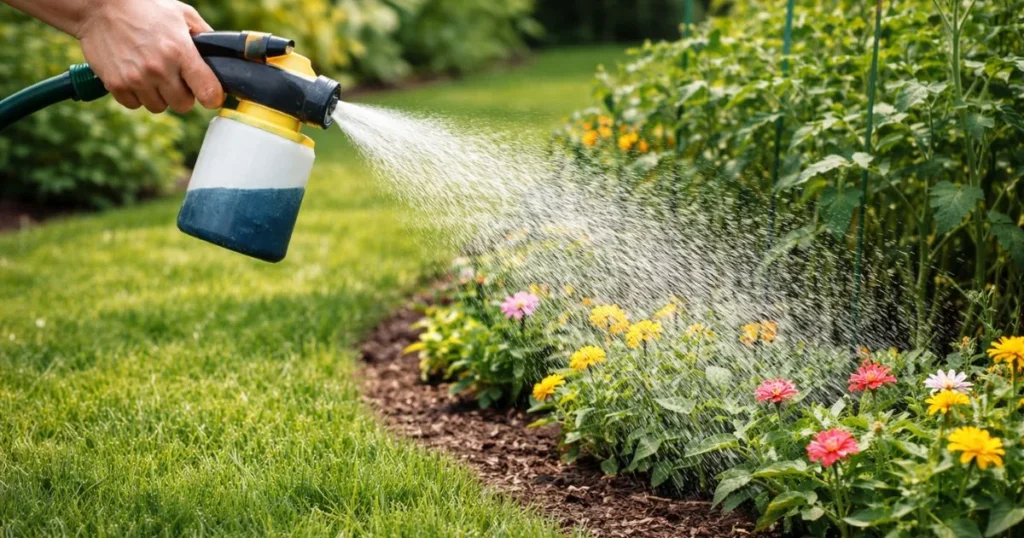
Liquid fertilizer is mixed with water. It is sprayed on soil or leaves.
Plants absorb nutrients quickly. This helps when plants look weak, pale, or slow-growing.
Liquid fertilizer works well for:
- Gardens
- Container plants
- Quick growth support
It does not last long in soil and needs more frequent use.
What Is Granular Fertilizer?
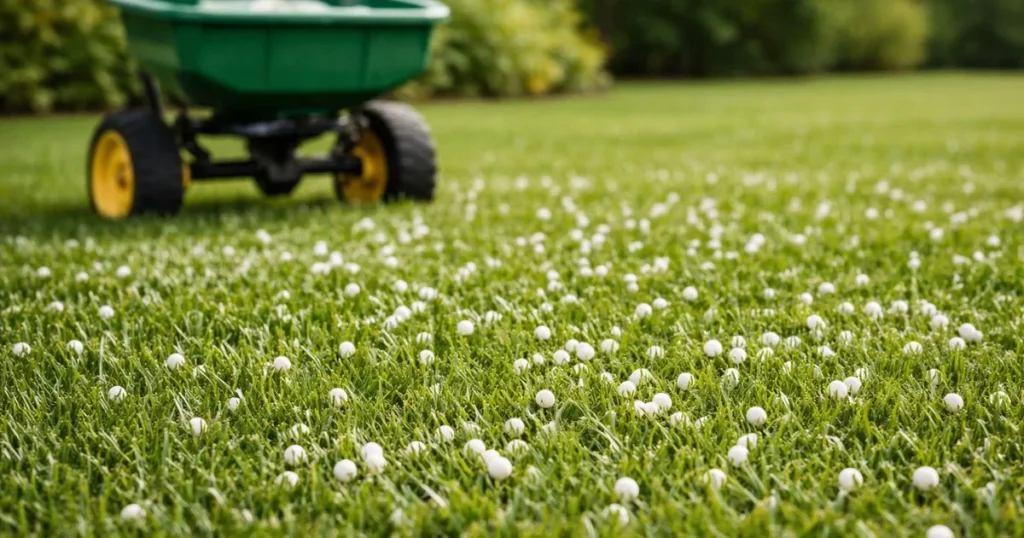
Granular fertilizer comes as dry pellets or grains. It is spread on soil or grass.
Water breaks the granules down slowly. Nutrients move into the soil over time.
Granular fertilizer works well for:
- Lawns
- Large areas
- Regular feeding plans
It lasts longer and needs fewer applications.
Controlled-Release vs Quick-Release Fertilizer
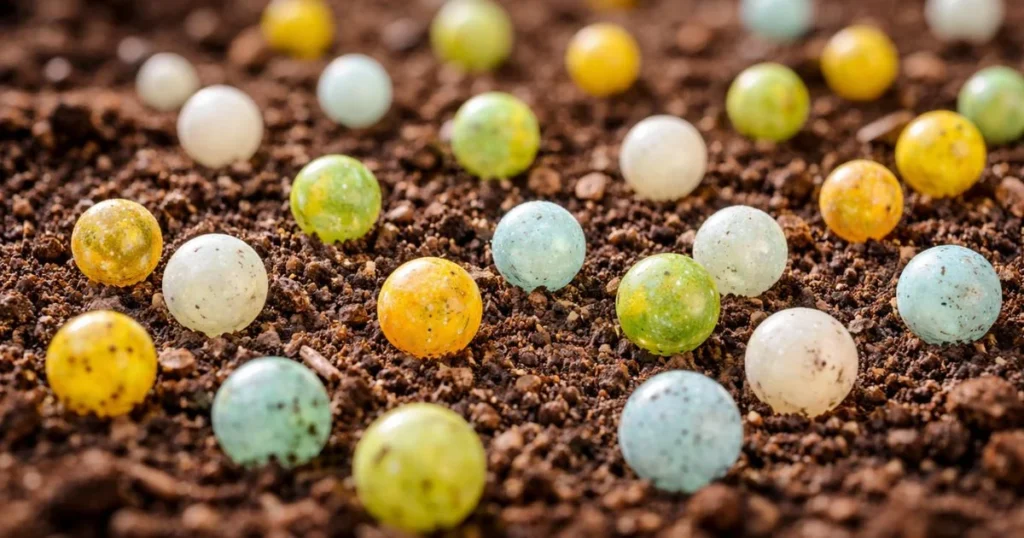
Some granular fertilizers are controlled-release. They have a coating.
The coating slows nutrient release. This feeds plants steadily.
Quick-release fertilizers act faster but fade sooner.
If you want steady feeding instead of fast spikes, read our guide on slow release fertilizer to understand how it works over time.
Controlled-release fertilizer is helpful for lawns and beginners. It lowers the risk of uneven growth and overfeeding.
Benefits and Drawbacks of Liquid Fertilizer
Benefits of Liquid Fertilizer
- Fast results
- Easy to control feeding
- Helpful for vegetables and flowers
- Useful for quick color improvement
Drawbacks of Liquid Fertilizer
- Needs frequent use
- Can wash away after rain
- Higher risk of leaf damage if overused
Liquid fertilizer fits gardeners who want quick changes and manage small areas.
Benefits and Drawbacks of Granular Fertilizer
Benefits of Granular Fertilizer
- Long-lasting feeding
- Easy for large lawns
- Lower nutrient loss
- Fewer applications needed
Drawbacks of Granular Fertilizer
- Slower results
- Needs watering to activate
- Uneven spreading can cause patches
Granular fertilizer suits homeowners who want steady lawn growth with less effort.
Liquid Fertilizer Advantages in Specific Situations
Liquid fertilizer helps when plants need fast support.
It works well for:
- Yellow grass
- Weak garden plants
- Containers and raised beds
It is also useful when correcting nutrient shortages quickly.
Foliar Application of Fertilizers
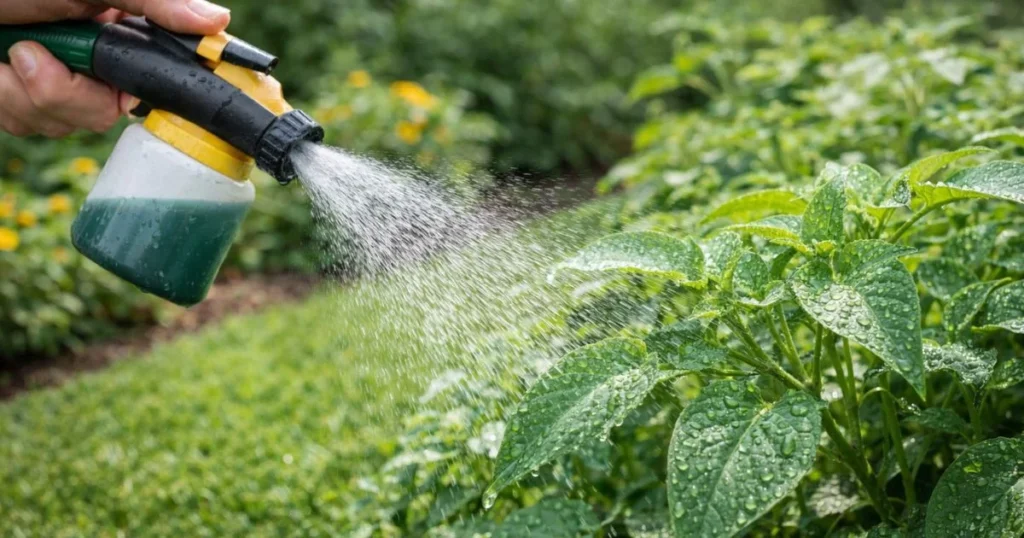
Foliar feeding means spraying liquid fertilizer on leaves.
Leaves absorb nutrients directly. This helps when roots cannot absorb nutrients well.
Foliar feeding works best as short-term support. It does not replace soil feeding.
How to Apply Liquid Fertilizer
Liquid fertilizer is applied using a hose sprayer or pump sprayer.
Follow label instructions closely. Do not apply more than directed.
Apply during calm weather. Avoid spraying before rain.
This method works best for gardens and small areas.
How to Apply Granular Fertilizer
Granular fertilizer is spread with a hand spreader or push spreader.
Water the area after application. This helps nutrients reach roots.
Spread evenly to avoid dark or damaged spots.
This method suits lawns and wide spaces.
Do Liquid and Granular Fertilizers Have the Same Nutrients?
Yes. Both types can contain the same nutrients.
The difference is not the nutrients, but how fast plants absorb them.
Always check fertilizer labels for nutrient numbers.
To understand what these nutrient numbers actually mean and how to choose them correctly, read our complete guide on lawn fertilizer numbers explained.
How Soil Type Affects Liquid and Granular Fertilizer
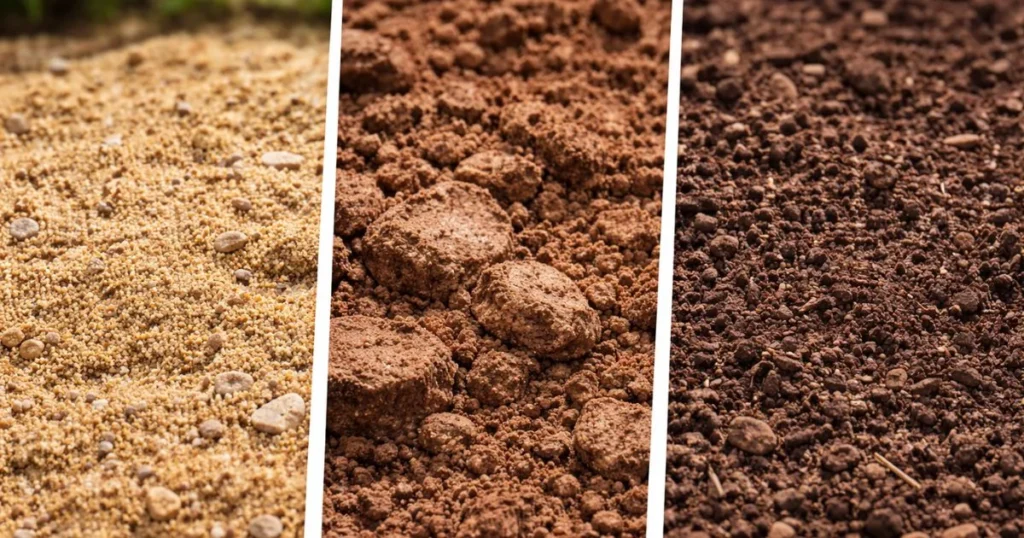
Soil type changes how fertilizer behaves.
Sandy soil drains water fast. Liquid fertilizer may move away quickly. Slow-release granular fertilizer works better here.
Clay soil holds water longer. Liquid fertilizer stays near roots longer. Granular fertilizer still works but needs careful watering.
Loamy soil holds nutrients well. Both fertilizer types work well.
Knowing soil type helps avoid waste and poor results.
Cost Comparison: Liquid vs Granular Fertilizer
Quick Decision Guide
- Choose liquid fertilizer if you want fast results.
- Choose liquid fertilizer for gardens and containers.
- Choose granular fertilizer for lawns and large areas.
- Choose granular fertilizer if you want long-term feeding.
Liquid fertilizer often costs more over time. It requires frequent use.
Granular fertilizer costs less per season. It feeds plants longer.
Liquid fertilizer saves time for small spaces.
Granular fertilizer saves money for lawns and large areas.
Cost depends on size, frequency, and feeding goals.
Best Choice for Lawns
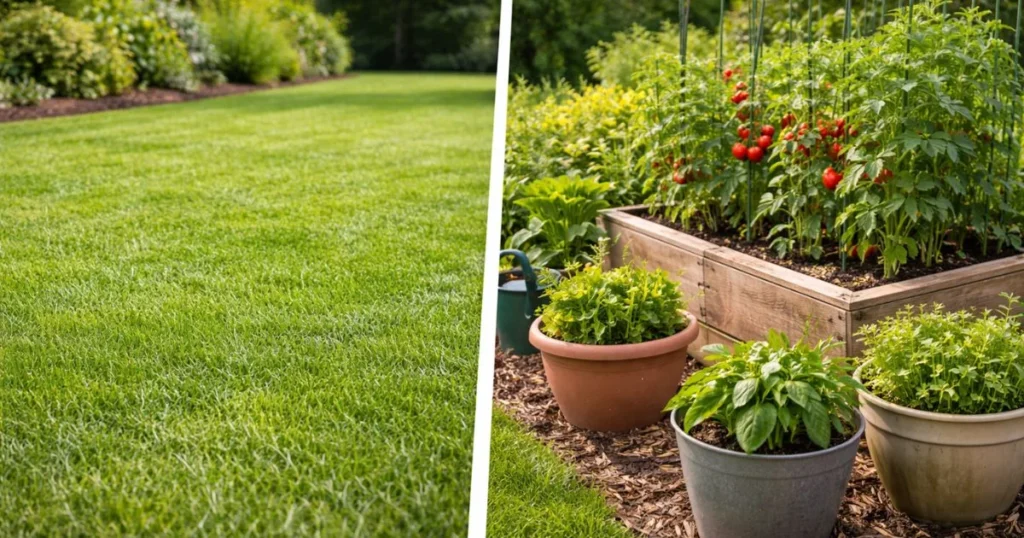
Granular fertilizer is best for most lawns.
It spreads evenly and feeds grass slowly. Controlled-release options work well for steady growth.
For late-season feeding that prepares grass for cold weather, a dedicated winterizer fertilizer may be a better choice than standard granular products.
Liquid fertilizer can help with quick color but should not replace regular lawn feeding.
Best Choice for Gardens and Containers
Liquid fertilizer works well for gardens and containers.
Plants absorb nutrients quickly during active growth.
Granular fertilizer can be used but needs careful measuring in small spaces.
When Not to Use Each Type
Do not apply liquid fertilizer before heavy rain. It may wash away.
Avoid spreading granular fertilizer on dry soil unless you water it in.
Skip fertilizing plants that are stressed or damaged by drought.
Follow label directions carefully. Using more fertilizer will not improve growth and can cause damage.
Common Fertilizer Mistakes to Avoid
- Using more fertilizer than directed
- Applying liquid fertilizer before rain
- Forgetting to water after granular fertilizer
- Feeding dry or stressed plants
These mistakes can damage plants and waste fertilizer.
Using more fertilizer than directed can damage plants. If your lawn already shows stress from too much feeding, review the signs of over fertilization lawn symptoms and fix the issue early.
Frequently Asked Questions
Can I use liquid and granular fertilizer together?
Yes. Granular fertilizer supports long-term feeding. Liquid fertilizer supports quick growth.
Which fertilizer is better for lawns?
Granular fertilizer works best for steady lawn care.
Is liquid fertilizer better for gardens?
Yes. It works well for vegetables and flowers.
Can fertilizer harm plants?
Yes. Too much fertilizer can damage roots and leaves.
Should soil be tested before fertilizing?
Soil testing helps choose the right nutrients.
Can fertilizer wash into drains?
Yes. Avoid applying fertilizer before rain.
Key Takeaways
- Liquid fertilizer works fast but does not last long.
- Granular fertilizer feeds plants over time.
- Lawns usually perform better with granular fertilizer.
- Gardens and containers respond faster to liquid fertilizer.
- Most fertilizer problems come from overuse and poor timing.
Conclusion
After years of hands-on lawn and garden care, I learned that fertilizer works best when it matches the goal. I rely on granular fertilizer for steady lawn growth because it feeds grass over time and keeps results even. When plants need fast help, liquid fertilizer does the job quickly. Most problems come from overuse, poor timing, or ignoring soil needs, not from the fertilizer itself. When you understand how liquid and granular fertilizers work, you stop guessing and start seeing healthy, consistent growth.