 Skip to content
The first time I over fertilized my lawn, I thought I had done everything right. I followed the label. I spread the fertilizer evenly. A few days later, the grass tips turned brown. Some areas shot up fast. Other spots stopped growing. I felt confused and worried because the lawn looked worse than before.
If you are here, you may be feeling the same way. You tried to care for your lawn, not damage it. Over fertilization lawn symptoms often appear after good intentions. I have dealt with this problem on my own lawn and helped others fix it too. Once you know what to look for and what steps actually help, the situation becomes much easier to handle.
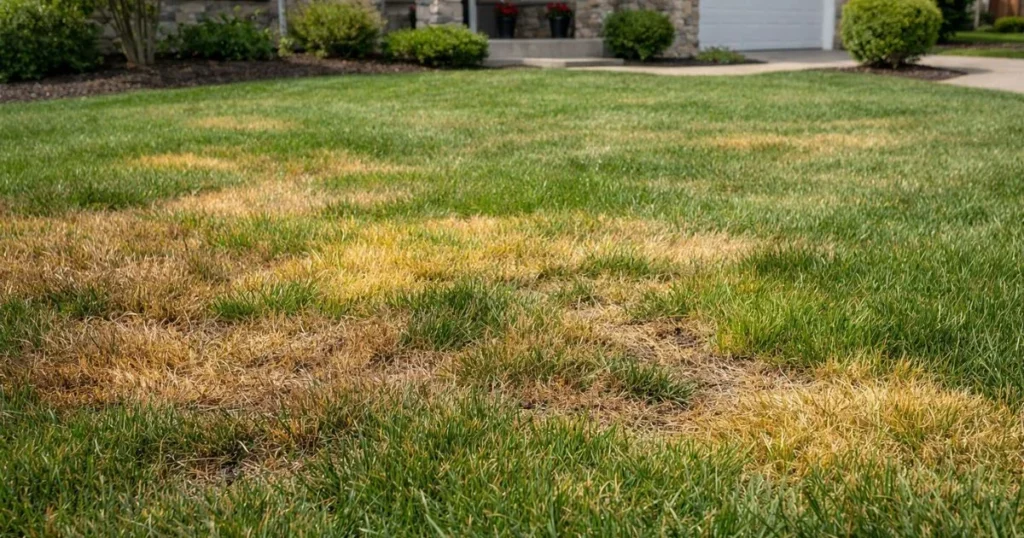
- Over fertilization lawn symptoms often appear within a few days.
- Brown tips and uneven patterns are common warning signs.
- Deep watering helps flush excess fertilizer from the soil.
- Most lawns recover with time and basic care.
- How Do You Know You Over-Fertilized Your Lawn?
- Is It Over Fertilization or Something Else?
- Why Over Fertilization Happens
- What Happens in the Soil During Fertilizer Burn
- What to Do Right Now
- Mistakes to Avoid After Over Fertilizing
- Lawn Repairs If Damage Is Severe
- Soil Testing and Smarter Fertilizing
- How to Prevent Over Fertilization
- Environmental and Safety Notes
- FAQ About Over Fertilization Lawn Symptoms
- When to Consider Professional Help
- Final Thoughts
How Do You Know You Over-Fertilized Your Lawn?
Most people ask one question first.
Did fertilizer cause this damage?
If these signs appeared soon after fertilizing, over fertilization is likely.
Leaf Tip Browning
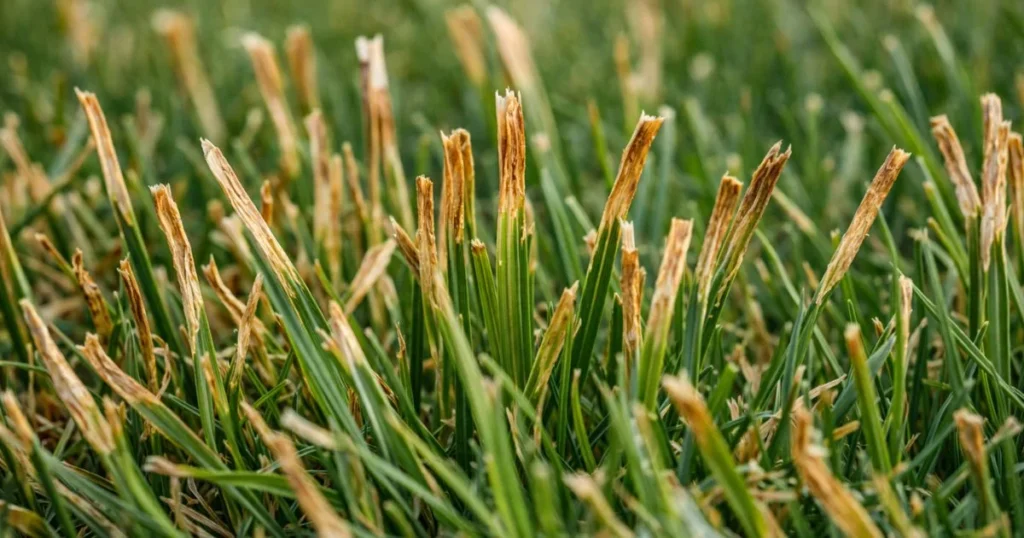
Grass tips turn brown or look burned.
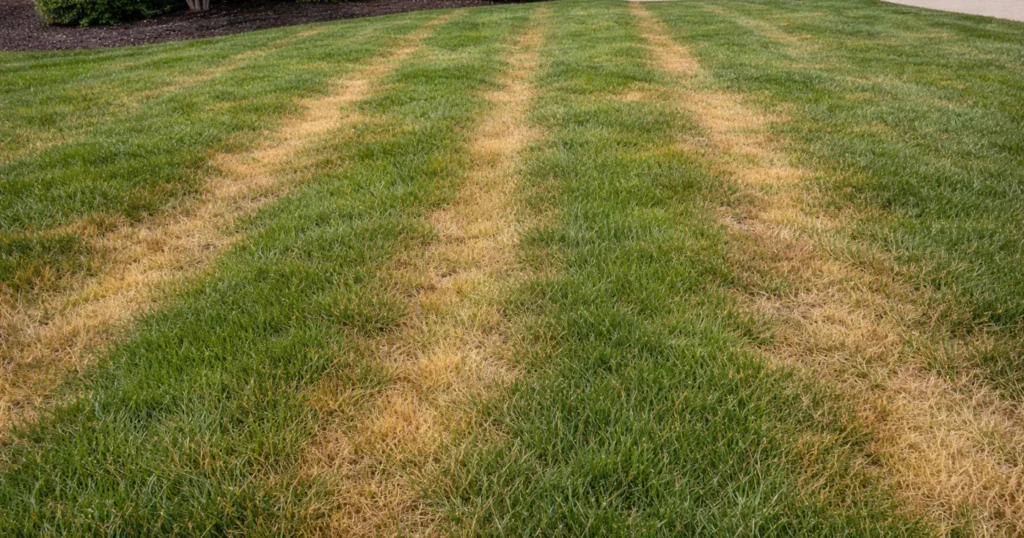
This often follows straight lines or spreader paths.
This is one of the clearest over fertilization lawn symptoms.
Wilting or Yellowing
Grass may turn yellow or pale.
It may look weak even when soil is wet.
Roots are stressed and cannot absorb water well.
Excessive Grass Growth
Some areas grow very fast.
You may need to mow more often.
This growth is weak and does not last.
Stunted Growth
In serious cases, grass stops growing.
Thin or bare spots may appear.
This happens when roots are damaged by fertilizer salts.
Strong Smell or Runoff
A sharp chemical smell may come from the lawn.
You may see fertilizer washing away after watering or rain.
This shows too much product was applied.
Fertilizer Buildup
White or crusty residue may appear on soil.
Granules may still be visible days later.
This blocks water from reaching roots.
Patchy Grass or Bare Spots
Some areas turn brown while others stay green.
Patterns often match uneven spreading.
Weeds
Weeds may grow faster than grass.
They respond quickly to extra nutrients.
Pest and Disease Stress
Overfed grass becomes weak.
This makes it easier for insects and diseases to move in.
Is It Over Fertilization or Something Else?
| Lawn Symptom | Likely Cause |
|---|---|
| Brown tips in straight lines | Over fertilization |
| Entire lawn turning brown | Drought stress |
| Round or spreading brown patches | Lawn disease |
| Small dark green circles | Pet urine damage |
Many lawn problems look alike.
This quick check helps confirm the cause.
- Fertilizer burn follows straight lines or patterns
- Drought stress affects the whole lawn evenly
- Lawn disease forms round or spreading patches
- Dog urine damage appears in small circles
If damage lines match fertilizer spread, over fertilization is the likely reason.
Why Over Fertilization Happens
Most cases come from small mistakes.
Common causes include:
- Using too much fertilizer
- Fertilizing too often
- Uneven spreading
- Fertilizing before rain
- Using fast-release fertilizer without care
Even careful homeowners make these errors.
Many over fertilization problems start with misunderstanding fertilizer strength and numbers. For a clear explanation, read our guide on lawn fertilizer numbers explained.
What Happens in the Soil During Fertilizer Burn
When too much fertilizer is applied, excess salts build up in the soil. These salts pull moisture away from grass roots instead of feeding them. As roots lose water, they become stressed and weak. This is why grass tips turn brown and growth slows down. Fast-release fertilizers increase this risk because they release nutrients all at once. If you are unsure how fast-release products differ from longer-lasting options, see our comparison of liquid vs granular fertilizer before your next application.
What to Do Right Now
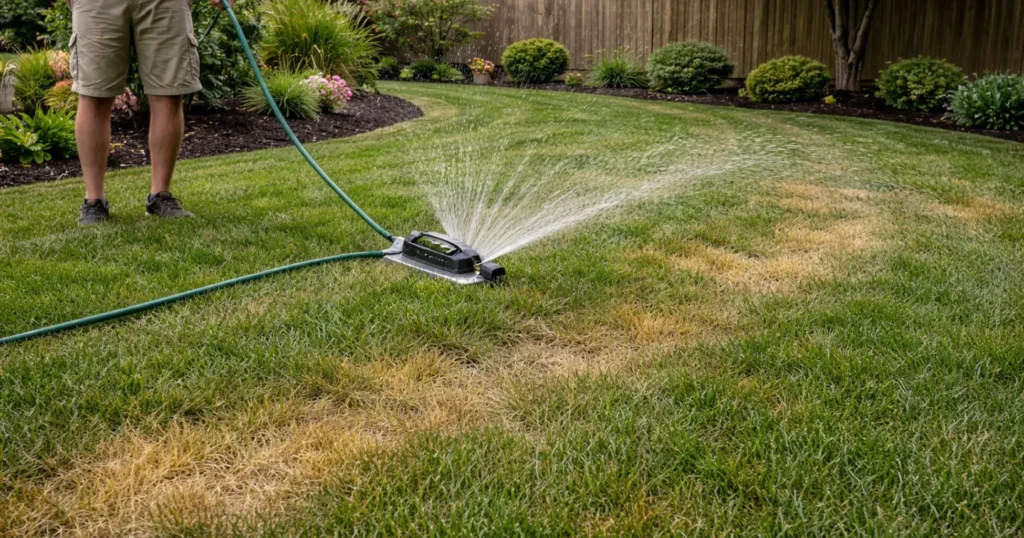
If you think your lawn is over fertilized, act quickly.
Water the Lawn Deeply
Deep watering helps wash extra fertilizer through the soil.
Avoid light spraying.
Water once or twice daily for several days if needed.
Remove Visible Fertilizer
If you see granules, rake them up.
Do this before watering again.
Pause Mowing
Do not mow stressed grass right away.
Give it time to recover.
Watch for Improvement
New green growth is a positive sign.
Some areas heal without extra work.
Mistakes to Avoid After Over Fertilizing
Some actions can make the damage worse. Do not add more fertilizer thinking it will fix the problem. Avoid using quick lawn repair products right away. Light daily watering can spread salts instead of flushing them. Instead, focus on deep watering and patience while the lawn begins to recover.
Lawn Repairs If Damage Is Severe
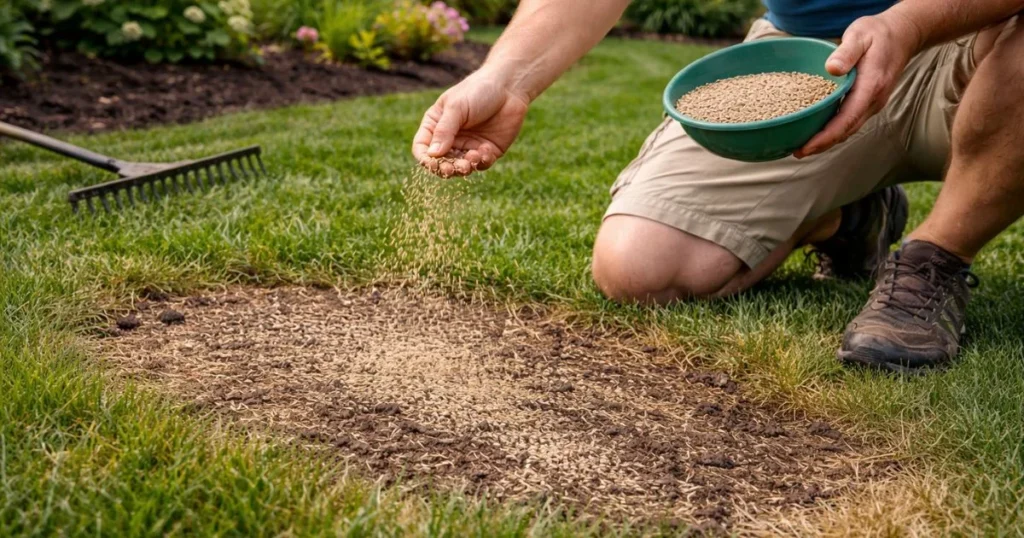
Some lawns need more help.
Remove Dead Grass
Lightly rake loose, dead grass.
Healthy roots below may still recover.
Reseed Bare Areas
Once burning stops, add grass seed.
Cover lightly with soil.
Improve Soil Airflow
Aeration helps water and air reach roots.
This supports recovery.
Be Patient
Minor damage often heals in a few weeks.
Heavy damage may take a full season.
For gentle soil recovery support after fertilizer damage, consider natural options like worm castings for lawn instead of applying more synthetic fertilizer.
| Damage Level | Recovery Time |
|---|---|
| Mild burning | 2 to 4 weeks |
| Moderate damage | 1 to 2 months |
| Severe damage | One full growing season |
If grass does not show improvement after several weeks of deep watering, root damage may be serious and reseeding could be needed.
Soil Testing and Smarter Fertilizing
Soil testing helps prevent repeat damage.
A soil test shows:
- Nutrients already present
- Whether fertilizer is needed
This prevents applying what your lawn does not need.
If your soil test shows nutrient imbalance instead of excess nitrogen, review our guide on phosphorus for lawn to understand when phosphorus is actually needed.
How to Prevent Over Fertilization
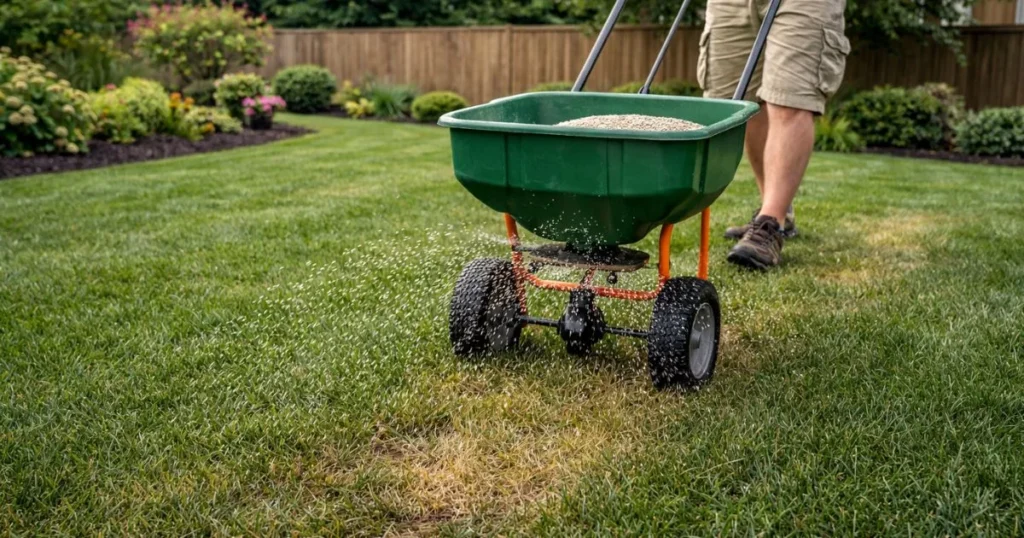
- Read fertilizer label instructions carefully.
- Measure your lawn before applying fertilizer.
- Use slow-release fertilizer when possible.
- Avoid fertilizing before heavy rain.
- Spread fertilizer evenly across the lawn.
Simple habits reduce risk.
- Follow label instructions
- Use slow-release fertilizer when possible
- Fertilize only during active growth
- Avoid fertilizing before rain
- Spread fertilizer evenly
Balanced feeding protects roots and soil.
Environmental and Safety Notes
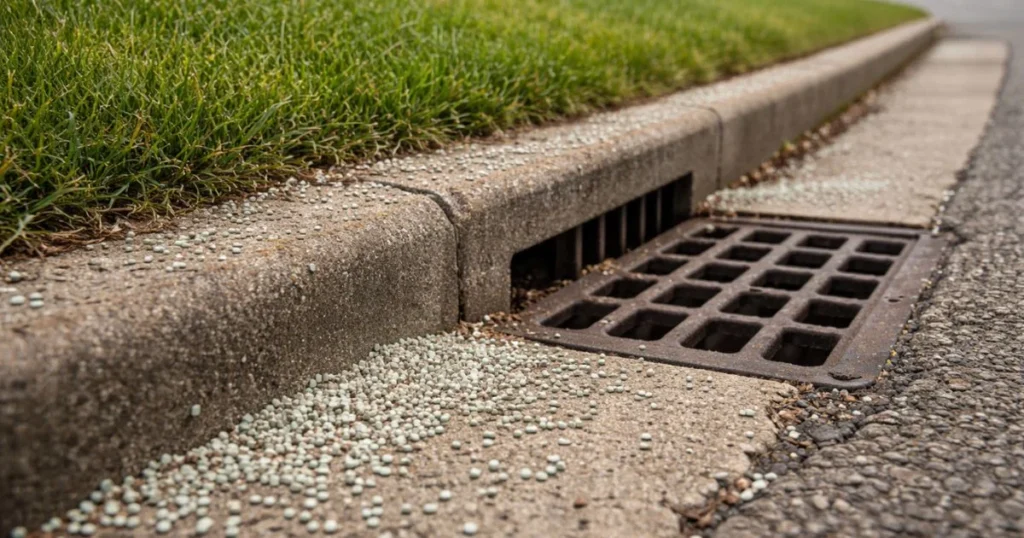
Extra fertilizer does not stay in one place.
- Runoff can enter drains
- Nutrients may reach nearby water
- Pets and children can contact residue
Clean spills and store fertilizer safely.
FAQ About Over Fertilization Lawn Symptoms
Can My Lawn Recover?
Yes.
Most lawns recover with proper watering and time.
How Long Does Recovery Take?
Light damage heals in 2 to 4 weeks.
Severe damage may take longer.
Can Too Much Water Make It Worse?
Light watering spreads fertilizer.
Deep watering helps flush salts.
Should I Fertilize Again Soon?
No.
Wait until steady growth returns.
Can Rain Cause Fertilizer Burn?
Yes. If fertilizer is applied right before heavy rain, nutrients can move quickly into the soil and concentrate in certain areas. This can increase salt buildup and stress the roots.
Should I Rake Burned Grass?
You can lightly rake loose, dead grass once burning has stopped. Avoid aggressive raking while grass is still stressed. Healthy roots underneath may still recover.
When to Consider Professional Help
If damage keeps spreading or grass does not recover, expert help may be useful.
Professionals test soil and apply correct amounts.
Final Thoughts
From experience, most lawns recover when the problem is handled calmly and early. I have learned that adding more products never fixes fertilizer damage. Deep watering, patience, and time matter more than quick fixes. When I stopped reacting and focused on basic care, my lawn slowly came back. If you spot over fertilization lawn symptoms early and give your grass space to heal, recovery is very possible. Healthy lawns grow from balance, not excess.