

Every spring, I hear the same worries from homeowners. The lawn suddenly turns light green. White seedheads pop up everywhere. The grass looks uneven and weak. Many people think they did something wrong. They blame fertilizer, watering, or even disease. I have seen how frustrating this feels, especially after months of effort.
Thank you for reading this post, don't forget to subscribe!In most of these cases, the problem is not poor care. It is confusion between annual bluegrass and Kentucky bluegrass. I have dealt with this issue many times while helping homeowners inspect their lawns. Once we identify your grass correctly, the stress dropped. The solution became clear. This guide is built from that experience, so you can figure out what is happening in your lawn and avoid costly mistakes. If you want a broader view of lawn grasses and how they differ across climates and uses, see our guide to different lawn grass types.
- What Is the Difference Between Annual Bluegrass and Kentucky Bluegrass?
- Quick Visual Difference (Don’t Skip This)
- Why Lawns Look Strange in Spring
- What Is Annual Bluegrass?
- What Does Annual Bluegrass Look Like?
- When and Where Annual Bluegrass Grows
- How Annual Bluegrass Spreads
- Kentucky Bluegrass
- Annual Bluegrass vs Kentucky Bluegrass
- Is Annual Bluegrass Bad for Lawns?
- Identification and Life Cycle
- Impact on Your Lawn
- What To Do This Season
- Management and Control
- Should You Handle This Yourself?
- Common Mistakes to Avoid
- Frequently Asked Questions
- Final Thoughts
What Is the Difference Between Annual Bluegrass and Kentucky Bluegrass?
Annual bluegrass is a short-lived grassy weed that grows in clumps and produces early seedheads.
Kentucky bluegrass is a long-lasting turf grass that spreads through underground stems and stays green longer.
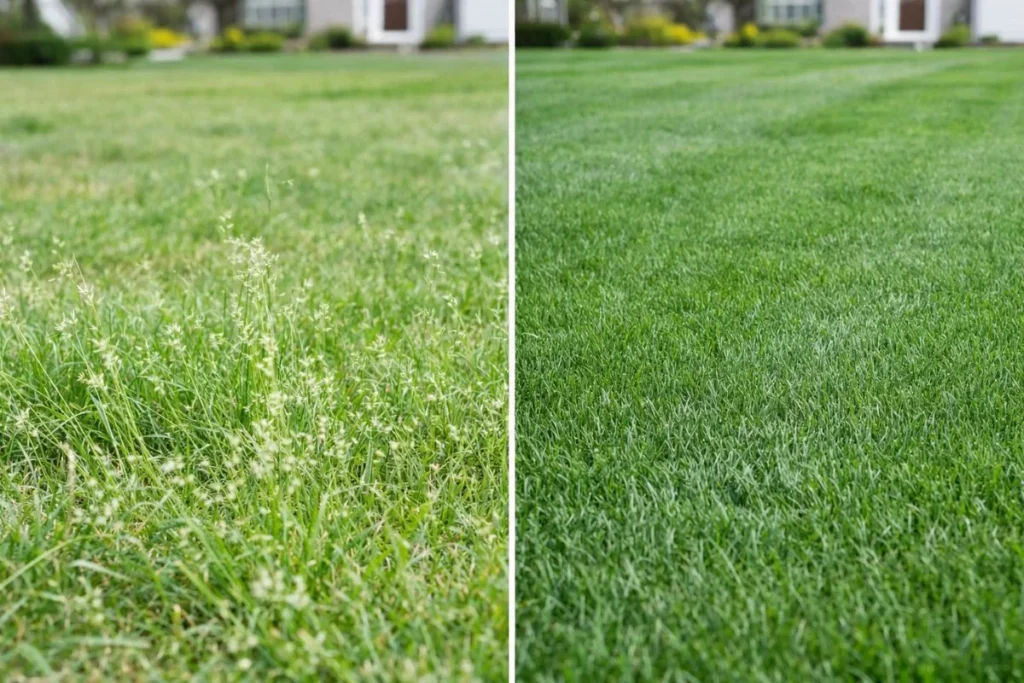
Quick Visual Difference (Don’t Skip This)
If your lawn suddenly looks lighter or uneven, this quick comparison will help you identify the problem in seconds.
| Feature | Annual Bluegrass | Kentucky Bluegrass |
|---|---|---|
| Color | Light green | Medium to dark green |
| Growth | Clumps | Spreads with rhizomes |
| Seedheads | Appear early in spring | Rare in home lawns |
| Life Cycle | One season | Perennial |
| Lawn Quality | Weak, uneven | Dense, strong turf |
Quick tip: If you see light green patches with early seedheads, it is most likely annual bluegrass.
Why Lawns Look Strange in Spring

Early spring is when problems show up.
Annual bluegrass wakes up early. It grows fast. It produces seedheads even when the lawn is cut short. This makes the lawn look pale and uneven.
Kentucky bluegrass (see what Kentucky bluegrass looks like) wakes up more slowly. It blends in better and does not show many seedheads in home lawns.
If your lawn suddenly looks lighter and messy in spring, annual bluegrass is often the reason.
What Is Annual Bluegrass?
Annual bluegrass, also called Poa annua, is a grassy weed. It prefers cool and wet conditions.
Most plants start growing in fall. They survive winter. In spring, they drop many seeds. When summer heat arrives, many plants die.
Even when plants die, seeds remain in the soil. This is why the weed comes back every year.
What Does Annual Bluegrass Look Like?
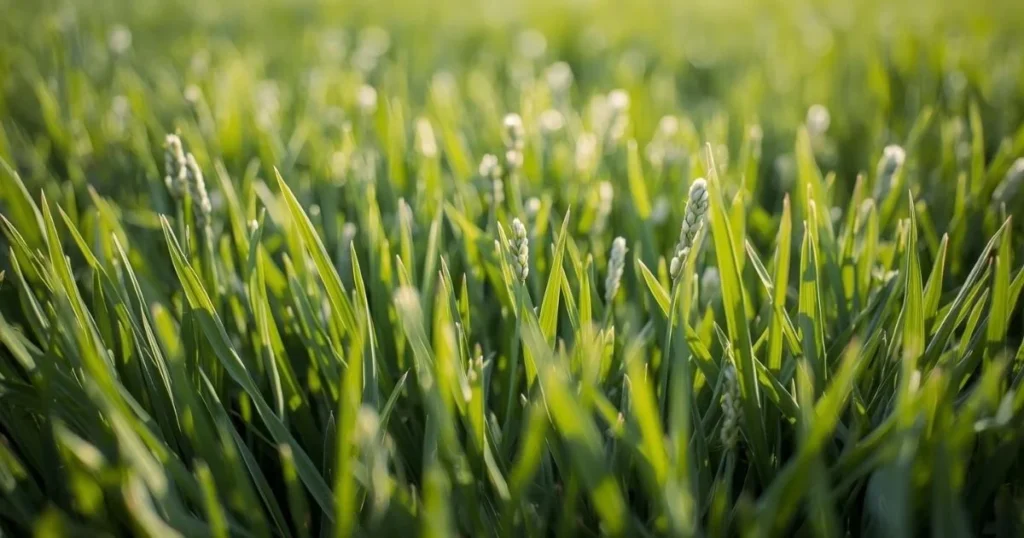
You can spot annual bluegrass by checking a few features.
- Light green color
- Soft and weak texture
- Rounded or boat-shaped leaf tips
- Many white seedheads in early spring
- Grows in small clumps
Seedheads are the easiest sign. If you see them all over the lawn early in the year, it is a strong warning sign.
Ligule Differences Between Annual and Kentucky Bluegrass
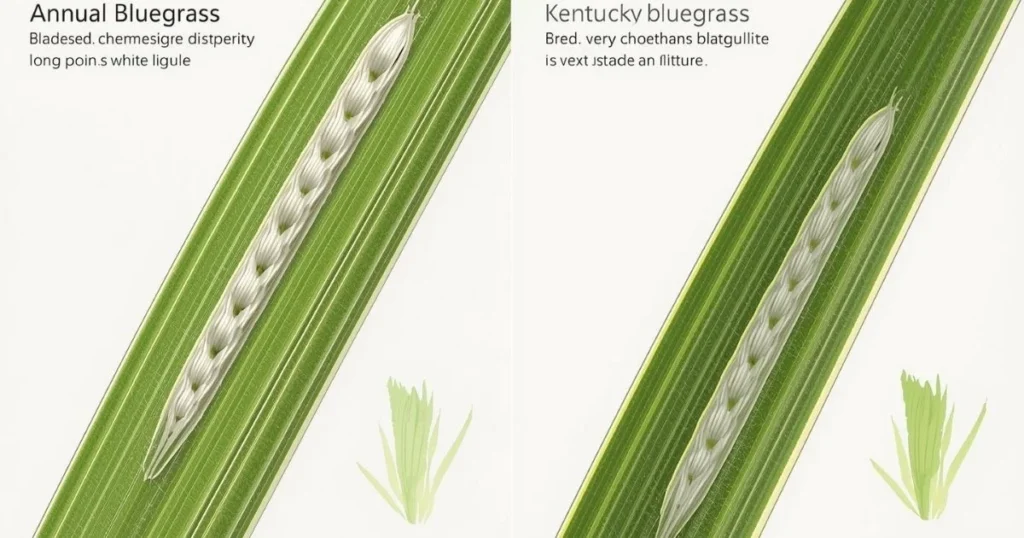
The ligule is a small flap where the leaf meets the stem.
- Annual bluegrass has a long, white, pointed ligule
- Kentucky bluegrass has a very short ligule that is hard to see
This detail helps confirm what grass you have.
When and Where Annual Bluegrass Grows
Annual bluegrass grows best in cool, moist areas.
- Germinates in fall
- Grows during winter
- Produces seeds in early spring
- Weakens or dies in summer heat
It often shows up in thin lawns, overwatered areas, and compacted soil.
Climate Effects on Annual Bluegrass
Climate changes how long this weed survives.
In cooler northern or coastal areas, plants may live through summer. In hotter regions, most plants die once heat builds.
Even after plants die, seeds stay behind and sprout again in fall.
How Annual Bluegrass Spreads
Annual bluegrass spreads only by seed.
Each plant drops many seeds. Those seeds can stay active for years. This makes quick fixes ineffective.
Long-term control depends on timing and lawn health.
Kentucky Bluegrass
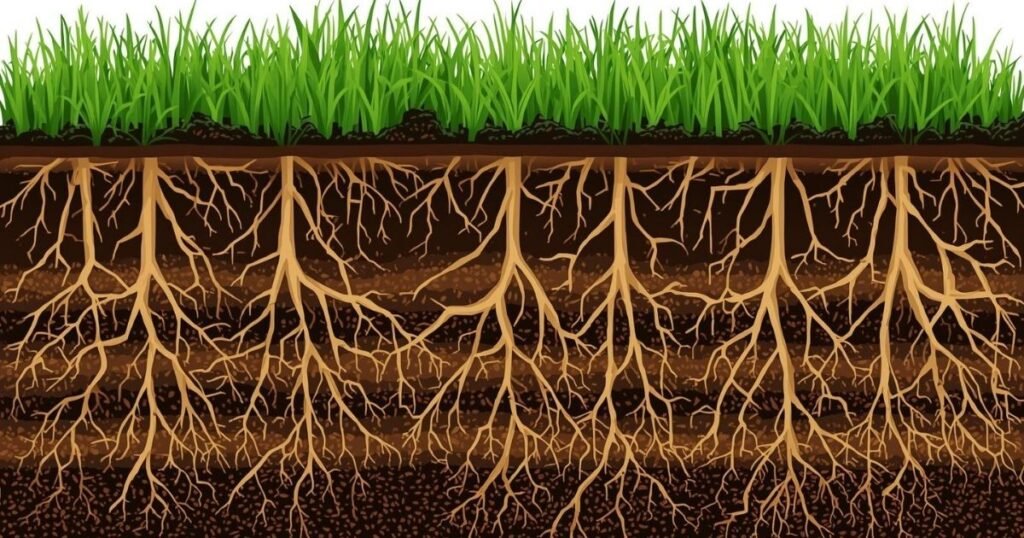
Kentucky bluegrass is a desirable lawn grass. Its scientific name is Poa pratensis.
It grows slower but lives for many years.
Key traits include:
- Medium to dark green color
- Fine to medium texture
- Boat-shaped leaf tips
- Underground stems called rhizomes
Rhizomes help it spread and repair bare areas.
Annual Bluegrass vs Kentucky Bluegrass
| Feature | Annual Bluegrass | Kentucky Bluegrass |
|---|---|---|
| Life cycle | One season | Many years |
| Color | Light green | Medium to dark green |
| Seedheads | Very early in spring | Rare in lawns |
| Growth habit | Clumps | Spreads underground |
| Summer performance | Often dies back | Handles heat better |
| Lawn value | Weed | Desirable turf |
These grasses differ in important ways.
- Life cycle
Annual bluegrass lasts one season.
Kentucky bluegrass lasts many years. - Color
Annual bluegrass is pale green.
Kentucky bluegrass is deeper green. - Growth habit
Annual bluegrass grows in clumps.
Kentucky bluegrass spreads underground.
Quick Identification Checklist
Before applying any control, confirm what grass you are dealing with.
If the grass:
- Turns light green early in spring
- Produces white seedheads even when mowed short
- Grows in small clumps
- Looks weak by early summer
It is most likely annual bluegrass.
If the grass:
- Stays darker green
- Spreads and fills bare areas
- Does not show early seedheads
- Survives summer better
It is most likely Kentucky bluegrass.
Correct identification prevents wasted time and unnecessary treatments.
Seedhead Timing Difference
Annual bluegrass produces seedheads very early in spring. This happens even at low mowing height.
Kentucky bluegrass rarely shows seedheads in home lawns. When it does, they appear later and usually grow taller.
Early seedheads across the lawn almost always point to annual bluegrass.
Is Annual Bluegrass Bad for Lawns?
For most home lawns, yes.
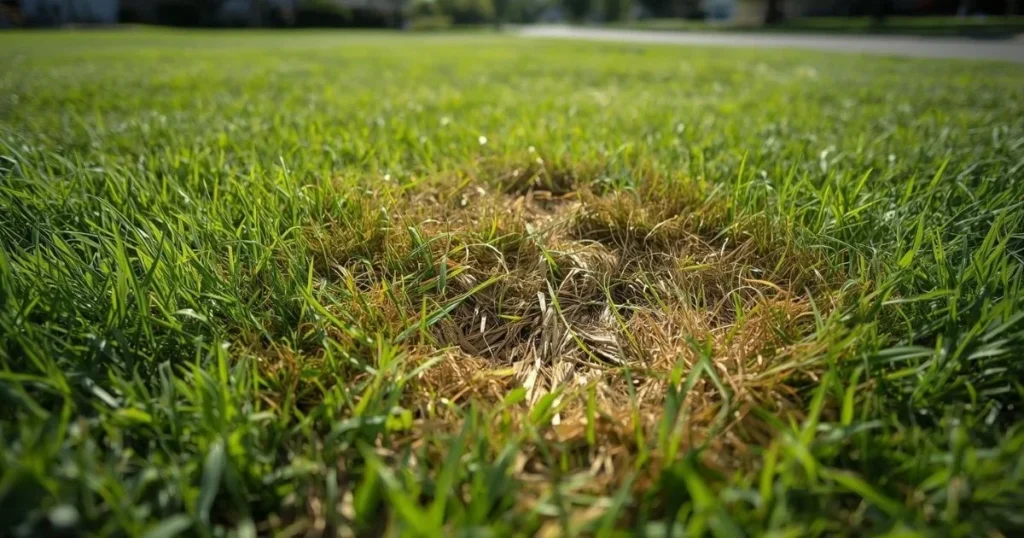
Annual bluegrass creates weak spots. It struggles in heat. When it dies, bare areas appear. These areas invite weeds and disease.
Kentucky bluegrass stays stronger through summer when cared for properly.
Identification and Life Cycle
Correct identification comes first.
If grass in your lawn:
- Turns light green early
- Produces seedheads fast
- Grows unevenly
It is likely annual bluegrass.
Kentucky bluegrass stays more uniform and holds color longer.
Impact on Your Lawn
Annual bluegrass causes several issues.
- Uneven color
- Thin turf by summer
- Poor heat tolerance
- Higher disease risk
Soil Compaction and Annual Bluegrass
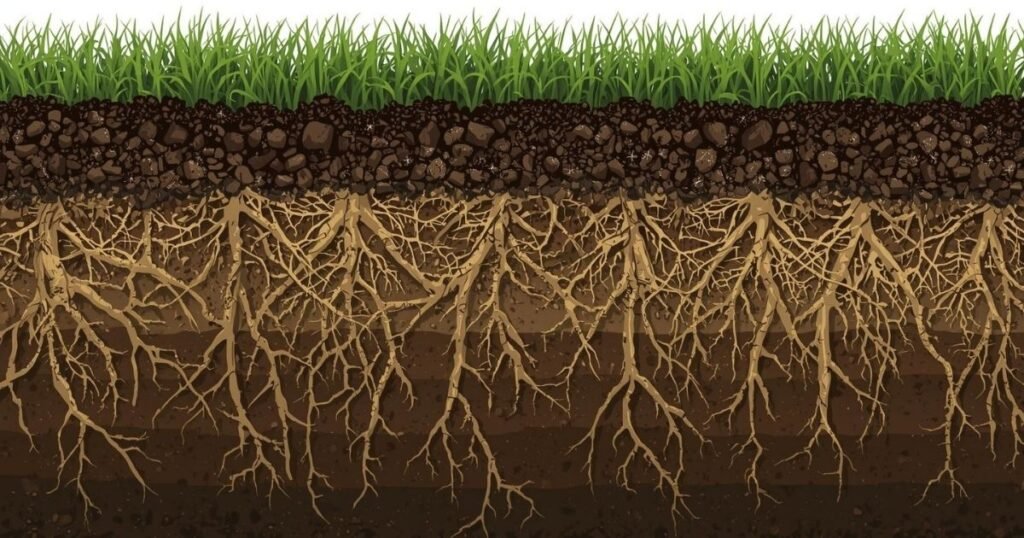
Compacted soil favors annual bluegrass.
Heavy foot traffic and poor drainage make it worse. Core aeration helps loosen soil and supports stronger turf.
What To Do This Season
| Season | What To Do | What To Avoid |
|---|---|---|
| Spring | Mow correctly, reduce stress | Scalping or heavy watering |
| Summer | Maintain turf health | Overworking weak grass |
| Fall | Apply pre-emergent, overseed | Skipping timing |
Spring
- Do not scalp the lawn
- Mow at the recommended height
- Avoid heavy watering
Summer
- Water deeply but less often
- Reduce stress on turf
- Accept that some annual bluegrass may die
Fall
- Apply pre-emergent at the right time
- Overseed thin areas
- Improve soil conditions
Fall is the most important season for control.
Management and Control
No single step solves the problem.
Cultural Control
Healthy lawns resist weeds better.
- Proper mowing height
- Correct watering habits
- Good drainage
- Balanced fertilization
Dense turf leaves less space for weeds.
Pre-Emergent Control
Pre-emergents stop seeds from sprouting.
- Apply in early fall
- Soil should be cooling
- Timing matters more than brand
Missing fall timing allows new plants to grow.
Post-Emergent Control
Post-emergent options are limited for homeowners.
- Best results occur in late spring
- Some products harm turf
- Labels must be followed closely
Prevention works better than spraying.
Should You Handle This Yourself?
You can manage annual bluegrass if:
- It covers small areas
- Your lawn is mostly healthy
- You can commit to fall care
You may need help if:
- Large areas are affected
- The lawn dies back every summer
- Problems return year after year
Common Mistakes to Avoid
- Cutting grass too short
- Watering too often
- Skipping fall treatments
- Expecting instant results
Control takes time and consistency.
- Annual bluegrass covers large areas of the lawn
- The lawn dies back every summer
- Fall treatments were missed for years
- The problem returns no matter what you try
Frequently Asked Questions
Is annual bluegrass a weed?
Yes. It is considered a weed in most home lawns.
Will it kill Kentucky bluegrass?
It weakens the lawn but does not directly kill it.
Can I remove it in one year?
Usually no. Seeds stay in the soil.
Does summer heat fix the problem?
Heat kills plants but not seeds.
Final Thoughts
From my experience, lawns struggle most when the wrong grass is treated the wrong way. I have watched homeowners chase spring fixes year after year, only to see the same problem return. When they focused on proper identification and fall timing, the lawn slowly improved. Annual bluegrass lost ground, and healthy turf took over. These two grasses may look alike, but they demand different care. Once you understand that difference, you gain real control over your lawn and stop repeating the same cycle each season.
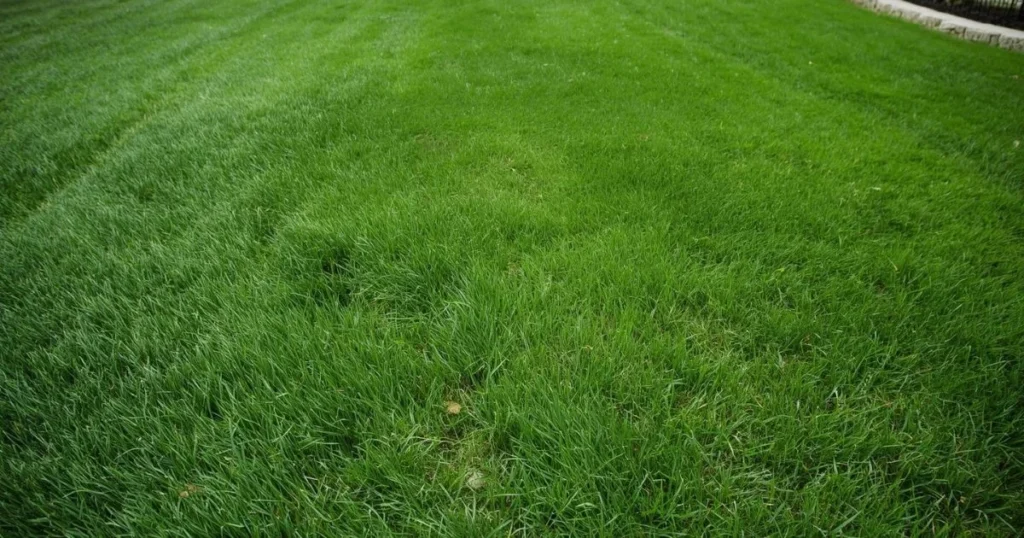
- Light green grass with early seedheads is usually annual bluegrass
- Kentucky bluegrass is darker and spreads underground
- Annual bluegrass returns each year if fall care is skipped
- Correct identification saves time and money
- Fall is the most important season for control