

Not sure what kind of grass you have? You can identify your lawn in minutes by checking a few simple things like blade shape, color, and how the grass grows. In this guide, you’ll learn the exact steps professionals use to identify grass types quickly and correctly.
Thank you for reading this post, don't forget to subscribe!If you have ever looked at your lawn and wondered why it looks thin, patchy, or unhealthy, you are not alone. Many homeowners spend money on fertilizer, seed, and weed control without knowing what kind of grass they have, and that often makes the problem worse instead of better. After years of working with different grass types, I learned that identification is the first step. Learn more in our guide to different lawn grass types:
- How to Identify Your Grass (Quick Answer)
- Quick Grass Identification Table
- Know Your Grass Growing Region
- Observe Lawn Grass Features
- Growth Habit Types Explained
- Step-by-Step Grass Identification
- Using Seed Heads to Identify Grass
- Best Time of Year to Identify Grass
- Grass Identification by Photo (Quick Guide)
- Identify Common Cool-Season Lawn Grasses
- Identify Common Warm-Season Lawn Grasses
- Other Grass Types You May See
- Common Lawn Grasses by U.S. Region
- Turfgrass Identification Chart (Quick Help)
- How to Identify Your Grass Using Photos
- How to Use a Grass ID App
- When to Ask for Expert Help
- Why Identifying Your Grass Type Is Important
- Common Grass Identification Mistakes to Avoid
- Common Mistake: Guessing Grass Type Too Early
- Frequently Asked Questions
- Still Not Sure What Grass You Have?
- Final Thoughts
How to Identify Your Grass (Quick Answer)
You can quickly identify your grass by checking these key signs:
- Your region (cool-season vs warm-season)
- Blade width and color
- Growth pattern (spreading vs clumping)
- Presence of runners (above or below ground)
If your grass grows fast in summer and turns brown in winter, it is likely a warm-season grass. If it stays green in cooler months, it is likely a cool-season grass.
- Your grass type depends on climate, blade shape, and how it grows.
- Cool-season grasses grow best in spring and fall.
- Warm-season grasses grow best in summer and turn brown in winter.
- Identifying your grass first helps you avoid damaging it with the wrong care.
Quick Grass Identification Table
| Feature | Cool-Season Grass | Warm-Season Grass |
|---|---|---|
| Best growth | Spring & Fall | Summer |
| Winter color | Green | Brown |
| Common regions | North | South |
| Blade feel | Soft to medium | Medium to coarse |
Know Your Grass Growing Region
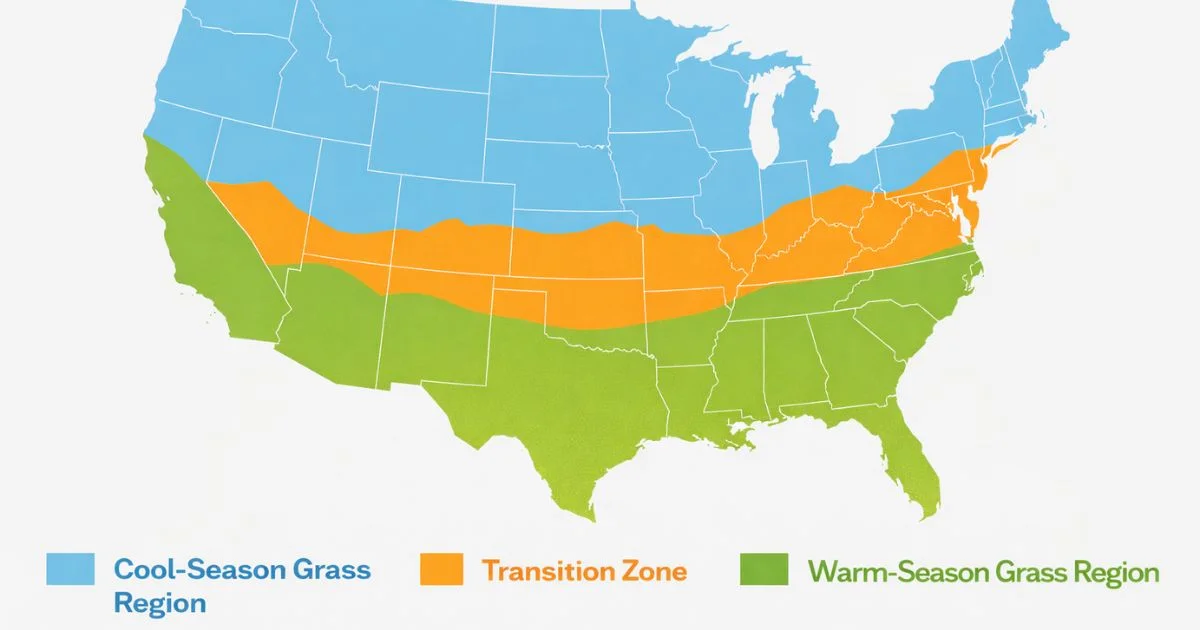
Grass grows best in certain climates.
The United States has three main lawn regions.
If you live in a warm region, see the best grass to grow in Florida.
Cool-season grass regions
These grasses grow best in cooler weather.
Common in:
- Northern states
- Northeast and Midwest
- Pacific Northwest
Examples:
- Kentucky bluegrass
- Perennial ryegrass
- Fine fescue
- Tall fescue (compare tall fescue vs other fescue types)
Warm-season grass regions
These grasses grow best in warm weather.
Common in:
- Southern states
- Southeast and Southwest
- Coastal areas
Examples:
- Bermuda grass (see what Bermuda grass looks like) to compare blade shape and growth pattern
- Zoysia grass (compare Zoysia vs fescue)
- St. Augustine grass (learn how to identify St. Augustine grass)
- Centipede grass
Transition zone
This area is between north and south.
Both types can grow here.
Examples:
- Tall fescue
- Zoysia grass
- Bermuda grass
If you live in the transition zone, grass identification is extra important because many grasses look similar.
Observe Lawn Grass Features
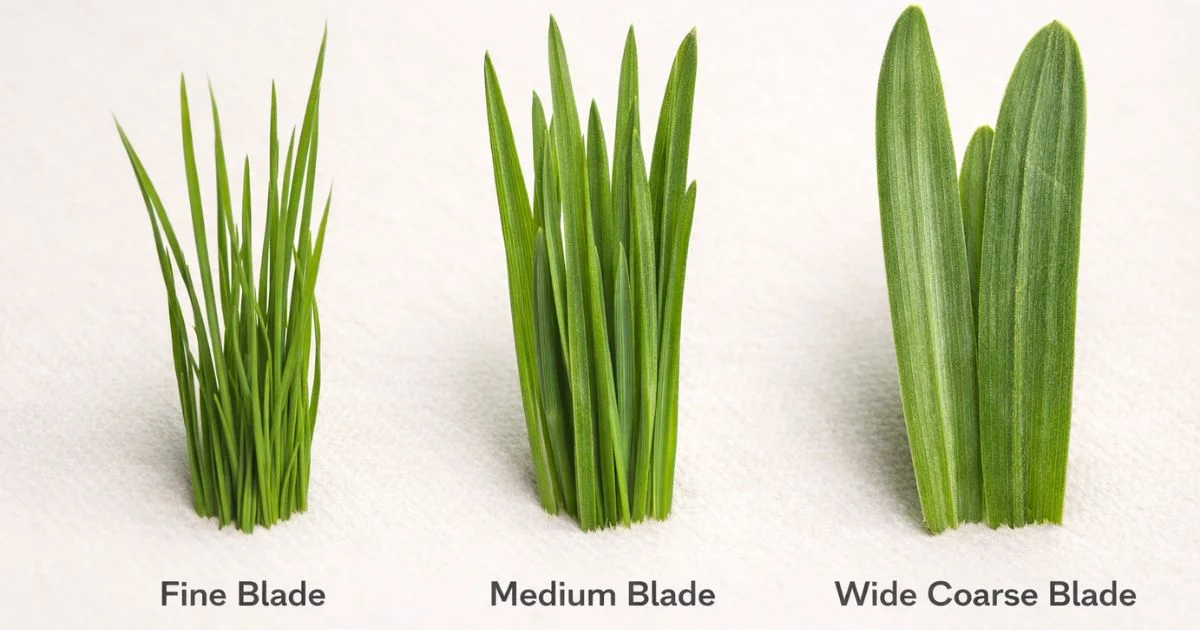
Look closely at your grass.
Small details can tell you the type.
Blade shape
- Fine blades feel soft and thin.
- Medium blades feel firm.
- Wide blades feel coarse.
Blade tip
- Pointed tips are common in Bermuda and ryegrass.
- Rounded tips are common in St. Augustine.
Color
- Blue-green often means Kentucky bluegrass.
- Bright green often means ryegrass or fescue.
- Dark green often means Zoysia or St. Augustine.
Growth pattern
- Some grasses spread sideways with runners.
- Some grow in clumps.
Growth Habit Types Explained
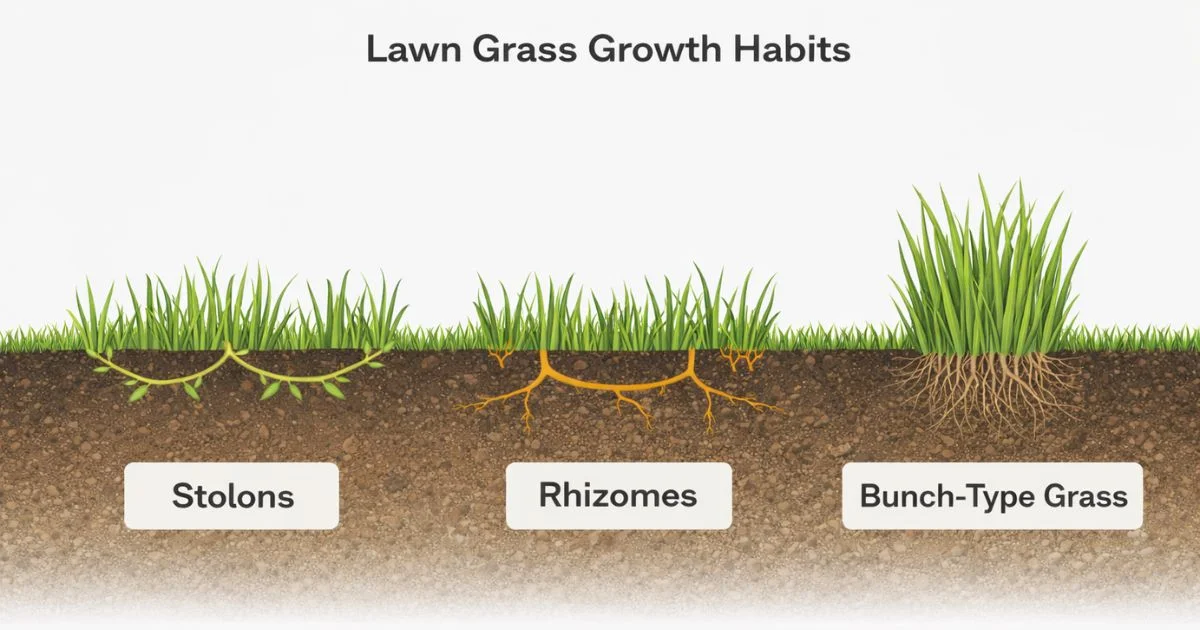
Grass grows in different ways. This helps with identification.
- Stolons are runners that grow above the soil.
- Rhizomes are runners that grow below the soil.
- Bunch-type grasses grow in tight clumps and do not spread much.
Examples:
- Bermuda grass spreads with stolons and rhizomes.
- Zoysia spreads mostly with rhizomes.
- Tall fescue grows in bunches.
Step-by-Step Grass Identification
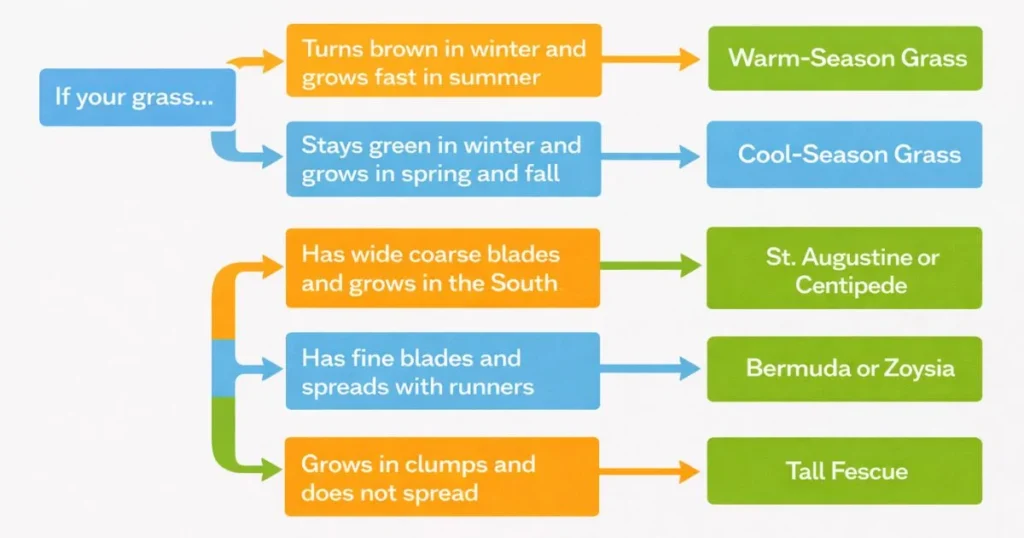
| If your grass… | Then it is likely… |
|---|---|
| Turns brown in winter and grows fast in summer | Warm-season grass |
| Stays green in winter and grows in spring and fall | Cool-season grass |
| Has wide coarse blades and grows in the South | St. Augustine or Centipede |
| Has fine blades and spreads with runners | Bermuda or Zoysia |
| Grows in clumps and does not spread | Tall fescue |
Follow these steps in order.
Step 1: Find your growing zone
Know if you live in a cool, warm, or transition area.
Step 2: Look at the grass blades
Check width, color, and shape.
Step 3: Check how it grows
Spreading grass has runners above or below ground.
Bunch grass grows in tight clumps.
Step 4: Check the vernation
Pull a new leaf from the stem.
Rolled leaf = rolled vernation
Folded leaf = folded vernation
What Is Vernation?
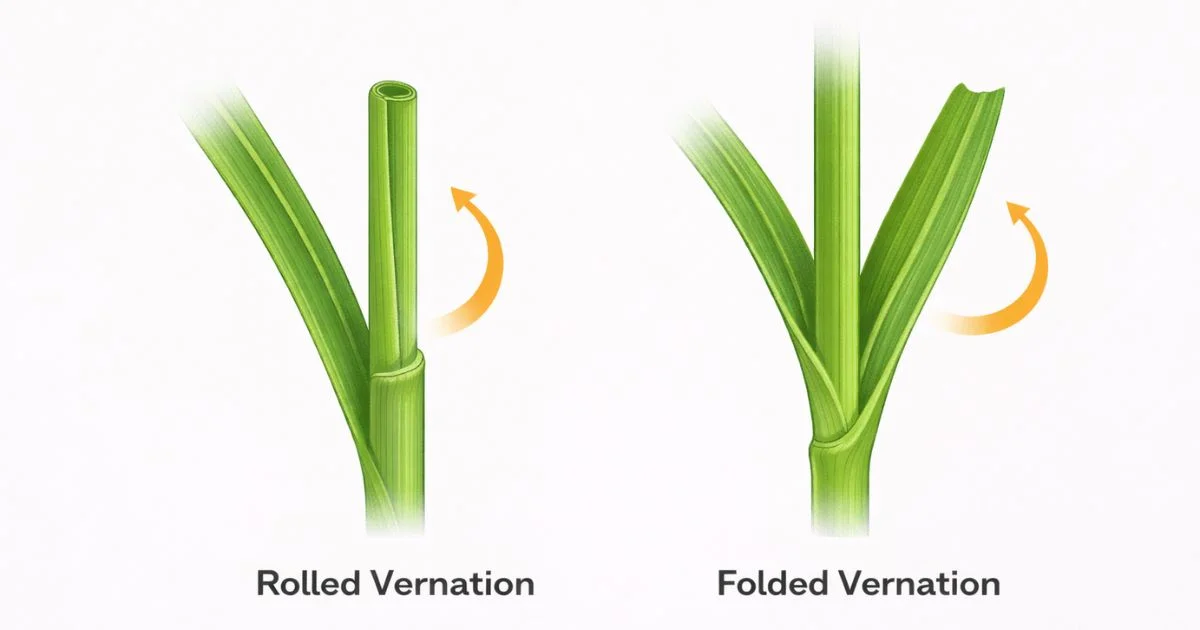
Vernation means how a new leaf is folded inside the stem.
Rolled vernation means the leaf looks round when pulled out.
Folded vernation means the leaf looks flat when pulled out.
Examples:
- Kentucky bluegrass has folded vernation (see how to identify Kentucky bluegrass).
- Bermuda grass has rolled vernation.
Step 5: Look for auricles
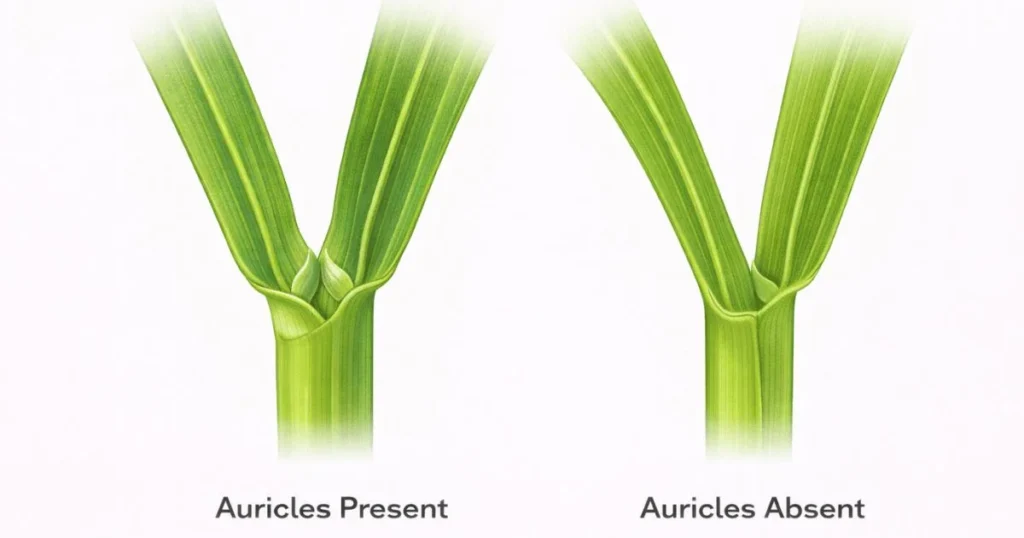
Auricles are small ear-like parts near the base of the leaf.
Many lawn grasses do not have auricles.
Perennial ryegrass often has small auricles.
Fescue usually has none.
Auricles help separate ryegrass from other cool-season grasses.
Step 6: Look at the ligule
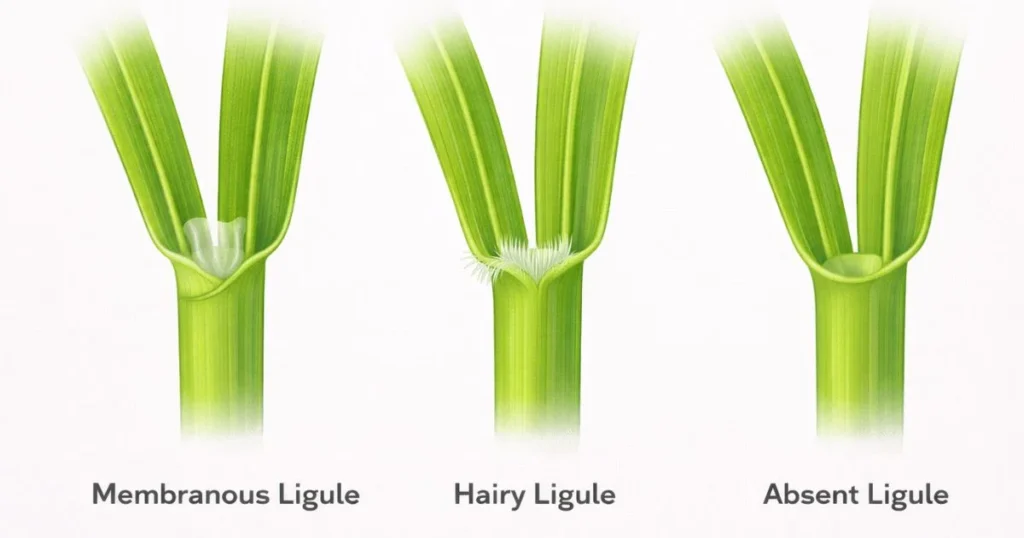
The ligule is a tiny part where the leaf meets the stem.
It can be:
- Membranous (a thin flap)
- Hairy (a fringe of hairs)
- Or missing
Examples:
- Kentucky bluegrass has a short membranous ligule.
- Bermuda grass has a fringe of hairs.
- Zoysia grass has small hairs.
- St. Augustine grass has noticeable hairs.
This feature is very helpful when grasses look similar.
Using Seed Heads to Identify Grass
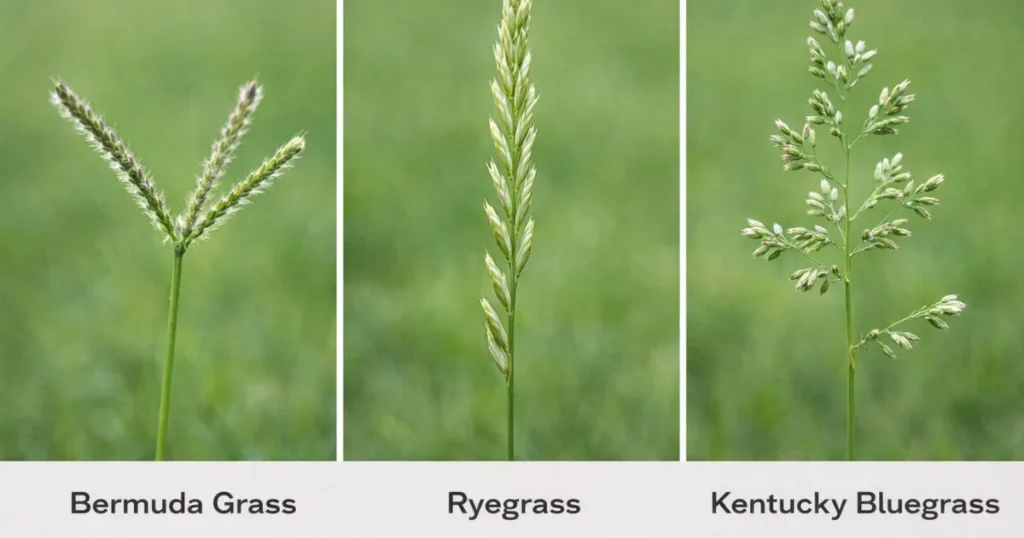
Seed heads can help identify grass when present.
- Bermuda grass has finger-like seed heads.
- Ryegrass has a tall narrow seed head.
- Kentucky bluegrass has a loose open seed head.
Seed heads appear mostly in late spring and summer.
Best Time of Year to Identify Grass
Grass is easier to identify during active growth.
- Spring and fall work best for cool-season grasses.
- Summer works best for warm-season grasses.
- Winter makes identification harder, especially in warm regions.
Grass Identification by Photo (Quick Guide)
You can often identify your grass just by looking at it closely. Here are common visual signs:
- Bermuda grass: Fine blades, spreads quickly, light green color
- Zoysia grass: Thick, dense, carpet-like lawn
- St. Augustine grass: Wide blades, bright green, coarse texture
- Fescue grass: Thin to medium blades, grows in clumps
Compare your lawn with these traits to narrow down your grass type faster.
Identify Common Cool-Season Lawn Grasses
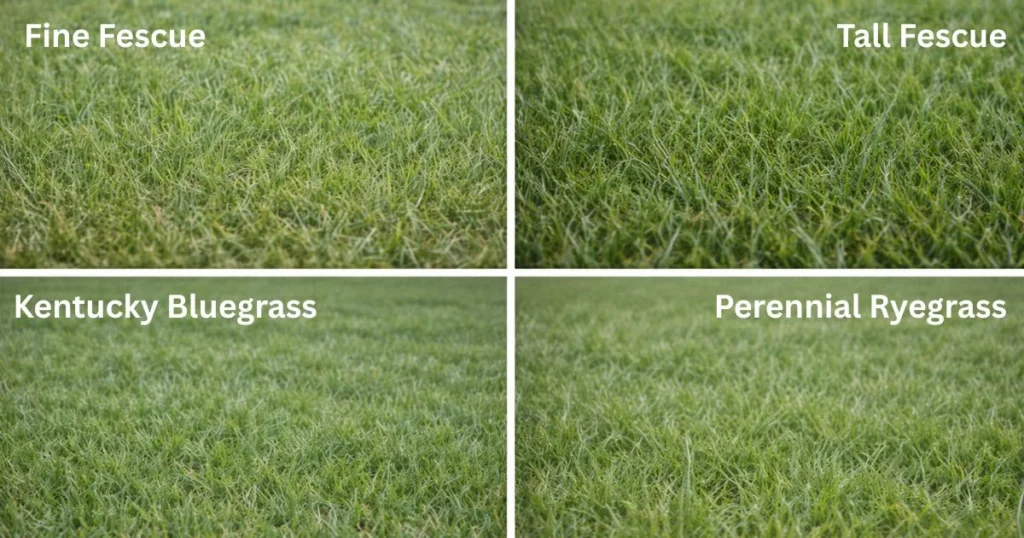
Kentucky Bluegrass
- Fine blade
- Blue-green color
- Spreads with underground stems
- Forms thick lawns
Perennial Ryegrass
- Shiny dark green leaves
- Grows fast
- Often used in mixes
Fine Fescue
- Very thin blades
- Soft texture
- Good for shade
Tall Fescue
- Wide blades
- Deep roots
- Handles heat better than other cool grasses
Identify Common Warm-Season Lawn Grasses
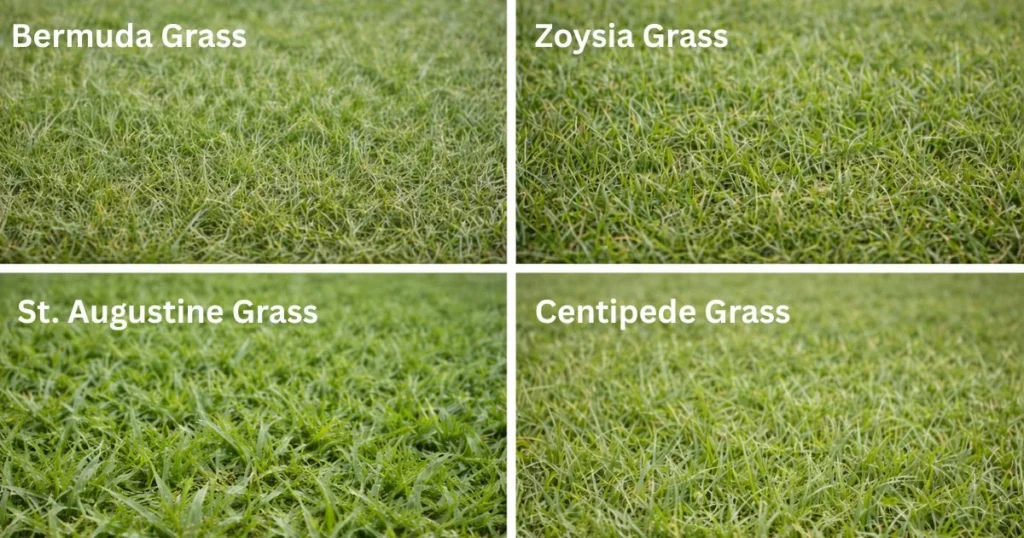
Bermuda Grass
- Fine texture
- Narrow blades with pointed tips
- Loves full sun
- Turns brown in winter
Zoysia Grass
- Thick and carpet-like
- Slow growing
- Handles foot traffic well
St. Augustine Grass
- Wide blades
- Bright green
- Grows well in warm coastal areas
- Likes some shade
Centipede Grass
- Light green color
- Slow growth
- Low maintenance
Other Grass Types You May See
- Buffalograss — Common in the Central Plains. Very drought tolerant.
- Bahiagrass — Found in the southern coastal states. Coarse and tough.
- Bentgrass — Fine textured. Often on golf courses.
Common Lawn Grasses by U.S. Region
| Region | Common Grasses |
|---|---|
| Northern states | Kentucky bluegrass, ryegrass, fine fescue |
| Southern states | Bermuda, Zoysia, St. Augustine, Centipede |
| Transition zone | Tall fescue, Zoysia, Bermuda |
| Central Plains | Buffalograss, tall fescue |
| Coastal South | St. Augustine, Bahia |
Turfgrass Identification Chart (Quick Help)
| Feature | Cool-Season | Warm-Season |
|---|---|---|
| Best growth | Spring and fall | Summer |
| Winter color | Stays green | Turns brown |
| Common areas | North | South |
| Blade feel | Soft to medium | Medium to coarse |
How to Identify Your Grass Using Photos

You can also use your phone.
Tips:
- Take a close photo of one blade.
- Take a photo of the full lawn.
- Take a photo where grass meets the soil.
Use a plant or grass ID app for help.
These tools use AI to suggest the grass type.
How to Use a Grass ID App
Steps:
- Take a close photo of one blade.
- Take a photo of the whole lawn.
- Upload the photo to a plant or grass ID app.
- Compare the result with your visual checks.
Apps work best with clear and bright photos.
Apps are helpful, but they are not always perfect. Use them together with visual checks.
When to Ask for Expert Help
Sometimes grass identification is still difficult.
You should ask for help if:
- Your lawn looks different in each area
- Grass traits do not clearly match one type
- You want confirmation before reseeding or renovation
Local extension offices and lawn professionals can confirm grass types and prevent costly mistakes.
Why Identifying Your Grass Type Is Important
Knowing your grass type helps you:
- Water correctly
- Use the right fertilizer
- Mow at the right height
- Prevent disease and weeds
- Save money and time
Wrong care can damage your lawn.
Common Grass Identification Mistakes to Avoid
- Guessing grass type based on color alone
- Using fertilizer without knowing the grass type
- Overseeding with a different grass than what already exists
- Mowing too short for the grass you have
- Using weed killer that is not safe for your grass
Avoiding these mistakes can protect your lawn from long-term damage.
see: Best time to overseed your lawn
Common Mistake: Guessing Grass Type Too Early
Many homeowners guess their grass type based on color alone, which often leads to wrong care decisions. Always check multiple features like blade shape, growth habit, and region before deciding.
Frequently Asked Questions
Can I identify grass in winter?
Yes, but it is harder. Warm-season grasses turn brown.
Can weeds look like grass?
Yes. Crabgrass and goosegrass look like turf grass.
Is one lawn always only one grass type?
No. Many lawns have mixed grass types.
Should I ask a professional?
Yes, if you are unsure. Local extension offices can help.
Does shade change how grass looks?
Yes. Shade can make grass thinner and darker.
Can watering change grass color?
Yes. Dry grass looks pale or gray-green.
Is visual identification always accurate?
No. Some grasses look alike.
Still Not Sure What Grass You Have?
Take a close photo of your lawn and compare it with the features above, or use a grass identification app for extra help. Combining visual checks with simple tools gives the most accurate results.
Final Thoughts
After helping many homeowners improve their lawns and seeing the same mistakes repeated, I can say with confidence that knowing your grass type is the foundation of good lawn care. When people stop guessing and start identifying, their lawns respond with thicker growth, better color, and fewer problems. I have seen lawns change simply because the right care was finally applied to the right grass, and that is why this step matters so much. Take a few minutes to observe your lawn, use this guide, and make informed choices, because a healthy lawn starts with understanding what is growing in it.