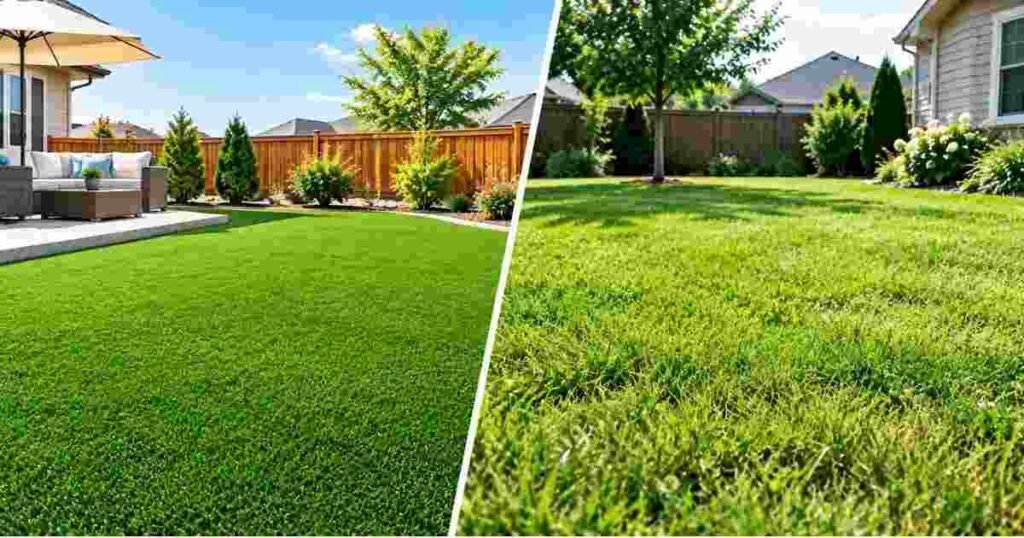
Every homeowner who has ever stood in the yard on a Saturday morning, mower in one hand and a long to-do list in the other, has probably wondered the same thing: is all this work actually worth it? And more and more, that question leads to a bigger one. Would artificial turf save me money in the long run, or is good old natural grass still the smarter choice?
Thank you for reading this post, don't forget to subscribe!It’s a fair debate, and the honest answer is that it depends on how you live, where you live, and what you value. Both options can be the money-saving winner for the right household. So instead of throwing numbers at you, let’s walk through how each one really affects your wallet, your weekends, and your yard over time. By the end, you’ll know which direction makes sense for your home.
The Real Cost Conversation Isn’t About the Price Tag
Here’s the first thing to understand. When people ask which option saves money, they usually picture the initial price. But a lawn isn’t a one-time purchase. It’s an ongoing relationship, and the true cost shows up over years, not on day one.
Natural grass tends to ask for less money upfront. Seeding or laying sod is usually the gentler hit to your budget at the start. Artificial turf, on the other hand, asks for more at installation because of the materials and the labor involved in doing it right.
So if you only look at the beginning, grass wins. But the beginning is not where the real story lives. The savings, or the slow drain, happen in everything that comes after.
Where Natural Grass Keeps Costing You
A living lawn is beautiful, but it’s also hungry. It needs water, and plenty of it, especially through hot summers and in drier climates. It needs feeding, weeding, and regular mowing. It wants aeration, overseeding, and the occasional rescue mission when a brown patch shows up uninvited.
Each of those needs comes with a cost. Some are obvious, like your water bill climbing in July or the fertilizer and products you keep restocking. Others are quieter. The gas or electricity for the mower. The trimmer line. The sprinkler repairs. The weekend hours you spend doing it all, which have real value even if they never show up on a receipt.
None of these are deal-breakers on their own. Together, though, they add up season after season, year after year. A natural lawn is a bit like a pet. The adoption is the easy part. The ongoing care is the real commitment.
Where Artificial Turf Earns Its Keep
Artificial turf flips the equation. You pay more to get started, but the ongoing costs shrink dramatically. There’s no mowing. No weekly watering to keep it green. No fertilizer, no weed treatments, and no reseeding bare spots.
That changes your math in a few meaningful ways. Your water usage drops, which matters more every year as water gets scarcer and pricier across much of the country. Your maintenance spending nearly disappears. And those reclaimed weekend hours become yours again, which is a kind of savings that’s hard to put a figure on but easy to feel.
Quality turf is also built to last for many years when it’s installed well. Over a long enough horizon, the lack of ongoing costs can quietly close the gap on that higher starting point, and in water-intensive climates, it can pull ahead entirely.
The catch is that turf rewards doing it right the first time. A proper base, correct drainage, and clean edges are what separate turf that looks great for a decade from turf that ripples, pools water, or fades early. This is one of those projects where the installation matters as much as the product.
It’s Not Just About Money
Money is the headline, but a few other factors shape which option feels like a win.
Think about how you actually use your yard. Homes with kids and pets often love turf because it stays clean, green, and mud-free no matter how much traffic it takes. There’s no worn dirt path where little feet run the same route every day. On the flip side, gardeners who love the feel of real grass underfoot, or who want their yard to support pollinators and soak up rainwater naturally, may lean toward a living lawn.
Climate plays a huge role too. In regions with long dry spells and watering restrictions, natural grass fights an uphill battle, and turf starts to look like the practical hero. In milder, rainier places, grass has an easier time and a smaller water footprint.
And let’s be honest about lifestyle. If mowing relaxes you and you take pride in a hand-tended lawn, that’s worth something real. If yard work is the chore you dread most, the value of never touching a mower again is genuine.
The Hybrid Approach More People Are Choosing
Here’s a secret that often gets lost in the either-or debate. You don’t have to pick just one.
Plenty of homeowners are blending the two. Turf goes in the high-traffic, hard-to-grow spots: the shady side yard where grass always struggles, the pet run, the play area, and the narrow strip nobody enjoys mowing. Natural grass or planting beds stay where they shine, framing the space with living texture and color.
This mix-and-match strategy often lands in the financial sweet spot. You trim the thirstiest, most labor-heavy parts of your yard while keeping the greenery you love. For a lot of households, that balance saves the most money and delivers the best-looking result.
Figuring out that balance for your specific property is where a knowledgeable local landscaper earns their keep. A team that understands your climate, soil, and drainage can tell you honestly where turf will pay off and where grass still makes sense. If you’re in the Salt Lake City area and want a straight answer tailored to your yard, the crew at Activescapes Landscaping and Snow Removal designs and installs outdoor spaces built to handle the local climate and last. Wherever you live, the lesson is the same: get a professional eye on the layout before you commit.
So, Which One Actually Saves You Money?
Here’s the thoughtful bottom line.
Natural grass tends to save money if you have a mild, rainy climate, you don’t mind the upkeep, and you plan to stay in your home a shorter time. The lower starting cost wins when the ongoing demands are manageable, and you enjoy the work.
Artificial turf tends to save money if you live somewhere hot or dry, you water heavily to keep grass alive, you value your time, or you plan to stay put for years. The bigger upfront investment pays you back through lower bills and near-zero maintenance.
And for a huge number of homeowners, the smartest money move is a thoughtful blend of both, placed exactly where each one performs best.
The real win isn’t choosing a side. It’s matching your yard to how you actually live, so your outdoor space saves you money and gives you more time to enjoy it. That’s a result worth stepping outside for.