Skip to content
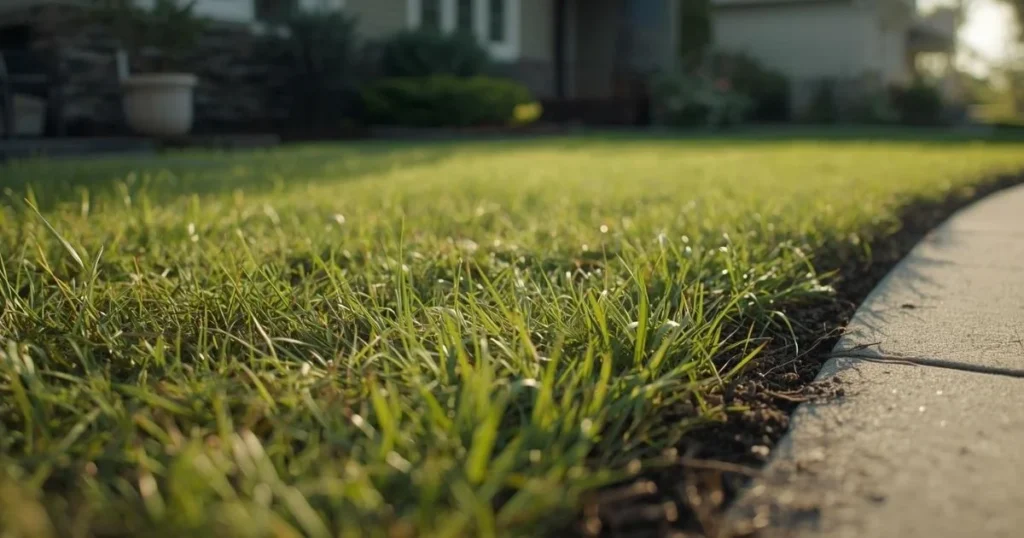
If you have a lawn with tall fescue, you may already know the problem. Thin lines appear where people walk. Dog spots show up and stay. Each year, you seed again, hoping the grass will fill in on its own. I faced the same issue in my own lawn. The grass stayed green, but bare areas never fully closed. It felt like fixing the same problems again and again.
That frustration pushed me to look deeper. I tested rhizomatous tall fescue in real lawns, not just by reading labels or ads. Over time, I observed how it behaved in everyday conditions. Foot traffic, summer heat, and small damage showed how it truly performed. This article is based on that experience, along with turf research and field results, so you know what this grass can truly do before choosing it. If you want a broader overview of lawn grasses and how different types behave across climates and uses, see our Grass Types guide.
- Rhizomatous tall fescue spreads slowly using short underground stems.
- It helps repair small thin spots, not large bare areas.
- Best for homeowners who want durability with less yearly overseeding.
- Performs better in summer heat than many cool-season grasses.
- Available as seed or sod, depending on budget and timeline.
- Quick Summary: Is Rhizomatous Tall Fescue Right for You?
- What “rhizomatous” means in tall fescue
- How rhizomatous tall fescue is different from regular tall fescue
- What seed and sod sellers usually highlight
- What research and extension sources say about rhizomatous tall fescue
- Does rhizomatous tall fescue really repair itself?
- Why rhizomatous tall fescue is often marketed as “self-repairing”
- How it performs in heat compared to other cool-season grasses
- When rhizomatous tall fescue makes more sense than Kentucky bluegrass
- When to plant rhizomatous tall fescue in the USA
- How to plant it from seed
- Using sod instead of seed
- Do all rhizomatous tall fescue types perform the same?
- What to ask before buying seed or sod
- How soil and compaction affect rhizomatous tall fescue
- Why deep watering matters for this grass
- Seed vs sod: cost and effort comparison
- Situations where rhizomatous tall fescue may struggle
- Common myths you may hear
- Frequently Asked Questions
- Final thoughts
Quick Summary: Is Rhizomatous Tall Fescue Right for You?
Rhizomatous tall fescue is a cool-season grass with limited underground spread.
It repairs small thin spots better than regular tall fescue.
It does not spread fast like Kentucky bluegrass.
Best for:
- Home lawns with light to moderate foot traffic
- Lawns with pets that cause small worn areas
- Areas with summer heat stress
- Homeowners who want fewer repairs over time
Not ideal for:
- Lawns needing fast spreading grass
- Constantly wet or poorly drained soil
- Dense shade with little sunlight
What “rhizomatous” means in tall fescue
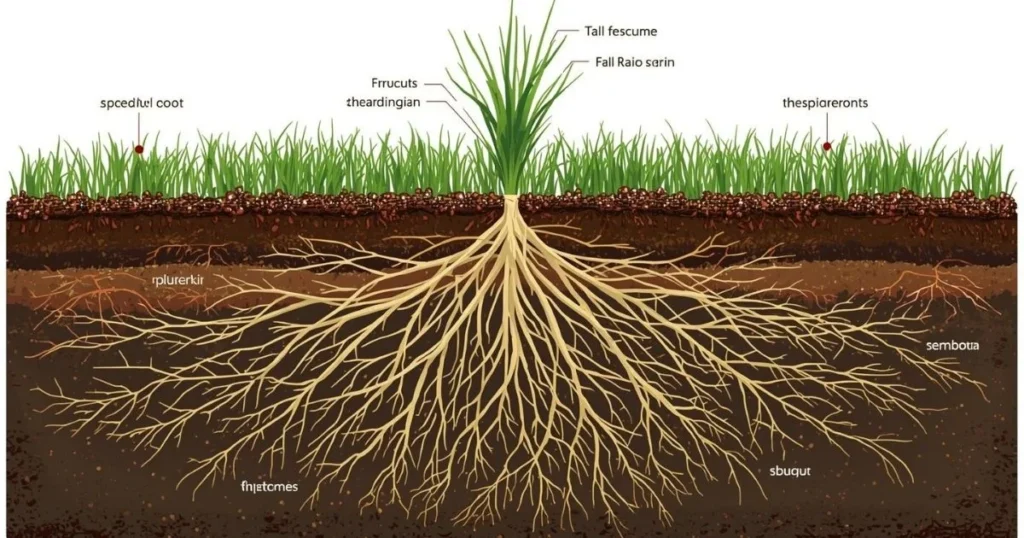
Rhizomes are underground stems.
They grow sideways below the soil surface.
New grass shoots can grow from them.
In rhizomatous tall fescue, rhizomes are short and slow growing.
So yes, this grass spreads.
But it spreads slowly and only short distances.
How rhizomatous tall fescue is different from regular tall fescue
| Feature | Rhizomatous Tall Fescue | Regular Tall Fescue | Kentucky Bluegrass |
|---|---|---|---|
| Growth habit | Limited spreading | Bunch-type | Spreading |
| Repair ability | Moderate | Low | High |
| Heat tolerance | Good | Good | Fair |
| Maintenance level | Medium | Medium | High |
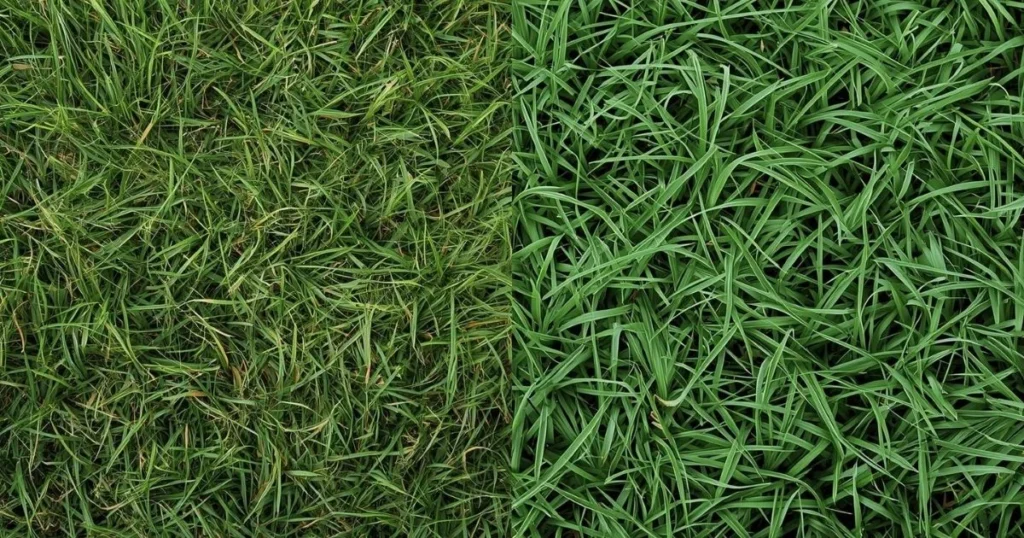
Regular tall fescue has a bunch-type growth habit.
It stays where it is planted.
If it becomes thin or damaged, it will not move back on its own.
Rhizomatous tall fescue has limited lateral spread.
This helps it recover from wear, pets, and light traffic.
Large bare areas still need overseeding or sod.
What seed and sod sellers usually highlight
Many seed and sod products focus on strength and recovery.
They often mention color, density, and stress tolerance.
These benefits exist.
But repair happens slowly and depends on care and growing conditions.
Good lawn care still matters.
What research and extension sources say about rhizomatous tall fescue
Research and extension sources explain that rhizomatous tall fescue is not a different species. It is tall fescue selected and bred to produce short rhizomes under the right conditions. These rhizomes allow limited lateral spread, not aggressive takeover.
Field studies and turf research also show that rhizome activity varies by cultivar, soil, moisture, and management. In real lawns, this means some repair happens naturally, but results depend on care and patience.
This is why expectations matter. Rhizomatous tall fescue improves recovery compared to bunch-type tall fescue, but it does not behave like fast-spreading grasses.
Does rhizomatous tall fescue really repair itself?
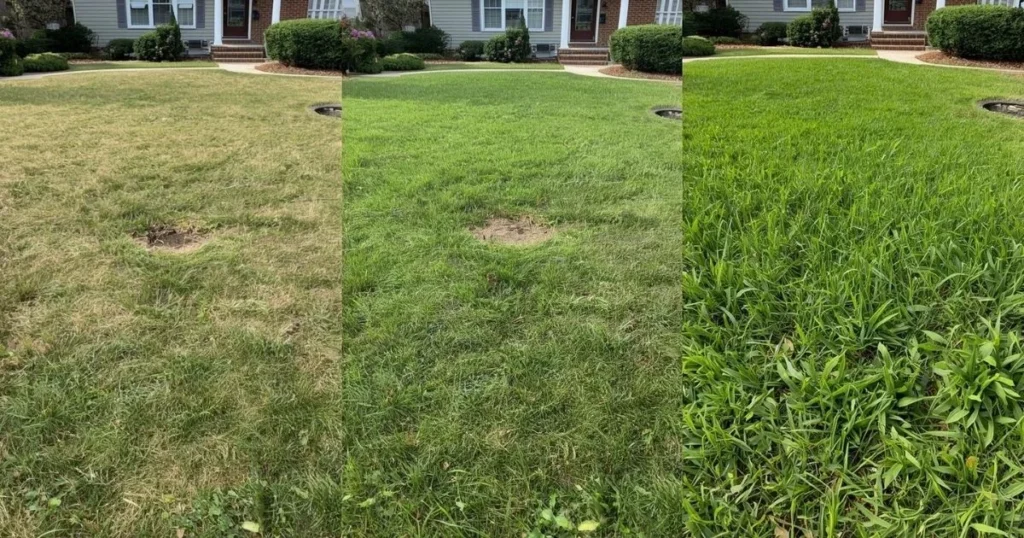
Short answer: yes, but slowly.
It can help fill:
- Small bare spots
- Thin lawn areas
- Light pet damage
It will not:
- Fix large dead patches fast
- Spread across the whole yard
Think of it as extra help, not a full solution.
- Weeks 1–2: Roots establish, no visible spread.
- Weeks 3–6: Lawn thickens, thin spots soften.
- Months 2–3: Small bare areas begin to fill in.
- Beyond: Steady improvement with proper care.
Why rhizomatous tall fescue is often marketed as “self-repairing”
Many products describe rhizomatous tall fescue as self-repairing. This description comes from its ability to form short rhizomes that can slowly fill nearby thin areas.
In practice, self-repair means reduced repair work over time, not instant recovery. Lawns with proper soil, watering, and mowing see better results. Poor conditions limit rhizome activity.
Understanding this difference helps avoid disappointment.
How it performs in heat compared to other cool-season grasses
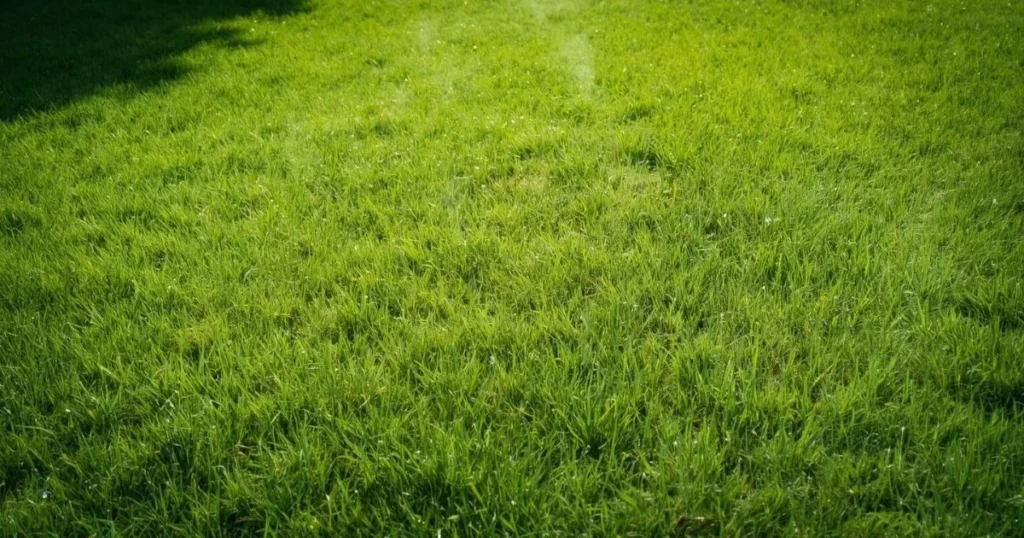
Rhizomatous tall fescue has deep roots.
Deep roots help it handle summer heat better than many cool-season grasses.
Kentucky bluegrass often struggles in heat.
Fine fescues may thin out under stress.
This grass focuses more on survival than fast growth.
When rhizomatous tall fescue makes more sense than Kentucky bluegrass
Rhizomatous tall fescue is often chosen when Kentucky bluegrass struggles. In areas with summer heat, water limits, or compacted soil, bluegrass may thin or go dormant more often.
Tall fescue maintains deeper roots and steadier color under stress. While it does not spread as fast as bluegrass, it survives heat better in many transition-zone lawns.
This trade-off explains why some homeowners prefer durability over rapid spread.
When to plant rhizomatous tall fescue in the USA
Fall is the best time in most regions.
Soil is cooler and weeds are less active.
Spring planting can work.
Weeds are more active in spring.
Best timing:
- Early fall in northern and transition zones
- Early spring only if fall planting was missed
How to plant it from seed
Follow these steps:
- Remove debris and dead grass
- Loosen the top layer of soil
- Spread seed evenly
- Lightly rake the surface
- Keep soil moist
Do not bury seed deeply.
Light soil contact is enough.
Using sod instead of seed
Sod gives faster coverage.
It costs more than seed.
Sod works well for:
- New lawns
- Slopes
- High-use areas
Water daily at first.
Reduce watering after roots settle.
Do all rhizomatous tall fescue types perform the same?
No.
Performance depends on the cultivar.
Some types form more rhizomes.
Others focus on color or disease tolerance.
This affects:
- Repair speed
- Density
- Stress response
Always check variety details before buying.
What to ask before buying seed or sod
Before buying seed or sod, ask which cultivars are included. Rhizome strength, disease tolerance, and performance vary by variety.
Also ask about recommended mowing height, water needs, and expected repair speed. Clear answers help match the grass to your lawn conditions.
How soil and compaction affect rhizomatous tall fescue
This grass develops deep roots.
Deep roots help it handle compacted soil better than shallow grasses.
Heavy compaction still causes problems.
For better results:
- Loosen soil before planting
- Avoid traffic on wet soil
- Core aerate when soil feels hard
Healthy soil supports steady growth.
Why deep watering matters for this grass
Deep watering pushes roots downward.
Shallow watering keeps roots near the surface.
Deep roots help:
- Handle heat stress
- Improve drought tolerance
- Strengthen the lawn
Water less often.
Water longer each time.
Seed vs sod: cost and effort comparison
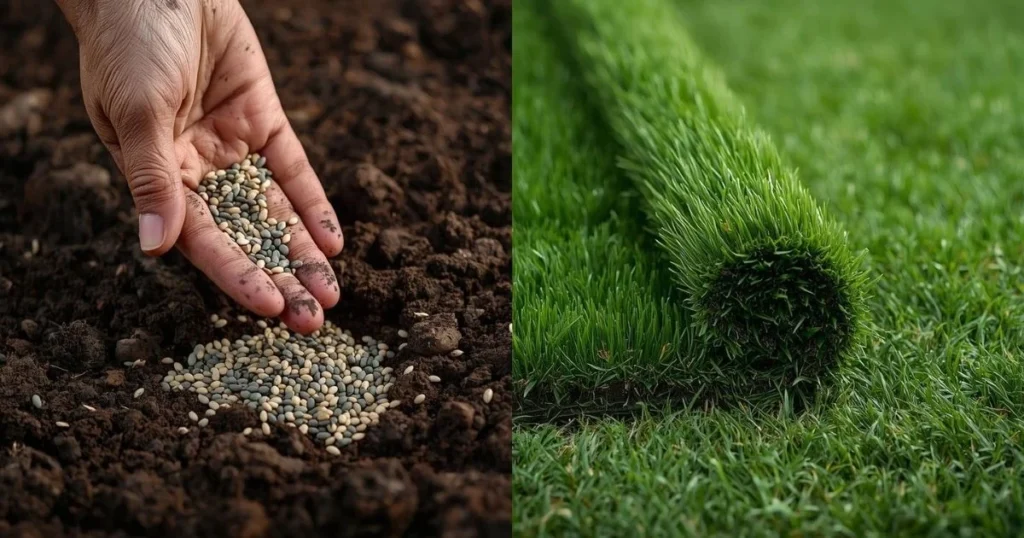
Seed:
- Lower cost
- Slower results
- More patience needed
Sod:
- Higher cost
- Fast coverage
- Less early weed pressure
Choose based on budget and timeline.
| Factor | Seed | Sod |
|---|---|---|
| Cost | Lower | Higher |
| Time to coverage | Slow | Fast |
| Weed risk | Higher early | Lower |
| Skill needed | Basic | Low |
Situations where rhizomatous tall fescue may struggle
This grass is not right for every lawn.
It may struggle in:
- Dense shade
- Constantly wet soil
- Lawns expecting fast self-spreading coverage
Knowing limits helps avoid poor results.
Common myths you may hear
1: It spreads like Kentucky bluegrass
Fact: Spread is much slower
2: It never needs overseeding
Fact: Overseeding still helps
3: All tall fescue spreads
Fact: Only selected types form rhizomes
Frequently Asked Questions
Does rhizomatous tall fescue spread on its own?
Yes, but slowly.
It helps fill small thin areas over time.
Can it fix large bare spots?
No.
Large areas still need seed or sod.
Is it good for homes with dogs?
It handles wear better than older tall fescue.
Heavy damage still needs repair.
Does it need overseeding?
Yes.
Just less often than bunch-type tall fescue.
Is seed or sod better?
Seed costs less.
Sod gives faster results.
Final thoughts
After working with different lawns and seeing how rhizomatous tall fescue performs over time, one thing stands out. It helps reduce repair work, but it does not remove the need for care. In lawns with pets, foot traffic, and summer stress, I saw steadier recovery compared to regular tall fescue. Results came slowly, but they lasted. With proper soil prep, deep watering, and realistic expectations, this grass proves to be a reliable choice for homeowners who want durability instead of quick fixes.
- Homeowners with pets or foot traffic
- Lawns that suffer from summer heat stress
- People who want fewer yearly repairs
- Those with realistic expectations about spread speed