
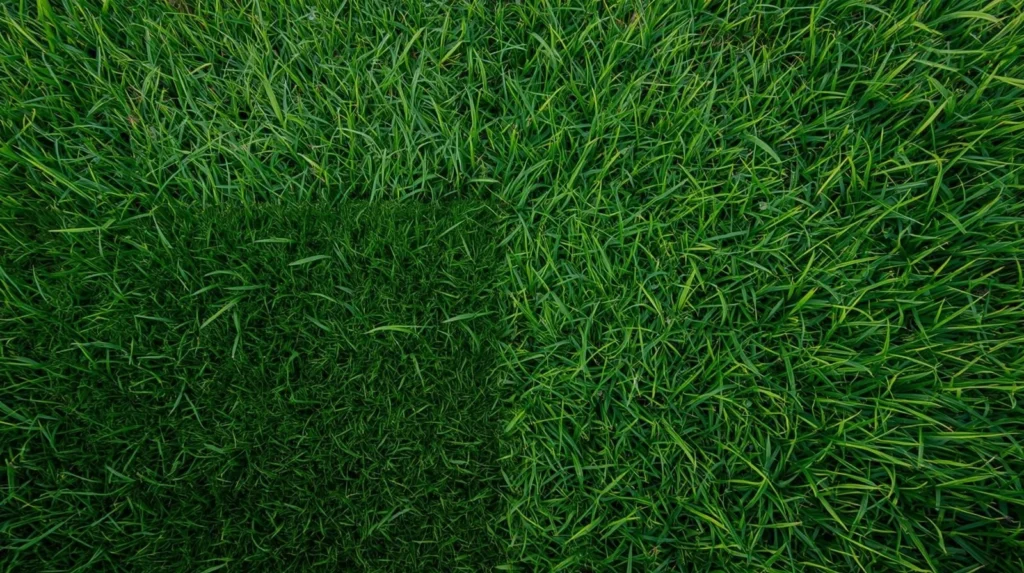
Many homeowners get confused between tall fescue and other fescue types. While they belong to the same family, they perform very differently in real lawns. If you want a clear understanding of all grass types, check this guide on different lawn grass types to choose the best option for your yard. In this article, you’ll quickly learn the key differences and which one is right for your lawn.
Thank you for reading this post, don't forget to subscribe!Over the years, through hands-on experience and research, I’ve learned which fescue types thrive in different conditions. I’ve experimented with turf-type tall fescue, traditional tall fescue, and fine fescue, adjusting watering, mowing, and fertilization to match their needs. In this guide, I’ll share practical insights, lessons learned, and expert tips to help you choose the best fescue for your lawn, avoid common mistakes, and maintain a strong, healthy yard that looks great year-round.
- Tall Fescue vs Fescue (Quick Answer)
- What is Fescue?
- What is Tall Fescue?
- Types of Fescue
- Tall Fescue vs Fine Fescue (Side-by-Side Comparison)
- Tall Fescue vs Fescue
- Turf-Type vs Traditional Tall Fescue
- Fescue by USDA Zones
- Step-by-Step Grass Selection Guide
- Best Grass for Your Region
- Lawn Care Tips
- User Advice: How to Choose the Right Fescue
- What to Choose Based on Lawn Conditions
- Exact Seeding and Timing Advice
- Common Lawn Problems and Fixes
- Can You Mix Tall Fescue and Fine Fescue?
- Regional Lawn Advice (USA)
- Quick Action Checklist
- Short Experience Insight
- Frequently Asked Questions (FAQs)
- Which One Should You Choose?
- Conclusion
Tall Fescue vs Fescue (Quick Answer)
Tall fescue is a strong, drought-tolerant grass with wide blades, ideal for high-traffic lawns. Fine fescue is softer, shade-tolerant, and better for low-traffic areas. The main difference is durability vs shade tolerance.
Quick Takeaways:
- Tall Fescue: Durable, heat & drought tolerant, ideal for high-traffic areas.
- Fine Fescue: Best for shady lawns, low traffic.
- Turf-Type Tall Fescue: Slower growth, smoother texture, low-maintenance.
- Traditional Tall Fescue: Faster growth, coarser blades, quick coverage.
- Always match fescue type to shade, traffic, and USDA zone for best results.
What is Fescue?
Fescue is a group of cool-season grasses. It has many types. Some common types are:
- Tall fescue
- Fine fescue
- Dwarf fescue
Fescues are used in lawns, parks, and sports fields. They grow well in the USA cool and transition zones.
What is Tall Fescue?
Tall fescue is one type of fescue. It is popular for lawns.
- It has wide blades.
- It grows in clumps.
- It is strong against heat and drought.
- It works well on lawns with pets or kids.
Tall fescue comes in turf-type and traditional tall fescue. Turf-type is smoother and grows slower. Traditional tall fescue grows faster and is coarser.
Types of Fescue
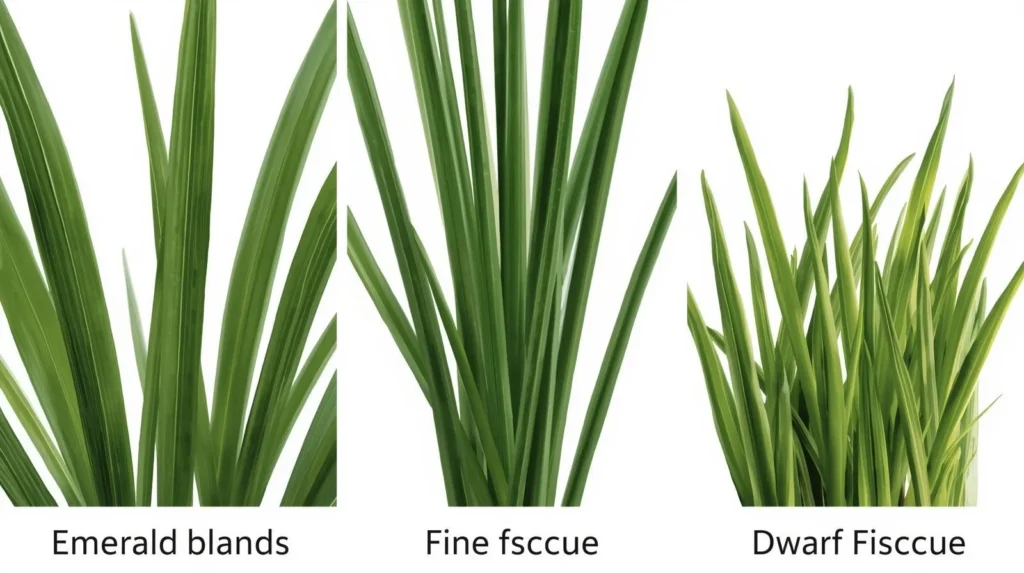
Here are the main fescue types:
| Type | Blade Width | Shade Tolerance | Drought Tolerance | Best Use |
|---|---|---|---|---|
| Tall Fescue | Wide | Medium | High | Lawns, high traffic |
| Fine Fescue | Narrow | High | Medium | Shady areas, low traffic |
| Dwarf Fescue | Medium | Medium | Medium | Small lawns or patches |
This table helps you see differences easily.
Tall Fescue vs Fine Fescue (Side-by-Side Comparison)
| Feature | Tall Fescue | Fine Fescue |
|---|---|---|
| Blade Width | Wide | Narrow |
| Shade Tolerance | Medium | High |
| Drought Tolerance | High | Medium |
| Traffic Tolerance | High | Low |
| Best Use | Lawns, pets, sports | Shade, low maintenance lawns |
Tall Fescue vs Fescue
| Type | Blade Width | Growth Rate | Shade Tolerance | Drought Tolerance | Traffic Tolerance | Best Use |
|---|---|---|---|---|---|---|
| Tall Fescue | Wide | Moderate | Medium | High | High | Lawns, pets, kids, sports areas |
| Turf-Type Tall Fescue | Wide | Slow | Medium | High | Medium | Low-maintenance lawns, uniform color |
| Traditional Tall Fescue | Wide | Fast | Medium | High | High | Quick coverage, rugged lawns |
| Fine Fescue | Narrow | Slow | High | Medium | Low | Shady lawns, low traffic areas |
| Dwarf Fescue | Medium | Slow | Medium | Medium | Low | Small lawns, patches |
When people say fescue, they often mean tall fescue. But technically, fescue includes many types.
Key differences:
- Blade width: Tall fescue is wider than fine or dwarf fescue.
- Growth: Tall fescue grows faster than fine fescue.
- Shade: Fine fescue grows better in shade.
- Durability: Tall fescue is stronger for heavy use.
Turf-Type vs Traditional Tall Fescue
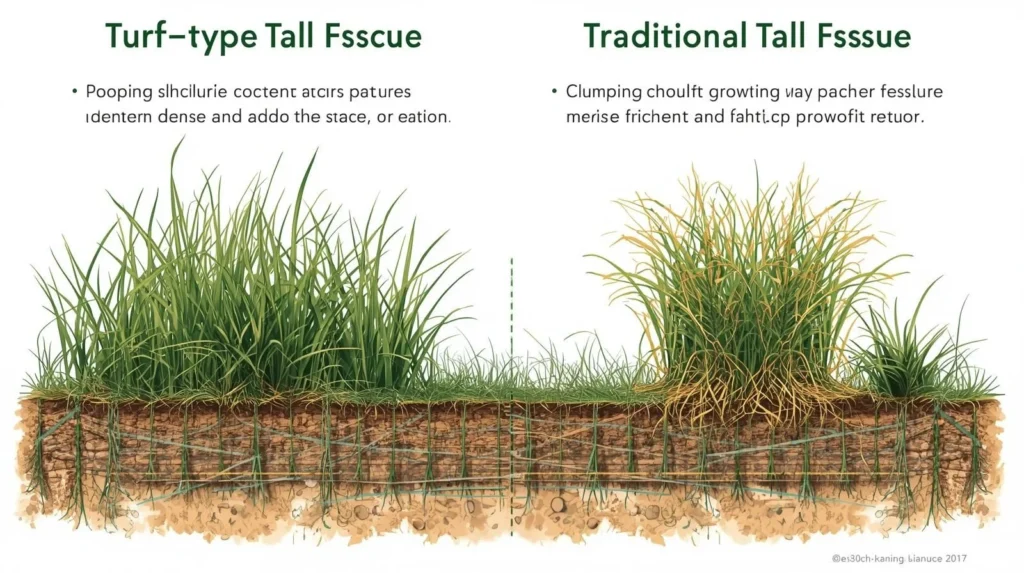
Some people get confused between these two.
Turf-type tall fescue:
- Smoother texture
- Slower growth
- Dark green color
Traditional tall fescue:
- Coarser blades
- Fast growth
- Light green color
Fescue by USDA Zones
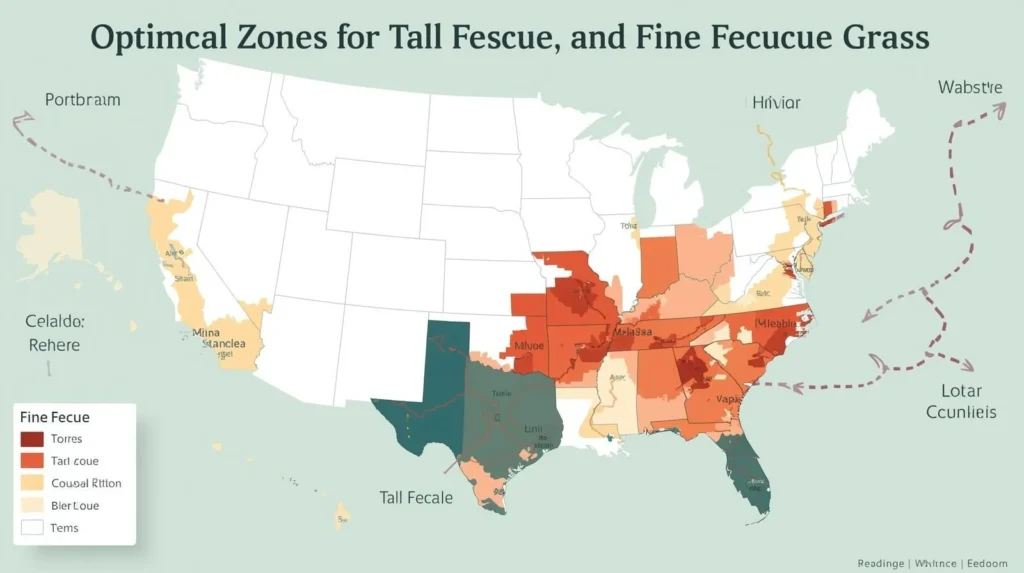
| USDA Zone | Recommended Fescue Type | Notes |
|---|---|---|
| 3–5 (Northern USA) | Fine Fescue | Best for shade, cool climates |
| 5–7 (Transition Zone) | Tall Fescue (Turf-type) | Tolerates heat, moderate shade |
| 7–9 (Southern USA) | Tall Fescue (Traditional) | Heat and drought tolerant, strong for traffic |
This helps you pick the right fescue type based on your region.
Step-by-Step Grass Selection Guide
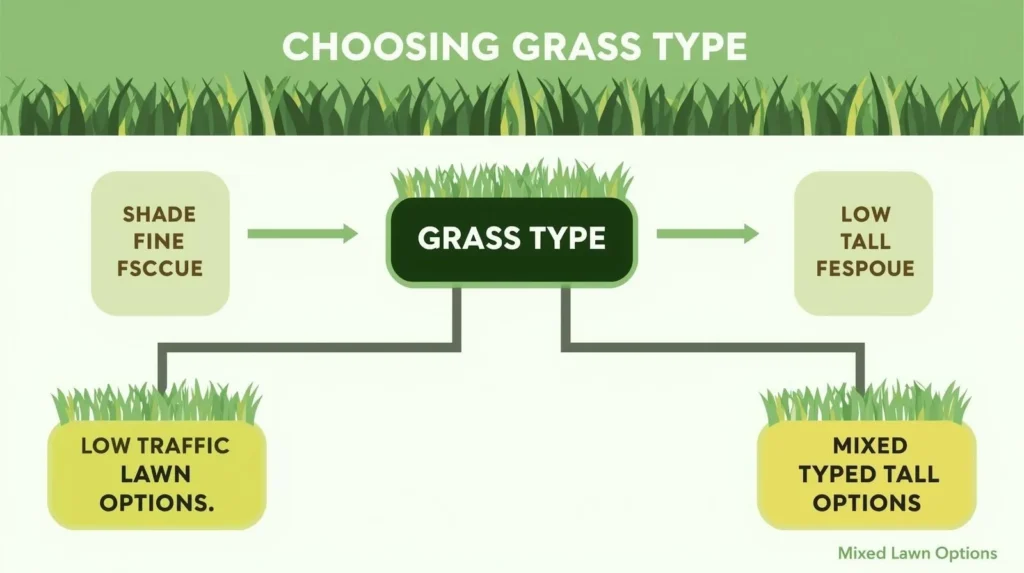
Which Fescue is Right for Your Lawn?
- Do you have shade? → Fine Fescue
- High foot traffic or pets? → Tall Fescue
- Low-maintenance lawn desired? → Turf-Type Tall Fescue
- Drought concerns? → Tall Fescue
- Want a mixed lawn? → Combine Tall Fescue & Fine Fescue
A simple flow to help homeowners decide which fescue fits their lawn.
Best Grass for Your Region
Fescues grow well in cool and transition zones in the USA.
- Northern areas: Fine fescue works well in shade.
- Southern areas: Tall fescue resists heat better.
- Lawns with kids or pets: Choose tall fescue for durability.
Lawn Care Tips
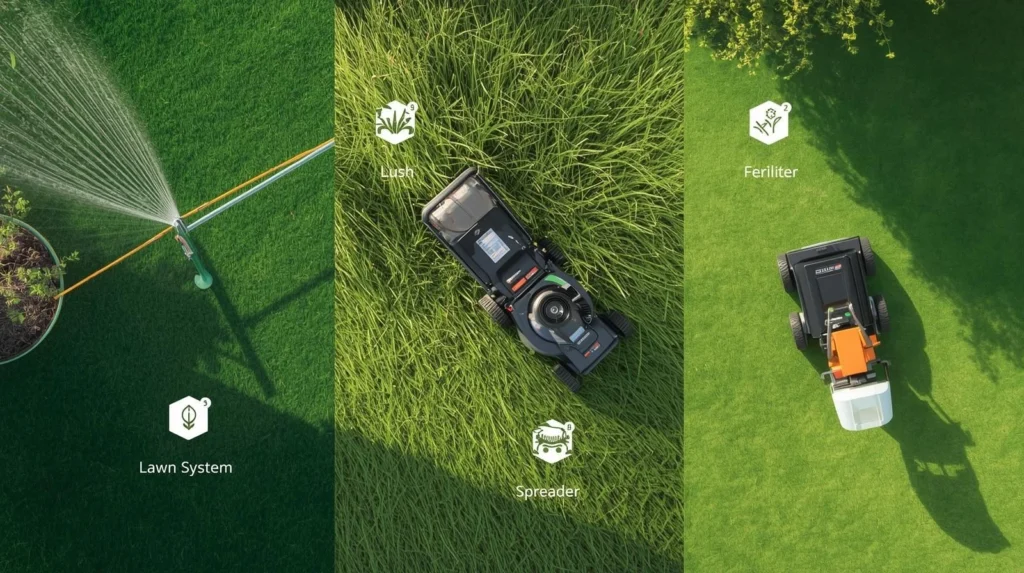
To keep your fescue healthy:
- Watering: 1 inch per week. Water deeply. See: How often to water your grass seed
- Mowing: Tall fescue 2.5–3 inches. Fine fescue 2–2.5 inches.
- Fertilizing: Spring and fall. Avoid too much nitrogen.
- Overseeding: Best in fall for thick lawn.
User Advice: How to Choose the Right Fescue
Before buying seed, look at your lawn conditions. Sun, shade, and traffic matter more than brand names. Choosing the wrong fescue often causes thin grass or poor growth.
What to Choose Based on Lawn Conditions
Shady lawn → Fine fescue
Sunny + traffic → Tall fescue
Low effort lawn → Turf-type tall fescue
Fast repair → Traditional tall fescue
Exact Seeding and Timing Advice
Best planting time: Early fall
Overseeding rate: 6–8 lbs per 1,000 sq ft
Watering: About 1 inch weekly
Mowing: Keep blades taller in summer
Common Lawn Problems and Fixes
Summer thinning → Tall fescue handles heat better
Patchy shade → Add fine fescue
Brown patches → Water mornings, reduce summer fertilizer
Can You Mix Tall Fescue and Fine Fescue?
Yes. Use tall fescue as the main grass and fine fescue in shaded areas. This gives better coverage across the lawn.
Regional Lawn Advice (USA)
North: Fine fescue works well
Transition zone: Turf-type tall fescue
South: Tall fescue with deep watering
Quick Action Checklist
✔ Match grass to sun and shade
✔ Choose tall fescue for traffic
✔ Seed in early fall
✔ Follow correct mowing height
✔ Watch for disease early
Short Experience Insight
In real lawns, mixing tall and fine fescue often solves uneven growth. Sun areas stay strong, and shaded spots stay green.
Frequently Asked Questions (FAQs)
Q: Is tall fescue the same as fescue?
A: No. Tall fescue is one type of fescue.
Q: What is turf-type tall fescue?
A: Turf-type is smoother and slower-growing than traditional tall fescue.
Q: Which fescue grows best in shade?
A: Fine fescue grows better in shaded areas.
Q: Can I plant tall fescue in drought areas?
A: Yes. Tall fescue tolerates heat and drought better than fine fescue.
Q: How fast does tall fescue grow?
A: Tall fescue grows moderately fast. Turf-type grows slower than traditional.
Q: Can I mix tall fescue and fine fescue?
A: Yes. Mixing can improve shade tolerance while keeping durability.
Q: What is the best soil for tall fescue?
A: Well-drained loam soil with pH 6.0–7.0 works best.
Q: Can tall fescue be used for pasture or sports fields?
A: Yes. Traditional tall fescue is strong for multi-use areas, while turf-type is better for lawns.
Which One Should You Choose?
- Choose tall fescue if you have kids, pets, or heavy foot traffic.
- Choose fine fescue if your lawn has a lot of shade.
- Mix both if your lawn has both sun and shade areas.
Conclusion
From my experience caring for lawns across different climates, I can confidently say that choosing the right fescue type transforms a struggling yard into a lush, resilient lawn. Tall fescue offers durability, heat tolerance, and strength for high-traffic areas, while fine fescue excels in shady spots with gentler care.
Experimenting with turf-type and traditional tall fescue taught me that turf-type is perfect for a low-maintenance, uniform lawn, and traditional is ideal for quick coverage and rugged use. By applying these lessons, backed by hands-on experience and research, you can make informed choices, save time, and enjoy a lawn that thrives under your specific conditions.