 Skip to content
Most people search for ryegrass lawn because something feels off. The lawn looks thin. Winter turns it brown. Summer heat burns patches. I have seen homeowners water more, mow more, and still feel stuck. Many stand in their yard holding a seed bag, unsure if ryegrass will fix the problem or create a new one.
I have helped people who planted ryegrass without knowing how it behaves. Some were happy for a few months, then confused when it faded. Others used the wrong type and watched the lawn disappear after one season. This guide is written from those real situations. It explains what a ryegrass lawn actually does, when it works well, and how to avoid common mistakes before they cost time and money. If you want a broader overview of lawn grasses and how different types fit different climates and uses, see our Grass Types guide.
- Perennial Ryegrass at a Glance
- What Is a Ryegrass Lawn?
- How a Ryegrass Lawn Looks
- Pros and Cons of a Ryegrass Lawn
- Annual Ryegrass vs Perennial Ryegrass in Lawns
- How Long Does a Ryegrass Lawn Last?
- How Fast Does a Ryegrass Lawn Grow?
- Overseeding vs Full Reseeding: What Do You Really Need?
- How to Establish a Ryegrass Lawn
- Caring for a Ryegrass Lawn
- Mixing Ryegrass With Other Lawn Grasses
- Ryegrass for Overseeding Southern Lawns
- Common Ryegrass Lawn Mistakes
- If a Ryegrass Lawn Fails, What Usually Went Wrong?
- Other Perennial Ryegrass Considerations
- Is a Ryegrass Lawn Right for You?
- Is Ryegrass a Long-Term Lawn or a Short-Term Fix?
- Perennial Ryegrass Lawn Care Calendar
- Final Thoughts
Key Takeaways
- A ryegrass lawn grows fast and turns green quickly.
- It works best in cool or mild climates.
- Perennial ryegrass is for lawns, not annual ryegrass.
- Ryegrass does not spread on its own and needs care.
- It is often used for winter color in southern lawns.
Perennial Ryegrass at a Glance
- Grass type: Cool-season
- Color: Dark green
- Growth speed: Fast
- Best use: Home lawns and overseeding
- Spread type: Bunch-forming
A ryegrass lawn fills in quickly but does not spread sideways.
What Is a Ryegrass Lawn?
A ryegrass lawn is grown using perennial ryegrass seed. This grass grows best in cool weather. It stays green in spring and fall. hot areas, it may thin out during summer.
In northern states, ryegrass can be a full-time lawn. In southern states, it is often used to keep lawns green during winter when warm-season grass turns brown.
How a Ryegrass Lawn Looks
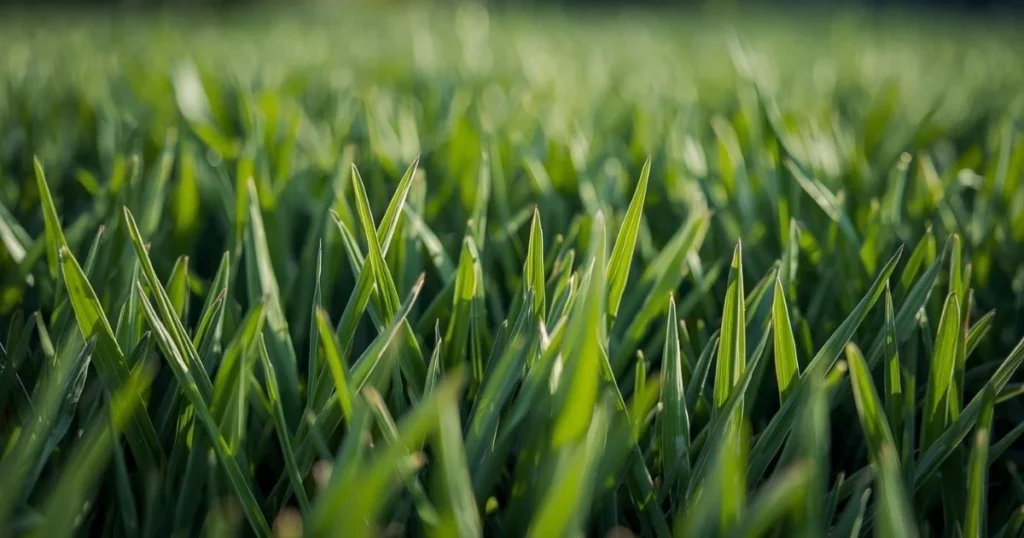
Many homeowners want to confirm what grass they already have.
Ryegrass lawns look neat and even. The blades are thin and smooth. The underside of the leaf often looks shiny.
Common visual signs:
- Fine to medium blade width
- Upright growth
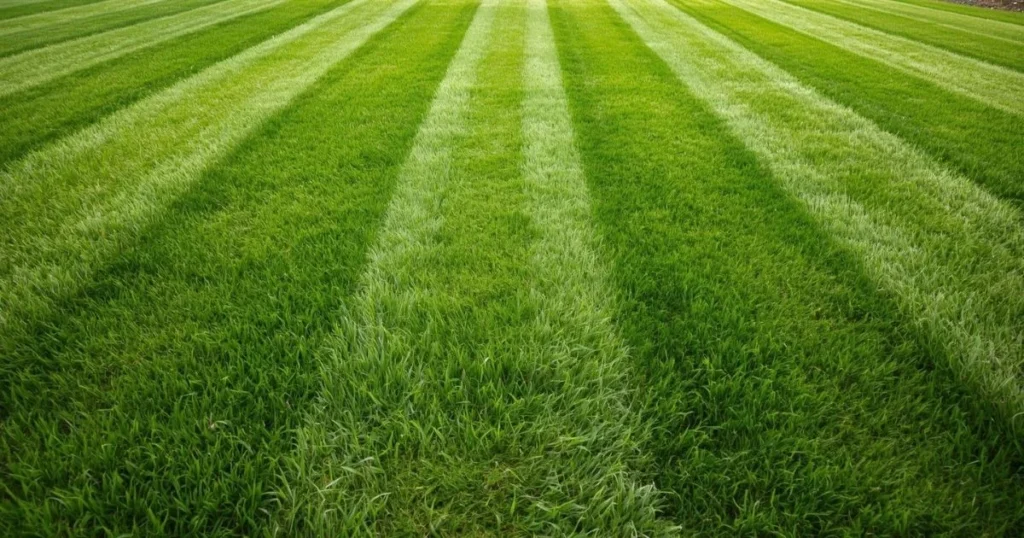
- Clear mowing stripes
- Even green color
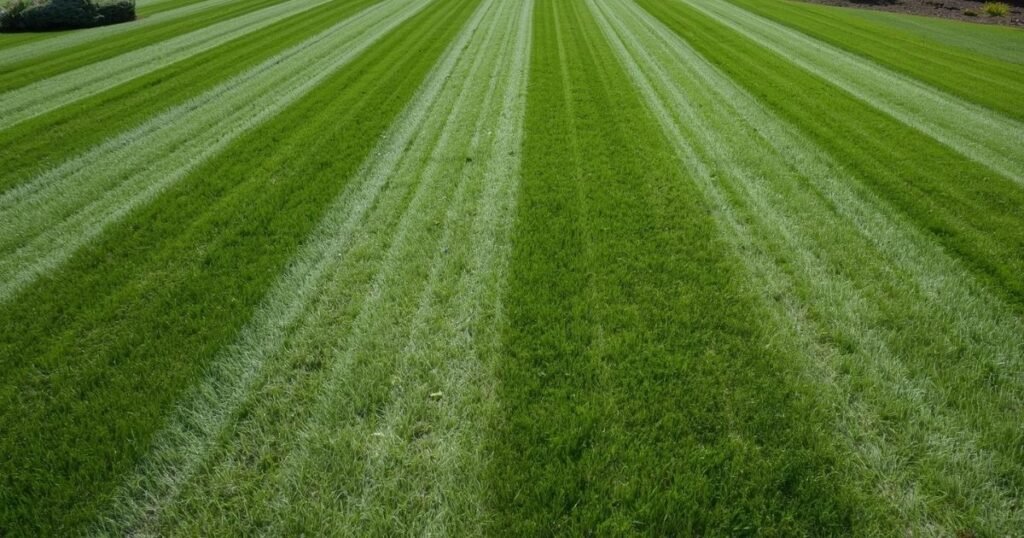
If your lawn shows strong striping after mowing, ryegrass is a common match.
Is This a Ryegrass Lawn?
- Grass blades are thin and smooth
- Lawn shows clear stripes after mowing
- Grass grows upright, not sideways
- Lawn turns green quickly in cool weather
If most answers are yes, your lawn is likely ryegrass.
Pros and Cons of a Ryegrass Lawn
Pros
- Germinates quickly
- Turns green fast
- Soft underfoot
- Handles foot traffic well
Cons
- Weak in extreme heat
- Needs regular watering
- Does not spread on its own
- Can thin out in summer
Ryegrass rewards care but shows stress when ignored.
Annual Ryegrass vs Perennial Ryegrass in Lawns
Many lawn problems come from mixing these two by mistake.
Perennial ryegrass is used for home lawns. It can last for years in cool climates and is used for overseeding.
Annual ryegrass grows fast but dies after one season. Many universities list it as a grassy weed. It often comes from low-cost seed blends.
Key differences:
- Annual ryegrass dies after one year
- Perennial ryegrass can last multiple years
- Annual ryegrass looks coarse and uneven
- Perennial ryegrass looks finer and cleaner
If a ryegrass lawn dies fully after one season, it is often annual ryegrass.
| Feature | Annual Ryegrass | Perennial Ryegrass |
|---|---|---|
| Lifespan | One season only | Can last several years |
| Use in Lawns | Often unwanted | Best choice for lawns |
| Texture | Coarse | Fine and smooth |
| Common Issue | Dies after one year | Heat stress in summer |
How Long Does a Ryegrass Lawn Last?
In cool or mild climates, a ryegrass lawn can last for several years with proper care. It may thin over time but can be maintained with overseeding.
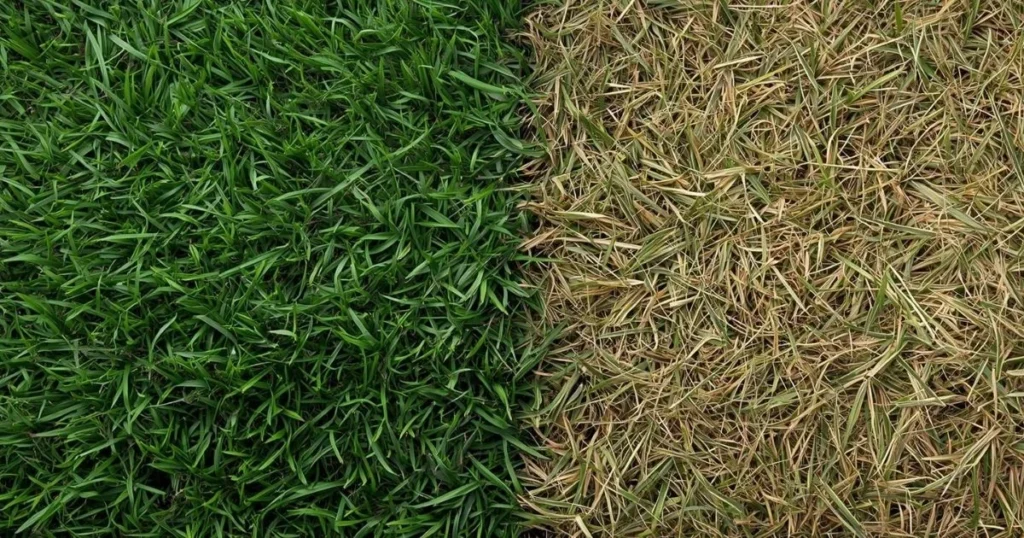
In hot summer climates, ryegrass often struggles during heat. It may thin out each summer and recover again in fall. In these areas, ryegrass works best as a seasonal or managed lawn, not a permanent one.
How Fast Does a Ryegrass Lawn Grow?
This is one of the main reasons people choose ryegrass.
What most homeowners see:
- Sprouts in 5 to 7 days
- Light green cover in 2 weeks
- First mowing in about 3 weeks
This fast growth makes ryegrass popular for repairs and new lawns.
Overseeding vs Full Reseeding: What Do You Really Need?
You can overseed ryegrass if:
- The lawn is thin but still alive
- Bare spots are scattered
- Soil is visible between grass
You should consider full reseeding only if:
- The lawn is mostly dead
- Weeds cover most of the area
- Grass does not recover at all
How to Establish a Ryegrass Lawn
Best planting times:
- Early fall
- Early spring
Basic steps:
- Prepare the soil
- Spread seed evenly
- Keep soil moist
- Mow once grass reaches proper height
Fast results depend on even watering during the first two weeks.
Caring for a Ryegrass Lawn
Mowing
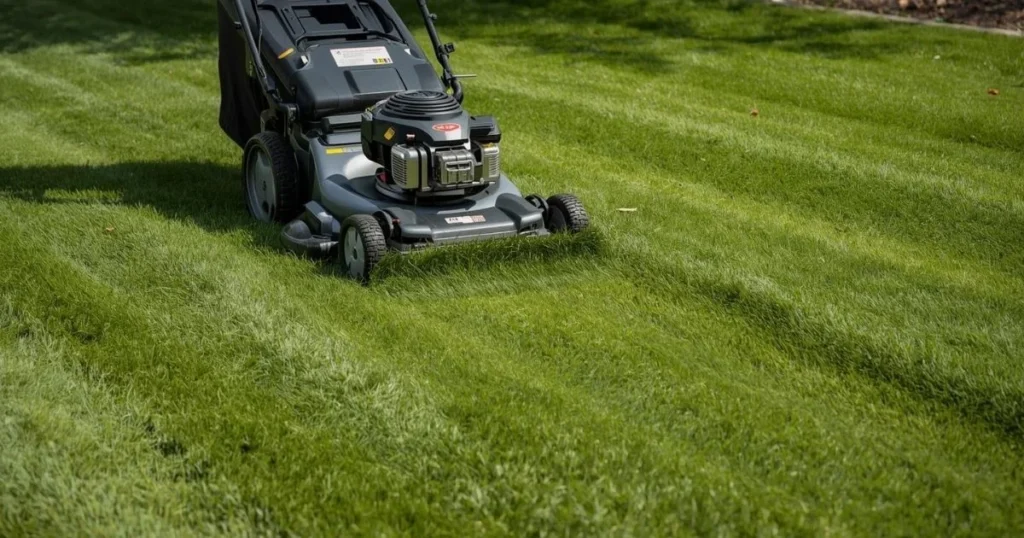
- Best height: 1.5 to 2.5 inches
- Avoid cutting too low
- Sharp blades reduce damage
Water
- Light and frequent watering during early growth
- Deep watering once established
- Avoid soggy soil
Fertilization
- Feed during active growth
- Spring and fall are best
- Avoid heavy feeding in heat
Dethatching and Aeration
- Thatch can build up over time
- Aeration helps roots grow
- Fall works best
Disease, Insects, and Weeds
Common ryegrass lawn issues:
- Red thread
- Dollar spot
- Leaf disease in wet lawns
Most problems come from excess moisture and low airflow.
Mixing Ryegrass With Other Lawn Grasses
Ryegrass is often mixed with other grasses for fast color.
Common mixes:
- Ryegrass with tall fescue
- Ryegrass with Kentucky bluegrass
- Ryegrass overseeded into bermuda grass
Important things to know:
- Ryegrass does not spread sideways
- Thin spots need reseeding
- In warm areas, ryegrass fades as heat returns
Mixing works best when quick green cover is the goal.
Ryegrass for Overseeding Southern Lawns
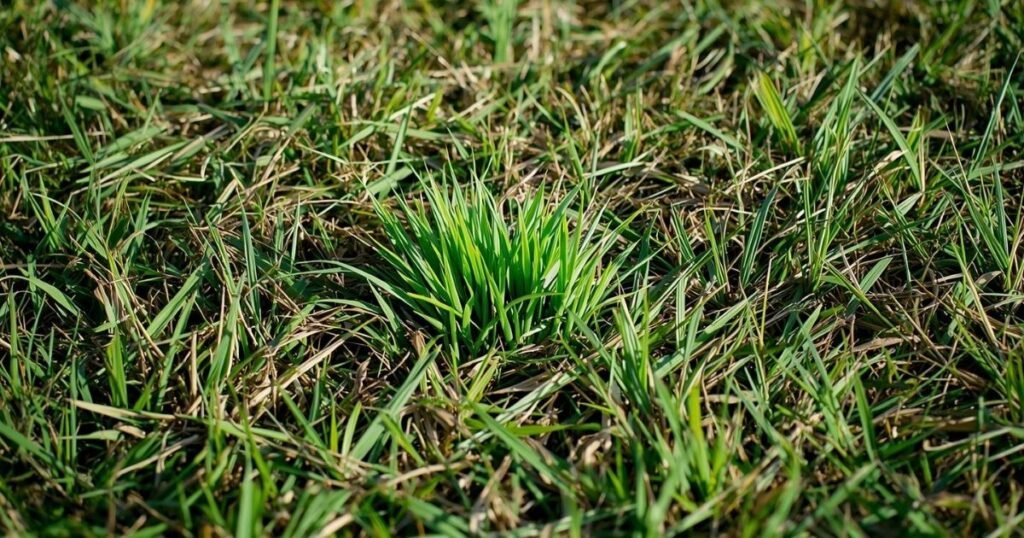
Many southern homeowners use ryegrass for winter color.
Why it is used:
- Keeps lawns green in winter
- Covers bare areas fast
What happens later:
- Ryegrass fades in spring
- Warm-season grass grows back
This change is planned and normal.
Common Ryegrass Lawn Mistakes
These mistakes cause most ryegrass problems:
- Planting in extreme heat
- Using annual ryegrass by mistake
- Mowing too short
- Overwatering
Avoiding these keeps the lawn healthy longer.
If a Ryegrass Lawn Fails, What Usually Went Wrong?
Most ryegrass lawn failures happen because of:
- Planting in the wrong climate
- Using annual ryegrass by mistake
- Expecting ryegrass to survive extreme heat
- Cutting the lawn too short during summer
In most cases, failure is caused by conditions, not poor effort.
Other Perennial Ryegrass Considerations
- Grows in clumps
- Needs reseeding over time
- Prefers sun to light shade
- Performs poorly in deep shade
Choose quality seed for better results.
Is a Ryegrass Lawn Right for You?
A ryegrass lawn is a good choice if:
- You live in a cool or mild climate
- You want fast green color
- Your lawn gets good sunlight
- You can water regularly
A ryegrass lawn may not be a good choice if:
- Summers are very hot
- You want low care
- Your yard has heavy shade
- You want spreading grass
This decision saves time and money.
| Season | What You See | What It Means | What to Do |
|---|---|---|---|
| Spring | Thick and green | Active growth | Mow and feed lightly |
| Summer | Thin or stressed | Heat stress | Raise mowing height |
| Fall | Dark green | Strong growth | Overseed and aerate |
| Winter | Slow growth | Dormant period | Limit foot traffic |
Is Ryegrass a Long-Term Lawn or a Short-Term Fix?
Ryegrass works best when you accept it as:
- A long-term lawn in cool climates
- A seasonal solution in warm climates
- A grass that needs attention, not neglect
If you want a lawn that spreads on its own and survives heat with little care, ryegrass may not be the right choice.
Perennial Ryegrass Lawn Care Calendar
Spring
- Light feeding
- Regular mowing
- Watch for disease
Summer
- Raise mowing height
- Water deeply
- Reduce stress
Fall
- Strong growth period
- Overseed thin spots
- Aerate if needed
Winter
- Slow growth
- Less mowing
- Limit foot traffic
Final Thoughts
After working with many lawns, one thing stays true. Ryegrass works best when used for the right purpose. I have seen it turn bare yards green in weeks, and I have also seen it fail when planted in the wrong climate or cared for poorly. Most problems are not caused by ryegrass itself, but by wrong timing and expectations. When you choose ryegrass knowing how it grows through the year, it can be a strong and reliable lawn option. Good results always start with choosing the right grass for your situation.