 Skip to content
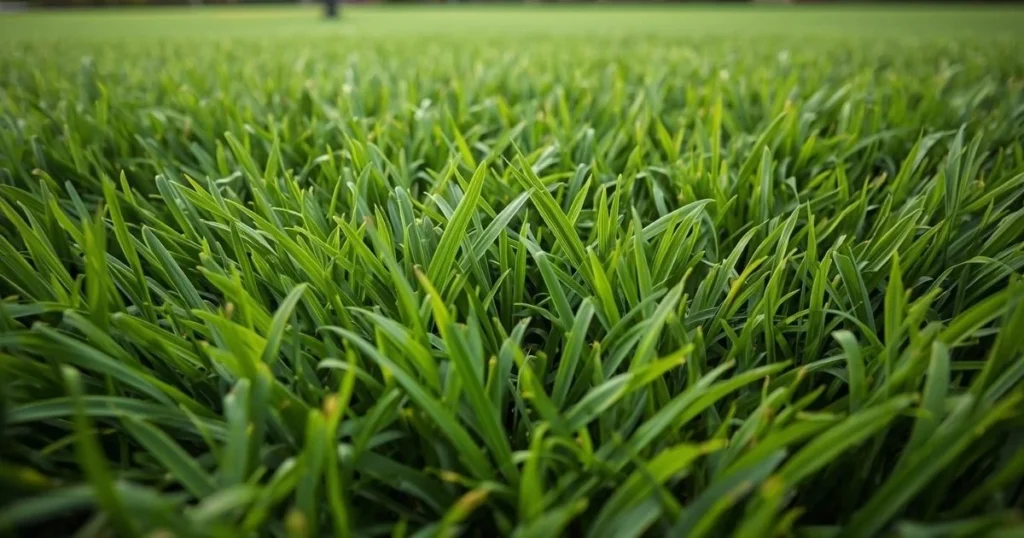
I have been in this spot myself. Standing in the yard, looking down at the grass, and feeling unsure. Some parts looked thick. Other areas looked weak. The blades seemed wide, but online guides gave mixed answers. That confusion often leads people to guess, and guessing is where lawn problems begin.
I have seen many homeowners make the same mistake. They start mowing, watering, or treating the lawn before they know what grass they have. If the lawn is St Augustine grass, wrong care can make it thin and stressed very fast. This guide is written from real experience to help you identify your grass with clear signs you can see right now. If you want a broader overview of lawn grasses and how different types behave across regions and conditions, see our Grass Types guide.
- Description
- Quick 60-Second Identification Check
- Identification
- Identifying Tips in Real Lawns
- Why Some St Augustine Lawns Look Different
- Growing Conditions
- Where St Augustine Grass Is Common in the USA
- Seasonal Appearance
- Maintenance
- Establishment Methods
- Common Misidentification
- Common Identification Mistakes
- Damage vs Misidentification
- FAQ
- What to Do After You Confirm It
- Conclusion
Key Takeaways
- St Augustine grass has wide, flat blades
- Leaf tips are rounded, not sharp
- Thick runners grow above the soil
- The lawn spreads sideways, not upright
Description
St Augustine grass is a warm-season lawn grass. It grows thick and spreads fast across the soil. The lawn looks full and flat. It handles shade better than many other warm-season grasses.
Botanical Name
St Augustine grass is known by the scientific name Stenotaphrum secundatum.
Universities and turf experts use this name in research and lawn guides.
Quick 60-Second Identification Check
Use this fast check if you want a yes or no answer.
- Blades look wide, not thin
- Leaf tips look rounded, not sharp
- Thick runners spread on top of the soil
- Lawn grows sideways more than upward
If all four match, it is St Augustine grass.
| Feature | St Augustine Grass |
|---|---|
| Blade width | Wide and flat |
| Blade tip | Rounded |
| Growth style | Spreads sideways |
| Runners | Above ground |
| Texture | Coarse |
Identification
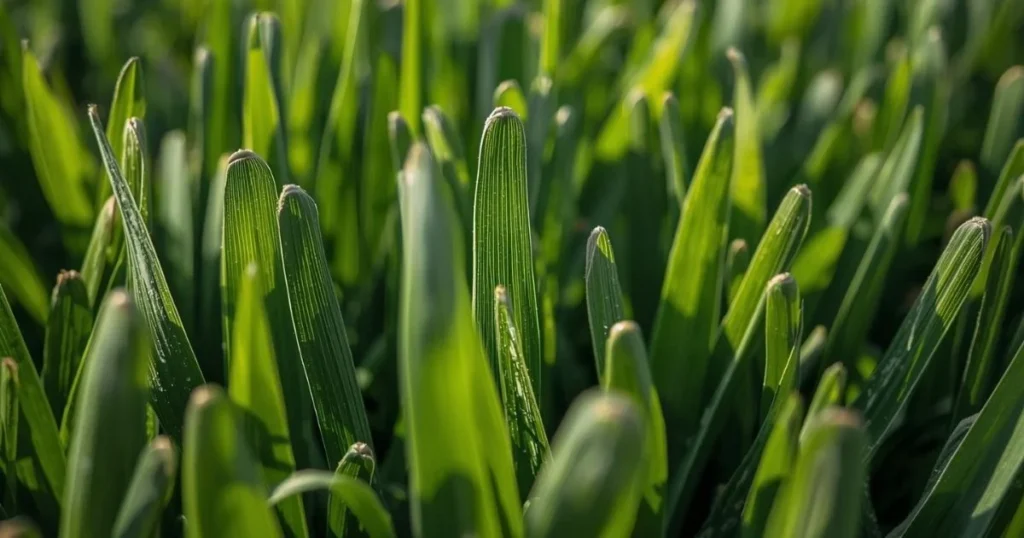
You can confirm St Augustine grass by checking the leaves, runners, and lawn texture.
Quick Technical Identification
St Augustine grass has a few technical traits used by turf experts.
The leaf blade is usually about 6 to 9 mm wide.
The ligule is a short fringe of hairs.
Auricles are not present.
Leaf traits
- Leaves are wide and flat
- Color is medium green to blue-green
- Tips are rounded
- Texture feels coarse
Wide blades are the strongest visual clue.
Seedhead appearance
St Augustine grass rarely shows seedheads in home lawns.
When present, seedheads are short, thick, and upright.
Most lawns never show them due to mowing.
Runner growth
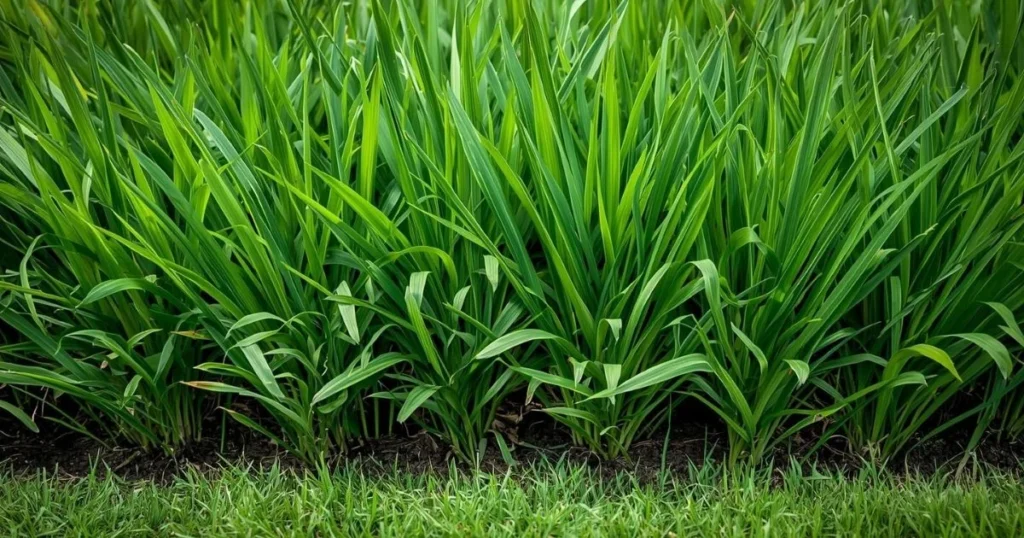
- Spreads using above-ground runners
- Runners are thick and easy to see
- Growth spreads across the surface
Leaf arrangement on runners
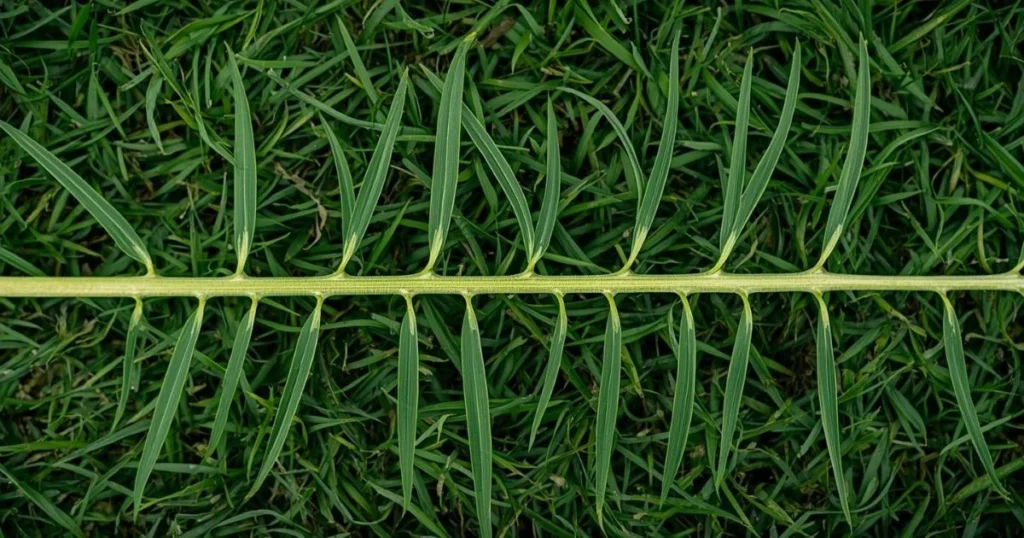
Leaves grow in opposite pairs along the runner.
Pull one runner and lay it flat to see this clearly.
Lawn texture
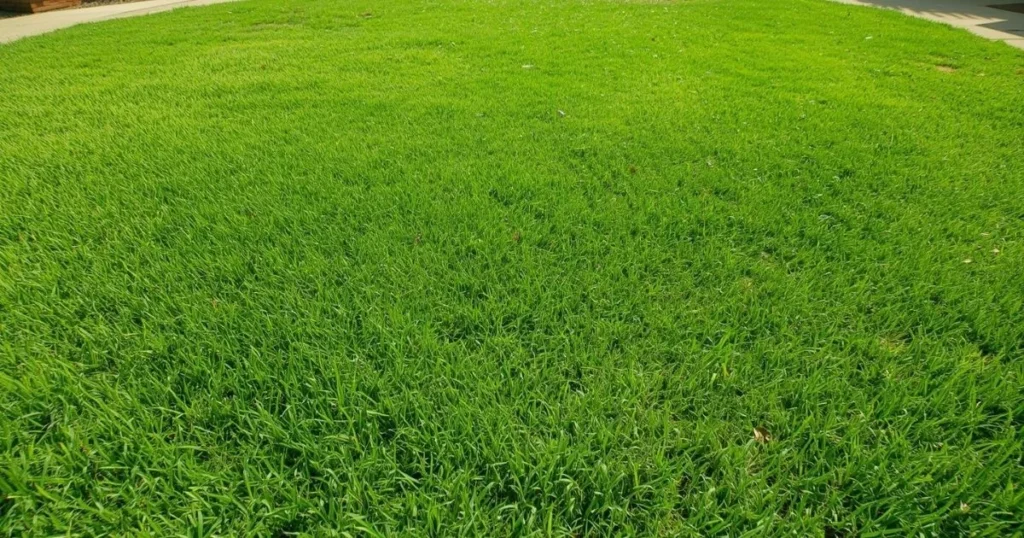
- Lawn looks dense and carpet-like
- Grass spreads sideways
- Bare spots fill in during warm weather
Identifying Tips in Real Lawns
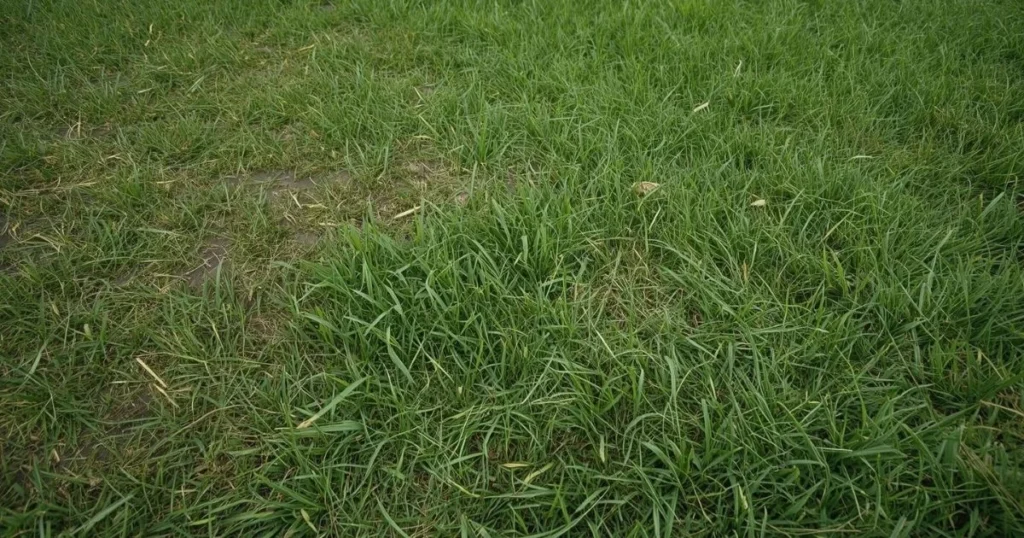
Real yards are not perfect. Here is what to expect.
- Shaded areas may look thinner
- Sunny areas look thicker
- Edges near sidewalks spread fast
- Mixed lawns are common
These signs still fit St Augustine grass.
Why Some St Augustine Lawns Look Different
Not all St Augustine lawns look the same.
Different varieties can change how the grass looks.
Some types have darker color.
Others grow slightly finer or thicker blades.
Is This St Augustine Grass?
- Blades are wide
- Runners are visible on the soil
- Grass spreads sideways
- Blades are thin
- Growth is upright
- No surface runners are present
Growing Conditions
St Augustine grass grows best in:
- Warm climates
- Full sun to partial shade
- Moist, well-drained soil
Where St Augustine Grass Is Common in the USA
This grass is widely used in Florida, Texas, the Gulf Coast, California, and the Southeast.
Cold winters can thin or damage it.
Seasonal Appearance
St Augustine grass changes during the year.
- Spring: Slow green-up
- Summer: Thick and full
- Fall: Color fades slightly
- Winter: Stress or thinning in cooler areas
These changes are normal.
Maintenance
Good care keeps this grass healthy.
- Mow high, not short
- Water deeply, not daily
- Feed during the warm season
- Reduce heavy foot traffic
Low mowing weakens the lawn.
Establishment Methods
St Augustine grass is not grown from seed in home lawns.
It is installed using:
- Sod
- Plugs
- Sprigs
Sod gives the fastest coverage.
Common Misidentification
| Feature | St Augustine | Bermuda | Zoysia |
|---|---|---|---|
| Blade width | Wide | Thin | Medium |
| Growth pattern | Sideways spread | Upright growth | Slow spread |
| Texture | Coarse | Fine | Firm |
| Shade tolerance | Better | Poor | Medium |
St Augustine grass is often confused with other grasses.
Bermuda vs St Augustine
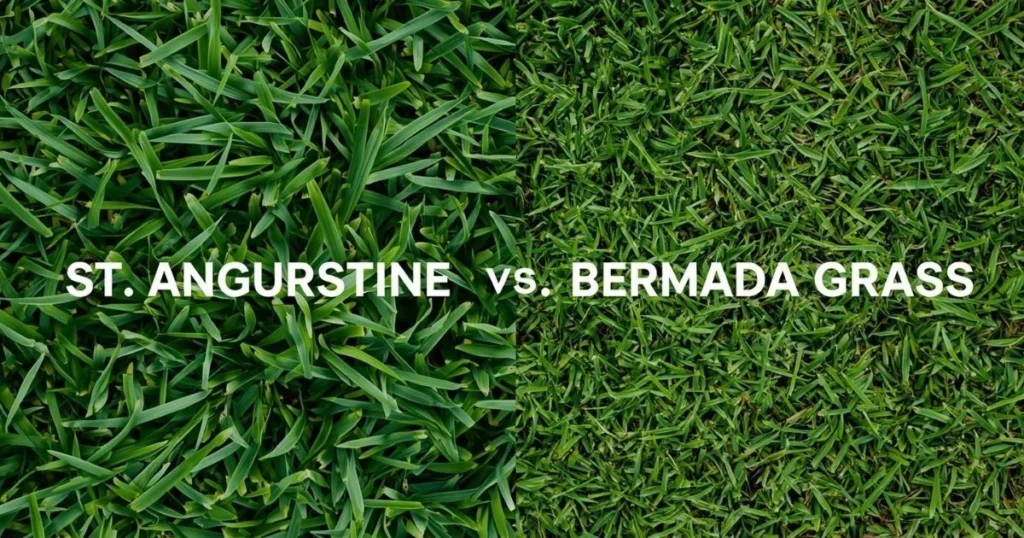
- St Augustine blades are wide
- Bermuda blades are thin
- Bermuda grows upright
- St Augustine spreads across the soil
St Augustine vs Zoysia
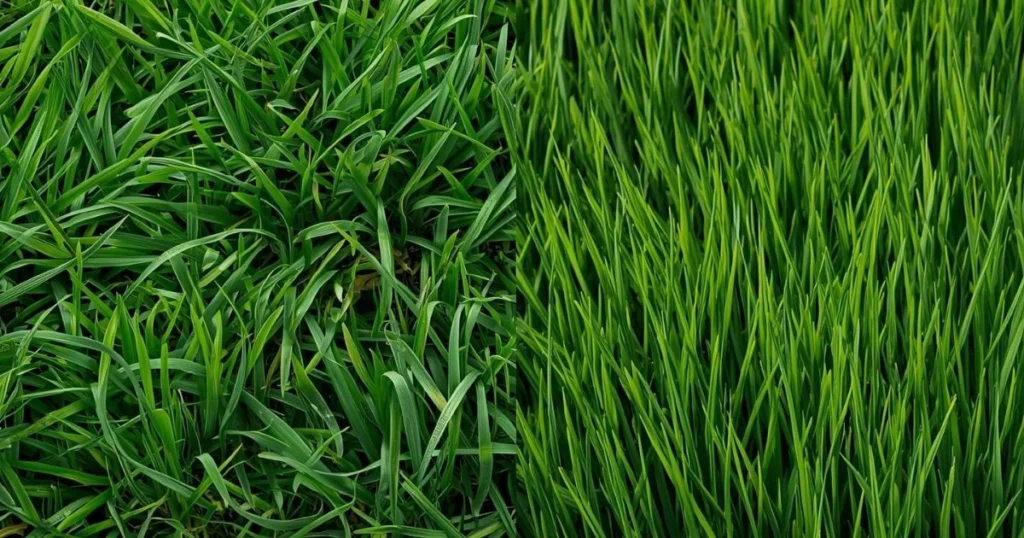
- Zoysia feels stiff
- St Augustine feels rough
- Zoysia blades are narrower
St Augustine vs Carpetgrass
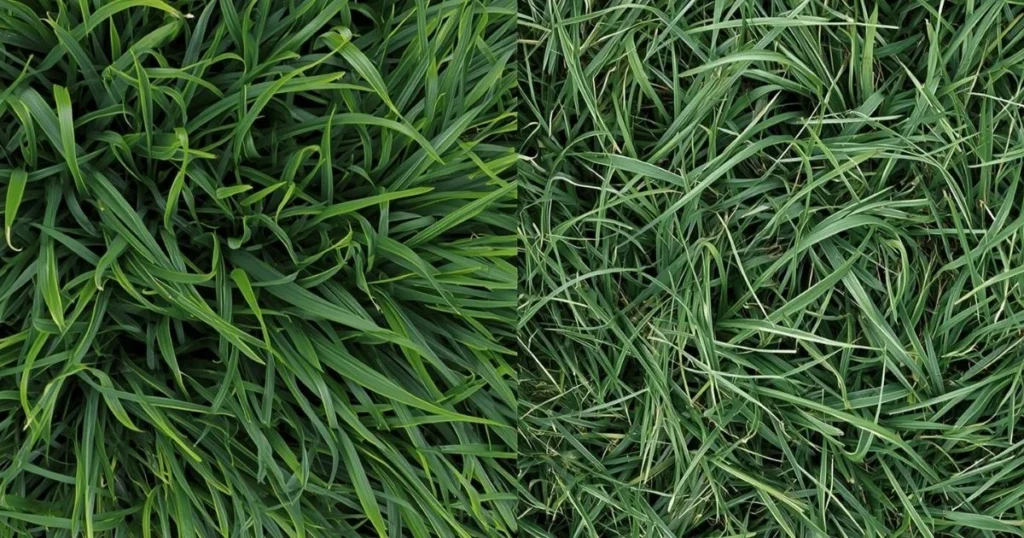
- Carpetgrass blades are narrower
- Carpetgrass is lighter green
- St Augustine has thicker runners
Common Identification Mistakes
Many people misidentify this grass because:
- It looks thin in shade
- It mixes with Bermuda
- Damage makes blades look smaller
Always check the runners and blade width.
Damage vs Misidentification
Stress can make St Augustine grass hard to identify.
Pests, disease, low mowing, or drought can thin the blades and hide runners.
In many cases, the grass type is correct, but the lawn is stressed.
FAQ
How do I know if my lawn is St Augustine grass?
Look for wide blades, rounded tips, and thick runners above the soil.
Can St Augustine grass grow in shade?
Yes. It handles shade better than many warm-season grasses.
Why does my St Augustine grass look thin?
Low mowing, poor watering, or stress are common causes.
Does St Augustine grass mix with other grasses?
Yes. It often mixes with Bermuda grass.
What to Do After You Confirm It
Once you know your grass type, the next steps are simple:
- Set the right mowing height
- Follow a warm-season feeding plan
- Watch for pests and disease
Correct identification makes lawn care easier.
Conclusion
From my experience, most lawn problems start with one issue: not knowing the grass type. I have helped people who tried everything, yet their lawn kept struggling, simply because they treated St Augustine grass like another grass. Once they learned what to look for, wide blades, thick runners, and sideways growth, things changed. Correct identification brings confidence. It helps you make the right choices and avoid costly mistakes. Knowing your grass is the first real step to a healthy lawn.
Wide blades and thick surface runners are the clearest signs of St Augustine grass.