 Skip to content
- Grass choice depends on climate more than appearance.
- Sun and shade affect grass survival.
- High traffic lawns need stronger grass types.
- Low-maintenance grasses save time and water.
- Grass mixes often work better than single types.
Many lawns fail even when people do everything right. They buy good seed or sod. Watering happens on time. Mowing is done carefully. Still, the grass turns thin, patchy, or brown. I have seen this happen again and again. The real problem is not effort. It is choosing grass that does not match the yard. Shade, heat, soil, and foot traffic matter more than most people think.
I have worked with lawns in different climates and yard conditions. One thing stays true every time. The same grass never works everywhere. Once homeowners match grass to their climate and how the yard is used, results improve fast. This guide on types of grass for landscaping is built to help you avoid common mistakes and choose grass that fits your yard, not just what looks good on a label. If you want a complete overview of lawn grass categories, seasonal types, and identification basics, see our Grass Types guide.
- Grass Types by US Region
- Cool-Season Grasses
- Warm-Season Grasses
- Drought-Tolerant Grasses
- Ornamental Grass Types
- Low-Maintenance Grass Options
- Fast-Growing Grass for Lawns
- Grass for Shaded Areas
- Grass for High-Traffic Areas
- Native Grass Species
- Grass Alternatives for Landscaping
- Lawn Grasses for Sun and Shade
- Mixed Lawns Are Often Best
- Compare Grass Types
- How to Visually Identify Grass Types
- Grass Growth Habits
- Seed vs Sod for Landscaping
- Cost and Time Expectations
- Grasses in the Transition Zone
- Frequently Asked Questions
- conclusion
- You Are Not Doing It Wrong
Grass Types by US Region
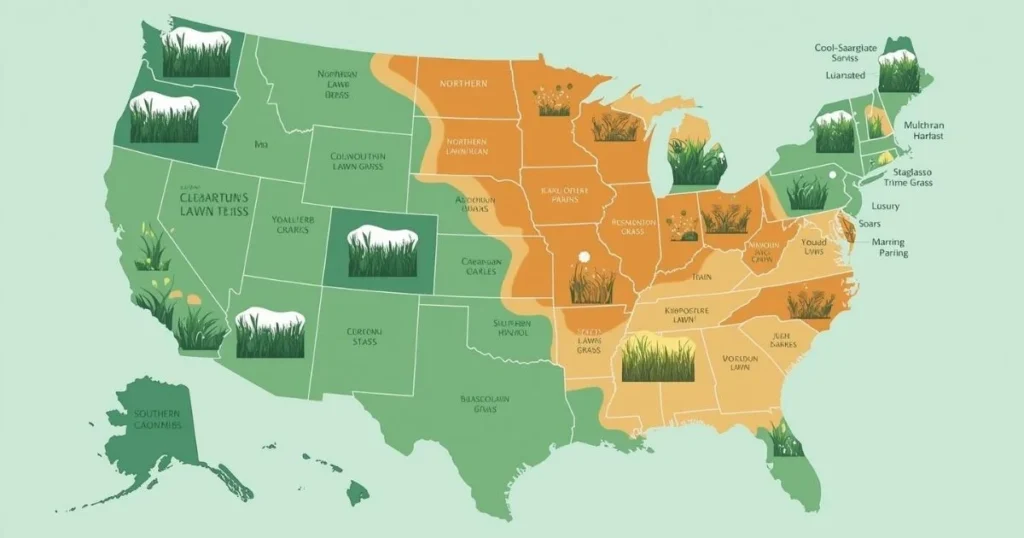
Where you live matters more than brand names.
Climate decides what grass survives long term.
Northern States
Cold winters and mild summers are common.
Cool-season grasses perform best here.
This includes states such as Michigan, Minnesota, Wisconsin, and New York.
Best options include:
- Kentucky bluegrass for classic lawns
- Tall fescue for durability
- Fine fescue for shade
- Perennial ryegrass for fast coverage
These grasses recover well after winter.
Southern States
Heat and long summers are the main challenge.
Warm-season grasses handle this better.
This includes states such as Texas, Florida, Georgia, and Alabama.
Best options include:
- Bermuda grass for active lawns
- Zoysia grass for balance
- St. Augustine grass for coastal areas
- Centipede grass for low care
These grasses grow strongest in warm soil.
Transition Zone Areas
These areas face both heat and cold.
Grass choice needs balance.
This includes states such as Tennessee, North Carolina, Virginia, and Missouri.
Good options include:
- Tall fescue
- Zoysia grass
- Grass blends
Many homeowners in these areas use mixes to reduce risk.
Cool-Season Grasses
Cool-season grasses grow best in cooler weather.
They stay green in spring and fall.
They slow down during hot summers.
These grasses are common in northern lawns.
Common Cool-Season Grass Types
Kentucky Bluegrass
This grass forms a thick lawn.
It looks clean and even.
It needs regular watering and mowing.
Tall Fescue
This grass has deep roots.
It handles heat and foot traffic better.
It works well for families with pets.
Fine Fescue
This grass works well in shade.
It needs less mowing.
It does not recover fast from damage.
Ryegrass
This grass grows fast.
It helps cover bare spots.
It is often used in blends.
Warm-Season Grasses
Warm-season grasses grow during heat.
They peak in summer.
They rest in winter.
These grasses are common in southern lawns.
Common Warm-Season Grass Types
Bermuda Grass
This grass spreads quickly.
It handles heavy use.
It needs full sun.
Zoysia Grass
This grass grows slower but stays thick.
It feels soft underfoot.
It uses less water once established.
St. Augustine Grass
This grass has wide blades.
It grows well in warm and coastal regions.
It handles light shade.
Centipede Grass
This grass needs little input.
It grows slowly.
It suits low-use lawns.
Drought-Tolerant Grasses
Some yards face water limits.
Drought-tolerant grasses help reduce stress.
These grasses survive dry periods better.
Buffalo Grass
This grass is native to the USA.
It needs little water.
It suits open, sunny areas.
Zoysia Grass
This grass also handles dry conditions.
It stays dense once settled.
Ornamental Grass Types
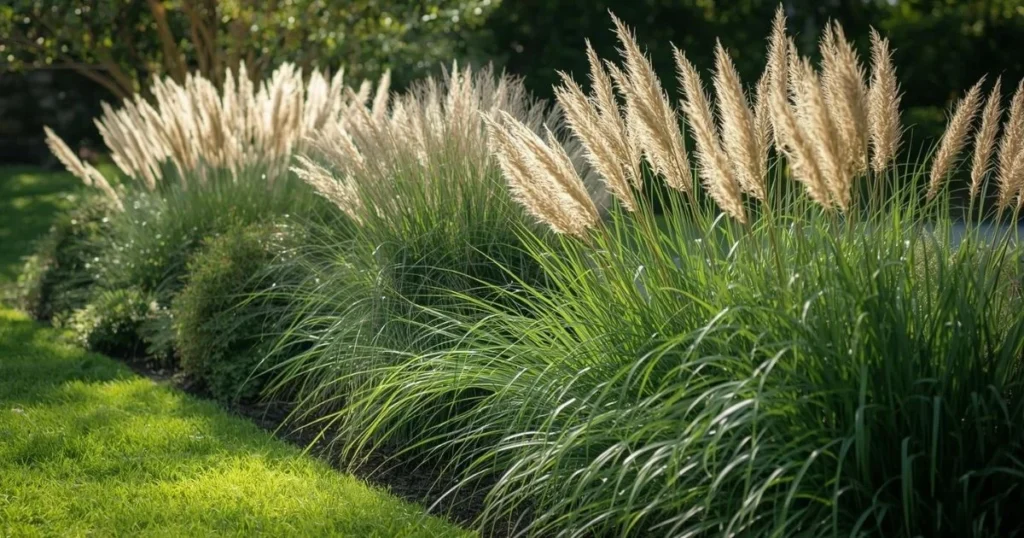
Some grasses are not for walking.
They are used for style and structure.
Ornamental grasses add height and movement.
Popular Ornamental Grasses
Fountain Grass
This grass adds soft texture.
It works well along borders.
Switchgrass
This grass grows tall.
It can add privacy.
Feather Reed Grass
This grass grows upright.
It fits modern designs.
Blue Fescue
This grass stays small.
It works well in accents.
Low-Maintenance Grass Options
Some homeowners want less work.
Low-maintenance grass saves time.
These grasses need less water and care.
Centipede Grass
This grass grows slowly.
It needs little feeding.
Buffalo Grass
This grass often survives on rainfall.
Fast-Growing Grass for Lawns
Fast growth helps new lawns fill in.
It also helps repair damage.
Ryegrass
This grass sprouts quickly.
It gives fast green cover.
Bermuda Grass
This grass spreads fast in heat.
Grass for Shaded Areas
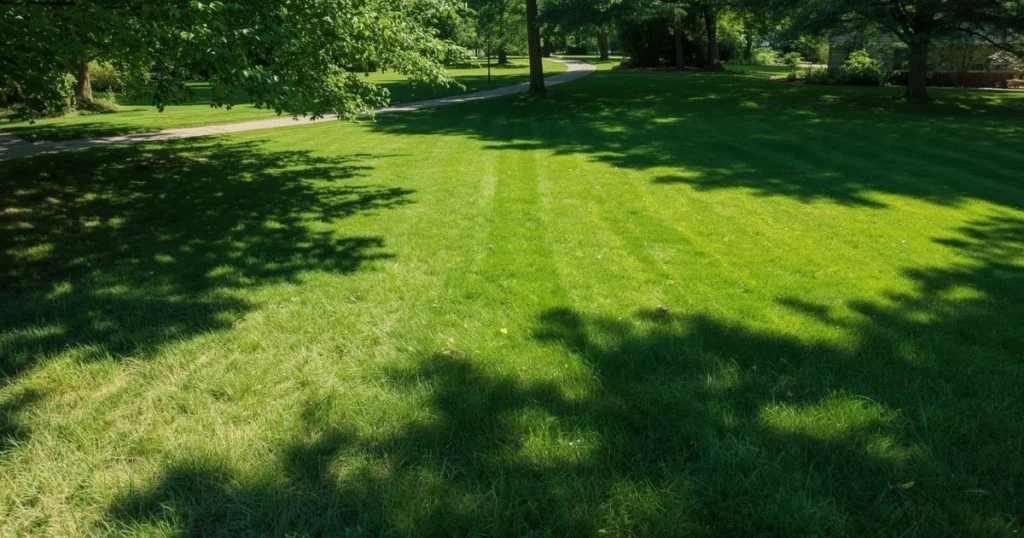
Shade limits grass choices.
Many grasses fail without sun.
Better shade options include:
Fine Fescue
This grass grows well under trees.
St. Augustine Grass
This grass handles partial shade in warm areas.
Grass for High-Traffic Areas
Busy lawns need strong grass.
Weak grass breaks down fast.
Bermuda Grass
This grass repairs itself quickly.
Tall Fescue
This grass handles repeated use.
Native Grass Species
Native grasses match local conditions.
They need less long-term care.
They also support local wildlife.
Common native options include:
- Buffalo grass
- Switchgrass
- Little bluestem
Grass Alternatives for Landscaping
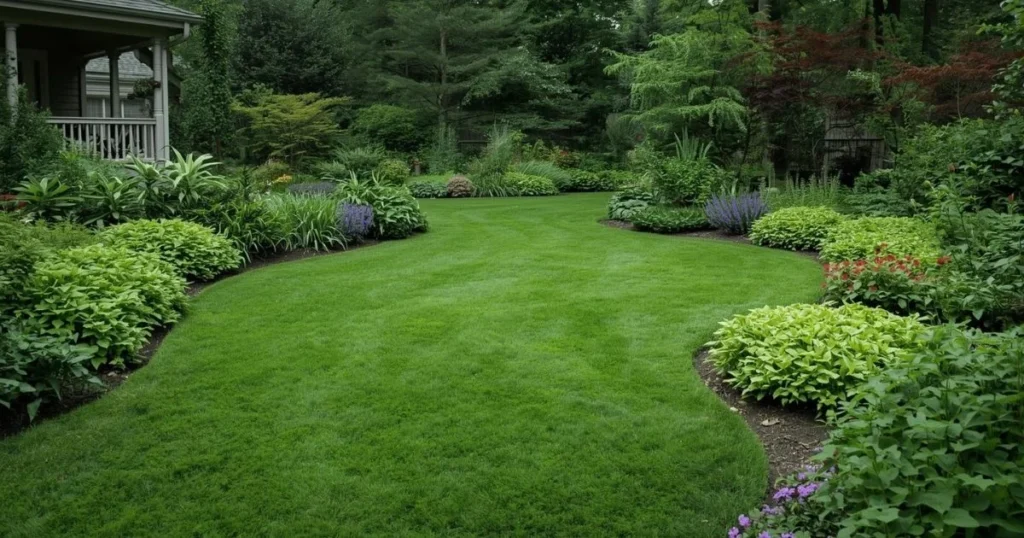
Grass is not always the best choice.
Some yards use alternatives.
These reduce mowing and water use.
Clover
This stays green longer.
It supports soil health.
Ground Covers
These work well in shade.
They reduce upkeep.
Lawn Grasses for Sun and Shade
Light exposure affects success.
- Full sun lawns suit Bermuda or Zoysia
- Partial shade lawns suit Tall Fescue
- Heavy shade lawns suit Fine Fescue
Always check sun patterns first.
| Yard Condition | Best Grass Types |
|---|---|
| Full sun | Bermuda, Zoysia |
| Partial shade | Tall Fescue |
| Heavy shade | Fine Fescue |
| High foot traffic | Bermuda, Tall Fescue |
| Low maintenance | Centipede, Buffalo |
| Dry areas | Buffalo, Zoysia |
Mixed Lawns Are Often Best
Single grass types can fail.
Mixes improve survival.
Blends help handle:
- Shade changes
- Foot traffic
- Weather swings
Many lawns are planted this way.
Compare Grass Types
Before choosing grass, compare:
- Climate fit
- Water needs
- Mowing needs
- Traffic tolerance
This avoids mistakes.
- Identify your climate and region.
- Check how much sun and shade your yard gets.
- Think about foot traffic from kids or pets.
- Decide between seed or sod.
- Select one grass type or a blend.
How to Visually Identify Grass Types
Grass types can often be recognized by blade width, color, and growth pattern.
Wide blades usually belong to warm-season grasses.
Thin blades are common in cool-season grasses.
Grass Growth Habits
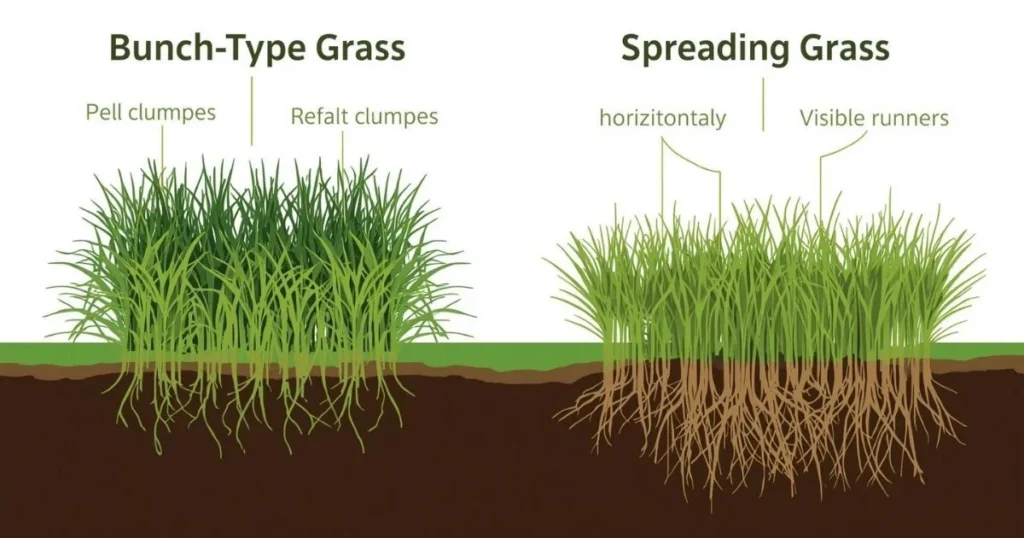
Grass spreads in different ways.
This affects repair.
Bunch-Type Grasses
These grow in clumps.
They do not spread on their own.
Examples include:
- Tall fescue
- Fine fescue
- Ryegrass
Bare spots may need reseeding.
Spreading Grasses
These spread through roots or runners.
They recover faster.
Examples include:
- Bermuda grass
- Zoysia grass
- Kentucky bluegrass
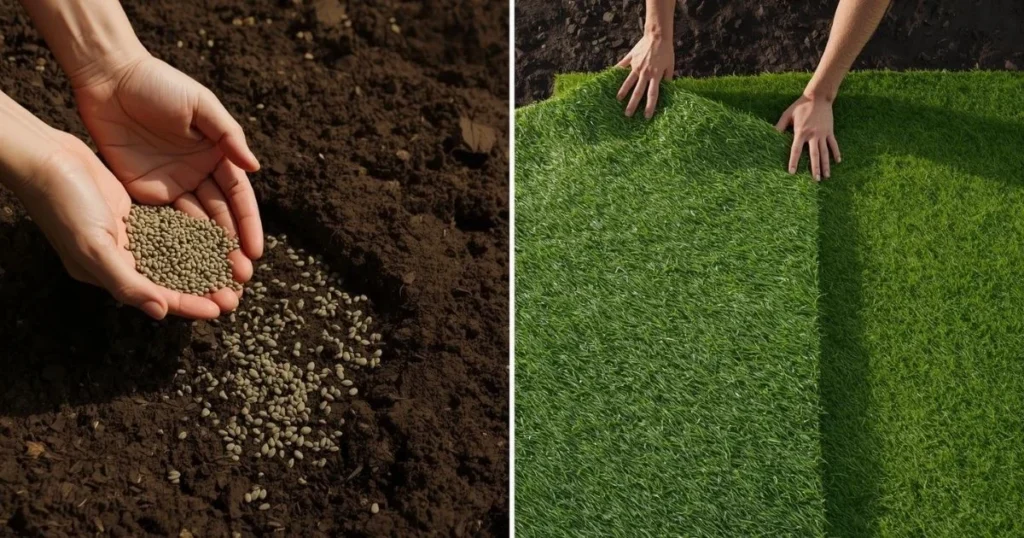
Seed vs Sod for Landscaping
- Choosing grass based on color only.
- Ignoring shade from trees or buildings.
- Planting full-sun grass in shaded areas.
- Overwatering grasses that need less water.
- Using one grass type for the whole yard.
Grass can be planted in two ways.
Grass Grown From Seed
This costs less.
It takes longer to fill in.
Common options include:
- Tall fescue
- Kentucky bluegrass
- Ryegrass
- Fine fescue
Grass Installed as Sod
This gives instant coverage.
It costs more.
Common sod grasses include:
- Bermuda grass
- Zoysia grass
- St. Augustine grass
Cost and Time Expectations
Choosing the right grass affects both cost and time.
Seed usually costs less but requires patience.
Sod costs more but delivers faster results.
Matching grass to your yard helps avoid redoing the lawn later.
Grasses in the Transition Zone
Some areas face mixed weather.
These areas need flexible grass.
Tall fescue works well here.
Zoysia grass is also common.
Frequently Asked Questions
What type of grass is best for landscaping?
The best grass depends on climate, sun, and use.
Which grass needs the least care?
Buffalo grass and centipede grass need less work.
Can I mix grass types?
Yes. Many lawns use blends.
Can I mix warm and cool season grasses?
This works in some areas, especially transition zones.
How long does new grass take to establish?
Seed takes weeks.
Sod establishes faster.
Does grass type affect water use?
Yes.
Some grasses need more water.
conclusion
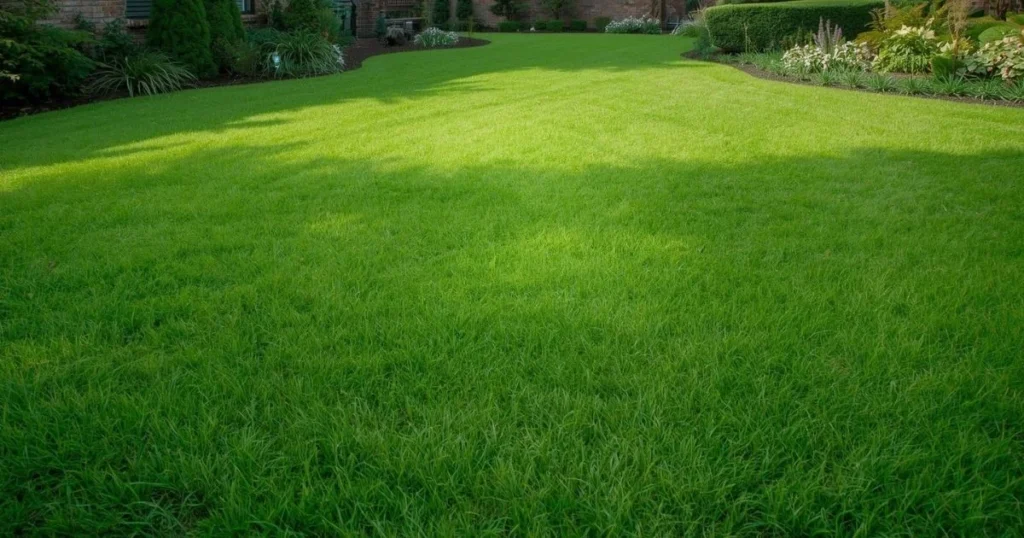
After years of seeing what works and what fails, one lesson stands out. Grass success depends on fit, not trends. Climate, sunlight, water needs, and daily use all shape the result. Lawns that last are planted with the right grass from the start. Use this guide to compare options and think about your own yard conditions. That choice saves money, time, and frustration, and it leads to a landscape that stays healthy season after season.
You Are Not Doing It Wrong
Most lawn problems come from poor grass matching, not poor care.
Once the right grass is chosen, maintenance becomes easier and results improve.
No grass works everywhere. The best landscaping grass is the one that fits your climate, sunlight, and lifestyle. Match grass to your yard, and results improve.