 Skip to content
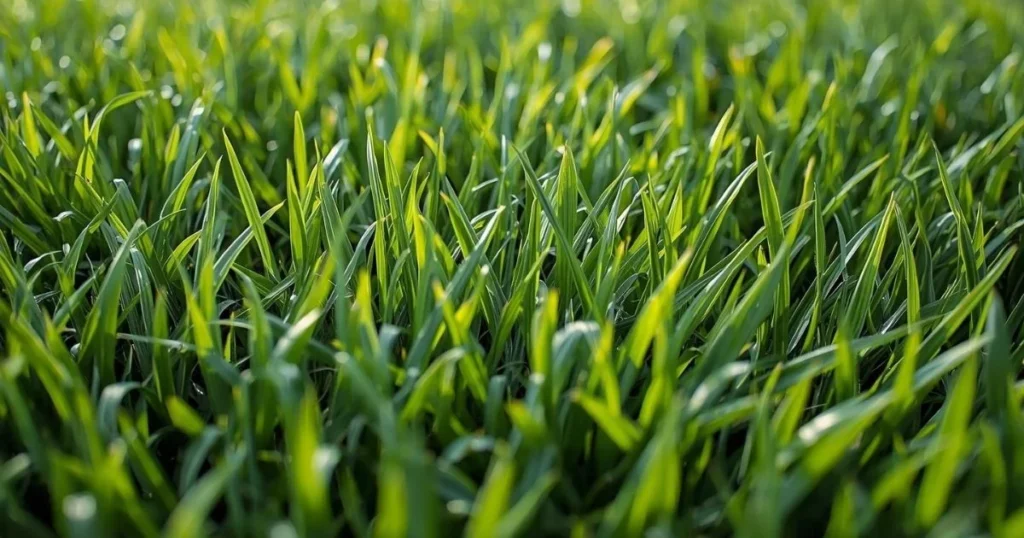
Many homeowners notice their lawn looks different from others on the street. The grass spreads fast, grows sideways, or turns brown in winter. This often causes stress. People worry they have weeds, bad soil, or a dying lawn. I have spoken with many homeowners who stood in their yard confused, asking why their grass behaves this way and whether they should fix it or remove it.
From real lawn checks and years of grass identification work, this confusion usually points to one thing: Bermuda grass. The issue is not the grass itself, but not knowing what it looks like or how it grows. This guide explains what does Bermuda grass look like using clear signs you can see with your own eyes, based on real lawn behavior, not theory. If you want a broader overview of lawn grasses and how different types grow across climates, see our Grass Types guide.
- Quick Answer for Fast Identification
- What Is Bermuda Grass?
- What Does Bermuda Grass Look Like Up Close?
- Bermuda Grass Leaf Size and Shape
- Bermuda Grass Measurements and Growth Size
- How Bermuda Grass Grows and Spreads
- What Do Bermuda Grass Seed Heads Look Like?
- What Does Bermuda Grass Look Like in Different Seasons?
- What Does Bermuda Grass Look Like When It First Grows?
- Does Bermuda Grass Look Different in Shade?
- Types of Bermuda Grass and How They Look
- How to Identify Bermuda Grass in Your Lawn (Step-by-Step)
- When You Can Be 100% Sure It Is Bermuda Grass
- Bermuda Grass vs Look-Alike Grasses
- Why Bermuda Grass Often Looks “Out of Place”
- Is Bermuda Grass a Lawn Grass or a Weed?
- What NOT to Do Before Identifying Bermuda Grass
- Why Bermuda Grass May Look Thin or Patchy
- Quick Identification Table (Scan-Friendly)
- When Identification Matters the Most
- Conclusion
Key Takeaways
- Bermuda grass has thin, pointed blades and a fine texture.
- It spreads using runners above and below the soil.
- It grows thick in summer and turns brown in winter.
- Finger-shaped seed heads help confirm identification.
- Correct identification prevents wrong lawn treatment.
Quick Answer for Fast Identification
Bermuda grass has thin, pointed blades with a green to blue-green color. It spreads using runners across and under the soil, grows thick in summer, produces finger-shaped seed heads, and turns brown in winter.
If this matches what you see, you likely have Bermuda grass.
What Is Bermuda Grass?
Bermuda grass is a warm-season grass that grows best in full sun. It spreads quickly and forms a dense mat. Because of this, it is used on lawns, sports fields, and golf courses.
In cool-season lawns, it often stands out and looks unwanted. That is why many people confuse it with weeds.
What Does Bermuda Grass Look Like Up Close?
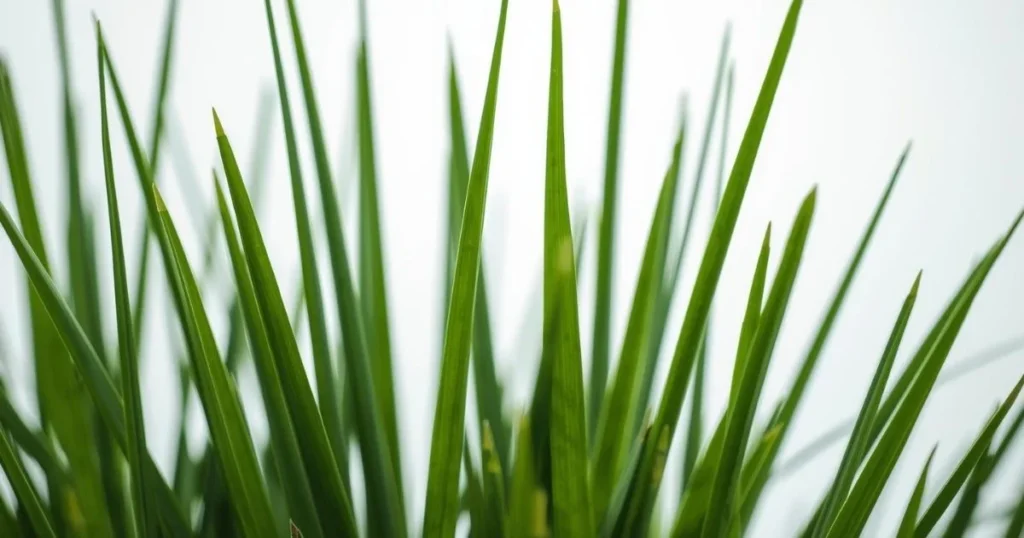
When viewed closely, Bermuda grass has a fine texture.
Common traits include:
- Very thin leaf blades
- Sharp, pointed tips
- Green or blue-green color
- Slightly rough feel
This fine look helps separate it from wider-bladed grasses.
Bermuda Grass Leaf Size and Shape
Leaf shape is a strong clue.
- Blades are narrow
- Tips are pointed
- Leaves grow upright, then bend
When mowed, the lawn looks smooth. When not mowed, the grass spreads sideways.
Bermuda Grass Measurements and Growth Size
For those who want clear proof:
- Blade width is very thin
- Blade length stays short with mowing
- Unmowed grass grows taller
- Runners stretch across the soil
This explains why it fills bare spots quickly.
How Bermuda Grass Grows and Spreads
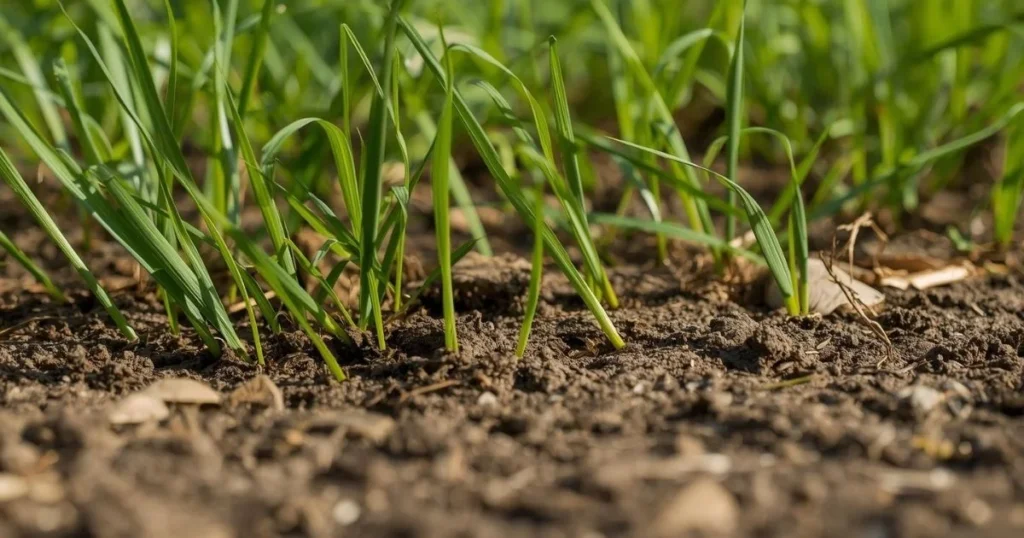
Bermuda grass spreads in two ways.
- Stolons grow above ground
- Rhizomes grow below ground
These runners create new plants as they move. This growth pattern explains why it takes over nearby areas.
What Do Bermuda Grass Seed Heads Look Like?
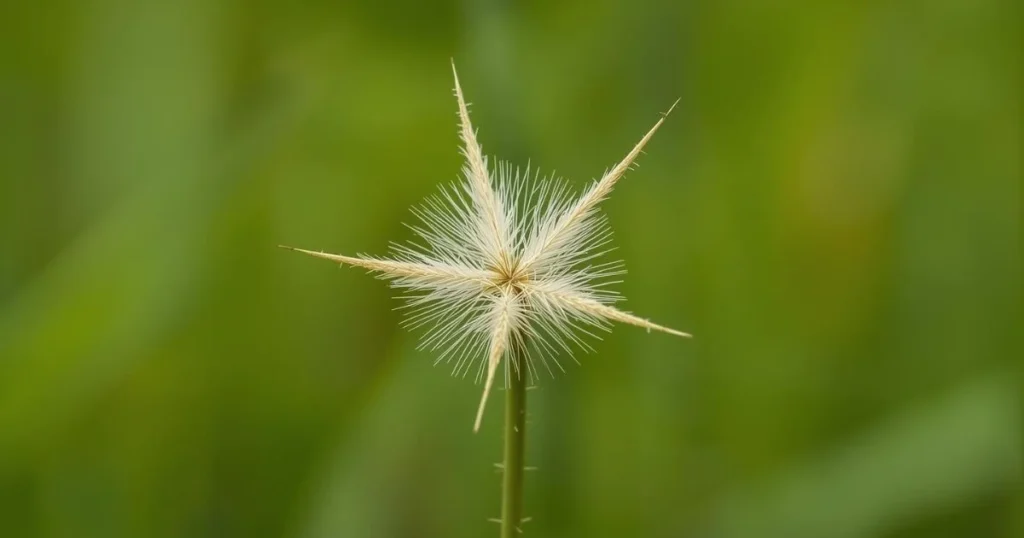
Seed heads appear when grass grows tall.
They look like fingers coming from one point.
Key signs:
- 3 to 6 thin spikes
- Star-like shape
- Light green to brown color
These seed heads confirm identification.
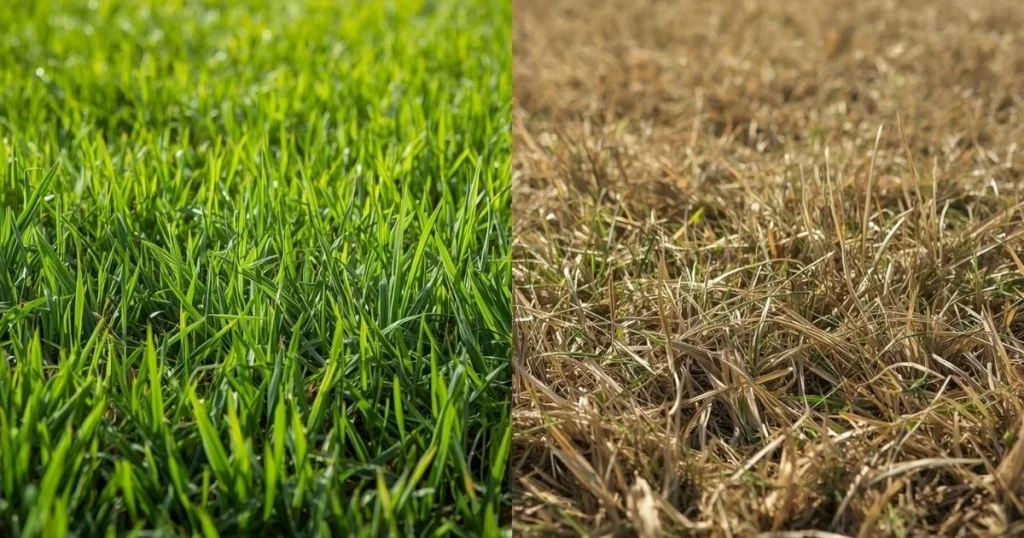
What Does Bermuda Grass Look Like in Different Seasons?
Spring
Grass starts turning green.
Summer
Growth is fast and thick. Color is rich.
Fall
Growth slows. Color fades.
Winter
Grass turns brown and goes dormant. This is normal.
Many homeowners worry in winter, but the grass is still alive.
What Does Bermuda Grass Look Like When It First Grows?
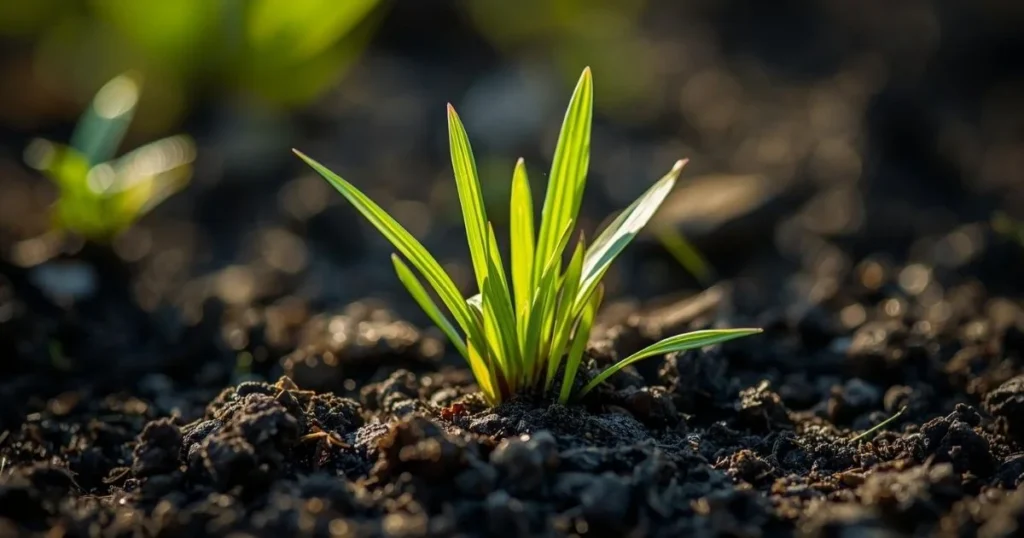
Young Bermuda grass looks lighter and thinner.
- Light green color
- Very thin blades
- Low growth
- Early runner formation
As it matures, density increases.
Does Bermuda Grass Look Different in Shade?
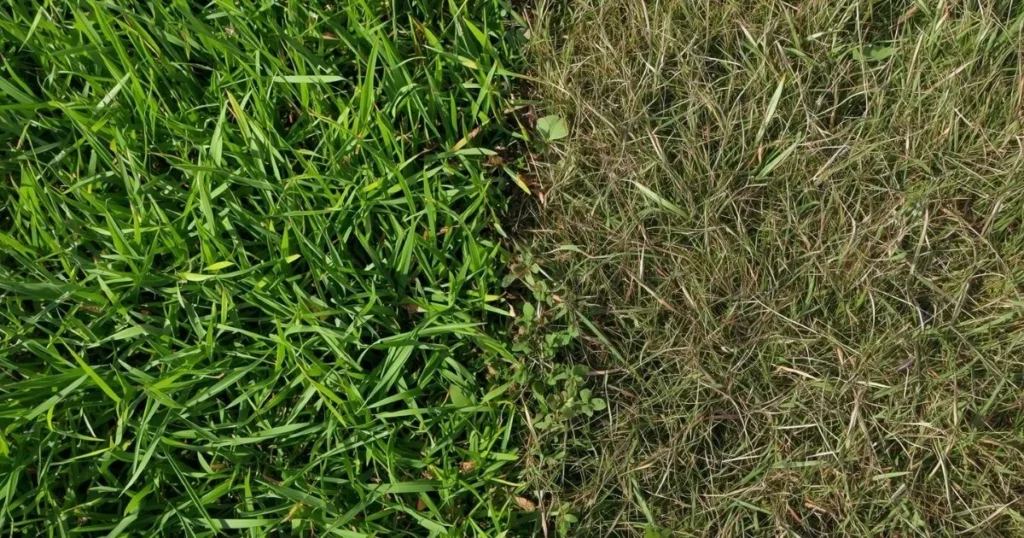
Yes.
- Blades thin out
- Color becomes pale
- Lawn looks patchy
Bermuda grass needs full sun to look healthy.
Types of Bermuda Grass and How They Look
Common Bermuda grass
- Lighter green
- Less dense
- Seen in home lawns
Hybrid Bermuda grass
- Darker green
- Very dense
- Used on sports fields
Hybrids appear smoother and tighter.
How to Identify Bermuda Grass in Your Lawn (Step-by-Step)
- Look at blade width
- Check for pointed tips
- Look for runners on soil
- Watch winter color change
- Check for finger-shaped seed heads
If most signs match, it is Bermuda grass.
| Question | Yes | No |
|---|---|---|
| Blades are thin and pointed | ✔ | |
| Grass spreads sideways | ✔ | |
| Seed heads look like fingers | ✔ | |
| Grass turns brown in winter | ✔ | |
| Grass needs full sun | ✔ |
When You Can Be 100% Sure It Is Bermuda Grass
If your lawn shows thin blades, spreads sideways with runners, and turns brown in winter, you can be confident it is Bermuda grass. You do not need soil tests or lab checks. Visual signs are enough. Most homeowners misidentify Bermuda grass simply because they expect grass to stay green year-round. Once these key traits line up, further comparison is unnecessary.
Bermuda Grass vs Look-Alike Grasses
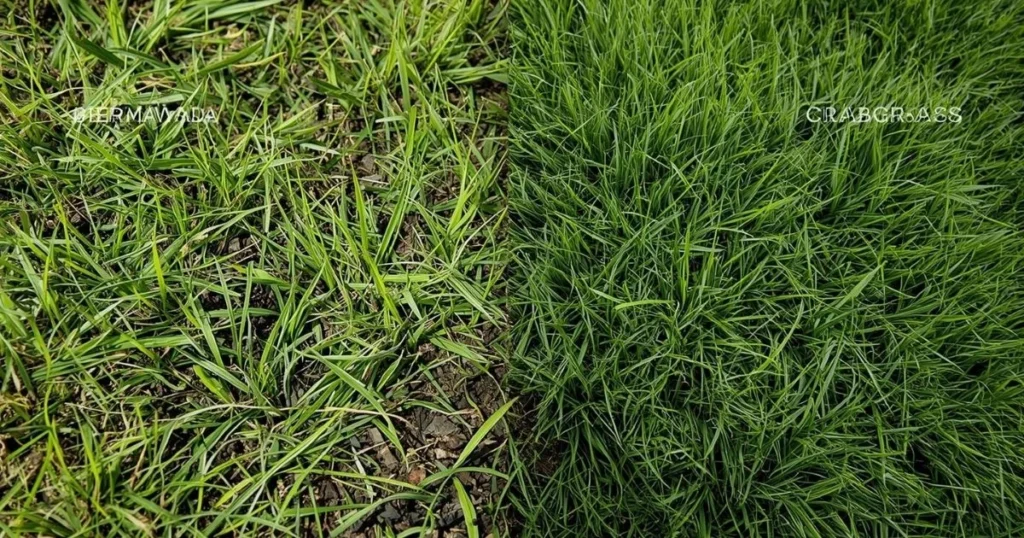
| Feature | Bermuda Grass | Crabgrass |
|---|---|---|
| Blade width | Thin | Wide |
| Growth style | Spreading runners | Clumps |
| Winter look | Brown but alive | Dies off |
Bermuda grass vs crabgrass
- Bermuda blades are thinner
- Crabgrass grows in clumps
Zoysia vs Bermuda grass
- Bermuda spreads faster
- Zoysia feels thicker
This helps avoid wrong treatment.
Why Bermuda Grass Often Looks “Out of Place”
Bermuda grass often looks different because it grows lower, spreads faster, and reacts strongly to sunlight. In mixed lawns, it stands out next to cool-season grass. This does not mean it is unhealthy. It means the lawn contains grasses with different growth habits.
Is Bermuda Grass a Lawn Grass or a Weed?
It depends on where it grows.
- Desired in warm-season lawns
- Unwanted in cool-season lawns
The appearance stays the same. The setting changes.
What NOT to Do Before Identifying Bermuda Grass
Before treating your lawn, avoid making changes based on assumptions. Avoid reseeding until you clearly know your grass type. Products made for cool-season lawns can harm Bermuda grass. Winter browning does not mean the lawn is dead. Many lawn problems start with treating Bermuda grass as something it is not.
Why Bermuda Grass May Look Thin or Patchy
Common causes:
- Shade
- Cold weather
- Low nutrients
- Heavy foot traffic
Sun exposure makes the biggest difference.
Common Questions About Bermuda Grass
Why does Bermuda grass turn brown in winter?
Bermuda grass goes dormant in cold weather. This is normal and does not mean the grass is dead.
Is Bermuda grass a weed?
It is a lawn grass in warm regions but acts like a weed in cool-season lawns.
How can I tell Bermuda grass from crabgrass?
Bermuda grass has thinner blades and spreads with runners, while crabgrass grows in clumps.
Quick Identification Table (Scan-Friendly)
| Feature | What You See |
|---|---|
| Blade width | Very thin |
| Tip shape | Pointed |
| Color | Green to blue-green |
| Growth | Runners spread |
| Seed head | Finger-shaped |
| Winter | Brown |
When Identification Matters the Most
Correct identification matters most before reseeding, fertilizing, or applying weed control. Using the wrong approach can thin the lawn or make spreading worse. Identifying Bermuda grass first helps prevent wasted time and unnecessary expense.
Conclusion
From hands-on lawn inspections and real homeowner cases, correct grass identification always comes first. Bermuda grass often causes worry simply because people do not recognize it. Once you know its thin blades, spreading runners, summer growth, and winter color change, the confusion stops. When you can identify Bermuda grass with confidence, you make better lawn decisions, avoid mistakes, and save time and effort. Knowing what you have is always the first step to a healthier lawn.