 Skip to content
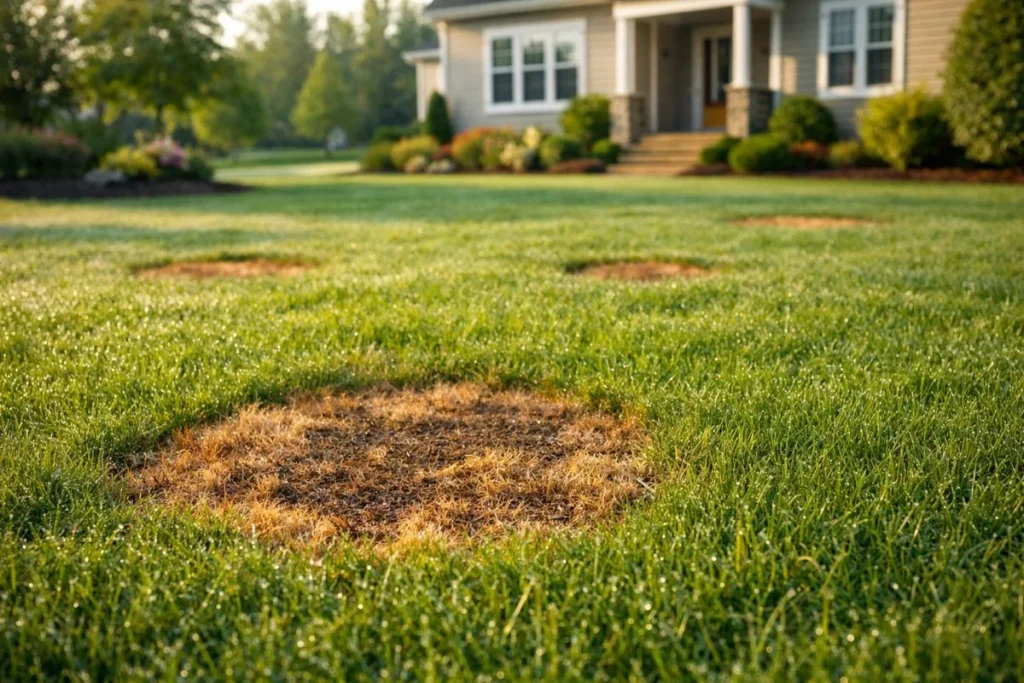
You step outside and notice brown patches spreading across your lawn. A few days ago it looked healthy. Now it looks thin, stressed, and uneven. You start wondering if you overwatered, cut it too short, or if the weather caused it. Then the real question hits you: Will lawn fungus go away on its own, or is this about to get worse? Most homeowners hope it is temporary. No one wants to spend money or time fixing something that might fix itself.
After working with many lawn disease cases and studying turf problems across different climates, I can tell you this: waiting is the most common mistake. Some mild infections slow down when conditions improve, but many do not disappear without changes in care. What starts as a small patch can quietly expand if the root cause is ignored. The key is knowing when to monitor and when to act. Let’s walk through it clearly so you can make the right call for your lawn. Before deciding whether to wait or treat, it helps to correctly identify the disease. If you are unsure what type of infection you are seeing, review our complete guide on lawn fungus identification to compare symptoms and patterns first.
- Is Lawn Fungus Temporary or Serious?
- What Is Lawn Fungus?
- The Disease Triangle: Why Lawn Fungus Starts
- Dormant vs Cured: Important Difference
- Will Lawn Fungus Go Away When Weather Changes?
- When Can Lawn Fungus Fade Without Fungicide?
- What Type of Lawn Fungus Do You Have?
- Lawn Fungus Comparison Guide
- Should You Wait or Treat Right Away?
- How to Fix Lawn Fungus Without Spending Much
- When Fungicide Is Necessary
- Lawn Fungus by Region in the United States
- DIY or Professional Treatment?
- How Much Does Treatment Cost?
- How to Prevent Lawn Fungus from Returning
- Frequently Asked Questions
- Final Answer
Quick Answer
- Lawn fungus usually does not go away on its own.
- Mild cases may slow down in dry weather.
- Most infections return if moisture problems remain.
- Early action prevents larger and more expensive damage.
Is Lawn Fungus Temporary or Serious?
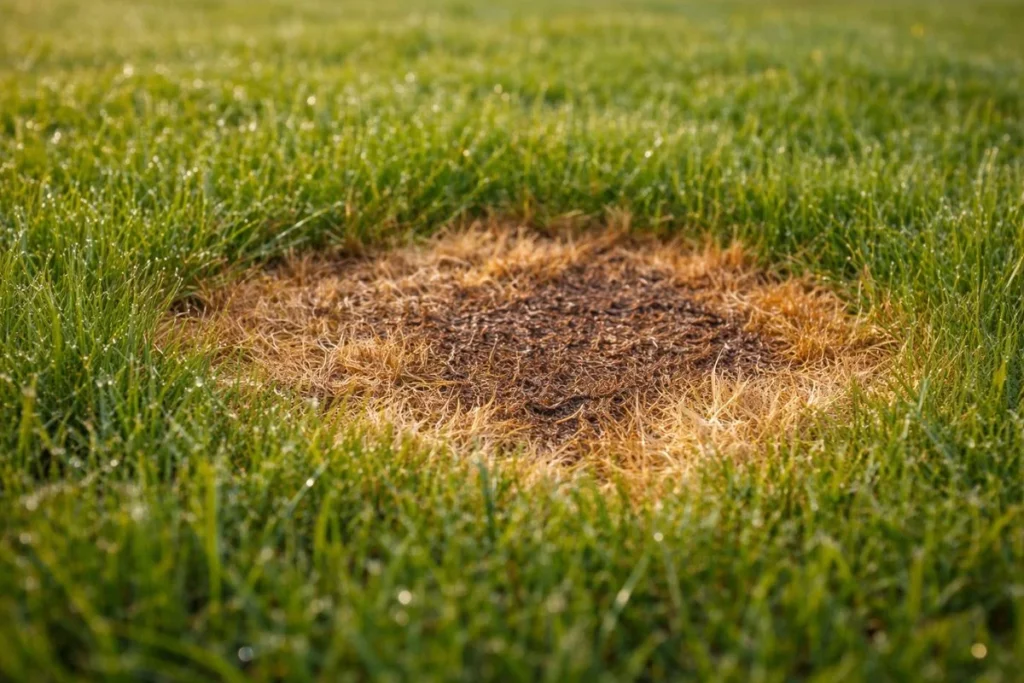
Most homeowners hope it is temporary.
Sometimes it is mild. Sometimes it spreads fast.
Here is the difference:
- Small spots that stop growing may be mild
- Patches that expand weekly are active infection
- Grass that thins and turns straw colored needs attention
Lawn fungus rarely fixes itself fully. It may slow down. It may look better. But spores usually remain in the soil.
What Is Lawn Fungus?
Lawn fungus is a grass disease caused by organisms that already live in soil and thatch.
They grow when:
- The lawn stays wet
- Humidity is high
- Airflow is poor
- Grass is weak
- Soil is compacted
These conditions allow fungus to spread quickly.
The Disease Triangle: Why Lawn Fungus Starts
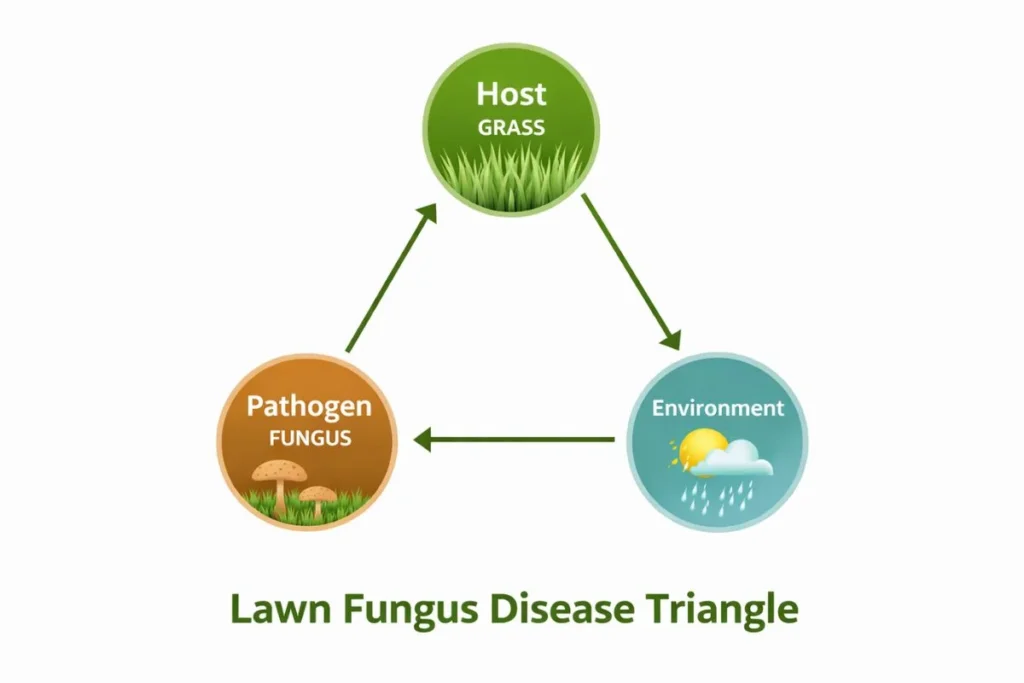
Lawn fungus needs three things to grow.
This is called the disease triangle:
- Host – your grass
- Pathogen – the fungus
- Environment – heat and moisture
If one of these is reduced, disease slows.
For example:
- Improve drainage
- Reduce watering
- Strengthen grass health
This breaks part of the triangle.
Dormant vs Cured: Important Difference
Many lawns look better when weather changes.
But that does not always mean the problem is gone.
- Dormant means inactive but still alive
- Cured means controlled and recovered
Most lawn fungus becomes dormant in dry or cool weather. It often returns when humidity increases again.
Will Lawn Fungus Go Away When Weather Changes?
Dry weather can slow fungus growth.
Cold weather can stop active spread.
But weather alone rarely removes it from the soil.
If moisture returns, fungus often returns.
So heat or cold may pause the issue. They do not remove the cause.
When Can Lawn Fungus Fade Without Fungicide?
There are mild cases where improvement happens naturally.
For example:
- Snow mold may fade after lawns dry
- Red thread may improve after nitrogen feeding
- Light dollar spot may stop with better watering
If patches stop spreading and grass thickens again, cultural fixes may be enough.
But if patches expand weekly, waiting is risky.
What Type of Lawn Fungus Do You Have?
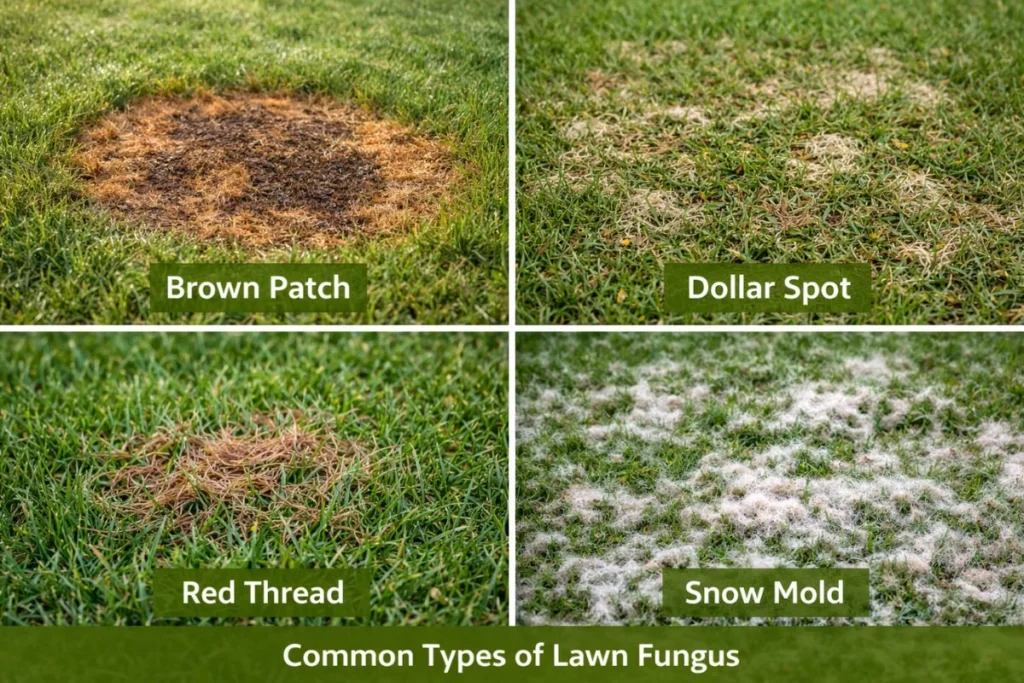
Correct diagnosis helps you decide whether to wait or treat.
Brown Patch
- Large circular brown areas
- Common in humid summer
Dollar Spot
- Small round spots
- Often linked to low nitrogen
Red Thread
- Pink or red strands
- Seen in cool, damp weather
Snow Mold
- Gray or pink patches after snow melts
Different types behave differently. Some mild cases improve with lawn care changes. Severe infections usually need treatment.
Lawn Fungus Comparison Guide
| Fungus Type | Can It Go Away Alone? | When It Might Fade | Needs Fungicide? |
|---|---|---|---|
| Brown Patch | Rarely | Dry weather | Often yes |
| Dollar Spot | Sometimes | After feeding | Sometimes |
| Red Thread | Sometimes | With nitrogen | Not always |
| Snow Mold | Often mild cases | After drying | Severe cases only |
| Pythium | Almost never | Rare | Yes |
Should You Wait or Treat Right Away?
Use this simple guide.
Wait and Adjust Lawn Care If:
- Patches are small
- They are not growing
- Weather recently improved
- Grass still has green growth
Treat Quickly If:
- Patches expand each week
- Grass pulls up easily
- Lawn smells musty
- You see slimy or matted areas
If infection spreads fast, fungicide may be needed.
Wait or Treat Decision Guide
| What You See | What It Means | What To Do |
|---|---|---|
| Small patch, not growing | Mild infection | Improve watering and monitor |
| Patch spreading weekly | Active infection | Treat soon |
| Grass slimy or matted | Severe infection | Use fungicide immediately |
| Lawn thin and weak overall | Stress issue | Strengthen lawn first |
How to Fix Lawn Fungus Without Spending Much
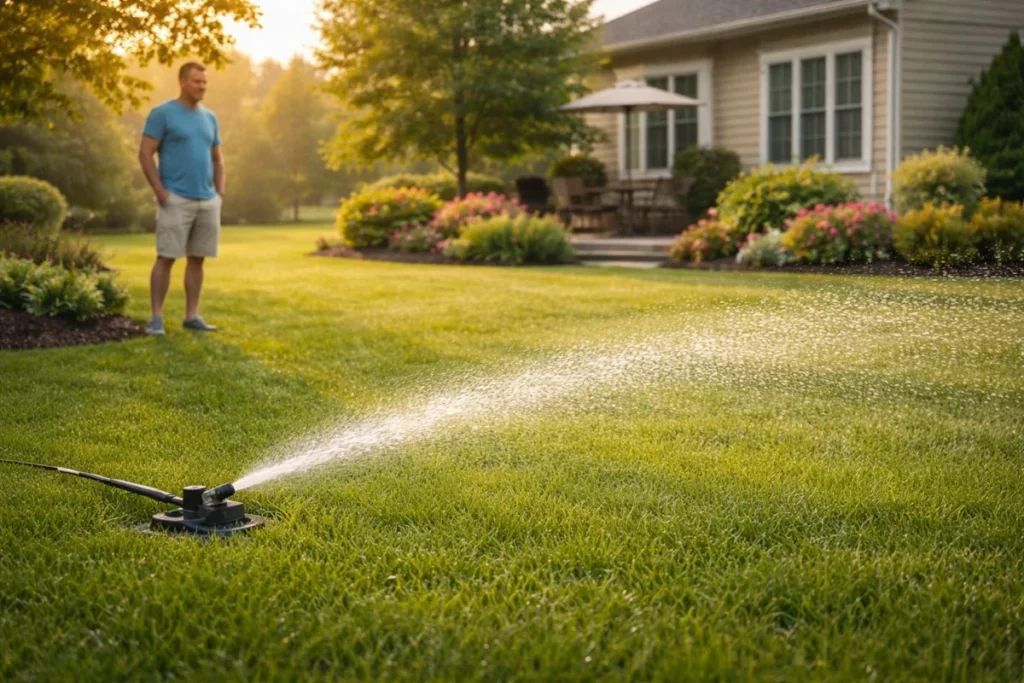
Start with simple changes.
Improve Watering
- Water early morning
- Water deeply but less often
- Avoid night watering
Improve Airflow
- Aerate compacted soil
- Remove excess thatch
- Mow at proper height
Strengthen Grass
- Apply balanced fertilizer
- Avoid heavy nitrogen in extreme heat
Many mild infections improve with these steps alone.
7-Day Lawn Fungus Check
- Day 1: Mark the edge of the patch with a small flag or object.
- Day 3: Check if the patch has expanded.
- Day 5: Look for color changes or thinning grass.
- Day 7: Compare size and condition.
If the patch grows larger after 7 days, treatment is usually needed.
When Fungicide Is Necessary
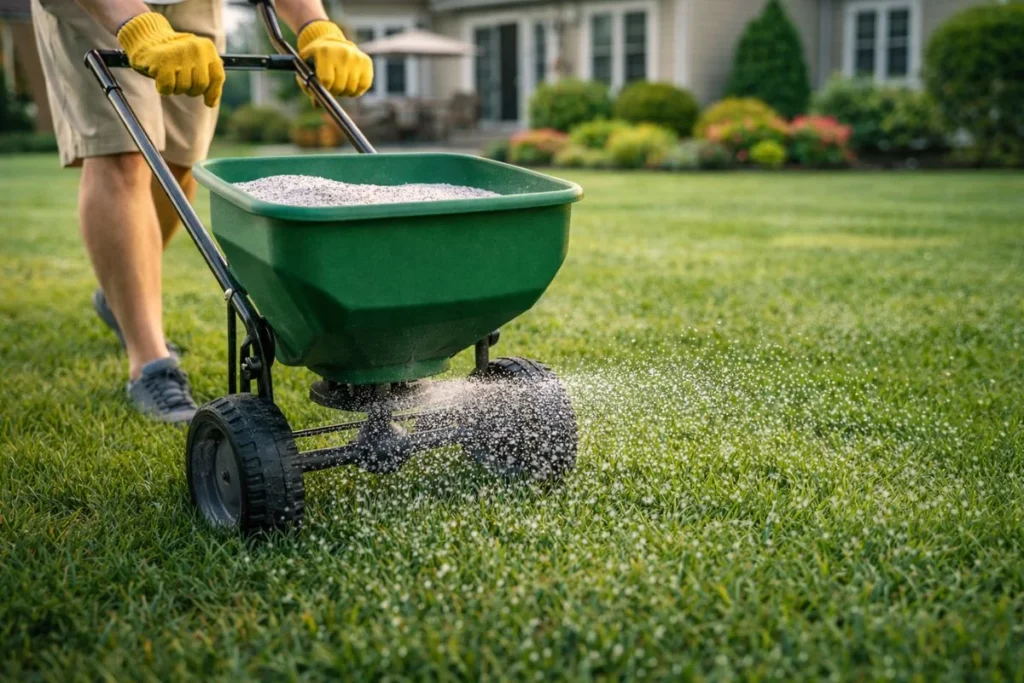
If lawn fungus keeps spreading, treatment may be required.
There are two types:
Preventative Fungicides
- Applied before disease spreads
- Best when weather favors infection
Curative Fungicides
- Used during active infection
- Most effective early
Some products stay on the surface. Others move inside the plant.
Most require reapplication every 14 to 21 days. Always follow the label. Rotating active ingredients helps avoid resistance.
Lawn Fungus by Region in the United States
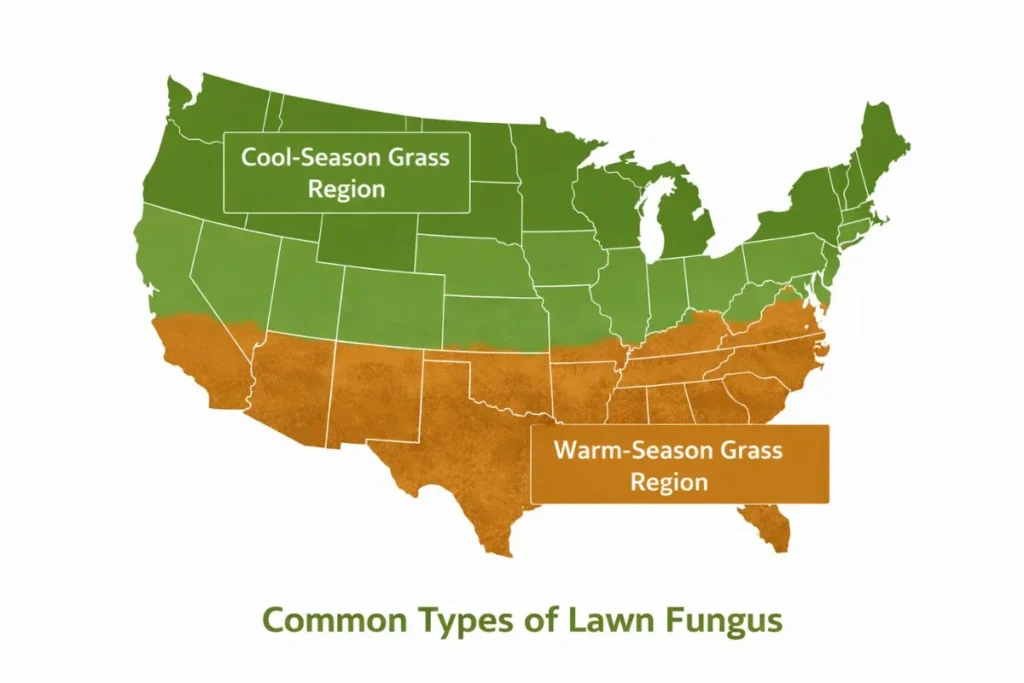
Climate affects timing.
Northern States
- Brown patch late spring to summer
- Dollar spot in summer
- Snow mold after winter
Southern States
- Brown patch during humid summer
- Large patch in spring and fall
- Pythium during heavy rain
Knowing your region helps you act before it spreads.
DIY or Professional Treatment?
Small lawns with mild infection can often be handled at home.
Consider professional help if:
- Infection covers large areas
- Fungicide did not stop spread
- You are unsure of diagnosis
- Lawn has repeated yearly outbreaks
Professional treatment may cost more upfront but can prevent long-term damage.
How Much Does Treatment Cost?
- DIY fungicide: $20 to $60 per application
- Professional visit: $100 to $300
- Severe cases may need repeat treatment
Waiting too long can increase repair cost.
How to Prevent Lawn Fungus from Returning
Strong grass resists disease.
Follow this simple plan:
Spring
- Aerate
- Fertilize properly
Summer
- Water early
- Avoid overfeeding
Fall
- Remove leaves
- Overseed thin spots
Prevention costs less than repair.
Frequently Asked Questions
Can lawn fungus spread to neighbors?
Yes. Spores spread through wind and equipment.
Does sunlight kill lawn fungus?
Sunlight helps dry grass. It slows growth but does not remove spores.
Should I mow infected grass?
Yes. Clean blades after mowing.
Is lawn fungus dangerous to pets?
Most are not harmful. Keep pets off treated areas until dry.
Final Answer
In my experience working with lawn disease issues, lawn fungus rarely vanishes on its own. It may slow down when the weather shifts, and it may look better for a short time, but if moisture and soil conditions stay the same, the problem often returns. The homeowners who protect their lawns best are the ones who act early. They improve watering habits, strengthen the grass, and treat only when needed. Healthy lawns are not random. They are maintained with attention and simple, smart decisions. If you watch the signs and respond early, you can control lawn fungus before it turns into a costly repair.